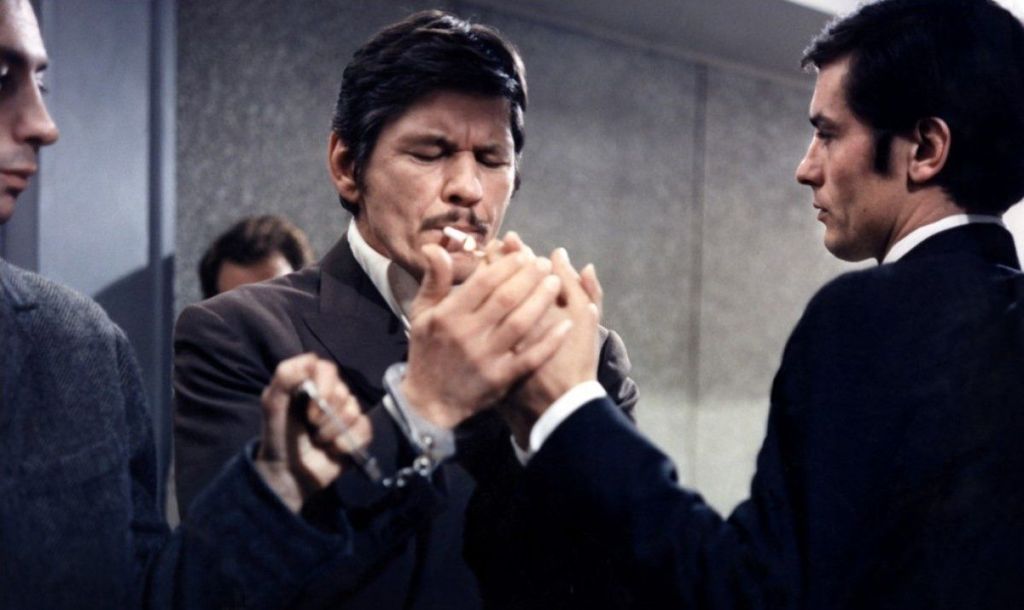
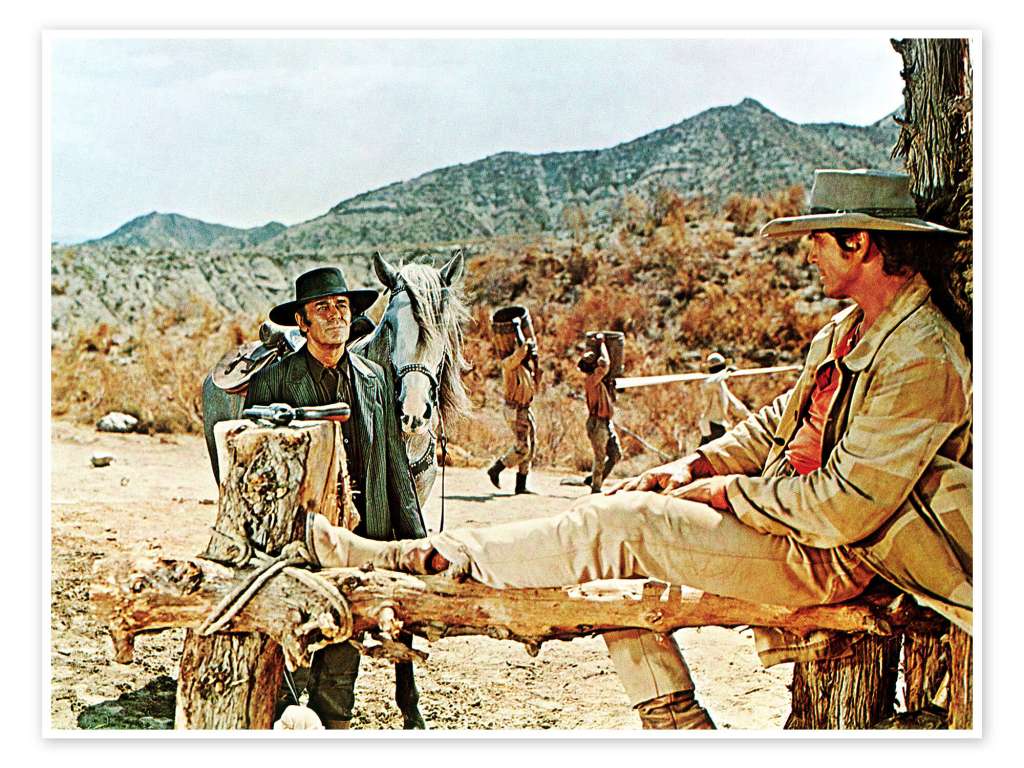
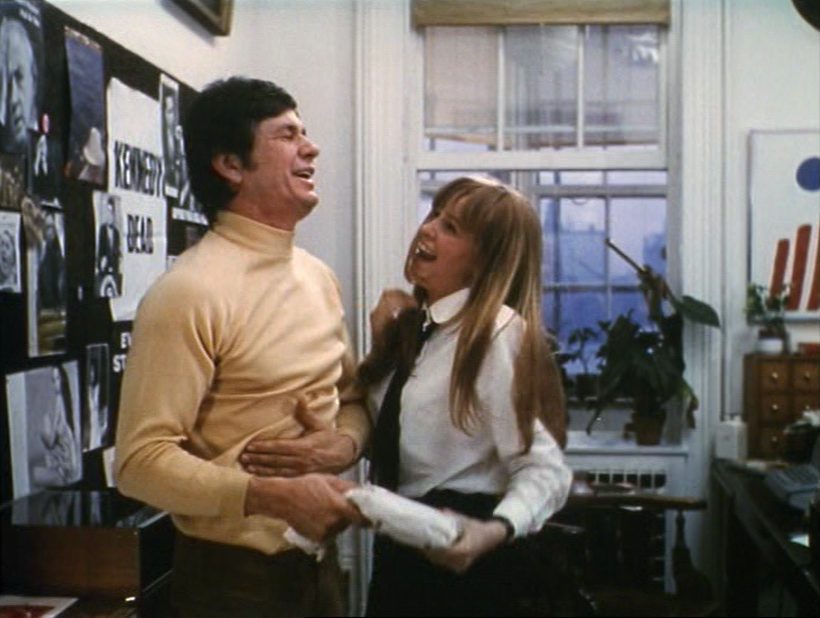
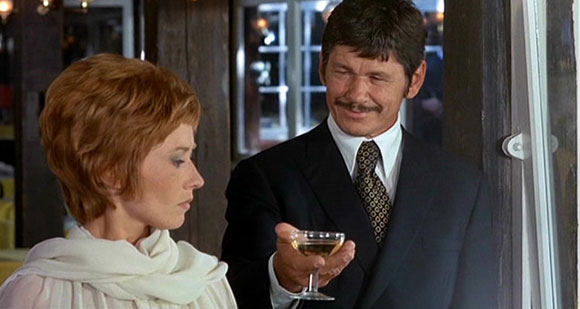
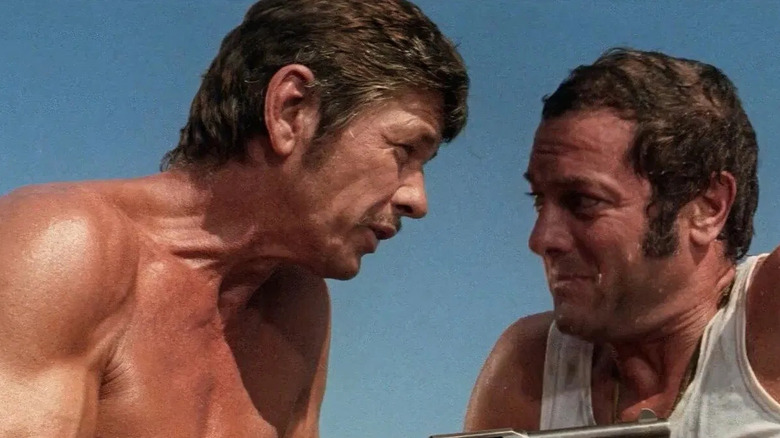
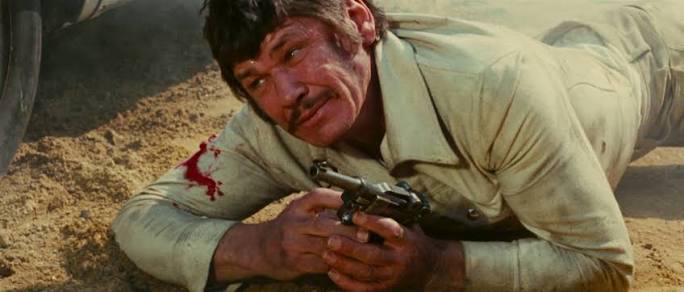
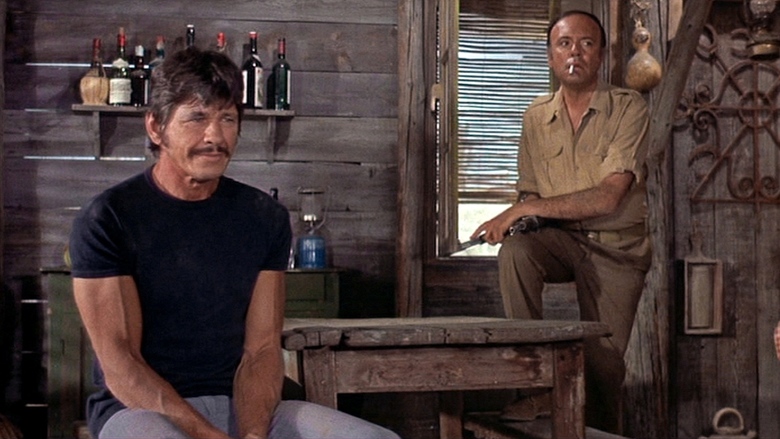
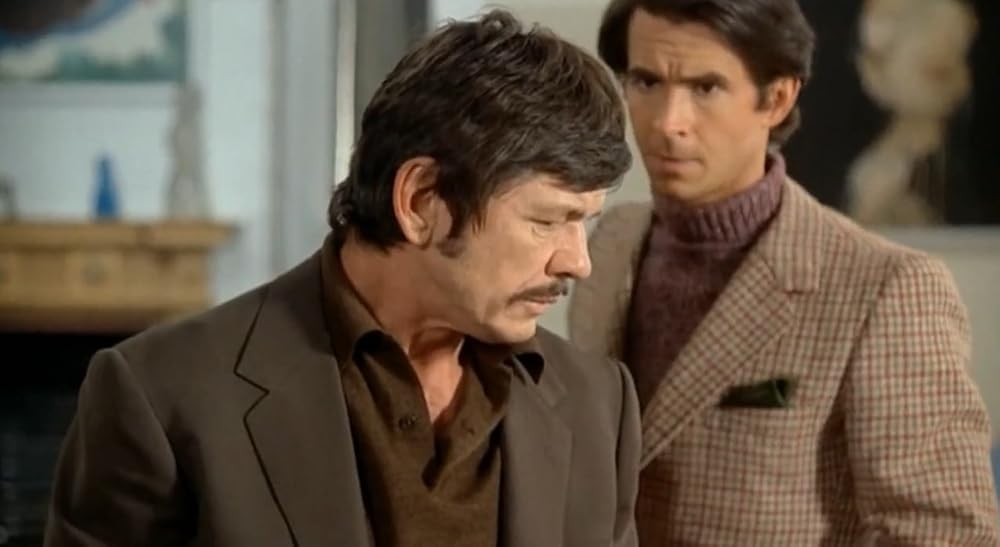
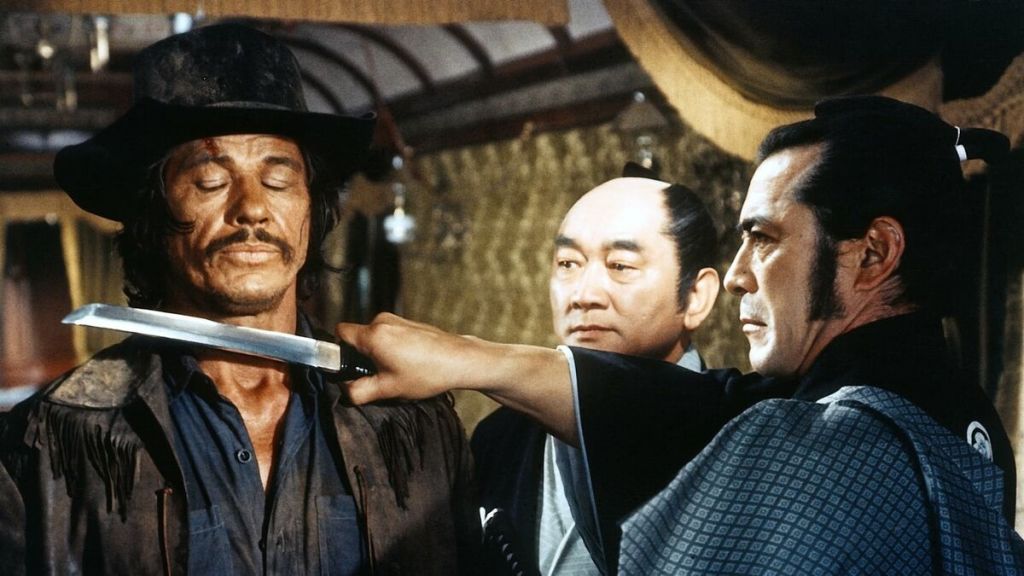
After a couple of decades as a working character actor on American films and TV shows, Charles Bronson left for Europe in the late 60s and became a massive worldwide film star. This set the stage for him to come back to America and establish his stardom in Hollywood as well. Today, on November 3rd, 2026, Bronson’s 105th birthday, I celebrate that important phase of his career with 9 shots from 9 films!
Farewell, Friend (1968) – Charles Bronson & Alain DelonOnce Upon a Time in the West (1968) – Charles Bronson & Henry FondaLola (1970) – Charles Bronson & Susan GeorgeRider on the Rain (1970) – Charles Bronson & Marlene JobertYou Can’t Win ‘Em All (1970) – Charles Bronson & Tony CurtisViolent City (1970) – Charles BronsonCold Sweat (1970) – Charles Bronson & Jean TopartSomeone Behind the Door (1971) – Charles Bronson & Anthony PerkinsRed Sun (1971) – Charles Bronson, Tetsu Nakamura & Toshiro Mifune
“Are you willing to trade your life for his, or is life too precious?” — Mitch Leary
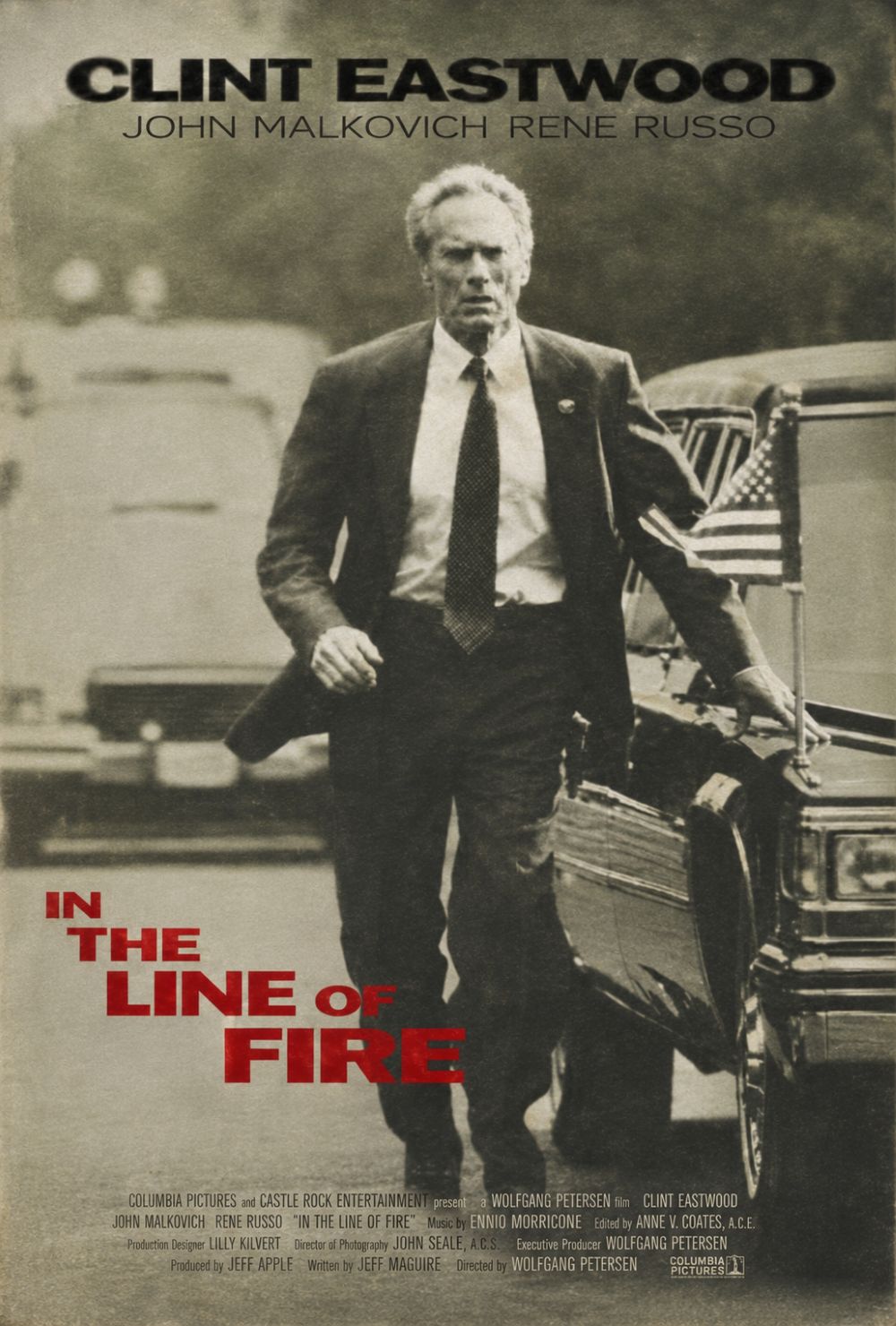
In the Line of Fire is the kind of thriller that makes doing the basics well look like a lost art. Wolfgang Petersen’s 1993 film has a troubled hero, a frightening villain, a clear threat, and enough confidence to let conversations generate as much suspense as the action. There’s nothing especially revolutionary about its setup, but that’s part of the pleasure. This is polished Hollywood entertainment that knows exactly what it wants to deliver. Its greatest strength is tension, particularly when Clint Eastwood and John Malkovich are simply talking, each trying to find the weakness the other would rather keep hidden.
Eastwood plays Frank Horrigan, a veteran Secret Service agent still carrying the emotional weight of John F. Kennedy’s assassination. He was there in Dallas, and decades later, he hasn’t stopped wondering whether he could have done something differently. When a potential assassin threatens the current president, Frank sees more than another assignment. He sees a chance to confront the moment that has defined his life. Screenwriter Jeff Maguire gives the familiar redemption story a useful psychological hook: Frank isn’t just afraid of failing again. He’s afraid that his worst suspicions about himself might finally be confirmed.
What makes Eastwood so effective is that he doesn’t treat Frank’s age as an inconvenience the movie needs to ignore. It’s part of the character’s personality, his professional situation, and the way other people respond to him. He has the stubborn confidence of someone who has survived plenty, but also the bruised pride of someone who knows he can’t keep going forever. Eastwood gets plenty of mileage out of dry humor and that familiar, unimpressed stare, yet the performance becomes more interesting when those defenses slip. Frank’s guilt gives the tough-guy routine a vulnerability that keeps him from feeling like a recycled action hero.
Then there’s Malkovich, who turns the would-be presidential assassin into the movie’s most unsettling presence. His character, Mitch Leary, also calls himself Booth, and he takes an intensely personal interest in Frank. A former CIA assassin, he understands violence, preparation, and the usefulness of getting inside somebody’s head. Malkovich doesn’t need to shout to dominate a scene. His calm delivery is often more disturbing than a conventional villain’s threats would be. He sounds amused, curious, even companionable, which makes the cruelty underneath that voice feel worse. You never mistake his intelligence for wisdom, but you immediately understand why Frank can’t dismiss him.
Their phone conversations are the film’s real engine. Leary doesn’t merely announce what he plans to do; he turns Frank’s history into a weapon, pushing him to revisit questions he has spent years trying to bury. There’s a nasty intimacy to these exchanges. The two men occupy opposite sides of the same professional world, both shaped by institutions that demand loyalty and offer little comfort afterward. Petersen keeps that connection disturbing without pretending they’re morally interchangeable. Frank’s pain has made him difficult and withdrawn; Leary uses his grievances to justify murder. Their similarities sharpen the conflict rather than excuse the villain.
Petersen’s direction is wonderfully assured because he understands that suspense needs more than constant movement. He gives the audience time to anticipate danger, then makes the practical business of protecting a president feel like a series of potential disasters. Crowds, public appearances, and the sheer difficulty of identifying one determined attacker become more threatening than any elaborate action gimmick. When the film does pick up speed, the excitement has a psychological dimension: Frank’s physical vulnerability and his obsession with stopping Leary matter as much as the immediate chase. The action advances the relationship instead of temporarily replacing it.
Rene Russo brings a welcome change of rhythm as fellow agent Lilly Raines. Her scenes with Eastwood introduce flirtation, skepticism, and a little room to breathe between threats. The romance is also one of the film’s more conventional elements: Frank gets the younger colleague who can challenge him while recognizing the wounded man beneath the attitude. Still, Russo has enough presence to make their exchanges enjoyable rather than merely functional. She doesn’t act as though Frank’s reputation automatically makes him irresistible, and that resistance helps. Their teasing rapport also gives Eastwood a chance to be funny without turning Frank into a walking punchline.
The film isn’t flawless. Leary’s ability to stay ahead of everyone occasionally feels a little too convenient, and the redemption framework leaves relatively little doubt about the emotional destination. Some supporting characters exist mainly to question Frank’s judgment or complicate his assignment. But those familiar ingredients rarely become distracting because the central conflict remains so engaging. Maguire’s screenplay builds its suspense around character rather than relying entirely on surprise. Knowing roughly what kind of showdown is coming doesn’t ruin the experience; the pleasure lies in watching the pressure accumulate and wondering how much Frank will sacrifice to reach it.
In Petersen’s career, In the Line of Fire marked the beginning of a remarkable run of Hollywood hits. Its success led into Outbreak, Air Force One, The Perfect Storm, and Troy, a streak that established him as a dependable director of large-scale commercial entertainment. That momentum finally broke with his 2006 remake Poseidon, which disappointed at the box office. A decade-long absence from directing followed before he returned with the German crime comedy Four Against the Bank in 2016. Seen within that run, this earlier thriller stands out for how much excitement Petersen creates through actors and carefully managed anticipation.
What sticks with you about In the Line of Fire isn’t just whether Frank can stop an assassination, but how easily Leary can get under his skin with a phone call. That personal edge gives the movie its bite, even when the plot follows familiar thriller territory. Eastwood lets the cracks show without losing his screen presence, while Malkovich makes a quiet voice sound like the worst possible news. Petersen knows when to let them spar and when to turn up the heat. The result is a crowd-pleaser with enough personality to outlast its twists—and a villain who makes answering the phone seem like a terrible idea.
There aren’t many things that could kill Charles Bronson in his movies, but ASSASSINATION came up with a possibility that I’ll admit that I never considered before! It was fun discussing this scene with Jan Gan Boyd when she guested on the This Week in Charles Bronson podcast.
This is one of my favorite songs to which to sing along.
The video was directed by Jesse Dylan, son of Bob. Jesse has also directed a few movies that Bob probably would never have watched otherwise, including the Will Ferrell soccer comedy, Kicking & Screaming. Unfortunately, it appears that Jesse is also a part of the George Soros organization but I still like this song and video. Add to that, George Soros is nearly a 100 years old so, while it ain’t over til it’s over, it will still probably be over sooner than later.
“Godzilla was baptized in the fire of the H-bomb and survived. What could kill it now?” — Dr. Yamane
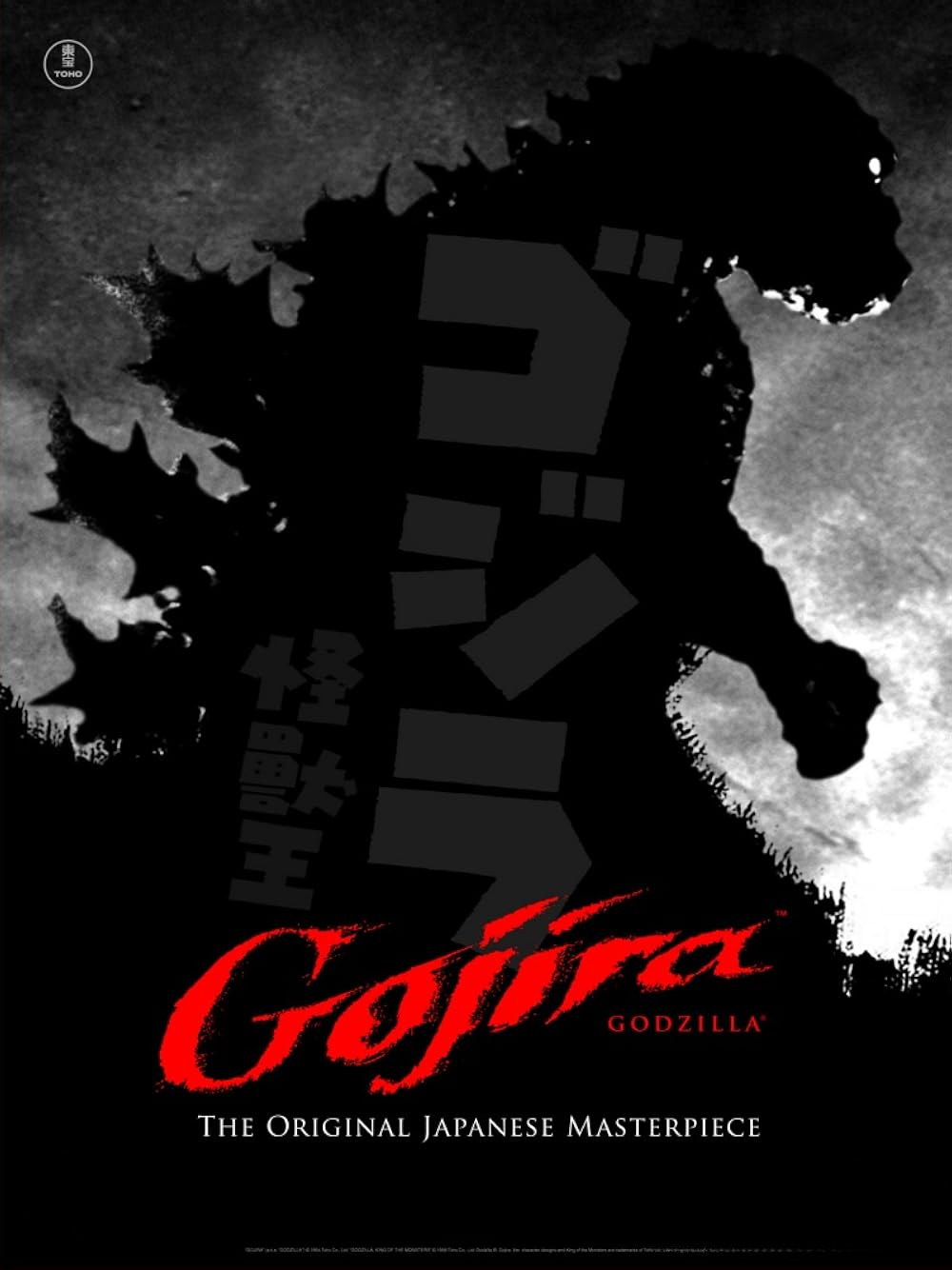
If your only exposure to Godzilla is the big guy body-slamming other monsters while kids cheer, the original 1954 Japanese Godzilla—titled Gojira in Japan—is going to hit you like a ton of bricks. Directed by Ishirō Honda, this isn’t a lighthearted monster romp. It’s a funeral procession in disguise, soaked in grief and dread, that happens to feature a radioactive giant stomping Tokyo into paste. Importantly, this is not the 1956 Americanized version, Godzilla, King of the Monsters!, which inserted newly filmed scenes of Raymond Burr as reporter Steve Martin, making him the central viewpoint character. Honda’s original is a different, heavier experience.
The setup is simple enough. Ships keep sinking, an island community connects the disasters to an old legend, and a prehistoric creature disturbed by hydrogen-bomb testing emerges from the sea. What follows builds toward one of the most devastating stretches of monster-movie filmmaking ever put to celluloid. When Godzilla attacks Tokyo, Honda shoots the rampage like a war picture, not a creature feature. There’s no wink, no reassuring invitation to laugh at the destruction. Night falls, the city burns, and civilians flee through the streets in scenes that are hard to shake. That’s clearly the point.
Here’s the thing you can’t separate from this movie: Japan was less than a decade removed from the end of World War II. Tokyo’s destruction onscreen bears an eerie resemblance to the aftermath of the American firebombing campaign of 1945, particularly the devastating March 9–10 raid. The burning neighborhoods, shattered buildings, and displaced civilians evoke a catastrophe that contemporary audiences didn’t need help imagining. Calling these sequences archival footage would go too far; they’re carefully constructed effects and dramatic scenes. But their emotional force comes partly from how closely this imagined disaster brushes against living memory. Honda makes the destruction feel remembered rather than merely invented.
The political undercurrent is what elevates Godzilla from an impressive genre exercise to something more troubling. The film is an unmistakable response to nuclear weapons and testing, made when hydrogen-bomb explosions in the Pacific were immediate public concerns. Its opening evokes the Lucky Dragon No. 5 incident, in which Japanese fishermen were exposed to radioactive fallout from an American hydrogen-bomb test at Bikini Atoll earlier that year. That wasn’t distant history to the original audience. It was the news. Godzilla turns that fear into a physical presence: something humanity has disturbed but cannot control.
The film’s concern with proliferation becomes clearest through Dr. Serizawa and his Oxygen Destroyer. He possesses a discovery that could kill Godzilla, but he understands that demonstrating its power could open the door to another arms race. The question isn’t simply whether this weapon can solve today’s emergency. It’s what happens when governments demand more of it tomorrow. That’s a sharper dilemma than the usual hunt for a monster-killing gadget. The proposed solution belongs to the same destructive cycle as the problem, and Serizawa knows that good intentions won’t keep his invention out of dangerous hands.
Dr. Yamane, played by a wonderfully grave Takashi Shimura, complicates things further by wanting Godzilla studied rather than destroyed. His position can seem maddening when people are dying, but it gives the creature an identity beyond walking target practice. Godzilla is dangerous, yet he’s also a living consequence of human interference. That doesn’t make killing him unnecessary, but it makes the victory harder to celebrate. Honda lets scientific curiosity, public safety, and moral responsibility pull against each other. The film’s strongest human conflict isn’t really about who gets the girl. It’s about what people owe one another when knowledge becomes destructive.
Special credit goes to Eiji Tsuburaya’s effects work. The creature suit, miniature buildings, and optical effects can look rough now, but dismissing them as cheap misses the ambition involved. This was a substantial production by contemporary Japanese standards, not a tiny-budget throwaway. The physical weight of the collapsing structures gives the rampage a tactile quality, while the black-and-white photography helps hold the illusion together. Akira Ifukube’s score supplies another crucial layer: those heavy rhythms and mournful passages make Godzilla feel less like an attraction than an approaching calamity. The images and music work together to give the monster tragic gravity.
Honda’s willingness to linger on suffering is even more important than the effects. A mother clutching her children and telling them they’ll soon join their father is a brutal interruption of anything resembling uncomplicated monster-movie fun. The hospital scenes refuse to let the attack end when Godzilla leaves the frame. Injured people remain, children face radiation examinations, and survival looks nothing like relief. These moments make the film’s anti-nuclear concerns inseparable from its storytelling. Honda doesn’t merely tell you that destruction is terrible. He keeps looking at the people who have to endure it.
Is the movie perfect? Not entirely. The love triangle between Emiko, Ogata, and Serizawa is more functional than riveting, and some explanatory passages slow the momentum. A few effects shots expose the gap between the filmmakers’ ambitions and their available techniques. But the sincerity carries it through. There’s no ironic safety net, and that directness becomes a strength. The same applies to the ending: Serizawa’s sacrifice is moving because it answers a moral crisis, not just a tactical one. He wants to stop the immediate catastrophe without leaving humanity another means of creating the next.
The American version deserves a little more fairness than simply calling it worthless: it retains powerful material, and Burr’s performance isn’t the problem. Still, its cuts and added viewpoint weaken the original’s political and emotional coherence. Honda’s Godzilla is the fuller experience, and one of science fiction’s enduring achievements. It helped define the modern kaiju film, but its importance goes beyond launching a franchise. Underneath the creature suit and miniature tanks is a serious film about wartime trauma, nuclear fear, and whether humanity can survive its own inventions. That’s a lot for a monster movie to carry. Honda makes it hurt.