Sixty years ago today, on October 27, 1966, It’s The Great Pumpkin, Charlie Brown first aired on CBS!
I used to love watching It’s The Great Pumpkin, Charlie Brown every October and I still haven’t forgiven CBS for selling it and all of the other Peanuts specials to Apple TV. We do subscribe to Apple TV so I can still watch the special every year but it just feels unfair to me. Watching Linus wait for the Great Pumpkin and Charlie Brown getting a rock while trick-or-treating is something that brought people together. It was a shared experience and now, it’s not. That still really bothers me. Where’s the sincerity in taking away a beloved communal experience and making people pay to enjoy it? No wonder the Great Pumpkin never shows up.
(Even though it’s not in the same league, I’m also not happy with Disney for yanking Toy Story of Terror! off the air either. Sometimes, I feel like we’re heading towards a world without holidays or any celebrations whatsoever.)
Here are some of my favorite scenes from It’s The Great Pumpkin, Charlie Brown. I’ll have at least two more to share on Halloween!
Ghosts and other things that go bump in the night! Do you believe in them? Or do they just believe in you? Here to help you get ready for every spirit’s favorite night are some ghosts from the pulps!
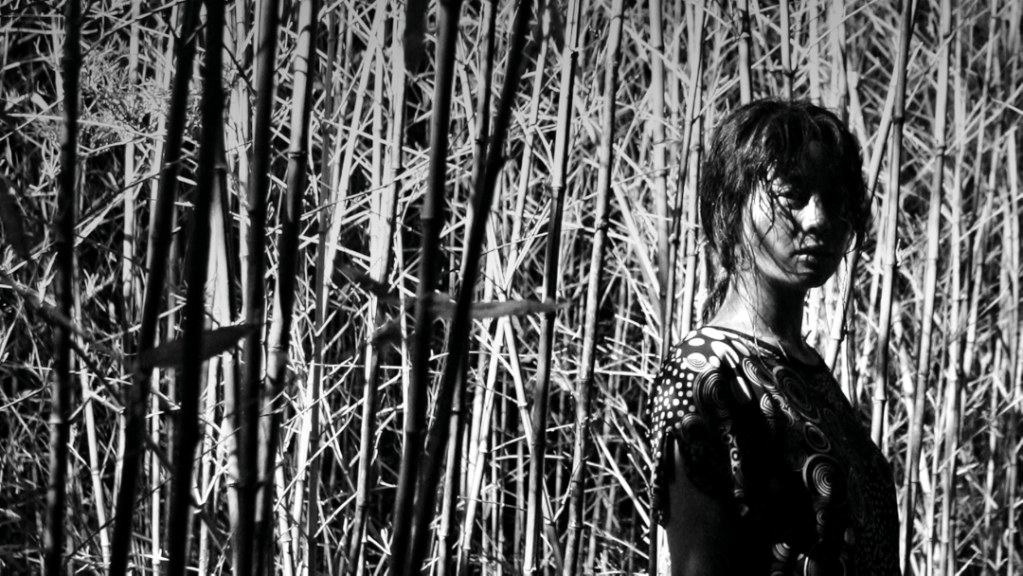
I made an impulse purchase of the blu-ray for the South Korean horror film BEDEVILLED many years ago. I enjoy the films of South Korea, especially the action films, but as I read about this one online, it piqued my interest as a movie that had the potential to be a truly disturbing experience. I’m not saying I had buyer’s remorse, but by the time it arrived at my house, I had lost my nerve, so it sat on my shelves for a good 4 or 5 years. Today, in my quest to watch as many new films for this year’s Horrorthon as I can, my courage came back, and I finally cracked open the package and pressed play.
The story follows Hae-won (Ji Seong-won), a young woman who needs a break from the stresses of her life in Seoul, so she travels to the remote Moo-do Island where she grew up. Once there, she reconnects with her childhood friend Bok-nam (Seo Young-hee), who lives there with her husband, daughter, mother-in-law, and a handful of other people. We soon learn that things are very wrong on the island and that Bok-nam is abused, physically and sexually, on a daily basis and subjected to every kind of humiliation imaginable. In her desperation, Bok-nam sees her friend as a last chance to escape the island with her daughter. When Hae-won doesn’t believe some of the things that her friend tells her, and when it seems that all hope is lost, Bok-nam snaps and picks up the sickle that she uses every day to harvest potatoes. But this time, the blade has a different purpose, with everyone on the island a target of her vengeance.
If you’ve watched very many South Korean films, you know that they’re not known for being short. Based on that industry norm, BEDEVILLED is allowed the time it needs for an extended buildup that forces us to experience Bok-nam’s suffering so we can fully understand her transformation. On the surface, Bok-nam should be appreciated for the woman that she is. She works hard, she earns the family money through the honey from her bee hives, and she’s a good mother. Unfortunately, that’s not how the gender dynamics play out on this island. The men we meet on the island have no talent and provide nothing. Rather, they loaf around all day and chew on “Bozo leaves,” the type of leaves that make you act like a bozo when you eat them. Her husband takes the money she earns and even uses it to bring a prostitute there for his own personal gratification. There’s a telling scene early in the film where her husband says he’s taking their daughter fishing and Bok-nam wonders how a guy who grew up on an island is so bad at fishing. Disgustingly, we eventually come to suspect that those trips were never about the possibility of catching fish.
The older women are no help either. They witness horrible things happening to Bok-nam and either tell her it’s her own fault or they say she just needs to shut up and get back to work. As the audience, it’s extremely hard to watch her being raped, beaten, dismissed, and lied about for over an hour. That’s one of the worst things about Hae-won’s actions and attitudes as the story plays out. She’s the one person that Bok-nam thought she could count on, but she really can’t and that’s when we know things are about to get ugly. So, when the one thing Bok-nam truly loves is taken away from her, it’s more than a relief when she finally picks up that sickle. This isn’t an evil woman; this is a woman that has been treated with inhumane cruelty for years with no hope of escape. The cruelty is hard to watch, and so is the revenge, but there’s no doubt that it has been earned. It’s violent, brutal, graphic, and very understandable.
Seo Young-hee is terrific in the lead role of Bok-nam, giving us an initially likable character whose suffering is heartbreaking long before it becomes violent. Through her performance, we can see her retribution as a natural culmination of the horrific things we’ve witnessed, rather than simply a series of bloody scenes designed for shock value. I also have to give credit to director Jang Cheol-soo for trusting the power of his story and never losing sight of the human tragedy at its center. Ji Seong-won has a tougher job with Hae-won, whose preoccupation with her own problems and reluctance to believe her friend make her seem shallow in comparison.
I’m not going to pretend that BEDEVILLED is an easy movie to watch, and I’m certainly not going to say it was an enjoyable piece of entertainment, at least not in the traditional sense. It’s too cruel and disturbing for that. But it’s a great piece of horror, one that understands that cruelty should have consequences. Bok-nam’s breaking point might be hard to watch, but the true horror is everything that happens to her before she reaches it.
“I didn’t realize it was a haunt. I’m sorry. Could you remind me again? A haunt is worse than a spook, but not as bad as a fright? Oh, oh, equal to a scare, right?” — Tom Loftis
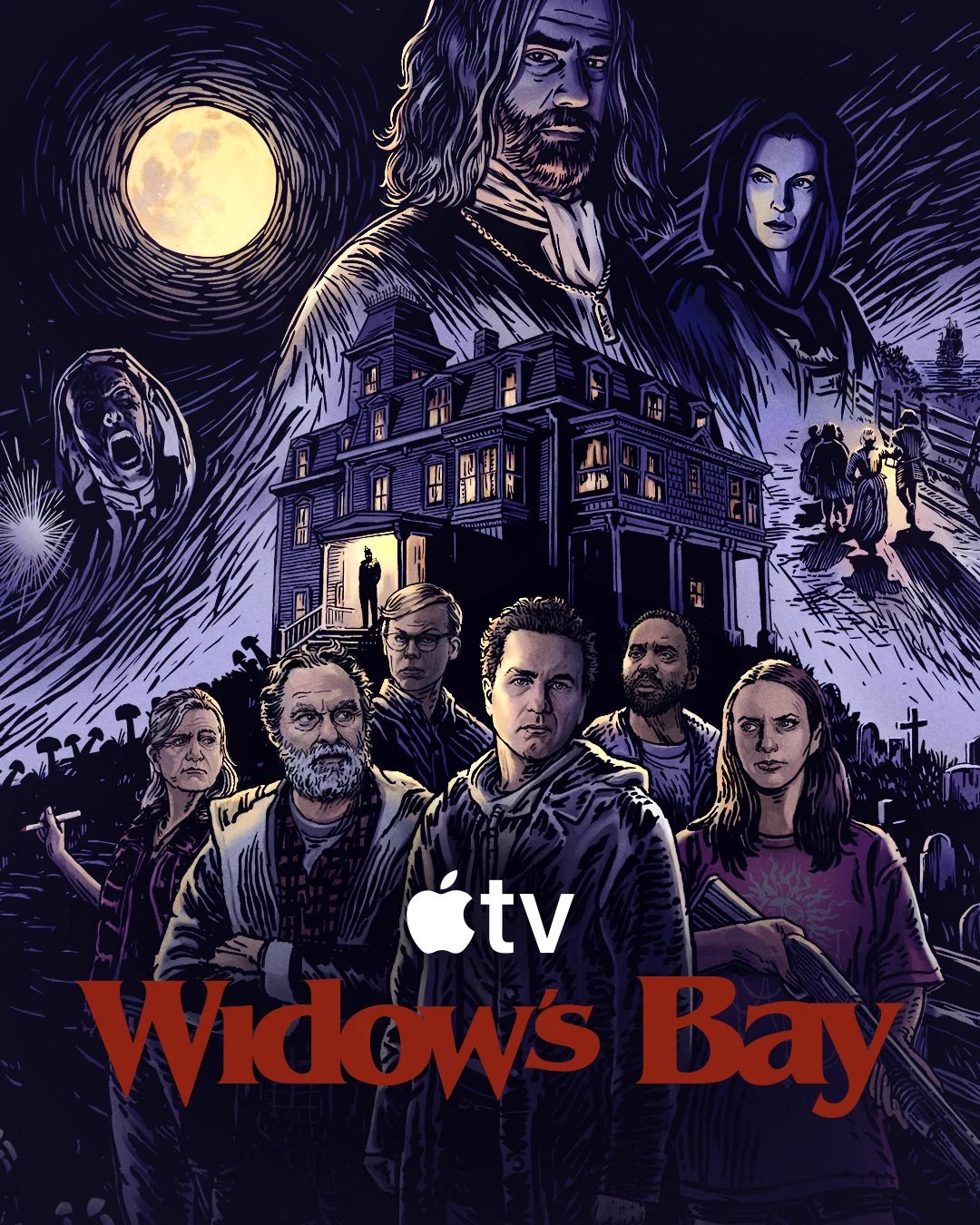
Most horror stories would be a lot shorter if people could admit that something was wrong. Widow’s Bay turns that familiar frustration into the foundation of a very funny, genuinely creepy series about a community with plenty of reasons to avoid the truth. Created by Katie Dippold for Apple TV, the 2026 horror comedy understands that denial isn’t just a convenient way to keep characters in danger. Sometimes it’s a survival strategy, a family tradition, or practically a requirement for holding public office. That gives the show something more interesting to work with than another cursed town full of people making terrible decisions.
At the center of that denial is Tom Loftis, played by Matthew Rhys, the mayor of an isolated New England island he wants to turn into a thriving tourist destination. It’s an understandable ambition, except that his hometown’s atmosphere is less relaxing coastal getaway and more place where someone’s grandmother knows exactly why you shouldn’t go outside tonight. The residents believe the island is cursed, while Tom sees their superstitions as obstacles to progress. Their competing interpretations give the series its central tension: how do you convince people that their future can improve when their past apparently refuses to stay buried?
Rhys makes Tom’s refusal to acknowledge the obvious both entertaining and revealing. He’s not simply playing the clueless authority figure who exists so viewers can yell at the screen. There’s anxiety beneath his confidence, and his determination to control the island’s future overlaps with his worries about his increasingly independent son. He wants to believe that being responsible and working hard will eventually make everything manageable. Watching that belief collide with circumstances beyond his control provides some of the show’s best comedy. More importantly, it makes his stubbornness feel like a character flaw rather than a screenwriting shortcut.
Dippold does an excellent job of weaving comedy into the horror without making either side feel like an obligation. The jokes aren’t constantly elbowing the audience, pointing out how silly supernatural stories can be. Instead, they emerge from people trying to preserve their dignity, defend their authority, or get through an awkward conversation while something deeply unsettling happens around them. There’s a wonderful absurdity to treating a potentially cursed community as a branding problem. Yet the show never loses sight of the fact that these characters have to live with the consequences once the promotional optimism wears off.
That approach also gives familiar horror tropes some welcome personality. The series draws on recognizable territory, including haunted spaces, slasher scenarios, ominous warnings, and communities with disturbing histories. There are echoes of The Fog, The Shining, Halloween, and The Witch, but recognition isn’t the whole joke. Dippold uses those familiar shapes to explore how these particular people respond to fear. Sometimes they panic, sometimes they argue, and sometimes they behave as though acknowledging a supernatural threat would be more embarrassing than getting killed by it. The humor comes from their reactions, not from suggesting that the danger doesn’t matter.
The New England coastal setting gives that danger a distinct character. Widow’s Bay understands the appeal of a picturesque place where the local stories gradually make the scenery feel less inviting. Its folklore and mythology aren’t just decorative details sprinkled over a generic haunted-town premise. They influence how residents understand their surroundings and what they consider normal. Stories about church bells, mushrooms, and the consequences of leaving the island suggest a community organized around inherited warnings. There’s something especially creepy about rules everyone repeats but nobody can fully explain, particularly when ignoring them might carry consequences.
That uncertainty connects the show’s supernatural mythology to its interest in generational trauma. The island’s history isn’t something its residents can simply remember, regret, and move beyond. It has become part of their behavior, their relationships, and their expectations. The curse works as more than an explanation for frightening events; it also becomes a way of thinking about damage passed down through families and communities. The show’s attention to buried history and Puritan-era origins reinforces the sense that the present rests on foundations nobody has properly examined. Tom’s desire for a fresh start clashes with everything that a fresh coat of paint cannot fix.
What keeps this material from becoming heavy-handed is the show’s willingness to let pain and absurdity occupy the same scene. People don’t stop being petty, awkward, or unintentionally funny because they’re dealing with inherited suffering. Sometimes those habits are precisely how they avoid confronting it. Widow’s Bay finds humor in those defenses without treating the underlying hurt as a punch line. That distinction matters. The series can laugh at the ways people cope while still recognizing why they developed those responses. Its comedy makes the emotional material feel more human, rather than providing an escape hatch whenever things become uncomfortable.
The supporting cast helps make that balance convincing. Kate O’Flynn’s Patricia and Stephen Root’s Wyck contribute more than colorful reactions to the latest strange occurrence. Patricia’s loneliness and need for connection, along with Wyck’s regrets, give the island’s troubles an emotional dimension beyond the immediate business of staying alive. Their eccentricities might get the initial laugh, but the vulnerabilities underneath keep them interesting. The community works because it feels populated by people with unfinished lives, not just convenient victims. As those lives become entangled with the supernatural, the danger gains weight without requiring everyone to become suddenly solemn.
The season’s episodic variety is another strength, allowing individual supernatural stories to develop while the larger mystery continues taking shape. That structure gives different characters and different kinds of fear room to breathe. It also prevents the series from leaning too heavily on Tom’s skepticism as its only comic engine. Some horror imagery does make its influences obvious, and viewers looking for completely unfamiliar genre territory may recognize certain setups early. Still, the show usually finds its freshness in character and tone. Predicting the general direction of a scare doesn’t necessarily mean predicting the uncomfortable, funny, or revealing response that follows.
What makes Widow’s Bay worth spending time with is how comfortably it lets you laugh and feel uneasy without forcing a choice between the two. Dippold gives the island’s strange traditions, inherited wounds, and supernatural threats room to feed into one another, while the cast keeps everything grounded in recognizable human behavior. Not every familiar horror setup feels entirely fresh, but the people caught inside those situations make the difference. You’re laughing at their stubbornness one minute and worrying about them the next. That’s a tricky balance to sustain, and the show makes it look deceptively easy.
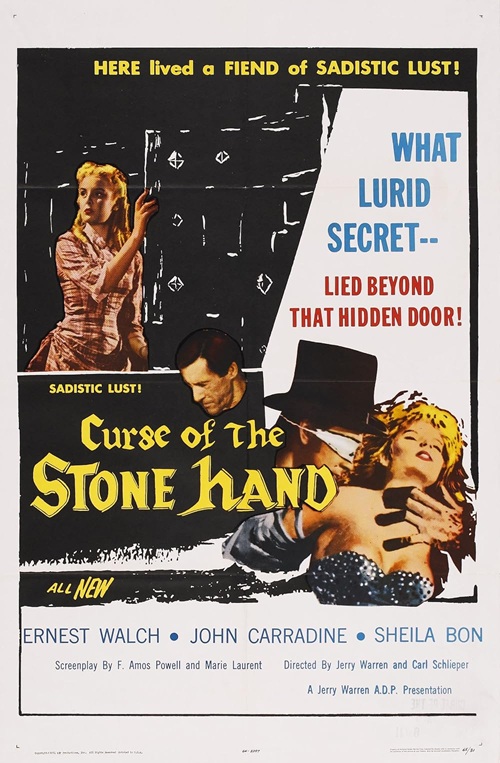
In 1965’s Curse of the Stone Hand, a dilapidated mansion sits deserted. Two men explore the grounds of the estate and one of them mentions that this house was once the finest in “Kent” but now the locals feel that it is cursed. There are mysterious stone sculptures of hands throughout the house. Some inhabitants think that the hands are the source of the curse. The first inhabitant of the house was a degenerate gambler named Robert Braun (Carlos Cores), who gambled himself into debt and, as a result, joined the Suicide Club as a way to try to win back his money. The hands, we are told, are somehow to blame for this, though it sounds like it’s more of a case of Robert needing to join Gamblers Anonymous. Once Robert was no longer in the house, the estate was claimed by another rich family. The family’s son was a sadist who had the power of hypnotism, which he used to torment his sister’s fiancé. Again, in my opinion, it’s open to debate as to whether or not the hands are to blame. To me, it seems more likely that the hypnotist is just a spoiled wastrel who wasn’t properly raised by his parents. The message seems to be less “Beware of the hands” and more “Don’t let your child grow up to be a hypnotist.”
If all of this sounds disjointed, that’s because it is. American film distributor Jerry Warren purchased two Chilean films and then edited them together to form what would become Curse of the Stone Hand. He dubbed over the dialogue to create some false connections between the two films and then he shot a few extra scenes with Katherine Victor and John Carradine. Victor and Carradine served to provide exposition, filling in the blanks that had been created by Warren’s mash-up. John Carradine’s character is especially interesting because he’s credited as being “The Old Drunk” but his character doesn’t ever appear to be drunk. Instead, he appears to just be one of the many people who works on the estate and who has opinions about the family that lives there. Carradine only has about two minutes of screen time. (Of course, Jerry Warren gave him top billing.) He’s not onscreen long enough to really give a performance that could be considered either good or bad. That said, it’s impossible not to smile whenever John Carradine shows up in one of these films. It’s always a little amusing how John Carradine effortlessly went back and forth from working with John Ford to working with people like Jerry Warren. Before there was Eric Roberts, there was John Carradine.
Curse of the Stone Hand is pretty much an incoherent film. It’s possible that the original Chilean films were good. Some of the shots do feature a bit of atmosphere. But, ultimately, it’s impossible to tell while watching this film, with its dubbed dialogue and its incomprehensible plot. That said, I’ll always have a spot in my heart for the shamelessness of filmmakers like Jerry Warren. Warren knew that you could get a lot out of a melodramatic title and a cameo from a name performer. Curse of the Stone Hand stands as a tribute to his never give up, never surrender spirit.
First released in 1961 and directed by Curtis Harrington, Night Tide stars a young Dennis Hopper as Johnny, an awkward sailor. Johnny meets Mora (Linda Lawson), who works as a “mermaid” on the pier. For Johnny, it’s love at first sight. However, the more that Johnny pursues her, the more he learns about both her mysterious past and the dark fate of her previous boyfriends.
Night Tide is low-key and atmospheric gem of a movie, one that serve as an inspiration for low-budget filmmakers every where. Lawson is perfectly cast as the enigmatic Mora but the film really belongs to Dennis Hopper. Hopper’s naturally off-key presence made him perfect for the role of Johnny.
Night Tide is one of those low-budget movies that, because it’s in the public domain, has been released on DVD (often in inferior form) by dozens of different companies. Often times, films like this turn out to be fairly forgettable. Night Tide, however, is an exception.
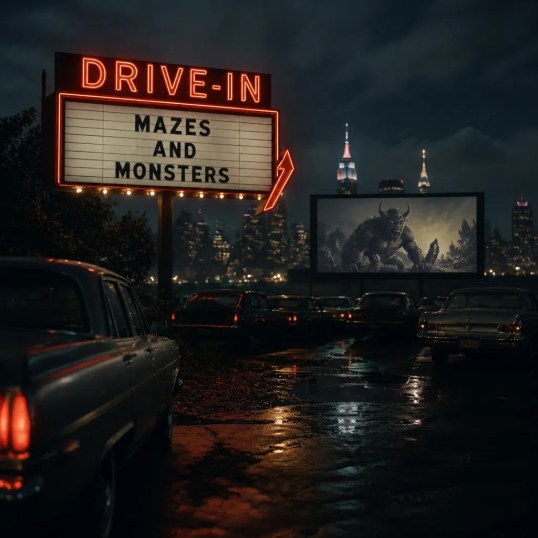
Based on a best-seller by Rona Jaffe, 1982’s Mazes and Monsters tell the story of some college students who enjoy playing a game called…. well, Mazes and Monsters. Now, I realize that Mazes and Monsters may sound a lot like Dungeons and Dragons but they are actually two separate games. One game takes place in a dungeon. The other takes place in maze, got it?
When the players decide to play the game in some nearby caves, it causes the newest member of the group (Tom Hanks — yes, Tom Hanks) to snap and become his character. Convinced that he’s living in a world full of monsters and wizard, Hanks runs away to New York. How does that go? During a moment of clarity, Hanks calls his friends and wails, “There’s blood on my knife!”
It’s all fairly silly. There was a moral panic going on about role playing games when this film was made and this film definitely leans into the panic. But, in its own over-the-top way, it works. If you’ve ever wanted to see Tom Hanks battle a big green lizard, this is the film for you. And I defy anyone not to tear up a little during the final scene!
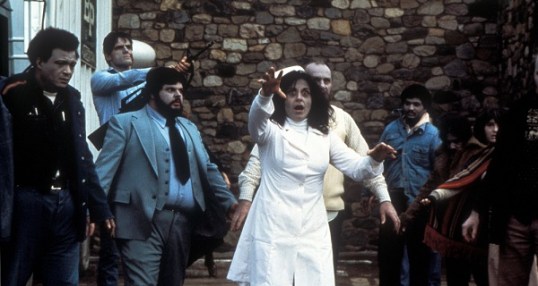
Dawn of the Dead (1978, dir by George Romero, DP: Michael Gornick)
Dario Argento not only produced and edited the European cut for 1978’s Dawn of the Dead, he also introduced George Romero to Goblin. The Italian band, famous for their horror movie soundtracks, provided the classic score to Dawn of the Dead.
(Admittedly, the score is is used far more prominently in Argento’s cut of the film than in Romero’s.)
For today’s horror song of the day, here is Goblin’s Main Theme From Dawn of the Dead.
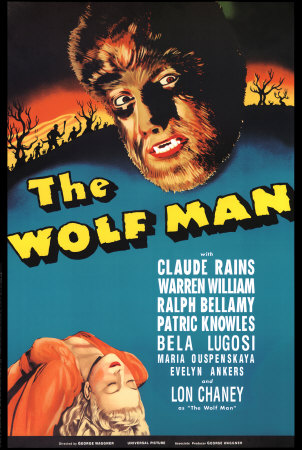
Today’s horror scene that I love comes from 1941’s The Wolf Man. Watch as poor Larry Talbot transforms, for the first time, into The Wolf Man! I’ll be the first to admit that, in the past, I’ve been pretty critical of Larry as a character and Lon Chaney, Jr.’s performance in the role. But, in this scene, Chaney does an excellent job of capturing Larry’s helplessness as the curse takes effect for the first time.
4 Or More Shots From 4 Or More Films is just what it says it is, 4 shots from 4 of our favorite films. As opposed to the reviews and recaps that we usually post, 4 Shots From 4 Films lets the visuals do the talking!
4 Shots From 4 Horror Films
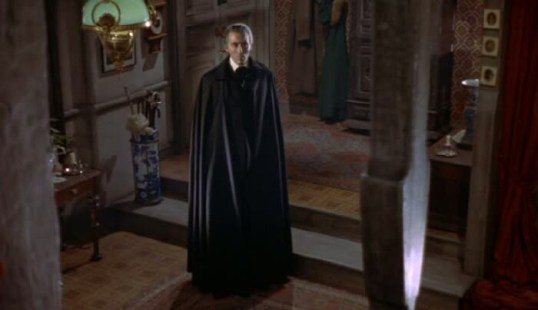
The Horror of Dracula (1958, dir by Terence Fisher, DP: Jack Asher)
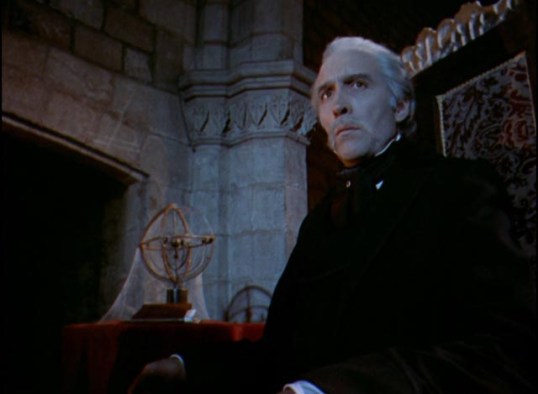
Count Dracula (1970, dir by Jess Franco, DP: Manuel Merino and Luciano Trasatti)
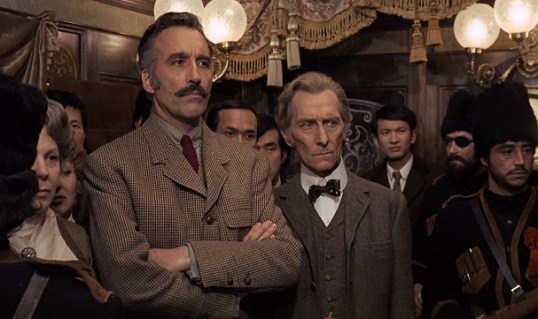
Horror Express (1972, dir by Eugenio Martin, DP: Alejandro Ulloa)
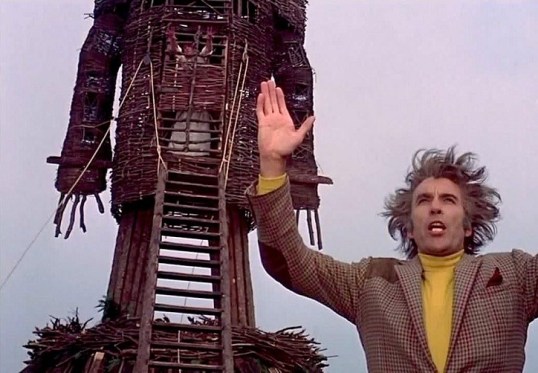
The Wicker Man (1973, dir by Robert Hardy. DP: Harry Waxman)