“In the War Between Men and Women the Shooting Has Begun.” — Jack Ketchum
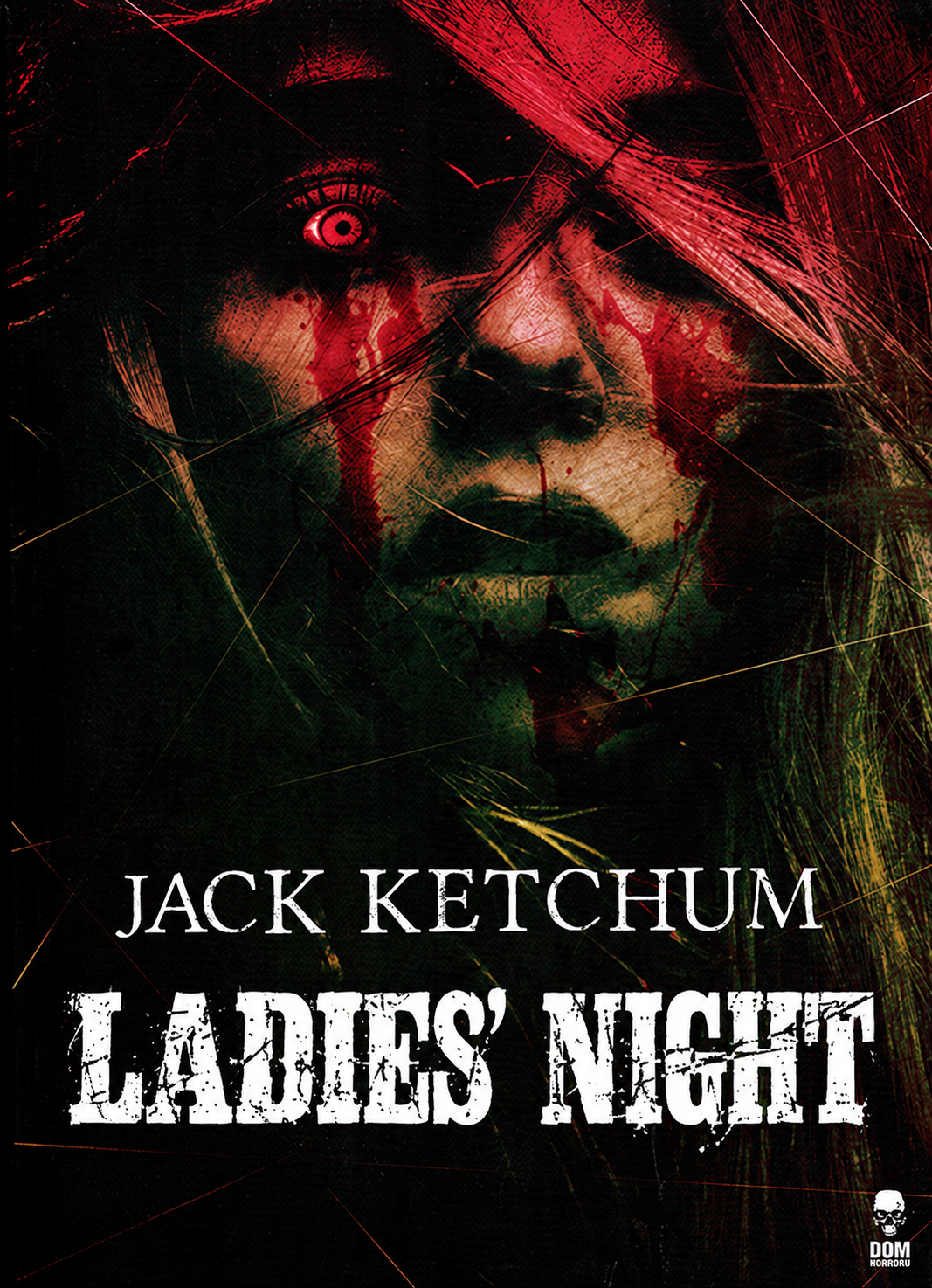
Jack Ketchum’s Ladies’ Night takes a premise that sounds like the setup for a trashy midnight movie and follows it somewhere genuinely unpleasant. A chemical spill in New York City turns women into sexually aggressive killers, leaving men scrambling to survive a night of escalating violence. That description pretty much tells you whether you want to go anywhere near this book. What it doesn’t tell you is how effectively Ketchum can turn an outrageous concept into a tense survival story—or how often the concept threatens to swallow everything interesting about it. This is lean, nasty horror with considerable momentum and some serious limitations.
The central character is Tom Braun, a husband and father whose wandering eye gives him an immediate disadvantage in the likability department. When the outbreak erupts, his ordinary selfishness suddenly looks small beside the catastrophe unfolding around him. After escaping violence at a bar, he realizes his son, Andy, is back at their apartment with his wife, Susan, who may also be affected. Getting home becomes the story’s driving objective. It is a straightforward hook, but a strong one: surviving the streets means little if the person Tom needs to protect is trapped somewhere supposedly safe.
What works best is the collision between that intimate fear and the larger urban disaster. Tom has a specific destination, while the city around him keeps producing new obstacles. Ketchum doesn’t need an elaborate mystery to maintain suspense; he needs distance, uncertainty, and the knowledge that every delay could matter. The movement through a collapsing New York gives the book something of a nightmare journey’s rhythm. Each escape offers temporary relief rather than security. The comparison to The Warriors is especially apt because both stories turn crossing the city into a desperate struggle to get home (and, for the ancient history nerds out there, that film’s literary roots trace back to Xenophon’s Anabasis). Different circumstances, same nightmare of having a destination and far too many people between you and it.
Ketchum’s prose suits that urgency. The writing is direct, physical, and more interested in what happens next than in stopping to admire itself. That approach can look simple until you consider how easily a book like this could become exhausting or ridiculous. The narrative needs to keep its outrageous premise moving fast enough that the immediate danger remains convincing. For much of the novel, it does. The brevity helps, too. This isn’t a sprawling apocalypse with chapters devoted to explaining every institution’s response. It stays close to the panic, pushing its characters through an increasingly hostile environment.
Then there is the violence, which deserves more than a routine “not for the squeamish” warning. Ladies’ Night combines graphic injury, sexual aggression, and the destruction of familiar relationships. Its nastiness comes partly from making intimacy dangerous: attraction becomes a trap, and people who should offer comfort become sources of terror. That is more disturbing than simply putting monsters on street corners. At its strongest, the book makes the body itself feel unreliable, something that can be chemically commandeered and turned against other people. At its weakest, the same material feels like another opportunity to deliver a grotesque spectacle.
That distinction matters because the novel’s gender politics are impossible to separate from its entertainment value. Women become the threatening population, while men occupy the principal survival perspective. The setup also provides repeated circumstances in which violence against women becomes a matter of immediate self-defense. You can recognize that these women are victims of contamination rather than willing participants and still find the resulting arrangement uncomfortable. The issue isn’t simply that the book contains offensive material. It’s that its central mechanism keeps returning to a narrow, heavily sexualized vision of female monstrosity.
There is a potentially richer horror story inside that discomfort. A person being forced into murderous behavior is horrifying for the person losing control, not just for whoever stands nearby. But Ladies’ Night largely draws its momentum from the men trying to survive the consequences. That emphasis limits how fully the women register as people experiencing their own catastrophe. The book can therefore feel caught between two effects: the tragedy of human beings being transformed into threats and the lurid excitement of fighting those threats. The second is generally louder, which makes the first harder to feel consistently.
Tom adds some useful friction because he isn’t presented as an uncomplicated model husband. His infidelity puts an ugly edge on the rescue narrative: a man who has been neglecting his marriage now has to fight his way back toward his family. That doesn’t automatically make him a deeply developed character, but it gives the action a more interesting starting point than simple heroism. His concern for Andy supplies a credible emotional priority without requiring the reader to excuse his earlier behavior. The novel works better when those two judgments can coexist—he can be selfish and still desperately want to save his child.
The limitation is that momentum frequently substitutes for depth. Once the emergency takes over, there is little room for the characters to become much more than their immediate needs and reactions. That isn’t fatal in a short survival novel, but it affects how the violence lands. When characterization stays thin, suffering can become another event in the action rather than something with lasting emotional weight. Andy’s vulnerability gives the story an essential human anchor, yet the surrounding mayhem sometimes competes with that concern instead of intensifying it. The book is gripping more reliably than it is moving.
Ladies’ Night left me more impressed by Ketchum’s ability to sustain tension than by what he does with the ideas underneath it. As a fast, brutal urban nightmare, it delivers: the objective is clear, the danger keeps shifting, and the prose rarely lets the pressure ease. As an exploration of gender, intimacy, or the people caught inside its catastrophe, it is much less satisfying. Its provocations are stronger than its insights, and its nastiness occasionally feels like a shortcut rather than an achievement. Still, there is real craft beneath the exploitation premise. I’d call it a qualified recommendation for readers who enjoy extreme horror and can tolerate an ugly premise without expecting the book to fully interrogate it. It gets under your skin, but not always for the reasons that make a horror novel great.