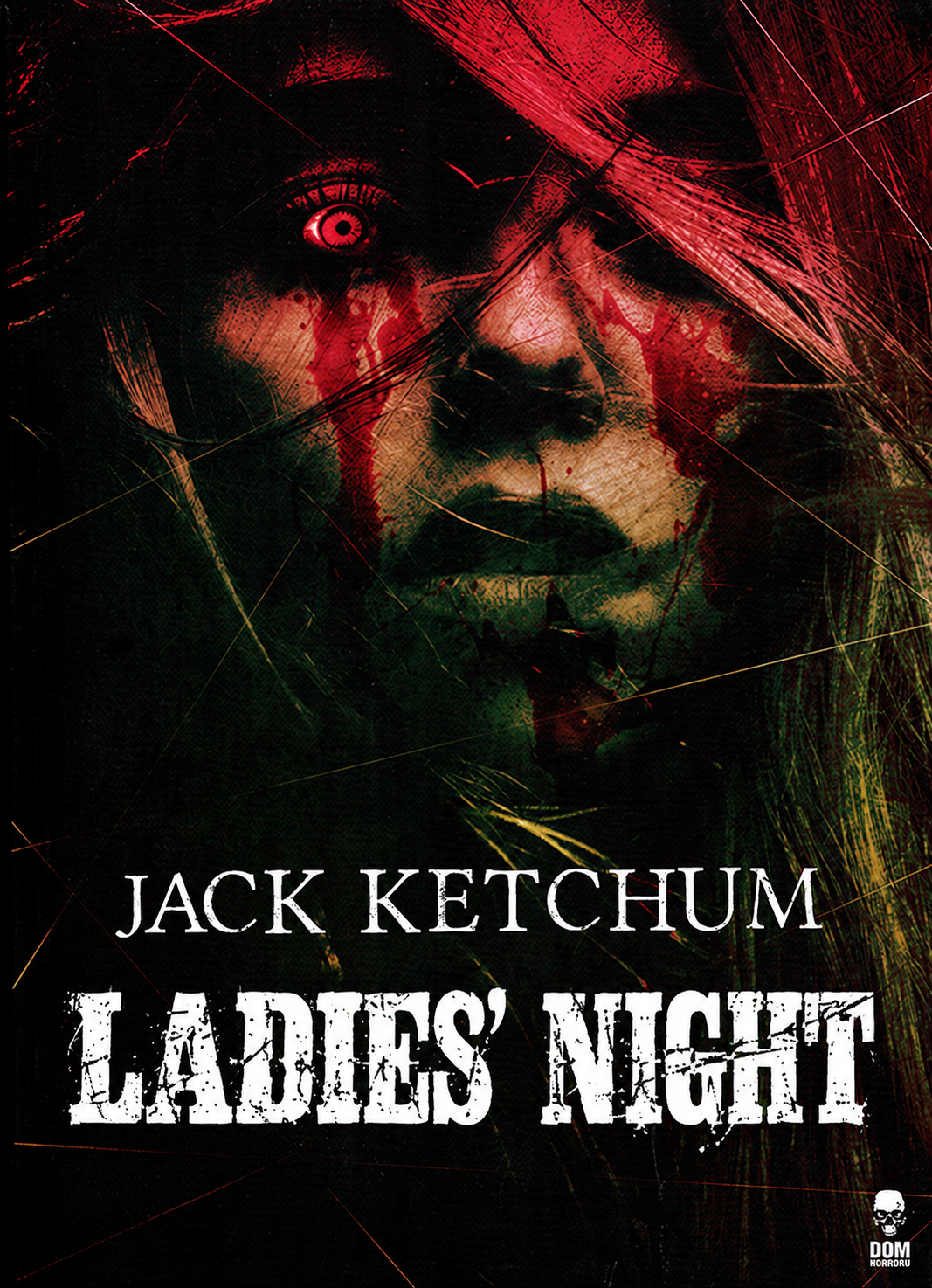
Horror Book Review: Ladies’ Night (by Jack Ketchum)


“In the War Between Men and Women the Shooting Has Begun.” — Jack Ketchum

Jack Ketchum’s Ladies’ Night takes a premise that sounds like the setup for a trashy midnight movie and follows it somewhere genuinely unpleasant. A chemical spill in New York City turns women into sexually aggressive killers, leaving men scrambling to survive a night of escalating violence. That description pretty much tells you whether you want to go anywhere near this book. What it doesn’t tell you is how effectively Ketchum can turn an outrageous concept into a tense survival story—or how often the concept threatens to swallow everything interesting about it. This is lean, nasty horror with considerable momentum and some serious limitations.

The central character is Tom Braun, a husband and father whose wandering eye gives him an immediate disadvantage in the likability department. When the outbreak erupts, his ordinary selfishness suddenly looks small beside the catastrophe unfolding around him. After escaping violence at a bar, he realizes his son, Andy, is back at their apartment with his wife, Susan, who may also be affected. Getting home becomes the story’s driving objective. It is a straightforward hook, but a strong one: surviving the streets means little if the person Tom needs to protect is trapped somewhere supposedly safe.

What works best is the collision between that intimate fear and the larger urban disaster. Tom has a specific destination, while the city around him keeps producing new obstacles. Ketchum doesn’t need an elaborate mystery to maintain suspense; he needs distance, uncertainty, and the knowledge that every delay could matter. The movement through a collapsing New York gives the book something of a nightmare journey’s rhythm. Each escape offers temporary relief rather than security. The comparison to The Warriors is especially apt because both stories turn crossing the city into a desperate struggle to get home (and, for the ancient history nerds out there, that film’s literary roots trace back to Xenophon’s Anabasis). Different circumstances, same nightmare of having a destination and far too many people between you and it.

Ketchum’s prose suits that urgency. The writing is direct, physical, and more interested in what happens next than in stopping to admire itself. That approach can look simple until you consider how easily a book like this could become exhausting or ridiculous. The narrative needs to keep its outrageous premise moving fast enough that the immediate danger remains convincing. For much of the novel, it does. The brevity helps, too. This isn’t a sprawling apocalypse with chapters devoted to explaining every institution’s response. It stays close to the panic, pushing its characters through an increasingly hostile environment.

Then there is the violence, which deserves more than a routine “not for the squeamish” warning. Ladies’ Night combines graphic injury, sexual aggression, and the destruction of familiar relationships. Its nastiness comes partly from making intimacy dangerous: attraction becomes a trap, and people who should offer comfort become sources of terror. That is more disturbing than simply putting monsters on street corners. At its strongest, the book makes the body itself feel unreliable, something that can be chemically commandeered and turned against other people. At its weakest, the same material feels like another opportunity to deliver a grotesque spectacle.

That distinction matters because the novel’s gender politics are impossible to separate from its entertainment value. Women become the threatening population, while men occupy the principal survival perspective. The setup also provides repeated circumstances in which violence against women becomes a matter of immediate self-defense. You can recognize that these women are victims of contamination rather than willing participants and still find the resulting arrangement uncomfortable. The issue isn’t simply that the book contains offensive material. It’s that its central mechanism keeps returning to a narrow, heavily sexualized vision of female monstrosity.

There is a potentially richer horror story inside that discomfort. A person being forced into murderous behavior is horrifying for the person losing control, not just for whoever stands nearby. But Ladies’ Night largely draws its momentum from the men trying to survive the consequences. That emphasis limits how fully the women register as people experiencing their own catastrophe. The book can therefore feel caught between two effects: the tragedy of human beings being transformed into threats and the lurid excitement of fighting those threats. The second is generally louder, which makes the first harder to feel consistently.

Tom adds some useful friction because he isn’t presented as an uncomplicated model husband. His infidelity puts an ugly edge on the rescue narrative: a man who has been neglecting his marriage now has to fight his way back toward his family. That doesn’t automatically make him a deeply developed character, but it gives the action a more interesting starting point than simple heroism. His concern for Andy supplies a credible emotional priority without requiring the reader to excuse his earlier behavior. The novel works better when those two judgments can coexist—he can be selfish and still desperately want to save his child.

The limitation is that momentum frequently substitutes for depth. Once the emergency takes over, there is little room for the characters to become much more than their immediate needs and reactions. That isn’t fatal in a short survival novel, but it affects how the violence lands. When characterization stays thin, suffering can become another event in the action rather than something with lasting emotional weight. Andy’s vulnerability gives the story an essential human anchor, yet the surrounding mayhem sometimes competes with that concern instead of intensifying it. The book is gripping more reliably than it is moving.

Ladies’ Night left me more impressed by Ketchum’s ability to sustain tension than by what he does with the ideas underneath it. As a fast, brutal urban nightmare, it delivers: the objective is clear, the danger keeps shifting, and the prose rarely lets the pressure ease. As an exploration of gender, intimacy, or the people caught inside its catastrophe, it is much less satisfying. Its provocations are stronger than its insights, and its nastiness occasionally feels like a shortcut rather than an achievement. Still, there is real craft beneath the exploitation premise. I’d call it a qualified recommendation for readers who enjoy extreme horror and can tolerate an ugly premise without expecting the book to fully interrogate it. It gets under your skin, but not always for the reasons that make a horror novel great.
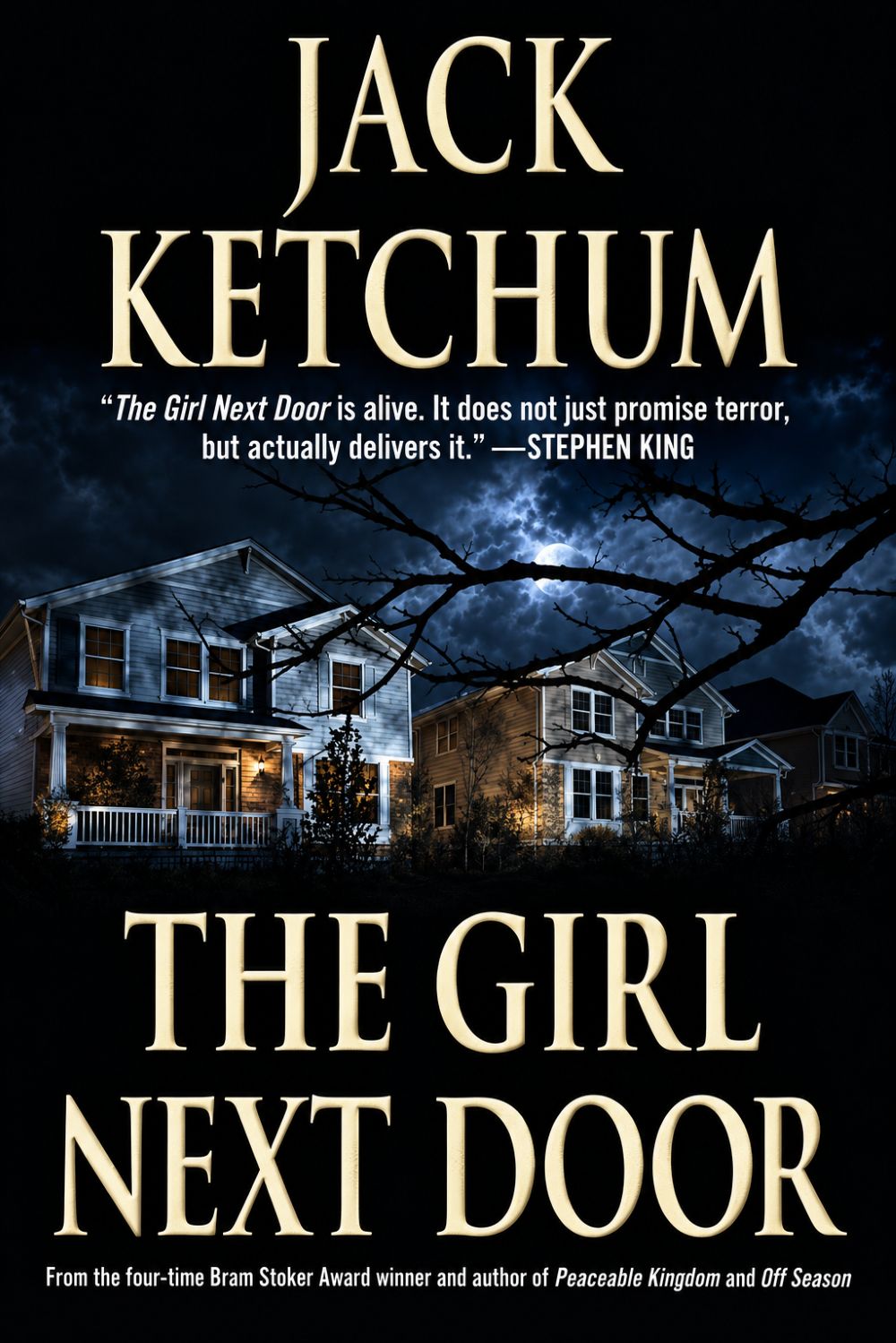
Horror Book Review: The Girl Next Door (by Jack Ketchum)


“It’s for your own good. I got to teach you about connivance.” — Ruth Chandler

The Girl Next Door, the 1989 horror novel by Jack Ketchum (the pseudonym of Dallas William Mayr), makes calling something “disturbing” feel inadequate. It takes the familiar ingredients of a childhood summer and turns them into something almost unbearably ugly. There are no supernatural creatures, no elaborate mythology, and no comforting suggestion that evil belongs somewhere outside ordinary life. Instead, Ketchum builds his nightmare around an abusive adult, vulnerable children, and a neighborhood willing to look away. Loosely inspired by the 1965 murder of Sylvia Likens, the novel carries a weight that goes beyond its fictional circumstances.

The story follows David, a boy looking back on the summer when Meg and her younger sister, Susan, came to live next door. Having lost their parents in a car accident, the sisters enter the household of their aunt, Ruth Chandler, whose relaxed attitude initially makes her seem appealing to the neighborhood boys. She gives them access to an adult world without demanding much responsibility. But that apparent freedom has a rotten foundation. Ruth’s hostility toward Meg gradually develops into systematic abuse, with the children around her becoming witnesses, accomplices, and participants. David’s memories turn the story into an account of both victimization and failed intervention.

One of Ketchum’s smartest choices is letting the neighborhood feel like a neighborhood before it becomes a nightmare. The early stretches have the loose, unstructured atmosphere of childhood: hanging around, exploring, watching other people, and trying to understand feelings you cannot quite name. That ordinary texture matters. Without it, the novel might feel like a sequence of atrocities arranged for maximum impact. Instead, the horror grows out of a recognizable social world. Places that should offer safety become threatening, and familiar relationships become mechanisms of control. The book does not transport its characters into hell so much as show how they make one together.

David is the key to that effect, and also the character most likely to frustrate readers. He recognizes that something is wrong, but recognition does not immediately produce courage. His affection for Meg exists alongside curiosity, fear, and a troubling willingness to remain near the people hurting her. That gap between feeling and action gives the novel much of its moral force. It would be easier to follow a straightforward rescuer or an openly vicious participant. David occupies a less comfortable position: someone who wants to think of himself as decent while repeatedly failing to do what decency requires.

The retrospective narration makes his hesitation even harder to dismiss. We are not simply watching a child misunderstand events as they happen; we are hearing an adult return to experiences he cannot comfortably leave behind. Memory becomes something closer to an ongoing accusation than a source of nostalgia. Ketchum understands how people bargain with themselves when taking action might mean losing friends, challenging authority, or admitting that the situation has already become intolerable. David’s perspective keeps raising an unpleasant question: how much does private sympathy matter when the person suffering never receives meaningful help?

Ruth, meanwhile, is frightening because her power does not depend on being especially clever. She controls the household, establishes the rules, and gives the children permission to treat cruelty as acceptable behavior. Her authority supplies an excuse that their curiosity and aggression can hide behind. What makes her particularly repulsive is the way she turns her hostility toward Meg into a kind of moral judgment. Punishment becomes something she claims the girl deserves. Ketchum shows how easily an adult’s resentment can become a shared reality when nobody with enough power challenges it.

There is also a perverted sense of herd mentality running through the children’s treatment of Meg. The group becomes its own little moral universe, where joining in is accepted and objecting means setting yourself against everyone else. Ruth provides permission, but the kids reinforce it through their willingness to watch, participate, and return for more. Their shared involvement makes each act seem less like an individual choice, even though that does nothing to erase anyone’s responsibility. What should be the ordinary childhood desire to belong becomes something grotesque: belonging through another person’s humiliation. Meg’s suffering turns into a group activity, and the absence of meaningful resistance helps cruelty pass for normal behavior.

Meg is the novel’s emotional center, although the decision to tell her story through David creates a genuine limitation. We know her partly through his attraction, admiration, and guilt rather than through sustained access to her own thoughts. That distance can be painful, and readers may reasonably wish she had more room to exist beyond what happens to her. Still, her concern for Susan and her resistance to Ruth’s attempts to define her give her an identity that the abuse cannot entirely erase. The strongest passages make her feel like a person being attacked, not merely a device designed to upset the audience.

Ketchum’s prose helps keep the book from collapsing under its subject. The writing is direct and generally unfussy, with little interest in making brutality sound beautiful. That plainness gives the escalation a terrible clarity. The violence is graphic, including sexual violence and prolonged abuse involving minors, and it is worth being blunt about that before recommending the novel. Yet the most upsetting element is not necessarily any individual act. It is the repetition, the growing participation, and the sense that every crossed boundary makes the next one easier to ignore.

There is nevertheless a fair argument to be made against the book. Fiction drawn from a real child’s suffering invites questions about exploitation, and the intensity here does not automatically settle those questions in Ketchum’s favor. Some readers will find that the accumulation of cruelty overwhelms the characterization or makes the novel’s point long before it ends. That is not a failure of nerve on their part. The book deliberately occupies territory where bearing witness and consuming suffering become difficult to separate. Its seriousness deserves consideration, but seriousness alone does not make every artistic choice beyond criticism.

For me, The Girl Next Door works because its lasting subject is complicity rather than shock. The violence is impossible to overlook, but what stays with you is the machinery surrounding it: permission, cowardice, resentment, and the small decisions that allow something monstrous to continue. It is not an enjoyable read in the usual sense, and I would hesitate to recommend it simply because someone likes horror. As a bleak examination of cruelty and moral failure, though, it is exceptionally effective. Ketchum removes the comfortable distance between ordinary life and atrocity, leaving a novel whose real terror is how little separates the two.