Cleaning Out the DVR Pt 9: Film Noir Festival Redux


gary loggins's avatarcracked rear viewer

prev

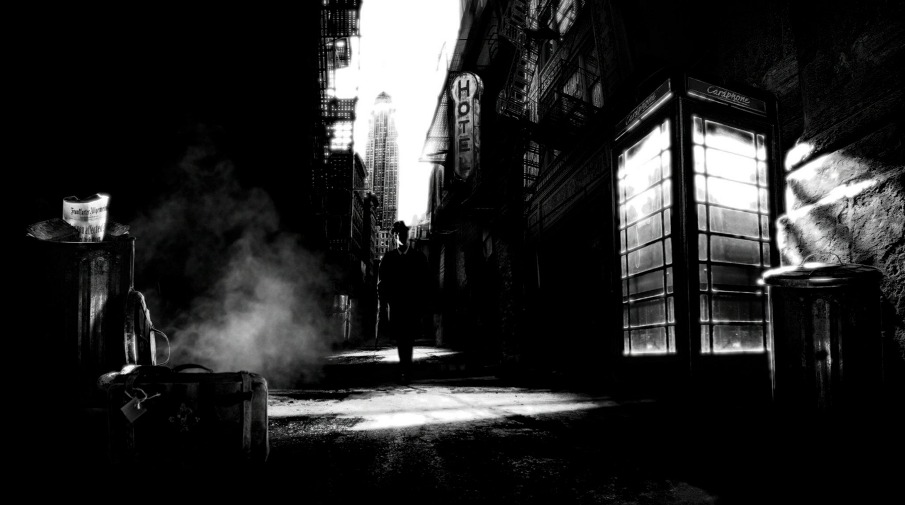
Welcome back to the decadently dark world of film noir, where crime, corruption, lust, and murder await. Let’s step out of the light and deep into the shadows with these five fateful tales:

redux1

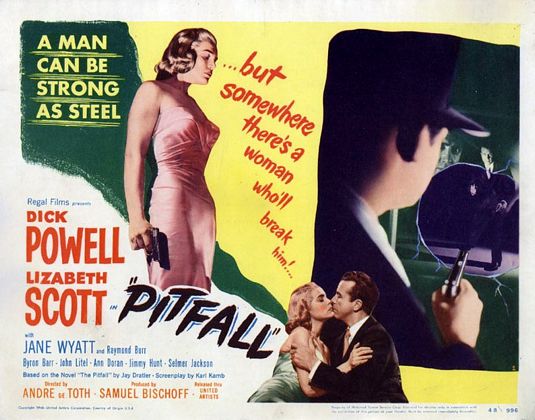
PITFALL (United Artists 1948, D: Andre DeToth) Dick Powell is an insurance man who feels he’s stuck in a rut, living in safe suburbia with his wife and kid (Jane Wyatt, Jimmy Hunt). Then he meets hot model Lizabeth Scott on a case and falls into a web of lies, deceit, and ultimately murder. Raymond Burr  costars as a creepy PI who has designs on Scott himself. A good cast in a good (not great) drama with a disappointing ending. Fun Fact: The part of Scott’s embezzler boyfriend is played by one Byron Barr, who is not the Byron Barr that later changed his name to Gig Young.  

redux2

THE BRIBE (MGM 1949, D:Robert Z. Leonard) Despite an…

View original post 759 more words

A Soggy Bowl of PULP (United Artists 1972)


gary loggins's avatarcracked rear viewer

pulp1

They had the hook in me, and I was caught like a large mouth bass. The bait was the stuff my dreams were made of, a heady concoction of gangsters and femmes fatale, of faded Hollywood stars and references to Mickey Spillane and Ross MacDonald. I had let my guard down and plunged headlong into the trap, forgetting you can’t judge a book by its cover, especially one luridly titled PULP.

pulp2

It all started so promisingly. I was introduced to Mickey King, a second-rate English hack writing under the pseudonym “Guy Strange”, scribbler of paperback trash like “Kill Me Gently” and “My Gun is Long”. Mick’s paid a visit by a gravel-voiced goon called Dinuccio, a Neanderthal throwback who hires the wordsmith to ghost a biography for his mysterious boss. Next thing Mickey knows, he’s on a tour bus and told he’ll be contacted. An American named Miller could be the one, but Miller…

View original post 428 more words

Rockin’ in the Film World #7: The Beatles in A HARD DAY’S NIGHT (United Artists 1964)


gary loggins's avatarcracked rear viewer

beatles1

(It’s a Sunday night, February 9, 1964. Everybody’s watching THE ED SULLIVAN SHOW to get a peek at this new phenomenon called Beatlemania. The adults in the room are disgusted, saying things like “They look like a bunch of girls!”, “They must be sissies!”, and “Yeah yeah yeah? What the hell kind of song is that??” They just don’t get it.  But the six-year-old kid watching along does, and a lifelong obsession with rock’n’roll is born…)

beatles2

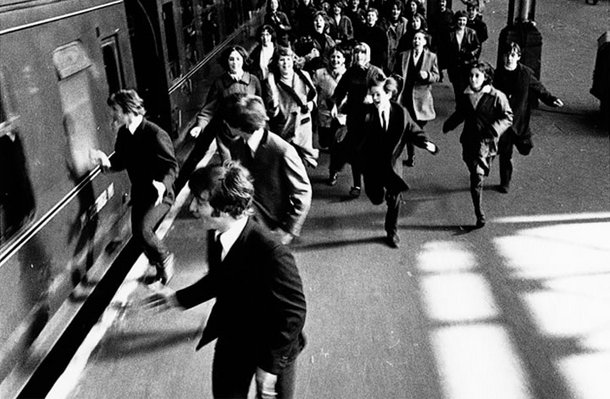
From the opening shot of the Fab 4 being chased down the street by screaming teenyboppers to the final clanging guitar notes of the title tune, A HARD DAY’S NIGHT makes a joyful noise introducing The Beatles to the silver screen. John, Paul, George, and Ringo come off as a mod version of the Marx Brothers with their anarchic antics, guided by the deft hand of director Richard Lester. Shot in cinema verite style, this zany, practically…

View original post 517 more words

Cleaning Out the DVR Pt 8: All-Star Comedy Break


gary loggins's avatarcracked rear viewer

comedy1

Tonight I’ll be watching the Major League Baseball All-Star Game, but for those of you non-baseball fans, here’s a look at five funny films from the 1930’s & 40’s:

comedy2

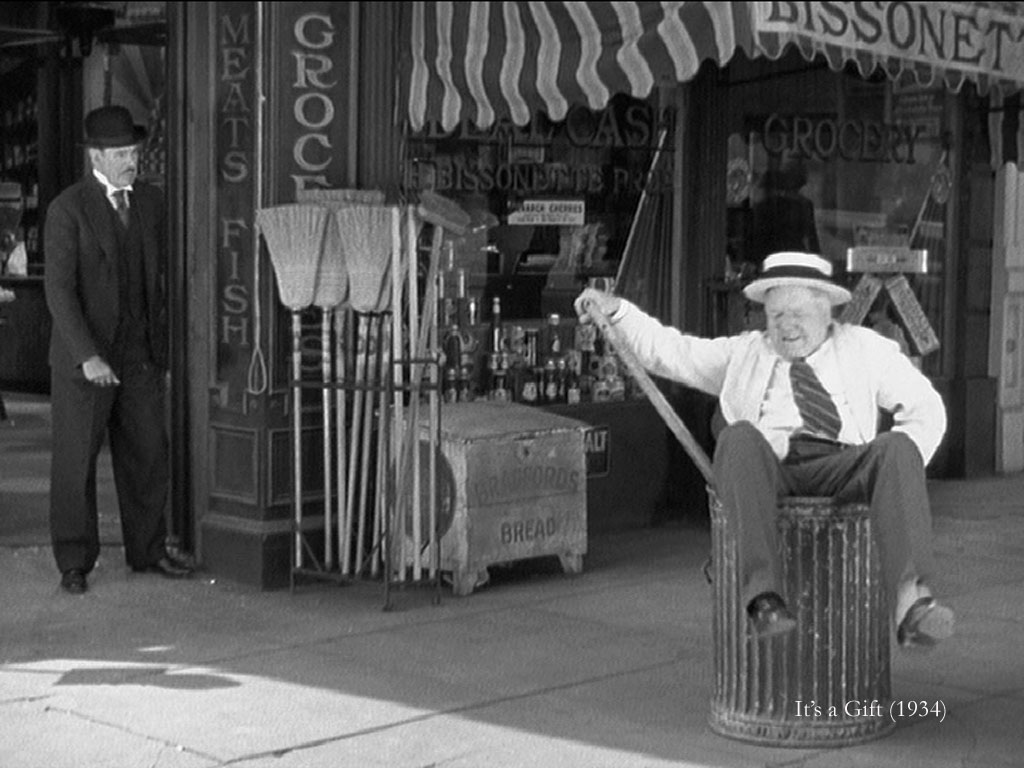
IT’S A GIFT (Paramount 1934, D: Norman Z. McLeod) The Great Man himself, W.C. Fields , works his magic in this delightfully demented domestic comedy about hen pecked grocer Harold Bissonette, who dreams of owning an orange grove in California. His wife (Kathleen Howard) is a domineering battle-axe, his kid (Tommy Bupp) an obnoxious, roller skating brat, and daughter Mildred (Jean Rouveral) doesn’t want to leave her “true love”. This sets the stage for some of Fields’ funniest surrealistic scenes, including his grocery store being demolished by blind Mr. Mickle and perennial nemesis Baby Leroy; poor W.C. trying to get some sleep on the porch while being constantly disturbed by noisy neighbors, a wayward coconut, a man looking for “Carl LeFong”, and…

View original post 625 more words

Take the Money and Run: GUN CRAZY (United Artists 1950)


gary loggins's avatarcracked rear viewer

gun1

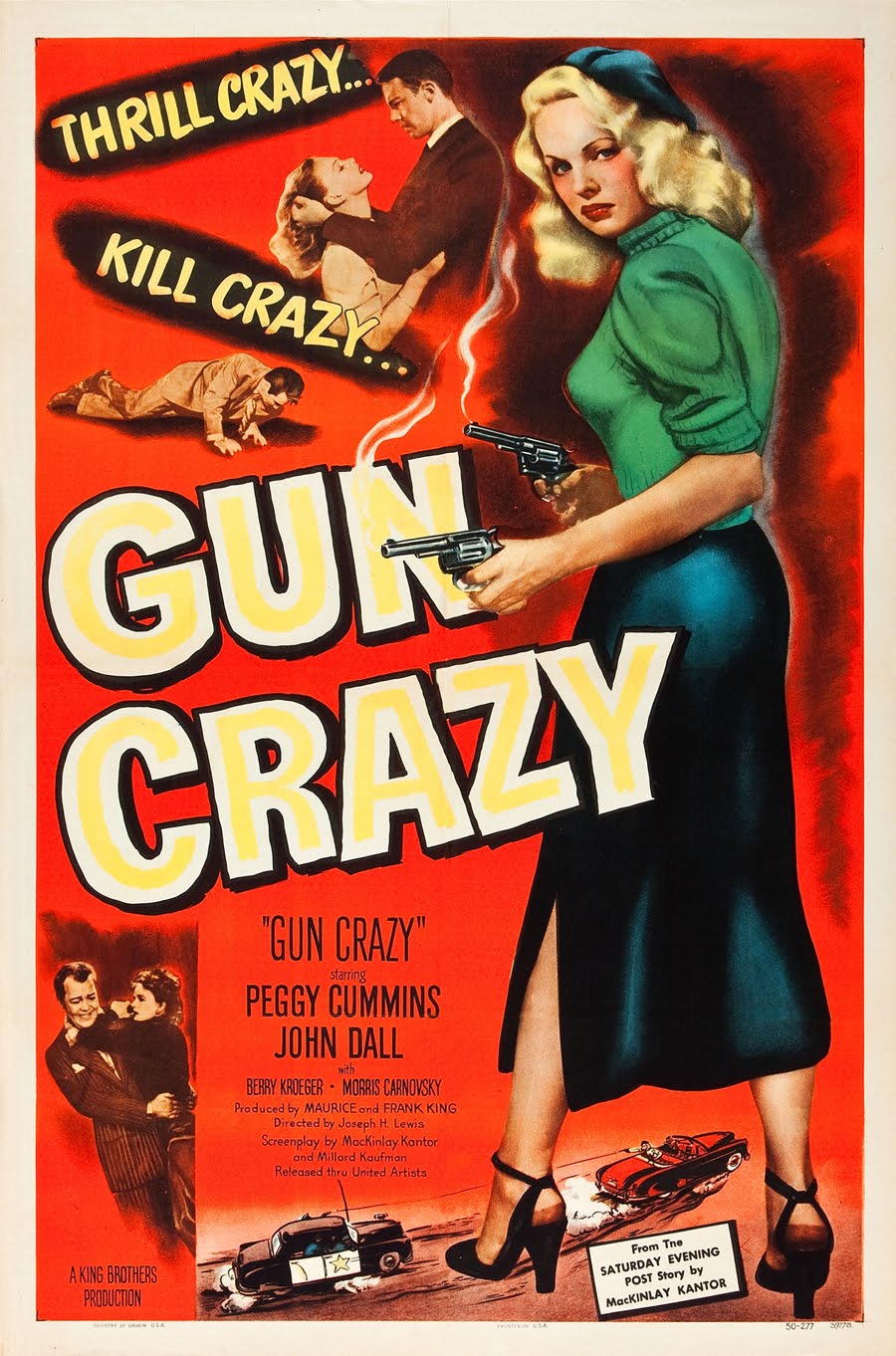
GUN CRAZY is a thrill ride that will have you hanging on for dear life as it takes its protagonists on a downward-spiraling roller coaster ride that turns straight downhill into rock bottom. This is the ultimate noir, moving at breakneck speed towards its inevitable conclusion, a sordid tale of sex and violence that’s second to none. GUN CRAZY was a huge influence on many later films, especially 1967’s BONNIE & CLYDE, right down to the fashion style of lead Peggy Cummins.

Bart Tare loves guns. So much so that, as an adolescent, he smashes a store window to steal one. Busted by the cops, he’s sent to reform school until he’s of age. After a stint in the Army, Bart returns to his hometown, and with old pals Dave and Clyde, attends a carnival. It’s there he meets Annie Laurie Starr, a trick-shot artist. There’s immediate heat between the two, as their mutual…

View original post 848 more words

Marlowe at the Movies Pt 3: THE LONG GOODBYE (United Artists 1973)


gary loggins's avatarcracked rear viewer

lg1

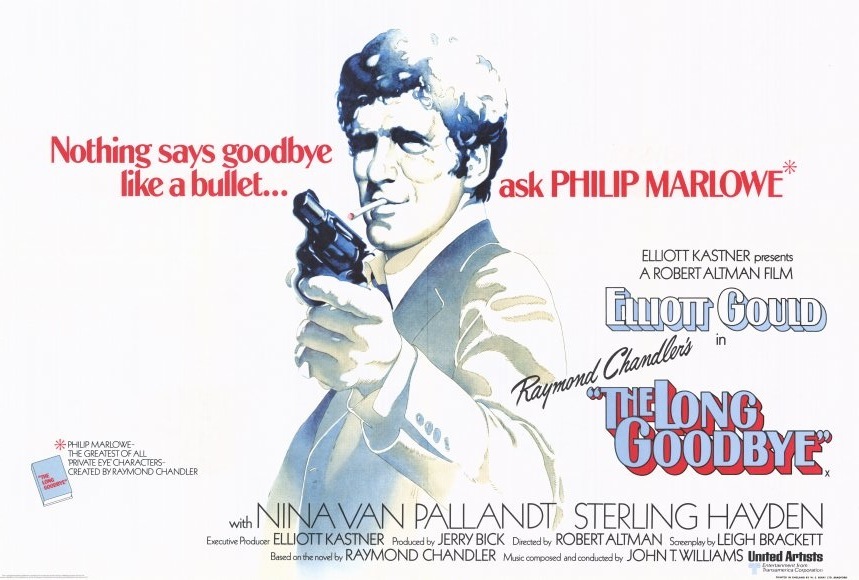
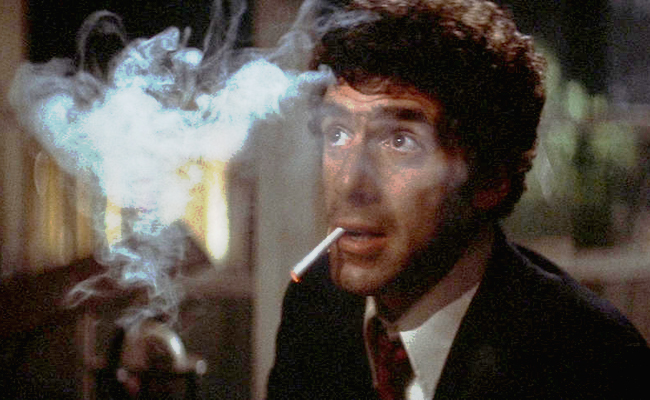
Elliott Gould was a hot Hollywood commodity in the early 1970’s. The former Mr. Barbra Streisand broke through in the 1969 sex farce BOB & CAROL & TED & ALICE, earning an Oscar nomination for supporting actor. He was marketed as a counter-culture rebel, quickly appearing in MOVE, GETTING STRAIGHT, LITTLE MURDERS, and Robert Altman’s M*A*S*H. But his flame dimmed just as fast, and his erratic onset behavior and rumored drug abuse caused him to become unemployable. When Altman decided to make the neo-noir THE LONG GOODBYE, he insisted on casting Gould as Philip Marlowe. The film put Gould back on the map, and though critics of the era weren’t crazy about it, THE LONG GOODBYE stands up well as an artifact of its era and a loving homage to Raymond Chandler’s hard-boiled hero.

lg2

Philip Marlowe is clearly an anachronism is 70’s LA, with his ever-present cigarette, cheap suit, beat-up ’48 Lincoln…

View original post 583 more words

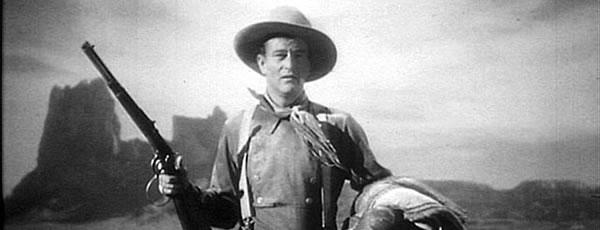
A Star is Born in Monument Valley: John Wayne in John Ford’s STAGECOACH (United Artists 1939)


gary loggins's avatarcracked rear viewer

stage1

If you think the characters and Western tropes in STAGECOACH are familiar, you’re right. But let’s be clear… STAGECOACH introduced many of these now-clichéd devices to film, and is one of the enduring classics of the American West. Director John Ford was well versed in Westerns, having cut his professional teeth on them during the silent era. This was his first sound Western and Ford was determined to reinvent the genre, with much more adult themes than the usual Saturday matinée kiddie fare. He succeeded with a daring story featuring an outlaw and a prostitute as his heroes, and exceeded his goal by creating a brand new Hollywood star in the process: John Wayne.

stage2

Wayne had been a football player for the USC Trojans when an injury caused him to lose his scholarship. Through some university connections, he was able to gain employment in the film industry as a prop…

View original post 1,029 more words

The Seventh Annual Academy Awards: 1920


Over on Through the Shattered Lens Presents the Oscars, we are reimagining Oscar history, one year at a time. Today, we take a look at 1920. Prohibition goes into effect, women finally get the right to vote, Harding is elected President, D.W. Griffith finally gets some recognition, and Fatty Arbuckle is the most popular man in Hollywood!

Lisa Marie Bowman's avatarThrough the Shattered Lens Presents The Oscars

William S. Hart, the Third President of AMPAS William S. Hart, the Third President of AMPAS

1920 was a year of many changes.

On January 16th, the 18th Amendment went into effect and prohibition became the law of the land.  Suddenly, it was illegal to transport and sell alcohol in the United States.  As social reformers rejoiced, the government grew and ordinary citizens started to hoard whatever liquor they had.  (Selling alcohol was illegal but drinking it was not.)  Perhaps the people happiest about prohibition were the gangsters who now had a totally new market to exploit.

On August 26th, the 19th amendment to the U.S. Constitution passed and, finally, all women were granted the right to vote.  And it came not a minute too late because it was time for the United States to elect a new president.  Weary after the nonstop drama of  8 years of Woodrow Wilson, the American electorate turned to Warren…

View original post 1,342 more words

The Sixth Annual Academy Awards: 1919


At the 1919 Academy Awards, Evelyn Preer makes history, Harry Houdini is rewarded for playing himself, and Bolshevism goes on trial!

Jedadiah Leland's avatarThrough the Shattered Lens Presents The Oscars

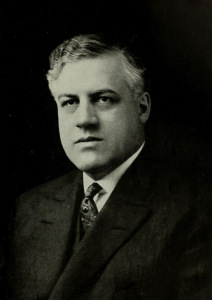
Attorney General A. Mitchell Palmer Attorney General A. Mitchell Palmer

In 1919, as the Spanish Flu continued to infect and kill millions, the world tried to recover from World War I.  After spending six months at the Paris Peace Conference, President Woodrow Wilson returned to the U.S. and launched an ultimately unsuccessful campaign to bring the United States into the newly formed League of Nations.  On September 25th, while barnstorming across the nation in support of the League, a physically exhausted Wilson collapsed and never truly recovered.  On October 2nd, a stroke left him partially paralyzed and blind in one eye.

Even before Wilson’s physical collapse, the U.S. population had reason to feel uncertain about the future.  On January 6th, the wildly popular Theodore Roosevelt died in his sleep.  Before his death, Roosevelt had been widely expected to run for President in 1920 and hopefully return the U.S. to the peace and prosperity…

View original post 1,108 more words

Review: A Bridge Too Far (dir. by Sir Richard Attenborough)


1977 a bridge too far

“Well, as you know, I always felt we tried to go a bridge too far” — Lt. Gen. Frederick Browning

With the recent passing of Sir Richard Attenborough I decided to bring up one of the films which first brought his name to my attention. I was quite the young lad when I first saw Attenborough’s epic war film A Bridge Too Far. I would say that it was one of my earlier memories of watching a film with my father who was a major fan of war films. One could say that I got my appreciation and love for the genre from him.

A Bridge Too Far was adapted from the Cornelius Ryan book of the same name which depicted from start to finish the disastrous World War II battle known as Operation Market Garden. The film states that the Allied landings at Normandy, France in the summer of 1944 had the German forces reeling and on the verge of collapse. With Eisenhower having to choose between competing plans to chase Hitler’s forces right into Berlin from his two best generals in George S. Patton and Bernard Montgomery, the film already lays down something that’s become synonymous with military disasters throughout history. Political expediency and pressure on Eisenhower led to an operation that was never attempted in military history and one which required every aspect of the operation to go according to plan for it to work. As the film would show this was not meant to be.

The film begins with the operation’s early days as Allied commanders rush to put Montgomery’s plan to drop 35,000 paratroopers behind German lines in occupied-Netherlands in order to capture and hold key bridges until Allied armored forces arrived to reinforce them. It’s a daring plan that the Attenborough films with a obvious confidence and enthusiasm, but also one that already showed some nagging doubts from field commanders who would be in the thick of the fighting if intelligence reports were inaccurate. One could almost say that Attenborough was making the film a sort of anti-war message which was a rarity when it came to Hollywood and and film industry depicting the events of World War II at the time.

While the film does explore that very anti-war theme throughout it’s really a by-product of how the battle itself unfolds and shown to the viewers that might give one such an idea. Yet, in the end A Bridge Too Far was a much more complicated film to just be labeled as an anti-war film. Yes, the battle itself was a disaster for the Allied forces of American, British and Polish soldiers involved, but despite the political bumbling and military arrogance of those who command from behind a desk, the film actually does a great job of showing that bond soldiers earn when confronted with the horrors of battle.

Attenborough and producer Joseph E. Levine pulls together an all-star cast for the film with names such as Sean Connery, Edward Fox, Robert Redford, Michael Caine and Laurence Olivier just to name a few. Films such as A Bridge Too Far rarely get made anymore in this day and age. The cast itself is part of the reason why the film still holds up to scrutiny decades after it’s release. While all-star casts such as this seemed to have been common place before the 1980’s it still looked like a daunting task for Attenborough to manage so many Hollywood stars and veteran British actors. Every character from Hopkin’s Col. Frost, Connery’s Gen. Urquhart and Redford’s Maj. Cook get to shine in their sections of the film as their individual stories about the battle all tie-in together to show just how complicated the events that they were filming truly turned out to be.

At times, one almost could feel overwhelmed by the amount of recognizable names and faces that come across the screen, yet Attenborough and producer Levine were able to juggle not just the logistics of the film’s screenplay, but the egos and reputation of the very stars who would become the backbone of the film.I think in a lesser filmmaker A Bridge Too Far could easily have turned into the very Operation Market Garden it was trying to depict.

It’s a film that never celebrates the concept of war itself, but actually shows that war remains a bloody and chaotic affair that relies not just on planning and execution but on the whims of lady luck. While Attenborough’s film never reached the sort of iconic status that another Cornelius Ryan adapted film has attained in The Longest Day, it does remain the more powerful of the two as it doesn’t just explore the historical event as a sort of academic exercise, but as an exploration of that old military adage of “No plan survives contact with the enemy”.

So, in the end I recommend that those looking to watch and experience the earlier directorial works of Sir Richard Attenborough should check out A Bridge Too Far. It remains to this day one of his more underappreciated films especially when compared to his later more acclaimed films like Gandhi, Chaplin and Shadowlands.