4 Shots From 4 Films is just what it says it is, 4 shots from 4 of our favorite films. As opposed to the reviews and recaps that we usually post, 4 Shots From 4 Films lets the visuals do the talking.
To be honest, it’s always a good day to do 4 shots from 4 Terrence Malick films but today’s specific inspiration was the acclaim that has greeted Malick’s latest film, A Hidden Life, at Cannes. Critics are saying that A Hidden Life marks Malick’s “return to greatness.”
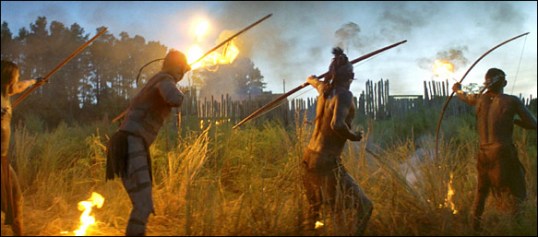
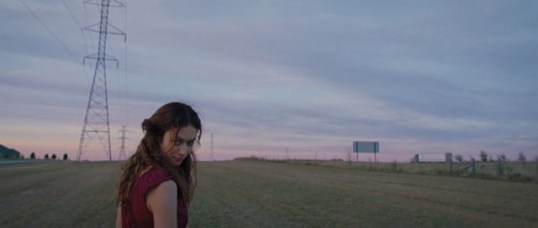
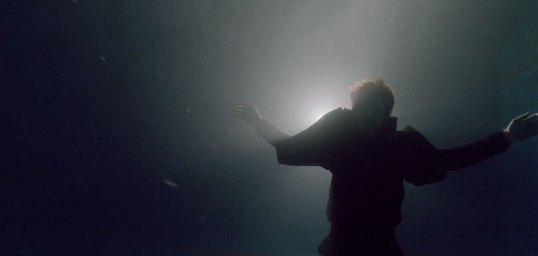
Personally, I don’t think Malick had to return because he never left. Even his more uneven works all have moments of greatness and visual beauty. These four shots below come from four of Malick’s films that weren’t quite as acclaimed as Days of Heaven or Tree of Life. These are four films that were not nominated for best picture. They received mixed reviews. However, regardless of what the critics may have said at the time of their release, there’s a beauty to all four of them and, watching them today, it’s hard not to feel that their statue will grow as time goes on. All four of them reveal an artist unlike any other. All of four of them remind us that Terrence Malick is an important and vibrant cinematic force.
As of right now, I am greatly looking forward to seeing A Hidden Life. Until that film gets released over here in the U.S., here are….
4 Shots From 4 Films is just what it says it is, 4 shots from 4 of our favorite films. As opposed to the reviews and recaps that we usually post, 4 Shots From 4 Films lets the visuals do the talking.
Today is Texas Independence Day!
In honor of my home state, here are….
4 Shots From 4 Texas Films
Dazed and Confused (1993, dir by Richard Linklater)
Continuing our look at good films that were not nominated for best picture, here are 6 films from the 1970s.
Dirty Harry (1971, dir by Don Siegel)
“Well, I’m all torn up about his rights….” Detective Harry Callahan (Clint Eastwood) says after being informed that he’s not allow to torture suspects for information. Unfortunately, in this case, the Academy agreed with all the critics who called Harry a menace and this classic and influential crime film was not nominated. Not even Andy Robinson picked up a nomination for his memorably unhinged turn as Scorpio.
Carrie (1976, dir by Brian DePalma)
The Academy liked Carrie enough to nominate both Sissy Spacek and Piper Laurie for Best Actress and Best Supporting Actress, respectively. The film itself, however, went unnominated. It’s enough to make you want to burn down the prom.
Suspiria (1977, dir by Dario Argento)
In a perfect world, Goblin would have at least taken home an Oscar for the film’s score. In the real world, unfortunately, Argento’s masterpiece was totally snubbed by the Academy.
Days of Heaven (1978, dir by Terence Malick)
If it were released today, Terence Malick’s dream-like mediation of life during the depression would definitely be nominated. In 1978, perhaps, the Academy was still not quite sure what to make of Malick’s beautiful but often opaque cinematic poetry.
Halloween (1978, dir by John Carpenter)
“The night he came home!” should have been “The night he went to the Oscars!” The film received no nominations and it’s a shame. Just imagine Donald Pleasence winning for his performance as Loomis while John Carpenter racked up almost as many nominations as Alfonso Cuaron did this year for Roma.
Dawn of the Dead (1978, dir by George Romero)
If the Academy wasn’t willing to nominate Night of the Living Dead, there was no way that they would go for the film’s longer and bloodier sequel. But perhaps they should have. Few films are cited as an inspiration as regularly as Dawn of the Dead.
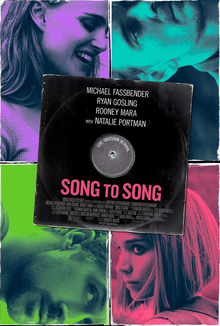
You’re watching a movie called Song to Song. It’s about beautiful people in a beautiful city.
In this case, the city is Austin, Texas. The people are all involved in the Austin music scene and they’re played by actors like Ryan Gosling, Rooney Mara, Natalie Portman, Michael Fassbender, and Cate Blanchett. A good deal of Song to Song was filmed at the Austin City Limits festival and several real-life musicians appear as themselves, though only Patti Smith is on screen long enough to make much of an impression. To be honest, both the music and Austin are almost incidental to the film. Though the movie was sold as an Austin film and it premiered at SXSW, it could have just as easily taken place in Ft. Worth.
The film is made up of short, deliberately obscure shots. The camera never stops moving, floating over images of sunsets, sunrises, and oddly empty streets. Because the film was shot with a wide-angle lens, you’re never not aware of the expanse around the characters. At times, all of those beautiful film stars run the risk of become specks on the landscape, as if the film itself is taunting the characters for thinking that they are more important than nature.
Who are the characters? It’s not always easy to say. There are plenty of voice overs but it’s rare that anyone directly states what they’re thinking or who they are. When the characters speak to each other, they mumble. The dialogue is a mix of the banal and the portentous, a sure sign of a film that was largely shot without a script. Eventually, you turn on the captioning so that you can at least understand what everyone’s muttering.
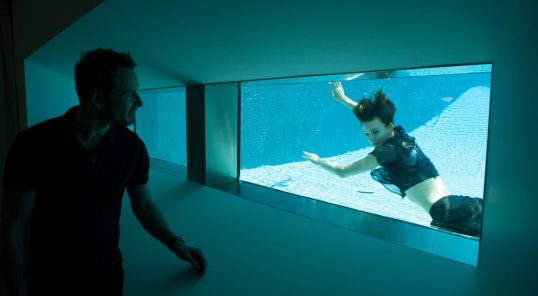
Michael Fassbender plays Cook. Cook appears to be a music producer but he could just as easily be a businessman who enjoys hanging out with and manipulating aspiring stars. People seem to know him but nobody seems to be particularly impressed by him. Cook spends a lot of time standing in front of a pool. Is it his pool? Is it his house? It’s hard to say. Cook is obsessed with control or maybe he isn’t. Halfway through the film, Fassbender appears to turn into his character from Shame.
Ryan Gosling is BV. BV appears to be a lyricist, though it’s never made clear what type of songs that he writes. At one point, you think someone said that he had written a country song but you may have misheard. BV appears to have an estranged relationship with his dying father. BV may be a romantic or he may not. He seems to fall in love easily but he spends just as much time staring at the sky soulfully and suggesting that he has a hard time with commitment. BV appears to be Cook’s best friend but sometimes, he isn’t. There’s a random scene where BV accuses Cook of cheating him. It’s never brought up again.
Rooney Mara is Faye. Faye contributes most of the voice overs and yet, oddly, you’re never sure who exactly she is. She appears to be BV’s girlfriend and sometimes, she appears to be Cook’s girlfriend. Sometimes, she’s in love and then, just as abruptly, she’s not. She may be a singer or she may be a songwriter. At one point, she appears to be interviewing Patty Smith so maybe she’s a music journalist. The film is centered around her but it never makes clear who she is.
Natalie Portman is Rhonda. Rhonda was a teacher but now she’s a waitress. She might be religious or she might not. She might be married to Cook or she might not. Her mother (Holly Hunter) might be dying or she might not.
And there are other beautful people as well. Cate Blanchett plays a character named Amanda. Amanda has a relationship with one of the characters and then vanishes after four scenes. There’s an intriguing sadness to Blanchett’s performance. Since the first cut of Song to Song was 8 hours long, you can assume her backstory was left on the cutting room floor. (And yet strangely, it works that we never know much about who Amanda is.) Lykke Li shows up, presumably playing herself but maybe not. Berenice Marlohe and Val Kilmer also have small roles, wandering in and out of the character’s lives.
There’s a lot of wandering in this movie. The characters wander through their life, stopping only to kiss each other, caress each other, and occasionally stare soulfully into the distance. The camera seems to wander from scene to scene, stopping to occasionally focus on random details. Even the film’s timeline seems to wander, as you find yourself looking at Rooney Mara’s forever changing hair and using it as a roadmap in your attempt to understand the film’s story.
“I went through a period when I thought sex had to be violent,” Rooney Mara’s voice over breathlessly explains, “We thought we could just roll and tumble, live from song to song, kiss to kiss.”
As you watch Song to Song, you find yourself both intrigued and annoyed. This is a Terrence Malick film, after all. You love movies so, of course, you love Malick. Even if his recent films have been flawed and self-indulgent, he is a true original. You want to support him because he’s an artist but, as you watch Song to Song, the emphasis really does seem to be on self-indulgence. The images are beautiful but the characters are so empty and the voice overs are so incredibly pretentious. Should you be mad or should you be thankful that, in this time of cinematic blandness, there’s a director still willing to follow his own vision?
At times, Song to Song is brilliant. There are images in Song to Song that are as beautiful as any that Malick has ever captured. Sometimes, both the images and the characters are almost too beautiful. The music business is tough and dirty but all of the images in Song to Song are clean and vibrant.
At times, Song to Song is incredibly annoying. It’s hard not to suspect that the film would have worked better if Natalie Portman and Rooney Mara had switched roles. Mara can be an outstanding actress with the right director (just check out her performance in Carol) but, in Song to Song, her natural blandness makes it difficult to take her seriously as whoever she’s supposed to be. Portman has much less screen time and yet creates an unforgettable character. Mara is in 75% of the film and yet never seems like an active participant.
At times, the film is annoyingly brilliant. Malick’s self-indulgence can drive you mad while still leaving you impressed by his commitment to his vision.
And then, other times, the film is brilliantly annoying. Many directors have mixed overly pretty images with pretentious voice overs but few do so with the panache of Terrence Malick.
Even fans of Terrence Malick, of which I certainly am one, will probably find Song to Song to be his weakest film. Even compared to films like To The Wonder and Knight of Cups, Song to Song is a slow movie and there are moments that come dangerously close to self-parody. Unlike Tree of Life, where everything eventually came together in enigmatic poignance, Song to Song often feels like less than the sum of its parts. And yet, I can’t totally dismiss anything made by Terrence Malick. Song to Song may be empty but it’s oh so pretty.
(Lisa recently discovered that she only has about 8 hours of space left on her DVR! It turns out that she’s been recording movies from July and she just hasn’t gotten around to watching and reviewing them yet. So, once again, Lisa is cleaning out her DVR! She is going to try to watch and review 52 movies by Wednesday, November 30th! Will she make it? Keep checking the site to find out!)
On October 14th, I recorded Zoolander 2 off of Epix.
A sequel to the 2001 cult hit, Zoolander 2 came out earlier this year and got absolutely terrible reviews and quickly vanished from theaters. Watching the film last night, I could understand why it got such terrible reviews. Zoolander 2 is not only a terrible movie but it’s also a rather bland one. Somehow, the blandness is even more offensive than the badness.
Zoolander 2 opens with Justin Bieber getting assassinated and Derek Zoolander (Ben Stiller) being forced to come out of retirement and discover why pop stars are being targeted. And, of course, Zoolander can’t do it without the help of Hansel (Owen Wilson)! Penelope Cruz is in the film as well, playing Zoolander’s handler and essentially being wasted in a role that could have been played by anyone.
Oh! And Will Ferrell returns as well. Ferrell gives a performance that essentially shouts out to the world, “Fuck you, I’m Will Ferrell and no one is going to tell Will Ferrell to tone his shit down!”
Actually, I think everyone in the world is in Zoolander 2. This is one of those films that is full of cameos from people who probably thought a silly comedy would be good for their image. For instance, there’s a huge number of journalists who show up playing themselves. Matt Lauer shows up and I get the feeling that we’re supposed to be happy about that. There was a reason why people cheered when the sharks ate him in Sharknado 3.
You know who else shows up as himself? Billy Zane! And Billy Zane has exactly the right type of attitude for a film like this. He shows up and he mocks the whole enterprise by giving the Billy Zaniest performance of Billy Zane’s career. For that matter, Kiefer Sutherland also shows up as himself. I’m not really sure what Kiefer was doing in the film but he makes sure to deliver all of his lines in that sexy growl of his. Kiefer knows what we want to hear.
You may notice that I’m not talking about the plot of Zoolander 2. That’s largely because I couldn’t follow the plot. This is an incredibly complicated film but it’s not complicated in a funny way. Instead, it’s complicated in a way that suggests that the film was made up on the spot. It’s as if the cast said, “We’re all funny! Just turn on the camera and we’ll make it work!”
The problem with Zoolander 2 is obvious. The first film pretty much exhausted the comic possibilities of making a spy film about shallow and stupid models. Don’t get me wrong — the first film did a good job but it’s not like it left any material untapped. But I would ask you to indulge me as I imagine an alternate reality.
Consider this: Terrence Malick was reportedly a huge fun of Zoolander.
Let’s take just a minute to imagine a world in which Ben Stiller asked Terrence Malick to write and direct Zoolander 2. And let’s say, just for the sake of argument, that Malick agreed!
Just think about it — 4 hours of Zoolander and Hansel staring up at the sky and thinking about nature. “What is this thing that causes the heart of man to beat?” Zoolander asks. “Are we nature or has nature become us?” Hansel replies.
If I wanted to play a really mean April Fools Day joke, I would announce that, after getting thoroughly booed at Cannes last year and suffering from some of the worst word-of-mouth in cinematic history, Gus Van Sant’s The Sea Of Trees has finally gotten an American release date.
But I’m not mean and I’m not going to play that joke on you.
Instead, I’m going to tell you that not only is Van Sant’s Sea of Trees never going to be released in the U.S. but that the script is also currently being reshot by Terrence Malick…
April Fools!
Bleh, what a stupid holiday.
Anyway, the truth of the matter is that Sea of Trees still does not have an American release date but it will be released in Europe later this month. Eventually, if nothing else, Sea of Trees will make it to Netflix and we’ll get to discover what everyone was booing about in Cannes.
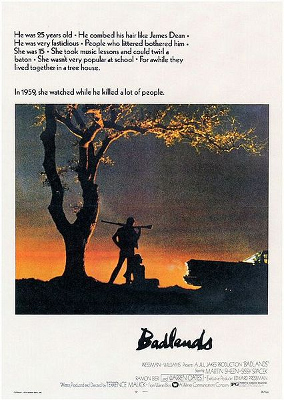
Terrence Malick is such an influential director that it is easy to forget that he has only directed nine films over the past 42 years. (One of those ten, Knight of Cups, will be released later this year. Two other are currently in postproduction.) He has received Oscar nominations for The Thin Red Line and The Tree of Life but, for me, Malick’s best work remains his directorial debut, Badlands.
Badlands is based on the real-life murder spree of Charles Starkweather and his girlfriend, Caril Ann Fugate. In 1958, 20 year-old Starkweather murdered 11 people in Nebraska and Wyoming. 14 year-old Fugate was with Starkweather at the time of the murders but has always claimed that she was Starkweather’s hostage. After the two of them were captured, Starkweather was sent to the electric chair while Fugate served 17 years of a life sentence.
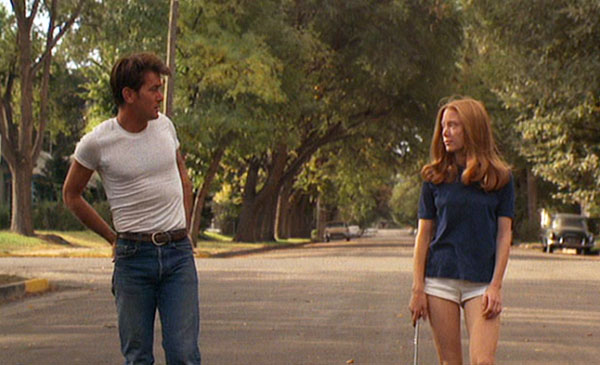
In Badlands, 25 year-old Kit (Martin Sheen) is a garbage man who has a huge chip on his shoulder. One day, Kit spots 15 year-old Holly (Sissy Spacek) outside, twirling a baton. Kit starts to talk to Holly, who thinks that he looks like her favorite actor, James Dean. Kit and Holly start dating. Holly’s father (Warren Oates), a sign painter who has never recovered emotionally from the death of his wife, tells Kit to stay away from his daughter. After Kit murders her father, Holly joins him in fleeing from the scene of the crime. With the police and bounty hunters chasing them, the two young lovers head across the midwest and leave a trail of bodies in their wake.
Badlands sticks pretty close to the facts of the real-life Starkweather/Fugate case but, at the same time, it is definitely the product of Terrence Malick’s artistic vision. It is interesting to see how, even in his first film, Malick was already exploring the themes and using the techniques that would later distinguish both The Thin Red Line and The Tree Of Life. Like those two films, Badlands is full of majestic scenery, contrasting the beauty of nature with the ugliness of humanity. Like all Malick films, Badlands also features a narrator. Holly tells us her story but, in contrast to the philosophical narrators from Malick’s later films, Holly speaks exclusively in romantic clichés and delivers her narration in a flat, unemotional style.
When we first see Holly, her white shorts, blue shirt, and red hair add up to an all-American tableau. When Holly falls in love with Kit because of his resemblance to James Dean and then either justifies or ignores every destructive thing that he does, she is predicting the rise of our current celebrity-dominated culture. Meanwhile, Kit is so determined to be James Dean that he even imitates Dean’s performance from Rebel Without A Cause while talking to the police.
Badlands is one of Malick’s most accessible films. Sissy Spacek is amazing as the childlike Holly and Martin Sheen has probably never been better than in his role here. And, of course, you have the great Warren Oates in the small but crucial role of Holly’s harsh father. Badlands is an American classic and still the best film of Terrence Malick’s legendary career.
4 Shots From 4 Films is just what it says it is, 4 shots from 4 of our favorite films. As opposed to the reviews and recaps that we usually post, 4 Shots From 4 Films is all about letting the visuals do the talking.
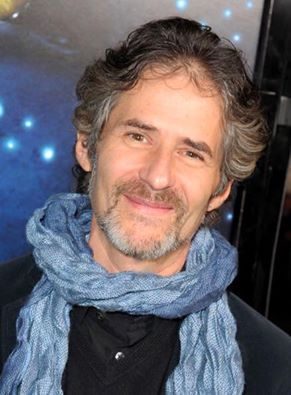
Tonight, the film community is in shock following the news of the passing of award-winning composer James Horner. Our latest installment of 4 Shots From 4 Films is dedicated to to the memory of this talented artist.
The four shots below all come from films that feature a score composed by the great James Horner.
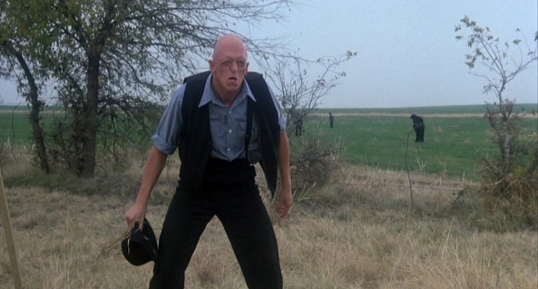
Deadly Blessing (1981, dir by Wes Craven)
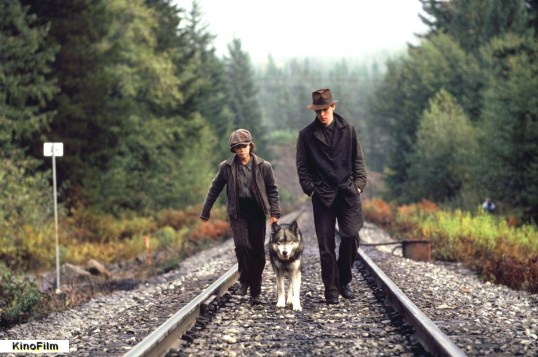
The Journey of Natty Gann (1985, dir by Jeremy Kagan)
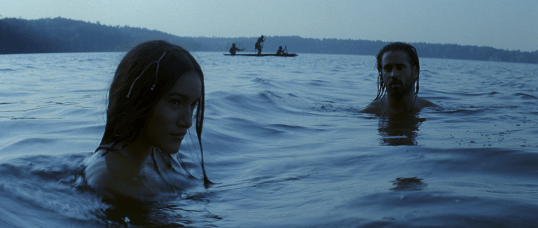
The New World (2005, dir by Terrence Malick)
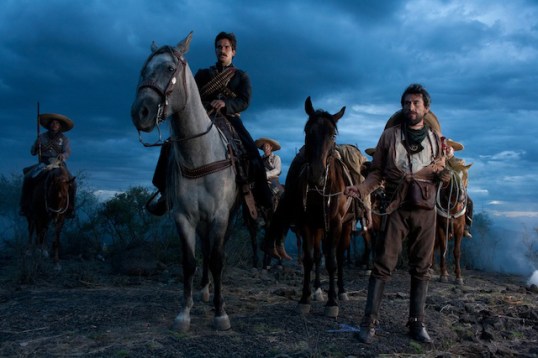
Cristiada, also known as For Greater Glory (2012, dir by Dean Wright)
For those of you who love to follow the Oscar race, today is a big day. Several groups announced their picks for the best of 2011 today. The most important of these groups would be the Los Angeles Film Critics Association. Though the LAFCA has a pretty iffy record when it comes to predicting the actual Oscar winners, their picks still tend to influence the nominations.
Here are the LAFCA winners, along with a little commentary from yours truly.
Best Musical Score: Hanna (runner-up: Drive)
There was a lot I liked about the LAFCA awards but this is the one that truly made me go: “Yay!” Hanna was a great film that deserves a lot more attention than its been given.
Best Cinematography: The Tree of Life (Runner-up: The City of Life and Death)
Best Production Design: Hugo (runner-up: Tinker, Tailor, Solider, Spy)
Best Supporting Actress: Jessica Chastain for Coriolanus, The Debt, The Help, Take Shelter, Texas Killing Fields, and The Tree of Life (runner-up: Janet McTeer for Albert Nobbs)
Considering that she has next to no range as an actress, Jessica Chastain is having a pretty good year. I have a feeling she’ll win an Oscar in February and then eventually end up joining the cast of Law & Order: SVU.
Best Supporting Actor: Christopher Plummer in Beginners (runner-up: Patton Oswalt in Young Adult)
As good as Plummer was in Beginners, think about how much more exciting it would have been if Oswalt had won.
Best Screenplay: A Seperation. (runner-up: The Descendants)
Best Documentary: The Cave of Forgotten Dreams (runner-up: The Arbor)
Again, let us consider that Werner Herzog’s masterpiece wasn’t even a semi-finalist as far as the Academy is concerned.
Best Independent/Experimental Film: Spark of Being
Best Actress: Yun Jung-hee in Poetry (runner-up: Kirsten Dunst in Melancholia)
Yay! I am so bored with Meryl Streep.
Best Actor: Michael Fassbender for Shame, A Dangerous Method, X-Men: First Class, and Jane Eyre. (runner-up: Michael Shannon in Take Shelter)
Yay! For both the winner and the runner-up.
Best Director: Terrence Malick for The Tree of Life (runner-up: Martin Scorsese for Hugo)
I was on twitter when this result was announced and Oh. My. God. My timeline like totally exploded with people getting all excited and hopeful. And then, quite a few minutes later, all that excitement turned to rage as the next award was announced–
Best Picture: The Descendants (runner-up: The Tree of Life)
That’s right. After going out on a limb with best actress and (debatably) best director and going out of their way to honor the unfairly neglected, the LAFCA gave best picture to one of the most overrated films of 2011 — The Descendants. This despite the fact that The Descendants hadn’t won a single other award and was a runner-up in only one category. That must have really loved that 2nd place screenplay. This choice reeks of compromise, as if a group of critics decided to all unite and vote for their 2nd or 3rd choice in order to keep a more controversial films like The Tree of Life from winning.
That said, my pick for the best of 2011 remains Hanna.
Best Foreign Language Film: The City of Life and Death (runner-up: A Separation)
So, A Separation has a better screenplay than the best film of 2011, yet it’s not as good a film as The City of Life and Death.
New Generation award: Martha Marcy May Marlene
To recap, the three major critics groups have now spoken and each one has named a different film for best picture. The National Board of Review went for Hugo, the New Yorkers went for The Artist, and the LAFCA went for The Descendants.
In fact, the Artist was totally ignored by Los Angeles and I’ve noticed that there seems to be a backlash developing against this film. The Artist won’t be opening here until Dec. 21st so I can’t judge it but I would say that if you’re upset about about a French film like The Artist getting so much attention, don’t worry. Maybe David Fincher will remake it with American actors next year.