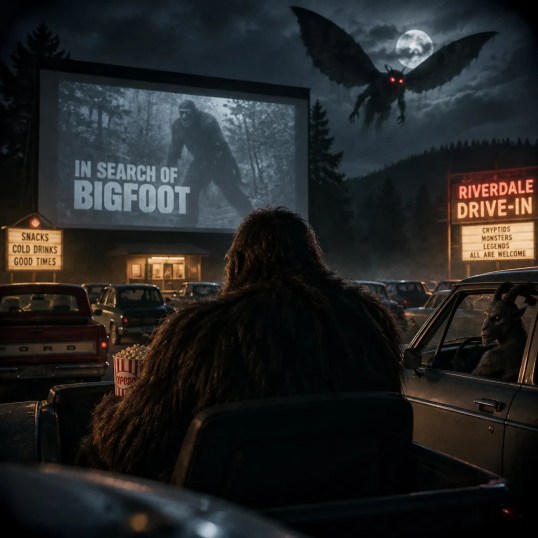
Today, we have In Search of Bigfoot, a 1976 documentary about the search for everyone’s favorite backwoods inhabitant. Will our hunters be able to find Bigfoot before the camera runs out of film? Will we hear stories about playing catch with Sasquatch? Watch to find out!
(Personally, I always love these pseudo-scientific documentaries. After the success of The Legend of Boggy Creek, they were apparently all the rage for a little while. Can you prove it didn’t happen?)
Since we are now almost halfway through October, it only seems appropriate to share what may be the most famous (and perhaps the most covered) song about witchcraft, Donavon’s Season of the Witch!
This song was originally recorded in 1966 and it’s gone on to become a Halloween mainstay. One fan of the song was future director Martin Scorsese, who originally planned to borrow the song’s title for one of his own films. However, George Romero beat Scorsese out the gate with a film called Season of the Witch and Scorsese ended up renaming his film, Mean Streets.
Shot straight-on-video, 2013’s My Refuge is a film about the end of the world.
Maybe.
It’s actually somewhat difficult to explain what’s going on in My Refuge. It’s an ensemble film, one that is apparently taking place in a small city in Arizona. (That’s according to the plot summary on Tubi. The film itself doesn’t give us as specific location, though it certainly looks like it’s taking place in the arid Southwest.) It’s an ensemble film, one that has a dizzying amount of characters. The majority of the character never meet each other and quite a few are never even named. After reports come in that New York City (which is pretty far away from Arizona) has been hit with a nuclear bomb, the characters all deal with the impending end of the world in their own way.
One woman quit her retail job and makes plan to finally finish that novel that she started years ago.
One teenage girl overdoses and is rushed to the hospital, where her family watches and prays.
A woman obsessively cleans her house and accuses her husband of having an affair. Her husband says that he was tempted but he never actually went through with it but, eventually, he decides that being tempted is just as bad.
A criminal seeks revenge on the cop who shot his best friend.
A married couple look forward to the birth of their first child.
A preacher preaches.
The news reports that more bombs are on the way.
People pray in the street and prepare for the unknowable future.
The film’s message is clear. Even with the world descending into chaos and the end apparently right around the corner, the people in this film find peace and hope through their belief in God. He is their refuge in terrible times. The film itself is not as preachy as I probably just made it sound and it deserves some credit for acknowledging that all of the characters have a good reason to be worried about the future. I mean, nuclear war is a big deal, regardless of what you may believe about the afterlife.
The narrative is difficult to follow. This is a low-budget,straight-to-video film and it’s pretty clear that the majority of the performers were not professionals. There’s a lot of awkward line readings and moments that don’t quite make sense. Everyone tends to blend together. Normally, I would say that would be a problem for an ensemble film but, oddly enough, it kind of works here. In the end, everyone is in the same boat. All of their individual drams are going to reach the same conclusion, regardless of how they may feel about it.
The film is only 79 minutes long but, as is so often the case with earnest , shot-on-video productions, the pace is slow and things aren’t helped by a muddy soundtrack that sometimes makes it a struggle to understand what the characters are saying. Amateur filmmakers often tend to overlook the importance of clean and understandable sound.
My Refuge is flawed but sincere. At its best, it captures the shock and fear that would surround any major calamity. It’s a confusing film but, for many people, these are confusing times.
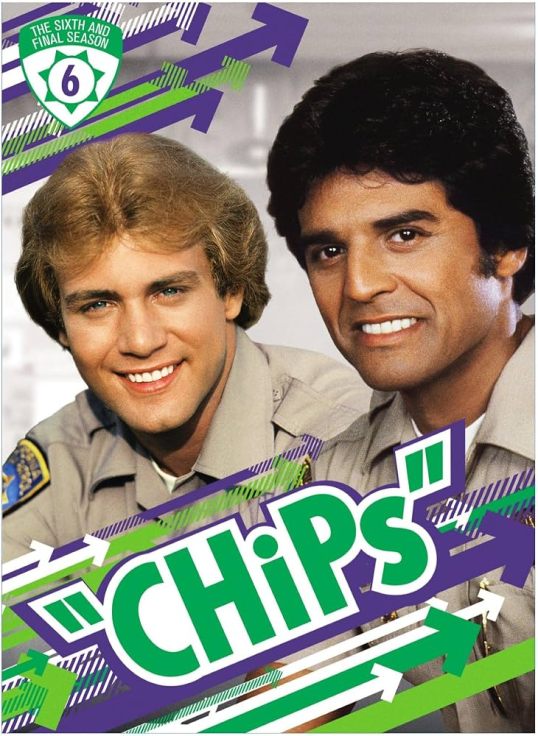
Welcome to Late Night Retro Television Reviews, a feature where we review some of our favorite and least favorite shows of the past! On Mondays, I will be reviewing CHiPs, which ran on NBC from 1977 to 1983. The entire show is currently streaming on Prime!
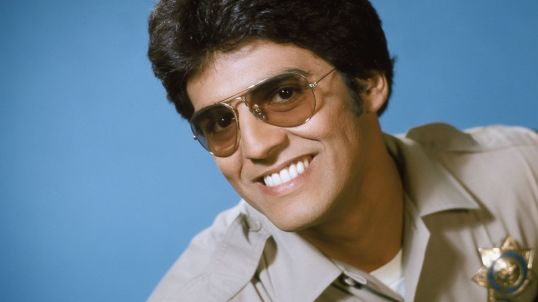
This week, Ponch meets David Caruso.
Episode 6.12 “Hot Date”
(Dir by John Florea, originally aired on January 9th, 1983)
Ponch, whose fiancée was tragically killed just four episodes ago, is super-excited because his new girlfriend is going to be in town for the weekend. Lori (Catherine Hickland) is a flight attendant and, from the dialogue, it sounds like she and Ponch have been an item for a while. So, was Ponch seeing her while he was engaged? What a jerk!
Unfortunately, Jake (Brendan Burns) and Charlie (David Caruso) are also in town. Jake was busted and sent to prison by Ponch and Bobby. (That’s kind of weird since Bobby is still in his probationary period and hasn’t even been with the Highway Patrol for more than a year. Maybe it was a short prison sentence.) Now that Jake’s out, he wants revenge. He and Charlie take Ponch, Lori, and the annoying housekeeper (Ivy Bethune) hostage in Ponch’s apartment.
Meanwhile, at headquarters, Bobby and Kathy (Tina Gayle), talk two runaways (Brad Savage and Michelle Riskas) into returning home. Kathy also receives flowers from a unknown man. (The first set of flowers is delivered by someone wearing a gorilla suit.) Kathy’s unknown admirer turns up at the station. It turns out to be an old widower (Phil Silvers) to whom Kathy was once polite.
While all of this is going on, Getraer tires to impress the captain (John Ericson) during the station’s annual inspection. I guess he manages to do that, despite Grossman having an expired driver’s license and Officer Webster (Clarence Gildyard, Jr.) getting mud on his car while chasing a criminal. (Was Webster just supposed to let the criminal escape so the car would stay clean?) The whole inspection plot just kind of disappears.
The majority of this episode deals with Ponch being held hostage and it’s pretty dreary. As I’ve explained many times in the past, I absolutely hate episodes that feature people being held hostage because it’s always the same thing. Ponch tries to negotiate. Jake yells a lot. Charlie is dumb but loyal. It’s nothing that hasn’t been done a hundred times in the past. It’s boring. Eventually, Bobby calls the apartment and Ponch is able to tip him off that something’s happening. Bobby, Getraer, and Bruce show up to take down the bad guys.
For whatever reason, everyone overacts in this episode. In the role of Ponch’s houseskeeper, Ivy Bethune is almost unbearable. David Caruso also goes more than a little overboard as Charlie. Unfortunately, none of it does anything to liven up a fairly dull episode.
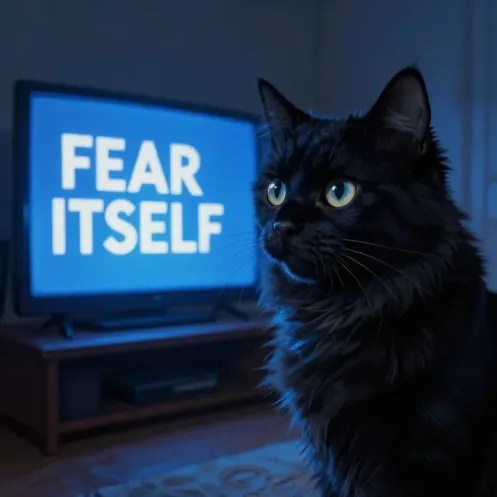
For our final episode of Fear Itself, we have Echoes. In this episode, a man discover that he was a killer in a previous life. Director Rupert Wainwright also directed the remake of The Fog. Does anyone remember that remake?
Though this episode was meant to air in 2008, the show went on hiatus and was then cancelled before it could air. It was finally released in 2009, as a part of the Fear Itself box set.
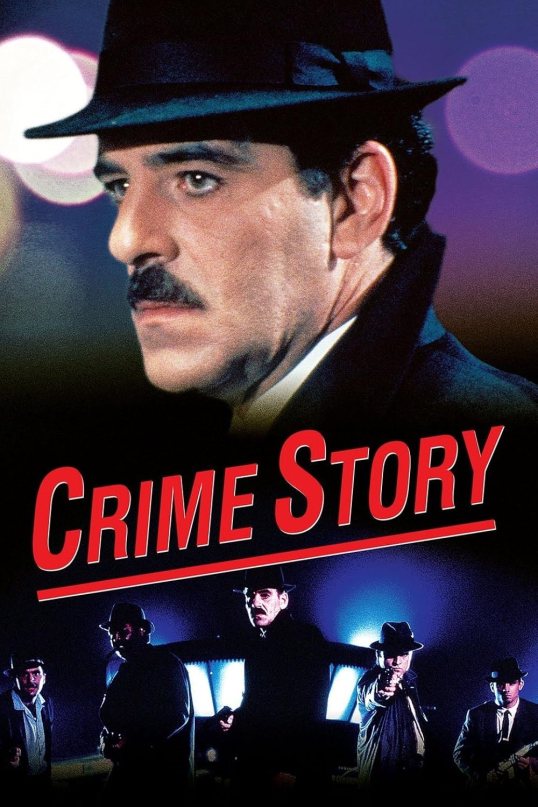
Welcome to Retro Television Reviews, a feature where we review some of our favorite and least favorite shows of the past! On Mondays, I will be reviewing Crime Story, which ran on NBC from 1986 to 1988. The entire show can be found on Tubi!
This week, Julie returns.
Episode 2.2 “Blast From The Past”
(Dir by Eugene Corr, originally aired on September 29th, 1987)
Torello’s ex-wife, Julie (Darlanne Fluegel), is in Las Vegas with her new husband, Dr. John Newhouse (David Soul). While Julie waits outside, John steps into a bank to withdraw some money. He ends up walking straight into a bank robbery. When one of the four robbers is shot and wounded by a security guard, Newhouse tries to stanch the young criminal’s bleeding. Newhouse explains that he’s a doctor. The leader of the gang, Smilin’ Jack (James Remar), took a bullet to the hand during the robbery, so he abducts Newhouse so that he can take care of both his hand and the other robber.
Newhouse is held prisoner in a trailer park in the middle of the desert. Needing to launder the stolen money, Smilin’ Jack calls his old friend, Frank Holman. Holman, who has moved on from his singing career and now wants to shoot stag films, comes out to the trailer park. He brings his movie camera. Soon, the trailer park is full of aspiring actresses.
Meanwhile, Julie goes to Torello and asks for his help. Torello puts the investigation into Las Vegas organized crime on hold so that he can find Dr. Newhouse. The other members of the Task Force have no problem with this because they all worship the ground that Torello walks on. And, of course, Torello ends up sleeping with Julie before eventually tracking down Smilin’ Jack and rescuing Dr. Newhouse.
This episode was pretty boring. Holman trying to become a filmmaker provided some amusing moments, but otherwise this was a fairly standard crime melodrama. James Remar brought a certain demented energy to the character of Smilin’ Jack, but the character was still obviously just a one-off villain from the minute he first appeared.
This was the second episode to not feature Luca and Pauli, both of whom are presumed dead despite the fact that Tony Denison and John Santucci are still listed in the opening credits. Crime Story’s narrative momentum really slows down when it’s just Torello’s story. He needs a worthy adversary and, without Luca around, he doesn’t have one.
Hopefully, next week’s episode will be a bit more interesting.
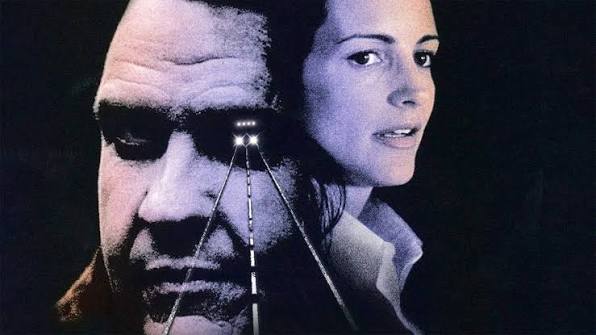
BLACKTOP opens on stand-up comic David (Lochlyn Munro) in the middle of his act at an out of the way truckers bar. His girlfriend Sylvia (Kristin Davis) is at the show, and she doesn’t look very happy. After the show, we find out that David & Sylvia’s relationship is not in a good place at all. She wants to settle down and get married, and he wants to keep performing his shows even though his career is going nowhere. When he tells her he’s agreed to perform three more nights the next weekend at that same place, she blows a gasket and wants to get out of there. Conveniently, a nice trucker named Jack (Meat Loaf), who she had only just met a little earlier, is there handy, and she asks him for a ride out of town in his truck, Goliath. He happily agrees, almost too happily, because it turns out he just might be a serial killer. Sensing something’s off and wanting to get his girlfriend back, David takes off after them, hoping to find them before she becomes the next victim.
That’s the basis for this “mad trucker” thriller that premiered on HBO back in October of 2000. If the story sounds ludicrous to you, just know that it is. It takes a completely stupid decision to kick off the events of the story. Seriously Sylvia, David may be a bit of a loser, but do you have to abandon him and ride off into the night with a trucker you don’t know, who looks like Meat Loaf, just to make a point?!! Don’t you think you may be overreacting?!! Some might say that I’m making too big of a deal about this, that it’s just a plot device to set the story of “terror in a big rig” in motion. You are correct in some ways, but her moronic decision stuck with me through the rest of the movie. Later, when she was supposed to be tough, smart and resourceful, I kept thinking about her dumb decision that put her in this predicament, and how many people had already been killed or seriously maimed because of it.
The story also includes these silly little details like Jack leaving clues for David along the way so that he can have a chance to find them. Somehow Jack can perfectly predict David’s exact route and speed so he can place all these notes at the perfect places on the road, with some of them pretty complicated. And he does this without Sylvia even noticing. Sylvia isn’t exactly the most observant person around. Nothing proves this any more than a scene where Jack has Sylvia sit close to him so he can show her how to drive the big rig. While he’s giving her tips, David is trying to drive up and save her. The mad trucker does all this swerving and slamming on breaks and sliding and plays it all off like he’s just showing her some easy and safe driving moves. Sylvia never realizes David is anywhere near them, and since Jack hasn’t gone full psycho yet, she doesn’t seem to care. Maybe I’m just not that big of a fan of Kristin Davis, either. I never really liked her on SEX AND THE CITY, and I don’t like her that much in this either, even though I did kind of like the scenes where she took off her shirt and wandered around in her bra.
Not to sound like this is pick on Kristin Davis day, because I didn’t care for Lochlyn Munro as David either. He was supposed to be this stand-up comic, but he wasn’t funny at all. I mean some people were laughing because the script said so, but he’s lucky tomatoes weren’t being thrown at him. I found everything bland and boring about him, even though he drove a Red 1959 Edsel. That was actually kind of funny, as he kept taking on the big rig with it. I don’t think I’ve ever seen an Edsel / Peterbilt duel in a movie before, but it happens here several times.
By far the best part of BLACKTOP for me was watching Meat Loaf as Trucker Jack. Loaf had played a villainous trucker in BLACK DOG with Patrick Swayze a couple of years earlier, so the filmmakers must have reasoned that the public wanted more. I’ll admit that his character in this does seem awfully nice at first, and the people around seem to think he’s a pretty good guy too. But he also has this look in his eyes, and when he stops turning on the charm, he’s ready to kill. He’s a kind and empathetic ear to Kristin’s character one moment, and then he’s cutting off someone’s ear with his big knife the next. He’s fixing a nice meal for Kristin one moment, and then he’s shooting at David right in front of her with his high-powered rifle the next. Once she sees that side of him, she starts trying to fight back, and that’s when he gets to go over the top. When he gets to be crazy Trucker Jack, the kind of guy who hangs sides of beef along with murdered victims in the freezer in his truck; those were my favorite parts of the movie.
I know my review sounds very critical in places, and I don’t want to come off too hard on the film. If you’re looking for some solid big rig stunt driving work, and a very simple story featuring a psychopathic truck driver, you could have some fun with this one. Meat Loaf has some fun in his role, so if you’re a fan you should enjoy his work. Just keep your expectations low and don’t ever think that any of the characters are about to make some smart decisions. That seems to be the recipe for enjoying this trip down the BLACKTOP!
The youtuber didn’t have a title card; so, I made a scary ghost. I hope that it didn’t scare you too much! This is a parody of “It Follows”, the horror movie based on an STD that follows the next person and kills them. I always liked “It Follows” because if you were a child of the 90s, AIDS always the big warning that if you had sex, you would die. I would always ask; “why can’t I just use a condom?” and the response was always the same- “You’d risk your life for sex?” and me being me, I would respond with – “I thought that I already established that?” and they would pearl clutch.
In this short, the protagonist is a virgin who no one wants; so, he befriends the “It Follows” puritanical evil spirit and does ride-alongs with it as it explodes its victims. I thought it was fairly funny. There were some actual stars in the films and it appeared to have an actual budget, which gave me some nepobaby vibes. The films were ok, but I couldn’t understand how the budget would be this big, but then I saw that the channel has 1 million subscribers and 1 million views even for this short; so, I guess people have low standards.
I mean, it’s not horrible- just aggressively mediocre. If you’re a wonder bread as a burger bun kind of guy, this is for you.
In this odd 65-minute film from 1983, Michael David Simms stars John “Zack” Zachary.
Zack is a private investigator, though he’s not the hard-drinking, hard-smoking type that you typically expect to see in the movies or on television. Instead, he’s rather mild-mannered and polite. He goes to church every Sunday. Throughout the film, people from his church pop up and try to convince him to start coming on Saturday at well. Zack has to work though. He’s got an important case.
(The only thing that really makes Zack look like a typical television detective is that he has a really nice car. However, that car spends most of this movie “in the shop.” As a result, Zack has to drive a broken-down pink car.)
You would think that the case would have some sort of religious angle, given that this is a faith-based film. That’s certainly what I was expecting and I was kind of looking forward to it. I thought it would be entertaining to watch Zack uncover a cult of atheists and maybe discover that the fire was actually the first sign of the apocalypse. However, it just turns out to be an ordinary case. He’s been hired to investigate whether or not a recent fire in Malibu was an accident or a case of arson. Someone may have committed insurance fraud and Zack is going to help the insurance company by finding out if they did. (The fact that the hero works for an insurance company is a big clue that this movie was made a long time ago.)
Early on, Zack is approached by a young man named Jeremy Logan (Matthew Shaker), who says that he wants to be a private detective and that he he would appreciate the chance to work with Zack. Zack agrees, largely because Jeremy and he go to the same church. Jeremy helps out with the investigation and he also spends a lot of time talking about all of the various church projects that he’s involved with. About halfway through the film, they meet a woman (Stephani Hardy) who needs help and they take on her case without payment because it’s the right thing to do. Luckily, the woman has a clue that helps Jeremy and Zack solve the case of the fire. The solution to the case doesn’t make much sense but it feels kind of inevitable due to the fact that there aren’t that many characters in the film and, therefore, there weren’t that many possible suspects.
This is an example of an attempt to meld faith-based filmmaking with an established genre. It’s not just a religious film. It’s a TV-style mystery! The mystery really isn’t that interesting, though and the solution is a bit unsatisfying, That said, Michael David Simms gives a surprisingly good performance as Zack. I personally have a weakness for low budget films from the 70s and 80s because they were usually shot on location and, as a result, they provide a chance to see what the world used to look like. If nothing else, Zack works as a time capsule.