The Boston Society of Film Critics Have Spoken!


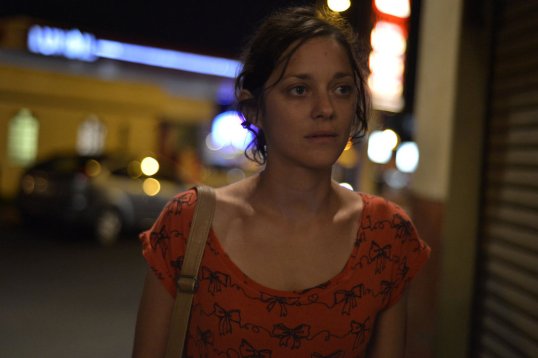
marion cotillard

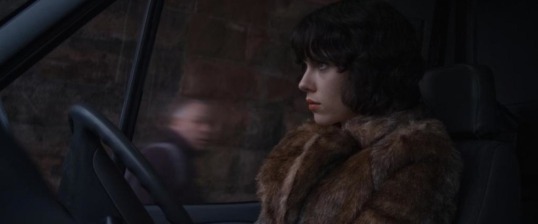
Earlier today the Boston Society of Film Critics (not to be confused with Boston Online Film Critics) announced their picks for the best of 2014!  Among the winners: Boyhood, Richard Linklater, Marion Cotillard (who is suddenly starting to look like she might be the new front-runner for best actress), and J.K. Simmons (who is probably about as much a sure thing as anyone or anything could be this year).

The winners are listed below!

(h/t to awardswatch.)

Best Picture
Winner: BOYHOOD
Runner up: BIRDMAN

Best Director
Winner: Richard Linklater, BOYHOOD
Runner up: Clint Eastwood, AMERICAN SNIPER

Best Actor
Winner: Michael Keaton, BIRDMAN
Runner up: Timothy Spall, MR. TURNER

Best Actress
Winner: Marion Cotillard, THE IMMIGRANT and TWO DAYS, ONE NIGHT
Runner up: Hilary Swank, THE HOMESMAN

Best Supporting Actor
Winner: J.K. Simmons, WHIPLASH
Runner up: Edward Norton, BIRDMAN

Best Supporting Actress
Winner: Emma Stone, BIRDMAN
Runner up: Laura Dern, WILD

Best Screenplay
Winner: Armando Bo, Alexander Dinelaris, Nicolas Giabone and Alejandro G. Iñárritu, BIRDMAN and Richard Linklater, BOYHOOD (tie)
Runner up: MR. TURNER

Best Cinematography
Winner: Emmanuel Lubezki, BIRDMAN
Runner up: Dick Pope, MR. TURNER

Best Film Editing
Winner: Sandra Adair, BOYHOOD
Runner up: Joel Cox and Gary Roach, AMERICAN SNIPER

Best Animated Film
Winner: The Tale of Princess Kaguya
Runner-up: The LEGO Movie

Best Foreign Language Film
Winner: TWO DAYS, ONE NIGHT
Runner up:

Best Documentary
Winner: Citizenfour
Runner up: Jodorowsky’s Dune

Best Ensemble Cast
Winner: BOYHOOD
Runner up: BIRDMAN

Best Use of Music in Film
Winner: INHERENT VICE
Runner up: WHIPLASH

Best New Filmmaker
Winner: Dan Gilroy, NIGHTCRAWLER
Runner up: Gillian Robespierre, OBVIOUS CHILD

Here are The Washington D.C. Film Critics Picks For The Best of 2014!


I like the Washington D.C. Film Critics because they don’t just give out awards.  Instead, they nominate multiple films and leave everyone in suspense until they get around to giving out their awards.  Just like the Oscars!

Anyway, here are their nominees for 2014!

WDC

Best Film:
Birdman or (The Unexpected Virtue of Ignorance)
Boyhood
Gone Girl
Selma
Whiplash

Best Director:
Damien Chazelle (Whiplash)
Ava DuVernay (Selma)
David Fincher (Gone Girl)
Alejandro G. Iñárritu (Birdman or (The Unexpected Virtue of Ignorance))
Richard Linklater (Boyhood)

Best Actor:
Benedict Cumberbatch (The Imitation Game)
Oscar Isaac (A Most Violent Year)
Michael Keaton (Birdman or (The Unexpected Virtue of Ignorance))
David Oyelowo (Selma)
Eddie Redmayne (The Theory of Everything)

Best Actress:
Scarlett Johansson (Under the Skin)
Felicity Jones (The Theory of Everything)
Julianne Moore (Still Alice)
Rosamund Pike (Gone Girl)
Reese Witherspoon (Wild)

Best Supporting Actor:
Ethan Hawke (Boyhood)
Edward Norton (Birdman or (The Unexpected Virtue of Ignorance))
Mark Ruffalo (Foxcatcher)
Andy Serkis (Dawn of the Planet of the Apes)
J.K. Simmons (Whiplash)

Best Supporting Actress:
Patricia Arquette (Boyhood)
Jessica Chastain (A Most Violent Year)
Laura Dern (Wild)
Emma Stone (Birdman or (The Unexpected Virtue of Ignorance))
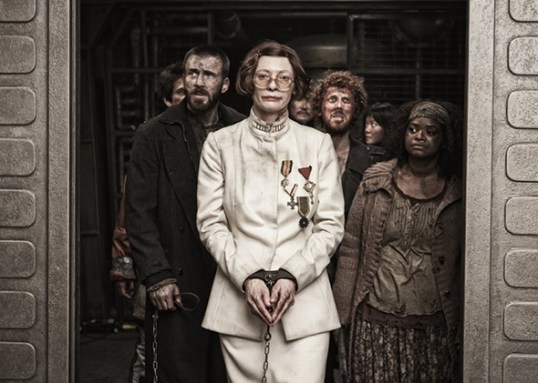
Tilda Swinton (Snowpiercer)

Best Acting Ensemble:
Birdman or (The Unexpected Virtue of Ignorance)
Boyhood
The Grand Budapest Hotel
Into the Woods
Selma

Best Youth Performance:
Ellar Coltrane (Boyhood)
Mackenzie Foy (Interstellar)
Jaeden Lieberher (St. Vincent)
Tony Revolori (The Grand Budapest Hotel)
Noah Wiseman (The Babadook)

Best Adapted Screenplay:
Gillian Flynn (Gone Girl)
Graham Moore (The Imitation Game)
Paul Thomas Anderson (Inherent Vice)
Anthony McCarten (The Theory of Everything)
Nick Hornby (Wild)

Best Original Screenplay:
Alejandro G. Iñárritu, Nicolás Giacobone, Alexander Dinelaris, Jr., Armando Bo (Birdman or (The Unexpected Virtue of Ignorance))
Richard Linklater (Boyhood)
Wes Anderson (The Grand Budapest Hotel)
Phil Lord & Christopher Miller (The LEGO Movie)
Damien Chazelle (Whiplash)

Best Animated Feature:
Big Hero 6
The Book of Life
The Boxtrolls
How to Train Your Dragon 2
The LEGO Movie

Best Documentary:
Citizenfour
Jodorowsky’s Dune
Last Days in Vietnam
Life Itself
The Overnighters

Best Foreign Language Film:
Force Majeure
Ida
Mommy
Two Days, One Night
Wild Tales

Best Art Direction:
Production Designer: Kevin Thompson, Set Decorator: George DeTitta Jr., SDSA (Birdman or (The Unexpected Virtue of Ignorance))
Production Designer: Adam Stockhausen, Set Decorator: Anna Pinnock (The Grand Budapest Hotel)
Production Designer: Nathan Crowley, Set Decorator: Gary Fettis (Interstellar)
Production Designer: Dennis Gassner, Set Decorator: Anna Pinnock (Into the Woods)
Production Designer: Ondrej Nekvasil, Set Decorator: Beatrice Brentnerova (Snowpiercer)

Best Cinematography:
Emmanuel Lubezki, ASC, AMC (Birdman or (The Unexpected Virtue of Ignorance))
Robert Yeoman, ASC (The Grand Budapest Hotel)
Hoyte Van Hoytema, FSF, NSC (Interstellar)
Roger Deakins, ASC, BSC (Unbroken)
Daniel Landin, BSC (Under the Skin)

Best Editing:
Douglas Crise, Stephen Mirrione, ACE (Birdman or (The Unexpected Virtue of Ignorance))
Sandra Adair, ACE (Boyhood)
Kirk Baxter, ACE (Gone Girl)
Lee Smith, ACE (Interstellar)
Tom Cross (Whiplash)

Best Original Score:
Antonio Sanchez (Birdman or (The Unexpected Virtue of Ignorance))
Trent Reznor & Atticus Ross (Gone Girl)
Hans Zimmer (Interstellar)
Jóhann Jóhannsson (The Theory of Everything)
Mica Levi (Under the Skin)

The Joe Barber Award for Best Portrayal of Washington, DC:
Anita
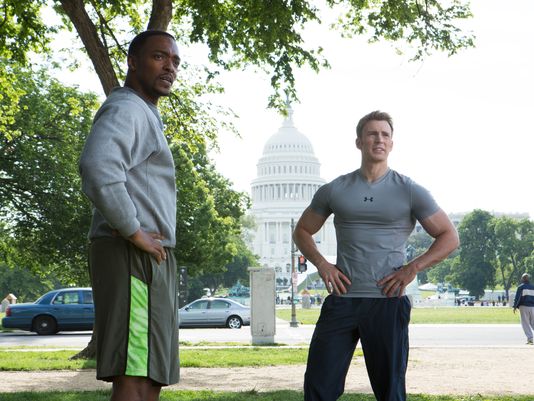
Captain America: The Winter Soldier
Kill the Messenger
Selma
X-Men: Days of Future Past

WDC2

The Boston Online Film Critics Go Their Own Way


140624_MOV_Snow.jpg.CROP.promo-mediumlarge

The Boston Online Film Critics have announced their picks for the best of 2014!

(While I doubt that this will lead to Snowpiercer becoming a major player in the Oscar race, the Boston Online Film Critics do have excellent taste in film…)

BEST PICTURE:
SNOWPIERCER

BEST DIRECTOR:
Alejandro González Iñárritu, BIRDMAN

BEST ACTOR:
Brendan Gleeson, CALVARY

BEST ACTRESS:
Marion Cotillard, TWO DAYS ONE NIGHT

BEST SUPPORTING ACTOR:
Edward Norton, BIRDMAN

BEST SUPPORTING ACTRESS:
Tilda Swinton, SNOWPIERCER

BEST SCREENPLAY:
John Michael McDonagh, CALVARY

BEST FOREIGN LANGUAGE FILM:
TWO DAYS ONE NIGHT

BEST DOCUMENTARY:
LIFE ITSELF

BEST ANIMATED FILM:
THE LEGO MOVIE

BEST CINEMATOGRAPHY:
BIRDMAN

BEST EDITING:
James Herbert & Laura Jennings, EDGE OF TOMORROW

BEST ORIGINAL SCORE:
Mica Levi, UNDER THE SKIN

THE TEN BEST FILMS OF THE YEAR:
1. SNOWPIERCER
2. UNDER THE SKIN
3. BOYHOOD
4. ONLY LOVERS LEFT ALIVE
5. THE BABADOOK
6. TWO DAYS ONE NIGHT
7. BIRDMAN
8. CALVARY
9. INHERENT VICE
10. SELMA

Here are the 10 Semi-finalists for The Best Visual Effects Oscar!


Guardians of the Galaxy

Earlier today, the Academy announced the 10 semi-finalists for this year’s Oscar for Best Visual Effects.

Not on the list: Noah, Exodus, Edge of Tomorrow, or April Rain.

Here’s what made the cut:

Captain America: The Winter Soldier

Dawn of the Planet of the Apes

Godzilla

Guardians of the Galaxy

The Hobbit: Battle of the Five Armies

Interstellar

Maleficent

Night at the Museum: Secret of the Tomb

Transformers: Age of Extinction

X-Men: Days of Future Past

BW and CA

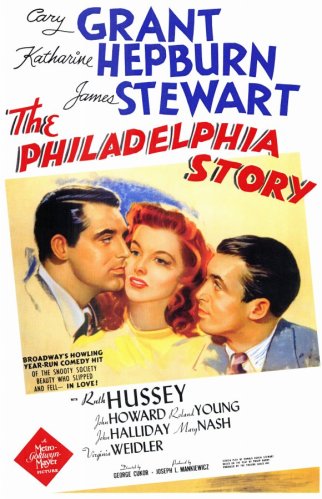
Lisa Reviews The Oscar Nominees: The Philadelphia Story (dir by George Cukor)


The-Philadelphia-Story-(1940)

There are a few reasons why The Philadelphia Story was one of those films that I had been meaning to watch for a while.  For one thing, The Philadelphia Story was nominated for best picture of 1940 (it lost to Alfred Hitchcock’s Rebecca) and my ultimate goal is to see and review every single film ever nominated for best picture.  The other reason is that Jimmy Stewart won an Oscar for his performance in The Philadelphia Story and anyone who doesn’t love Jimmy Stewart has obviously never seen Anatomy of a Murder (not to mention It’s a Wonderful Life!).

Well, The Philadelphia Story was on TCM last night and I finally got to see it and what can I say?  I absolutely loved it.  For a 74 year-old, black-and-white comedy, The Philadelphia Story is still a lot of fun.

The Philadelphia Story tells the story of Tracy Lord (Katharine Hepburn), a wealthy socialite who is engaged to marry George Kitteridge (John Howard), a self-described “man of the people,” who is widely respect for both his strong moral character and the fact that — unlike most of Tracy’s friends — he made his fortune as opposed to inheriting it.

It would be tempting to reach into the bag of simplistic blogging clichés and call the Lords a 1940s version of Khardashians but I’m not going to do that because the Lords have a lot more wit and class.  My favorite member of Tracy’s family was Dinah (Virginia Wiedler), her teenage sister who is sarcastic, cheerfully cynical, and has no problem demanding to be the center of attention.  My sister Erin claims that the reason I liked Dinah is because I saw a lot of myself in the character and that’s probably true.  However, I have to say that the great thing about both Tracy and Dinah is that they were both wittier, classier, and better dressers than all of the Khardashians and Jenners combined.

Anyway, the evil editor of Spy Magazine, Sidney Kidd (Henry Daniell), wants to get pictures of Tracy’s very exclusive and very private wedding so he sends two of his reporters in under cover.  Mike Connor (James Stewart) is a frustrated writer who hates having to lower himself to writing for a tabloid.  Photographer Liz (Ruth Hussey) is secretly in love with Mike.  Helping Mike and Liz pass themselves off as friends of the family is Tracy’s ex-husband, C.K. Dexter Haven (Cary Grant).

As quickly becomes obvious, Dexter is still in love with Tracy.  However, Tracy divorced Dexter because Dexter was an irresponsible alcoholic and, even though Dexter has changed his ways and she is still obviously attracted to him, Tracy is now engaged to the morally upright but boring and judgmental George.

However, Tracy is not just torn between George and Dexter.  She is attracted to Mike as well, to the extent that Tracy even takes the trouble to read some of Mike’s short stories.  For only the second time in her life, Tracy gets drunk and goes for a midnight swim with Mike.  This, of course, leads to the best scene in The Philadelphia Story: Jimmy Stewart singing Somewhere Over The Rainbow.

Seriously, the scene made my entire night.

The Philadelphia Story is based on a play and the film itself is rather stagey in that way that films from the 40s often appear to be to modern viewers.  But, once you get used to the fact that the movie was made in 1940 and not 2014, it’s a real delight.  The dialogue is funny and it’s delivered by one of the best casts ever.  Playing a role that was specifically written for her, Katherine Hepburn is brilliant as the strong-willed but unapologetically romantic Tracy and Cary Grant is just as charming as you would expect Cary Grant to be.  Best of all, you’ve got Jimmy Stewart singing Somewhere Over the Rainbow and seriously, how can you not love that?

Lisa Reviews The Oscar Nominees: Nicholas and Alexandra (dir by Franklin J. Schaffner)


Nicholas_and_Alexandra-831476012-large

(Depending on how much you know about world history, the review below may contain spoilers.)

It was nearly four years ago that I decided that my goal in life was to watch and review every single film — no matter how obscure or potentially disappointing — that had ever been nominated for best picture.  Of course, that’s not my only goal.  If anything, I may have too many, often contradictory goals in my life.  But seeing all of the best picture nominees was definitely one of them and, all these years later, it’s a goal that I’m still trying to achieve.  With the help of TCM and their nonstop schedule of movies made long before I was born, it’s also a goal on which I am slowly but surely making progress.

Last night, as I scrolled through the guide, I noticed that TCM would be showing Nicholas and Alexandra, a three and a half hour film from 1971.  Now normally, I would be hesitant about watching a film that long, if just because I have ADHD and I doubt I’d be able to concentrate on it.  In a theater, watching the action unfold on a big screen, it wouldn’t be a big deal.  However, it’s totally different when you’re talking watching a movie on TV in a house that is full of potential distractions.  Add to that, Wednesday night is when I usually watch shows like Survivor, Hell’s Kitchen, and South Park.

But, here’s the thing.  The title Nicholas and Alexandra sounded familiar to me and not just because I’m an obsessive history nerd.  I did some checking and I discovered that, regardless of how obscure the film may be today, Nicholas and Alexandra was nominated for best picture.  It lost to The French Connection but it was nominated.

So, of course, I had to watch it.

And you know what?
NA

It’s not a terrible movie.  It’s certainly not great.  It has multiple flaws and it’s hard to imagine this film being nominated alongside films like The French Connection, Last Picture Show, and A Clockwork Orange.  Watching the movie, I got the feeling it was probably nominated because it was a big, expensive epic and not because it was one of the best of the year.  But, if you stick with the film (which, if we’re going to be honest here, is much easier said than done), it’s not quite as disappointing as you might expect it to be.

Nicholas and Alexandra tells the story of the last monarch of Russia, Tsar Nicholas II (Michael Jayston).  Struggling to escape the shadow of his father and incapable of understanding what life is like for those not born into royalty, Nicholas is portrayed as being well-meaning but autocratic and blind to the fact that the days of royalty are rapidly coming to an end.  His wife, Alexandra (Janet Susman) is also unpopular with both the Russian citizenry and the royal court on account of being German.

Alexandra spends most her time doting on her youngest son, Alexei, who suffers from hemophilia.  When a flamboyant Serbian monk named Rasputin (Tom Baker) claims that he has the power to heal Alexei, Alexandra immediately brings him into the court.  Soon, rumors are flying across Russia about Rasputin’s relationship with Alexandra.

Meanwhile, men with names like Lenin (Michael Bryant), Trotsky (Brian Cox), and Stalin (James Hazeldine) are plotting to lead a “worker’s revolution…”

If you know anything about history, it’s not really a spoiler to reveal what happens in the second half of Nicholas and Alexandra.  (And if you’re not into history, you probably would not have any interest in watching the movie in the first place.)   Archduke Franz Ferdinand is assassinated, plunging the entire world into war.  Russia declares war on Germany and the German-born Alexandra becomes even more unpopular than before.  The rest of the royal court, jealous over the mad monk’s influence, plots against Rasputin.  The Tsar is forced from the throne and Nicholas and his family spend their last days as captives of the people they once ruled.  Now a powerless prisoner, Nicholas finally starts to understand the world beyond his palace walls.  However, in the end, Nicholas, Alexandra, their children, and their loyal servants are taken into a small room and violently executed.  End of movie.

NA2

So, there are a lot of things wrong with Nicholas and Alexandra.  Not the least of the film’s problem is an unwieldy length and generally slow pace.  (The film was directed by Franklin J. Schaffner, who also directed the still-fun original Planet of the Apes.  Little of the flair he brought to Planet of the Apes is present here.)  This is one of those films that is full of incident with various characters popping up and discussing the intricacies of international politics with little concern as to whether or not any of this is the least bit cinematic or even compelling on a narrative level.  The film has a huge cast but very few memorable characters.

Even worse is that neither Nicholas nor Alexandra never come across as being all that interesting.  The film makes the case that Nicholas’s downfall was largely a result of him being unlucky enough to rule at a time when people across Europe and Asia were rejecting the old ways for the new ways of revolution and industrialization.  Nicholas is continually portrayed as being well-meaning but isolated and that has the potential to be interesting but, at times, the film feels almost as emotionally detached as its characters.

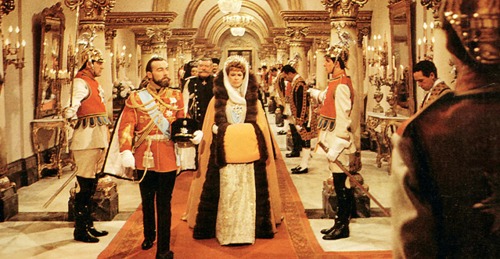
That said, Nicholas and Alexandra does work as a spectacle, as a showcase for beautiful clothing and ornate scenery.  As a character study, Nicholas and Alexandra largely fails but, as a fashion show, it’s actually a lot of fun.    Early on in the film, there’s a lengthy sequence in which Nicholas and Alexandra walk down the red-carpeted hallways of their palace.  It’s shot through Nicholas’s eyes and we see a collection of guards and noblemen and women standing to the side and bowing their heads as the Tsar and his wife walk past.  It’s a good scene and one that perfectly shows not only the life that Nicholas is used to but also why Nicholas doesn’t want to change that life.

baktna03

Perhaps not surprisingly, the first two hours of Nicholas and Alexandra work best when they focus on the flamboyant character of Rasputin.  Baker does a really go job as Rasputin, delivering all of his lines with a ferocious intensity while staring with obviously unhinged eyes.  When he’s with Alexandra, Rasputin is calculating and coldly conniving, providing just enough comfort to keep her under his control.  When he’s with Nicholas or any of the other male members of the court, he reveals himself to be an arrogant libertine, making profane jokes and bragging about his conquests.  It’s a really good performance but, as with so many other good performances in this film, it occasionally gets lost in the film’s dense production.

The best moments of Nicholas and Alexandra come towards the end, with the humbled Nicholas finally revealing his humanity and the Tsar’s family struggling to maintain their dignity even as their inevitable fate approaches.  At this point, the performers came to life.  The film suddenly had an emotional resonance.  It finally became about something!  For those final 20 or so minutes, Nicholas and Alexandra suddenly seemed worthy of being awarded.

In fact, based on those final 20 minutes, I would even be willing to see a sequel called Nicholas and Alexandra and Rasputin Makes Three.  

(Though I’m not sure how that sequel could ever be made.  As @Kev1Media pointed out when I suggested it on twitter, Adam Sandler would have to be somehow involved.)

As for Nicholas and Alexandra, it’s not a great film but if you’re into history or you’re an Oscar completist like me, the film has its occasional charms.  You just have to be willing to look for them.

Nicholas and Alexandra

Here Are The Gotham Nominations!


Under the Skin

Under the Skin

Here are the nominations for the Gotham Independent Film Awards!  It’s debatable just how reliable the Gothams are as an Oscar precursor.  For one thing, the majority of the big studio productions are not eligible for the Gothams.  However, when you’re an indie film trying to win mainstream awards, any recognition is good recognition.

As far as the nominees go, Birdman and Boyhood are already Oscar front runners.  However, the Gotham nominations will perhaps remind some people that The Grand Budapest Hotel is eligible for Oscar consideration as well.

Here are the Gotham nominations!

Best Feature

  • Birdman or (The Unexpected Virtue of Ignorance) – Alejandro G. Iñárritu, director; Alejandro G. Iñárritu, John Lesher, Arnon Milchan, James W. Skotchdopole, producers (Fox Searchlight Pictures)
  • Boyhood – Richard Linklater, director; Richard Linklater, Cathleen Sutherland, Jonathan Sehring, John Sloss, producers (IFC Films)
  • The Grand Budapest Hotel – Wes Anderson, director; Wes Anderson, Scott Rudin, Steven Rales, Jeremy Dawson, producers (Fox Searchlight Pictures)
  • Love Is Strange – Ira Sachs, director; Lucas Joaquin, Jay Van Hoy, Lars Knudsen, Ira Sachs, Jayne Baron Sherman, producers (Sony Pictures Classics)
  • Under the Skin – Jonathan Glazer, director; Nick Wechsler, James Wilson, producers (A24 Films)

Best Documentary

  • Actress – Robert Greene, director; Douglas Tirola, Susan Bedusa, Robert Greene, producers (The Cinema Guild)
  • CITIZENFOUR – Laura Poitras, director; Laura Poitras, Mathilde Bonnefoy, Dirk Wilutzky, producers (RADiUS, Participant Media, and HBO Documentary Films)
  • Life Itself – Steve James, director; Zak Piper, Steve James, Garrett Basch, producers (Magnolia Pictures and CNN Films)
  • Manakamana – Stephanie Spray & Pacho Velez, directors; Lucien Castaing-Taylor, Véréna Paravel, producers (The Cinema Guild)
  • Point and Shoot – Marshall Curry, director; Marshall Curry, Elizabeth Martin, Matthew Van Dyke, producers (The Orchard and American Documentary / POV)

Bingham Ray Breakthrough Director Award

  • Ana Lily Amirpour for A Girl Walks Home Alone at Night (Kino Lorber)
  • James Ward Byrkit for Coherence (Oscilloscope Laboratories)
  • Dan Gilroy for Nightcrawler (Open Road Films)
  • Eliza Hittman for It Felt Like Love (Variance Films)
  • Justin Simien for Dear White People (Lionsgate and Roadside Attractions)

Best Actor*

  • Bill Hader in The Skeleton Twins (Lionsgate and Roadside Attractions)
  • Ethan Hawke in Boyhood (IFC Films)
  • Oscar Isaac in A Most Violent Year (A24 Films)
  • Michael Keaton in Birdman or (The Unexpected Virtue of Ignorance) (Fox Searchlight Pictures)
  • Miles Teller in Whiplash (Sony Pictures Classics)

* The 2014 Best Actor nominating panel also voted to award a special Gotham Jury Award jointly to Steve Carell, Mark Ruffalo, and Channing Tatum for their ensemble performance in Foxcatcher (Sony Pictures Classics).

Best Actress

  • Patricia Arquette in Boyhood (IFC Films)
  • Gugu Mbatha-Raw in Beyond the Lights (Relativity Media)
  • Julianne Moore in Still Alice (Sony Pictures Classics)
  • Scarlett Johansson in Under the Skin (A24 Films)
  • Mia Wasikowska in Tracks (The Weinstein Company)

Breakthrough Actor

  • Riz Ahmed in Nightcrawler (Open Road Films)
  • Macon Blair in Blue Ruin (RADiUS)
  • Ellar Coltrane in Boyhood (IFC Films)
  • Joey King in Wish I Was Here (Focus Features)
  • Jenny Slate in Obvious Child (A24 Films)
  • Tessa Thompson in Dear White People (Lionsgate and Roadside Attractions)
Boyhood

Boyhood

Finally — Some Oscar News!


Finally, I have some concrete, nonspeculative, 100% verified Oscar news to share with y’all!

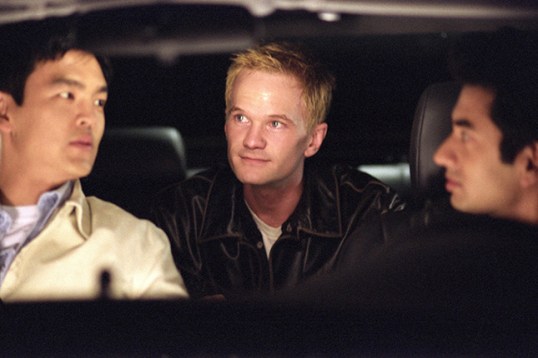
Yesterday, it was announced that the host of next year’s ceremony will be …. Neil Patrick Harris!

Now, that news isn’t really shocking or surprising.  Neil Patrick Harris has been hosting everything lately.  He’s hosted the Tonys.  He’s hosted the Emmys.  It’s about time that he got a chance to host the Oscars.

I have to admit that I think it’s a little bit silly the amount of importance that some commentators put on who exactly is going to host the ceremony.  Usually, it really doesn’t make that much of a difference.  Seth McFarlane was criticized when he hosted.  Ellen DeGeneres was acclaimed.  But ultimately, did either one of them really make a difference?  It all comes down to what the winners are wearing, what they say in their speeches, and whether or not there are any surprises or upsets.  The host is just kind of there.

(I mean, Ellen did a good job and all but oh my God, did I ever get sick of every group on the planet trying to do their own version of the Oscar selfie….)

I know some of my friends were hoping that Tina Fey and Amy Poehler would host the Oscars.  Honestly, though, both Tina and Amy have lately started to remind me of the type of girls in high school who would judge you for wearing a short skirt.  There’s a certain tyranny of thought right now that says we have to love everything that Tina and Amy do but I personally think I’ll be much happier with Neil Patrick Harris.

And who knows?  Gone Girl could be an Oscar contender this year and, depending on how much the Academy actually embraces it, Harris could be both the host and a nominee, an accomplishment most recently achieved by James Franco.

Anyway, the main reason I’m happy about this news is because it means that Oscar season is here!  Soon, all of the Oscar films will have been seen and reviewed.  The critics groups will be voting.  The campaigns will be starting.

And it will officially be a good time to be alive…

"Take me to the Oscars!"

“Take me to the Oscars!”


Embracing the Melodrama #57: Winter’s Bone (dir by Debra Granik)


winters-bone

I can still remember what it felt like, back in 2010, as I stepped out of the theater where I had just watched Winter’s Bone.  I had just spent 100 minutes engrossed in that film’s world and it was somewhat jarring to suddenly find myself back in my world.  The air around me was still.  The clear sky above me seemed to be a totally new shade of blue.  The sounds of passing cars and overheard conversations echoed in my head.  When I walked, I felt as if I was moving at a different, dreamier pace than everyone else, as if I was still only partially back in my world.

That’s the type of film that Winter’s Bone is.  It’s a film about life on the fringes, a portrait of a very real part of America that a lot of people don’t even realize exists.  It’s a film that sticks with you and dares you to try to forget the people who it has introduced you to and the stories that it tells.

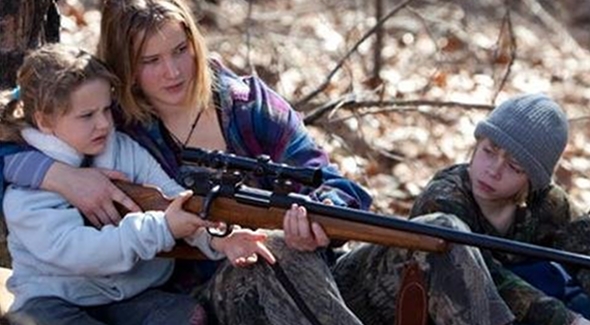
Winter’s Bone takes place in the Ozarks, a society and world that is dominated by meth and secrets.  Speaking as someone who still has family who live on the outskirts of the world depicted here, I can say that Winter’s Bone gets both the big picture and the little details right.  Everything from the unbreakable cycle of poverty to the defiant resilience of the people is depicted just as it is.  Make no mistake about it — the people in Winter’s Bone may not have much but they do have their pride.  It’s portrayed best in the scene where meth head Teardrop (John Hawkes) glares down the county sheriff (Garret Dillahunt), letting him know that, regardless of who is wearing the uniform, this is Teardrop’s world.

Teardrop is the uncle of 17 year-old Ree Dolly (Jennifer Lawrence), who is considering joining the army once she graduates from high school but, for now, spends all of her time taking care of her mentally ill mother and her two younger siblings.  Her father, who is one of the county’s best meth cooks, was recently arrested and has a court date approaching.  However, he has apparently skipped bail and disappeared.  When Ree is told that, unless her father shows up for his court date, she and her family will lose their house, Ree sets out to try to find him.

05_Flatbed_1 - JANUARY

Ree, however, knows that her father would never have jumped bail and she also knows that there’s no way he died in a meth lab fire, as some people are claiming.  She knows that her father has been murdered but, unlike Teardrop, Ree has no interest in getting revenge.  She just wants to find his body so she can prove that he’s dead and her family can keep their home.  Unfortunately, even this brings Ree into conflict with the local crime boss.

Taking place on a blasted landscape of dilapidated farms, rusty pickups, and the burned ruins of abandoned meth labs, Winter’s Bone is an unusually powerful piece of Southern gothic. It’s also a film that — unlike a lot of other acclaimed movies — actually gets better with repeat viewings.  When you first see it, you’re overwhelmed by the film’s bleakness.  When it ends, you’re not sure if you should be happy or sad.  The second time, however, you can better appreciate the skill with which director Debra Granik tells her story, the way she frames Ree against the landscape as if Ree was the lone hero in a classic western and how the scenes where Ree searches for her father in a swamp are full of shadows and menace.  The third time, you can better appreciate the performances of characters actors like John Hawkes, Garret Dillahunt, and especially Dale Dickey.  The fourth time, you no longer have any doubts.  Winter’s Bone is one of the best films that you’ve ever seen.

And, through it all, Jennifer Lawrence is there and reminding you why she became a star in the first place.  She may have won her Oscar for Silver Linings Playbook and she may be best known for being the face of The Hunger Games franchise but Winter’s Bone remains Jennifer Lawrence’s best and bravest performance.  Without a hint of vanity or reluctance, Lawrence portrays Ree as a resilient and unsentimental survivor and you can’t help but cheer her on as she refuses to back down to any authority, legal or otherwise.  By the end of the film, you know that Ree is probably as trapped as anyone but you can’t help but hope that she’ll somehow find something better.

If you haven’t seen Winter’s Bone, you need to.

Target Practice

Embracing the Melodrama #43: The Piano (dir by Jane Campion)


I recently watched the 1993 best picture nominee The Piano and all I can say is that it is going to be a struggle to put into words just how much I loved this film.

Taking place in the 19th century, The Piano tells the story of Ada (Holly Hunter), a Scottish woman who hasn’t spoken since she was 6 years old.  Like many things in this enigmatic film, the reason why Ada stopped speaking is never clearly stated.  What is known is that she communicates through sign language and by playing her piano.  While Ada is usually a black-clad and somber figure, she comes to life when she plays the piano.  Ada also has a daughter named Flora, the result of a brief affair that Ada had with one of her teachers.  Unlike her mother, Flora (played by 10 year-old Anna Paquin, long before True Blood) is rarely silent and delights in telling elaborate lies about how her father died.

the-piano-01

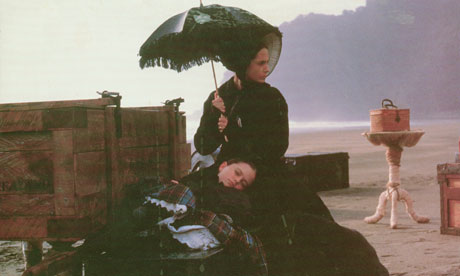
Ada’s father sells her into marriage to a New Zealand frontiersman named Alisdair (Sam Neill), a man who Ada has never even met.   When Ada and Flora first arrive in New Zealand, they are dropped off on the beach and forced to wait a night until Alsdair can meet them.  In the film’s most hauntingly beautiful scenes, Ada plays her piano on that beach while Ada dances in the surf.  It’s during those scenes that The Piano reveals three of its greatest strengths: the lush cinematography of Stuart Dryburgh, the haunting score composed from Michael Nyman, and the fact that Hunter and Paquin are totally believable as mother and daughter.  Not only is it easy to imagine Paquin growing up to look like Holly Hunter, but the two actresses even manage to perfectly imitate each other’s gestures and facial expressions.  Most of the reviews that I’ve read of  The Piano tend to emphasize the film’s focus on the conflict between the sensual and repressed but to me, the film works just as well as an exploration of the strong bonds that naturally exist between mothers and daughters.  I’m not ashamed to admit that when I look at the picture above, I reminded of how, when I was Flora’s age, I also used to hide behind my mom whenever I saw anyone that I didn’t know coming our way.

When Alisdair does finally show up to take them to their new home, he proves to be a rather cold and distant figure.  It would have been very easy for the film to portray Alisdair as being a completely heartless villain but, as played by Sam Neill, Alisdair is potrtayed as being less a traditional villain and more as just being a painfully unimaginative man who is incapable of understanding why Ada’s piano is so important to her.  To Ada, the piano and its music equals the life and freedom that she’s not allowed to experience.  To Alisdair, the piano is simply a bulky object that will not fit into his small house.  Over Ada’s objections (luckily, Flora is on hand to translate her sign language), Alisdair first leaves the piano on the beach and then agrees to sell it to Baines (Harvey Keitel), another white settler who — unlike Alisdair — is comfortable with the natives and their customs.

Baines, however, allows Ada to come over to his hut and play the piano.  He offers to give the piano back to her — key by key — if she agrees to continue to come to his hut and play while he watches and “pleasures” himself.  Reluctantly, Ada agrees but soon, she and Baines are falling in love.

Needless to say, when Alisdair finds out what has been going on at Baines’s hut, he is not happy.  As he largely considers to be his property, bought and paid for, he also feels that he has the right to decide whether or not she’s capable of playing her piano…

The Piano: Holly Hunter and Anna Paquin

The Piano is a simply an amazing and visually sensual film that is blessed with excellent lead performances from Hunter, Keitel, Neill, and Paquin.  As directed by Jane Campion, The Piano plays out as both a delirious homage to gothic romanticism and a feminist parable about the way that even women who aren’t mute are still punished for expressing their honest desires.

And, of course, there’s that amazing score: