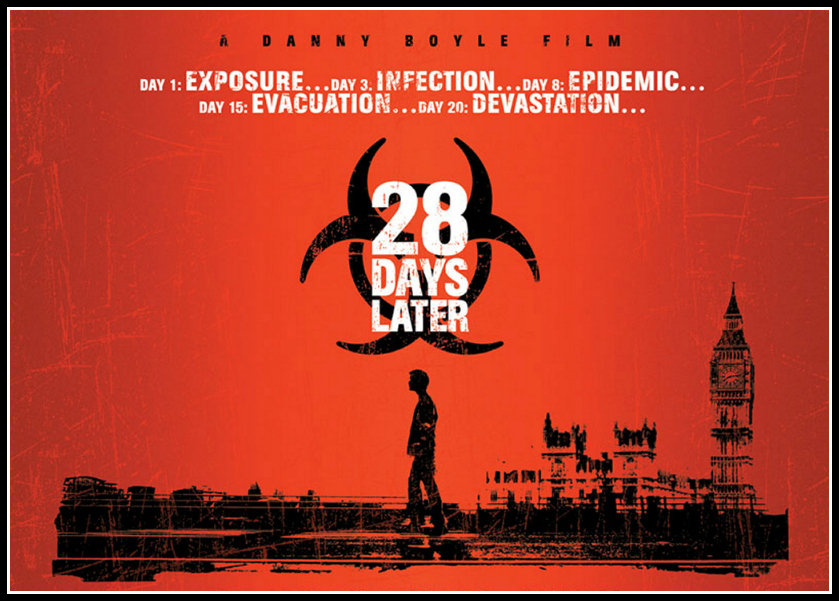
28 Days Later


There are A LOT of bad horror films out there and I mean Halloween Resurrection bad, but when you get a truly great one, it sticks with you for your life.  This movie is more unique in that the writer Alex Garland really peaked with this film and there are IMDB credits to prove it.  Danny Boyle directed the piece and you really feel as though you were inhabiting the after-times of a dead world….well, undead.  Danny Boyle did Trainspotting, Slumdog Millionaire, 127 hours, but I know what you’re thinking- Did he write anything besides family films for Disney?  Yes, he made this awesome zombie film.

We see shots of terrible violence and realize that monkeys are being forced to watch it. Then, Animal Rights Activists enter heavily armed with guns and sanctimony.  The researcher begs them not to release the animals because they are infected with a terribly contagious disease and that the goal of their research is to find a cure for rage.  The Animal Rights Activists patiently listen to the scientist instead of acting purely from smug instinct, dooming us all.  Just kidding, they release one of the monkeys, it rips the animal rights activist apart, barf bleeds all over her, making her patient zero, and I try really hard not to root for the diseased monkey.  The disease is out!  Of course, many of us always knew that animal rights activists would lead to the zombie apocalypse.  Just read their twitter feeds and you’ll know that they’ll doom us all.  Fade to Black and 28 Days Later… appears as a subtitle in the bottom right….BRILLIANT!!!

Jim wakes from a coma to a dead world.  Sound familiar? Yes, TWD went beyond homage there.  He leaves the hospital to amazing details that really sell a dead London.  Empty hospital, empty streets, garbage, worthless cash everywhere, a bus is overturned in front of parliament, and an amazing score reveals a World without people.  If you’re looking for the song that plays when he’s walking around dead London during the opening –  it’s by Godspeed You! Black Emperor – East Hastings – Long Version.

HOW DID THEY MAKE LONDON EMPTY?  MERLIN!  This is England, after all.   Nah, Danny Boyle got MANY government officials to agree to let the production shutdown huge traffic arteries for 90 seconds at a time.  London is one my most favorite cities and I would love to live there and it is Europe’s New York City, therefore, imagine shutting down Times Square for filming.  

Jim gets chased by fast-moving zombies and meets Selena and a Red Shirt.  He goes with them and realizes very quickly that he was probably better off in a coma.  Jim insists on seeing his parents.  They agree to take him and he finds them suicided on the bed clutching a note that reads- “With endless love, we left you sleeping. Now, we’re sleeping with you.  Don’t wake up.” This is not your dad’s zombie movie.  They decide to stay at his house for the night, but are attacked by zombies.  Red Shirt gets infected and is dispatched by Selena.  Jim and Selena must flee.

Jim and Selena venture forth and find Frank and his daughter Hannah.  It hasn’t rained for some time, therefore -no water.  For survival, they have to leave the city.  Selena doesn’t want to go with Frank and his daughter because she sees them as anchors, but Jim insists and Hannah explains that we actually need each other. Frank plays a radio signal that beckons them to safety and they leave as one tribe.  Along the way, there are some intense scenes and some shopping.  They arrive at the salvation location, but Frank gets infected and is killed by soldiers.

Right away, you can tell that the soldiers are goofing off too much.  I have commanded soldiers and there’s some level of goofing off, but this had an air of creepiness and broken discipline.    The soldier’s have taken over a residence as their HQ and have put up defenses to keep zombies out and people in.  We quickly learn that the radio message was a trap. Corporal Mitchell harasses Selena and a fight erupts.  The Major breaks it up, but it’s clear that Jim, Hannah, and Selena are prisoners.  The Major explains that the soldiers could not face a dead world and one attempted suicide.  The Major had a plan- lure women to the compound with a radio signal.  When they arrived, they would keep them prisoner to breed with his soldiers to restart civilization. He puts it simply: women equal hope.  His logic and delivery is truly chilling in its cold mathematics.

They decide to execute Jim and a SGT who gets in their way and keep Hannah and Selena for reproduction.  Corporal Mitchell and another Soldier take Jim and the SGT out for execution to a killing field.  Corporal Mitchell wants to bayonet Jim, the other Soldier can’t handle that kind of intimate murder, leading to a melee.  The SGT is killed and Jim escapes.

The next sequence is truly amazing because we see our hero morph from the sensitive man that he is naturally to a state of feral revenge indistinguishable from the fast-moving zombies.  He’s shirtless to further emphasize his lack of civility as he makes short work of many of the soldiers to rescue Hannah and Selena. Corporal Mitchell who wanted to bayonet him and rape Selena becomes the focal point of Jim’s rage- Jim puts his thumbs deep into Corporal Mitchell’s eyes until he’s dead.  This is a critical act of monstrosity because it shows not tells in the clearest finality that there is no separation between Jim’s blind rage and the rage that has infected the human population.

I don’t want to totally spoil the ending because this film will remain with you and is a must see.  It’s commentary on violence and society is forever salient: Violence is horrific, but forced civilization is worse and will lead to the ultimate act of revenge – THUMBS IN YOUR EYEBALLS or some such equivalent.  The other important lesson the film tries to inculcate is to beware of self-certain sanctimonious people because their grandiosity could doom us all.

What If Awards Season Began And Lisa Totally Missed It? Here Are The Gotham Nominations!


The_Witch_poster

As proof of how busy I’ve been over the past few days, just consider this: On October 20th, awards season kicked off and I totally missed it!

That’s right.  On October 20th, the nominations for the 2016 Gotham Awards were announced.  The Gothams honor independent films and they actually have some pretty strict guidelines regarding what they consider to be independent.  So, a lot of this year’s potential Oscar nominees are not eligible for the Gotham Awards.

That said, over the past few years, the Gothams have slowly emerged as a somewhat helpful precursor.  While getting a Gotham nomination does not guarantee any film an Oscar nomination, it certainly doesn’t hurt.  That may especially be true this year as 2016 has, for the most part, not been the great cinematic year that 2015 was.  With no real favorites having yet to emerge, every precursor counts.

So, with that in mind and just a few days late, here are the Gotham nominations!

Best Feature

Certain Women
Kelly Reichardt, director; Neil Kopp, Vincent Savino, Anish Savjani, producers (IFC Films)

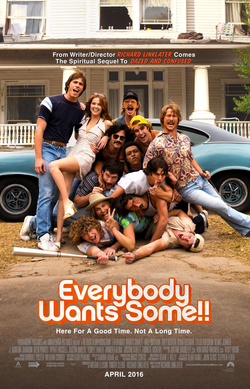
Everybody Wants Some!!
Richard Linklater, director; Megan Ellison, Ginger Sledge, Richard Linklater, producers (Paramount Pictures)

Manchester by the Sea
Kenneth Lonergan, director; Kimberly Steward, Matt Damon, Chris Moore, Lauren Beck, Kevin J. Walsh, producers (Amazon Studios)

Moonlight
Barry Jenkins, director; Adele Romanski, Dede Gardner, Jeremy Kleiner, producers (A24)

Paterson
Jim Jarmusch, director; Joshua Astrachan, Carter Logan, producers (Amazon Studios)

Best Documentary

Cameraperson
Kirsten Johnson, director; Marilyn Ness, producer (Janus Films)

I Am Not Your Negro
Raoul Peck, director; Rémi Grellety, Raoul Peck, Hébert Peck, producers (Magnolia Pictures)

O.J.: Made in America
Ezra Edelman, director; Caroline Waterlow, Ezra Edelman, Tamara Rosenberg, Nina Krstic, Deirdre Fenton, Erin Leyden, producers (ESPN Films)

Tower
Keith Maitland, director; Keith Maitland, Megan Gilbride, Susan Thomson, producers (Kino Lorber, Independent Lens)

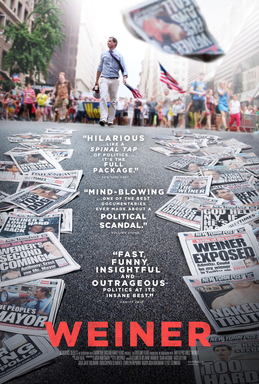
Weiner
Josh Kriegman, Elyse Steinberg, directors and producers (Sundance Selects and Showtime Documentary Films)

Weiner_(film)

Bingham Ray Breakthrough Director Award

Robert Eggers for The Witch (A24)

Anna Rose Holmer for The Fits (Oscilloscope Laboratories)

Daniel Kwan & Daniel Scheinert for Swiss Army Man (A24)

Trey Edward Shults for Krisha (A24)

Richard Tanne for Southside with You (Roadside Attractions and Miramax)

Best Screenplay

Hell or High Water, Taylor Sheridan (CBS Films)

Love & Friendship, Whit Stillman (Amazon Studios)

Manchester by the Sea, Kenneth Lonergan (Amazon Studios)

Moonlight, Story by Tarell Alvin McCraney; Screenplay by Barry Jenkins (A24)

Paterson, Jim Jarmusch (Amazon Studios)

Best Actor*

Casey Affleck in Manchester by the Sea (Amazon Studios)

Jeff Bridges in Hell or High Water (CBS Films)

Adam Driver in Paterson (Amazon Studios)

Joel Edgerton in Loving (Focus Features)

Craig Robinson in Morris from America (A24)

Best Actress*

Kate Beckinsale in Love & Friendship (Amazon Studios)

Annette Bening in 20th Century Women (A24)

Isabelle Huppert in Elle (Sony Pictures Classics)

Ruth Negga in Loving (Focus Features)

Natalie Portman in Jackie (Fox Searchlight Pictures)

Breakthrough Actor*

Lily Gladstone in Certain Women (IFC Films)

Lucas Hedges in Manchester by the Sea (Amazon Studios)

Royalty Hightower in The Fits (Oscilloscope Laboratories)

Sasha Lane in American Honey (A24)

Anya Taylor-Joy in The Witch (A24)

* The 2016 Best Actor/Best Actress and Breakthrough Actor nominating panels also voted to award a special Gotham Jury Award for ensemble performance to Moonlight, “in which actors at all levels of experience give outstanding performances that speak eloquently to one another both within and across each chapter of the story.” The awards will go to actors Mahershala Ali, Naomie Harris, Alex Hibbert, André Holland, Jharrel Jerome, Janelle Monáe, Jaden Piner, Trevante Rhodes, and Ashton Sanders.

everybody_wants_some_poster

(AWARDS SEASON HAS BEGUN!!!)


James Bond Film Review: SPECTRE (dir by Sam Mendes)


Spectre_poster

(SPOILERS)

Three years ago, Arleigh, Leonard, Chris Mead, and I reviewed every single James Bond films up to Skyfall.  Leonard often refers to this as being our Avengers moment and it remains one of my fondest memories of my time here at the Shattered Lens.  It really doesn’t matter who is playing the role or what the villain’s evil plan may be, or whether the individual film was made in the 60s or just last year, the Bond films are a lot of fun.  Some of them are better than others.  Sometimes, you get lucky and you get something like For Your Eyes Only and sometimes you have to settle for Die Another Day.  Ultimately, every Bond film is an event and, in many ways, they are critic proof.  As long we hear the iconic music, as long as Bond gets a few good quips, as long as the villain chuckles while explaining his evil plan, as long as there’s an exciting chase and a big explosion, and as long as there’s a lot of gorgeous clothes to look at and at least one tastefully lit sex scene, most viewers will be happy.

If it’s not broken…

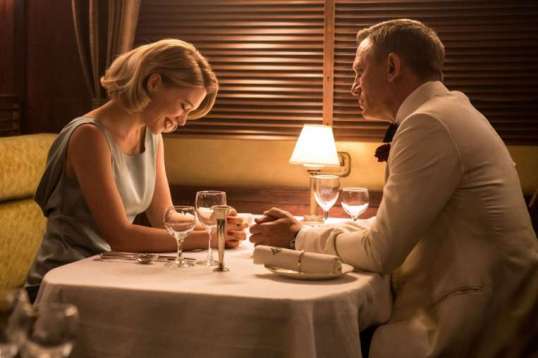
Most viewers will probably be happy with SPECTRE, the latest Bond film.  I saw the film yesterday and, even if it won’t ever make my list of top ten Bond films, I enjoyed it.  Daniel Craig is back as Bond, Christoph Waltz fulfills his destiny by becoming the 9th actor to play the iconic villain Blofeld, Dave Bautista is a properly intimidating henchman, and Lea Seydoux is the strongest Bond girl since Eva Green.  One thing that I especially appreciated about the film is that, in the roles of M, Miss Moneypenny, and Q, Ralph Fiennes, Naomie Harris, and Ben Whishaw are actually given an opportunity to get involved in the film’s action and all three of them are a lot of fun to watch.  The film has an absolutely brilliant opening, featuring Bond assassinating a man in Mexico City and destroying a city block in the process.  There’s an exciting chase scene, there’s a few moments of genuine wit, and there’s even one of those patented Bond train journeys, where sex and violence are mixed with intoxicating results.  And yes, the clothes are to die for…

To Die For

To Die For

It’s good and undeniably enjoyable in so many ways and yet somehow, SPECTRE still left me feeling slightly disappointed.  Some of that is because SPECTRE exists in the shadow of Skyfall.  After Skyfall (which I feel should have been one of the films nominated for best picture of 2012), expectation were sky high for SPECTRE.  Those expectations were so high that there was no way that SPECTRE could have hoped to meet them.  (You could argue that Quantum of Solace faced the same problem when it had to follow Casino Royale.)  SPECTRE is no Skyfall but, then again, few films are.

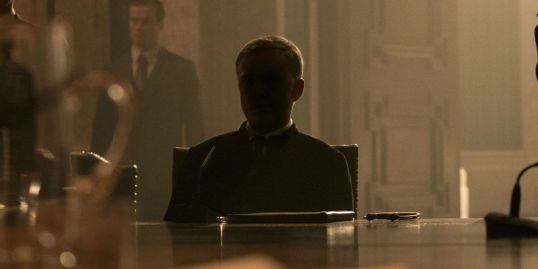
Speaking of high expectations, I think we were all expecting Christoph Waltz to be one of the best Bond villains.  After all, Waltz is a legitimately great actor and he specializes in the type of cheerful arrogance that has epitomized some of Bond’s greatest antagonists.  (One can easily imagine Waltz playing Auric Goldfinger.)  Add to that, Waltz is playing Blofeld, the ultimate Bond bad guy.  As it is, Waltz gives a good performance but SPECTRE‘s Blofeld just isn’t that interesting.  He has a lot more in common with the generic baddie from Quantum of Solace than with Goldfinger or the fascinated Raoul Silva of Skyfall.

As well, it wasn’t just enough for Blofeld to be the leader of a secret organization bent on world domination.  It wasn’t enough that Blofeld was secretly responsible for everything that happened in Casino Royale, Quantum, and Skyfall (which, as much as some critics have complained about this particular plot twist, is actually a clever reference to Blofeld’s shadowy presence in all of Sean Connery’s Bond films).  For some reason, the film’s writers decided it would be a good idea to make him Bond’s jealous stepbrother.  Blofeld’s past relationship to Bond feels incredibly superfluous.  I like to think that I’m pretty good at suspending my disbelief (especially when it comes to a Bond film) but I have to admit that I found myself rolling my eyes while Blofeld talked about how jealous he was when Bond came to live with his family.

We all know it's you, Christoph...

We all know it’s you, Christoph…

(As well, Blofeld’s jealousy was a bit too reminiscent of Raoul Silva’s jealousy of Bond.  It worked in Skyfall because we weren’t expecting a Bond villain to have a vulnerable side and Javier Bardem’s perversely charismatic performance caught the viewers off guard.  In SPECTRE, it just feels like something that should have been eliminated during a rewrite.)

Daniel Craig, of course, is the sixth actor to officially play the role of James Bond.  It’s always interesting to see how each actor interprets the role.  The most successful Bond films are always built around the actor’s individual interpretation.  For instance, it would be difficult to imagine Roger Moore in any of Sean Connery’s Bond films and, at the same time, it would be hard to imagine Sean Connery in The Spy Who Loved Me.  Sean Connery was the Ruthless Bond.  George Lazenby was the Insecure Bond.  Roger Moore was the Bemused Bond.  Timothy Dalton was the Boring Bond.  Pierce Brosnan was the Suave Bond.  Depending on which one of his films you see, Daniel Craig is either the Professional Bond or the Whiny Bond.  SPECTRE continues the pattern that we’ve seen in the previous Craig films of presenting a James Bond who is struggling to balance his humanity with his job.  When it works, like in Skyfall, it’s riveting.  When it doesn’t work, like in Quantum of Solace, it runs the risk of getting rather tedious.  SPECTRE finds Craig in between those two extremes.  It’s an uneven performance.  Craig and Seydoux have great chemistry and the scenes where Craig interacts with Fiennes, Harris, and Whishaw are fun to watch.  But there are other scenes where Daniel Craig just comes across like he’s bored with the whole thing.  Craig’s Bond has spent four films trying to figure out how he feels about his job.  If Craig returns for a fifth film (and, as of right now, that seems to be a big if), he will hopefully have finally gotten over it.

(That said, SPECTRE was definitely written for Craig’s bond.  At the end of the film — SPOILER, obviously — Bond has the choice between executing a man in cold blood or allowing the authorities to arrest him.  Craig allows the man to be arrested.  Connery would have put a bullet in his head and then smirked about it.)

He totally would...

He totally would…

And if it seems that I’m being critical of SPECTRE — well, I am.  It’s one of the more uneven films in the Bond franchise, one that especially suffers when compared to some of the other spy films (Kingsman, MI: Rogue Nation) released this year.  But, at the same time, SPECTRE does deliver the basics of what we expect from a Bond film.  It’s entertaining and it has its fun moments.  It’s no Skyfall but at least it’s better than Quantum of Solace.

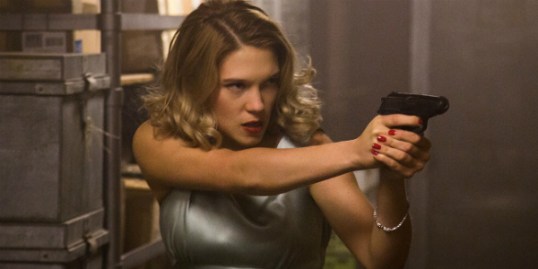
Incidentally, I want to be Lea Seydoux when I grow up...

Incidentally, I want to be Lea Seydoux when I grow up…

Other Bond Reviews on TSL:

  1. Casino Royale (TV version)
  2. Dr. No
  3. From Russia With Love
  4. Goldfinger
  5. Thunderball
  6. You Only Live Twice
  7. Casino Royale (excessive version)
  8. On Her Majesty’s Secret Service
  9. Diamonds Are Forever
  10. Lisa’s Review of Live and Let Die
  11. Arleigh’s Review of Live and Let Die
  12. The Man With The Golden Gun
  13. The Spy Who Loved Me
  14. Moonraker
  15. For Your Eyes Only
  16. Octopussy
  17. Never Say Never Again
  18. A View To A Kill
  19. The Living Daylights
  20. Licence to Kill
  21. Goldeneye
  22. Tomorrow Never Dies
  23. The World Is Not Enough
  24. Die Another Day
  25. Casino Royale (Craig version)
  26. Quantum of Solace
  27. Skyfall

Film Review: Southpaw (dir by Antoine Fuqua)


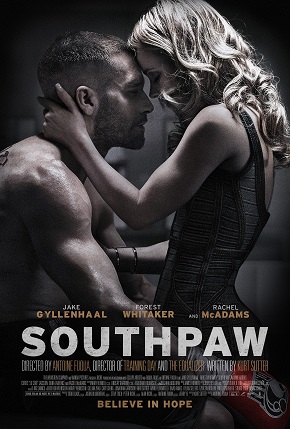
Southpaw_poster

Southpaw features Jake Gyllenhaal as a boxer who loses his wife, his daughter, his career, his self-respect, his car, his house, his manager, his friends, and nearly his life.  But then, about 70 minutes into the film, he gets a chance to get it all back.  Well, almost all of it.  His wife is dead so he can’t get her back but there are hints that he might get together with a helpful social worker after the end credits role.

There was really only one reason why I was interested in seeing Southpaw and that’s because it starred Jake Gyllenhaal.  Last year, Gyllenhaal gave the performance of his career in Nighcrawler.  Gyllenhaal was so brilliant that you just knew the Academy was going to prove itself clueless by not nominating him.  And that’s exactly what happened.  Gyllenhaal was snubbed and, as a result, the Academy now owes him a nomination.  When the trailer for Southpaw first appeared and we saw Gyllenhaal as muscular and bloody, a lot of us assumed that Southpaw would be the film that would get him that nomination.

And Jake Gyllenhaal does do a pretty good job in Southpaw.  He’s one of the main reasons for seeing the film.  It’s interesting to compare Gyllenhaal’s hyperactive performance and sickly appearance in Nightcrawler with his work as boxer Billy Hope in Southpaw.  Billy is a professional brawler and you believe it when you look at him.  Not only is he huge and muscular but he’s got a face that has obviously been punched more than a few times.  When he speaks, he isn’t the hyper articulate con man of Nightcrawler and Love and Other Drugs.  Instead, he stares at the ground as he mumbles and struggles to put together the simplest of thoughts.  It’s a good performance but, at the same time, it lacks the element of surprise that Gyllenhaal has brought to his best roles in the past.  You watched both Donnie Darko and Nightcrawler and you knew that only Gyllenhaal could have brought those roles to life.  Billy Hope, however, is a far less interesting character and you could imagine any number of actors playing the role.  (Reportedly, Southpaw was actually written with Eminem in mind and you really can see him playing the role.)

And really, the entire film is a lot like Billy Hope.  It does its job but there’s nothing all that interesting about it.  Southpaw‘s biggest surprise comes about 20 minutes into the film when Billy’s loving wife, Maureen (Rachel McAdams), is shot and killed and you already knew that was going to happen from the film’s trailer.  After Maureen’s death, Billy starts using alcohol and drugs and, as a result, he loses custody of his daughter, Leila (12 year-old Oona Laurence, giving a great performance).  Because this is a sports film, Billy has to hit rock bottom before, with the help of a grizzled and haunted trainer (Forest Whitaker), he can get a chance to win back both the championship and his daughter.  Director Antoine Fuqua obviously know how to tell these type of testosterone-drenched stories but there’s not a single moment in Southpaw that you won’t see coming from miles away.

And don’t get me wrong.  Unlike some other films that I was less than overwhelmed by, I can actually understand why some people in the theater applauded at the end of Southpaw.  It’s an effective film, even if it does run on for a little bit too long.  It tells a heartfelt story.  It’s a crowd pleaser and I’m sure that a lot of people will enjoy it.  But, for me, it was just too predictable.  I like it when movies catch me off guard and that’s something that Southpaw never came close to doing.

A quick sidenote: Southpaw features the final score composed by the late James Horner and the film is dedicated to his memory.  If you see the movie, be sure to stick around for the dedication so that you can put your hands together for a cinematic and musical legend.

Quick Peek: The 2nd Spectre Trailer (and Featurette)


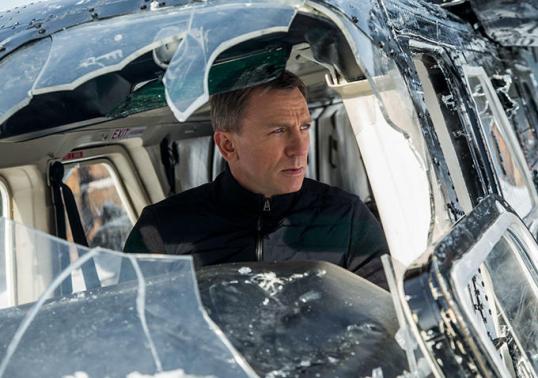
images-2Sometime around 8am in London, the 2nd trailer for Sam Mendes “Spectre” was released. The 24th film in the Bond Franchise, this one is a little similar to the Skyfall trailer in that Bond (Daniel Craig) is perhaps on the run again or is at least trying to cover his tracks. So far, it’s looking good.

Here are some of the things I’ve noticed:

1.) It’s a Snow Movie – With the exception of The World is Not Enough, most of the Bond films that take place in cold climates seem to fair better than the desert ones. As long as none of the girls aren’t named after a Holiday, this might work. Of course, that’s just my opinion there, others may of course disagree.

2.) Bond and M (Ralph Fiennes) already have issues – From the start Bond and M are at odds. That was quick. Nice to get it all out of the way.

3.) The Return of Mr. White. – One of the men responsible for the death of Vesper Lynd and member of Quantum (whatever that was), Mr. White (Jesper Christiansen) makes another appearance here. Maybe he has something important to share?

4.) Use of the theme from On Her Majesty’s Secret Service – that was great to hear. Hope it’s incorporated into the film somehow. I believe that Thomas Newman (Mendes’ long time musical companion) is on board here, so maybe it’ll be used?

5.) Dave Bautista as an evil henchman. Not sure what Mr. Hinx will be doing, but there seems to be a close quarters fight in a train, reminiscent of From Russia With Love.

6.) That sweet, curvy and shiny Aston Martin DB10. Just look at it. In this movie, it goes head to head with a Jaguar CX75. As just about everyone knows, Jaguar is the Official Vehicle of Villains everywhere. Should be interesting to see how that turns out.

7.) Q finally gets a Q Branch worthy of the title. It looks like there a few things he’s working on in the background on some of the shots. One of which appears to be a flamethrower maybe, for the new car.

Enjoy! Spectre is set to release on November 5th (which as a side note of no particular importance nor relation, was the day Marty McFly arrived in Hill Valley, back in 1955). Additionally, here’s a featurette on the cars in the film.

Bond 24 Officially Named “Spectre” in Announcement.


If you’re a long time reader of Through the Shattered Lens, you’re probably aware that we’re all fans of the Bond franchise in some way. Around the release of Skyfall, we collectively reviewed every single Bond film. The project – spearheaded by our own Lisa Marie Bowman – was quite the success with each writer taking a film and showcasing their love (or displeasure for it). To date, I consider that our best  “Avengers” moment.

Today, the Announcement for the next film in the series was made at the legendary Pinewood Studios. Director Sam Mendes introduced audiences to the 24th film, “Spectre”, which already seems interesting given the history of the evil group in Bond canon. I guess this means Quantum is no more, was a small piece of a larger puzzle, or perhaps it’s grown into something bigger? We’ll have to wait and see, but it’s up to speculation. Lee and I were actually talking about that yesterday. We do know that the production will take 007 from London to Mexico City, among other locations.

All of the actors were on hand, including new members Christoph Waltz (Django Unchained, Inglorious Basterds), Monica Bellucci (Malena, The Matrix Reloaded), and Lea Seydoux (Mission: Impossible -Ghost Protocol, Blue is the Warmest Color). Returning are Daniel Craig as James Bond, Ralph Finnes as M, Penny Dreadful’s Rory  Kinnear as Tanner, Ben Whishaw (Layer Cake, Cloud Atlas) and Naomie Harris (Ninja Assassin, Mandela: Long Walk to Freedom) as Moneypenny.

Although Roger Deakins won’t be on hand for the Cinematography, its okay (though he’ll be missed). Hoyt Van Hoytema is taking over the reigns. Between Spike Jonze “Her”,  “Interstellar” and “Birdman”, Hoytema knows what he’s doing.

Even Aston Martin threw their keys into the ring with the new DB10, to celebrate their 50 year relationship with Bond. 10 copies were made exclusively for the film and we hope Mendes leaves them in better condition than 007 usually does.

Production starts next Monday and the film is on track for release next November.

James Bond Review: Skyfall (dir. by Sam Mendes)


For almost a month, starting in mid-October and almost two weeks into November, we here at Through the Shattered Lens have watched and shared our reviews and thoughts on the 25 James Bond films (22 official EON productions with 3 non-official ones) which preceded this week’s release of the latest James Bond entry with Skyfall. We’ve shared which were our personal favorites of the series. Some preferred the Connery-era of the Bond franchise while some were in the Moore-era. What we here have all come to realize is just how timeless this franchise has become despite it having celebrated it’s 50th anniversary just last month.

The James Bond film franchise has gone beyond what Ian Fleming had imagined when he first came up with a literary character that would become a global pop icon and remain one of cinemas most successful franchises in history. There have been low points in the franchise (usually when the actor whohas been performing the role has outlived their stay) but then there have been some great highs. In the end, there’s always been one constant and that’s the character of James Bond — British secret agent 007 with a license to kill.

A franchise which began with on Sean Connery in the title role has now seen a return to prominence with the role now in the care of British actor Daniel Craig. The Craig-era began with the critically-acclaimed Casino Royalewhich also became popular with the mass audience. The sequel to this reboot would set the franchise back a step or two, but still became the second highest grossing Bond film in the franchise. We now come to the third Bond film in the Craig-era with 2012’s Skyfall and the question of whether the James Bond franchise can still remain relevant in this age of hyper-kinetic and ultra-violent action films remain to be answered.

Skyfall begins with Bond already in the middle of a mission to recover a computer hard-drive which stores the names of hundreds of NATO agents deep undercover within the many terrorist organizations around the world. Things are not going well for Bond and his fellow MI6 agents. He finds many of them already dead or dying and it’s up to him and another agent named Eve (played by Naomie Harris) to chase after the mercenary who has taken off with the hard-drive.

One thing we’ve come to expect with the more recent James Bond films (especially the Daniel Craig ones) are the action sequences which make up the opening section of the film. Even before we get to the recognizable Bond opening credit sequence this opening of the film using a very thrilling and elaborate action sequence tend to set the tone for the rest of the film. Skyfall was no different as Bond chases the mercenary Patrice through the rooftops of Istanbul’s Grand Bazaar right up to a one-on-one fight on top of a moving train. Through an unfortunate stroke of luck and a command decision by “M” back in MI6 headquarters in London we segue ito the always popular opening credits sequence with Bond having been shot by accident and left for dead.

The plot of Skyfall was somewhat similar to Goldeneye which saw Pierce Brosnan introduced as the new James Bond. James Bond finds himself racing against time and a former MI6 agent who feels betrayed not just by the country and organization he loyally served but by “M” herself. Raoul Silva (played with a sociopathic flair and panache by Javier Bardem) knows the in’s and out’s of MI6 and this allows him to penetrate both their physical and cyber defenses which puts the entire national security of Great Britain and the Commonwealth in extreme peril. It also puts “M” on the proverbial political hot seat as civilian oversight committees look to find a scapegoat for dead MI6 agents and Silva’s continuing assault on Britain’s intelligence apparatus.

To say anymore about the plot of Skyfall would ruin the biggest joy about this film. Mendes would’ve been one of the last people I saw being picked to direct a James Bond film, but he proves himself more than just capable, but also brings his own character-driven narrative sensibilities to raise the bar for future James Bond film. His handling of the quieter moments during the film shows that particular skill of his that has made him an Academy Award-winning filmmaker. It was on the action scenes that Mendes’ skill as a filmmaker would remain in doubt, but with the help of second unit director Alexander Witt, Skyfall manages to create action scenes that weren’t created for the sake of putting action on the screen but to move the story forward.

In the past, James Bond films rarely moved into introspection on it’s main character’s personal and professional motivations. This began to change when Daniel Craig was picked to help reboot the franchise. The first two films with Craig as Bond showed a much grittier and emotionally complex 007 than in years past. We also got a Bond who was still new to the role of being a 00-agent so we saw the character grow into the role. With Casino Royale and Quantum of Solace we got a Bond who moved from newly minted secret agent then to an agent going off the reservation and following his emotions to finish a mission (both official and personal). The one thing those two films didn’t do was give us a Bond that was fully capable and confident in his abilities to get the job done through the biggest odds. But before we finally get that Bond in Skyfall we see him go through personal doubts about whether he still has the skill to be 007 in a world that sees him and his kind of espionage a relic of the Cold War. By the time the film finishes to a close we find ourselves seeing this new modern, complex Bond finally meeting the old-school traditional Bond who delighted our parents and grandparents in the past.

There’s so much more to be said about this film which brings to the table the best of 50 years this franchise has been on the silver screen. The film pays homage to it’s cinematic history, but not so much that the film becomes a “Can you spot a past Bond reference” exercise. Each and every reference seemed to flow naturally into every scene it showed up in and some even got a nice ovation and reaction (classic Aston Martin DB for example). We even got to see the film poke a bit of cheeky fun at some of the franchises more over-the-top plot devices and all of it in good fun.

Then even with a strong story, great performances from the film’s principal cast members there’s still the question that always get asked whenever a new Bond film hits the screen. That question being how were the latest new Bond Girls.

While Naomie Harris’ Eve was a nice partner to Craig’s Bond their chemistry just didn’t flare up like most of the classic pairings in the franchise. That honor goes to Bond’s short, brief time with the character Severine (played by the ridiculously beautiful Bérénice Lim Marlohe). The scenes the two share in the Macau gambling house was one of the highlights of the film with Marlohe conveying both the femme fatale and damsel in distress in the same scene with the most subtle of acting touches. There’s a good chance that whenever “best of…” lists about Bond girls get made each and every year Marlohe as Severine would be on the top of most lists.

It took two films and six years of exploring, deconstructing and analyzing the character of James Bond through the performance of Daniel Craig. Through that time we’ve gotten to see a new side to James Bond without dismissing and forgetting about the character’s suave and deadly efficiency of past Bond films. While I still lean towards Sean Connery as the gold standard of all James Bond performances after seeing Craig as Bond for the third time in Skyfall the gap has shrunk considerably and I wouldn’t argue if some have Craig matching and/or surpassing Connery in the role. It’s a title that would be well-earned and with how the film ends a chance to see how Craig moves forward as Bond not just in the updated modern sense but the traditional that has made the character one of the most iconic figures in cinema history.

A last note, we get a return to old-school James Bond songs with Adele performing the film’s song which actually has the film’s title in it. The song also harkens back to the days of Shirley Bassey and If I had a choice in the matter I would just let Adele sing all future Bond songs for as long as she wants to.

Thus end Through the Shattered Lens’ retrospective on the James Bond franchise both past and present. It’s been a great ride and all thanks to the drive and organization of co-founder Lisa Marie Bowman who styles herself as the site’s resident Bond Girl.

Trailer: Skyfall (dir. by Sam Mendes)


We finally get the return of Britain’s deadliest and world-renowend “Double-O” agent with Sam Mendes’ Skyfall.

It’s been quite a long time since Marc Foster’s underwhelming Quantum of Solace with MGM’s subsequent bankruptcy being one of the major causes for the delay of this film being made. With the MGM bit now out of the way James Bond finally returns to the big screen with Daniel Craig once again donning the Walther and the tuxedo to play the debonair and ruthless killer agent that Ian Fleming made famous through his spy novels.

This teaser doesn’t show much other than some bits of action (one of which looks like it might’ve been lifted out of a level of Modern Warfare 3) and Bond being coldly ominous about people coming to get him and “M”. I’ve always been a huge fan of the Bond films and even when they don’t go over so well I still enjoy myself. They also tend to have a different director with each and every film which gives each film a different take on the character of Bond. This time around we have Sam Mendes in the director’s chair and it’ll be interesting to see how well he handles the thriller genre and action.

Skyfall is set for an October 26, 2012 release date.

Horror Review: 28 Days Later (dir. by Danny Boyle)


For decades, the zombie film genre has been defined by the rules established by the grandfather of the modern zombie story, George A. Romero. His 1968 landmark horror film Night of the Living Dead transformed what had once been a gothic creature rooted in the voodoo folklore of Haiti and the Caribbean into an apocalyptic force symbolizing social collapse and human weakness. The film not only terrified audiences but also laid the foundational blueprint for every zombie movie that followed. Romero’s zombies weren’t merely monsters — they were a reflection of humanity’s fears, prejudices, and inner decay. His influence has remained so pervasive that, even today, filmmakers working in horror are inevitably responding to his legacy, whether they realize it or not.

Through the years, there have been numerous attempts to deviate from Romero’s formula. The most prominent early success came in the 1980s with the Return of the Living Dead series — a clever horror-comedy franchise that infused dark humor and punk aesthetics into the genre. Yet even that beloved cult entry eventually lost steam. True reinvention did not arrive until 2002, when British filmmaker Danny Boyle and screenwriter Alex Garland collaborated on 28 Days Later, a project that both revitalized the zombie genre and split its devoted fan base down the middle. Was it truly a “zombie” film, or something else entirely? That very debate remains unresolved more than twenty years later.

Boyle’s film begins not with a supernatural curse or the reanimation of the dead, but with a catastrophic act of human arrogance. A group of naïve animal-rights activists break into a research laboratory to rescue chimpanzees subjected to bureaucratic cruelty. However, they find that these animals have been injected with a rage-inducing virus — the product of bioengineering rather than black magic. One of the activists, horrified by what she witnesses, ignores the pleas of a desperate scientist and frees a chimp, unleashing a pandemic that will decimate Britain within weeks. This opening sequence is both economical and horrifying: the origins of the apocalypse come from compassion twisted into recklessness. Boyle establishes his tone immediately — quick editing, grainy digital video, and an oppressive sense of realism create a world that feels disturbingly possible.

The narrative then leaps forward twenty-eight days. In a now-iconic sequence, the protagonist Jim (played by Cillian Murphy) awakens from a coma in an abandoned London hospital. His disorientation mirrors that of the audience: sterile hallways littered with trash, flickering lights, a haunting silence broken only by the hum of wind through the empty city. When Jim emerges into the sunlight, the camera captures a London entirely devoid of people, its majestic landmarks standing as hollow monuments to civilization’s sudden collapse. This is one of cinema’s most unforgettable depictions of isolation. The haunting score by John Murphy and the use of Godspeed You! Black Emperor’s instrumental “East Hastings” heighten the apocalyptic stillness, transforming London into a ghost metropolis.

Jim’s bewilderment only deepens when he seeks refuge in a church — a setting traditionally associated with salvation — only to find it desecrated by carnage. His presence awakens a horde of infected individuals who charge at him with terrifying speed. Unlike Romero’s slow, lumbering undead, Boyle’s infected are human beings transformed by a virus that amplifies their aggression to animalistic extremes. They move like predators, sprinting at prey with berserk fury. Jim narrowly escapes thanks to two survivors, Selena (Naomie Harris) and Mark (Noah Huntley), who introduce him to the brutal new rules of existence: infection spreads through blood contact, turning victims within seconds, and hesitation means death.

The trio’s uneasy alliance soon crumbles after Mark becomes infected, forcing Selena to kill him without hesitation. This harrowing moment establishes her as one of the film’s strongest and most pragmatic characters — a refreshing departure from the damsel archetype that has long haunted horror cinema. Jim and Selena later encounter Frank (Brendan Gleeson), a good-natured taxi driver, and his teenage daughter Hannah (Megan Burns), who have been surviving in a fortified apartment building. Together they form a fragile surrogate family and travel in search of a military broadcast promising safety and a potential cure.

Boyle deftly blends moments of human warmth amid horror. Scenes like the group’s scavenging trip through an abandoned grocery store — a darkly comic echo of Dawn of the Dead’s consumer satire — offer glimpses of joy and normalcy. The countryside sequences, shot with a painterly eye, contrast the urban decay of London with the serene beauty of a world reclaiming itself from human control. Nature, the film quietly suggests, endures long after people have vanished.

Their journey leads them to a fortified mansion commanded by Major Henry West (Christopher Eccleston), a British officer whose soldiers claim to have “the answer to infection.” The supposed sanctuary quickly reveals a darker truth. West’s band of men have descended into moral depravity, promising their commander that the promise of “women” will restore morale. The film shifts from survival horror to psychological thriller as the real threat emerges — not the infected outside, but the monstrousness within human beings when order collapses. In this descent into militaristic patriarchy and madness, Boyle channels the spirit of Romero’s Day of the Dead, where the military’s illusion of control becomes the true source of terror.

Boyle and Garland’s reinvention of the zombie mythos was revolutionary. Longtime fans of Romero’s shambling undead initially resisted the notion that 28 Days Later even qualified as a zombie movie. After all, its creatures weren’t reanimated corpses but living people overtaken by an uncontrollable virus. Yet their function within the story — relentless, dehumanized embodiments of contagion and rage — served the same thematic role as zombies always had: mirrors for society’s breakdown. The debate over whether the infected “count” as zombies is less important than the fact that Boyle redefined the genre’s emotional and kinetic language. His infected didn’t just pursue victims; they hunted them. Their blistering speed and screams injected pure chaos into what had once been slow, creeping dread.

The technical and artistic choices heightened the film’s intensity. Shot largely on digital video with handheld cameras, 28 Days Later looked raw and immediate, more like found footage than polished fiction. This realism bridged the gap between old-school horror and the new century’s fixation on viral outbreaks and global instability. Coming in the post-9/11 era, its images of deserted cities and military lockdowns felt eerily prescient, foreshadowing later fears of pandemics and authoritarian control.

The performances ground the film emotionally. Cillian Murphy’s portrayal of Jim evolves from bewildered innocence to hardened survivor, serving as the audience’s emotional compass. Naomie Harris delivers one of the genre’s most capable female performances, blending vulnerability with ferocity. Brendan Gleeson, always magnetic, brings compassion and tragedy to Frank — a man whose paternal instincts ultimately lead to heartbreak. Christopher Eccleston’s Major West stands as a chilling embodiment of human corruption in crisis: the soldier who insists he is saving civilization while replicating its worst impulses.

Despite being produced on a modest budget of roughly eight million dollars, Boyle’s film achieved a scale and impact far greater than its resources suggested. The empty London shots — achieved by closing key streets at dawn for only minutes at a time — remain astonishing feats of logistical precision and cinematic audacity. More importantly, the film’s minimalist production enhanced its believability. Everything about 28 Days Later feels lived-in, grimy, and plausible.

Two decades on, 28 Days Later continues to stand as one of the most influential horror films of the 21st century. Its success reinvigorated a genre that had grown stale and inspired a wave of imitators across film, television, and video games, from Zack Snyder’s Dawn of the Dead remake to AMC’s The Walking Dead. Beyond its cultural impact, it remains a haunting meditation on rage — personal, societal, and political. Boyle and Garland transformed horror into a canvas for existential dread, exploring how quickly civility unravels when survival becomes the only law.

Whether one calls it a zombie film or not hardly matters anymore. 28 Days Later breathed new life into the undead myth, shattering old rules and redefining what modern horror could be. The debate it sparked continues, but one truth is undeniable: the genre has never been the same since Jim first walked through that silent, ruined London — a world devoured not by the dead, but by the terrifying rage of the living.

Quickie Review: Ninja Assassin (dir. by James McTeigue)


There comes around a few films every year which I end up enjoying despite how awful it is to most everyone. I’m a major fan and follower of all things grindhouse and for some grindhouse means it was made during the late 60’s and through most of thru the 70’s. I always thought of grindhouse as a state of mind. I mean I like to believe that’s why Robert Rodriguez and Quentin Tarantino make the films that they make (all of them grindhouse films at heart if not execution). So, it happens that in 2009 there was one film which was panned universally by critics and mainstream audiences everywhere. It was the second film by Wachowski Brothers protege James McTeigue. He was the same director who made the impressive V for Vendetta film adaptation (I still believe to this day that the Wachowski Brothers had a hand in directing that adaptation).

When word came down that he was going to do a modern ninja film which included Sho Kosugi (he practically was the star of most, if not all, of the best-known ninja grindhouse flicks of the 70’s and 80’s) there was no doubt that this film would rock. The heightened anticipation for this martial arts extravaganza would turn out to be more a whimper than a bang. James McTeigue’s Ninja Assassin became one of 2009’s worst films of the year and part of me don’t agree with how most people viewed it.

The story for this film was quite simple. Former ninja assassin tries hiding from his former ninja clan and it’s badass ninja leader (played by badass ninja-man himself, Sho Kosugi). The part of this former ninja was played by Korean singing pop sensation who went by the name Rain. He got the lead part for this film due to the Wachowski Brothers and uber-action producer Joel Silver having been impressed seeing his work on the Wachowski Brothers’ very-maligned and misunderstood live-action take on the classic Japanese anime series, Speed Racer. The brothers and Silver saw a start on the rise in their midst and decided to make a film around Rain. The fact that the film ended up being Ninja Assassin must’ve been one reason why we haven’t heard of him in the US since.

Still, Rain did a good enough job as the blank-faced, albeit master of the ninja arts, Raizo. He was chosen because he looked the part, moved like the part and probably powers that be thought him being shirtless half the time would bring in the huge J-pop and K-pop demographic. Again, the producers might have been reaching a bit much when they were developing Ninja Assassin.

The rest of the film is Raizo being chased by his former clan, having flashbacks of his time as a child being trained by the Ozuna ninja clan to become their top assassin, then back to the present trying to kill as many ninja as possible, while avoiding getting killed himself. Believe me when I say that the blood and body parts rain down like dismembered bodies were on sale at Wal-Mart and everything was tagged “Entire Stock Must Go!”.

Ninja Assassin will live and die through it’s action sequences and despite the heavy use of CGI-blood the action in this film were pretty good. There’s the usual slo-mo tricks the Wachowski Brothers have become well-known for and it seems like their protege have learned from them well. I actually thought that the ultra-violent and very gory action scenes is why this film reminded me of past martial arts grindhouse flicks. Those were also very bloody and violent. It was as if the filmmakers of those film were telling McTeigue that the more blood and violence the merrier.

I would mention that the film had some good performances from the non-ninja roles played by Naomie Harris and Ben Miles, but I’d be lying. Their work here was passable and just needed to fill the slow and dialogue-heavy gaps in-between ninja butchering. These non-ninja butchering scenes actually slowed the film down. I do believe that if they were replaced with more ninja butchering hapless Interpol security agents and vice versa then Ninja Assassin would’ve turned out a hundred times better. Sometimes mindless gory violence is better than wince-inducing dialogue and exposition.

From the sound of this review one would think that I didn’t like Ninja Assassin. Part of me doesn’t like this film, but the part of my brain which understands the nature of grindhouse flicks loved this film because of the very awful things people say about it. This is a film which was so bad that it passed the point of awfulness and became entertaining in its very own way. I mean this film definitely felt like a Sho Kosugi ninja flick but of the digital age. I always believed that no matter the era and no matter how advanced film techniques get there will always be filmmakers out there who go about in a serious manner to create a good film, but despite their best intentions and plans the overall execution and final product don’t live up to their expectations. In a way, that’s what most grindhouse films tend to be in the end. Films made with the best in mind but got lost in its very own grandiose plans to come out batshit nuts on the other side.

PS: Those wondering how ninja having no guns can take on militayr-trained agents in tactical armor wielding the latest in assault rifles. Well, who needs a Heckler&Koch G36 assault rifle when one can throw shuriken as fast as an assault rifle. In the end, Ninja vs. SWAT makes for a badass, mindless climactic battle scene.