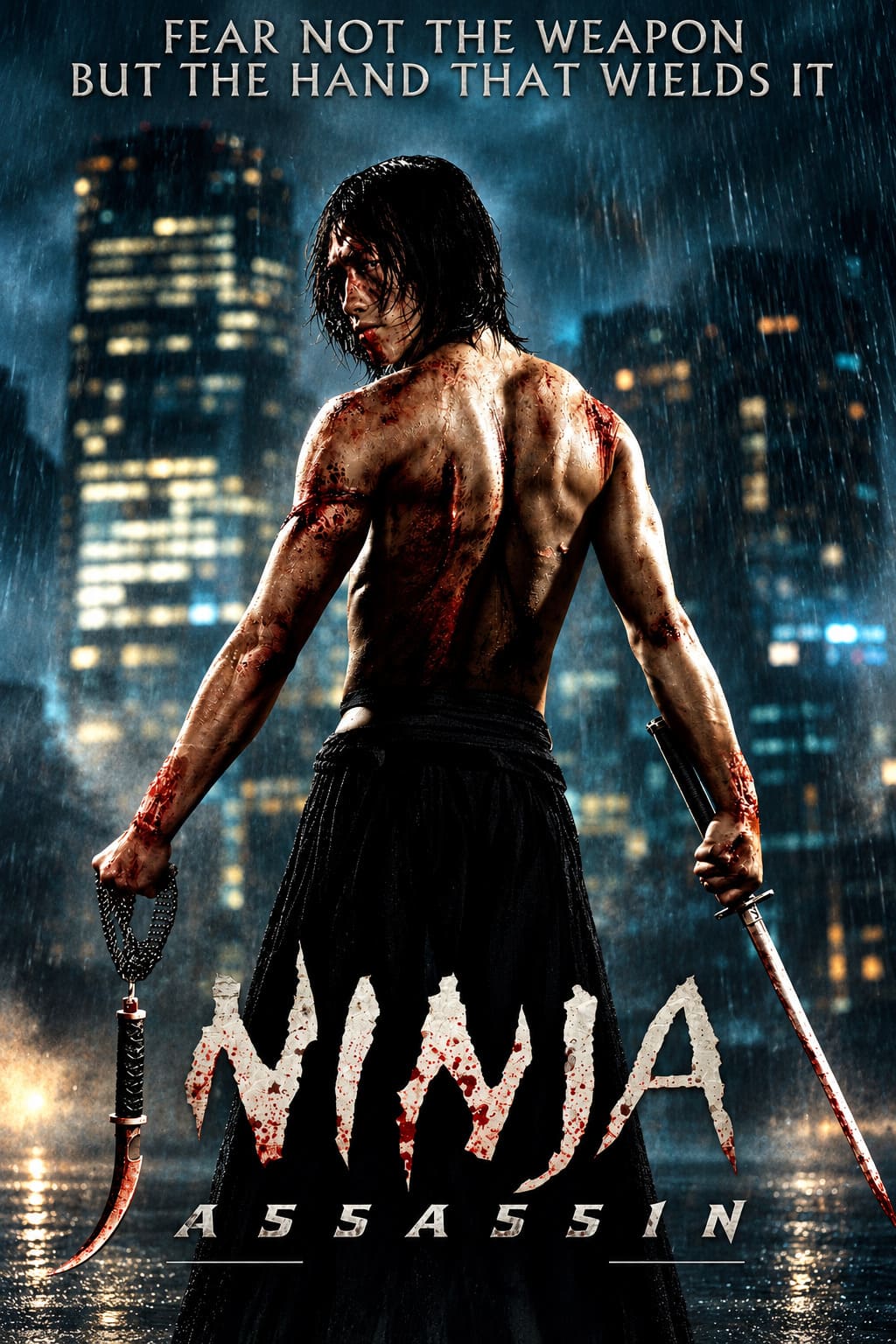
Review: Ninja Assassin (dir. by James McTeigue)


“This is not my family. You are not my father. And the breath I take after I kill you will be the first breath of my life.” — Raizo

Watching Ninja Assassin feels a little like stumbling onto a late-night cable movie that has been given a much bigger budget, a larger blood supply, and zero interest in restraint. It is a blood-soaked, over-the-top revenge movie about a superhuman killer carving his way through an army of shadowy cult ninjas, and it wants blades, bodies, darkness, shredded limbs, dramatic training flashbacks, and a hero so physically intimidating that the camera occasionally seems to pause just to admire how absurdly ripped he is. It is loud, grimy, excessively violent, and frequently ridiculous. It is also, depending on your tolerance for late-2000s CGI carnage and ultra-serious ninja mythology, a pretty entertaining slice of trashy action cinema.

The film stars Korean pop superstar Rain as Raizo, a prodigiously gifted killer raised by the Ozunu Clan, a secret organization that turns stolen children into elite assassins. Raizo is trained from childhood to erase fear, reject compassion, and become basically invisible in the darkness. The clan’s motto might as well be “trauma builds character,” because every flashback involves some new level of horrifying abuse: children fighting one another, training through severe pain, learning to tolerate wounds, and being punished for even the smallest sign of vulnerability. It is all delivered with the straight-faced intensity of a dark comic book, which is probably the best way to approach the movie as a whole.

The present-day story follows Raizo after he breaks from the Ozunu Clan and goes rogue. His target is Lord Ozunu, played by genuine ninja-film legend Sho Kosugi, who runs the entire organization like a supernatural military cult. Raizo’s path crosses with Mika Coretti, played by Naomie Harris, a Europol researcher in Berlin who discovers evidence that a string of political assassinations may be connected to an apparently mythical network of ninja killers. Naturally, nobody believes her, because this is a movie where the phrase “ninja assassins are real” is treated with the same bureaucratic skepticism as an expense-report discrepancy. Once Mika gets too close to the truth, the Ozunu Clan sends people to remove her from the equation, and Raizo enters the picture as both protector and revenge machine.

The plot is not really the point, but it does enough to move the movie from one stabbing to the next. Ninja Assassin has the basic shape of a revenge story, with Raizo torn between the brutal identity he was given and the humanity he is trying to reclaim. The flashbacks fill in his childhood bond with Kiriko, another member of the clan who pays the price for refusing to fully submit to Lord Ozunu’s cruelty. That loss becomes the emotional engine for Raizo’s rebellion, and while the movie does not exactly dig deep into the character’s psychology, it gives Rain a clear enough motivation to work with. He is not just killing bad guys because the script needs more bodies on the floor. He is trying to destroy the institution that made him into a weapon.

Rain is honestly one of the movie’s biggest strengths. He does not have to carry the film through nuanced dialogue or complicated dramatic scenes, and that is probably for the best, because the screenplay does not give him much room for that kind of performance. But he has undeniable screen presence. He looks the part, moves like someone who trained brutally for it, and sells the physical exhaustion of a man who has spent his whole life getting cut, beaten, stabbed, and forced to keep moving anyway. The movie’s action depends on Raizo feeling almost superhuman without becoming completely weightless, and Rain finds that balance most of the time. He is less a conventional action hero than a human weapon who has finally decided to aim himself at the people who built him.

Sho Kosugi is also a welcome presence as Lord Ozunu. He does not get a huge amount of screen time, but he has the kind of weathered, stern authority that makes the role work. Lord Ozunu is not a layered villain; he is an evil master who talks in cold pronouncements about weakness and loyalty, tortures his students, and commands legions of black-clad killers. Still, Kosugi makes him feel more substantial than the usual disposable martial-arts-movie villain. His involvement also gives Ninja Assassin a connection to the ninja-cinema boom of the 1980s, when Kosugi was one of the genre’s biggest names. The film feels like it is trying to combine that old-school ninja-movie sensibility with the slick, digital, hyperviolent style that came out of the Matrix era.

That connection makes sense given the people behind the movie. McTeigue had previously directed V for Vendetta and worked closely with the Wachowskis, who produced Ninja Assassin alongside Joel Silver. You can feel that late-1990s and 2000s action aesthetic all over it: cold blue lighting, rain-slick streets, rapid editing, wire-assisted movement, slow-motion impacts, and CGI blood that erupts in fountains whenever a blade touches skin. The action is often designed less around realism than around visual impact. A ninja does not just stab somebody; he slices through them with enough force to send gallons of digital blood spraying across the frame. Arms come off. Heads come off. Bodies are carved up so thoroughly that the movie sometimes feels like a slasher picture with martial-arts choreography.

When Ninja Assassin is working, that excess is part of the fun. The early sequence in a Bangkok nightclub is a strong example. Gangsters laugh at the idea that ninjas exist, and then the lights go out. Bodies start falling apart in the darkness while unseen attackers move through the room. It is silly, but it is exactly the kind of silly the movie needs to be. The clan’s assassins are framed less like ordinary people than horror-movie monsters: they emerge from shadows, disappear into smoke, and leave mutilated corpses behind. The best moments make ninja combat feel supernatural and frightening rather than simply athletic.

The problem is that the movie sometimes sabotages its own action with its visual style. It is extremely dark, often to the point that it becomes hard to tell who is hitting whom. The rapid editing can also make fights feel more like a blur of limbs, blades, and blood splatter than a clearly staged exchange. There are sequences where the choreography seems like it could be impressive if the camera would just pull back and let the audience see it. Instead, McTeigue often keeps everything moving so fast that the action loses some of its physical clarity. This is particularly frustrating because the film clearly put real effort into Rain’s training and the stunt work.

The CGI is another mixed bag. At times, the exaggerated gore has a knowingly cartoonish quality that fits the movie’s pulpy tone. At other times, it looks like a video-game cutscene from the late 2000s, especially when blood splashes directly toward the camera. The film wants to be nasty and visceral, but the artificial effects can create distance rather than impact. You are rarely shocked by the violence because it is so obviously constructed as spectacle. Then again, nobody should go into a film called Ninja Assassin expecting the sober realism of The Bourne Identity. This is a movie where shadow ninjas attack police officers with chains, blades, and explosive acrobatics. Subtlety was never invited.

Naomie Harris does what she can with Mika, though the character is written mostly as the audience’s entry point into the ninja conspiracy. She gets some decent moments of determination and disbelief, but the film does not give her nearly as much agency as it should. Once Raizo arrives, Mika increasingly becomes someone who needs to be rescued, protected, and dragged through the story’s bloodier sections. Ben Miles is fine as her superior, Ryan Maslow, but the Europol material is the least exciting part of the film. Whenever it cuts away from Raizo’s training, his revenge, or another batch of black-clad assassins, the energy drops.

Still, there is something oddly admirable about how committed Ninja Assassin is to its own trashy premise. It does not pretend to be a prestige thriller, a grounded espionage drama, or a sophisticated martial-arts epic. It is a hard-R revenge movie built around a simple promise: Rain versus an army of ninjas. On that level, it delivers enough mayhem to satisfy viewers who enjoy excessively violent action movies and do not need the script to be smarter than the title.

Ninja Assassin is not a hidden masterpiece, and it has plenty of flaws: thin characters, clunky dialogue, uneven CGI, murky camerawork, and a plot that exists mainly to connect the fight scenes. But it has a strong lead, a memorable villain, a few genuinely cool action-horror moments, and an unapologetically ridiculous energy. It is best enjoyed as a guilty-pleasure throwback to the era when Hollywood action movies believed every problem could be solved with a black mask, a sword, and several gallons of CGI blood.
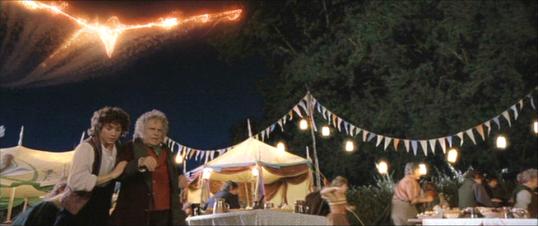
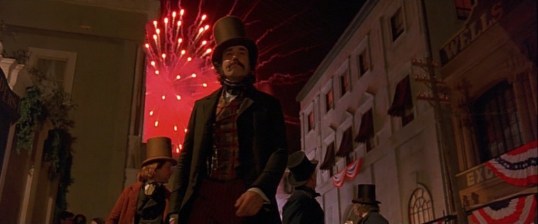
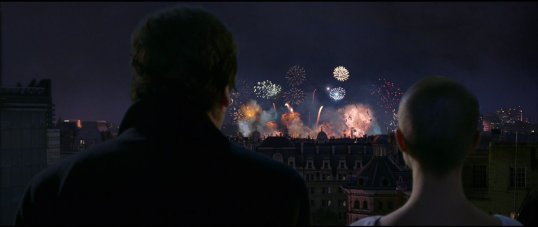
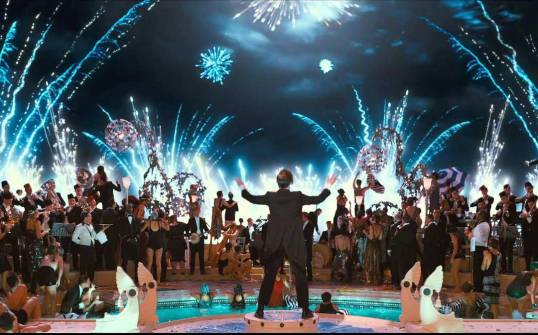
4 Shots From 4 Films: Lord of the Rings: The Fellowship of the Ring, Gangs of New York, V For Vendetta, The Great Gatsby


4 Or More Shots From 4 Or More Films is just what it says it is, 4 shots from 4 of our favorite films. As opposed to the reviews and recaps that we usually post, 4 Shots From 4 Films lets the visuals do the talking!

Because it’s the fourth, this edition of 4 Shots From 4 Films features some classic cinematic moments involving fireworks!

4 Shots From 4 Films

The Lord of the Rings: The Fellowship of the Ring (2001, dir by Peter Jackson, DP: Andrew Lesnie)

Gangs of New York (2002, dir by Martin Scorsese, DP: Michal Ballhaus)

V for Vendetta (2005, dir by James McTeigue, DP: Adrian Biddle)

The Great Gatsby (2013, dir by Baz Luhrmann, DP: Simon Duggan)

A Quickie With Lisa Marie: The Raven (dir. by James McTeigue)


The Raven, a largely disappointing thriller that just opened this weekend, takes place in 1849 in Baltimore, Maryland.  A mysterious killer is terrorizing the city and, as Inspector Fields (Luke Evans) quickly deduces, he’s patterning his murders after the works of an alcoholic and disreputable writer named Edgar Allan Poe (played here, in the style of Robert Downey, Jr., by John Cusack).  Fields recruits Poe to help catch the killer but the killer has other plans.  He kidnaps Edgar’s fiancée  Emily(Alice Eve*) and then challenges Edgar to a game.  The killer will continue to commit random murders and, with each murder, he’ll include a clue to finding Emily.  However, Edgar also has to write a story inspired by the killer’s crimes.  Desperate to save Emily, Edgar agrees…

I wouldn’t necessarily say that I had high hopes for The Raven but, on the basis of the trailer, I was hoping that it would at least be an entertaining and self-aware genre piece.  Unfortunately, The Raven isn’t even that.  Instead, it’s a slowly paced, predictable film that’s not even awful enough to be fun.  John Cusack has a few enjoyably over-the-top moments as Edgar Allan Poe and Brendan Gleeson is always fun when he’s being all blustery but the rest of the cast barely seems to be awake.  (In particular, poor Luke Evans struggles to look like he’s interested in anything that’s happening on-screen.)  Director James McTeigue comes up with a lot of striking images but the film is so oddly edited that the scenes never seem to flow together and the end result is a film that feels oddly static and listless.

—

*Alice Eve has heterochromia, just like me!  Yay for both of us!

Review: V for Vendetta (dir. by James McTeigue)


“Remember, remember the fifth of November, the gunpowder treason and plot. I know of no reason why the gunpowder treason should ever be forgot.”

Alan Moore’s decision to want his name off the final credits for the film adaptation of V for Vendetta now makes sense. Moore has had a hate/hate relationship with Hollywood and the film industry in general. They’ve taken two of his other works in The League of Extraordinary Gentlemen and From Hell. and bollocks’d them up (to borrow a term used quite a bit in V for Vendetta). Outside of Watchmen, Alan Moore sees V for Vendetta as one of his more personal works and after reading the screenplay adaptation of the graphic novel by The Wachowski Brothers his decision afterwards was to demand his name be removed from the film if it was ever made. Part of this was his hatred of the film industry for their past mistakes and another being his wish for a perfect adaptation or none at all. Well, V for Vendettaby James McTeigue and The Wachowski Brothers is not a perfect film adaptation. What it turns out to be is a film that stays true to the spirit of Moore’s graphic novel and given a modern, up-to-the-current news retelling of the world’s state of affairs.

V for Vendetta starts off with abit of a prologue to explain the relevance of the Guy Fawkes mask worn by V throughout the film and the significance of the date of the 5th of November. I think this change in the story from the source material may be for the benefit of audiences who didn’t grow up in the UK and have no idea of who Guy Fawkes was and what his Gunpowder Plot was all about. The sequence is short but informative. From then on we move on to the start of the main story and here the film adheres close enough to the source material with a few changes to the Evey character (played by Natalie Portman) but not enough to ruin the character. Caught after curfew and accosted by the ruling government’s secret police called Fingermen, Evey soon encounters V who saves her not just from imprisonment but rape from these so-called Fingermen.

Right from the start the one thing McTeigue and The Wachowski Brothers got dead-on was casting Hugo Weaving as the title character. Voice silky, velvety and sonorous, Weaving infuses V with an otherworldly, theatrical personality. Whether V was speaking phrases from Shakespeare, philosophers or pop culture icons, the voice gave a character who doesn’t show his face from behind the enternally-smiling Guy Fawkes mask real life. I’d forgiven the makers of this films for some of the changes they made to the story and some of the characters for keeping V as close to how Moore wrote him. Once V and Evey are thrown in together by the happenstance of that nightly encounter their fates became intertwined. Portman plays the reluctant witness to V’s acts of terrorism, murders and destruction in the beginning, but a poignant and emotionally powerful sequence to start the second half of the film soon brings Evey’s character not much towards V’s way of doing things, but to understanding just why he’s doing them. This sequence became the emotional punch of the whole film and is literally lifted word for word from the graphic novel. This is the sequence in the film which should resonate the loudest for most people whether they buy into the rest of the film or not.

The rest of the cast seemed like a who’s who of the British acting community. From Stephen Rea’s stubborn and dogged Chief Inspector Finch whose quest to find V leads him to finding clues about his government’s past actions that he’d rather not have found. Then there’s Stephen Fry’s flamboyant TV show host who becomes Evey’s only other ally whose secret longings have been forbidden by the government, but who’s awakened by V’s actions to go through with his own form of rebellion. Then there’s John Hurt as High Chancellor Adam Sutler who’s seen chewing up the scenery with his Hitler-like performance through Big Brother video conferences (an ironic bit of casting since John Hurt also played Winston Smith in the film adaptation of the Orwell classic 1984). I really couldn’t find any of the supporting players as having done a bad job in their performances. Even Hurt’s Sutler might have seemed over-the-top to some but his performance just showed how much of a hatemonger Sutler and, in the end, his Norsefire party really were in order to stay in power.

The story itself, as I mentioned earlier, had had some changes made to it. Some of these changes angered Moore and probably continues to anger his more die-hard fans. I count myself as one of these die-hards, but I know how film adaptations of classic literary works must and need to trim some of the fat from the main body and theme of the story to fully translate onto the silver screen. The Wachowski Brother’s screenplay did just that. They trimmed some of the side stories and tertiary characters from the story and concentrated on V, Evey and Inspector Finch’s pursuit of both the truth of V and his own journey in finding that truth. This adaptation wa much closer to how Peter Jackson adapted The Lord of the Rings. As a fan of Moore I understood why he was unhappy with the changes, but then Moore was and still is an avowed perfectionist and only a perfect adaptation would do.

Critics on both sides of the aisle have called V for Vendetta revolutionary, subversive, daring to irresponsible and propagandist. All because the film dares to ask serious questions about the nature and role of violence as a form of dissent. But the granddaddy question the film brings up that has people talking is the question: terrorist or freedom fighter? Is V one or the other or is he both? Make no mistake about it, V for all intents and purposes is a terrorist if one was to use the definition of what a terrorist is. The makers of this film goes to great lenghts to describe throughout the film just how Sutler and his Norsefire (with its iconic Nazi-like imagery and extreme fundamentalist Christian idealogy) party rose to power in the UK. Partly due to what seemed like the failed US foreign policy and its subsequent and destructive decline as a superpower and the worldwide panic and fear it caused as a result. V for Vendetta also ask just who was to blame for allowing such individuals to rule over them. V has his reasons for killing these powers-that-be, but he also points out that people really should just look in the mirror if they need to know who really was to blame. For it was the population — whose desire to remain safe and have a semblance of peace — gave up more and more of their basic liberties and rights for a return to order. If one was to look at the past 100 years they would see that it’s happened before. There was the regime of Pol Pot in Cambodia, Milosevic’s Greater Serbia, and the king of the hill of them all being Adolf Hitler and his Nazi Inner Circle.

Another thing about V for Vendetta that will surely talked about alot will be the images used in the film. Not just images and symbols looking so much like Nazi icons, but images from the events of the past decade which have become symbols of oppression and censorship. The film shows people bound and hooded like prisoners from Abu Ghraib. The reason of the war on terror used time and time again by Sutler to justify why England and its people need him and his group to protect them by any means necessary. V for Vendetta seems like a timely film for our current times. Even with the conclusion of the film finally accomplishing what Guy Fawkes failed to do that night of November 5th some 400 plus years ago, V for Vendetta doesn’t give all the answers to all the questions it raises. I’m sure this would be something that’ll frustrate them some audiences. So much of people who go to watch thought-provoking films want their questions answered as clearly as possible and all of them. V for Vendetta doesn’t answer them but gives the audience enough information to try and work it out themselves.

In final analysis, V for Vendetta accomplishes in bringing the main themes of Alan Moore’s graphic novel to life and even does it well despite some of the changes made. It is a film that is sure to polarize the extreme left and right of the political pundits and commentators. But as a piece of thought-provoking and even as a politically subversive film, V for Vendetta does it job well. It is not a perfect film by any respect, but the story and message it tries to convey in addition to its value as a piece of entertainment mor than makes up for its flaws. Alan Moore and his followers might not love and approve of this film, but it doesn’t mean the film in and of itself wasn’t a good one. Sometimes calls for literal adaptations of beloved works or no adaptation at all also becomes a form of creative oppression and censorship.