Film Review: Palo Alto (dir by Gia Coppola)


Palo Alto came out in May of last year and it never quite got as much attention as it deserved.  A lot of that is because the film is based on a collection of short stories by James Franco and a lot of critics apparently decided ahead of time that Palo Alto was some sort of vanity project.

Of course, nothing could be further from the truth.  Palo Alto is actually one of the better films of 2014, a minor masterpiece of ennui that also serves as a promising directorial debut for Gia Coppola.  (Of course, Gia’s aunt Sofia made her directorial debut with an ennui-centric literary adaptation of her own, The Virgin Suicides.)

Palo Alto follows several teenagers over the course of one school year.  (It’s no coincidence that, at one point, Fast Times At Ridgemont High shows up on a TV screen.)  The film itself is deceptively plotless, with its occasionally drifting narrative mirroring the lives of protagonists who literally have no direction.  April (Emma Roberts), who is too intelligent to really fit in with either her shallow friends or her flakey family, plays soccer and has a crush on both Teddy (Jack Kilmer) and her coach, Mr. B (James Franco, playing an unapologetically sleazy character).  Teddy is a talented artist who, after a drunk driving accident, finds himself on probation and sentenced to do community service.  Making it difficult for Teddy to stay out of trouble is his best friend, Fred (Nat Wolff), who hides his sociopathic nature behind a constant stream of jokes.  And then there’s Emily (Zoe Levin), who hides her insecurities behind a wall of blow jobs and demeaning sexual encounters.

As for the adults of Palo Alto, they’re for the most part a collection of grim but ineffective authority figures and parents who don’t want to grow up.  Mr. B hides his predatory nature behind a kind smile and a paternal nature.  April’s stepfather (Val Kilmer) is permanently stoned.  Teddy’s mother is unconcerned with her son’s drinking.  Meanwhile, Fred’s father (Chris Messina) offers weed to and hits on his son’s friends.

And it may all sound a bit familiar.  Every year, it seems like there is a countless number of indie films about directionless teenagers and irresponsible parents.  But Palo Alto is distinguished by Gia Coppola’s confident and frequently surreal direction.  Coppola has a good eye for detail and, as a result of the gorgeous cinematography of Autumn Durald, the film is always interesting to watch regardless of how familiar the story may seem.  The entire cast does a good job as well, with Emma Roberts and Nat Wolff as clear stand-outs.

And, I have to admit, that on a personal level, there was a lot of Palo Alto to which I related.  Whether it was the awkward conversations between April and Teddy or the sad look on Emily’s face as she stared at her reflection, there were so many small moments that just felt true.  As I watched Palo Alto, it was impossible for me not to think about my own time in high school.  I knew quite a few Teddys.  I even knew a few Freds.  And sometimes, I was April and then other times, I could have been any of the other characters who wander throughout Palo Alto.

Don’t listen to the haters.  Palo Alto is more than worth your time.

A Quick Review: The Hobbit: The Battle of the Five Armies (dir by Peter Jackson)


TheHobbit5Armies

It seems kind of weird to do a quick review for a 144 minutes film that not only serves as the end of one epic trilogy but also as a prequel for yet another epic trilogy.

Well, so be it.  I hate to admit it but I really don’t have that much to say about The Hobbit: The Battle of the Five Armies beyond the fact that I saw it on the day after Christmas, I enjoyed it, and I thought Aidan Turner was really hot.  It’s not a perfect film but then again, The Hobbit has never been a perfect trilogy.  As opposed to the Lord of the Ring films, The Hobbit told a story that could have easily been told in two films.  As a result, whenever you watch one of The Hobbit films, you’re aware of all of the filler that was included just to justify doing three films.

But so what?  The Hobbit films are fun.  Despite the cynical economic reasons behind turning The Hobbit into a trilogy, director Peter Jackson’s love for the material always came through.  In the title role, Martin Freeman was always likable.  Ian McKellan and Christopher Lee made for properly enigmatic wizards.  Though apparently his inclusion caused some controversy among purists, it was nice to Orlando Bloom as Legolas.  I also liked Evangeline Lilly’s elf character, even if everyone else seemed to dislike her and her love story with Aidan Turner.  And then there was Benedict Cumberbatch providing a perfectly evil and self-satisfied voice for Smaug.

I have to admit that, with the exception of Aidan Turner, I was never a big fan of the dwarves.  They were all so surly and bad-tempered and it didn’t take me too long to get tired of Richard Armitage showing up as Thorin and acting like a jerk.  However, in the final part of the trilogy, Armitage’s surly performance started to make sense.  As Thorin grew more and more paranoid, I saw that The Hobbit was actually using both the character and Armitage’s performance to make a much larger point.  Power corrupts and most conflicts are ultimately all about money and property.  It was a good message.

When the Battle of the Five Armies started, I was shocked to discover how little I remembered about the previous two Hobbit films.  It took me a while to get caught up on who everyone was and why they were all fighting over that mountain.  As opposed to the LoTR films, it’s not always easy to get emotionally invested in The Hobbit films.  But, Jackson is a good director and he’s a good storyteller and, even though it took me a while to get caught up, I was still often enthralled with what I was watching on screen.  The images were so stunning and the battle scenes were so spectacularly done that I could handle being occasionally confused.

Battle of the Five Armies is a fitting end for the Hobbit trilogy.  It’s not a perfect film but it is exciting and fun and that’s really all that matters.  At the end of it, the audience in the theater applauded, not just for the film but in recognition of everything that Peter Jackson has given us over the past 14 years.

It was a good way to spend the day after Christmas.

Film Review: Unbroken (dir by Angelina Jolie)


Ultimately, Unbroken is a victim of expectations.

From the start of last year, Oscar watchers and other film critics were united in fully expecting Unbroken to be a great film.  No sooner had 12 Years A Slave won best picture then we were all predicting that Unbroken would be named the best film of 2014 and that Angelina Jolie would be the 2nd woman to win an Oscar for best director.

And can you blame us?

Unbroken seemed to have everything that you would expect to add up to Oscar glory.  Not only was it directed by a celebrity (and, ever since Argo, everyone has been under the impression that all performers can also direct) but it starred an exciting and up-and-coming actor.  It was not only a war film but it was a war film that took place during the only war that everyone agrees was a good one, World War II.  It was based on a true story and what a story!  Louis Zamperini was an Olympic medalist whose athletic career was put on hold when he joined the U.S. Air Force.  After a plane crash, he and two other survivors spent 47 days floating in a lifeboat.  They were finally captured by the Japanese and Louis spent the rest of the war as POW.  During that time, he survived terrible torture.  When the war finally ended, Louis set aside his anger and publicly forgave those who had nearly killed him.  When he was 80 years old, he returned to Japan and carried the Olympic torch.  It’s an incredibly touching story and it should have made for a great movie.

And, ultimately, that’s Unbroken‘s downfall.  It has all the ingredients for being a great movie but instead, it’s only a good one.

That’s certainly not the fault of Jack O’Connell, who plays Louis and gives a strong and sympathetic performance.  Actually, the entire film is well-acted, with everyone fully inhabiting his role.  Perhaps the film’s best performance comes from Miyavi, who plays “The Bird,” the sadistic head of both of the POW camps where Louis is held prisoner.  The dynamic between The Bird and Louis is an interesting one, with the film emphasizing that The Bird is in many ways jealous of Louis’s previous fame and Miyavi plays the character as if he were a high school bully who has suddenly been left in charge of the classroom.

That the cast does well should not be a surprise.  Actors-turned-directors can usually get good performances but often times, they seem to struggle with shaping a narrative and this is where Unbroken struggles.  It’s not that Unbroken doesn’t tell a worthy story.  It’s just that it tells it in such a conventional and predictable way.  The entire film is full of scenes that seem like they were lifted out of other, more memorable movies.  The scenes with Louis growing up and competing in the Olympics feel like they could have come from any “inspiring” sports biopic.  (It doesn’t help that Louis’s brother and coach has been given dialogue that sounds like it should be surrounded by air quotes.)  When Louis is joking around with the guys in the plane, it feels like a hundred other war films.  When Louis is floating in the ocean, it’s hard not to compare the film’s static and draggy approach to what Ang Lee was able to do with Life of Pi or J.C. Chandor with All Is Lost.  Miyavi brings a feeling of real menace and danger to the POW scenes but it’s not enough.  Jolie’s direction is competent but there’s not a single moment that feels spontaneous or truly cinematic.

In fact, I sat through Unbroken totally dry-eyed, which is somewhat amazing considering how easily I cry at the movies.  However, towards the end of the film, there was a clip of the real-life, 80 year-old Louis running down the streets of Tokyo with the Olympic Torch and, at that moment, his story became real for me.  And that’s when the tears came.

I really wish Unbroken had been better because Louis Zamperini seems like someone who deserved to have a great film made about him.  Angelina Jolie’s heart was in the right place but, ultimately, it’s just not enough to make Unbroken the film that it deserves to be.

Here Are The Central Ohio Film Critics Nominees!


Birdman

Yesterday, the Central Ohio Film Critics announced their nominees for the best of 2014 and they really liked Birdman!  I wonder if the Central Ohio Film Critics ever have fights with the Southwestern Ohio Film Critics or the Ohio/Kentucky Border Critics…

Here are the nominees!

Best Film

  • Birdman or (The Unexpected Virtue of Ignorance)
  • Boyhood
  • Gone Girl
  • The Grand Budapest Hotel
  • The Imitation Game
  • A Most Violent Year
  • Nightcrawler
  • Selma
  • Snowpiercer
  • Whiplash

Best Director

  • Wes Anderson – The Grand Budapest Hotel
  • Damien Chazelle – Whiplash
  • Ava DuVernay – Selma
  • Alejandro González Iñárritu – Birdman or (The Unexpected Virtue of Ignorance)
  • Richard Linklater – Boyhood

Best Actor

  • Ralph Fiennes – The Grand Budapest Hotel
  • Jake Gyllenhaal – Nightcrawler
  • Michael Keaton – Birdman or (The Unexpected Virtue of Ignorance)
  • David Oyelowo – Selma
  • Eddie Redmayne – The Theory of Everything

Best Actress

  • Essie Davis, The Babadook
  • Scarlett Johansson, Under the Skin
  • Felicity Jones, The Theory of Everything
  • Rosamund Pike, Gone Girl
  • Reese Witherspoon, Wild

Best Supporting Actor

  • Josh Brolin – Inherent Vice
  • Ethan Hawke – Boyhood
  • Edward Norton – Birdman or (The Unexpected Virtue of Ignorance)
  • Mark Ruffalo – Foxcatcher
  • J.K. Simmons – Whiplash

Best Supporting Actress

  • Patricia Arquette – Boyhood
  • Jessica Chastain – A Most Violent Year
  • Keira Knightley – The Imitation Game
  • Emma Stone – Birdman or (The Unexpected Virtue of Ignorance)
  • Tilda Swinton – Snowpiercer

Best Ensemble

  • Birdman or (The Unexpected Virtue of Ignorance)
  • Foxcatcher
  • Gone Girl
  • The Grand Budapest Hotel
  • Guardians of the Galaxy

Actor of the Year (for an exemplary body of work)

  • Jessica Chastain (The Disappearance of Eleanor Rigby, Interstellar, Miss Julie, and A Most Violent Year)
  • Benedict Cumberbatch (The Hobbit: The Battle of the Five Armies and The Imitation Game)
  • Jake Gyllenhaal (Enemy and Nightcrawler)
  • Chris Pratt (Guardians of the Galaxy and The LEGO Movie)
  • Tilda Swinton (The Grand Budapest Hotel, Only Lovers Left Alive, Snowpiercer, and The Zero Theorem)

Breakthrough Film Artist

  • Damien Chazelle – Whiplash – (for directing and screenwriting)
  • Ava DuVernay – Selma – (for directing)
  • Jennifer Kent – The Babadook – (for directing and screenwriting)
  • Gugu Mbatha-Raw – Belle and Beyond the Lights – (for acting)
  • Justin Simien – Dear White People – (for directing and screenwriting)

Best Cinematography

  • Benoît Delhomme – The Theory of Everything
  • Hoyte Van Hoytema – Interstellar
  • Daniel Landin – Under the Skin
  • Emmanuel Lubezki – Birdman or (The Unexpected Virtue of Ignorance)
  • Robert Yeoman – The Grand Budapest Hotel

Best Film Editing

  • Sandra Adair – Boyhood
  • Spencer Averick – Selma
  • Kirk Baxter – Gone Girl
  • Douglas Crise and Stephen Mirrione – Birdman or (The Unexpected Virtue of Ignorance)
  • Tom Cross – Whiplash

Best Adapted Screenplay

  • Paul Thomas Anderson – Inherent Vice
  • Bong Joon-ho and Kelly Masterson – Snowpiercer
  • Gillian Flynn – Gone Girl
  • Nick Hornby – Wild
  • Graham Moore – The Imitation Game

Best Original Screenplay

  • Wes Anderson – The Grand Budapest Hotel
  • J.C. Chandor – A Most Violent Year
  • Damien Chazelle – Whiplash
  • Alejandro González Iñárritu, Nicolás Giacobone, Alexander Dinelaris, and Armando Bo – Birdman or (The Unexpected Virtue of Ignorance)
  • Paul Webb – Selma

Best Score

  • Alexandre Desplat – The Grand Budapest Hotel
  • Jóhann Jóhannsson – The Theory of Everything
  • Trent Reznor and Atticus Ross – Gone Girl
  • Antonio Sanchez – Birdman or (The Unexpected Virtue of Ignorance)
  • Hans Zimmer – Interstellar

Best Documentary

  • Citizenfour
  • Dinosaur 13
  • Finding Vivian Maier
  • Jodorowsky’s Dune
  • Life Itself

Best Foreign Language Film

  • Force Majeure (Turist)
  • A Girl Walks Home Alone at Night
  • Ida
  • Two Days, One Night (Deux jours, une nuit)
  • We Are the Best! (Vi är bäst!)

Best Animated Film

  • Big Hero 6
  • The Book of Life
  • The Boxtrolls
  • How to Train Your Dragon 2
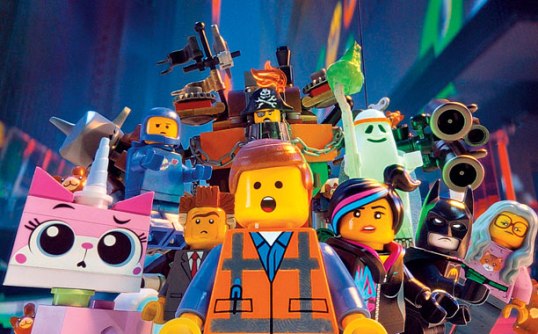
  • The LEGO Movie

Best Overlooked Film

  • The Babadook
  • Blue Ruin
  • Edge of Tomorrow
  • Enemy
  • Locke

000144.0022649.tif

Here Are The Producers Guild Nominees!


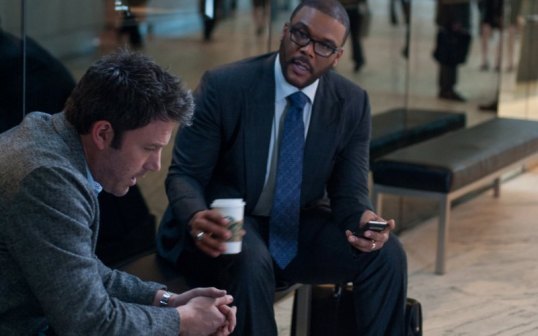
Tyler Perry in Gone Girl

The Producers Guild of America nominees were announced today.

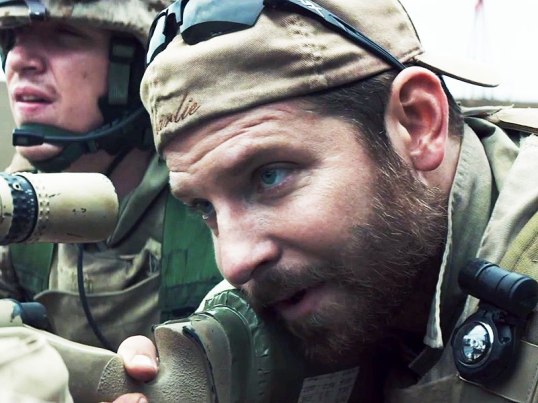
The PGA is often seen as being a pretty strong precursor as far as the actual Oscar nominations are concerned.  Therefore, it’s a bit surprising to see that Selma was snubbed.  (A lot of people are speculating that it may be because the Selma screeners were sent out late.  We’ll see.)  It’s less surprising that Unbroken was snubbed because Unbroken has not exactly lived up to expectations.  (I’ll post my review of the film soon.)  At this point, it’s hard to be surprised to see Nightcrawler mentioned because — for a supposed long shot — Nightcrawler‘s been doing pretty well as far as the precursors are concerned. Finally, the producers of former front runners Foxcatcher and Gone Girl have to be happy to see that their film has not been as forgotten by the guilds as it has been by many of the critical groups.

Here are the nominees!

American Sniper

Birdman

Boyhood

Foxcatcher

Gone Girl

The Grand Budapest Hotel

The Imitation Game

Nightcrawler

The Theory of Everything

Whiplash

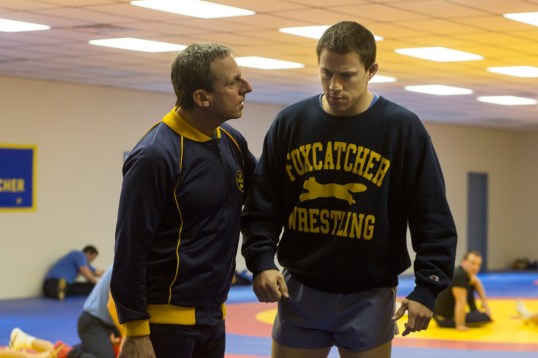
foxcatcher-trailer-hd

Here Are The Art Directors Guild Nominees!


Guardians-of-the-Galaxy-gang

The Art Directors Guild announced their nominees today!

And here they are:

Period Film
Inherent Vice
The Grand Budapest Hotel
The Imitation Game
The Theory of Everything
Unbroken

Fantasy Film
Interstellar
Into the Woods
Dawn of the Planet of the Apes
Guardians of the Galaxy
Captain America: The Winter Soldier

Contemporary Film
American Sniper
Birdman
Foxcatcher
Gone Girl
Nightcrawler

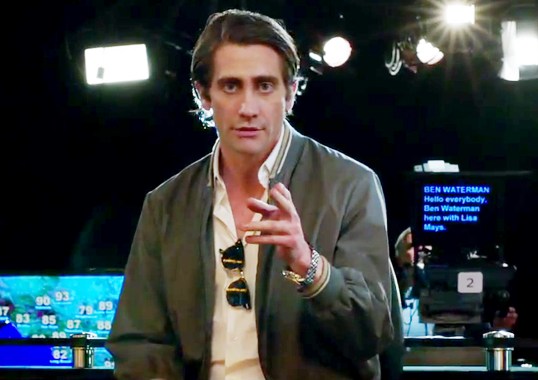
Jake Gyllenhaal in Nightcrawler

What Lisa Watched Last Night #108: Damaged (dir by Rick Bota)


Last night, I watched the first Lifetime movie of 2015 — Damaged!

Chris Klein in Damaged

Chris Klein in Damaged

Why Was I Watching It?

You guys know me and how much I love Lifetime movies!  Damaged was the first Lifetime movie of 2015 so it’s less a question of why was I watching it and more a question of how could I not watch it.

What Was It About?

Damaged is yet another Canadian thriller that has found a home on Lifetime.  Sam Luck (Chris Klien) is the big, affable, and quite frankly dumb teacher who has a nice house in the suburbs with a dog and a wife (Tasya Teles).  He also is co-owner of a diner because … well, why not?  (I got the feeling that the filmmakers just happened to have a diner set available.)

Anyway, Sam’s luck changes when the new teenage neighbor moves in.  Her name is Taran (Merritt Patterson) and, along with frequently flirting with Sam (who also happens to be one of her teachers), she also constantly has flashbacks where she’s either watching her mother have sex with an unseen boyfriend or standing in a cemetery while it rains.

As Sam grows closer to Taran, strange things start to happen.  His car is stolen but fortunately, Taran offers to allow him to drive her never-seen father’s car.  His dog disappears.  He’s informed that a student has accused him of sexual harassment.  His partner in the diner accuses him of embezzling money.  With all this happening, who else can Sam turn to for comfort other than his wife the teenage neighbor girl next door?

What Worked?

Damaged was an example of my favorite type of Lifetime movie: A complacent couple in the suburbs has their life destroyed by a malevolent outside force.  There’s something always fun about watching these smug suburbanites discovering just how easily their domestic bliss can be destroyed.

Merritt Patterson did a pretty good job in the role of Taran.  At the very least, she seemed to be having more fun than anyone else in the cast.

Finally, Damaged deserves some credit for not shying away from giving us a properly dark ending.  If this was an old grindhouse film, Damaged would be advertised as being a movie that “goes all the way.”

What Did Not Work?

So, here’s the thing.  If you, as a filmmaker, want us to sympathize with your lead character or, at the very least, hope that he doesn’t end up getting totally destroyed, it might help to not make the character a total moron.  As I watched the film, it was hard for me not to think about all the things that Sam could have done that would have prevented him from getting into this situation.

Here’s just a few examples:

1) When you’re a teacher and one of your students offers to give you her daddy’s car, don’t accept the car.  Why?  Because you’re a teacher and she’s a student in your class!  Yes, I understand that it was a really nice car but again: Student.  Teacher.

2) When you’re a teacher and you’re feeling depressed because someone has suggested that you’ve been sexually harassing your teenage students, don’t pour your heart out to the teenage girl who lives next door.

3) When you’re a teacher and one of your students offers you an expensive watch, don’t accept it!

4) When you’re a teacher and one of your students says she wants to go out and have fun with you, don’t go!

Seriously, it seems like most of Sam’s problems could have been avoided if he had bothered to read the Rules For Teacher/Student Interaction booklet that I’m sure he was given when he was first hired.  As such, it was hard to have much sympathy for Sam.  (Or his wife for that matter because, as badly as things turned out for her, she is the one who married the idiot in the first place.)

However, just to make clear: part of the fun of a movie like this is shaking your head at the stupid things some of the characters do.  And overall, Sam’s stupidity just made the film more fun.  So, I guess it’s debatable whether this is something that did not work.  (Though it certainly didn’t work that well for Sam, personally…)

“Oh my God!  Just like me!” Moments

At first, when I thought Taran just had an obsessive crush on Sam, I related to her because it reminded me of when I was in high school and I had a crush on Mark, who was engaged to our speech and debate coach.  One weekend, Mark accompanied us all on a road trip to a speech tournament in San Antonio.  One night, at the motel, I slipped on this pink Victoria’s Secret nightie that I had specifically bought for the trip and then I sneaked out of my room and pulled down on the fire alarm so that I could specifically meet Mark when he came running out of his room in his boxers and I could pretend to be all panicky (and in need of comforting) about the fire.  Ah, memories.

But anyway, as the movie progressed, I realized that I actually had less in common with Taran.  For instance, I’ve never tried to kill anyone.

Lessons Learned

The main lesson I learned was one that I already know.  If the police ever catch you doing something wrong, be sure to cry.  I already knew that crying was a good way to get out of speeding tickets but, according to the final scene of Damaged, it can get you out of a lot worse as well.

As for any teachers who may have been watching, I think the main lesson would be to read your code of conduct.

The National Society Of Film Critics Honors Goodbye to Language!


Goodbye to Lanugage

Earlier today, the National Society of Film Critics announced their picks for the best films of 2014!  By one vote, they named Jean-Luc Godard’s Goodbye To Language as best picture of the year.

Thank you, National Society of Film Critics, for reminding us that, occasionally, unexpected things do happen!

Check out the winners and the runner-ups below!

BEST PICTURE
*1. Goodbye to Language 25 (Jean-Luc Godard)
2. Boyhood 24 (Richard Linklater)
3. Birdman 10 (Alejandro G. Iñárritu)
3. Mr. Turner 10 (Mike Leigh)
BEST DIRECTOR
*1. Richard Linklater 36 (Boyhood)
2. Jean-Luc Godard 17  (Goodbye to Language)
3. Mike Leigh 12 (Mr. Turner)
BEST NON-FICTION FILM
*1. Citizenfour 56 (Laura Poitras)
2. National Gallery 19 (Frederick Wiseman)
3. The Overnighters 17 (Jesse Moss)
BEST SCREENPLAY
*1. The Grand Budapest Hotel 24 (Wes Anderson)
2. Inherent Vice 15 (Paul Thomas Anderson)
2. Birdman 15 (four co-writers)
BEST CINEMATOGRAPHY
*1. Mr. Turner 33 (Dick Pope)
2. The Immigrant 27 (Darius Khondji)
3. Goodbye to Language 9 (Fabrice Aragno)
BEST ACTOR
*1.Timothy Spall 31 (Mr. Turner)
2. Tom Hardy 10 (Locke)
3. Joaquin Phoenix 9  (Inherent Vice)
3. Ralph Fiennes 9 (The Grand Budapest Hotel)
BEST ACTRESS
*1. Marion Cotillard  80 (Two Days, One Night)
2.  Julianne Moore 35 (Still Alice)
3. Scarlett Johansson 21 (Lucy; Under the Skin)
BEST SUPPORTING ACTOR
*1. J.K. Simmons 24  (Whiplash)
2. Mark Ruffalo 21 (Foxcatcher)
3. Edward Norton 16 (Birdman)
BEST SUPPORTING ACTRESS
*1. Patricia Arquette 26 (Boyhood)
2. Agata Kulesza 18 (Ida)
3. Rene Russo 9 (Nightcrawler)

Film Review: Venus in Fur (dir by Roman Polanski)


One of the best films to be released in American theaters last year was also one that never really got as much recognition as it deserved.

Roman Polanski’s Venus In Fur (which, itself, is based on a play by David Ives that was loosely adapted from a novel written by Leopold von Sacher-Masoch, whose name and book would inspire the term masochism) features only two characters.  Thomas (Mathieu Almaric) is a neurotic playwright and director whose latest production is based on Sacher-Masoch’s book, Venus in Furs.  Vanda (Emmanuelle Seigner) is an actress who shows up late to audition for a lead role.

At first, Thomas is annoyed with and condescending towards the actress.  After all, she shows up late for the audition and gives a rather long and convoluted explanation as to why.  (It involves a dog wanting to fuck her.)  Despite the fact that she’s auditioning for a play set in the 19th century and featuring repressed members of the upper class, she shows up for the audition wearing leather and a dog collar.  (“I’m usually really demure and shit…” she assures him.)  At first, Thomas refuses to allow her to audition and says that there’s nobody in the theater for her to read with. Vanda suggests that he read with her.  Reluctantly, Thomas agrees…

And suddenly, Vanda goes from begging for his permission to taking control of the situation.  It turns out that she’s brought a period costume with her.  Before going up to the stage, she skillfully sets the stage lights to create the perfect effect.  (A stunned Thomas admits that he’s not even sure how the lighting board works.)  And when they’re on stage together, Vanda stuns Thomas by suddenly transforming herself into the character that he wrote.

The audition itself quickly becomes a not-quite friendly game between the two.  (This is a film that anyone — even little community theater actresses like me — who has ever auditioned for a role should be able to relate to.)  Vanda frequently interrupts the audition to question what Thomas has written and Thomas finds himself growing more and more disoriented as he’s frequently pulled out of the world he created and into reality.

Whenever challenged by Vanda, Thomas argues that the play has no deeper meaning.  It’s simply an adaptation of a work of literature.  However, as the audition continues, it becomes apparent that there’s more to the play and to the two people on stage than was originally apparent…

Venus in Fur is a fascinating film.  In its way, it’s also a playful one.  (You have to love the scene where a lingerie-clad Vanda suddenly takes on the role of therapist and perfectly psychoanalyzes Thomas’s fiancee.  Never has the invoking the name of Jacques Derrida led to so much laughter.)  Intelligently filmed by Polanski and wonderfully acted by both Amalric and Seigner, the power struggle between Thomas and Vanda makes for compelling viewing.

And hey, it’s currently on Netflix so you can watch it anytime you want.  Of course, it is subtitled but so what?  If you don’t know how to read, how did you make it through this review?

Seriously, find 93 minutes to spare and watch Venus In Fur.

Here Are The Eddie Nominations!


American Sniper

The Eddies!  Isn’t that a perfectly adorable name for an award?

Anyway, the Eddies are given out by the American Cinema Editors and they honor the best editing in film and television.  The Eddies make for an interesting precursor because (much like the SAG awards), they’re a guild award and the nominees and winners are being determined by many of the same people who will be voting on the Oscars.

Add to that, films that get a nomination for best editing often also get nominated for best picture.  (One huge exception to that rule would be David Fincher’s rehash The Girl With The Dragon Tattoo, which actually won best editing despite not being nominated for best picture.)

The big news from the Eddie nominations is that potential Oscar front-runner Selma was snubbed.  However, American Sniper was not.  While I doubt that the makers of Selma have anything to worry about, this does seem to indicate that — despite not making a huge showing as far as the critics awards are concerned — American Sniper might still be a factor in the best picture race.

(Then again, Oscar watchers like me are notorious for overanalyzing stuff like this…)

The film nominees can be found below.

Best Edited Feature Film (Dramatic)
“American Sniper” (Joel Cox, ACE & Gary Roach, ACE)
“Boyhood” (Sandra Adair, ACE)
“Gone Girl” (Kirk Baxter, ACE)
“The Imitation Game” (William Goldenberg, ACE)
“Nightcrawler” (John Gilroy, ACE)
“Whiplash” (Tom Cross, ACE)

Best Editing Feature Film (Comedy or Musical)
“Birdman” (Douglas Crise & Stephen Mirrione, ACE)
“The Grand Budapest Hotel” (Barney Pilling)
“Guardians of the Galaxy” (Fred Rasking, Hughes Winborn, ACE & Craig Wood, ACE)
“Into the Woods” (Wyatt Smith)
“Inherent Vice” (Leslie Jones, ACE)

Best Edited Animated Feature Film
“Big Hero 6” (Tim Mertens)
“The Boxtrolls” (Edie Ichioka, ACE)
“The LEGO Movie” (David Burrow & Chris McKay)

Best Edited Documentary (Feature)
“CITIZENFOUR” (Mathilde Bonnefoy)
“Finding Vivian Maier” (Aaron Wickenden)
“Glen Campbell: I’ll Be Me” (Elisa Bonora)

Guardians of the Galaxy