4 Shots From 4 Films: Special Jack Nicholson Edition


4 Shots From 4 Films is just what it says it is, 4 shots from 4 of our favorite films. As opposed to the reviews and recaps that we usually post, 4 Shots From 4 Films lets the visuals do the talking!

Today is Jack Nicholson’s 89th birthday!

It’s been sixteen years since Jack Nicholson last appeared in a movie, the forgettable How Do You Know.  And yet, he remains a screen icon with a filmography that is a cinema lover’s dream.  He’s worked with everyone from Roger Corman to Stanley Kubrick to Milos Forman to Martin Scorsese and, along the way, he’s become a symbol of a very American type of rebel.  Though often associated with the counter-culture, his style has always been too aggressive and idiosyncratic for him to be a believable hippie.  Instead, he’s one of the last of the beats, an outsider searching for meaning in Americana.

Happy birthday, Jack Nicholson.  May you have many happy returns!

4 Shots From 4 Jack Nicholson Films

Easy Rider (1969, dir by Dennis Hopper, DP: Laszlo Kovacs)

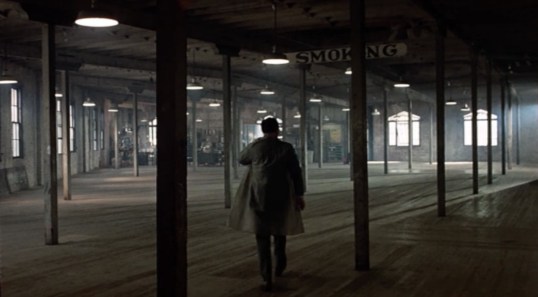
Chinatown (1974, dir by Roman Polanski, DP: John A. Alonzo)

The Shining (1980, dirby Stanley Kubrick, DP: John Alcott)

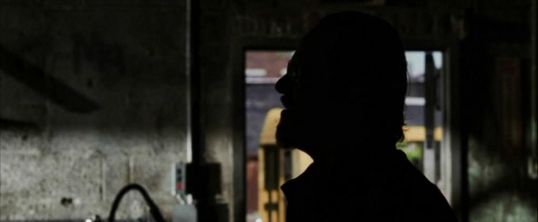
The Departed (2006, dir by Martin Scorsese, DP: Michael Ballhaus)

4 Shots From 4 Horror Films: The 1960s Part 3


This October, I’m going to be doing something a little bit different with my contribution to 4 Shots From 4 Films.  I’m going to be taking a little chronological tour of the history of horror cinema, moving from decade to decade.

Today, we finish off the 1960s!

4 Shots From 4 Horror Films

Even The Wind is Scared (1967, dir by Carlos Enrique Taboada)

Even The Wind is Scared (1967, dir by Carlos Enrique Taboada)

The Witchfinder General (1968, dir by Michael Reeves)

Witchfinder General (1968, dir by Michael Reeves)

Rosemary's Baby (1968, dir by Roman Polanski)

Rosemary’s Baby (1968, dir by Roman Polanski)

The Nude Vampire (1969, dir by Jean Rollin)

The Nude Vampire (1969, dir by Jean Rollin)4

4 Shots From 4 Horror Films: The 1960s Part Two


This October, I’m going to be doing something a little bit different with my contribution to 4 Shots From 4 Films.  I’m going to be taking a little chronological tour of the history of horror cinema, moving from decade to decade.

Today, we continue the 1960s!

4 Shots From 4 Horror Films

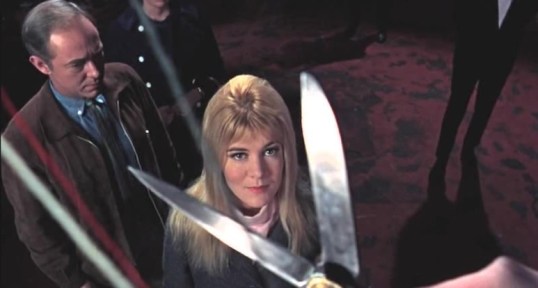
Blood and Black Lace (1964, dir by Mario Bava)

Blood and Black Lace (1964, dir by Mario Bava)

2,000 Maniacs (1964, dir by Herschell Gordon Lewis)

2,000 Maniacs (1964, dir by Herschell Gordon Lewis)

Repulsion (1965, dir by Roman Polanski)

Repulsion (1965, dir by Roman Polanski)

Kill, Baby, Kill (1966, dir by Mario Bava)

Kill, Baby, Kill (1966, dir by Mario Bava)

4 Shots From 4 Films: Special 1974 Edition


4 Or More Shots From 4 Or More Films is just what it says it is, 4 shots from 4 of our favorite films. As opposed to the reviews and recaps that we usually post, 4 Shots From 4 Films lets the visuals do the talking!

Today, we pay tribute to a great year in cinema.  It’s time for….

4 Shots From 4 1974 Films

The Godfather Part II (1974, dir by Francis Ford Coppola, DP: Gordon Willis)

Chinatown (1974, dir by Roman Polanski, DP: John A. Alonzo)

The Conversation (1974, dir by Francis Ford Coppola, DP: Bill Butler and Haskell Wexler)

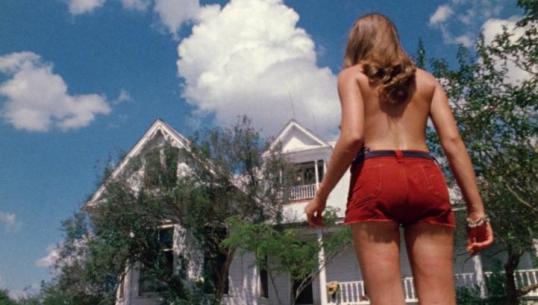
The Texas Chainsaw Massacre (1974, dir by Tobe Hooper, DP: Daniel Pearl)

8 Shots From 8 Films: Special Robert Evans Edition


4 Or More Shots From 4 Or More Films is just what it says it is, 4 shots from 4 of our favorite films. As opposed to the reviews and recaps that we usually post, 4 Shots From 4 Films lets the visuals do the talking!

95 years ago today, Robert Evans was born in New York City.  He started out working in his brother’s clothing business but a chance meeting with actress Norma Shearer led to him becoming an actor.  And while Evans, by his own account, was not a particularly good actor, he did prove himself to be very skilled at playing the games of Hollywood.  Evans eventually moved from acting to production, first as an executive at Paramount and then as an independent producer.

He lived a life as glamorous and tumultuous as the stars of his pictures and his memoir, The Kid Stays In The Picture, is considered to be one of the classic show biz autobiographies.  He hung out with cinematic rebels like Jack Nicholson and Robert Towne and counted Secretary of State Henry Kissinger as a friend.  He suggested that Francis Ford Coppola should direct The Godfather and, when Paramount put pressure on Coppola to cut the film down to two hours, it was Evans who famously announced that a two-hour Godfather was nothing more than a trailer.  He lost Ali MacGraw to Steve McQueen and, again by own account, he lost a lot of potentially productive years to cocaine.  (The Cotton Club scandal is one of the wildest in the history of Hollywood, though it should be noted that Evans himself was never charged with any wrongdoing.)  But, for all that he lost, Evans continues to gain admirers as being the epitome of the producer who was willing to take chances.  For all of his flamboyance, Evans had an eye for good material and the willingness to protect his directors.  In many ways, he was as important to the cinematic revolution of the 70s as the directors that he hired.  When Evans passed away in 2019, it was truly the end of an era.

Here, in honor of the birth and legacy of Robert Evans, are 8 Shots from 8 Films that Evans produced, either as studio chief at Paramount or as an independent producer.

8 Shots From 8 Robert Evans Films

Rosemary’s Baby (1968, dir by Romnn Polanski, DP: William A. Fraker)

Love Story (1970, dir by Arthur Hiller, DP: Richard Kratina)

The Godfather (1972, dir by Francis Ford Coppola, Cinematography by Gordon Willis)
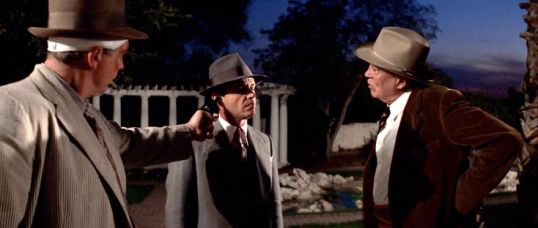
Chinatown (1974, dir by Roman Polanski, DP: John A. Alonzo)

Marathon Man (1976, dir by John Schlesinger, DP: Conrad Hall)

The Cotton Club (1984, dir by Francis Ford Coppola, DP: Stephen Goldblatt)
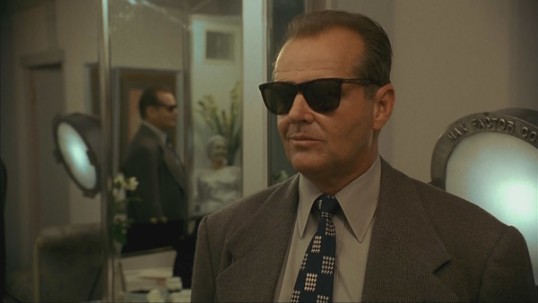
The Two Jakes (1990, dir by Jack Nicholson, DP: Vilmos Zsigmond)

Sliver (1993, dir by Phillip Noyce, DP: Vilmos Zsigmond)
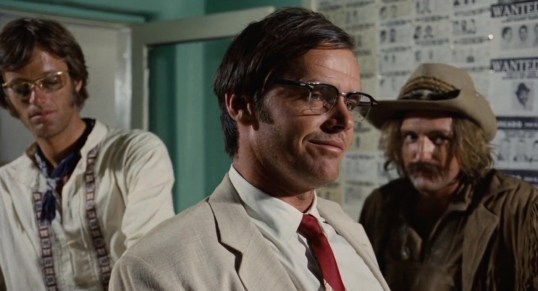
8 Shots From 8 Films: The Late 60s


4 Or More Shots From 4 Or More Films is just what it says it is, 4 shots from 4 of our favorite films. As opposed to the reviews and recaps that we usually post, 4 Shots From 4 Films lets the visuals do the talking!

This October, I’m going to be doing something a little bit different with my contribution to 4 (or more) Shots From 4 (or more) Films.  I’m going to be taking a little chronological tour of the history of horror cinema, moving from decade to decade.

Today, we take a look at the late 60s!

8 Shots From 8 Horror Films: The Late 60s

Torture Garden (1967, dir by Freddie Francis, DP: Norman Warwick)

The Sorcerers (1967, dir by Michael Reeves, DP: Stanley Long)

Rosemary’s Baby (1968, dir by Roman Polanski, DP: William A. Fraker)

The Witchfinder General (1968, dir by Michael Reeves, DP: John Coquillon)

Night of the Living Dead (1968, dir by George Romero, DP: George Romero)

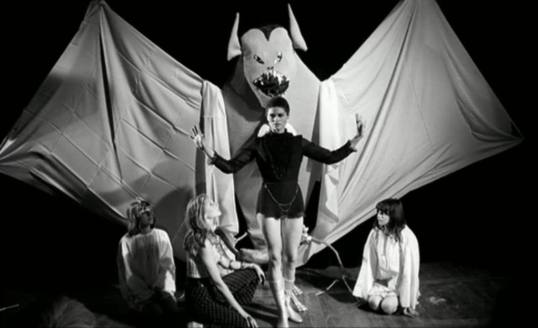
The Rape of the Vampire (1968, dir by Jean Rollin, DP: Jean Rollin)

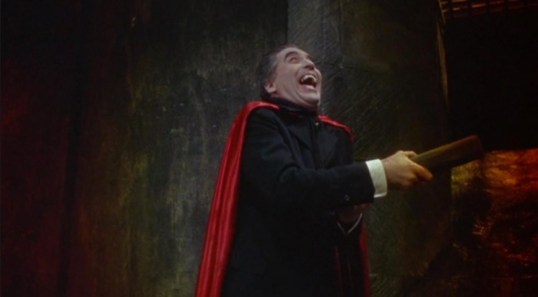
Dracula Has Risen From The Grave (1968, dir by Freddie Francis, DP: Arthur Grant)

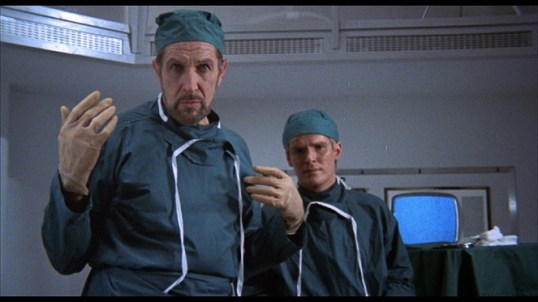
Scream and Scream Again (1969, dir by Gordon Hessler, DP: John Coquillon)

8 Shots From 8 Films: Special Robert Evans Edition


4 Or More Shots From 4 Or More Films is just what it says it is, 4 shots from 4 of our favorite films. As opposed to the reviews and recaps that we usually post, 4 Shots From 4 Films lets the visuals do the talking!

92 years ago today, Robert Evans was born in New York City.  He started out working in his brother’s clothing business but a chance meeting with actress Norma Shearer led to him becoming an actor.  And while Evans, by his own account, was not a particularly good actor, he did prove himself to be very skilled at playing the games of Hollywood.  Evans eventually moved from acting to production, first as an executive at Paramount and then as an independent producer.

He lived a life as glamorous and tumultuous as the stars of his pictures and his memoir, The Kid Stays In The Picture, is considered to be one of the classic show biz autobiographies.  He hung out with cinematic rebels like Jack Nicholson and Robert Towne and counted Secretary of State Henry Kissinger as a friend.  He suggested that Francis Ford Coppola should direct The Godfather and, when Paramount put pressure on Coppola to cut the film down to two hours, it was Evans who famously announced that a two-hour Godfather was nothing more than a trailer.  He lost Ali MacGraw to Steve McQueen and, again by own account, he lost a lot of potentially productive years to cocaine.  (The Cotton Club scandal is one of the wildest in the history of Hollywood, though it should be noted that Evans himself was never charged with any wrongdoing.)  But, for all that he lost, Evans continues to gain admirers as being the epitome of the producer who was willing to take chances.  For all of his flamboyance, Evans had an eye for good material and the willingness to protect his directors.  In many ways, he was as important to the cinematic revolution of the 70s as the directors that he hired.  When Evans passed away in 2019, it was truly the end of an era.

Here, in honor of the birth and legacy of Robert Evans, are 8 Shots from 8 Films that Evans produced, either as studio chief at Paramount or as an independent producer.

8 Shots From 8 Robert Evans Films

Rosemary’s Baby (1968, dir by Romnn Polanski, DP: William A. Fraker)

Love Story (1970, dir by Arthur Hiller, DP: Richard Kratina)

The Godfather (1972, dir by Francis Ford Coppola, Cinematography by Gordon Willis)

Chinatown (1974, dir by Roman Polanski, DP: John A. Alonzo)

Marathon Man (1976, dir by John Schlesinger, DP: Conrad Hall)

The Cotton Club (1984, dir by Francis Ford Coppola, DP: Stephen Goldblatt)

The Two Jakes (1990, dir by Jack Nicholson, DP: Vilmos Zsigmond)

Sliver (1993, dir by Phillip Noyce, DP: Vilmos Zsigmond)

The TSL’s Horror Grindhouse: Blood for Dracula (dir by Paul Morrissey)


Count Dracula (played by Udo Kier) has a problem.  In order to stay strong and healthy, he needs a constant supply of virgin blood.  (Or, as Kier puts in, “weergen blood.”)  Unfortunately, he lives in 1920s Romania and apparently, there just aren’t many virgins left in Eastern Europe.

However, Dracula’s assistant, Anton (Arno Juerging) has a solution.  Dracula just needs to move to Italy!  After all, Italy is the home of the Vatican and it’s just been taken over by Mussolini and the fascists.  Surely, no one in Italy is having sex!  Dracula should be able to find all the virgins that he needs in Italy!

So, Dracula climbs into his coffin and Anton drives him to Italy.  Once they arrive, they meet an Italian land owner,  Il Marchese di Fiore (played by Italian neorealist director Vittorio De Sica).  The Marchese is convinced that Dracula is a wealthy nobleman and he says that Dracula can marry any of his four daughters.  He assures Dracula that they’re all virgins but Dracula soon discovers that two of them are not.  It turns out that, thanks to the estate’s Marxist handyman, Mario (Joe Dallesandro), it’s getting as difficult to find a virgin in Italy as it was in Romania!

After completing work on Flesh For Frankenstein, director Paul Morrissey and actors Udo Kier, Joe Dallesandro, and Arno Juerging immediately started work on Blood for Dracula.  Though Blood for Dracula never quite matches the excesses of Flesh for Frankenstein, it still taps into the same satiric vein that provided the lifeblood that gave life to Flesh for Frankenstein.  Once again, the sets and costumes are ornate.  Once again, the frequently ludicrous dialogue is delivered with the straightest of faces.  Once again, Udo Kier goes over-the-top as a famous monster.  And, once again, Joe Dallesandro plays his role with a thick and anachronistic New York accent and he looks damn good doing it.

Ironically, one of the differences between Flesh for Frankenstein and Blood for Dracula is that there’s quite a bit less blood in the Dracula film.  Then again, that’s also kind of the point.  Dracula literally can’t find any blood to drink and, as a result, he’s become weak and anemic.  Udo Kier is perhaps the sickliest-looking Dracula in the history of Dracula movies.  By the time that he meets the Marchese’s four daughters, he’s so sick that he literally seems like he might fade away at any second.  As ludicrous as the film sometimes is, you can’t help but sympathize with Dracula.  All he wants is some virgin blood and the communists aren’t even willing to let him have that.  Blood for Dracula is, in its own twisted way, a much more melancholy film than Flesh For Frankenstein.  Or, at least it is until the finale, at which point one character gets violently dismembered but still continues to rant and rave even after losing the majority of their limbs.

When Blood for Dracula was released in 1974, it was originally called Andy Warhol’s Dracula, though Warhol had little to do with the movie beyond allowing his name to be used.  As with Flesh for Frankenstein, Antonio Margheriti was credited in some prints as a co-director, largely so the film could receive financial support from the Italian government.

Sadly, there would be no Andy Warhol’s The Mummy or Andy Warhol’s Wolfman.  One can only imagine what wonders Kier, Dallesandro, and Morrissey could have worked with those.


4 Shots From Horror History: Even The Wind Is Scared, Witchfinder General, Rosemary’s Baby, The Nude Vampire


This October, I’m going to be doing something a little bit different with my contribution to 4 Shots From 4 Films.  I’m going to be taking a little chronological tour of the history of horror cinema, moving from decade to decade.

Today, we finish off the 1960s!

4 Shots From 4 Films

Even The Wind is Scared (1967, dir by Carlos Enrique Taboada)

Even The Wind is Scared (1967, dir by Carlos Enrique Taboada)

The Witchfinder General (1968, dir by Michael Reeves)

Witchfinder General (1968, dir by Michael Reeves)

Rosemary's Baby (1968, dir by Roman Polanski)

Rosemary’s Baby (1968, dir by Roman Polanski)

The Nude Vampire (1969, dir by Jean Rollin)

The Nude Vampire (1969, dir by Jean Rollin)4 

4 Shots From Horror History: Blood and Black Lace, 2000 Maniacs, Repulsion, Kill Baby Kill


This October, I’m going to be doing something a little bit different with my contribution to 4 Shots From 4 Films.  I’m going to be taking a little chronological tour of the history of horror cinema, moving from decade to decade.

Today, we continue the 1960s!

4 Shots From 4 Films

Blood and Black Lace (1964, dir by Mario Bava)

Blood and Black Lace (1964, dir by Mario Bava)

2,000 Maniacs (1964, dir by Herschell Gordon Lewis)

2,000 Maniacs (1964, dir by Herschell Gordon Lewis)

Repulsion (1965, dir by Roman Polanski)

Repulsion (1965, dir by Roman Polanski)

Kill, Baby, Kill (1966, dir by Mario Bava)

Kill, Baby, Kill (1966, dir by Mario Bava)