Horror Film Review: Cape Fear (dir by Martin Scorsese)


And I beheld as Scorsese remade a classic movie and, Lo, there was De Niro, decorated in india ink and speaking in tongues…

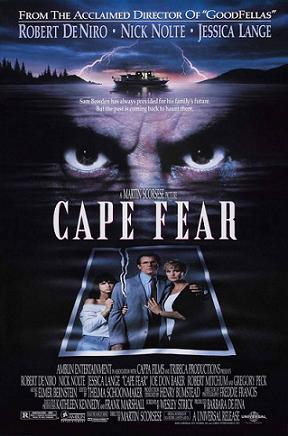
In 1991, Martin Scorsese remade the 1962 horror thriller, Cape Fear.  Both versions deal with the same basic story but each tells it in a very different way.  If the original Cape Fear was straightforward and to the point, Martin Scorsese’s version is so stylized that occasionally, it’s tempting to suspect that Scorsese might be parodying himself.  Zoom shots, negative shots, sweeping camera movements, Scorsese’s Cape Fear is full of all of them.  When a storm rolls in for the film’s operatic finale, the red clouds look as if their on fire.  Hell is coming to North Carolina, the film appears to be announcing.

While the plot largely remains the same, there are a few significant changes to the characters involved:

In the first Cape Fear, Robert Mitchum’s Max Cady was an arrogant, swaggering brute.  In the remake, Robert De Niro’s Cady is still an arrogant, swaggering brute but he’s now also an evangelical who is tattooed with bible verses and who speaks in tongues.  Cape Fear‘s approach to Cady’s religion is so over-the-top that it almost makes Stephen King’s approach to religious characters seem subtle and nuanced.  De Niro also speaks in a broad Southern accent.  Occasionally, De Niro gets the accent right but most of the time, he sounds like he’s in a Vermont community theater production of Cat On A Hot Tin Roof.

In the first Cape Fear, Gregory Peck’s Sam Bowden was a lawyer who caught Max while Max was attacking a woman and who then testified against Max in court.  That’s not the case with the remake’s version of Sam Bowden.  Despite being played by Nick Nolte, the remake’s Sam Bowden is such a wimp that you can’t help but dislike him.  His wife (Jessica Lange) doesn’t trust him.  His teenage daughter (Juliette Lewis) resents him and his attempts to control her life.  In this version, Sam didn’t testify against Max in court.  Instead, Sam was Max’s lawyer and withheld evidence that could have secured Max’s acquittal.  What Sam didn’t realize is that Max would spend his time in prison studying the law and that Max would eventually figure out what Sam did.

As in the original film, Max shows up in North Carolina and proceeds to stalk the Bowdens.  Unlike Mitchum, who was all quiet menace, De Niro plays Max as being loud and obnoxious, the type who will sit in a theater, light a cigar, and intentionally laugh at the top of his lungs.  Max knows enough about the law that he knows exactly what he can get away with.  He poisons Sam’s dog.  He rapes Sam’s associate, Lori (played, in a heart-breaking performance, by Ileana Douglas).  In one of the film’s most unsettling scenes, he pretends to be the new drama teacher and toys with Sam’s daughter.

With the help of a private eye (Joe Don Baker), Sam tries to get Max out of his life.  Eventually, Sam pretends to be out-of-town, all as part of a ruse to get Max to break into his house so that he can be shot in self-defense.  It’s here that Nolte’s wimpy performance becomes an issue.  It’s impossible not to laugh at the sight of Sam, all hunched down and desperately trying to run from room to room without being spotted through any of the windows.

To a certain extent, I suspect that were meant to see Sam as being a rather pathetic figure.  Scorsese doesn’t really seem to have much sympathy for him or his dysfunctional family.  If anything, the film seems to argue that Sam has been a bad lawyer, a bad husband, and a bad father and Max has been sent as a type of divine retribution.  Only by defeating Max can Sam find forgiveness and hope to have the type of life that Gregory Peck enjoyed in the first movie.

Scorsese’s Cape Fear is an uneasy mishmash of styles.  Is it an art film, a religious allegory, a horror film, or just a generic thriller?  It doesn’t seem to be sure.  Cape Fear‘s a Scorsese film so, of course, it’s always going to be worth watching.  But there are times when the film definitely runs the risk of overdosing on style.  Sometimes, Scorsese seems to be trying too hard to remind everyone that he’s a legitimately great director and ends up getting so invested in the film’s visuals that he runs the risk of losing the story.  De Niro has some scenes in which he is genuinely chilling but then he has other scenes where he is basically just a live action cartoon character.  The same can be said of the film itself.  It’s always watchable.  At times, it’s rather frightening.  But other times, it’s just too cartoonish to be effective.

If anything, this remake proves that sometimes, it’s best to keep things simple.

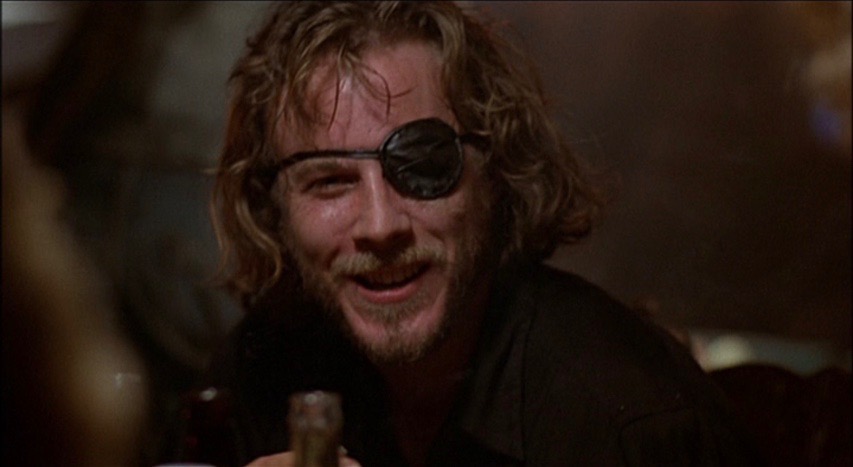
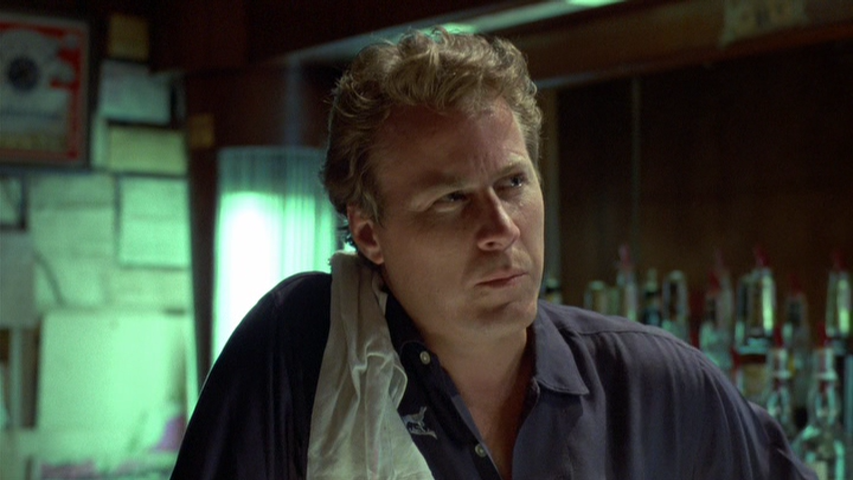
4 Shots From 4 Films (John Heard): Chilly Scenes Of Winter (1979), Cutter’s Way (1981), After Hours (1985), Big (1988)


I know everyone knew John Heard from the Home Alone series, but he did others things as well. Early on he was even given lead roles. I tried to pick a mixture of his early stuff, and when he was moved to largely playing character and supporting roles.

Rest in peace, John Heard.

Chilly Scenes Of Winter (1979, dir. Joan Micklin Silver)

Cutter’s Way (1981, dir. Ivan Passer)

After Hours (1985, dir. Martin Scorsese)

Big (1988, dir. Penny Marshall)

Here Are The DGA nominations!


la-la-land-full-poster-image-691x1024

The Director’s Guild announced their feature film nominations earlier today.

A DGA nomination is one of the biggest prizes of the precursor season.  In general, if the DGA nominates a film then it’s likely that film will also get nominated for best picture.  There have been exceptions, of course.  (David Fincher was nominated for his bastardized rehash of Girl With The Dragon Tattoo.)  But, for the most part, the DGA is the most reliable precursor available.

Five directors were nominated.  The usual suspects were there — Lonergan, Jenkins, and Chazelle.  Fortunately, Denis Villeneuve picked up a nomination, which is good news for Arrival.  The fifth nominee was a bit of a surprise.  Garth Davis was nominated for Lion, which I guess means I’ll have to go see that movie now, even though I have little real desire to do so.

Martin Scorsese was not nominated for Silence, which probably means that the film will be dead-in-the-water as far as Oscar nominations are concerned.

Also not nominated — Tim Miller for Deadpool, a film that’s been doing surprisingly well with the precursors.  If Tim Miller had been nominated, heads would have exploded.  It would have been fun to watch the twitter reaction.

Instead, we just got this —

Just to make it official, here are the five DGA nominees:

Denis Villeneuve — Arrival

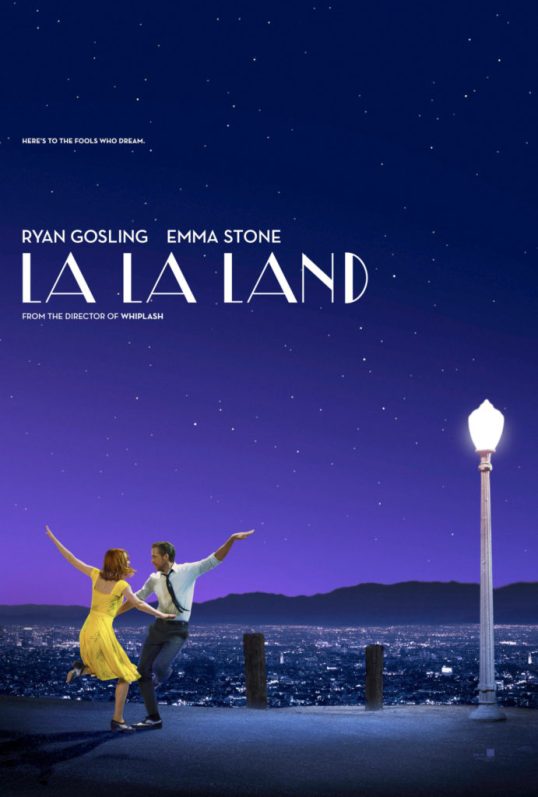
Damien Chazelle — La La Land

Garth Davis — Lion

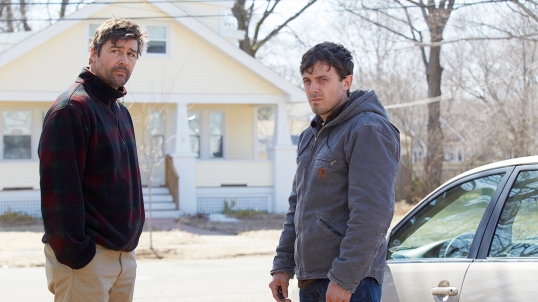
Kenneth Lonergan — Manchester By The Sea

Barry Jenkins — Moonlight

manchester-by-the-sea-sundance-2016

The National Board of Review names Manchester By The Sea the best of 2016!


manchester-by-the-sea-sundance-2016

Oscar season has officially begun!

Earlier today, The National Board of Review named their picks for the best of the year.  They went with Manchester By The Sea and a whole lot of other films that I hope to finally get to see in December!

My favorite two winners?  Amy Adams for best actress and Kubo and the Two Strings for Best Animated Film.

A cavaet: Of the so-called “major” precursors, The National Board of Review is usually the one that seems to match up the least with the actual Oscar results.

Here are the winners!

Best Film:  Manchester by the Sea

Best Director:  Barry Jenkins, Moonlight

Best Actor:  Casey Affleck, Manchester by the Sea

Best Actress: Amy Adams, Arrival

Best Supporting Actor: Jeff Bridges, Hell or High Water

Best Supporting Actress:  Naomie Harris, Moonlight

Best Original Screenplay:  Kenneth Lonergan, Manchester by the Sea

Best Adapted Screenplay:  Jay Cocks and Martin Scorsese, Silence

Best Animated Feature:  Kubo and the Two Strings
Breakthrough Performance (Male): Lucas Hedges, Manchester by the Sea

Breakthrough Performance (Female): Royalty Hightower, The Fits

Best Directorial Debut:  Trey Edward Shults, Krisha

Best Foreign Language Film:  The Salesman

Best Documentary:  O.J.: Made in America

Best Ensemble:  Hidden Figures

Spotlight Award: Creative Collaboration of Peter Berg and Mark Wahlberg

NBR Freedom of Expression Award:  Cameraperson

Top Films

Top 5 Foreign Language Films

  • Elle
  • The Handmaiden
  • Julieta
  • Land of Mine
  • Neruda

Top 5 Documentaries

  • De Palma
  • The Eagle Huntress
  • Gleason
  • Life, Animated
  • Miss Sharon Jones!

Top 10 Independent Films

  • 20th Century Women
  • Captain Fantastic
  • Creative Control
  • Eye in the Sky
  • The Fits
  • Green Room
  • Hello, My Name is Doris
  • Krisha
  • Morris from America
  • Sing Street

Kubo_and_the_Two_Strings_poster

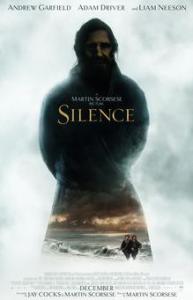
OH MY GOD!!!! Here’s The Trailer for Silence!


It’s here!  The trailer for Silence here!

Silence is one of the most anticipated films of 2016.  Directed by Martin Scorsese, it tells the epic story of three Jesuits in Japan.  Reportedly, Scorsese has been trying to get this film made since at least 1996.

For a while, of course, there was some doubt as to whether or not Silence would even be done in time for 2016.  In fact, it looked like the film might get pushed back to 2017 and, as a result, would fall out of Oscar contention.

If this story sounds familiar, it’s because the same thing nearly happened to Scorsese’s last film, The Wolf of Wall Street.

Will Silence have the same Oscar success as Wolf of Wall Street?  It’s hard to say.  The subject matter could be a hard sell.  I’m excited about it but then again, I love Scorsese and I come from a culturally Catholic background.  Will non-Catholics who love Michael Bay be as excited about Silence as I am?

Who knows?  To be honest, the trailer is full of striking images but I find myself wondering if this is going to be one of those visually impressive but emotionally detached films, the type that you respect more than you enjoy.

Watch the trailer below and decide for yourself!

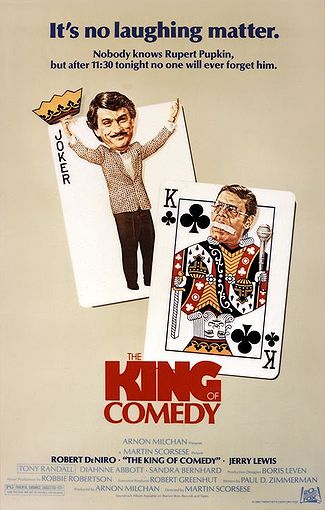
Film Review: The King of Comedy (dir by Martin Scorsese)


Kingofcomedy

Oh my God, do y’all want to see a really great film?

Then you need to do what I did earlier tonight.  You need to sit down and watch Martin Scorsese’s 1983 media satire, The King of Comedy.

Want to know more about The King of Comedy?  Then read on!  But be aware that there are spoilers in the review below!

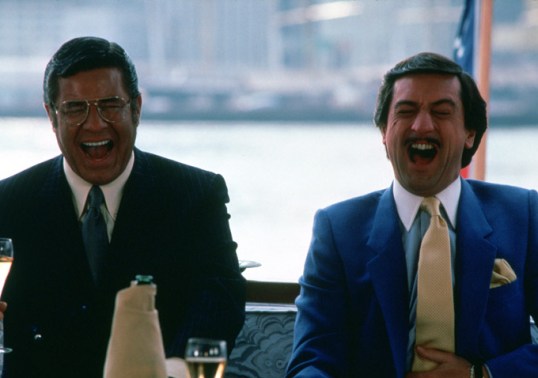
The King of Comedy tells the story of … well, it actually tells the story of several people.  On the one hand, it’s the story of Jerry Langford (played by Jerry Lewis, who gives a performance that is so good that you might even forget that he directed The Day The Clown Cried), a comedian who has his own late night talk show.  Jerry is a celebrity, the type who is mostly famous for being himself.  He makes his living by interviewing people at night but, in his daily life, he struggles to interact with the world at large.  Whenever Jerry steps outside, people start yelling at him.  When he walks away from one elderly fan, she responds by screaming insults at him.  If Jerry seems to be paranoid, it’s because he has good reason to be.

For instance, Masha (a chillingly unhinged performance from Sandra Bernhard) is obsessed with him.  When we first see Masha, she is jumping inside of Jerry’s limousine and refusing to leave.  When she finally gets a chance to be alone with her idol, her manner alternates between desire and hostility.  She may love Jerry but she could just as easily kill him.

And then there’s Rupert Pupkin (Robert De Niro).  Rupert is the character who brings Jerry and Masha together.  He’s a stand-up comedian, the self-described “king of comedy.”  He’s convinced that he can be a star if he can just get on Jerry’s show.  Rupert spends his time imagining the great friendship that he and Jerry could have, if only Jerry would let him on TV.  In his mind, he plays out the scene in which Jerry begs Rupert to take over the show.  Of course, in reality, Rupert lives in his mother’s basement and is surrounded by card-board cutouts of celebs that he will never meet.  When we first see Rupert, his only real skill seems to be the ability to get on everyone’s last nerve.

It’s a little hard to believe now but, when De Niro started his career, he almost exclusively played fuck-ups.  True, he may have won an Oscar for playing Vito Corleone in The Godfather, Part II.  But even while he was playing Vito, he was also playing the erratic and perpetually in debt Johnny Boy in Mean Streets.  In Taxi Driver, he was the delusional Travis Bickle and, in Raging Bull, he was a boxer who managed to alienate just about everyone in the world before finally ending up as an obese self-parody.  But, out of all the fuck-ups that the young(ish) Robert De Niro played, perhaps none was a bigger fuck-up than Rupert Pupkin.

Rupert Pupkin is a character whose sole purpose in life seems to be to make other people cringe with embarrassment.  He is the type of guy who will always come on too strong and say the wrong thing.  Even when Rupert manages to meet Jerry, he is so annoying that Jerry can barely wait to get away from him.  He is the type who asks if you want to see a picture of his “pride and joy” and then shows you a picture of two bottles of dishwashing liquid.  It undoubtedly took some courage to so fully commit to such an off-putting character but that’s exactly what De Niro did.  Rupert is perhaps one of the most annoying characters in cinematic history and yet, perhaps because he’s played by Robert De Niro, you can’t help but feel sorry for him.  You never exactly like him.  But you can’t help but feel a little bit sorry for him.  He is just so clueless!

Of course, what Rupert lacks in common sense, he makes up for in ambition.  He truly believes that he’s destined to be the king of comedy and if he and Masha have to kidnap Jerry Langford for that to happen, so be it.  It is perhaps not surprising that Rupert and Masha would kidnap Jerry and threaten to kill him unless Rupert is invited to appear on the show.  What is surprising is the fact, once we finally see Rupert’s act, we discover that it’s not as bad as we were expecting:

Apparently, when the film was first released, there was some controversy over whether or not Rupert actually appeared on TV and became a star or if it was just another of his delusions.  What’s funny is that there wouldn’t be any controversy today.  In 1983, the idea of someone going to such extremes to be famous may have seemed over-the-top.  In 2016, however, we all know Rupert would eventually end up with his own reality show.  In its way, The King of Comedy is one of the most prophetic films ever made.

The King of Comedy is a great film that, even after all these years, still deserves to be seen.  In fact, it’s probably even more relevant today than when it was first released.

the-king-of-comedy-deniro


4 Shots From 4 Films: Akira Kurosawa


4 Shots From 4 Films is just what it says it is, 4 shots from 4 of our favorite films. As opposed to the reviews and recaps that we usually post, 4 Shots From 4 Films is all about letting the visuals do the talking.

With the latest entry to the Star Wars franchise set to be released in just a few days I thought it was appropriate to share four particular scenes from one filmmaker who has been a huge influence on George Lucas’ vision for Star Wars. This filmmaker also became a huge influence on other master filmmakers such as John Ford, Steven Spielberg, Martin Scorsese, Francis Ford Coppola and Sidney Lumet just to name a few.

Many consider this filmmaker to be one of the greatest filmmakers who ever lived and in this humble individual’s opinion he was the greatest filmmaker who stood above all and whose storytelling and visual techniques would become part of the modern filmmaker’s toll bag.

The man I speak of is Akira Kurosawa.

4 SHOTS FROM 4 FILMS

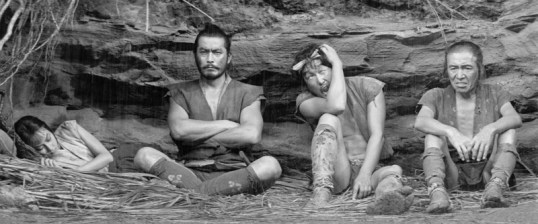
The Hidden Fortress (dir. by Akira Kurosawa)

The Hidden Fortress (dir. by Akira Kurosawa)

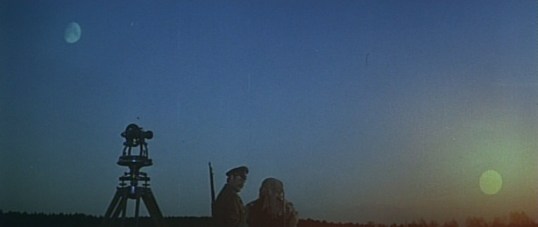
Dersu Uzala (dir. by Akira Kurosawa)

Dersu Uzala (dir. by Akira Kurosawa)

Yojimbo (dir. by Akira Kurosawa)

Yojimbo (dir. by Akira Kurosawa)

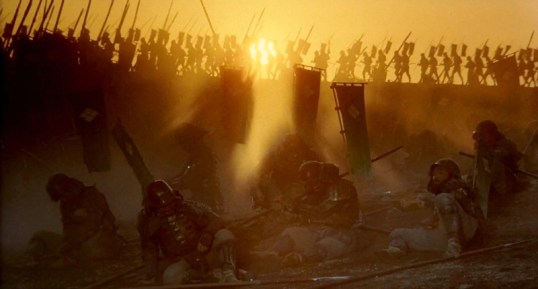
Kagemusha (dir. by Akira Kurosawa)

Kagemusha (dir. by Akira Kurosawa)

Embracing the Melodrama Part II #119: Shutter Island (dir by Martin Scorsese)


Shutter IslandThe 2010 film Shutter Island finds the great director Martin Scorsese at his most playful.

Taking place in 1954, Shutter Island tells the story of two detectives, Teddy Daniels (Leonardo DiCaprio, giving an excellent performance that, in many ways, feels like a test run for his role in Inception) and Chuck Aule (Mark Ruffalo, also excellent), who take a boat out to the Ashecliffe Hospital for The Criminal Insane, which is located on Shutter Island in Boston Harbor.  They are investigating the disappearance of inmate Rachel Solando, who has been incarcerated for drowning her three children.

Ashecliffe is one of those permanently gray locations, the type of place where the lights always seem to be burned out and the inmates move about like ghostly visions of sins brought to life.  It’s the type of place that, had this movie been made in the 50s or 60s, would have been run by either Vincent Price or Peter Cushing.  In this case, the Cushing role of the cold and imperious lead psychiatrist is taken by Ben Kingsley.  Max Von Sydow, meanwhile, plays a more flamboyantly sinister doctor, the role that would have been played by Vincent Price.

When a storm strands Teddy and Chuck on the island, they quickly discover that neither the staff nor the patients are willing to be of any help when it comes to tracking down Rachel.  As Teddy continues to investigate, he finds himself stricken by migraines and haunted by disturbing images.  He continually sees a mysterious little girl.  He has visions of his dead wife (Michelle Williams).  A horribly scarred patient in solitary confinement (Jackie Earle Haley) tells him that patients are regularly taken to a lighthouse where they are lobotomized.  When Teddy explores more of the island, he comes across a mysterious woman living in a cave and she tells him of even more sinister activity at Ashecliffe.  Meanwhile, Chuck alternates between pragmatic skepticism and flights of paranoia.

And I’m not going to share anymore of the plot because it would be a crime to spoil Shutter Island.  This is a film that you must see and experience for yourself.

This is one of Martin Scorsese’s most entertaining films, an unapologetic celebration of B-movie history. He knows that he’s telling a faintly ludicrous story here and, wisely, he embraces the melodrama.  Too many directors would try to bring some sort of credibility to Shutter Island by downplaying the film’s more melodramatic moments.  Scorsese, however, shows no fear of going over the top.  He understands that this is not the time to be subtle.  This is the time to go a little crazy and that’s what he does.

Good for him.

Shattered Politics #74: The Aviator (dir by Martin Scorsese)


The_Aviator_Poster

“The way of the future.” — Howard Hughes (Leonardo DiCaprio) in The Aviator (2004)

As I recently rewatched the 2004 best picture nominee, The Aviator, I realized that, in the film’s scheme of things, Ava Gardner was far more important than Katharine Hepburn.  (Or, perhaps it would be more appropriate to say that Kate Beckinsale’s Ava Gardner was far more important than Cate Blanchett’s Katharine Hepburn.)

Over the course of the film, both Hepburn and Gardner are involved with billionaire-turned aviator-turned film director Howard Hughes (Leonardo DiCaprio).  Throughout the film, Katherine is portrayed as being flighty, pretentious, and overdramatic.  There’s a lot of dark humor to the scene where Katherine breaks up with Howard, largely because Katharine is incapable of not acting as if she’s making a film.  Her every word is so carefully rehearsed that you have to agree when Howard says that she’s incapable of not giving a performance.  Ava, on the other hand, is always direct.  She has a sense of humor.  She has no trouble telling Howard off.  Whereas Katharine put on airs of being an incurable romantic, Ava tells Howard flat out that she doesn’t love him and is only using him to forward her career.

But, while Katharine Hepburn gets more screen time, it’s Ava Gardner who actually saves Howard’s business.  Towards the end of the film, after Howard has had a nervous breakdown and has locked himself in a hotel room, it’s Ava who suddenly shows up, cleans him, and dresses him.  She’s the one who gives Howard the strength to leave his room and to face down the corrupt senator (Alan Alda) who is investigating his business.

Of course, Howard Hughes is best known for once being the world’s richest recluse.  In the 1960s, Howard locked himself away in a hotel room in Las Vegas and spent the next decade laying naked in bed and watching television.  The Aviator doesn’t deal with this period of Howard’s life but it’s full of scenes where we catch glimpses of Howard’s future.  Throughout the film, we watch as Howard obsessively washes his hands.  We watch as he gives precise instructions on how even the simplest of tasks are to be accomplished.  We watch as he grows increasingly paranoid about the germ-filled outside world.  The film suggests that Howard’s obsessive compulsive disorder both served to make him a great engineer and a great filmmaker while, at the same time, ultimately destroying him.

The Aviator was the second film that DiCaprio made with Scorsese.  And, as bad as DiCaprio may have been in Gangs of New York, he’s absolutely brilliant in The Aviator.  As a character, Howard Hughes has so many quirks and tics that it would have been easy for DiCaprio to go overboard.  Instead, he gives a surprisingly subtle performance.  And, even more importantly as far as I’m concerned, he actually sounds authentically Texan when he speaks.

In many ways, much of The Aviator reminds me of Gangs of New York.  Both films are gorgeously produced period epics that try to cover a lot of material.  Both films are absolute cat nip for history nerds like me.  But, whereas Gangs of New York leaves one feeling vaguely dissatisfied, The Aviator actually improves with subsequent viewings.  Whereas the action in Gangs had no center, The Aviator revolves around Howard and the actor playing him.

While the Aviator starts off with Howard making movies and romancing Katharine Hepburn, it’s at its best when Howard appears before a committee chaired by Sen. Owen Brewster (Alan Alda) and passionately defends both himself as an engineer and a businessman and the right of innovators everywhere to freely pursue their passion.  The film suggests that Brewster was bribed by Howard’s main business rival, Juan Trippe (Alec Baldwin, in unapologetic villain mode), and it’s hard not to applaud when Howard stands up for himself.

Speaking of which, it’s odd, so soon after reviewing Alan Alda in The Seduction of Joe Tynan, to see Alda playing a far less ethical politician in The Aviator.  That said, Alda’s corrupt performance in The Aviator is a hundred times better than his cutesy work in Joe Tynan.  If anything, Alda gives a performance here that will remind everyone of why they don’t care much for their congressman.

The Aviator was nominated for best picture but it lost to the far more low-key Million Dollar Baby.  Scorsese would have to wait until the release of The Departed for one of his films to finally win best picture.

Shattered Politics #71: Gangs of New York (dir by Martin Scorsese)


Gangs_of_New_York_Poster

Despite the fact that it was nominated for best picture and marked the start of his fantastically successful collaboration with actor Leonardo DiCaprio, Martin Scorsese’s 2002 film Gangs of New York does not have the best reputation.  It always seems to be regarded as one of Scorsese’s lesser films and, often times, both The Aviator and The Departed are described as representing a comeback of sorts from Gangs.

To a certain extent, I have to agree.  Gangs of New York is a lesser Scorsese movie but then again, a lesser Scorsese film is still a hundred times better than the greatest films from Brett Ratner or Michael Bay.

The flaws of Gangs of New York are many.  The film, which tells the epic story of how an Irish gang led by Leonard DiCaprio battled a nativist gang led by Daniel Day-Lewis in Civil War-era New York City, runs for nearly 3 hours and yet it somehow still feels rushed and incomplete.  Cameron Diaz is far too contemporary of an actress to be truly believable as a 19th century pickpocket.  For that matter, Leonardo DiCaprio gives one of the worst performances of his career, coming across as being one-note and shrill.  If you only knew DiCaprio from his work in Gangs of New York, you would have a hard time believing that he was capable of doing the type of work that he did in Inception or The Wolf of Wall Street.

And yet, Gangs of New York is one of those flawed films that I can’t help but enjoy.

First off, on a purely personal level, how can I not love a film about how terribly the Irish were treated in the 19th Century?  Seriously, the Irish were regarded as if they were somehow subhuman.  They were attacked for being Catholic.  They were viewed as being criminals.  An entire freaking political party — the American party — was formed specifically to keep the Irish out.  But you know what?  We Irish kept coming, we kept fighting for our rights, and now everyone wishes they could be one of us!

Secondly, and this should not a shock when you consider that the film was directed by Martin Scorsese, the film looks absolutely gorgeous!  Despite the fact that it’s takes place in a 19th century slum and most of the characters are poor, Gangs of New York is a visual feast.  I loved the ornate sets and all the colorful clothes.  I loved the attention to detail that was put into everything.

(My favorite visual from the film: Daniel Day-Lewis and his entourage walking down a street while fireworks explode directly over Day-Lewis’s shoulder.)

Third, there’s Daniel Day-Lewis’s performance as Bill “The Butcher” Cutting.  One reason why DiCaprio’s performance is so noticeably bad is because he’s acting opposite Day-Lewis.  Sporting a handle-bar mustache and speaking in an almost satirically exaggerated New York accent, Day-Lewis turns Bill into one cinema’s greatest villains.

Add to that, the great Italian actor Giovanni Lombardo Radice show up for a few minutes, playing Simon Legree in a theatrical production of Uncle Tom’s Cabin!  Scorsese should make more films with Radice.

But, perhaps the main reason why I enjoy Gangs of New York is because, as I’ve mentioned so many times in the past, I really am a big history nerd.  And Gangs of New York deals with a period in American history that really doesn’t get as much attention as it deserves.  While we all know that the Civil War started when the South seceded from the union, what is often forgotten is that the North was not united in their support of Abraham Lincoln and the Union.  In fact, the Mayor of New York, Fernando Wood, was such a strong supporter of the Confederacy that he, at one point, suggested that New York City should secede from the union as well.  And when Lincoln instituted the draft, NYC — and several other cities in the north — exploded into riots.

Of course, Gangs of New York is not a 100% historically accurate.  For one thing, it compresses the time frame of the draft riots and — as films often do — it downplays the culture of Northern racism and instead portrays racists like Bill Cutting as being the exception to the rule.  But, even with that in mind, Gangs of New York still serves as a good starting point for those who want to learn more about American history than what they’ve been told in school.

My favorite parts of Gangs of New York dealt not with how the gangs fought each other but instead how the gangs were used as political foot soldiers.  One of the major supporting characters in Gangs of New York is William “Boss” Tweed (Jim Broadbent), a real-life politician who was at the center of one of America’s first major political scandals.  When we first meet Tweed, he is using Bill Cutting’s gang to fix elections.  However, as the film progresses, Tweed comes to realize that the political future of New York rests with the Irish.  So, Tweed starts using the Irish gang to fix elections.  For those of us who are into political history, the Boss Tweed scenes are a lot of fun.

Gangs of New York has its flaws.  It’s the type of project that, if it were made today, it would probably be a series on HBO and it would win all sorts of awards.  (Actually, it did kinda.  It was called Boardwalk Empire.)  It’s not perfect, but I like it.