Thoughts On The Culture — 9/11/26


It’s Been A While

It’s been two months since I last did one of these. With October approaching and horror movies demanding my attention, I decided to get at least one essay in here before the ghosts and the goblins take over for a month. Fair warning: This is not one of my happier editions of Thoughts On The Culture (and some of the earlier drafts were even angrier!) but these are some things that I’ve been trying to say for a few years now. If not now, when?

25 Years Ago

Every September 11th I decide I am going to write about the anniversary, and almost every year I give up after a few sentences. After the first few sentences, I always find myself getting too angry to continue.

There were 2,977 official victims of 9/11. And then there are the people who died in the days, months, years, and decades afterward, some from illnesses related to the toxic dust at the scene, some from the depression and anxiety that followed the attacks, and many in the wars that were fought after the attack. The world changed that morning. That is a difficult thing to deal with in one essay.

I know that a lot of my friends who are a bit more on the Left than me get upset with the patriotic rituals that surround the anniversary. That is because 9/11 sits badly with their preferred narrative, the idea that America is always at fault, that terrorists are simply activists trying to be heard, and that a capitalist society like this one is always one disaster away from collapse.

9/11 showed something else. I do not care if you dislike American foreign policy. That does not justify killing nearly three thousand innocent people. Subsequent investigations did not reveal saintly militants with a message. They revealed a crew of men whose ideas about sex and morality looked to be permanently stuck in early adolescence. And America did not collapse. That day is full of stories of heroism and sacrifice from the kind of ordinary Americans who usually don’t get much respect from our leaders. A society in which people have individual freedom does not come apart because of a disaster. Meanwhile, to take two countries long beloved by the anti-American Left, Venezuela couldn’t survive the loss of Hugo Chavez and Cuba’s power grid cannot even handle a visit from Hasan Piker.

Heroism

Actor Steve Buscemi was an FDNY firefighter with Engine 55 from 1980 to 1984.  The day after the attacks, Buscemi put on his old uniform and worked 12-hour shifts for days on end. He did not have his people alert the media. He did not brag about it later. He did it because he thought it was his duty. A lot of other people, who were not famous, did the same. Father Mychal Judge, a fire department chaplain, died while praying over the bodies of those who had crashed down to the streets. The passengers of UA 93 fought back and, at the cost of their own lives, prevented one of the planes from crashing into the U.S. Capitol. That was America on September 11th.

A Few Words From My Father

My dad thought the attacks showed how weak the terrorists actually were. As he put it, flying a plane into a building does not take a genius. It just takes someone willing to do it. He was not intimidated. He took the lack of immediate follow-up attacks to mean the whole operation was sloppier than it looked on television. He thought the terrorists had gotten lucky, and that their leaders would be blown to oblivion soon enough. At the time, everyone assumed he was wrong. “Well, not many people agree with you on that,” one of my cousins said. It turned out my father was largely right.

Who Is More Traumatized?

This week, on Twitter or X or whatever you want to call it, a lot of Zoomers have been complaining that 9/11, an event which they were not even around for, is getting too much attention, and that the COVID years were actually the worst trauma.

The trauma from 9/11 came from not knowing what the future held, and from the feeling that another attack could come at any moment. On 9/11, even those of us who did not live in New York watched the attacks unfold on television. I saw people jumping to their deaths. I saw, and heard, the towers fall. Those images have never left. On that day, they were in the whole country’s head. As for COVID, how traumatized you were depended a great deal on which state you were living in. Not everyone was set free from the lockdowns at the same time.

The weird thing, to me, is this attitude that trauma is a competition. Nothing seems to scare certain people more than the fact that not everyone looks at the world the same way they do.

Is It Okay To Lighten The Mood?

It’s always okay to lighten the mood. In fact, I think there are times when writers have a duty to lighten the mood. Sometimes, I think it’s too tempting (and perhaps too easy) to simply obsess on the bad at the expense of the good. It’s easy to focus on the darkness but we need to be willing to accept that there are reasons to be happy as well. For instance, Big Brother is nearly over. Seriously, this has been a very frustrating season of the show that I love to moderately dislike. This season hasn’t so much been bad as it’s just been overwhelmingly bland. It’s not good enough to get excited about but it’s not really bad enough to hate. Fortunately, it’ll all be over on October 1st, just in time to celebrate the scary season!

Admittedly, this is mostly good news for me and my friend Jim. I introduced him to Big Brother last season and I don’t think he’s ever going to forgive me.

On a Happier Note

Let’s end this edition on a hopeful note. I am already busy watching and reviewing films for this year’s Horrorthon. October is my favorite time of the year, and I look forward to celebrating it with all of you!
Live Tweet Alert: Join #FridayNightFlix for Matinee!


As some of our regular readers undoubtedly know, I am involved in a few weekly watch parties.  On Twitter, I host #FridayNightFlix every Friday and I co-host #ScarySocial on Saturday.  On Mastodon, I am one of the five hosts of #MondayActionMovie!  Every week, we get together.  We watch a movie.  We tweet our way through it.

Tonight, at 10 pm et, I will be hosting #FridayNightFlix!  The movie?  1993’s Matinee!

If you want to join us this Friday, just hop onto twitter, find Matinee on Prime, start the movie at 10 pm et, and use the #FridayNightFlix hashtag!  I’ll be there happily tweeting.  It’s a friendly group and welcoming of newcomers so don’t be shy.

See you there!


6 Shots From 6 Films: Special Brian De Palma Edition


4 Or More Shots From 4 Or More Films is just what it says it is, 4 shots from 4 of our favorite films. As opposed to the reviews and recaps that we usually post, 4 Shots From 4 Films lets the visuals do the talking!

Today is the birthday of Brian De Palma and that means that it is time for….

6 Shots From 6 Brian De Palma Films

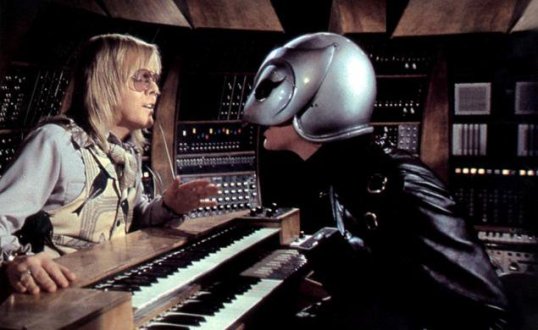
Phantom of Paradise (1974, dir by Brian De Palma, DP: Larry Pizer)

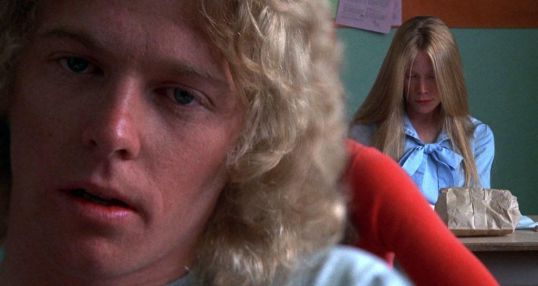
Carrie (1976, dir by Brian De Palma, DP: Mario Tosi)

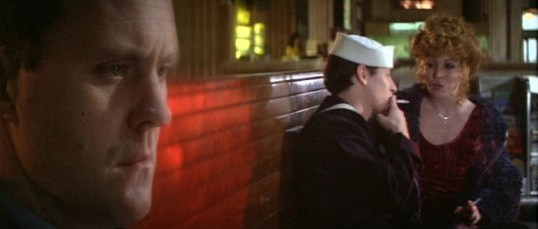
Dressed to Kill (1980, dir by Brian De Palma, DP: Ralf D. Bode)

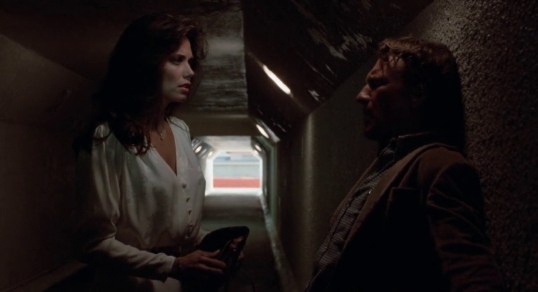
Blow Out (1981, dir by Brian De Palma, DP: Vilmos Zsigmond)

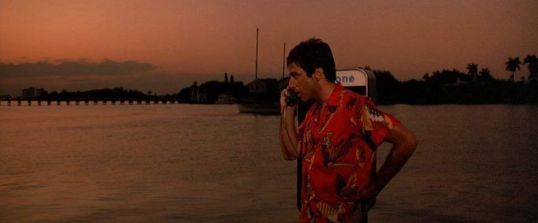
Scarface (1983, dir by Brian De Palma, DP: John A. Alonzo)

Body Double (1984, dir by Brian De Palma, DP: Stephen Burum)

Late Night Retro Television Review: Hunter 2.1 “Case X”


Welcome to Late Night Retro Television Reviews, a feature where we review some of our favorite and least favorite shows of the past!  On Thursdays, I will be reviewing Hunter, which aired on NBC from 1984 to 1991.  The entire show is currently streaming on Tubi and several other services!

This week, we begin the second season!

Episode 2.1 “Case X”

(Dir by David Soul, originally aired on September 21st, 1985)

Adult-film actresses are turning up dead all over Los Angeles. Hunter and McCall have the case, and it does not take them long to see the pattern. The killer is sleazy photographer Tony Cochran (Leo Rossi), and the women are being supplied to him by former adult star turned talent agent Andrea Burden (Rita Taggart). Knowing who the murderer is and having the evidence to arrest him are two different things. After Tony murders his brother (Sam Anderson) and frames him for the crimes, it looks as if Tony might walk.

So, of course, McCall goes undercover. She joins the fitness club where Andrea works out and looks for girls. She poses in lingerie for Tony. (Just as in the first season, McCall going undercover seems to largely mean McCall wearing less clothes than usual.) And when Tony kidnaps her, it is up to Hunter to rescue her and fill Tony with lead.

In other words, the second season of Hunter opens in a style familiar to anyone who watched the first. Hunter is still a shoot-first rebel. McCall is still his continually in-peril partner. The bad guy still underestimates this violent duo. While Hunter and McCall solve the crimes and kill the villains, Bernie Terwilliger keeps trying to write them up for every infraction imaginable. In this episode, Terwilliger counts seven violations of police policy on the part of Hunter and McCall. I counted a bit more but maybe Terwilliger was trying to be charitable.

The one real change between seasons is a new commanding officer. John Amos has been replaced by Bruce Davison. As Captain Wyler, Davison wears a three-piece suit, never has a hair out of place, and bristles when Hunter refuses to follow orders. That said, Wyler congratulates Hunter at the end of the episode and tells Terwilliger to back off the ethics investigation. For once, Hunter has a boss who is not actively trying to get him kicked off the force.

The episode itself is pretty predictable. As soon as Leo Rossi’s name appeared in the guest credits, it was easy to guess who the murderer would turn out to be. Hunter is not a show about complex mysteries or shocking twists. It is a show about the chemistry between Fred Dryer and Stepfanie Kramer, and about the promise that the bad guys will be punished. This episode delivered on both.

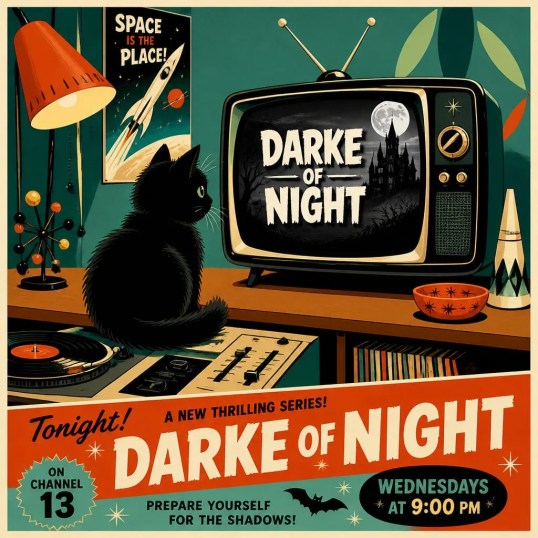
Retro Television Review: Darke of the Night 1.1 “Who’s Been Sitting In My Chair?”


Welcome to Retro Television Reviews, a feature where we review some of our favorite and least favorite shows of the past!  This Thursday, I will be reviewing Darke of the Night, which aired its only episode on the DuMont Network in 1955.  The show can be found on YouTube!

This week’s pilot originally aired as a part of the Studio 57 anthology show.

Episode 1.1 “Who’s Been Sitting In My Chair?”

(Dir by David Butler, originally aired on September 10th, 1955)

Johnny Darke (Jack Carson) is the hippest and coolest DJ in all of New York City .… or, at least, he’s as hip and cool as anyone could have been in 1955. All through the night, he spins records and talks to “the ghosts” who are listening. His station manager (Joseph Kearns) tells him that his sponsor doesn’t like it when Johnny talks about ghosts, but no one tells Johnny Darke what to do.

Johnny knows that a woman has been entering his apartment while he’s at the studio, but he doesn’t know why. (What I don’t know is why Johnny doesn’t just lock his door.) Johnny suspects that the woman is Margaret Canady (Jocelyn Brando), who lived in the apartment before Johnny moved in. Margaret’s boyfriend, Vincent Marsh (H.M. Wynant), is on death row for murder, but as Johnny learns about the case, he sees it as a story about two people who love each other as opposed to a woman who fell in love with a killer.

When Vincent breaks out of prison, he steals a guard’s gun and tells the guard that he’s going to use it to kill Margaret. (That was nice of him.) The police come down to the radio station and ask Johnny if he knows where to find Margaret. Johnny says that Margaret is probably at his apartment. After the police leave (and, strangely, do not immediately head over to Johnny’s apartment), Johnny calls his place and Margaret answers the phone. Apparently, Margaret’s not very good at secretly breaking into places.

When Johnny hears Vincent arrive over the phone, he hops over to his microphone and gives a cryptic message to “the ghost in the big brown chair” that the ghost who has just arrived is not in love with her. Then Johnny goes to his apartment and talks Vincent down.

This was a pilot for a series that would have featured Johnny Darke getting involved in the lives of his listeners. Jack Carson is likable as Johnny, which almost makes up for the fact that the story itself makes absolutely no sense. Why doesn’t Johnny just lock up his apartment before he heads to work? The implication is that Margaret is sneaking into the apartment to wait for Vincent to return, but there’s also a scene where it’s revealed that she’s secretly living with the building’s landlady. That scene is never followed up on. As I already mentioned, the biggest plot hole is that the police don’t immediately head over to Johnny’s apartment when they hear that Margaret is there. If they’re so determined to catch Vincent and they know that Vincent is planning on killing Margaret, why does it take them so long to actually go to the apartment? It seems like that should have been their priority.

Interestingly enough, the pilot ends with Jack Carson stepping out of character and offering up some statistics on the value of records purchased in 1957 ($4,000,000 worth) and the number of radio stations in the country. Carson explains that DJs are everywhere and every DJ has a million stories that could be adapted for Darke of the Night. He then brings on two actual DJs, Peter Potter and Al Jarvis. Both Potter and Jarvis endorse the idea of a weekly television series about a DJ.

It’s odd but, in its way, kind of touching. Jack Carson just seems so earnest and sincere about his desire to star as a radio DJ! Unfortunately, it didn’t happen for him. The pilot aired as part of the Studio 57 anthology series and that was that. Carson may not have gotten to play a DJ on a weekly basis, but two years later he co-starred in Cat on a Hot Tin Roof with Paul Newman and Elizabeth Taylor. Carson passed away in 1963 at the far too young age of 52, but he’ll live forever wherever classic movies are appreciated.

Join #TubiThursday For First Blood!


Hi, everyone!  Tonight, on Mastodon, I will be hosting the #TubiThursday watch party!  Join us for 1982’s First Blood!

You can find the movie on Tubi and you can join us on Mastodon at 9 pm central time!  (That’s 10 pm for you folks on the East Coast.)  We will be using #TubiThursday hashtag!  See you then!

Scenes That I Love: The Alien Arrives in Robert Wise’s The Day The Earth Stood Still


On this date, 112 years ago, filmmaker Robert Wise was born in Winchester, Indiana.  He started his career as an editor (and was Oscar-nominated for his work on Citizen Kane) and then eventually branched out into directing.  From the mid-forties to the year 2000, Wise directed every genre of film.  He won two Oscars for Best Director, one for West Side Story and one for The Sound of Music.  He was also the first director to helm a Stark Trek film with 1979’s Stark Trek — The Motion Picture.

Today’s scene that I love comes from Wise’s 1951 masterpiece, The Day The Earth Stood Still.  In this scene, America watches as a UFO darts across the sky and eventually lands in Washington D.C.  Though it’s a simple scene, it deftly captures the wonder of the moment.

4 Shots From 4 Films: Special Fred Olen Ray Edition


4 Or More Shots From 4 Or More Films is just what it says it is, 4 shots from 4 of our favorite films. As opposed to the reviews and recaps that we usually post, 4 Shots From 4 Films lets the visuals do the talking!

Today, the Shattered Lens wishes a happy birthday to the one and only Fred Olen Ray!  It’s time for….

4 Shots From 4 Fred Olen Ray Films

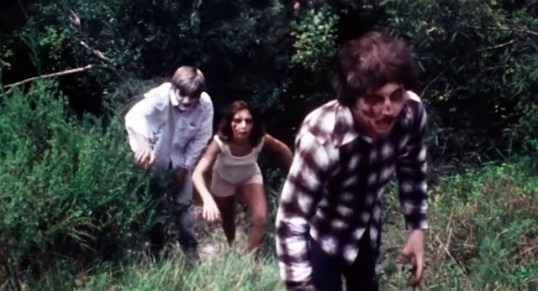
Alien Dead (1980, dir by Fred Olen Ray, DP: Fred Olen Ray)

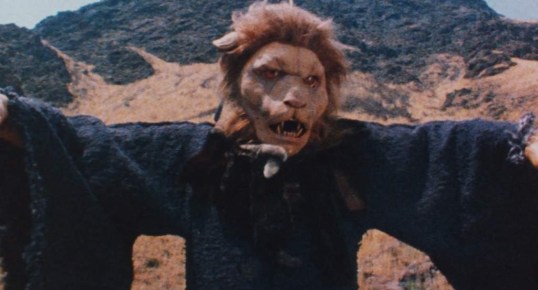
Scalps (1983, dir by Fred Olen Ray, DP: Larry Van Loon and Cynthia Webster)

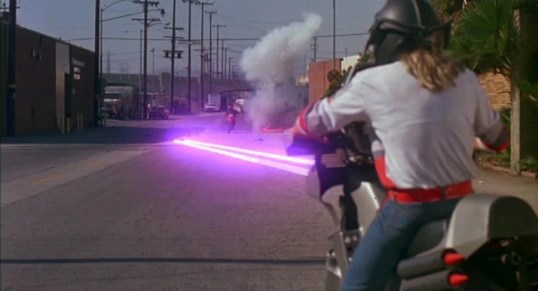
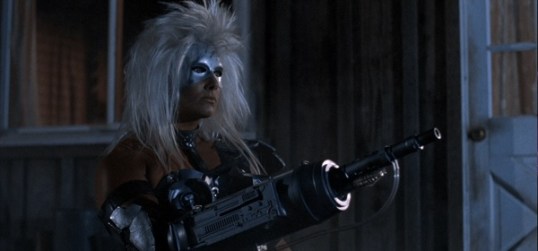
Cyclone (1987, dir by Fred Olen Ray, DP: Paul Elliott)

Alienator (1990, dir by Fred Olen Ray, DP: Gary Graver)