Today is National Trivia Day so I thought why not share some trivia? I love film trivia. I especially love trivia about who was considered for certain films. Hell, one of my most popular posts on the Shattered Lens dealt with all of the actors who were considered for the Godfather!
(I even came up with an alternative cast for The Godfather, even though I consider the actual film to be the best cast film in history.)
I also happen to love the James Bond films. (Well, not so much the recent Bond films. I’ve made my feelings on SPECTRE clear.) As a franchise, I absolutely love them. So, with all that in mind, here is a look at the actors who could have been Bond. I’ve compiled this article from many sources. And yes, you could probably just find a lot of the information on Wikipedia but then you’d miss out on my editorial commentary.

Hoagy Carmichael
Ian Fleming himself always said that his pick for Bond would have been the musician, Hoagy Carmichael. He even made a point, in Casino Royale, of having Vesper Lynd exclaim that Bond looked like Hoagy Carmichael. Of course, the first actor to actually play Bond was Barry Nelson in a 1954 television adaptation of Casino Royale. Nelson is probably best remembered for playing Mr. Ullman in Stanley Kubrick’s The Shining.

Barry Nelson, the first James Bond
When Dr. No went into production in 1961, many actors were considered for the role before Sean Connery was eventually cast. Many of them were very well-known actors and, had they been cast, Dr. No would not have been remembered as a Bond movie. Instead, it would be remembered as a star vehicle for … well, let’s take a look at some of the better-known possibilities:
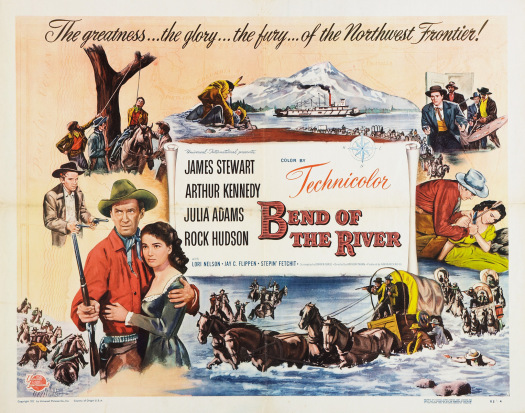
Among the famous actors who were mentioned for Bond in 1961: Cary Grant, Richard Burton, James Mason, Trevor Howard, Stanley Baker, George Baker, Jimmy Stewart, Rex Harrison, and David Niven. (Of that list, I think Burton would have made for an interesting Bond. If the Bond films had been made in the 1940s, Grant would have been my first choice. Trying to imagine Jimmy Stewart as a British secret agent is … interesting.)
Once it became obvious that a star was not going to play Bond, the role was offered to Patrick McGoohan and Rod Taylor. McGoohan had moral objections to the character. Rod Taylor reportedly felt that the film would flop. Steve Reeves, the American body builder who became famous for playing Hercules in Italy, was reportedly strongly considered. At one point, director Terrence Young wanted to offer the role to Richard Johnson, who later played Dr. Menard in Lucio Fulci’s Zombi 2.
Of course, the role went to Sean Connery and made Connery a huge star. In 1967, after Connery announced that he would no longer play the world’s most famous secret agent, there was a huge and widely publicized search for his replacement. Some of the names that were considered are intriguing. Others are just bizarre.

Oliver Reed
To me, perhaps the most intriguing name mentioned was that of Oliver Reed. Reed definitely would have brought a rougher edge of the role than some of the other actors considered. However, that’s one reason why Reed wasn’t picked. Apparently, it was felt that he did not have the right public image to play the suave Mr. Bond.
Somewhat inevitably, Michael Caine was sought out for the role. Caine, however, refused to consider it because he had already starred in three back-to-back spy thrillers and didn’t want to get typecast. Caine’s former roommate, Terrence Stamp, was another possibility but wanted too much control over the future direction of the Bond films. Future Bond Timothy Dalton was considered to be too young. Another future Bond, Roger Moore, didn’t want to give up his television career. Eric Braeden has the right look for Bond but was German. Rumor has it that producer Cubby Broccoli even considered Dick Van Dyke for the role, though I find that hard to believe. An even more surprising possibility was the nobleman Lord Lucan, who was offered a screen test in 1967 and who, ten years later, would vanish after being accused of murdering his children’s nanny.

Lord Lucan
Among the actors who auditioned before George Lazenby was cast in On Her Majesty’s Secret Service: Michael Billington, Jeremy Brett, Peter Purves, Robert Campbell, Patrick Mower, Daniel Pilon, John Richardson, Anthony Rogers, Hans De Vries, and Peter Snow.
After the mixed reception of both Lazenby’s performance and On Her Majesty’s Secret Service, Lazenby was soon out as James Bond. Even today, there’s a lot of controversy about what led to Lazenby being dismissed from the role. Some say Lazenby demanded too much money. Some say that Lazenby was merely used a pawn to try to get Sean Connery to return to the role. Regardless, Lazenby only made one film as Bond. (Of course, On Her Majesty’s Secret Service has retroactively been recognized as being one of the best of the series.)
With Connery still claiming that he would never return to the role, the film’s producers went through the motions of looking for a new Bond. Once again, Roger Moore and Timothy Dalton were considered. Connery suggested that a talk show host named Simon Dee should play the role. An actor named Roger Green auditioned. So did Michael Gambon, though he later said he was turned down because, in his own words, he “had tits like a woman.” Interestingly, several Americans were mentioned. Clint Eastwood as James Bond? Burt Reynolds? Adam “Batman” West? The mind boggles but their names were mentioned.

John Gavin
And interestingly enough, an American was cast. John Gavin is best known for playing Sam Loomis in Psycho but he was also, briefly, James Bond. After Gavin accepted he role and signed a contract, Sean Connery announced that he would be willing to return to the role. Gavin was paid off and Connery went on to star in Diamonds are Forever.
After Diamonds, Connery left the role for a second time and, once again, Bond was recast. This time, Roger Moore would finally accept the role. However, before Moore was cast, several other actors were considered. Some of the regular possibilities were mentioned again: John Gavin, Simon Oates, Timothy Dalton, and Michael Billington. Others considered included Jon Finch, Ranulph Fiennes, Peter Laughton, and Guy Peters. Some of those names are probably as unknown to you as they are to me but it’s intriguing to think that Guy Peters may not be a well-known name but, at one time, there was a possibility that he could suddenly become one of the biggest stars in the world.
Looking over the history of the Bond franchise, it’s interesting to see the number of times that Moore tried to leave the role, just to be talked into returning. Every time that Moore considered quitting, a new group of actors would be considered for the role of Bond. In 1979, when Moore said he might not return after Moonraker, Timothy Dalton, Michael Jayston, Patrick Mower (who was also considered for On Her Majesty’s Secret Service), and Michael Billington were all considered as replacements. So was Julian Glover. Ironically, when Moore did agree to return to the role, Glover was cast as the villain in For Your Eyes Only.

David Warbeck
To me, the most intriguing actor mentioned as a replacement for Roger Moore was David Warbeck. Warbeck was a television actor and model who subsequently had a nearly legendary film career in Italy. Not only did he play a key role in Sergio Leone’s Duck You Sucker!, but he also starred in Lucio Fulci’s The Black Cat and The Beyond. He also appeared in the best of Italian Apocalypse Now rip-offs, The Last Hunter. In interviews, Warbeck claimed that he was under contract to Cubby Broccoli to step into the role in case Roger Moore ever walked off the set. The likable and rugged Warbeck would have been an interesting Bond.
In 1983, when Moore again said he might not return to the role, Michael Billington (who actually did appear in a Bond film when he played a KGB agent killed at the start of The Spy Who Loved Me) would be once more considered as a replacement. British TV actors Lewis Collins and Ian Ogilvy were also considered for the role. In a repeat of what happened with John Gavin in Diamonds are Forever, American actor James Brolin was actually put under contract until Moore agreed to play the role in Octopussy.

James Brolin, in a screen test for Octopussy
After A View To A Kill, Moore left the role for the final time. Famously, future Bond Pierce Brosnan was actually cast as his replacement until the surge of interest created by his casting led to the renewal of Remington Steele, the American television show in which Brosnan was starring. Once the show was renewed, Brosnan could no longer work the Bond films into his schedule.
Among the other names mentioned: Sean Bean, Simon MacCorkindale, Andrew Clarke, Finlay Light, Mark Greenstreet, Neil Dickson, Christopher Lambert, Mel Gibson, and Antony Hamilton. Sam Neill was another possibility and reportedly came very close to getting the role. Watch any of the films that Neill made when he was younger and you can definitely see hints of Bond.

Sam Neill
In the end, Timothy Dalton finally accepted the role. Ironically, for an actor who spent 20 years being courted for the role, Dalton turned out to be a bit of a flop as Bond. He made two movies (both of which were considered to be disappointing when compared to the previous Bond films) and then left the role.
Looking over the contemporary reviews of Dalton as Bond, one thing that comes through clearly is that a lot of people resented him for taking a role that they felt should have gone to Pierce Brosnan. When the Bond films resumed production with Goldeneye in 1994, Brosnan finally stepped into the role. Reportedly, if Brosnan had turned down the role, the second choice was Sean Bean. Much like Julian Glover, Bean may have lost out on 007 but he did end up playing the villain.

Sean Bean
Among the other actors who were reportedly considered before Brosnan accepted the role: Mark Frankel, Paul McGann, Liam Neeson, Russell Crowe, and Lambert Wilson. Ralph Fiennes, who has been M since Skyfall, was also considered.
As opposed to his predecessors, Brosnan seemed to be very comfortable with the idea of playing Bond and never threatened to leave the role. Looking over the Bond-related articles that were published from 1995 to 2004, I found the occasional speculation about whether Rupert Everett would be the first gay James Bond or if Sharon Stone would be the first female James Bond but I found very little speculation about Brosnan actually leaving the role. Indeed, when Brosnan officially retired as Bond in 2004, it was less his decision and more at the prodding of the franchise’s producers, who felt that the series needed to be rejuvenated with a new (and younger) actor. After Brosnan left, the series was rebooted and Daniel Craig played the role in Casino Royale.
In the past, I’ve made it clear that Daniel Craig is hardly my favorite Bond. I loved Skyfall (and I consider it to the 2nd best Bond film, after From Russia With Love) but, even in that case, I felt that the film succeeded despite Craig instead of because of him. With Casino Royale, we were supposed to be seeing a young and inexperienced Bond. That’s never come through to me, probably because Craig looked like he was nearly 50 years old when he made Casino Royale.
Among the actors who were mentioned for the role before Craig received the role: Ralph Fiennes (again), Colin Salmon, Ewan McGregor, Henry Cavill, Rupert Friend, Julian McMahon, Alex O’Laughlin, Clive Owen, Dougray Scott, and Goran Visjnic. Dominic West, who I think would have been great in the role, reportedly ruled himself out because he heard a rumor that Brosnan would be returning to the role.

Dominic West
Daniel Craig, of course, has been talking about leaving the role ever since he was first cast. I think Skyfall would have been a perfect movie for him to leave on. (It would have saved the world from SPECTRE.) However, Craig has apparently agreed to do at least one more Bond film. Maybe two.
When Craig does leave, who will replace him? Idris Elba, of course, is probably the most widely discussed possibility. James Norton has also been named as a possibility. Others that I’ve seen mentioned: Tom Hardy, Jack Huston, Aidan Turner, Tom Hiddleston, Michael Fassbender, Jamie Bell, and Henry Cavill (again).
My personal choice? Dominic Cooper. He’d be an off-center Bond but I think it would still be an intriguing pick.

Dominic Cooper
Who knows what the future may hold for 007? All I know is that I look forward to the speculation.
Happy National Trivia Day, everyone!