4 Shots From 4 Film: Special Grace Kelly Edition


4 Shots From 4 Films is just what it says it is, 4 shots from 4 of our favorite films.  As opposed to the reviews and recaps that we usually post, 4 Shots From 4 Films is all about letting the visuals do the talking.

Tomorrow would have been Grace Kelly’s 97th birthday!  It’s time for….

4 Shots From 4 Grace Kelly Films

Fourteen Hours (1951, directed by Henry Hathaway)

Fourteen Hours (1951, directed by Henry Hathaway)

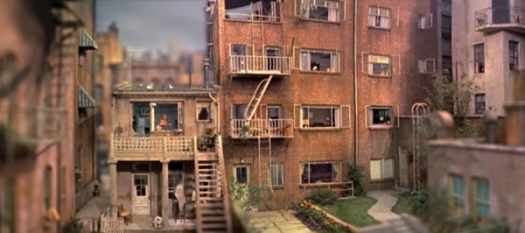
Rear Window (1954, directed by Alfred Hitchcock)

Rear Window (1954, directed by Alfred Hitchcock)

To Catch A Thief (1955, directed by Alfred Hitchcock)

To Catch A Thief (1955, directed by Alfred Hitchcock)

High Society (1956, directed by Charles Walters)

High Society (1956, directed by Charles Walters)

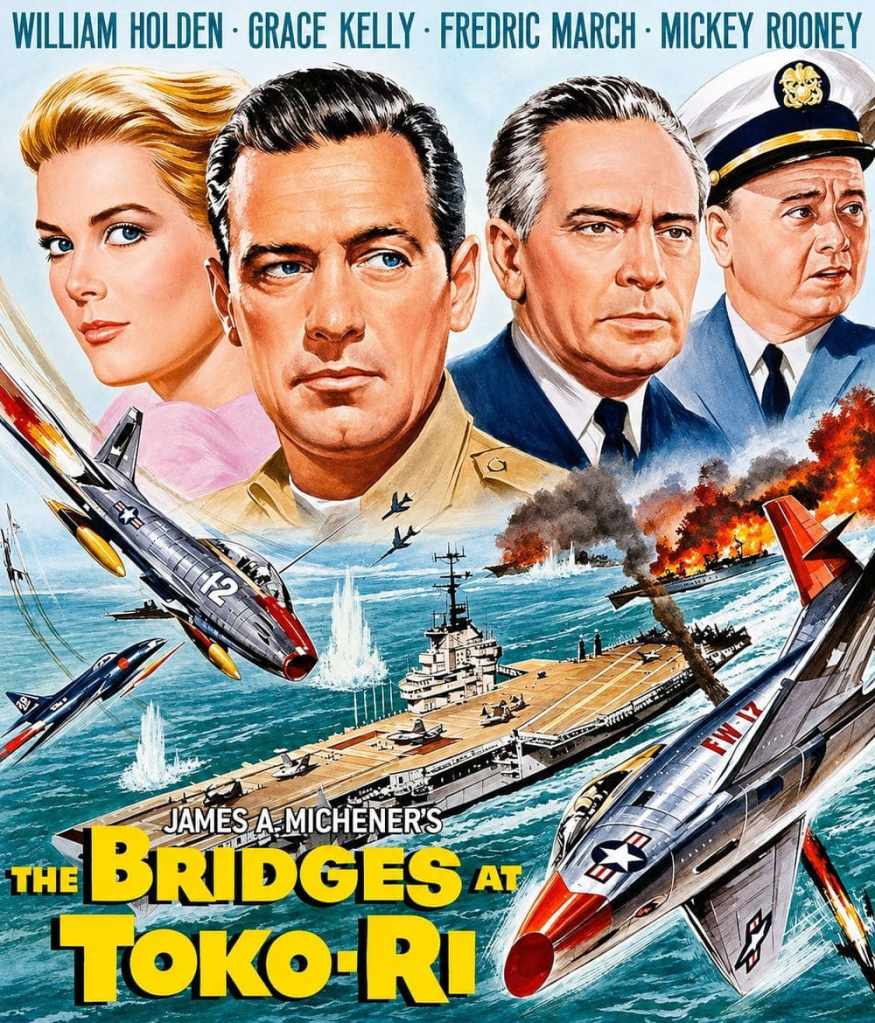
Film Review: The Bridges at Toko-Ri (dir. by Mark Robson)


“All through history, men have had to fight the wrong war in the wrong place, but that’s the one they’re stuck with.” — Rear Admiral George Tarrant

Mark Robson’s The Bridges at Toko-Ri looks like a straightforward military tribute, but it leaves a much more uncomfortable impression. There are aircraft carriers, daring pilots, and impressive combat sequences, yet the strongest feeling is how badly its central character wants to go home. This is a war movie about courage that never makes courage look easy or especially rewarding. Adapted from James A. Michener’s story, it balances admiration for servicemen with serious doubts about what their service costs. That ambivalence makes it more interesting than a simple flag-waving adventure.

William Holden plays Lieutenant Harry Brubaker, a Navy reservist recalled to combat during the Korean War after already serving in World War II. Back home, he has a law practice, a wife, and two daughters. He isn’t looking for another chance to prove himself. He feels he has already done his share, and his resentment gives the movie its emotional center. His assignment to help destroy heavily defended bridges becomes more than a dangerous mission: it represents the military’s claim on a life he thought belonged to him again.

Holden is a strong fit because he can make frustration feel contained rather than theatrical. Brubaker doesn’t need constant speeches to communicate exhaustion; his reluctance comes through in his guarded manner and conversations with Rear Admiral George Tarrant, played by Fredric March. Tarrant sees an excellent aviator and potential career officer, while Brubaker sees a civilian whose future keeps getting interrupted. Their disagreement gives the film a useful tension. Neither man is presented as a fool, but they clearly aren’t measuring the value of military service in quite the same way.

Grace Kelly’s Nancy Brubaker gives that tension a domestic dimension. The family’s reunion in Japan shows what Harry stands to lose, making the danger personal rather than abstract. Nancy initially wants distance from the frightening details of his work, but eventually insists that he tell her about the bridges and the risks involved. That shift matters: she becomes someone trying to face reality alongside him rather than simply a comforting image of home. The family interlude slows the action, but it also gives the action consequences. Without it, Harry would be another pilot in trouble.

The supporting material is less consistently effective. Mickey Rooney brings energy to helicopter rescue pilot Mike Forney, whose green hat and romantic troubles provide a broad change of pace. Some of that business feels like a detour from the more compelling drama, especially when the comedy leans heavily on his unruly personality. Still, the humor serves a purpose beyond filling time. It gives the military setting a sense of everyday life, reminding us that these men have interests and problems that exist outside their assignments. Rooney’s liveliness also provides a useful contrast to Holden’s tightly controlled anxiety.

Robson gets considerable mileage out of the physical business of naval aviation. Launching, landing, and keeping men and aircraft moving become sources of suspense before the major attack even begins. The Navy’s cooperation gave the production access to real carrier operations, and that material lends weight to the spectacle. The machinery looks impressive, but it also makes the men seem vulnerable: a damaged plane or a failed landing can turn routine procedure into disaster. The film’s Academy Award for special effects feels appropriate, although the technical achievement works best when it supports that vulnerability.

What makes The Bridges at Toko-Ri especially interesting is its willingness to accommodate anti-war feelings within a patriotic framework. It emerged during the Red Scare, when Hollywood blacklisting made suspected Communist associations professionally devastating and political dissent could invite accusations of disloyalty. It would be too sweeping to say every anti-war sentiment was automatically considered un-American, but the atmosphere certainly discouraged challenges to Cold War orthodoxy. Against that background, allowing a capable American serviceman to question why he must fight in Korea gives the film a striking edge. His unhappiness is not simply treated as cowardice.

That doesn’t make the movie an outright rejection of the war, though. Tarrant explicitly argues that America must resist Communism, and the production opens with a tribute to the Navy. Its unusual quality lies in the friction between that official justification and the emotional experience it depicts. The admiral can explain why the mission matters without making Brubaker’s predicament feel fair. For me, this is where the film’s anti-war undertones are strongest: not in a declaration that all fighting is pointless, but in its refusal to let strategic necessity erase individual suffering.

As the bridge assignment approaches, the film draws its strongest suspense from the gap between professional competence and private fear. Brubaker knows how to do his job; that doesn’t mean he can switch off his awareness of everything riding on it. Robson makes that distinction count without needing to turn every conversation into a debate. There are dated comic passages and occasional stretches of stiff dialogue, but the central conflict remains compelling. The Bridges at Toko-Ri can admire military skill and still question the demands placed on the people who possess it. That tension gives its action an emotional weight that outlasts the spectacle.

Lisa Marie Reviews An Oscar Nominee: The Country Girl (dir by George Seaton)


First released in 1954 and based on a play by Clifford Odets, The Country Girl is centered around the production of a believably terrible stage musical called The Land Around Us.

Director Bernie Dodd (William Holden) is known for his willingness to take risks.  One of his previous plays was about a punk-drunk boxer so he cast an actual punch-drunk boxer in the role.  For The Land Around Us, Bernie wants to cast Frank Elgin (Bing Crosby), a former singing star who has fallen on hard times.  Frank was once a hitmaker but, after the tragic death of his son, his career went downhill.  He’s now lucky if he can get a job singing a commercial jingle.  Though Frank aces his audition, the show’s producer (Anthony Ross) insists that Frank is just too unreliable and that everyone know that he’s now a drunk.  Bernie, however, insists on casting Frank and Bernie, as always, gets his way.

Bernie grew up looking up to Frank and it’s hard for him to see that his idol is now struggling.  Bernie squarely puts the blame on Frank’s wife, Georgie (Grace Kelly, wearing glasses and her hair tied back).  Whenever Bernie sees Georgie, she seems to be criticizing Frank and micromanaging his life.  Bernie tells Frank that Georgie is holding back his career but Frank explains that Georgie is unstable and that, whenever he’s tried to leave her, she’s responded by attempting to commit suicide.  Bernie, who seems to have issues with women in general, believes everything that Frank says.  Whenever Frank makes a demand during the rehearsal process, Bernie blames Georgie.  Whenever Frank seems to be insecure about whether or not he can still be a star, Bernie blames Georgie.

Of course, Bernie’s wrong.  As is obvious to everyone watching the film (and as should have been obvious to Bernie from the moment he first saw Frank and Georgie together), Georgie is the the only person who is keeping Frank from totally falling apart.  If she seems to be demanding, she knows that it’s because Frank is so desperate to be a star again that he tends to let people walk all over him.  If she’s overprotective of Frank, that’s because she knows that Frank is an alcoholic who blames himself for the death of their son.  Frank is the one who tried to commit suicide, not Georgie.  Georgie has dedicated her life to taking care of Frank and, if she is sometimes overly critical with him, it’s because she alone understands that Frank is throwing his life away.

It’s a sad film.  Both Georgie and Bernie are almost fanatically loyal to Frank but it’s hard not to feel that the self-centered and self-destructive Frank doesn’t really deserve their loyalty.  That we have any sympathy at all for Frank is due to the performance of Bing Crosby, who plays the role with just enough self-awareness that the audience gets a hint of the man Frank was before he turned to alcohol and self-pity.  As usual, William Holden is well-cast as a cynical but ultimately kind-hearted character and he does a good job of hinting at what lies underneath Bernie’s rough exterior.  Grace Kelly won her only Oscar for playing Georgie and she does a fairly good job, even if she does seem to be miscast.  Georgie is far cry from the glamorous characters that Kelly usually played.  Personally, I think she was far more Oscar-worthy in Rear Window, which was released the same year and featured Kelly in a far more interesting role.  George Seaton directs the film as if it were a film noir, with Holden, Crosby, and Kelly often acting in the shadows.  The Country Girl works best when it contrasts the artificiality of Bernie’s show with the real-life human drama taking place backstage.

The Country Girl was nominated for Best Picture, Director, Actor, and Actress.  While Grace Kelly was named Best Actress, the rest of the awards were won by On The Waterfront, with Bing Crosby losing to Marlon Brando.

12 Oscar Snubs From the 1950s


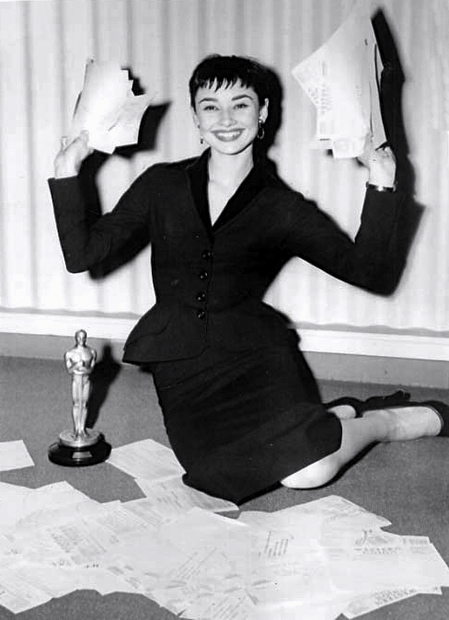
Audrey Hepburn and her Oscar.  At least the Academy didn’t snub her!

Continuing our look at the Oscar snubs of the past, it’s now time to enter the 50s!

World War II was over. Eisenhower was President. Everyone was worried about communist spies. And the Hollywood studios still reigned supreme, even while actors like Marlon Brando and James Dean challenged the establishment.  There were a lot great film released in the 50s.  There were also some glaring snubs on the part of the Academy.  Here’s twelve of them.
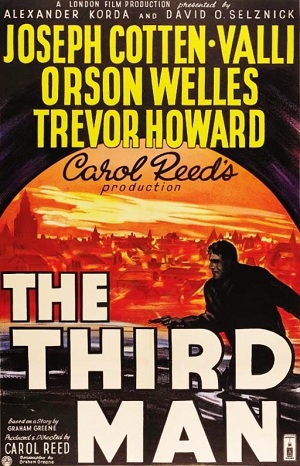
1950: The Third Man Is Not Nominated For Best Picture

….and Orson Welles was not nominated for Best Supporting Actor!  The Third Man received three Oscar nominations, for Director, Cinematography, and Editing.  The fact that Welles, Joseph Cotten, Alida Valli, and the film’s score were not nominated (and that King Solomon’s Mines was nominated for Best Picture instead of The Third Man) remains one of the more surprising snubs in Oscar history.

1952: Singin’ In The Rain Is Not Nominated For Best Picture

What the Heck, Academy!?  This was the year that The Greatest Show On Earth won the Best Picture Oscar.  Personally, I don’t think The Greatest Show On Earth is as bad as its reputation but still, Singin’ In The Rain is a hundred times better.

1953: Alan Ladd Is Not Nominated For Best Actor For Shane

How could Shane score a nomination for Best Picture without Shane himself receiving a nomination?

1954: Rear Window Is Not Nominated For Best Picture

Rear Window was not totally ignored by the Academy.  Alfred Hitchcock received a nomination for directing.  It also received nominations for Best Adapted Screenplay, Cinematography, and Sound.  However, Rear Window was not nominated for Best Picture and James Stewart, Grace Kelly, Raymond Burr, and Thelma Ritter all went unnominated as well.  Today, Rear Window is definitely better-remembered than the majority of 1954’s Best Picture nominees.  Certainly, it deserved a nomination more than Seven Brides For Seven Brothers and Three Coins in The Fountain.

1955: Ralph Meeker Is Not Nominated For Best Actor For Kiss Me Deadly

I guess I shouldn’t be surprised.  If the Academy wasn’t going to nominate Rear Window for Best Picture, there was no way that they would have nominated Ralph Meeker for playing a sociopathic private detective who, even if inadvetedly, helps to bring about the end of the world.

1955: Rebel Without A Cause Is Not Nominated For Best Picture or Best Actor

The 1955 Best Picture lineup was a remarkably weak one.  The eventual winner was Marty, a likeable film that never quite escapes its TV roots.  Picnic has that great dance scene but is otherwise flawed.  Mister Roberts was overlong.  Love Is A Many-Splendored Thing and The Rose Tattoo are really only remembered by those of us who have occasionally come across them on TCM.  Perhaps the best-remembered film of 1955, Rebel Without A Cause, received quite a few nominations but it was not nominated for Best Picture.  And while the Rebel himself, James Dean, was nominated for Best Actor, it was for his performance in East of Eden.  1955 was a strange year.

1955: Robert Mitchum Is Not Nominated For Best Actor For The Night of the Hunter

Robert Mitchum only received one Oscar nomination over the course of his entire career, for 1945’s The Story of G.I. Joe.  He deserved several more.  His performance as the villainous preacher in The Night of Hunter made Reverend Harry Powell into one of the most iconic film characters of all time.
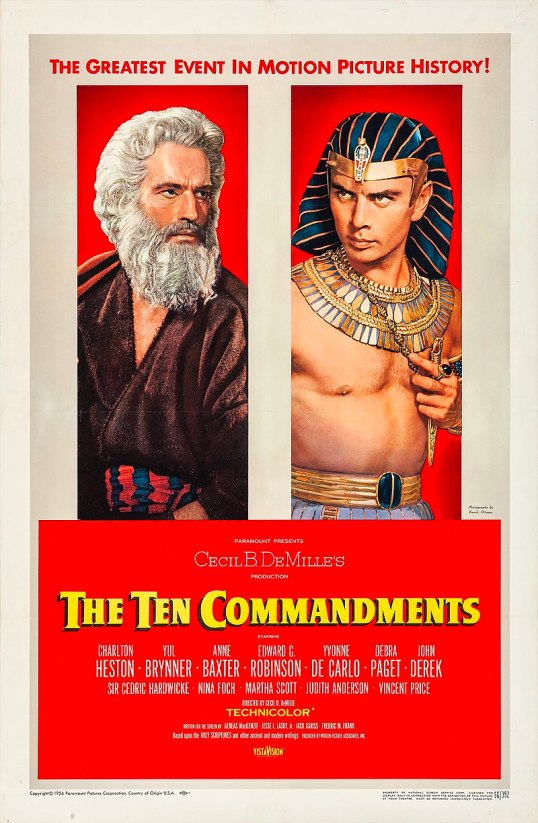
1956: Cecil B. DeMille Is Not Nominated For Best Director For The Ten Commandments

Cecil B. DeMille was only nominated once for Best Director, for 1952’s The Greatest Show On Earth.  DeMille, however, deserved to be nominated for The Ten Commandments.  As campy as DeMille’s films can seem today, he was an expert storyteller and that’s certainly evident when one watches The Ten Commandments, a film that holds the viewer’s attention for nearly four hours.  DeMille deserved a nomination for the Angel of Death scene alone.  The screams in the night are haunting.

1957: Henry Fonda Is Not Nominated For Best Actor For 12 Angry Men

With 12 Angry Men, Fonda did something that very few actors can.  He made human decency compelling.  One gets the feeling that, much like Tom Hanks in Captain Phillips, Fonda made it look so easy that the Academy took him for granted.

1958: Touch Of Evil Is Totally Ignored

Anyone who had researched the history of the Academy knows that there was no way that the 1950s membership would have ever honored Orson Welles’s pulp masterpiece, Touch of Evil.  That said, it still would have been nice if they had.  Touch of Evil has certainly go on to have a greater legacy than Gigi, the film that won Best Picture that year.

1958: Vertigo Is Almost Totally Ignored

Vertigo did receive nominations for Art Direction and Sound but Alfred Hitchcock, James Stewart, and the film itself were snubbed.

1959: Some Like It Hot Is Not Nominated For Best Picture or Best Actress

Some Like It Hot received 6 Oscar nominations, including nominations for Best Director, Best Actor, and Best Adapted Screenplay.  It did not receive a nomination for Best Picture and, sadly, Marilyn Monroe did not receive a nomination for Best Actress.  Much as with Henry Fonda in 12 Angry Men, one gets the feeling that the Academy took Monroe for granted.  It’s sad to realize that, while two actresses have been nominated for playing Marilyn Monroe, Monroe herself would never be nominated.

Agree?  Disagree?  Do you have an Oscar snub that you think is even worse than the 12 listed here?  Let us know in the comments!

Up next: Things get wild with the 6os!
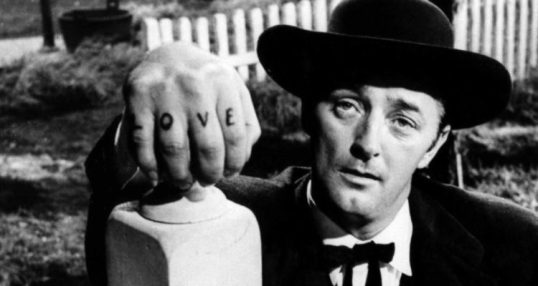
Night of the Hunter (United Artists 1955; D: Charles Laughton)
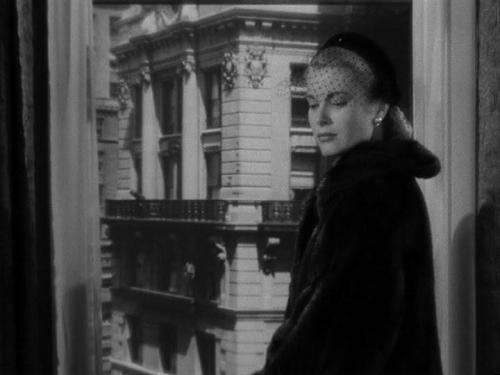
6 Good Films That Were Not Nominated For Best Pictures: The 1950s


The Governor’s Ball, 1958

Continuing our look at good films that were not nominated for best picture, here are 6 films from the 1950s.

The Third Man (1950, dir by Carol Reed)

Now, it should be noted that The Third Man was not ignored by the Academy.  It won the Oscar for Best Cinematography and it was nominated for both editing and Carol Reed’s direction.  But, even with that in mind, it’s somewhat amazing to consider all of the nominations that it didn’t get.  The screenplay went unnominated.  So did the famous zither score.  No nominations for Joseph Cotten, Alida Valli, Trevor Howard, or even Orson Welles!  And finally, no Best Picture nomination.  1950 was a good year for the movies so competition was tight but still, it’s hard to believe that the Academy found room to nominate King Solomon’s Mines but not The Third Man.

Rear Window (1954, dir by Alfred Hitchcock)

Alfred Hitchcock directed some of his best films in the 50s, though few of them really got the recognition that they deserved upon their initial release.  Vertigo is often described as being Hitchcock’s masterpiece but, to be honest, I actually prefer Rear Window.  This film finds the master of suspense at his most playful and, at the same time, at his most subversive.  Casting Jimmy Stewart as a voyeur was a brilliant decision.  This film features one of my favorite Grace Kelly performances.  Meanwhile, Raymond Burr is the perfect schlubby murderer.  Like The Third Man, Rear Window was not ignored by the academy.  Hitchcock was nominated and the film also picked up nods for its screenplay, cinematography, and sound design.  However, it was not nominated for best picture.

Rebel Without A Cause (1955, dir by Nicholas Ray)

Nicholas Ray’s classic film changed the way that teenagers were portrayed on film and it still remains influential today.  James Dean is still pretty much the standard to which most young, male actors are held.  Dean was not nominated for his performance here.  (He was, however, nominated for East of Eden that same year.)  Instead, nominations went to Sal Mineo, Natalie Wood, and the film’s screenplay.  Amazingly, in the same year that the forgettable Love Is A Many-Splendored Thing was nominated for best picture, this popular and influential film was not.

Kiss Me Deadly (1955, dir by Robert Aldrich)

It’s unfortunate but not surprising that Kiss Me Deadly was totally ignored by the Academy.  In the mid-to-late 50s, the Academy tended to embrace big productions.  There was no way they were going to nominate a satirical film noir that featured a psychotic hero and ended with the end of the world.  That’s a shame, of course, because Kiss Me Deadly has proven itself to be more memorable and influential than many of the films that were nominated in its place.

Touch of Evil (1958, dir by Orson Welles)

Speaking of underappreciated film noirs, Orson Welles’s Touch of Evil is one of the craftiest and most brilliant films ever made.  So, of course, no one appreciated it when it was originally released.  This cheerfully sordid film features Welles at his best.  Starting with a memorable (and oft-imitated) tracking shot, the film proceeds to take the audience into the darkest and most eccentric corners of a small border town.  Everyone in the cast, from the stars to the bit players, is memorably odd.  Even the much mocked casting of Charlton Heston as a Mexican pays off wonderfully in the end.

The 400 Blows (1959, dir by Francois Truffaut)

Francois Truffaut’s autobiographical directorial debut was released in the United States in 1959 and it was Oscar-eligible.  Unfortunately, it only picked up a screenplay nomination.  Of course, in the late 50s, the last thing that the Academy was going to embrace was a French art film from a leftist director.  However, The 400 Blows didn’t need a best picture nomination to inspire a generation of new filmmakers.

Up next, in an hour or so, we continue on to the 60s!


30 Days of Noir #24: Fourteen Hours (dir by Henry Hathaway)


As a genre, film noir has always been associated with crime: murder, brutish gangsters, seductive femme fatales, and occasionally a cynical private detective doing the right thing almost despite himself.  However, not all film noirs are about criminals.  Some are just about desperate characters who have found themselves on the fringes, living in a shadow-filled world that appears to be monstrously indifferent to all human suffering.

That’s certainly the case with the 1951 noir, 14 Hours.  The film centers around Robert Cosick (Richard Basehart, who previously played a murderer in another classic noir, He Walked By Night).  Robert isn’t a gangster.  He’s not a private detective.  He doesn’t carry a gun and he doesn’t provide any sort of hard-boiled narration.  In fact, for the majority of the film, Robert is defined by less who he is and more by what he’s doing.  Robert Cosick, having earlier checked into a room on the 15th floor of a New York hotel, has climbed out of a window and is now standing on a ledge.  Robert says that he’s going to jump.

What has driven Robert Cosik to consider such an extreme action?  The film never settles on any one reason, though it gives us several clues.  When his father (Robert Keith) and his mother (Agnes Moorehead) show up at the scene, they immediately start bickering about old family dramas.  When Robert’s ex-fiancee (Barbara Bel Geddes) begs him to step in from the ledge, he listens a bit more to her than he did to his parents but he still refuses to come in from the ledge.

But perhaps the real reason that Robert Cosick is out on that ledge can be found in the film’s shadowy visuals.  Directed in a semi-documentary fashion by Henry Hathaway and featuring harsh, black-and-white cinematography that’s credited to Joe MacDonald, Fourteen Hours emphasizes the indifference of the city.  From the menacing landscape of concrete buildings to the crowds gathering below the ledge to see if Robert lives or dies,  New York City is as much as a character in this film as Robert, his family, or the cop (played by Paul Douglas) who finds himself trying to talk Robert into reentering his hotel room.  When night falls, the city may light up but it does nothing to alleviate the shadows that seem to be wrapping themselves around Robert.  For the fourteen hours that Robert is on that ledge, he may be the center of the world but the film leaves little doubt that New York City will continue to exist in all of its glory and its horror regardless of how Robert’s drama plays out.  Whether he lives or dies, Robert appears to be destined to be forgotten.

When the film isn’t concentrating on the cops trying to talk Robert into getting back in the hotel room, it shows us the reactions of the people who see him standing out on that ledge.  (If this film were made today, everyone would be holding up their phones and uploading Robert’s plight to social media.)  Some people are moved by Robert’s struggle.  For instance, a young woman played by Grace Kelly (in her film debut) reaches a decision on whether or not to get a divorce based on what she sees happening on the ledge.  Two office workers (played by Jeffrey Hunter and Debra Paget) even strike up a romance as they wait to see what will happen.  Some people view Robert as being a madman.  Others see him as being a victim.  And then there’s the many others who view him as being either a minor distraction or a piece of entertainment.  For them, it’s less important why Robert’s on the ledge or even who Robert is.  What’s important to them is how the story is going to end.

It’s not a particularly happy film but it’s made watchable by Hathaway’s intelligent direction and the performances of Paul Douglas and Richard Basehart.  With its theme of instant fame and hollow indifference, it’s a film that remains as relevant today as when it was initially released.

Games People Play: Alfred Hitchcock’s DIAL M FOR MURDER (Warner Brothers 1954)


gary loggins's avatarcracked rear viewer

Alfred Hitchcock  wasn’t afraid to take chances. When the 3-D craze hit in the 1950’s, the innovative director jumped on the new technology to make DIAL M FOR MURDER, based on Frederick Knott’s hit play. The film is full of suspense, and contains many of The Master’s signature touches, but on the whole I consider it to be lesser Hitchcock… which is certainly better than most working in the genre, but still not up to par for Hitch.

Knott adapted his play for the screen, and keeps the tension mounting throughout. The story is set in London, and revolves around ex-tennis pro Tony Wendice, whose wife Margot is having an affair with American mystery writer Mark Halliday. Tony comes up with an elaborate plot to have her murdered by stealing a love letter Mark has written and blackmailing her, then setting up his old school acquaintance C.A. Swann, a man…

View original post 403 more words

Look At Me Look At You: Alfred Hitchcock’s REAR WINDOW (Paramount 1954)


gary loggins's avatarcracked rear viewer

When you go out to the neighborhood cinema, you’re indulging in a voyeuristic experience, watching the lives of people unfold before you on the screen. The theme of viewer as voyeur, peeping in on the privacy of total strangers, has never been done better than in Alfred Hitchcock’s REAR WINDOW, nor more entertainingly. Like James Stewart’s protagonist L.B. Jeffries, we the audience are the voyeurs in the shadows watching from afar, stumbling onto things not meant for our eyes, and powerless to stop them without outside assistance. Hitchcock is not only the Master of Suspense, but a master of audience manipulation, and this dazzling piece of moviemaking is not only a hell of a thrill ride but a technical marvel as well.

The world of globetrotting photojournalist Jeffries has been boiled down to the view of the courtyard outside his apartment window, just as the audience’s world is now focused on…

View original post 856 more words

Lisa Cleans Out Her DVR: High Noon (dir by Fred Zinnemann)


(I am currently in the process of cleaning out my DVR!  I recorded the 1952 best picture nominee, High Noon, off of Retroplex on January 28th.  This review is scheduled to posted at 12 noon, central time.  Clever, no?)

High Noon is a testament to the power of simplicity.

It’s a famous film, one that continues to be influential and which is still studied today.  It’s known for being one of the greatest westerns ever made but it’s also a powerful political allegory.  Even people who haven’t seen the film know that High Noon is the moment of the day when someone shows their true character.  Just as everyone knows the plot of Star Wars, regardless of whether they’ve actually watched the film, everyone knows that High Noon is about a town marshal who, after the entire town deserts him, is forced to face down a gang of gunmen on his own.

And yet, it really is a surprisingly simple movie.  It’s the quintessential western, filmed in black-and-white and taking place in the type of frontier town that you would expect to find hiding on the back lot of an old movie studio.  Though wonderfully brought to life by a talented cast, the majority of the characters are familiar western archetypes.

There’s the aging town marshal, a simple man of integrity.  Gary Cooper won an Oscar for playing the role of Will Kane.  When we first see Will, he’s getting married in a frontier courtroom.  All of the town leaders have come to his wedding and all of them wish him luck in the future.  Will is retiring and everyone agrees that the town would never have survived and prospered if not for Will Kane.  After all, Will is the one who captured the notorious outlaw, Frank Miller.  When the news comes that Miller has been pardoned and will be arriving back in town on the noon train, everyone tells Will that he should just leave town and go on his honeymoon.  However, the new marshal will not be arriving for another day and Will is not willing to abandon the town.  However, the town is more than willing to abandon him.

Will’s new wife is Amy Fowler (Grace Kelly).  Amy is a Quaker and a pacifist.  Amy begs Kane to leave town but Kane says that he’s never run from a fight.  Amy tells him that she’ll be leaving on that noon train, with or without him.  Helen Ramirez (Katy Jurado) is the former girlfriend of both Kane and Miller.  She is one of the few people in town to call out everyone else’s cowardice but she is still planning to leave before Miller arrives.  As she explains it to Amy, she would never abandon Kane if he were her man but he’s not her man anymore.

The townspeople, who first appear to be so friendly and honest, soon prove themselves to be cowards.  None of them are willing to stand behind Will.  The Mayor (Thomas Mitchell) publicly castigates Will for staying in town and putting everyone else in danger.  Deputy Harvey Pell (Lloyd Bridges) says that he’ll only help Will if Will recommends him as his replacement.  The town minister (Morgan Farley) is more concerned with why Will was married by the justice of the peace, instead of in the church.  The town judge (Otto Kruger) leaves early, saying he can be a judge in some other town.  One of the few people to show Will any sympathy is the former marshal (Lon Chaney, Jr.) but, unfortunately, he is too old and crippled by arthritis to provide any help.

Though it all, Frank’s gang sits at the train station and waits for Frank to arrive.  One gang member is played be Lee Van Cleef.  He looks really mean!

With a brisk running time of 84 minutes, High Noon unfolds in real time.  Throughout the film, as Kane grows increasingly desperate in his attempt to find anyone brave enough to stand with him, we see clocks in the background of nearly every scene.  We hear the ticking.  We know that both noon and Frank Miller are getting closer and closer.  We know that, soon, Will will have no other option but to stand on the street by himself and defend a town that doesn’t deserve him.

It’s simple but it’s undeniably powerful.

It’s been said that High Noon was meant to be a metaphor for the blacklist.  Frank Miller and his gang were the fascists that, having been defeated in World War II, were now coming back to power.  Will Kane was a stand-in for all the men and women of integrity who found themselves blacklisted.  The townspeople represented the studio execs who refused to challenge the blacklist.  That’s the theory and it’s probably true.  But, honestly, the political metaphor of High Noon works because it can be applied to any situation.  Will Kane is anyone who has ever had to face down the forces of totalitarianism.  He is anyone who has ever had the courage to take a lonely stand while everyone else cowered in the corner.

It’s a powerful metaphor and it’s also a genuinely entertaining movie.  The gunfight is thrilling.  The romance between Will and Amy feels real.  Even the town feels like an actual place, one that has its own history and culture.  It’s a simple film but it’s a great film.

Like a lot of great films, High Noon was nominated for best picture.  And, like a lot of great films, it lost.  In High Noon‘s case, it lost to a film that is almost its exact opposite, The Greatest Show on Earth.  However, Gary Cooper did win an Oscar for his unforgettable performance as Will Kane.

I think we tend to take classic films for granted.  Don’t do that with High Noon.  See it the next chance you get.