Anime You Should Be Watching: How a Realist Hero Rebuilt the Kingdom (Genjitsu Shugi Yūsha no Ōkoku Saikenki)


“The king to be sought during times of upheaval is not a saint, but a survivor, who is tenacious.” — Kazuya Souma

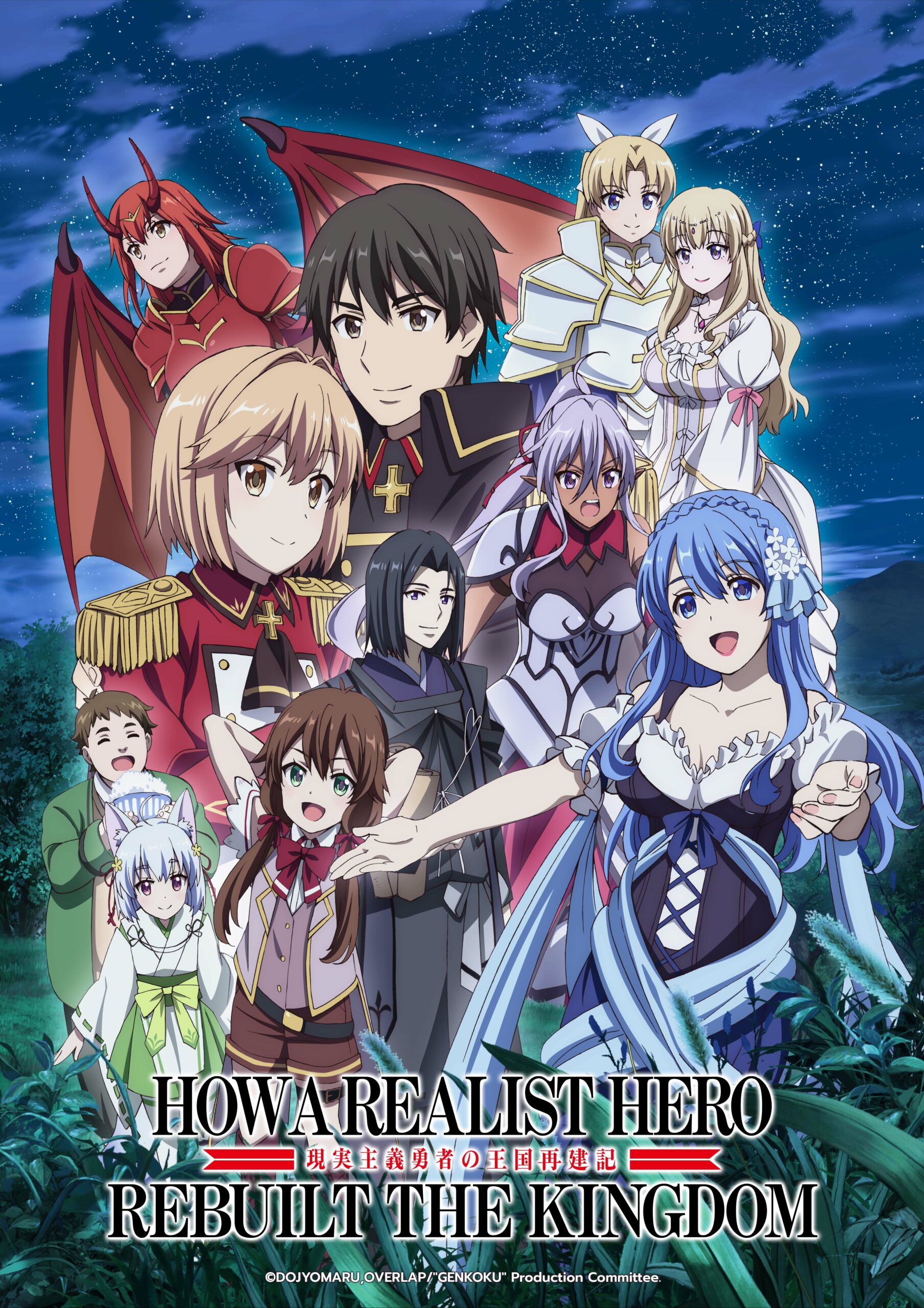
How a Realist Hero Rebuilt the Kingdom is one of those isekai anime that flips the script in the best way possible, and it’s a breath of fresh air in a genre that often feels like it’s running on autopilot. Instead of the usual power fantasy where the protagonist gets godlike abilities and smashes through hordes of enemies, this series drops its lead into a medieval kingdom and says, hey, how about you actually run this place? And that’s exactly what makes it so compelling. It’s less about magic swords and dragon slaying, and more about tax reform, infrastructure projects, and international diplomacy. Yeah, it sounds dry when you put it like that, but trust me, it’s anything but boring.

The story kicks off with Kazuya Souma, your average university student with a knack for history and a particular obsession with the Civilization video game series. One day, he’s summoned to the fantasy world of Elfrieden—not as a hero to save the world from a demon king, but as a consultant to help a struggling queen turn her kingdom around. The previous hero they summoned bailed after a few months, leaving the kingdom in worse shape than before. Souma, being the practical guy he is, decides to stick around and actually tackle the problems head-on. No overpowered cheat skills, no harem of adoring fans from day one, just a guy with a modern education trying to apply real-world logic to a medieval society. It’s a premise that sounds simple, but the execution is what makes it shine.

What really sets Souma apart from your typical isekai protagonist is his mindset. He’s not out to prove he’s the strongest or to collect a bunch of waifus (though, let’s be real, a few do end up in his orbit). He’s legitimately trying to fix a broken system. He introduces concepts like paper money, a postal system, and even a form of democracy, all while navigating the political minefield of a world where nobles would rather cling to tradition than admit they might need to change. The way he outmaneuvers his opponents isn’t with flashy spells or brute strength, but with economics, psychology, and good old-fashioned negotiation. Watching him turn a kingdom on the brink of collapse into a thriving nation is oddly satisfying, like binge-watching a really good business documentary, but with more elves and magic.

The supporting cast is just as strong as the protagonist. Queen Lisha starts off as a naive young ruler who’s in over her head, but her growth throughout the series is fantastic to watch. She goes from being a symbol of hope with no real power to a shrewd leader in her own right, learning from Souma’s strategies and gradually taking more control. Then there’s Prime Minister Halbert, the grizzled veteran who’s initially skeptical of Souma’s unconventional methods but slowly comes to respect him. The dynamic between these characters feels genuine, and their interactions are some of the highlights of the series. Even the antagonists aren’t just mustache-twirling villains; they’re people with their own motivations and reasons for resisting change, which makes the conflicts feel more nuanced.

The world-building in How a Realist Hero Rebuilt the Kingdom is another standout feature. Elfrieden isn’t just a generic fantasy kingdom; it’s a place with a rich history, complex social structures, and a variety of cultures. The series does a great job of making the world feel lived-in, from the political tensions between the human kingdom and its neighboring nations to the way magic is integrated into daily life. Unlike a lot of isekai where magic is just a tool for combat, here it’s treated as a natural part of the world that has real economic and social implications. For example, the kingdom’s reliance on slave labor is tied to the fact that certain magical races can only reproduce in specific conditions, which creates a weirdly logical justification for an otherwise dark practice. It’s details like this that make the world feel deeper and more thought-out than your average fantasy setting.

One of the most refreshing things about this anime is how it handles its themes. It’s not afraid to tackle heavy topics like class inequality, systemic corruption, and the ethics of governance. Souma isn’t some infallible genius who always makes the right call; he makes mistakes, faces setbacks, and sometimes has to compromise his ideals for the greater good. There’s a great episode where he has to decide whether to abolish slavery immediately or phase it out gradually, knowing that moving too fast could destabilize the economy and cause more harm than good. It’s a morally gray situation, and the series doesn’t shy away from showing the consequences of his choices. This kind of depth is rare in the isekai genre, where the protagonist’s decisions are usually framed as unambiguously right.

The animation by J.C.Staff is solid, though not exactly groundbreaking. The character designs are clean and distinct, and the backgrounds are detailed enough to sell the fantasy setting. The real star of the visual presentation, though, is the way the series uses its art to emphasize the themes. For example, the contrast between the rundown, impoverished parts of the kingdom and the opulent palaces of the nobility is stark and deliberate, reinforcing the social inequalities Souma is trying to address. The action scenes, while not as frequent as in other isekai, are well-choreographed and serve their purpose without feeling out of place in a story that’s more about politics than combat.

If I had to nitpick, the pacing can be a little uneven at times. The first season does a great job of setting up the world and the characters, but there are moments where it feels like the story is spinning its wheels, especially in the middle episodes. Some of the political maneuvering can also get a bit dense, and if you’re not into the whole nation-building aspect, it might feel slow. That said, the payoff is usually worth it. The moments where Souma’s plans come together are incredibly satisfying, and the character development is consistently strong throughout.

Another thing worth mentioning is how the series handles its source material. How a Realist Hero Rebuilt the Kingdom is based on a light novel series by Dojyomaru, and the anime adaptation does a pretty faithful job of bringing the story to life. There are, of course, some cuts and changes to fit the runtime, but nothing that feels egregious or out of place. If you enjoy the anime, the light novels are definitely worth checking out, as they go into even more detail about the world and the characters’ thoughts and motivations.

So, who is this anime for? If you’re a fan of isekai but tired of the same old power fantasy tropes, this is a must-watch. It’s also a great pick if you enjoy stories about politics, strategy, and world-building. That said, if you’re looking for non-stop action or a more traditional adventure narrative, you might find it a little slow. But if you’re willing to engage with its themes and appreciate a protagonist who wins with brains rather than brawn, How a Realist Hero Rebuilt the Kingdom is an absolute gem. It’s smart, thought-provoking, and surprisingly addictive, like a fantasy version of The West Wing with more dragons. And honestly, in a sea of isekai that often feel interchangeable, that’s more than enough to make it stand out.

Anime You Should Be Watching

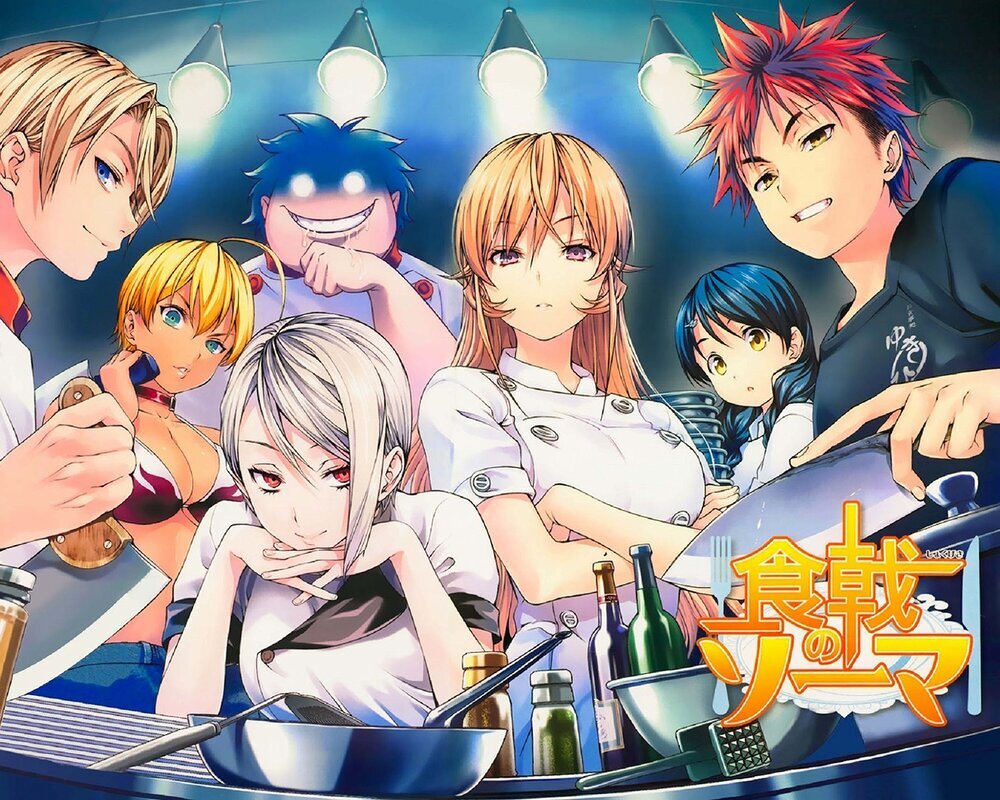
Guilty Pleasure No. 112: Food Wars! (Shokugeki no Soma)


Food Wars is one of those anime that feels like it should be ridiculous on paper, but somehow turns that absurdity into part of its charm. Across its five seasons, it blends intense cooking battles, over-the-top reactions, and shameless fan service into a series that is equal parts culinary hype machine and anime guilty pleasure.

What makes Food Wars stand out right away is how seriously it treats food while never taking itself too seriously as a show. The cooking scenes are loaded with detail, and the anime clearly loves showing off the textures, colors, and techniques behind every dish. Even when the plot gets wild, the series keeps circling back to a genuine appreciation for cooking, competition, and creativity, which gives it more heart than you might expect from an anime known for clothes literally exploding off people after a good bite.

Anyone who has grown up watching the high-octane drama of Iron Chef—whether the original Japanese production or the iconic American version on The Food Network—will feel right at home with the structure of this show. Much like those classic programs, Food Wars relies on a foundation of thematic ingredient requirements, ticking clocks, and an intense panel of judges waiting to dissect every flavor. The “Shokugeki” battles, or culinary duels, capture that same competitive spirit where a single secret ingredient or a daring last-minute pivot can be the difference between legendary status and total failure.

One of the most defining aspects of the series is how it effectively gamifies the entire culinary experience, turning every kitchen session into a high-stakes arena. The show treats cooking like a complex strategy game where each ingredient choice acts as a tactical move and every technique serves as a power-up. This framing forces the audience to view food not just as sustenance, but as a weapon or a defense, making the act of creation feel as tense and strategic as a combat sequence in any traditional action series.

This competitive spirit extends directly into the tasting sequences, which are arguably the most iconic parts of the entire five-season run. When a judge takes a bite, the show transforms the experience into a sensory battleground where the flavors represent different forces, emotions, or even elemental powers that clash on the palate. By turning flavor profiles into visual and psychological challenges, the show ensures that tasting isn’t just about appreciation—it is a judgment call that defines the character’s growth, pride, and survival in the cutthroat atmosphere of Totsuki Academy.

At the center of it all is Souma Yukihira, a protagonist who is easy to root for because he is confident without feeling smug. He is the kind of main character who thrives on pressure, and the show uses him well as an engine for momentum. Every challenge becomes a chance to watch him improvise, adapt, and push himself in a way that keeps the series moving fast. He is not some brooding genius or chosen one; he is just a stubborn, talented cook who wants to prove himself, and that makes the whole competition structure more fun.

The supporting cast is a big reason the anime works as well as it does. Erina starts off as icy and intimidating, but the series gradually gives her more depth, letting her grow beyond the “judge with a famous tongue” gimmick into someone with real emotional weight. The Polar Star Dorm crew adds a lot of personality and warmth, giving the story a sense of community that balances out the cutthroat tournament energy. Even when the show leans into exaggerated comedy, the characters usually feel distinct enough that their rivalries and friendships stay entertaining.

One of the show’s biggest selling points is obviously the fan service, and Food Wars does not pretend otherwise. It uses exaggerated reactions, dramatic body language, and suggestive imagery as a kind of visual shorthand for how amazing the food tastes. That approach is part joke, part spectacle, and part stylistic identity. For some viewers, that is the whole appeal; for others, it is the thing that makes the anime hard to recommend without a warning label. Still, the series is self-aware enough that the fan service feels tied to its outrageous personality rather than just being randomly thrown in.

The first season probably captures the show’s identity best because it still has that fresh mix of school-life fun, cooking creativity, and escalating rivalry. The early arcs feel energetic and focused, with each battle building on the last and giving the cast room to establish who they are. As the series moves forward, it gets more dramatic and more tournament-heavy, which is both a strength and a weakness. On one hand, the stakes rise and the clashes feel bigger; on the other, the show can start to feel like it is repeating its own formula with just enough variation to keep going.

By the middle seasons, Food Wars becomes more polished in some ways and more excessive in others. The food presentation remains impressive, and the battles often feel like mini sports dramas, but the storytelling starts to lean harder into anime logic, rival schools, overblown power scaling, and increasingly ridiculous cooking showdowns. That is not necessarily a bad thing, because the whole series is built on heightened reality, but it does mean the emotional impact depends a lot on whether you are fully onboard with the show’s specific brand of chaos.

The final season is where opinions tend to split the hardest. Some viewers feel it loses the magic and becomes more generic battle shounen than cooking anime, while others still see it as a satisfying enough conclusion that keeps the core spirit alive. There are still character moments worth caring about, especially around Souma and Erina, and the show does try to give the story a proper sense of closure. Even so, it is hard to ignore that the later stretch does not hit the same high point as the earlier seasons, especially when the novelty of the format starts wearing thin.

What keeps Food Wars from collapsing under its own absurdity is that it genuinely understands the appeal of competition. The anime is about food, yes, but it is also about pride, craft, ambition, and the need to prove yourself through skill. That gives it a surprisingly strong backbone underneath all the comedy and fan service. When it is working at its best, the show makes cooking feel like a high-stakes art form, where one meal can define a relationship, a reputation, or a future.

In the end, Food Wars is the kind of anime you watch because you want something loud, stylish, and a little indecent, but you stay because it actually cares about the process of cooking and the people doing it. It is messy, exaggerated, and sometimes way too horny for its own good, but that is also why it sticks in your memory. Across five seasons, it delivers a strange but effective mix of genuine culinary admiration and total anime nonsense, and that combination is exactly what makes it such a recognizable cult favorite.

Previous Guilty Pleasures

  1. Half-Baked
  2. Save The Last Dance
  3. Every Rose Has Its Thorns
  4. The Jeremy Kyle Show
  5. Invasion USA
  6. The Golden Child
  7. Final Destination 2
  8. Paparazzi
  9. The Principal
  10. The Substitute
  11. Terror In The Family
  12. Pandorum
  13. Lambada
  14. Fear
  15. Cocktail
  16. Keep Off The Grass
  17. Girls, Girls, Girls
  18. Class
  19. Tart
  20. King Kong vs. Godzilla
  21. Hawk the Slayer
  22. Battle Beyond the Stars
  23. Meridian
  24. Walk of Shame
  25. From Justin To Kelly
  26. Project Greenlight
  27. Sex Decoy: Love Stings
  28. Swimfan
  29. On the Line
  30. Wolfen
  31. Hail Caesar!
  32. It’s So Cold In The D
  33. In the Mix
  34. Healed By Grace
  35. Valley of the Dolls
  36. The Legend of Billie Jean
  37. Death Wish
  38. Shipping Wars
  39. Ghost Whisperer
  40. Parking Wars
  41. The Dead Are After Me
  42. Harper’s Island
  43. The Resurrection of Gavin Stone
  44. Paranormal State
  45. Utopia
  46. Bar Rescue
  47. The Powers of Matthew Star
  48. Spiker
  49. Heavenly Bodies
  50. Maid in Manhattan
  51. Rage and Honor
  52. Saved By The Bell 3. 21 “No Hope With Dope”
  53. Happy Gilmore
  54. Solarbabies
  55. The Dawn of Correction
  56. Once You Understand
  57. The Voyeurs 
  58. Robot Jox
  59. Teen Wolf
  60. The Running Man
  61. Double Dragon
  62. Backtrack
  63. Julie and Jack
  64. Karate Warrior
  65. Invaders From Mars
  66. Cloverfield
  67. Aerobicide 
  68. Blood Harvest
  69. Shocking Dark
  70. Face The Truth
  71. Submerged
  72. The Canyons
  73. Days of Thunder
  74. Van Helsing
  75. The Night Comes for Us
  76. Code of Silence
  77. Captain Ron
  78. Armageddon
  79. Kate’s Secret
  80. Point Break
  81. The Replacements
  82. The Shadow
  83. Meteor
  84. Last Action Hero
  85. Attack of the Killer Tomatoes
  86. The Horror at 37,000 Feet
  87. The ‘Burbs
  88. Lifeforce
  89. Highschool of the Dead
  90. Ice Station Zebra
  91. No One Lives
  92. Brewster’s Millions
  93. Porky’s
  94. Revenge of the Nerds
  95. The Delta Force
  96. The Hidden
  97. Roller Boogie
  98. Raw Deal
  99. Death Merchant Series
  100. Ski Patrol
  101. The Executioner Series
  102. The Destroyer Series
  103. Private Teacher
  104. The Parker Series
  105. Ramba
  106. The Troubles of Janice
  107. Ironwood
  108. Interspecies Reviewers
  109. SST — Death Flight
  110. Undercover Brother
  111. Out for Justice

Anime You Should Be Watching: Azumanga Daioh


The latest choice for “anime of the day” is the one and only Azumanga Daioh.

Azumanga Daioh is the extremely popular and critically-acclaimed series that was adapted from the manga of the same by. The manga ran for over three years and has been collected into three massive volume called tankobon. It’s creator is mangaka Azuma Kiyohiko and just looking at the name one sees the etymology of the series’ name.

The anime adaptation was done by anime studio J.C. Staff and shown by the Japanese tv network TV Tokyo over 26 episodes. The North American license used to be under ADV Films before it’s inevitable collapse wherein the North American licensing rights was bought by a Houston-based company called Aesir Holdings. One could still find the anime series on DVD which is great news since Azumanga Daioh is one of the best slice-of-life genre series with characters fully realized and storylines which range from comedic to drama with the two overlapping at times.

The series is about the lives of six Japanese high school girls and how their friendships evolve through their times together at school and out of it. There’s fan favorite Chiyo Mihama, the child prodigy, who struggles to fit in with her classmates who happen to be five years older. Then there’s the athletic Kagura whose friendly rivalry with the reserved Sakaki forms one subplot in the series. There’s Osaka the transfer student who fills in the role of the spacey and eccentric character in the series with Yomi and Tomo rounding out the cast of friends.

While most of the series focuses on the six friends other characters come in and out of their lives such as their homeroom teacher Yukari Tanizaki and their phys.ed instructor, Minamo Kurosawa. Then there’s Kimura-sensei. It’s this character that may have some viewers watching the series with a bit of discomfort as this character becomes a borderline obsessive with the teenage high school girls he teaches, especially the six girls who the series focuses on. While the series never goes over the line with Kimura-sensei’s behavior some people may still get turned off by it and dismiss the series. Here’s to hoping that doesn’t happen because Azumanga Daioh does a great job of exploring the lives of these six high school girls as their friendships with each other grows.

The anime doesn’t go overboard with surreal and way-out-there scenes. Most of the series really just shows routine, day-to-day activities that the girls go through in high school, but the writing is so spot-on that watching the series will definitely bring back fond, nostalgic memories of one’s own time in high school. There are some surreal moments, but they’re usually reserved for times when Osaka’s spaciness gets the better of her. This usually involves her imagining weird things about Chiyo-chan’s pigtails.

Azumanga Daioh does fall under the moe label due to the cuteness of the animations with special regard to the youngest in the group, Chiyo-chan. This moe aspect plus the fun and heartwarming stories involving the girls make this anime a fine choice to be the latest “anime of the day”.

Anime You Should Be Watching

Anime You Should Be Watching: Toradora!


The latest entry for Anime of the Day is the romantic comedy from Japanese animation studio J.C. Staff. I am talking about the quite popular anime series which had a 25-episode run in Japan’s TV Tokyo from October 2008 and March 2009. The series is Toradora! and is based on the light novel and manga by Takemiya Yuyuko.

This series is a romantic comedy and also one that is full of well-done drama. It’s an anime about relationships and stars two very atypical leads in Takasu Ryuji and Aisaka Taiga. Ryuji is the misunderstood highschool boy whose squinty eyes has labeled him a thuggish, criminal-type which causes some hilarious reactions from classmates and teachers both. Taiga is the doll-like tsudere-type who manages to scare everyone in her school due to her quick temper and improbable strong attacks. The two end up accidentally bumping into each other in the first day of classes and hilarity ensues from there.

Other characters such as Taiga’s friend Minorin (the weird, ditzy girl) and Ryuji’s best friend Kitamura Yusaku also lend their own personalities and relationship issues to the mix which ends up complication everyone else’s hook-ups. There’s also the kyuugere character in Kawashima Ami who is Yusaku’s very beautiful childhood friend whose attempt to hook-up with Ryuji causes other relationship complications which doesn’t untangle itself until very close to the end of the series.

Toradora! looks like the typical romantic comedy at first glance, but as one gets deeper into the series deeper layers in how the characters behave and their motivations for their earlier behaviors shine through. The comedy in the series actually begins to take a backseat to the complex romances in the show. We know from the beginning who should end up with who, but the journey the characters take to finally get to where they need to be in the end is the high point in the show.

For people new to anime this series is actually a very good starting point in the romantic-comedy genre as it takes the subject matter seriously and doesn’t pander to the usual easy hook of ecchi scenes and over-the-top comedy.

Anime You Should Be Watching