“The king to be sought during times of upheaval is not a saint, but a survivor, who is tenacious.” — Kazuya Souma
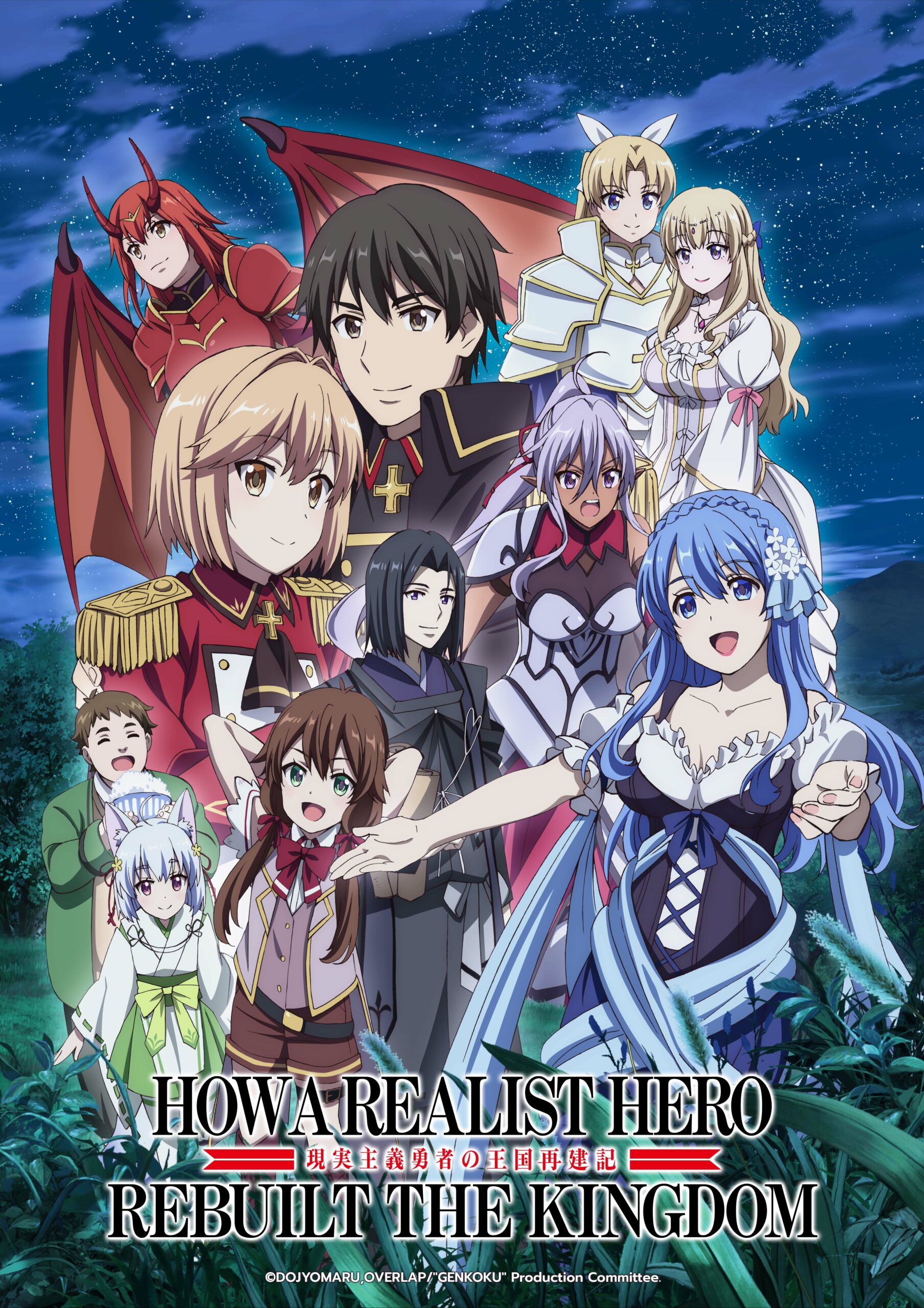
How a Realist Hero Rebuilt the Kingdom is one of those isekai anime that flips the script in the best way possible, and it’s a breath of fresh air in a genre that often feels like it’s running on autopilot. Instead of the usual power fantasy where the protagonist gets godlike abilities and smashes through hordes of enemies, this series drops its lead into a medieval kingdom and says, hey, how about you actually run this place? And that’s exactly what makes it so compelling. It’s less about magic swords and dragon slaying, and more about tax reform, infrastructure projects, and international diplomacy. Yeah, it sounds dry when you put it like that, but trust me, it’s anything but boring.
The story kicks off with Kazuya Souma, your average university student with a knack for history and a particular obsession with the Civilization video game series. One day, he’s summoned to the fantasy world of Elfrieden—not as a hero to save the world from a demon king, but as a consultant to help a struggling queen turn her kingdom around. The previous hero they summoned bailed after a few months, leaving the kingdom in worse shape than before. Souma, being the practical guy he is, decides to stick around and actually tackle the problems head-on. No overpowered cheat skills, no harem of adoring fans from day one, just a guy with a modern education trying to apply real-world logic to a medieval society. It’s a premise that sounds simple, but the execution is what makes it shine.
What really sets Souma apart from your typical isekai protagonist is his mindset. He’s not out to prove he’s the strongest or to collect a bunch of waifus (though, let’s be real, a few do end up in his orbit). He’s legitimately trying to fix a broken system. He introduces concepts like paper money, a postal system, and even a form of democracy, all while navigating the political minefield of a world where nobles would rather cling to tradition than admit they might need to change. The way he outmaneuvers his opponents isn’t with flashy spells or brute strength, but with economics, psychology, and good old-fashioned negotiation. Watching him turn a kingdom on the brink of collapse into a thriving nation is oddly satisfying, like binge-watching a really good business documentary, but with more elves and magic.
The supporting cast is just as strong as the protagonist. Queen Lisha starts off as a naive young ruler who’s in over her head, but her growth throughout the series is fantastic to watch. She goes from being a symbol of hope with no real power to a shrewd leader in her own right, learning from Souma’s strategies and gradually taking more control. Then there’s Prime Minister Halbert, the grizzled veteran who’s initially skeptical of Souma’s unconventional methods but slowly comes to respect him. The dynamic between these characters feels genuine, and their interactions are some of the highlights of the series. Even the antagonists aren’t just mustache-twirling villains; they’re people with their own motivations and reasons for resisting change, which makes the conflicts feel more nuanced.
The world-building in How a Realist Hero Rebuilt the Kingdom is another standout feature. Elfrieden isn’t just a generic fantasy kingdom; it’s a place with a rich history, complex social structures, and a variety of cultures. The series does a great job of making the world feel lived-in, from the political tensions between the human kingdom and its neighboring nations to the way magic is integrated into daily life. Unlike a lot of isekai where magic is just a tool for combat, here it’s treated as a natural part of the world that has real economic and social implications. For example, the kingdom’s reliance on slave labor is tied to the fact that certain magical races can only reproduce in specific conditions, which creates a weirdly logical justification for an otherwise dark practice. It’s details like this that make the world feel deeper and more thought-out than your average fantasy setting.
One of the most refreshing things about this anime is how it handles its themes. It’s not afraid to tackle heavy topics like class inequality, systemic corruption, and the ethics of governance. Souma isn’t some infallible genius who always makes the right call; he makes mistakes, faces setbacks, and sometimes has to compromise his ideals for the greater good. There’s a great episode where he has to decide whether to abolish slavery immediately or phase it out gradually, knowing that moving too fast could destabilize the economy and cause more harm than good. It’s a morally gray situation, and the series doesn’t shy away from showing the consequences of his choices. This kind of depth is rare in the isekai genre, where the protagonist’s decisions are usually framed as unambiguously right.
The animation by J.C.Staff is solid, though not exactly groundbreaking. The character designs are clean and distinct, and the backgrounds are detailed enough to sell the fantasy setting. The real star of the visual presentation, though, is the way the series uses its art to emphasize the themes. For example, the contrast between the rundown, impoverished parts of the kingdom and the opulent palaces of the nobility is stark and deliberate, reinforcing the social inequalities Souma is trying to address. The action scenes, while not as frequent as in other isekai, are well-choreographed and serve their purpose without feeling out of place in a story that’s more about politics than combat.
If I had to nitpick, the pacing can be a little uneven at times. The first season does a great job of setting up the world and the characters, but there are moments where it feels like the story is spinning its wheels, especially in the middle episodes. Some of the political maneuvering can also get a bit dense, and if you’re not into the whole nation-building aspect, it might feel slow. That said, the payoff is usually worth it. The moments where Souma’s plans come together are incredibly satisfying, and the character development is consistently strong throughout.
Another thing worth mentioning is how the series handles its source material. How a Realist Hero Rebuilt the Kingdom is based on a light novel series by Dojyomaru, and the anime adaptation does a pretty faithful job of bringing the story to life. There are, of course, some cuts and changes to fit the runtime, but nothing that feels egregious or out of place. If you enjoy the anime, the light novels are definitely worth checking out, as they go into even more detail about the world and the characters’ thoughts and motivations.
So, who is this anime for? If you’re a fan of isekai but tired of the same old power fantasy tropes, this is a must-watch. It’s also a great pick if you enjoy stories about politics, strategy, and world-building. That said, if you’re looking for non-stop action or a more traditional adventure narrative, you might find it a little slow. But if you’re willing to engage with its themes and appreciate a protagonist who wins with brains rather than brawn, How a Realist Hero Rebuilt the Kingdom is an absolute gem. It’s smart, thought-provoking, and surprisingly addictive, like a fantasy version of The West Wing with more dragons. And honestly, in a sea of isekai that often feel interchangeable, that’s more than enough to make it stand out.
Anime You Should Be Watching
- Gakuen Utopia Manabi Straight
- Chōjin Densetsu Urotsukidōji
- School Days
- Higurashi no Naku Koro ni
- Toradora!
- Aria
- Azumanga Daioh
- Bible Black
- Puella Magi Madoka Magica
- Black Lagoon
- Ika Musume
- High School DxD
- Bakemonogatari
- Sailor Moon
- Princess Tutu
- Another
- Hellsing Ultimate
- Sword Art Online
- Wolf Children Ame and Yuki
- Toaru Kagaku no Railgun
- Nichijō
- Redline
- Gakkou Gurashi (School Live)
- Gate: Thus the Japanese Self-Defense Force Fought in Their Land
- Hinamatsuri
- Asobi Asobase
- Zombie Land Saga
- Monster
- Farming Life In Another World (Isekai Nonbiri Nouka)
- Perfect Blue
- Shiki
- Angel of Darkness (Injū Kyōshi)
- Blood: The Last Vampire
- Akira
- Space Battleship Yamato (Uchū Senkan Yamato)
- Macross Plus
- Ninja Scroll (Jūbē Ninpūchō)
- Tokyo Godfathers (Tōkyō Goddofāzāzu)
- Memories
- That Time I Got Reincarnated as a Slime (Tensei Shitara Suraimu Datta Ken)
- Spy x Family
- Record Of Lodoss War (Rōdosu-tō Senki)
- Berserk (Kenpū Denki Berserk)
- Jin-Roh
- Made In Abyss (Meido in Abisu)
- Legend of the Galactic Heroes (Ginga Eiyū Densetsu)
- Nausicaä of the Valley of the Wind
- May I Ask for One Final Thing? (Saigo ni Hitotsu dake Onegai Shitemo Yoroshī Deshō ka)
- Initial D (Inisharu Dī)
- Vinland Saga (Vinrando Saga)
- Grave of the Fireflies (Hotaru no Haka)