(Hi there! So, as you may know because I’ve been talking about it on this site all year, I have got way too much stuff on my DVR. Seriously, I currently have 178 things recorded! I’ve decided that, on February 1st, I am going to erase everything on the DVR, regardless of whether I’ve watched it or not. So, that means that I’ve now have only have a month to clean out the DVR! Will I make it? Keep checking this site to find out! I recorded Empire of the Sharks, off of SyFy on August 5th, 2017!)
Welcome to the future! It’s very wet.
That’s to be expected, of course. In fact, now that 98% of the world is underwater, we should probably be surprised that the future isn’t more wet than it actually is. What survives of humanity now lives on floating, makeshift communities. Some of them are doing better than others, of course.
A warlord floats out there. His name is Ian Fien (John Savage). With the help of his main henchman, Mason Scrimm (Jonathan Pienaar), Fien has several communities under his grip. Everyone is required to pay Fien his tribute. Failing to do so means getting attacked by the sharks that Scrimm has under his control.
(Once 98% of your planet is underwater, you learn not to laugh at the possibility of being eaten by a shark.)
However, Fien has finally gone too far. He’s kidnapped Willow (Ashley de Lange), the daughter of a shark caller who may have inherited her family’s ability to control the sharks. Her boyfriend, Timor (Jack Armstrong), sets out to rescue Willow but it quickly turns out that he’s not going to be able to do it alone. Fien is simply too powerful and his fortress too well-defended by both men and sharks. Timor is going to have to travel to a floating bar and recruit a team of misfits to help him both rescue Willow and free his people from Fien’s tyranny.
If the plot of Empire of the Sharks sounds familiar, that’s because it’s a prequel to 2016’s Planet of the Sharks. It’s also an Asylum film. Of course, The Asylum is best-known for the Sharknado franchise but I think that, if they don’t also develop a Planet of the Sharks franchise, they’ll be missing out on a huge opportunity. One of the things that I liked about both Planet and Empire was the amount of effort that was put into creating the future. Each floating community is its own little world and full of details that will reward sharp-eyed viewers.
(I know that some people online complained that everyone looked too good, considering that they were living in a post-apocalypse wasteland. That may be true but here’s something to consider. Do you really want to spend 90 minutes watching ugly people?)
Anyway, I enjoyed Empire of the Sharks. The movie is pure fun. (Just the fact that the main villains are named Fein and Scrimm should tell you a lot about the film’s sense of humor.) It’s a cheerfully crazy movie, featuring CGI sharks and a nicely demented performance from John Savage. Hopefully, during this year’s shark week, we’ll get a third installment in the Planet of the Sharks franchise.
“Nothing will die. The stream flows, the wind blows, the cloud fleets, the heart beats. Nothing will die.” — John Merrick’s Mother, quoting Tennyson, at the end of The Elephant Man (1980)
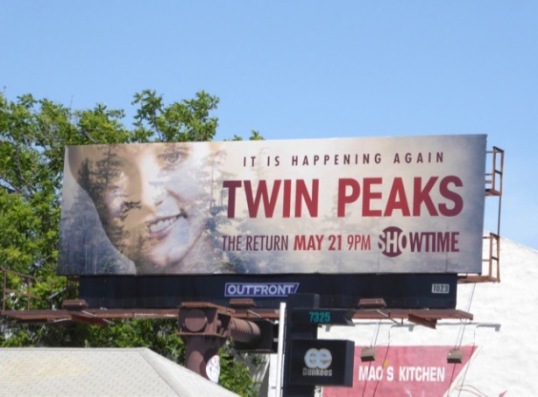
Was Twin Peaks: The Return a movie or a TV show?
As I sit here on January 9th, 2018, that’s a question that’s still on my mind. There are many critics who insist that Twin Peaks: The Return should be viewed as being a 16-hour movie. It’s a claim that I, myself, have made several times. In order to support this argument, we point out that David Lynch and Mark Frost didn’t sit down and write 16 different scripts. Instead, they wrote one 900-page script which they then filmed and subsequently divided into 16 different “chapters.” It’s really not that much different from what Quentin Tarantino did with Kill Bill or what Peter Jackson did with both The Lord of the Rings and The Hobbit. As well, Twin Peaks: The Return was such a monumental artistic achievement that calling it a TV show just seems somehow diminishing.
And yet, the fact of the matter is that Twin Peaks: The Return did air on television. It aired in 16 different episodes, which were aired on a weekly basis. To many, that fact alone makes Twin Peaks: The Return a television show.
It may all seem like a silly question to some readers. However, for those of us who like to make best-of lists at the start of the new year, it is a legitimate issue. Should I include Twin Peaks: The Return at the top of my list of the best 26 films of 2017 or should I rave about it in my list of good things I saw on television in 2017?
My solution is to do neither. Twin Peaks: The Return was such a monumental achievement that it deserves a best-of entry of its very own.
(Of course, not everyone is going to agree. For everyone who loved Twin Peaks: The Return, there was someone else who hated it with just as much of a passion.)
Months after the show ended, Twin Peaks: The Return continues to haunt many viewers. As the Man From Another Place once told Agent Cooper, “She is full of secrets.” When the show ended, many of the show’s mysteries were left unsolved. Really, we shouldn’t have been surprised. As a filmmaker, David Lynch has always been most interested in mysteries than solutions. What happened to Audrey? Why did Laura/Carrie scream? At the end of the show, was Dale trapped in another world or another time? Was BOB really destroyed?
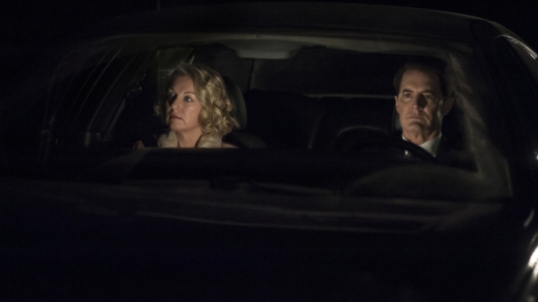
Interestingly, David Lynch actually provided viewers with two endings. The first ending, which occurred halfway through Part 17, was an ending that would have been perfect for a television show. Dale Cooper, back to normal, defeated the bad guys and was reunited with all of his friends. The second ending — also known as Part 18— was a much more Lynchian ending as two strangers took a road trip to nowhere. Part 17 gave us hope for the future. Part 18 ended with a dark reminder that the past cannot be changed, no matter how much we obsess over it. For me, Part 18 was the most important chapter of Twin Peaks: The Return.Part 8, of course, is the chapter that got and continues to get all the attention. And Part 8 was probably one of the greatest stand-alone episodes in television history. But, when considering the reoccurring themes of Twin Peaks: The Return and all of Lynch’s work, Part 18 was far more important.
What’s interesting is that, while the show ended on a dark note, Twin Peaks: The Return was often Lynch at his most optimistic. For all the terrible things that happened, the show also featured a reoccurring theme of redemption. Two of the original show’s most villainous characters — Dana Ashbrook’s Bobby Briggs and Richard Beymer’s Ben Horne — were reintroduced as two of the most sympathetic characters to be found in The Return. Agent Cooper finally escaped from the Black Lodge and not only got a chance to redeem himself by destroying Bob but he also destroyed his evil Double. He even got a chance to turn Dougie Jones into a good husband, father, and employee.
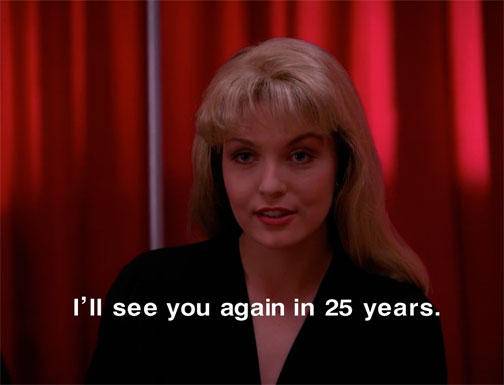
In the end, it would appear that Cooper’s only mistake was thinking that he could change the past. He may have saved Laura but, in doing so, he just transformed her into Carrie, an unbalanced woman living in a house with a dead body on the couch. As her final scream confirmed, he could save her life but he couldn’t erase her pain. The past is the past but the future can always be better.
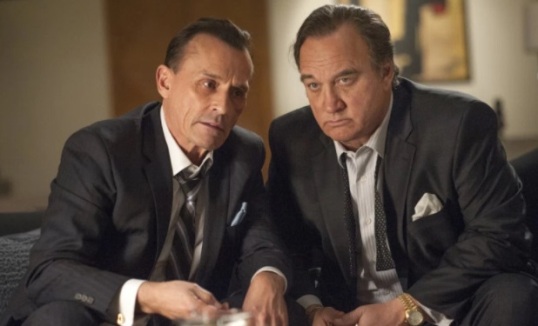
Of course, it wasn’t just the characters on the show who won redemption. The cast of Twin Peaks: The Return was truly amazing and, by the time the show ended, my opinion of several performers had changed forever. Who would ever have guessed that Jim Belushi would end up being one of my favorite characters? Or that Michael Cera would turn Wally Brando into a minor cult hero? Or that David Lynch would prove to be as good an actor as he is a director? Or that Balthazar Getty would get a chane to redeem his less than impressive work in Lost Highway with a chilling performance as the newest face of Twin Peaks corruption? Even the returnees from the original show — Dana Ashbrook, Wendy Robie, Sheryl Lee, Harry Goaz, Kimmy Robertson, Russ Tamblyn, Everett McGill, Peggy Lipton, Grace Zabriskie, James Marshall, Madchen Amick, and others — were given a chance to reveal new depths of character. Veterans like Robert Forster, Ashley Judd, Laura Dern, Don Murray, Jennifer Jason Leigh, Naomi Watts and Tim Roth shared the stage with newcomers like Chrysta Bell and Eamon Farren and they all came together to create an unforgettable world.
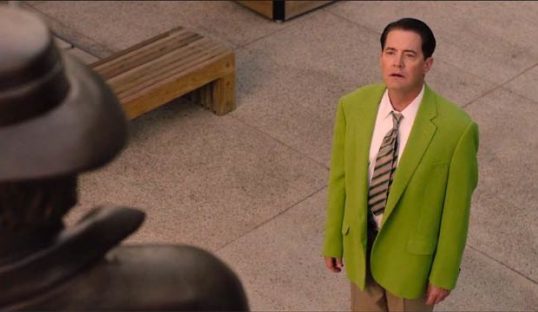
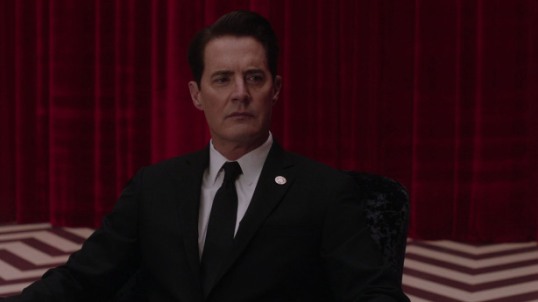
You could even argue that Twin Peaks: The Return was a comeback of sorts for Kyle MacLachlan. Hollywood has never seemed to really understand how to best use this appealing but quirky actor. Twin Peaks: The Return provided him with a chance to show what he can do, giving him not just one but three characters to play.
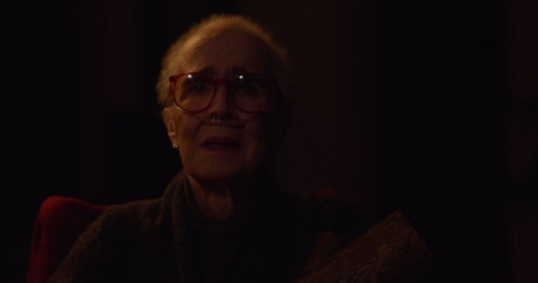
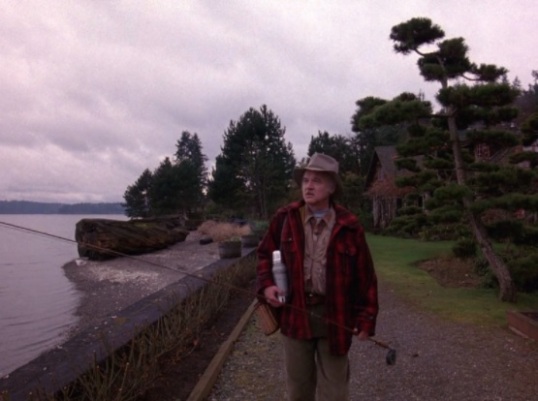
Twin Peaks: The Return gave us one final chance to appreciate some talented people who are no longer with us. Harry Dean Stanton was the face of old-fashioned decency. Miguel Ferrer provided snarky commentary, letting the audience know that the show understood how strange it was. Warren Frost returned briefly, still as reliable as ever as Doc Hayward. And Catherine E. Coulson, who was so often Lynch’s muse, got to play the role one more time.
(Jack Nance, Don S. Davis, Frank Silva, and David Bowie all made appearances as well, a reminder that they may no longer be with us but they will never be gone.)
In the end, it seems appropriate to end this post with a picture of Ed and Norma, finally together. The world of Twin Peaks: The Return was frequently a dark one but sometimes, love won.
Tomorrow, my look back at 2017 continues with my picks for my favorite songs of 2017.
(Hi there! So, as you may know because I’ve been talking about it on this site all year, I have got way too much stuff on my DVR. Seriously, I currently have 178 things recorded! I’ve decided that, on February 1st, I am going to erase everything on the DVR, regardless of whether I’ve watched it or not. So, that means that I’ve now have only have a month to clean out the DVR! Will I make it? Keep checking this site to find out! I recorded House of the Witch, off of SyFy on October 7th, 2017!)
Let’s say that you’re a teenager and you’re living in a small, rural town. There’s not really much to do, other than making out in pickup trucks and hanging out at the local diner.
However, there is a haunted house.
Of course, the official story is that the house isn’t haunted because everyone knows that there’s no such thing as ghosts. That said, the house does have a long and somewhat infamous history. And everyone knows that going anywhere near the house would probably be considered to be trespassing. In fact, one of your classmates is currently missing. He was last seen talking to two girls who dared him to pry the address off of the house’s front door.
So, it’s Halloween night. And you’re living in a small town and there’s not a whole lot to do.
So, the question is: would you break into the haunted house?
Now, I know a lot of you are probably saying that there’s no way you would break into that house. You’re too smart for that! No way would you break the law and risk your lives just so you could go inside a condemned house! You’re just going to go home early, do your homework, and get some sleep so you can wake up rested and ready for school on November 1st!
That’s what people say but we all know that’s not true. If I found myself in that situation, I would totally break into that house and so would you. Let’s just be honest here. It’s fun to take chances. It’s fun to get scared on Halloween, especially when your best friends are the ones who are scaring you. Even more importantly, it’s fun to think about how, for years afterward, you can brag about how you spent the night in a haunted house and you survived!
It’s human nature. We all want to touch the freshly painted wall. We all want to see the movies that were not supposed to watch. And we all want to break into the haunted house on Halloween.
House of the Witch is wonderfully creepy little movie about a group of teenagers who give into their natural instincts and break into a house on Halloween. Needless to say, the house turns out to be even more haunted than they were led to believe. In fact, the house is home to an ancient witch. Soon, everyone is trapped in the house and being hunted down one-by-one. Blood is spilled. Fingers are lost. Faces are infected with … something.
The storyline may sound simple but it’s also wonderfully effective and atmospheric. The dilapidated house is a truly frightening location and it just gets more frightening as the film progresses. By the end of the movie, I was looking over my shoulder to make sure that there weren’t any witches creeping around my living room. (Fortunately, there weren’t.) The film does a great job of keeping the viewer off-balance. Even though you know that damn witch is going to be behind every corner, you still jump when she suddenly pops up.
I liked the whole look of the film. Early on in the film, there’s a wonderful overhead shot of a pickup truck heading towards the house and the scene perfectly captures not only the creepiness of Halloween but also the emptiness of life in the nearby small town. Seeing the truck driving past empty and endless fields, it was easy to understand why the film’s characters were drawn to that cursed house. In a landscape defined by nothing, that house and its infamous reputation was at least something.
(Hi there! So, as you may know because I’ve been talking about it on this site all year, I have got way too much stuff on my DVR. Seriously, I currently have 178 things recorded! I’ve decided that, on February 1st, I am going to erase everything on the DVR, regardless of whether I’ve watched it or not. So, that means that I’ve now have only have a month to clean out the DVR! Will I make it? Keep checking this site to find out! I recorded Wicked Mom’s Club, off of the Lifetime Movie Network on October 7th, 2017!)
“You know girls. Friends one day. Enemies the next.”
— Olivia (Ashley Wood) in Wicked Mom’s Club (2017)
To be honest, before I actually sat down and watched this film, I assumed it was going to be comedy.
I mean check out the name: Wicked Mom’s Club. Doesn’t that just bring to mind snarky comments shared over wine and dark secrets?
And then I read the plot description, which basically said that the film was about a single mother who had to defeat the evil moms on the PTA. That sound like a comedy, doesn’t it?
But then I actually started the movie and it begain with a woman sobbing as she committed suicide in her suburban garage. At that point, it was obvious that Wicked Mom’s Club was not going to be a comedy.
Instead, it’s another “based-on-a-true-story” Lifetime film about all of the sordid secrets of the suburbs. It starts with Mandy (Jessica Blakemore) and her teenage daughter Riley (Virginia Tucker) moving into a new house. They’re looking to start a new life. Mandy is freshly divorced from a husband who used to cheat on her. Riley is a talented gymnast who got suspended from her previous school when she tested positive for drugs. It’s time for a new beginning! Not only do they have a new house but Mandy has a great job and an amazingly popular “mommy blog.”
Mandy meets Olivia (Ashley Wood). Olivia is the leader of the Gym Moms, a group of mothers whose daughters are all into gymnastics. At first, Olivia appears to be the nicest person in town. She talks about how much she loves Mandy’s blog. Riley becomes best friend’s with Olivia’s daughter, Chelsea (Bekka Walker). Mandy even confides in Olivia about Riley’s drug problems…
Uhmm, maybe she shouldn’t have done that.
From the beginning, there are hints that Olivia might not be as friendly as she seems. For instance, she deliberately knocks over a bag in order to distract Riley in the middle of her routine. Olivia always seems to be ordering the other Gym Moms around. Plus, a former Gym Mom approaches Mandy and warns her not to trust Olivia….
When Riley turns out to be a better gymnast than Chelsea, strange things start to happen. For instance, when Mandy tries to get a sponsor for her blog, she is shocked to discover that someone else has started a blog about what a terrible mother Mandy is. Since the entire town is obsessed with not only Mandy’s blog but also the random comments that are left on it, everyone starts to turn against Mandy. No one wants anything to do with you when you’re a bad blogger.
But, it doesn’t stop there. For instance, Mandy ends up getting arrested for drug possession. She starts to hear strange noises around her house. She grows paranoid, wondering if maybe Riley actually is blogging about her. Is Mandy being set up? And is this the end of the world’s most important mommy blog?
Wicked Mom’s Club may sound melodramatic but, honestly, I think everyone has had to deal with someone like Olivia at some point in their life. They may not all be as clever as Olivia is at destroying people’s lives but they’re out there, grown up bullies who live vicariously through their children. I grew up dancing and I’ve always been so thankful that my mom never put me under the type of pressure that the majority of my friends had to deal with. Ashley Wood did a good job bringing Olivia to villainous life and Jessica Blakemore and Virginia Tucker were believable as mother and daughter. Their difficult but loving relationship felt real.
I have to admit, though, that I was a little amused by how the entire world of Wicked Mom’s Club pretty much revolved around blogs and bloggers. I had no idea we were so powerful!
Well, it’s the second week of January and that means that it’s time for me to now to announce my picks for the best and worst of the previous year! Let’s start things out with my picks for the 16 worst films of 2017!
Tomorrow, my look back at 2017 continues with my picks for the greatest moments for the best and most important television show of 2017, Twin Peaks: The Return!
Continuing with my efforts to get caught up on the major films that I saw in 2017, here are my reviews of four biopics! Two of them are very good. One of them is so-so. And the other one … well, let’s just get to it…
All Eyez on Me (dir by Benny Boon)
All Eyez On Me is a movie that I think a lot of people had high hopes for. It was a biopic about Tupac Shakur, who died over 20 years ago but remains one of the most influential artists of all time. Starring Demetrius Shipp, Jr. (who, if nothing else, bore a strong physical resemblance to Tupac), All Eyez on Me followed Shakur from his youth as the son of activist Afeni Shakur (Danai Gurira), through his early stardom, his political awakening, his time in prison, his eventual association with Suge Knight (Dominic L. Santana), and his still unsolved murder in Las Vegas. Along the way all of the expected people pop up. Kat Graham plays Jada Pinkett and tells Tupac that he’s wasting his talent. Someone who looks nothing like Dr. Dre is introduced as being Dr. Dre. Another actor wanders through a scene and says his name is Snoop Dogg. The film last 2 hours and 20 minutes, with some scenes feeling oddly rushed while other drag on interminably.
The main reason why All Eyez On Me fails is that, unlike Straight Outta Compton, All Eyez on Me never figures out how translate Tupac’s legacy into cinematic form. For instance, when I watched Straight Outta Compton, I probably knew less about NWA than I knew about Tupac Shakur when I watched All Eyez On Me. But then there was that scene where NWA performed “Fuck That Police” while surrounded by the police and, at that moment, I understood why NWA deserved their own movie. There’s no comparable scene in All Eyez On Me, which gets so bogged down in going through the usual biopic motions that it never really comes to grips with why Tupac is such an iconic figure. Combine that with some less than stellar performances and some amazingly awkward dialogue and the end result is a film that is massively disappointing.
Maudie (dir by Aisling Walsh)
Maudie tells the story of Maud Lewis, a Canadian woman who found fame as a painter despite suffering from crippling arthritis. Working and living in a one-room house with her husband, a fisherman named Everett (Ethan Hawke), Maud Lewis’s paintings of flowers and birds eventually became so popular that one was even purchased by then-Vice President Richard Nixon.
Maudie is a very special movie, largely because of the incredibly moving performance of Sally Hawkins in the role of Maud. As played by Hawkins, Maud may occasionally be meek but she never surrenders her dream to create something beautiful out the often harsh circumstances of her life. Hawkins not only captures Maud’s physical struggles but she also captures (and makes compelling) the inner strength of this remarkable artist. Ethan Hawke also gives a remarkable performance as the gruff Everett. When you Everett first appears, you hate him. But, as the film progresses, Hawke starts to show hints of a sensitive soul that’d hiding underneath all of his gruffnes. In the end, Everett is as saved by Maud’s art as is Maud.
Directed by Aisling Walsh, this is a low-key but all together remarkable and touching film. If Sally Hawkins wasn’t already certain to get an Oscar nomination for Shape of the Water, she would definitely deserve one for Maudie.
A Quiet Passion (dir by Terrence Davies)
You would be totally justified in assuming that this film, a biopic of poet Emily Dickinson, would have absolutely nothing in common with The Last Jedi. However, believe it or not, they actually do have something very much in common. They are both films that, on Rotten Tomatoes, scored high with critics and not so high with audiences. When last I checked, it had a 93% critical score and a 51% audience score.
Well, you know what? Who cares? The idea that you can judge a film’s worth based on an arbitrary number is pure evil, anyway.
Personally, I’m not surprised to hear that audiences struggled with A Quiet Passion. It’s a very challenging film, one that is more concerned with mood than with traditional narrative. The film is much like Dickinson herself: dark, uncompromising, sharply funny, and, on the surface, unconcerned with what people might think. Much as how Dickinson retreated into her Amherst home, the film retreats into Dickinson’s head. It’s not always the most pleasant place to hide out but, at the same time, it’s so alive with creativity and filled with such a sharp wit that it’s tempting never to leave.
In the role of Emily, Cynthia Nixon gave one of the best performance of the year, bringing Emily to uncompromising life. Neither the film not Nixon ever make the mistake of sentimentalizing Dickinson. Her pain is just as real as her genius. Ultimately, though, both Nixon’s performance and A Quiet Passion stands as a tribute to Emily’s own quiet passion.
Much like Emily Dickinson’s poetry, A Quiet Passion will be appreciated with time.
Victoria & Abdul (dir by Stephen Frears)
If there’s ever been a film that deserves to be known as “generic Oscar bait,” it’s Victoria & Abdul.
Don’t get me wrong. It’s not a bad movie or anything like that. Instead, it’s a very respectable film about Queen Victoria (Judi Dench) and her servant, Abdul Karim (Ali Fazal), an Indian Muslim. While the rest of the royal court is scandalized by Victoria’s close relationship with the foreigner, Karim teaches the Queen about the Koran and encourages her to enjoy life. The royal court is played by the usual collection of distinguished actors who always appear in movies like this: Simon Callow, Tom Pigott-Smith, and Michael Gambon. Victoria’s heir is played by Eddie Izzard, which should tell you all you need to know about how the future Edward VII is portrayed.
As I said, it’s not a bad movie as much as it’s just not a very interesting one. You know that Abdul and Victoria are going to become close. You know that the Royal Court is going to be a bunch of snobs. You know that Victoria is going to get a chance to express anti-colonial sentiments that she must surely never actually possessed. Indeed, whenever the film tries to make any sort of larger statement, all of the characters suddenly start talking as if they’re from 2017 as opposed to the late 1800s.
This is the second time that Judi Dench has played Victoria. Previously, she played the Queen in a film called Mrs. Brown, which was about Victoria’s friendship with a Scottish servant. Apparently, Victoria got along well with servants.
(Hi there! So, as you may know because I’ve been talking about it on this site all year, I have got way too much stuff on my DVR. Seriously, I currently have 179 things recorded! I’ve decided that, on February 1st, I am going to erase everything on the DVR, regardless of whether I’ve watched it or not. So, that means that I’ve now have only have a month to clean out the DVR! Will I make it? Keep checking this site to find out! I recorded the 1967 film, The Love-Ins, off of TCM on September 28th, 2017!)
“We now enter Haight Ashbury. The promised land of the love movement. The utopia of LSD…and now we take you to Golden Gate Park for a hippie love-in!”
— A San Francisco Tour Guide in The Love-Ins (1967)
I doubt I could ever be a hippie. I don’t mind the drugs, the free love, or the music but the whole lack of showers and underwear would be too much for me. Add to that, from what I’ve seen, it appears that whenever there was a hippie gathering, it would inevitably lead to the arrival of mimes and who wants to deal with that? That said, I certainly do enjoy watching movies about hippies.
Take The Love-Ins for instance!
This 1967 film is all about hippies, or at the very least the popular perception of hippies. There’s even a lengthy sequence that takes place at a hippie gathering in San Francisco. While the hippies plays bongo drums, blow bubbles, dance, and stare at multi-colored umbrellas with stoned eyes, they’re watched by Jonathan Barnett (Richard Todd). Barnett used to be a respected philosophy professor but then he resigned his teaching position in protest after two students were expelled for publishing an underground newspaper. This led to Barnett appearing on a right-wing talk show where the antagonistic host told him that, if he loved the hippies so much, maybe he should got to Haight Ashbury and see how they really live. Barnett does just that and it blows his mind!
Soon, Barnett has re-invented himself. He’s now a psychedelic prophet, living in a commune with the expelled students and encouraging everyone to “Be more. Sense more. Love more.” That doesn’t quite have the same ring to it as “Tune in. Turn On. Drop out,” but it’s the same basic idea. Soon, hippies from all over the country are flocking to Prof. Barnett, dropping LSD, and doing interpretive dances. Not even the local outlaw bikers can stop Barnett from spreading his message.
Unfortunately, it doesn’t take long for his newfound fame to go to Barnett’s head. He soon stops listening to Larry (James MacArthur), the student whose expulsion started the whole movement, and instead surrounds himself with sycophants like Elliott (Mark Goddard). Barnett goes from being an idealist to a messianic cult leader. Soon, hippies are fighting in the streets, setting fired to newspaper they don’t like, and jumping out of windows. (“LSD told him he could fly. Gravity had different plans.” No one actually said that in the movie but I wish they had.) After discovering that his girlfriend (Susan Oliver) has been impregnated by Barnett, Larry realizes that he has to stop his former professor, one way or the other.
The Love-Ins was made by the same people responsible for Riot on Sunset Strip but, whereas Sunset Strip at least pretended to take an even-handed, documentary-like approach, The Love-Ins is a psychedelic freakout. Whereas Sunset Strip features Mimsy Farmer taking LSD and then staring at her hand, The Love-Ins features Susan Oliver taking LSD, transforming into Alice in Wonderland, and then dancing with Tweedle Dee and Tweedle Dum. And whereas Sunset Strip tried to be on the side of both the young and the old, The Love-Ins leaves little doubt that those hippies are no good! (While Larry may be a the film’s hero, he looks like he would be more comfortable in the ROTC than at Woodstock.) Barnett’s love-ins are revealed to be as choreographed as any political rally and, if there’s any doubt that he’s become a really bad guy, he even starts to perform impromptu wedding ceremonies. “How dare you make a mockery of marriage!?” an outraged observer shouts.
Seen today, the main value of The Love-Ins is a chance to see how many adults viewed the counter-culture and its leaders in 1967. (Director Arthur Dreifuss was 60 when he directed this film and the film often views its young characters with the detachment of someone not sure of how close he can really get before being attacked.) Of course, the main reason I liked The Love-Ins was because of the psychedelic dance scenes. (Though no one’s going to mistake this film for another Face in the Crowd, I also enjoyed some of the film’s satiric jabs at the cult of celebrity, which was apparently just as big in 1967 as it is in 2018.) It’s definitely a film of its time, though whether or not the people involved with the movie actually understood their time is another issue all together.
(Hi there! So, as you may know because I’ve been talking about it on this site all year, I have got way too much stuff on my DVR. Seriously, I currently have 180 things recorded! I’ve decided that, on February 1st, I am going to erase everything on the DVR, regardless of whether I’ve watched it or not. So, that means that I’ve now have only have a month to clean out the DVR! Will I make it? Keep checking this site to find out! I recorded the 1967 film, Riot on Sunset Strip, off of TCM on September 28th, 2017!)
“Dig that scene!”
That’s a line that’s heard more than once in Riot on Sunset Strip, a film that’s all about digging that scene.
In this case, the scene is Hollywood’s Sunset Strip in 1966. All the kids are going to the clubs and dancing to that strange rock and roll music. Protesters are walking up and down the sidewalk, carrying signs that carry radical messages like: “Be Nice” and “Make Peace.” (As far as I could tell, no one had a “Join the Conversation” sign.) Some of the so-called “long hairs” are wearing red armbands to show that they are a member of the counter-culture police force, determined to keep peace on the Strip. Meanwhile, the real police are a constant presence. There’s a 10 o’clock curfew for anyone under the age of 18 and if the cops catch you, you’re going to the station where your parents will be called and your mom will probably freak out over the length of your skirt. The kids want the police to change their attitude. The local business owners — the ones who don’t own a club and who all look like they might be related to Dwight Eisenhower — want the police to get even more aggressive.
Stuck in the middle of it all is the local police captain, Walt Lormier (Aldo Ray). Sure, Walt might be a member of the establishment, with his neckties and his J. Edgar Hoover haircut. But Walt knows that the kids aren’t all bad. Sure, their music sounds like noise to him. And some of the boys may wear their hair a little bit longer than Walt thinks they should. (In some scenes, it’s easy to imagine Walt thinking, “That haircut would have gotten you shot if you’d been in my unit in Korea…”) But mostly, Walt wants to keep peace. He’s even willing to meet with one of the protesters and listen to his concerns.
“Are you in college?” Walt asks the protester.
“Third year,” the protester replies, “Straight A’s.”
Of course, what Walt doesn’t realize is that his own daughter, Andy (Mismy Farmer, before she relocated to Italy), is one of the kids who is hanging out on the strip! Of course, it’s been a while since he’s seen Andy. Walt is divorced from Andy’s mother and says he really isn’t even sure where either Andy or his ex-wife lives now. Of course, we know that they’re living in a shack, one that has only one room and where wet clothes are hung from the ceiling so that they can dry. Andy’s mom is always drunk. Can you blame Andy for wanting to spend all of her time on the Strip?
Of course, not everyone on the Strip is as reasonable as a third year college student. Some of the kids actually are bad. One of them slips Andy LSD, which leads to Andy staring at her hand and then doing an interpretive dance at a house party. After discovering that his drugged daughter has been raped, Walt attacks her three rapists, which leads to the riot promised by the title. Being a good middle-of-the-road liberal, Walt realizes that he now has to make amends with the good kids but can he stop things before they get out of control? After all, those protesters are already passing out signs…
Based on an actual event. Riot on Sunset Strip is a real time capsule of a film. Regardless of whether the film itself is any good or not, it’s worth watching as just a reflection of the time in which it was made. Like a lot of the “social problem” films made in the mid-60s, it deals with a very real issue and then resolutely refuses to come down on either side. Older viewers could watch Mimsy Farmer freaking out on LSD and say, “See, that’s why we need a curfew!” Younger viewers could look at Andy’s drunk mother and the parents picking up their children at the station and say, “See, that’s why we need to burn down the establishment and move to Cuba!” In the end, the film declares that the kids are all right except for the ones that aren’t. Ultimately, it’s all the parents’ fault except for the parents who aren’t at fault.
(That said, I imagine that any truly committed 60s revolutionary would have rolled their eyes at the way they were portrayed in the film. The protesters and their signs automatically made me think about the infamous Kendall Jenner Pepsi commercial.)
Seen today, the main thing that I noticed about Riot on Sunset Strip is that all of the wild kids on the Strip looked more like missionaries than revolutionaries. One of Andy’s friend’s did occasionally let his hair fall in his eyes but otherwise, they were an amazingly clean-cut group of delinquents, the type who, today, would probably get blocked by every member of Resistance Twitter because everyone would assume that they were actually undercover Russian bots.
(At the end of the film, a narrators informs us, “Soon, half the world’s population will be under 25 years of age. What will happen to them? Where will they go?” The answer, of course, is that most of them will go to the suburbs.)
Today, it’s easy to roll your eyes at something like Riot on the Sunset Strip. Our modern culture of snark almost demands that you do. But, honestly, I enjoyed this film. Watching it was like having my own little time machine.
I just finished watching Lifetime’s first “big” film of the year, A Tale of Two Coreys, and I am probably just as shocked as anyone to say, “It wasn’t bad.”
In fact, I would even say that it was pretty good.
Shocking, I know.
A Tale of Two Coreys, of course, is a film about the tumultuous friendship between actors Corey Haim and Corey Feldman. They were stars in the 80s and outcasts by the 90s. They were infamous for their struggles with drugs and all the other demons that come with being famous at a young age. Eventually, Feldman ended up in the direct-to-video dungeon while Haim found himself essentially unemployable. Somewhat inevitably, they eventually found themselves reunited via reality television. Corey Haim died in 2010, at the age of 38. After his death, Feldman announced that, at the height of their stardom, both he and Haim were victimized by Hollywood pedophiles.
Over the past few years, Lifetime has aired several celebrity biopics and a few “unauthorized” movies about the behind-the-scenes drama on TV shows like Saved By The Bell, Full House, and Beverly Hills 90210. With the exception of the 90210 movie, none of them have been particularly memorable. Too often, they promised the “true story,” just to deliver a watered down version of what everyone already knew. Combine that with some questionable casting choices and you’ll understand why veteran Lifetime watches often roll their eyes when Lifetime announces another celebrity biopic.
Somehow, A Tale of Two Coreys manages to escape the Lifetime biopic curse.
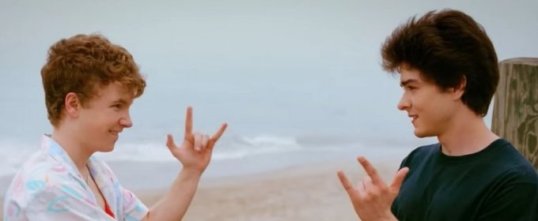
Now, just to make clear, A Tale Of Two Coreys does not name names. There’s a scene in which a Hollywood executive leads Corey Haim (played, as a teenager, by Justin Ellings) into a trailer but the man is never identified by name and the scene is shot in such a way that we don’t even get a clear look at his face. Later, both Feldman (played, as a teen, by Elijah Marcano) and Haim discuss some of the new “friends” that they’ve acquired since becoming stars. Again, no names are dropped but it’s not hard to read between the lines. It’s not until they’re adults and reality show co-stars that Feldman (now played by Scott Bosely) and Haim (Casey Leach) discuss what happened to them when they were younger.
Of course, famous people do pop up throughout the film. Brandon Howard plays Michael Jackson in two scenes. Jennifer Peo plays Carrie Fisher, who is seen telling Feldman to get off the drugs. If you watch carefully, an actor playing Tom Hanks shows up in the background of one scene. He doesn’t get any lines but he certainly does get annoyed with Feldman.
The film continually returns to the theme that both Feldman and Haim were, essentially, dropped into the middle of Hollywood without any supervision. Feldman’s parents (Ashley Scott and Patrick Muldoon) are portrayed as being leeches, more concerned with the money that Feldman could bring than Feldman’s mental or emotional health. On the other hand, Haim’s parents (Paula Lindberg and Brian Huskey) are portrayed as being loving but hopelessly naive about the world that their son has entered. The end result is that neither set of parents were there to provide any sort of guidance to their children.
It’s a deeply melancholy portrait of fame with Haim and Feldman quickly going from being innocent children to jaded, coke-snorting adolescents to eventually becoming adults who still haven’t come to terms with past. Admittedly, their stardom was a little before my time so I can’t really attest as to whether the film is a hundred percent accurate but director Steven Huffacker kept the story moving at a steady and tragically inevitable pace and all four of the actors who played Feldman and Haim did a good job of bringing their characters to life.










 Through the Shattered Lens