What’s an Insomnia File? You know how some times you just can’t get any sleep and, at about three in the morning, you’ll find yourself watching whatever you can find on cable or streaming? This feature is all about those insomnia-inspired discoveries!
If you were struggling to get to sleep last night, you could have jumped over to Tubi and watched the 1989 film, Listen to Me.
Listen to Me tells the story of two poor but ambitious teenagers who receive debate scholarships to fictional Kenmont University. Monica Tomanski (Jami Gertz) is a liberal from Chicago. Tucker Muldowney (Kirk Cameron) is a “shit-kickin’ conservative” who is from Oklahoma. Despite their different political beliefs, Monica and Tucker find themselves assigned to be debate partners by the college’s legendary debate coach, Charlie Nichols (Roy Scheider).
At Kenmont, debate is as popular and as important as football is at some other colleges. The entire student body shows up to listen to the debates and to cheer for their side. It’s like Oxford, if Oxford was solely populated by 80s teen actors. (Seriously, there’s a lot of familiar faces wandering around that campus.) Charlie is convinced that this could be the year that he wins the national tournament. Gar McKellar (Tom Quill), the troubled son of Sen. McKellar (Anthony Zerbe), is one of the best debaters in the country. However, Gar fears that winning a national debate tournament will somehow lead to him going into politics. He wants to be a writer and he’s got a self-destructive streak. As you probably already guessed, this all leads to Tucker and Monica debating the arrogant Harvard team in front of the Supreme Court. The topic? Whether or not Roe v Wade should be overturned….
A few thoughts on Listen to Me:
Kirk Cameron’s “Oklahoma” accent is, without a doubt, the worst that I have ever heard in any film ever made. When I was growing up, I did occasionally live in Oklahoma. I still visit Oklahoma frequently. Yes, people in Oklahoma do have an accent. However, that accent sounds nothing like whatever Cameron was trying to do in this film. Whenever Kirk Cameron speaks, he sounds less like an Oklahoma farm boy and more like the tubercular son of a once proud New Orleans family. Beyond the accent, Cameron just isn’t believable as a quick-on-his-feet debate champ. He overplays when he should underplay and underplays …. well, I can’t think of a single scene that he underplays. It’s just not a good performance.
Jami Gertz is a bit more convincing as Monica. (It perhaps helps that Gertz, like her character, is actually from Chicago.) But, for the majority of the film, Monica is seriously underwritten. She’s a straw feminist, who largely exists so that Tucker can tell her to loosen up.
As for the other debaters, we don’t learn much about them. That’s a shame because some of them — like Amanda Peterson’s crippled debater — seem like they would be much more interesting to follow than either Gar, Tucker, or Monica. It’s a crime to cast Peter DeLuise as an Ivy League debater without giving us a chance to actually see him debate.
Roy Scheider gives the best performance in the film, which isn’t really a surprise. That said, Charlie Nichols was a terrible debate coach, one whose entire philosophy seemed to be based on teaching his debaters to make loud and emotional arguments and hope that the judge doesn’t understand how competitive debating is supposed to work.
Would the Supreme Court really judge a national debate tournament?
As for the debates themselves, it’s hard not to notice that all of the arguments are emotional. There’s little talk of evidence or research or anything else. Instead, the characters talk about how abortion has personally effected them. (The Harvard team is portrayed as being snooty villains when they dare to bring up an actual clinical study about abortion.) Admittedly, I did not do college debate but I was involve with Speech and Debate in High School and, when it came to debate, I always tried to get by with the same cutesy techniques that everyone uses in this film. If the judge was a man, I definitely showed a little leg. If someone asked me about a study that disproved my argument, I’d respond by citing a fictional study that disproved their study. I was the Queen of Dramatic Personal Anecdote! And I rarely made it out of the preliminary rounds because most judges — the good ones, at least — were able to tell that I hadn’t bothered to do my homework and that I was just trying to skate by on charm and wit. My coach often told me that if I would actually do the work, I’d probably make it to the semis and beyond but …. eh, doing the work was just too much …. well, work. So, you can imagine my surprise when Tucker and Monica used the same techniques that I used and were declared to be the best debaters in the country!
Seriously, I was robbed!
Listen to Me is a very 80s film, right down to the debate montages and the explanations about why Roe v Wade would never actually be overturned. It tries to do for college debate what numerous other college-set films did for football an binge-drinking. Unfortunately, the film’s intentions are defeated by a didactic script and a miscast lead. It feels considerably longer than 100 minutes, which might help you with your insomnia.
“Bless me, Father, for I have sinned. I had the power… and I tried to prevent what I saw.” — Johnny Smith
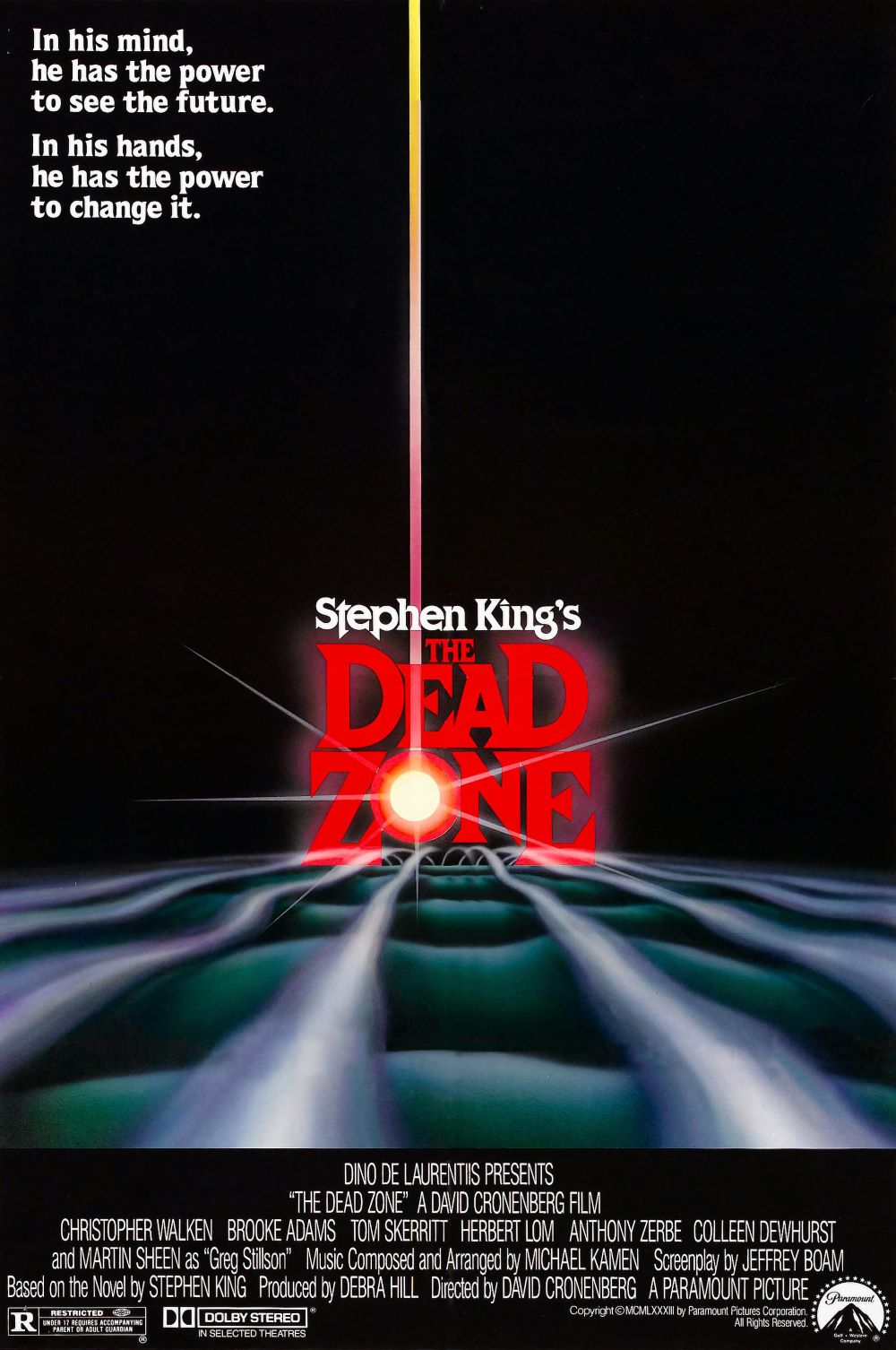
In 1983, David Cronenberg adapted Stephen King’s The Dead Zone with a distinctive emphasis on mood, morality, and psychological depth rather than traditional horror spectacle. The film follows Johnny Smith (Christopher Walken), a small-town schoolteacher whose life transforms irrevocably after a traumatic car accident leaves him in a five-year coma. Upon awakening, Johnny discovers he possesses psychic abilities that allow him to see the past and future by touch. Rather than a gift, this power becomes a heavy burden, isolating him and forcing him into wrenching moral choices.
Cronenberg’s direction is meticulous and deliberately restrained. The film’s muted color palette and stark winter landscapes visually echo Johnny’s emotional isolation and the fragility of human existence. His careful, often gliding camera movements create a mounting sense of quiet dread, while minimalistic sound design underscores moments of revelation with haunting subtlety. This subdued style elevates the film’s psychological impact, transforming it into a thoughtful and melancholy meditation on the cost of harrowing knowledge.
Significantly, The Dead Zone marks a departure from Cronenberg’s signature body horror. Instead of the grotesque physical transformations and visceral mutations that characterize much of his other work, here Cronenberg turns inward. The real horror lies in the malleability of the mind and the elusive nature of perception—how reality, memory, and the future are unstable constructs that can shift and fracture under psychic strain. This thematic focus on the impermanence and distortion of mental reality touches on some of Cronenberg’s deepest artistic fascinations.
The restrained treatment of body horror in The Dead Zone previews the director’s later, more psychologically driven films such as A History of Violence, Eastern Promises, and A Dangerous Method, where character studies and narrative depth take precedence over startling visuals. In this early pivot, Cronenberg demonstrates that his mastery lies not only in visual spectacle but in probing the profound emotional and moral dilemmas faced by his characters. The vision-focused horror here is cerebral and grounded, rooting supernatural phenomena in human frailty and ethical complexity.
Christopher Walken’s nuanced portrayal is the emotional heart of the film. He captures Johnny’s vulnerability, weariness, and profound solitude, portraying a man burdened by a cursed knowledge that isolates him from the world. Martin Sheen plays Greg Stillson, the ambitious and morally bankrupt politician whose rise Johnny must foretell and who embodies the film’s central threat. The supporting cast, including Brooke Adams as Johnny’s lost love Sarah and Tom Skerritt as Sheriff Bannerman, delivers compelling and authentic performances that humanize the film’s intimate, small-town environment.
Several changes from King’s novel sharpen the film’s thematic focus. The novel’s sprawling plot, including a serial killer subplot and a brain tumor storyline symbolizing Johnny’s mortality, is pared down or omitted. Despite this trimming, the serial killer element retained in the film remains chilling and effective. It highlights the darker repercussions of Johnny’s psychic gift and injects a tangible sense of dread, reinforcing the psychological weight Johnny carries. This subplot grounds the supernatural within a disturbing reality, illustrating the violent and tragic circumstances Johnny must grapple with as part of his burden.
The concept of the “dead zone” itself shifts in meaning. Originally, the term referred to parts of Johnny’s brain damaged by the accident, blocking certain visions. Cronenberg reinterprets it as a metaphor for the unknown and unknowable parts of the future—the gaps in psychic clarity that allow for free will and change. This subtle shift reshapes the narrative toward a more ambiguous, hopeful meditation on destiny and human agency.
Compared to King’s novel, Cronenberg’s Johnny is more grounded and isolated. The novel frames Johnny’s struggle within a broader spiritual and fatalistic context, highlighted by the looming presence of a brain tumor and a nuanced exploration of hope versus resignation. The film, by contrast, focuses on the emotional and moral fatigue induced by Johnny’s psychic gift, emphasizing his loneliness and reluctant responsibility rather than supernatural destiny.
Walken’s restrained, haunting performance strips away mythic grandeur to reveal a deeply human character. The film’s narrowed narrative tightens focus on Johnny’s internal anguish and his difficult ethical choices, making his plight intimate and richly relatable.
On a thematic level, The Dead Zone contemplates fate, free will, and sacrifice. Johnny’s psychic abilities act as a draining, almost chthonic force, transforming him into a reluctant prophet who is tasked with intervening in grim futures at great personal cost. The film’s bleak winter setting visually reflects Johnny’s alienation, while its deliberate pacing highlights the exhaustion and heartbreak that comes with such knowledge.
Ultimately, Cronenberg’s The Dead Zone goes beyond supernatural thriller conventions. It is a profound meditation on empathy, sacrifice, and the human condition—where the greatest horrors are internal, and the cost of knowledge is both psychic and emotional. Johnny Smith emerges as a tragic, flawed figure wrestling with unbearable burdens.
Cronenberg’s direction and the impeccable performances make The Dead Zone a standout in King adaptations. The film’s enduring impact lies in its rich thematic texture, its moral ambiguity, and its unflinching exploration of human frailty, all conveyed through a director shifting skillfully from physical body horror to psychological and existential terror. The film remains as haunting and resonant now as it was upon release, a testament to the synergy of Cronenberg and King’s extraordinary talents.
59 years ago today, the first episode of Star Trek aired in America.
There’s been a lot of different StarTrek shows and crews over the decades. I have to admit that I’ve always preferred the Original Series, with Kirk sleeping with every alien he met, McCoy and Spock bickering about logic, and Scotty warning that the engines can’t take much more. The Next Generation was strong as well, especially in the later seasons. The subsequent series have been hit-and-miss for me.
I was born long after the Original Series went off the air so, like a lot of people, my real introduction to Star Trek came through watching the films. This weekend, I sat down and watched all fourteen of the Star Trek films in order, from The Motion Picture to Section 31. Here are my thoughts.
Star Trek: The Motion Picture (1979, directed by Robert Wise)
In the first Star Trek film, Voyager returns to Earth, now known as V’ger. James T. Kirk (William Shatner) returns to the Enterprise with his old crew and takes command from Decker (Stephen Collins). Spock (Leonard Nimoy) returns from Vulcan is not happy about it.
Directed by Robert Wise, the first Star Trek film feels out-of-place amongst the films that followed it. It’s long and slowly paced and it doesn’t have the sense of humor that runs through the best of the films featuring the original cast. The film favors Kirk and Spock, with the rest of the original cast being largely used as bit players. Even the costumes are different from the uniforms worn in the later films, making Star Trek: The Motion Picture feel like an entry from an alternate universe.
Despite mixed review, Star Trek: The Motion Picture made the most money of any of the pre-reboot films at the box office. Because the film itself was so expensive, it was still judged to be a box office disappointment. The Star Trek films would continue but in a new direction.
Star Trek II: The Wrath of Khan (1982, directed by Nicholas Meyer)
Featuring a character-driven script, exciting action, the best villain in the history of the franchise, and an ending that will bring tears to the eyes of the most cynical viewer, The Wrath of Khan is the film that set the standard for the Star Trek films that would follow.
Ricardo Montalban, recreating a character that he originally played in the television series, is a compelling villain as the vengeance-driven Khan. Montalban and William Shatner make for perfect rivals, two sides of the same coin. At the same time, the other members of the original cast all get their moments to shine, especially Walter Koenig as Chekhov. Kirstie Alley is the sexist Vulcan to ever appear in the franchise and even the revelation that Kirk has a son is handled effectively. Kirstie Alley, Bibi Besch, and Merritt Butrick all fit in with the original crew.
But the thing everyone remembers about The Wrath of Khan is the death of Spock. Even though the movie features plenty of hints that Spock will return (including his command of “Remember” to McCoy), it’s impossible not to get emotional when Spock sacrifices himself for the crew. “I have always been your friend.” To quote George Costanza, that was hell of a thing when Spock died. In that scene, Leonard Nimoy shows that he was the (logical) heart of the franchise. Just as Spock brought out the best in the rest of the crew, Nimoy brought out the best in his co-stars. Shatner was never better than when he was mourning Spock.
Star Trek III: The Search For Spock (1984, directed by Leonard Nimoy)
Spock’s back! It’s not a surprise. I think everyone knew, at the end of Wrath of Khan, that the Genesis Project would bring back Spock. Star Trek III isn’t bad. Christopher Lloyd reminds us of how brutal the Klingons were before their Next Generation makeover. The self-destruction of the Enterprise is a powerful moment. I just wish that a film about Spock being given a new life hadn’t featured so much death. Both the revelation that David Marcus tampered with the Genesis Project and his subsequent death feel like missteps. Robin Curtis takes over the role of Saavik and Kirstie Alley is very much missed. DeForest Kelley playing McCoy possessed by Spock was, for me, the highlight of the film.
Star Trek IV: The Voyage Home (1986, directed by Leonard Nimoy)
Returning home after rescuing Spock from the Genesis Planet, the Enterprise crew is instead sent back into the past so that they can bring two whales into the future. The Voyage Home might not be the best Star Trek film (that honor belongs to Wrath of Khan) but it is the most likable and the most entertaining. Every member of the cast gets something to do in 20th Century San Francisco. The film is full of classic moments, from Chekhov looking for the “nuclear wessels” to Scotty trying to speak to the computer. The moment with the punk on the bus is a crowd-pleaser. I always laugh at Spock’s “One damn minute, Admiral.” After the violence in The Search for Spock, The Voyage Home‘s humor, gentle sincerity, and emphasis on the efforts of the entire ensemble is a welcome development.
Star Trek V: The Final Frontier (1989, directed by William Shatner)
Leonard Nimoy got his chance to shine as the director of the previous two Star Trek films so William Shatner was allowed to direct The Final Frontier. The Enterprise crew is brainwashed by a religious fanatic (Laurence Luckinbill) who is also, improbably, Spock’s brother. Only Kirk is able to resist and confront the entity claiming to be God. “What does God need with a starship!?” Kirk demands. It’s such an obvious question that I can’t believe the entity didn’t already have an answer worked out.
The Final Frontier gets no respect and it was probably doomed as soon as Shatner was announced as director. Shatner also developed the story and it’s probably not surprising that the main theme is that Kirk was the only person on the Enterprise strong enough to not be brainwashed by the film’s fake God. Laurence Luckinbill gave a good performance as Sybok but this film really does feel like an unfortunate episode of the original television series.
Star Trek VI: The Undiscovered Country (1991, directed by Nicholas Meyer)
Star Trek VI featured the final appearance of the Original Series cast as a group and they get a send-off worthy of their legacy. Having been previously established as the Federation’s greatest enemies, the Klingons finally pursue peace. Just as only Nixon could go to China, only Kirk and the original Enterprise crew can go to the Klingons. This movie is what Star Trek was all about, with enough world-building and continuity for the hardcore fans and a story that was interesting enough to hold the attention of the casual viewers. By featuring the start of the era of peace between the Federation and the Klingons, this film also filled in some of the Next Generation‘s backstory. The Final Frontier was meant to be the final Star Trek film featuring any of the original cast and it would have been the perfect entry for Captain Kirk to go out on. Unfortunately, that didn’t happen.
Star Trek Generations (1994, directed by David Cason)
William Shatner meets Patrick Stewart as one Star Trek crew passes the torch to the new Star Trek crew. Malcolm McDowell is the latest villain with an ill-defined plan. Picard and Kirk team up to stop McDowell’s villain. They succeed but at the cost of Kirk’s life. As opposed to Spock’s death in Wrath of Khan, Kirk’s death feels pointless and tacked on for no reason other than to signify the arrival of The Next Generation to the films. Seeing Shatner and Stewart together is interesting. Stewart may have been the better actor but Shatner still dominates their scenes together. Not giving Kirk a better send-off was one of the franchise’s biggest sins.
Star Trek: First Contact (1996, directed by Jonathan Frakes)
After the disappointing Generations, Picard and his crew finally got a film worthy of them with First Contact. Not only do the Borg return but the crew goes back into their past and experience a key date in the history of the Federation. After being outshone by Shatner in Generations, Patrick Stewart takes control in this film, giving a multi-layered and commanding performance that still gives the rest of the cast room to shine. Director Jonathan Frakes not only handles the action well but he also shows that he understands what makes the characters click. This was, without a doubt, the best of the Next Generation films and one the best of the Star Trek films overall.
Star Trek: Insurrection (1998, directed by Jonathan Frakes)
Entertaining but forgettable, Insurrection features Picard pulling a Kirk and defying orders from from a superior officer (played by Anthony Zerbe) and going out of his way to save Data from being decommissioned. Insurrection feels like an extended episodes of the Next Generation television series and lacks the epic scale of First Contact. Under the direction of Jonathan Frakes, the ensemble is strong and watching them interact feels like spending time with a group of old friends. F. Murray Abraham and Anthony Zerbe make for effective villains.
Star Trek: Nemesis (2002, directed by Stuart Baird)
Just as the Original Series crew sought peace with the Klingons in The Undiscovered Country, the final Next Generation film finds Picard, Riker, and the rest seeking peace with the Romulan Empire. Tom Hardy plays a clone of Picard who is now the leader of the Romulans. Data sacrifices himself in a move that tries too hard to duplicate the death of Spock. Picard retires. Director Stuart Baird emphasizes action over the chemistry of the Next Generation cast and the end result is a disappointing finale that left critics and audiences underwhelmed.
Star Trek (2009, directed by J.J. Abrams)
I think people forget about what a big deal this Star Trek reboot was when it first came out. Today, people focus on things like Kirk being a Beastie Boys fan and they forget how exciting it was to see Chris Pine, Zachary Quinto, Karl Urban, Simon Pegg, Anton Yelchin, John Cho, and Zoe Saldana all effortlessly stepping into the roles of the younger versions of the original cast. The storyline is predictable and Eric Bana’s a bland villain but the scenes between Leonard Nimoy and Zachary Quinto were a reminder of how important Spock was and is to Star Trek.
Star Trek wasn’t perfect, of course. In retrospect, I think creating an alternate timeline was a mistake because it created a situation where, even if someone died, it was just an alternate version dying and not the version that audiences knew and cared about. The alternate timeline would also lead to one of the biggest missteps in the history of the franchise.
Star Trek Into The Darkness (2013, directed by J.J. Abrams)
After the surprising success, both critically and commercially, of his Star Trek reboot, J.J. Abrams. Robert Orci, Alex Kurtzman, and Damon Lindelof wasted most of that good will by messing around with one of the franchise’s most memorable characters.
There are some good things to be said about Star Trek Into The Darkness. I like the action sequences and the climatic battle in the film’s futuristic version of San Francisco. But casting Benedict Cumberbatch, of all people, as Khan is a misstep that can’t be overcome. That the movie brought back Khan instead of exploring “strange new worlds” exposed the weakness of Abrams entire reboot. For all the hype, did the Star Trek reboot actually have anything new or original to offer? The answer here seemed to be no.
Star Trek Beyond (2016, directed by Justin Linn)
The final (for now) Star Trek theatrical film featured a memorable villain in the form of Idris Elba and a plot that felt like it could have just as easily been an episode of the original series. In retrospect, the film is mostly memorable for featuring the announcement of the death of Ambassador Spock. (The film was released a year after the death of Leonard Nimoy.) The death of Spock, this time with no Genesis Project around to bring him back, makes this installment feel like right place to end the films. For many of us, Nimoy was Star Trek.
Stark Trek: Section 31 (2025, directed by Olatunde Osunsanmi)
Though there have been many subsequent televisions shows, there hasn’t been a Star Trek theatrical release since 2016. The next installment has been in pre-production limbo for nearly ten years. (Quentin Tarantino was supposedly attached at one time.) Instead of coming to theaters, the latest Star Trek movie came to Paramount Plus.
I debated whether or not to include Section 31 in this list, both because it was a “made-for-TV” movie and also because it was so bad that I think most Star Trek fans would rather forget about it. A mediocre heist film that wastes star Michelle Yeoh and which doesn’t feel like it belongs in the Star Trek universe, Section31 may still represent the way forward for the franchise. With theaters having never recovered from the COVID shut-downs and more and more people preferring to stream their entertainment at home, the future of the Star Trek films could very well be a collection of assembly line Paramount Plus movies.
Finally, Case turned me onto this short film:
765874: Unification (2024, directed by Carlos Baena)
A collaboration between Otoy, a VFX company, and The Roddenberry Archive, with support from Paramount, 765874: Unification is a 10-minute short film that imagines Kirk meeting Spock in the afterlife. Shatner returns as Kirk, de-aged with CGI. Just as Kirk and Spock were friends in the film, the same was true of Shatner and Nimoy in real life. (You only have to compare Nimoy’s comments about Shatner with George Takei’s endlessly bitter takes to see what true class actually is.) This short film gives both characters the finale that they deserved.
It’s possible that we may never see another true Star Trek film. Most of the original cast is gone now. Patrick Stewart will always be Picard but even he is now approaching 90. But whatever the future may hold, I’m happy for the films that Star Trek gave us.
Every Monday night at 9:00 Central Time, my wife Sierra and I host a “Live Movie Tweet” event on X using the hashtag #MondayMuggers. We rotate movie picks each week, and our tastes are quite different. Tonight, Monday June 2nd, we are showing FAREWELL, MY LOVELY (1975) starring Robert Mitchum, Charlotte Rampling, John Ireland, Sylvia Miles, Anthony Zerbe, Harry Dean Stanton, Jack O’Halloran, Joe Spinell, and Sylvester Stallone.
FAREWELL, MY LOVELY finds Los Angeles private eye Philip Marlowe being hired by paroled convict Moose Malloy to find his girlfriend Velma, a former seedy nightclub dancer. All kinds of intrigue ensues as Robert Mitchum puts his droopy-eyed, world-weary spin on the famous detective!
So join us tonight for #MondayMuggers and watch FAREWELL, MY LOVELY! It’s on Amazon Prime. The trailer is included below:
Here at The Shattered Lens, we’re celebrating Clint Eastwood’s birthday on May 31st. I decided to revisit his 1999 film, TRUE CRIME.
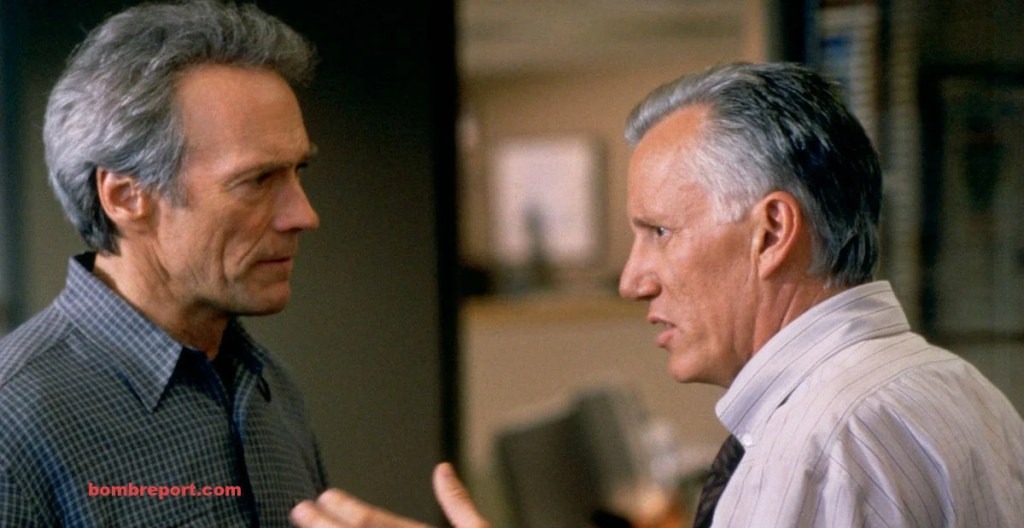
Clint Eastwood directs and stars as ace journalist, Steve Everett, who also happens to be a bad friend, a terrible dad, and an even worse husband. Literally the only thing that he’s got going for him is his “nose,” his ability to sniff out a story where no one else can. Even that has begun to fail him, mostly due to his recents bouts with alcoholism, which he seems to somewhat have a handle on at the time of this story. When a young, beautiful colleague tragically passes away in an auto accident, Steve is given her previous assignment to cover the execution of convicted murderer Frank Beechum (Isaiah Washington). Not the kind to write a human interest “puff piece” like the Oakland Tribune is wanting, Everett begins digging into the past and pretty soon that nose of his starts telling him that Beechum is a victim of circumstantial evidence. Despite his editor Bob Findley’s (Denis Leary) objections, he’s able to convince his newspaper boss Alan Mann (James Woods) to let him dig deeper into the story. As he tries to juggle his myriad personal problems with his growing belief in Beechum’s innocence, Everett is also facing a clock that is ticking down to the midnight execution. Will he be able to find the crucial piece of evidence that will set Beechum free?
TRUE CRIME appears to be somewhat of a forgotten Clint Eastwood film. I saw it at the theater when it came out in 1999, but it was not financially successful, only bringing in $16 Million at the box office. Regardless of that, I still love the film. It’s certainly not perfect. It’s probably too long, Beechum is probably too angelic after being “born again,” and the resolution may be a little unrealistic, but I still enjoyed every second of it. One of the coolest things about Clint Eastwood is his willingness to play such flawed men on screen, yet we still love him. He’s great in this film! Anyone who’s read much of my work knows that my love of actor James Woods goes back to being in junior high and renting his movies BEST SELLER and COP. It’s such a treat seeing the legendary pair on screen together even if Woods’ role is sort of a glorified cameo. Woods is hilarious in his limited screen time. My last shout out is to Isaiah Washington as the innocent man who’s about to be put to death. After all these years and appeals, he’s accepted his fate, but the scene where he tells Everett his story and Everett tells him that he believes he’s innocent is so powerful. Add to that Washington’s scenes with his wife and daughter, and I was very much emotionally invested in this film. Washington’s performance was key to the film working, and he’s great!
Overall, TRUE CRIME is a film that takes its sweet time, but it ultimately tells a tense, engrossing story that ratchets up the tension to 10 prior to its last second resolution. I consider it very underrated and highly recommend it. I’ve included the trailer below:
Welcome to Late Night Retro Television Reviews, a feature where we review some of our favorite and least favorite shows of the past! On Thursdays, I will be reviewing Highway to Heaven, which aired on NBC from 1984 to 1989. The entire show is currently streaming on Freevee and several other services!
This week …. it’s Halloween!
Episode 2.5 “The Devil and Jonathan Smith”
(Dir by Michael Landon, originally aired on October 30th, 1985)
It’s Halloween and Mark Gordon has got himself in some trouble.
Left alone while Jonathan helps a guy learn that gambling is never a good idea, Mark accidentally runs over a kid. The child is taken to the hospital in critical condition. Though Mark is told that the accident was not his fault, he still feels guilty and remarks to one doctor (Anthony Zerbe) that he would even give up his own soul for the child to get better. And wouldn’t you know yet — suddenly, the child gets better!
It turns out that the doctor wasn’t a doctor at all. He was Jabez Stone, a bookstore owner who works for the Devil (played, with two horns on his head, by Michael Berryman). Jabez explains that unless Mark holds up his end of the bargain, the child will die. He gives Mark a contract to sign, stating that he will give his soul to the Devil at the end of Halloween. Without Jonathan around to advise him, Mark signs the contract.
When Jonathan does finally return from his mission, he’s not happy to hear about what Mark has done. Jonathan explains that he can’t just order Jabez to destroy the contract. Instead, he’s going to have to somehow convince Jabez to give him the contract. In short, Jonathan is going to have to pull a con job. Since he’s an angel, Jonathan is not allowed to lie or steal. But there is a con artist named CJ Barabbas (Conrad Janis) who might be willing to help.
Or, CJ might be planning on tricking Jonathan into surrendering his own soul to Devil! As CJ tells Jabez, he would be willing to do anything to make sure he got a cushy office job if he should happen to end up in Hell. Is CJ planning on betraying Jonathan or is it just another part of the con?
Well, you can guess the answer. We’re only in the second season of a five-season show and, if Jonathan lost his soul, that would make the rest of the series kind of awkward. There’s never any doubt that CJ is playing a long con on Jabez and the Devil and it’s actually pretty easy to guess just how exactly he’s going to pull it off. This isn’t The Sting. It’s Highway to Heaven.
That said, this was a fun episode. Michael Berryman and Anthony Zerbe both seemed to be having a ball playing such cartoonishly evil characters and Conrad Janis was actually rather charming in the role of CJ Barabbas. Season 2 has gotten off to an uneven start but this episode was both humorous and, in its way, kind of touching. Landon and French were close friends in real life and that friendship comes through as Jonathan tries to keep Mark from spending an eternity in Hell.
Next week, Jonathan teaches a bunch of factory workers a lesson about pollution!
In 1978, KISS appeared to have it all. The band was famous for both their makeup and their anthemic stadium rock. They had just released not only a new studio album but also four solo albums. They had starred in their own Marvel comic and gained notoriety for supposedly allowing their blood to mixed in with the comic’s ink. Teenagers loved KISS and parents and religious leaders feared that the band’s name stood for Knights In Satan’s Service. KISS had everything except for motion picture stardom.
KISS Meets The Phantom Of The Park was supposed to change that. The film starred Anthony Zerbe as Abner Devereaux, an engineer and an expert at animatronics who loses his job at Magic Mountain and seeks revenge by using robot versions of KISS to drive the audience of their concert to riot. Fortunately, the real members of KISS are not just rock stars but also alien beings who descend from the heavens and shoot lightning bolts from their eyes. (Gene Simmons can breathe fire.) The real KISS isn’t going to allow their fan to be manipulated by a robot version of the band, which leads to a battle between KISS and the robots that protect Abner’s underground lair.
KISS Meets The Phantom of the Park aired on NBC on October 28th, 1978. It was later given a theatrical release in Europe, where it was re-edited and retitled Attack of the Phantom. Since then, it has become a very difficult film to see. (On Amazon, old VHS copies go for several hundred dollars.) One reason why the movie is so hard to see is because the members of the KISS hated the movie and felt that they were portrayed as being clowns instead of super heroes. Even though the members of the band have since mellowed out about the film (with Gene Simmons suggesting it should be viewed on a double bill with Plan 9 From Outer Space), KISS Meets The Phantom Of The Park is still a film that is more talked about than actually watched.
While looking for clips of the movie on YouTube, I came across an upload of the entire film. The only problem was that all of the dialogue was dubbed into German and that’s not a language that I speak. Still, figuring that you have to take your opportunities when they’re available, I decided to watch. I figured that the dialogue might not actually be that important and it wasn’t. I was able to follow the plot just fine. (The only weird thing about watching the move in German was listening to the members of the band speak in something other than a New York accent.) Fortunately, there’s actually more singing than talking in Kiss Meets The Phantom Of The Park and the songs are untouched and in English. KISS plays Magic Mountain in the film and they actually performed a real concert for filming. Those are real fans of the band going crazy whenever Gene Simmons sticks out his tongue.
The movie itself is definitely a product of its time and not meant to be taken seriously. The members of KISS are both aliens that descend from the heavens and rock musicians and they are never seen without their makeup. Even when they’re hanging out at a hotel pool, they are in full costume and they’re wearing their makeup. When the members of the band enter the Phantom’s underground lab, they have to fight a series of very 70s robots, including some that know karate and two who have lightsabers. For better or worse, it’s a very silly move that epitomizes an era. The special effects are cheesy, the members of the band often look straight at the camera, and the rest of the cast does what they can with what they’ve been given. Anthony Zerbe plays the Phantom with a hint of empathy while Deborah Ryan is the ingenue who searched for her missing boyfriend while Beth plays on the soundtrack. Keep an eye out for Brion James, playing a security guard.
Overall, the band probably would have been smarter to just release a concert film but then the rest of us wouldn’t have the fun of watching Paul Stanley face off against a robot version of Bruce Lee. KISS MeetsThe Phantom of The Park is worth watching at least once, even in German!
During the lawless day of the old west, a drifter named Roy Bean (Paul Newman) wanders into the desolate town of Vinegaroon, Texas. When he enters the local saloon, he meets the vagrants who run the town. They beat him, they rob him, and they tie him to the back of his horse and leave him to die.
Bean, however, does not die. Instead, he’s nursed back to health by a beautiful young woman named Maria Elena (Victoria Principal). Carrying a gun, Bean reenters the saloon and promptly kills nearly everyone who previously attacked him. (“I’m not done killing you yet!” Bean yells at one fleeing woman.) Bean sits down in front of the saloon and waits for justice. Instead, he’s visited by a lecherous traveling preacher (Anthony Perkins), who buries the dead and gives Bean absolution. Bean declares that he is now the “law of the West Pecos.” As the preacher leaves, he looks at the audience and says that he never visited Bean again and later died of dysentery in Mexico. He hasn’t seen Bean since dying so the preacher is sure that, wherever Bean went, it wasn’t Heaven.
Judge Roy Bean dispenses rough and hard justice from his saloon and renames the town Langtry, after the actress Lillie Langtry. Bean has never met Langtry or even seen her perform but he writes to her regularly and pictures of her decorate the walls of his saloon. Bean hires outlaws to serve as his town marshals and sentences prostitutes to remain in town and marry the citizens. Lawbreakers are left hanging outside of the saloon. Bean enters into a common law marriage with Maria and, for a while, they even own a bear, who drinks beer and helps Bean maintain order in the court. Bean may be crazy but his methods clean up the town and Langtry starts to grow. As Langtry becomes more civilized and an attorney named Arthur Gass (Roddy McDowall) grows more powerful, it starts to become apparent that there may no longer be a place for a man like Judge Roy Bean.
The real-life Judge Roy Bean did hold court in a saloon and he did name the town after Lilly Langtry. It’s debatable whether or not he was really a hanging judge. Because he didn’t have a jail, the maximum punishment that he could hand out was a fine and usually that fine was the same amount of however much money the accused had on him at the time of his arrest. Because of his eccentricities and his reputation for being the “only law west of the Pecos,” Roy Bean became a legendary figure. The Life and Times of Judge Roy Bean acknowledges from the start that it’s not a historically accurate, with a title card that reads, “Maybe this isn’t the way it was… it’s the way it should have been.”
Based on a script by John Milius and directed by Hollywood veteran John Huston, The Life and Times of Judge Roy Bean is one of the strangest westerns to ever be released by a major studio. Featuring multiple narrators who occasionally speak directly to the camera, The Life and Times of Judge Roy Bean is an episodic mix of low comedy, graphic violence, and syrupy romance. (The film’s sole Oscar nomination was for the song that played over scenes of Bean and Maria going on a romantic picnic with their pet bear.) Familiar faces show up in small roles. Along with Perkins and McDowall, Tab Hunter, Ned Beatty, Jacqueline Bissett, Ava Gardner, and Anthony Zerbe all play supporting roles. Even a heavily made-up Stacy Keach makes an appearance as an albino outlaw named Bad Bob.
Jacqueline Bisset in The Life and Times of Judge Roy Bean
Milius has gone on the record as calling The Life and Times of Judge Roy Bean a “Beverly Hills western” and he has a point. He envisioned the script as starring Warren Oates as a less likable and much more morally ambiguous version of Judge Roy Bean and he was not happy that his original ending was replaced by a more showy pyrotechnic spectacle. Milius envisioned the film as a low-budget spaghetti western but Huston instead made a Hollywood epic, complete with celebrity cameos and a theme song from Maurice Jarre and Marilyn Bergman. Milius said that his experience with The Life and Times of Judge Roy Bean is what led to him deciding to direct his own films.
Again, Milius has a point but John Huston’s version of The Life and Times of Judge Roy Bean has its strengths as well. Though he may not be the madman that Milius originally envisioned, Paul Newman gives a good, grizzled performance as Roy Bean and the role served as a precursor for the type of aging but determined characters that Newman would specialize in during the final phase of his career. Due to its episodic structure, the film is uneven but it works more often than it doesn’t. The chaotic early scenes reflect a time when the west was actually wild while the later scenes are more cohesive, as society moves into Langtry and threatens to make formerly indispensable men like Roy Ban obsolete. Even the cameo performances fit in well with the film’s overall scheme, with Anthony Perkins standing out as the odd preacher. Finally, the young Victoria Principal is perfectly cast as the only woman that Roy Bean loved as much as Lily Langtry.
Though it’s impossible not to wonder what Warren Oates would have done with the title role, The Life and Times of Judge Roy Bean is a good end-of-the-west western.
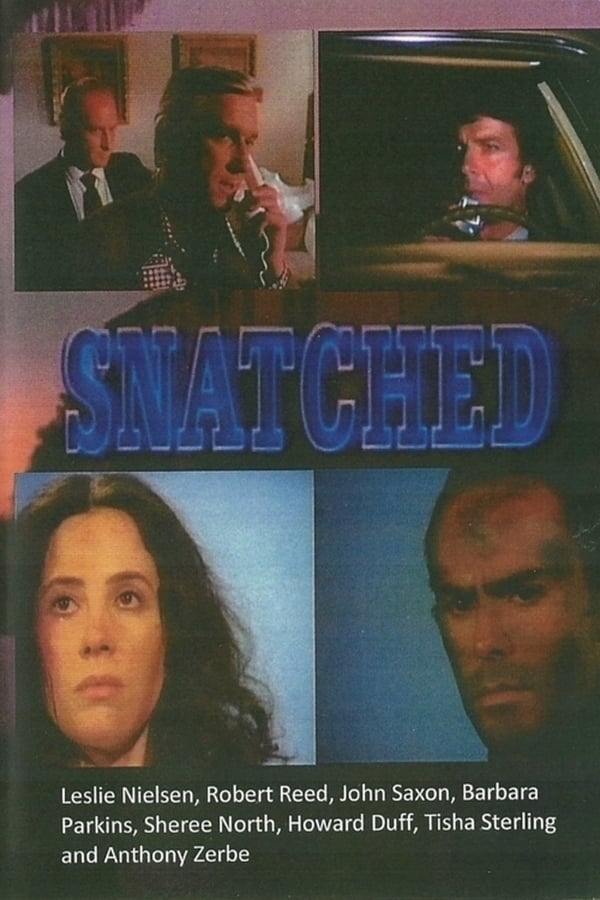
Three women have been kidnapped and are being held prisoner in a lighthouse. Robin Wood (Tisha Sterling), Kim Sutter (Sheree North), and Barbara Maxvill (Barbara Parkins) are married to three wealthy men and the kidnappers (one of whom is played by the great Anthony Zerbe) assume that the husband will be willing to pay whatever is necessary to get back their wives. Paul Maxvill (John Saxon) and Bill Sutter (Leslie Nielsen!) are willing to put up the money but Duncan Wood (Howard Duff) scoffs at the idea of paying a million dollars just to see his adulterous wife again!
It sounds like the set-up for a Ransom of Red Chief-type of comedy but Snatched is actually a very serious and intelligent thriller, one that will definitely keep you on your toes as you try to keep up with who is working for who. Kim is diabetic and is growing weaker every minute that she’s being held in the lighthouse. Paul, Bill, and police detective Frank McCloy (Robert Reed) try to get Duncan to pay his share of the ransom but Duncan is convinced that his wife has been cheating on him and he refuses to pay for her. On top of that, it turns out that one of the wives might be in on the scheme. When she tells the kidnappers that she’s actually the one who came up with the plan, is she just trying to protect the other wives or is she telling the truth? It leads to betrayal and a surprisingly downbeat ending.
Snatched is a well-produced made-for-TV movie. The mystery will keep you guessing and the cast is made up of a collection of old pros. Leslie Nielsen, cast here long before he reinvented himself as a comedic actor, is especially good as Bill Sutter and John Saxon gives one of his better performances as Paul. Even Robert Reed gives a good performance. Snatched is a classic made-for-TV mystery.
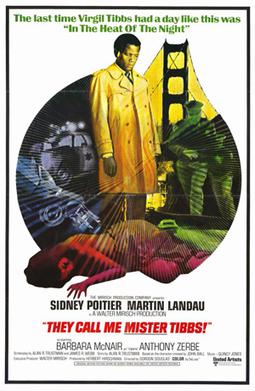
The 1970 police procedural, They Call Me Mister Tibbs!, opens with a murder in San Francisco.
A prostitute has been found dead in a sleazy apartment building and, according to witnesses, she was visited, shortly before her death, by the Reverend Logan Sharpe (Martin Landau). Rev. Sharpe is a prominent civic leader, an outspoken liberal who is a friend of the civil rights movement. Sharpe is currently at the forefront of a campaign to pass a city referendum that will add a “mini city hall” to every neighborhood and will help to fight against the gentrification of San Francisco. If Sharpe’s guilty, it will mean the death of the referendum.
Despite the fact that there’s a ton of evidence piling up against him and he kind of comes across as being a little bit creepy (he is, after all, played by Martin Landau), Rev. Sharpe insists that he’s innocent. Yes, he’s been visiting prostitutes but he’s not a client. No, of course not! Instead, Sharpe explains that he’s simply counseling them and praying for their souls. In fact, as far as Sharpe is concerned, this whole thing is just an attempt by the establishment to discredit his efforts to help the poor and underprivileged.
Heading up the investigation is a friend and supporter of Sharpe’s, Detective Virgil Tibbs (Sidney Poitier). That may seem like a good thing for Sharpe, except for the fact that Tibbs is an honest cop and he’s not the type to let friendship stand in the way of doing a thorough investigation. Tibbs admits that he supports Sharpe’s campaign and he wants the reverend to be innocent. But Tibbs is all about justice. Whether it’s teaching his son an important lesson about smoking or tracking down a potential serial killer, Virgil Tibbs is always going to do the right thing.
There are other suspects, all of whom are played by suitably sinister character actors. Anthony Zerbe plays a criminal who lived near the prostitute. Ed Asner plays her landlord, who may have also been her pimp. Is Sharpe being set up by the powers that be or is Tibbs going to have to arrest a man whom he admires?
They Call Me Mister Tibbs! was the second film in which Sidney Poitier played Virgil Tibbs. The first time he played the role was in 1967, when he co-starred with Rod Steiger in the Oscar-winning In The Heat of the Night. In that film, Poitier was a Philadelphia cop in the deep south who had to work with a redneck sheriff. In They Call Me Mister Tibbs!, Virgil is now working in San Francisco and he has to work the case on his own.
They Call Me Mister Tibbs! is a far more conventional film than In The Heat of the Night. Whereas In The Heat of the Night had a wonderful sense of place and atmosphere, They Call Me Mister Tibbs! could just as easily have taken place in Los Angeles, Phoenix, or even Philadelphia. With the exception of some slight profanity, They Call Me Mister Tibbs! feels more like a pilot for a TV show than an actual feature film. Perhaps the biggest problem with the film is that there’s no real surprises to be found within the film. You’ll guess who the murderer is within the first 10 minutes of the film and you’ll probably even guess how the movie will eventually end.
On the plus side, just as he did in In The Heat of the Night, Sidney Poitier brings a lot of natural authority to the role of Virgil Tibbs. He’s actually allowed to show a sense of humor in this film, which is something that the character (understandably) couldn’t do while he was surrounded by bigots and rednecks during his previous adventure. Virgil gets a few family scenes, where we watch him interact with his wife and his children. The scenes feel out of place but, at the same time, Poitier plays them well.
With Sharpe attempting to get his referendum passed and the possibility that riots could break out if Sharpe is indeed guilty of murder, there’s a slight political subtext to They Call Me Mister Tibbs! Sharpe’s argument that he was being set up by the establishment undoubtedly carried a lot of weight in 1970. Still, this is ultimately a shallow (if adequately entertaining) film that, for the most part, is only made memorable by Poitier’s commanding performance.





 Through the Shattered Lens