Since today is John Woo’s birthday, it only feels appropriate that today’s song of the day should come from John Powell’s score for Face/Off.
Since today is John Woo’s birthday, it only feels appropriate that today’s song of the day should come from John Powell’s score for Face/Off.
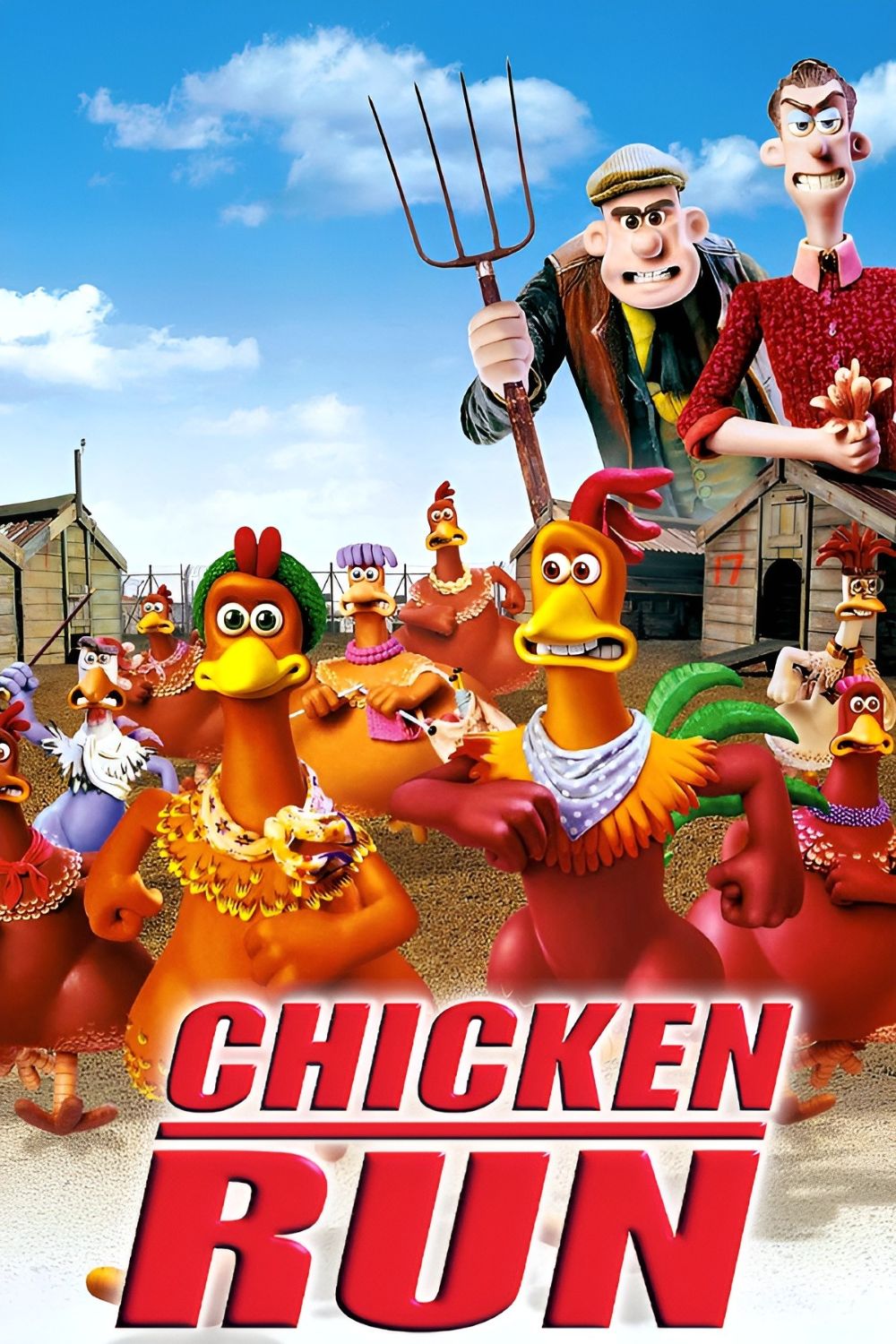
“I don’t want to be a pie. I don’t like gravy.” — Babs
Chicken Run is one of those animated films that seems simple at first glance: a bunch of chickens want to escape a farm before they become pies. That basic premise could have easily turned into a lightweight family comedy full of barnyard jokes and little else. Instead, the 2000 DreamWorks and Aardman production, directed by Peter Lord and Nick Park, plays like a miniature war movie, prison-break thriller, romance, survival adventure, and pitch-black satire all at once. It is consistently funny, but its comedy works because the stakes feel real. These chickens are not merely trying to get away from an annoying farmer; they are trying to survive an industrial system that sees them as disposable raw material.
The first thing that makes Chicken Run so memorable is how completely it commits to its central influence: John Sturges’s The Great Escape. Ginger, voiced with determined energy by Julia Sawalha, is essentially the Steve McQueen-like mastermind of a prisoner-of-war escape film, only without the motorcycle. She has attempted escape after escape from the Tweedys’ chicken farm, and every failure has made her more experienced, more stubborn, and more isolated from the flock. The farm itself is built and filmed like a prison camp: there are fences, watchtowers, guards, roll calls, surveillance, punishments, and a constant feeling that someone is always being watched. The chickens dig tunnels, build plans, assign tasks, debate leadership, and struggle with morale in a way that directly echoes the Allied prisoners in The Great Escape.
That influence is not just a clever parody. It gives the movie a real sense of structure and urgency. Ginger is not a character who simply wishes for freedom; she is obsessed with earning it. Every failed attempt lands her in the punishment shed, a tiny isolated box that is funny in its exaggerated stop-motion form but also genuinely unpleasant. The sight of Ginger sitting alone in darkness, listening to the rain and realizing that another escape has failed, establishes that the movie is willing to make her suffering count. She is not invincible, and the other chickens do not always believe in her. That gives her eventual success much more weight than it would have had in a more conventional cartoon.
The Tweedys are also far more sinister than the average animated villains. Mr. Tweedy, voiced by Tony Haygarth, is the bumbling half of the pair: nervous, confused, increasingly paranoid, and convinced that “the chickens are organizing.” It is one of the best-running jokes in the movie because he is absolutely right, but his wife refuses to take him seriously. Melisha Tweedy, voiced by Miranda Richardson, is the truly frightening one. She is cold, practical, greedy, and almost entirely without sentiment. When egg production drops, she does not consider improving conditions for the chickens. She decides to turn them into chicken pies.
That is where Chicken Run goes into much darker territory than its cheerful clay-animation style initially suggests. The film’s narrative is built around factory farming, confinement, exploitation, and mass slaughter. The chickens know that when one of them stops laying eggs, she is not being taken somewhere safe. She is taken away to die. The scene involving the elderly hen Edwina is particularly unsettling because it is handled with restraint. The audience never sees explicit violence, but the implication is unmistakable. The sound of the axe, the sudden absence, and the reactions of the other chickens tell the whole story. It is dark material for a family film, but it is never treated as a joke. The humor comes from character behavior and British deadpan timing, not from dismissing the fear these animals feel.
That balance is one of the movie’s greatest achievements. Chicken Run is undeniably an animated comedy, filled with visual gags, eccentric voices, and absurdly specific bits of dialogue, yet its themes remain surprisingly grim. The Tweedys’ new pie machine is not just a goofy invention. It is a huge, mechanized symbol of industrialized cruelty, a machine designed to turn living creatures into products at maximum efficiency. Once it appears, the farm stops feeling merely like a prison camp and starts feeling like something even more horrifying: a production line where the inmates are literally the merchandise. The comedy makes the movie accessible, but the darker ideas give it teeth.
Aardman’s stop-motion animation is essential to that effect. The chickens are expressive in a way that never makes them overly cute or polished. Their handmade look gives them texture and personality. You can see the fingerprints of the animators in the characters’ surfaces, the uneven little details of the farm, and the tangible construction of the machinery. Modern computer animation can create smoother movement and more elaborate spectacle, but Chicken Run has a physical presence that is hard to replicate digitally. The fences feel like real fences. The mud feels like real mud. The pie machine feels enormous and dangerous because it is a real object built in miniature and photographed frame by frame.
The design also helps sell the film’s strange mix of bleakness and whimsy. The Tweedys’ farm is gray, muddy, cramped, and oppressive, a place where every chicken coop resembles a barracks. Beyond the fence is a bright green countryside that feels almost mythic to the trapped flock. Freedom is not some vague emotional idea; it is visible right there, just beyond reach. That visual contrast makes Ginger’s desperation easy to understand. She is not asking for luxury. She wants sunlight, open space, and the ability to live without being counted, confined, or killed for failing to produce enough eggs.
Mel Gibson’s Rocky Rhodes enters the story as the possible answer to Ginger’s problem. He is introduced as a flying American rooster who crashes into the farm like a larger-than-life war hero. His nickname, “the Lone Free Ranger,” and his exaggerated confidence make him feel like a parody of classic American movie masculinity. Rocky is all swagger, charm, and improvised survival instinct, which makes him a good contrast to Ginger’s disciplined, strategic personality. He tells the chickens he can teach them to fly, and the entire farm becomes invested in the idea even when the plan seems impossible.
Rocky works because the film does not make him a flawless hero. He is entertaining and ultimately brave, but he is also a fraud. His supposed ability to fly is part of a circus act, and he has escaped captivity before by using a human-operated catapult rather than his own wings. When the truth comes out, it hurts because the chickens have placed their hope in him. Ginger especially feels betrayed, not only because Rocky lied but because she allowed herself to believe that someone else might finally have the answer. Their relationship has a nice edge to it; it is not a sweeping romance so much as a reluctant partnership between two strong-willed survivors who approach freedom in completely different ways.
The sequences built around the escape plan show how much fun Lord and Park have with action-adventure movie language. While The Great Escape is the most obvious inspiration, certain moments have an energy reminiscent of Indiana Jones and the Raiders of the Lost Ark. There are close calls with traps, rapid-fire improvisation, looming mechanical threats, and escapes that depend on inches of timing. The climax inside and around the pie machine especially has that pulpy serial-adventure tension. Characters are dragged toward blades and conveyor belts, machinery rattles and groans, and plans collapse only for someone to invent another solution at the last possible second.
The final act also brings in a strong resemblance to The Flight of the Phoenix, particularly in the way the chickens turn desperation into engineering. The flock has to build a flying machine out of whatever materials they can gather, and the project depends on cooperation between characters with very different skills. Fowler, the elderly rooster voiced by Benjamin Whitrow, becomes crucial here. At first he seems like a pompous relic, forever talking about his days in the Royal Air Force and resisting Ginger’s modern plans. But his knowledge and experience eventually become useful. He gives the group the language, confidence, and organizational spark needed to turn their makeshift aircraft from a dream into something that might actually leave the ground.
Fowler is also one of the funniest parts of the film because he represents a specific kind of old British pride: stubborn, ceremonial, and deeply attached to the past. His stories about serving under “the old RAF” seem ridiculous until the moment the chickens actually need someone who understands the basic principles of flying. The film never makes him into a conventional action hero, but it allows him to reclaim some dignity. Like many of the supporting characters, he gets a small but satisfying arc.
The rest of the flock is memorable because they are not interchangeable background animals. Babs is sweet, distracted, and constantly knitting, but her innocent manner hides an ability to contribute when it matters. Bunty is blunt, cynical, and always ready to question Ginger’s plans. Mac, with her Scottish accent and technical expertise, is the group’s engineer and probably the person most likely to explain why a wild idea will not work. Fetcher, the rat, is opportunistic and cowardly, but he is useful in the way only a black-market scavenger can be. Even the two dimwitted farm dogs have personality, serving as comic obstacles while still making the farm feel guarded and dangerous.
What makes Chicken Run endure is that it never treats its characters’ freedom as a trivial goal. The story has jokes about eggs, knitting, chicken behavior, British class attitudes, and American bravado, but beneath all of that is a serious belief that a community can refuse to accept the role assigned to it. Ginger’s greatest strength is not that she has the perfect plan. It is that she refuses to surrender when every plan fails. Her determination eventually spreads to the other chickens, who stop seeing themselves as helpless inmates and start acting like participants in their own rescue.
The ending is satisfying because it feels earned. The chickens do not escape through luck alone, and they do not wait for a human to save them. They escape because they organize, take risks, use their talents, forgive one another’s failures, and choose action over resignation. That is a surprisingly powerful message for a film about clay chickens escaping a pie factory.
More than two decades later, Chicken Run still stands as one of the strongest animated films of its era. Its stop-motion craft remains beautiful, its jokes still land, and its references to The Great Escape, Indiana Jones and the Raiders of the Lost Ark, and The Flight of the Phoenix add an extra layer of fun for viewers familiar with those films. But it is the movie’s willingness to acknowledge fear, exploitation, and death beneath the comedy that makes it more than a clever genre spoof. Chicken Run is funny because it is inventive, but it is memorable because it understands that freedom means the most when it is hardest to achieve.
Since today is John Woo’s birthday, it only feels appropriate that today’s song of the day should come from John Powell’s score for Face/Off.
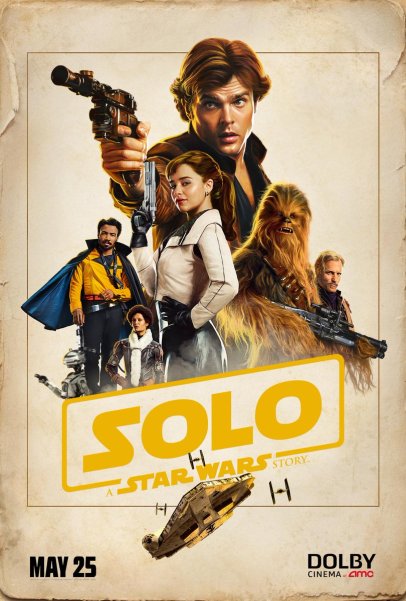 I feel like the Grinch, standing high on his mountain and looking down at all the Who’s in Whoville. Look at them, enjoying Solo – A Star Wars Story. Look at them, geeking over Chewie, the Millenium Falcon and the Kessel Run. Look at them smile at Lando Calrissian, still cool after these years. From where I stood, I had fun, but not nearly as much as they all did. Did we all watch the same film?
I think I’m a little jealous for not feeling that, and somewhat sad.
Granted, I didn’t outright despise Solo. I adore heist films like Thief and Heat. Perhaps it’s because the cast is fun to watch on-screen. You have the seedy side of the universe, and frankly, I’ve love to see more of it in future installments. This was closer to what I originally hoped to see with the Prequels, or even The Force Awakens. Not every Star Wars tale has to be an Empire vs. Rebellion / Jedi vs. Sith one (though lightsaber battles are always appreciated).
On the other hand, I had the same experience here that I did with Rogue One. The film almost lost me until it started to induce some nostalgia. With the exception of a few key scenes, I had a tough time feeling anything for most of this film. Boredom slapped me in the face for a little while here. Maybe I’ve just reached the age where I can put Star Wars on the shelf and maybe move on from it altogether. Judging by the number of people who chose to check their cell phones rather than watch the movie, I don’t think I’m alone there.
I initially bought a ticket for the 10:15pm Thursday IMAX showing, and then realized I wanted to come home early. I purchased a 7pm 3D showing, which is where this review is coming from. I didn’t feel the need to stay for the IMAX. Maybe that’s the best way to sum it up.
The movie was originally helmed by The Lego Movie’s Phil Lord and Christopher Miller, but due to creative differences, they were taken off the project and replaced by Ron Howard. Howard’s familar with Lucasfilm, having worked on Willow back in the late 1980’s. The result of this is that you have a very safe film. Howard dots the I’s, crosses the t’s and make the movie everything the writing duo of Jonathan and Lawrence Kasdan need. Since we know where Han & Chewie are going to end up, it’s just a matter of getting from Point A to Point B, without any real worries about the characters. I’m somewhat curious of what we could have had if Lord/Miller stayed on.
2121 Jump Street, perhaps?
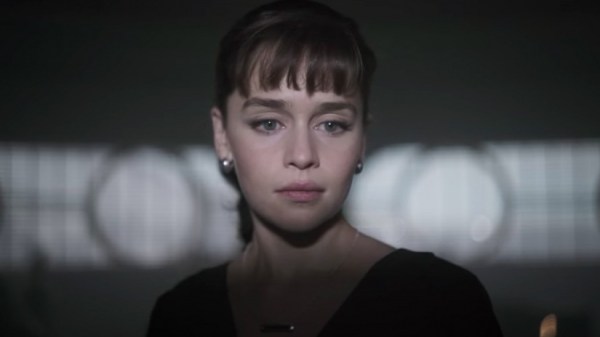
Emilia Clarke’s Qi’Ra, from Solo: A Star Wars Story.
While we’re on the topic of the writing, the Kasdans manage to drop a few bells and whistles that many fans will enjoy. There’s a line that Emilia Clarke’s Qi’Ra utters about her abilities that left me smiling and slowly nodding like a person who just received a toast. Lucasfilm is learning from The Last Jedi’s mistakes, that much is certain. It’s a tight script that rarely goes off tangent.
The movie finds a young Han Solo (Alden Ehrenreich, Beautiful Creatures, Hail Casear) looking to acquire some Hyperfuel, a power source that most smugglers pay a handsome price for. He dreams of becoming a pilot, someday having his own ship so that he can be reunited with an old flame/partner. This leads him to eventually join up with a heist crew and a task that needs to be fulfilled. I won’t give away any more, but it’s a great thing to see all of the pieces fall into place.

Han and Chewie, not caring about the odds.
The supporting cast in Solo is wonderful. That was something that felt right. Between Donald Glover’s scene stealing Lando Calrissian (which eerily sounds like Billy Dee Williams sometimes), Paul Bettany’s Dryden Vos, and Phoebe Waller-Bridge’s L3-37 , everyone in Solo gives a good performance. Aldenreich, I’m not sure of. I didn’t expect him to be Harrison Ford, but he seemed a little generic, for want of a better word. You could have plucked him out, dropped in someone else and it might be the same. At least, that’s how I felt. Still, he doesn’t give a bad performance. Han felt like the supporting character in his own film, the cast is that good.
From an effects standpoint, there are a number of creatures and various new ship tech to behold. It all looks and feels great (especially the Millennium Falcon flight sequences), though I should point out that the 3D presentation isn’t really necessarily. In fact, the first 20 minutes of the film are so dimly lit that the sunglass effect of 3D shades feels like you’re just watching silhouettes on-screen. Howard does a good Job of setting up scenes and keeping everything flowing. It’s a pretty tight production, overall and you’ll be suprised at how fast the film seems to move.
John Powell (X-Men: The Last Stand, The Bourne Trilogy, How to Train Your Dragon) takes on the musical responsibilities since Michael Giacchino’s doing everything else for Disney these days. It’s a great score, though if there is a particular theme for Han, I can’t say I caught it. I do plan on picking up the soundtrack when it comes out next week.
Overall, Solo: A Star Wars Story isn’t one you have to run to the theatre for. It’s not a terrible film by any means. It just didn’t hold me the way I wanted it to. I feel that’s more a reflection of myself than of the film overall. Still, if you can wait the three months to catch it digitally, you might be better off doing so.
Of course, as the Dude from the Big Lebowski says “That’s just like, your Opinion, man.” Go out there, see the film and form your own. Hope you enjoy it.
Dreamworks Animation’s How to Train Your Dragon was one of those films for 2010 that caught me completely off-guard. I had dismissed it as another Dreamworks attempt to try and take the crown from Pixar. So, it was quite a surprise when I finally saw it and realized that Dreamworks had out-Pixared Pixar with this latest offering.
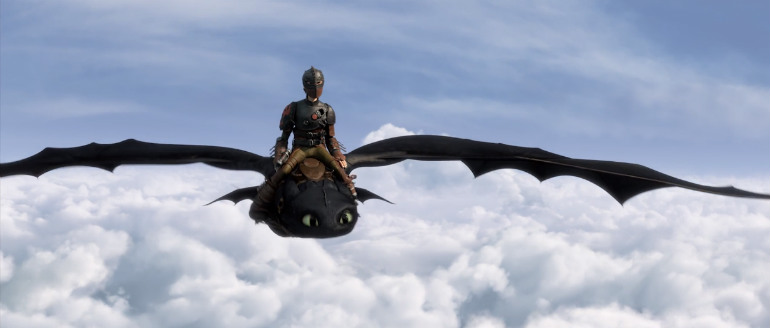
The film did great in the box-office and made the names Hiccup and Toothless names to remember fondly. So, it was a given that a sequel was going to be made and now it is 2013 and we finally have the first teaser trailer for How to Train Your Dragon 2 which will splash across all big-screen theaters around 2014.
To say that this teaser trailer evoked all the fun of the original would be an understatement. I would say that this simple teaser showing Toothless just flying around with Hiccup gave a better sense of the joy of flying than this year’s Man of Steel.
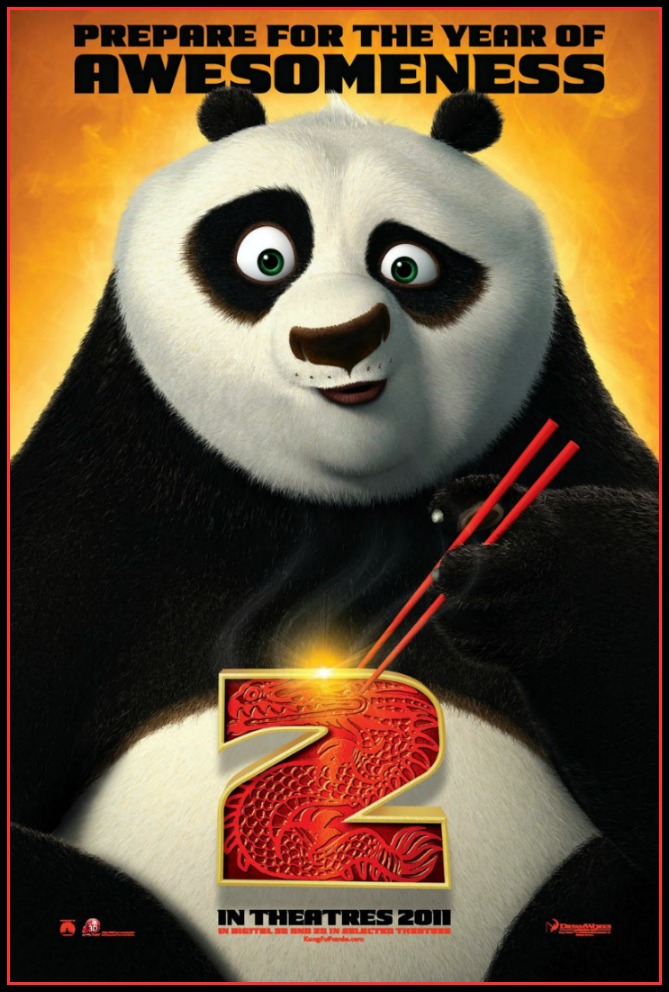
In 2008, Dreamworks Animation released what many had thought was one of their animated films. Some even went so far as to consider it on the same level as many of the Pixar animated offerings. This was high praise indeed and the praises from critics was awarded by public acclaim as Kung Fu Panda became an instant classic for Dreamworks Animation. It wasn’t a huge surprise that a sequel was quickly greenlit by the studio and now three years has passed and that sequel has finally come out. Kung Fu Panda 2 does one of those rare feats in film-making where it surpasses it’s original predecessor in all things. This was a sequel that was able to take what made the first one so fun and thrilling and build on it without losing the charm that made it so beloved in the first place.
Kung Fu Panda 2 brings back the Dragon Warrior Po (Jack Black returning in the role of the big fat panda) as he continues to live his dream of having become the Dragon Warrior and fighting evil, bandits and criminals with his fellow kung fu masters, the Furious Five. Instead of the film highlighting Po’s size as a detriment and keeping him a buffoonish character like in the beginning of the first film this sequel actually makes him an equal of his heroes, if not, surpassing them. This is a refreshing change since the writers could’ve easily banked on Po as a character who bungled and stumbled his way through most of the film.
This film was a continuation of Po’s journey as a hero which the first film was just the first step. Despite being a kung fu master in his own right his culture becomes threatened by a villain even more devious than the first film’s Tai Lung. Lord Shen (voiced by Gary Oldman) is the mad peacock heir to Gongmen City who has found an ultimate weapon through fireworks that he plans to defeat kung fu and conquer all of China. Kung fu is everything to Po and he journeys with the Furious Five to confront Lord Shen and stop his plans before it’s too late.
It’s during this journey that Po learns more about his true past and where he truly comes from. The sequences where Po’s adopted goose father tells of Po’s past was some of the best animations Dreamworks has done and I’d say surpasses some of Pixar’s own work. After seeing this film I’m sure many kids and some adults would want themselves their very own baby panda. Who would’ve thought that baby pandas sounded like human babies when they cried. It’s knowing his past that Po must now learn to find his inner peace if he’s to ever go beyond just being a kung fu master.
Kung Fu Panda 2 was actually quite a dark film in places as themes of genocide, destructive march of technology against nature, difficulties of adopted children finding their true origins and many others. That’s not to say that this sequel wasn’t fun to watch. The action took the kung fu fight scenes from the first film to a whole new level, but without turning it into all flash and no substance. It’s during some of the thrilling fight sequences that we see Po truly become part of the Furious Five and even affection from some of it’s members. It would be interesting to see how a third film would explore the growing relationship between Po and certain striped-feline.
The story gets a much needed infusion of creative help from one Guillermo Del Toro who served as creative producer. His inclusion in the film’s development was probably why the film had a much darker and serious tone in addition to the charm it continued from the first film. If there was anyone in Hollywood who knows how to further develop a character through a Campbellian hero’s journey then it’s Del Toro. If Dreamworks Animation is able to keep Del Toro on hand to further treat their other projects then it will be quite a coup for the studio.
The animation in this film is a step above the first film and anything Dreamworks Animation has ever done. With each passing year and release it looks like Dreamworks Animation has been able to come to the same level of animated work Pixar has set with their own projects. While I’m sure there’s no animosity between animators fo the two houses there probably is some sort of friendly rivalry which helps push both studios to improve on their animation work. All this means is that the public wins out in the end as we’re treated to better animated features from both Dreamworks and Pixar. It’s a good thing that Dreamworks Animation has also improved their storytelling with each new film that they’re not being called the weaker films when compared to Pixar’s latest.
In the end, Kung Fu Panda 2 more than lives up to it’s predecessor and actually surpasses it in every way. This sequel’s animation and use of stereoscopic 3D was some of the best in CG animation to date. It had a story that continued to explore and build the characters from the first film that they’ve gone beyond simple, basic animated characters but fully realized and complex individuals. Even the ending scene in the film which definitely sets-up a third film doesn’t seem tacked on but looks like something that would further continue Po’s hero’s journey. Sequels and milking of a franchise usually don’t sit well with serious film fans, but this franchise seems to be doing it correctly and using each new film to further an epic tale. Here’s to hoping we see Po and his Furious Five friends back for more in the coming years.
The Oscar nominations were announced today and, for the most part, it’s pretty much what you would expect. Below is the list of nominees. If a nominee listed in bold print, that means they also appeared on my own personal list of nominations.
Black Swan
The Fighter
Inception
The Kids Are All Right
The King’s Speech
127 Hours
The Social Network
Toy Story 3
True Grit
Winter’s Bone
(The Academy and I agree on five of the ten nominees. That’s actually more than I was expecting.)
Javier Bardem (Biutiful)
Jeff Bridges (True Grit)
Jesse Eisenberg (The Social Network)
Colin Firth (The King’s Speech)
James Franco (127 Hours)
(The only real surprise here is Bardem. I haven’t seen Biutiful but I’ve heard amazing things about it.)
Christian Bale (The Fighter)
John Hawkes (Winter’s Bone)
Jeremy Renner (The Town)
Mark Ruffalo (The Kids Are All Right)
Geoffrey Rush (The King’s Speech)
(Yay for John Hawkes! Some people are surprised that Andrew Garfield wasn’t nominated for The Social Network. I’m disappointed he wasn’t nominated for Never Let Me Go.)
Annette Bening (The Kids Are All Right)
Nicole Kidman (Rabbit Hole)
Jennifer Lawrence (Winter’s Bone)
Natalie Portman (Black Swan)
Michelle Williams (Blue Valentine)
(I’m happy to see Lawrence and Portman recognized but I still so wish that the Academy had recongized Noomi Rapace and Katie Jarvis as well. I knew it wouldn’t happen but still…)
Amy Adams (The Fighter)
Helena Bonham Carter (The King’s Speech)
Melissa Leo (The Fighter)
Hailee Steinfeld (True Grit)
Jacki Weaver (Animal Kingdom)
(Weaver — Yay!)
Darren Aronofsky (Black Swan)
David O Russell (The Fighter)
Tom Hooper (The King’s Speech)
David Fincher (The Social Network)
Joel Coen and Ethan Coen (True Grit)
(The snubbing of Christopher Nolan for Inception is probably the closest thing to an outrage that the Oscars will produce this year.)
127 Hours – Danny Boyle & Simon Beaufoy
The Social Network – Aaron Sorkin
Toy Story 3 – Michael Arndt (screenplay); John Lasseter, Andrew Stanton and Lee Unkrich (story)
True Grit – Joel Coen and Ethan Coen
Winter’s Bone – Debra Granik & Anne Rosellini
Another Year – Mike Leigh
The Fighter – Scott Silver, Paul Tamasy and Eric Johnson (screenplay); Keith Dorrington, Paul Tamasy and Eric Johnson (story)
Inception – Christopher Nolan
The Kids Are All Right – Lisa Cholodenko and Stuart Blumberg
The King’s Speech – David Seidler
How to Train Your Dragon
The Illusionist
Toy Story 3
(I haven’t seen The Illusionist yet but I’m looking forward to it because the previews look great, it’s based on a script by Jacques Tati, and I love all things French. Still, I kinda wish that Despicable Me had been nominated just so Arleigh could see the minions at the Academy Awards.)
Biutiful (Mexico)
Dogtooth (Greece)
In a Better World (Denmark)
Incendies (Canada)
Outside the Law (Hors-la-loi) (Algeria)
Alice in Wonderland – Robert Stromberg (production design), Karen O’Hara (set decoration)
Harry Potter and the Deathly Hallows Part 1 – Stuart Craig (production design), Stephenie McMillan (set decoration)
Inception – Guy Hendrix Dyas (production design), Larry Dias and Doug Mowat (set decoration)
The King’s Speech – Eve Stewart (production design), Judy Farr (set decoration)
True Grit – Jess Gonchor (production design), Nancy Haigh (set decoration)
Matthew Libatique (Black Swan)
Wally Pfister (Inception)
Danny Cohen (The King’s Speech)
Jeff Cronenweth (The Social Network)
Roger Deakins (True Grit)
Colleen Atwood (Alice in Wonderland)
Antonella Cannarozzi (I Am Love)
Jenny Beavan (The King’s Speech)
Sandy Powell (The Tempest)
Mary Zophres (True Grit)
(That’s right, I ended up going 0 for 5 as far as Costume Design is concerned. Which I guess goes to prove that I have better taste than the Academy.)
Exit Through the Gift Shop (Banksy and Jaimie D’Cruz)
Gasland (Josh Fox and Trish Adlesic)
Inside Job (Charles Ferguson and Audrey Marrs)
Restrepo (Tim Hetherington and Sebastian Junger)
Waste Land (Lucy Walker and Angus Aynsley)
(If Banksy wins, I’ll be happy. I have a feeling the award will go to Inside Job, however. As a documentary, Inside Job reminded me a lot of Capt. Hindsight from the South Park Coon Vs. Coon And Friends trilogy. Also, I’m a little bit surprised that Waiting for Superman wasn’t nominated. I’m even more surprised that I actually saw enough feature documentaries last year to even have an opinion. Also, interesting to note that Restrepo — a very nonpolitical look at military in the mid-east — was nominated while The Tillman Story, a much more heavy-handed and stridently political documentary was not.)
Killing in the Name (Nominees to be determined)
Poster Girl (Nominees to be determined)
Strangers No More (Karen Goodman and Kirk Simon)
Sun Come Up (Jennifer Redfearn and Tim Metzger)
The Warriors of Qiugang (Ruby Yang and Thomas Lennon)
(It’s always interesting that nobody knows what these movies are about yet their producers always end up giving the longest speeches at the Oscars. I’m hoping that Poster Girl wins because the actual producers have yet to be determined. I imagine that means there might be some sort of legal action going on which means that, if it wins on Oscar night, there might be a big fight at the podium. Plus, I like the title. It makes me want to walk up to people I barely know, lean forward, and go, “Can I be your poster girl?”)
Andrew Weisblum (Black Swan)
Pamela Martin (The Fighter)
Tariq Anwar (The King’s Speech)
Jon Harris (127 Hours)
Angus Wall and Kirk Baxter (The Social Network)
Adrien Morot (Barney’s Version)
Edouard F Henriques, Gregory Funk and Yolanda Toussieng (The Way Back)
Rick Baker and Dave Elsey (The Wolfman)
John Powell (How to Train Your Dragon)
Hans Zimmer (Inception)
Alexandre Desplat (The King’s Speech)
AR Rahman (127 Hours)
Trent Reznor and Atticus Ross (The Social Network)
Coming Home (from Country Strong, music and lyrics by Tom Douglas, Troy Verges and Hillary Lindsey)
I See the Light (from Tangled, music by Alan Menken, lyrics by Glenn Slater)
If I Rise (from 127 Hours, music by AR Rahman, lyrics by Dido and Rollo Armstrong)
We Belong Together (from Toy Story 3, music and lyrics by Randy Newman)
(I’ll just say it now — 4 nominations and I didn’t agree with a single one of them. Seriously, they could have nominated up to 5 songs but instead of giving at least one nomination to Burlesque, they just nominated 4 songs. What a load of crap.)
Day & Night (Teddy Newton)
The Gruffalo (Jakob Schuh and Max Lang)
Let’s Pollute (Geefwee Boedoe)
The Lost Thing (Nick Batzias, Shaun Tan and Andrew Ruhemann)
Madagascar, carnet de voyage (Madagascar, a Journey Diary) (Bastien Dubois)
(I’ve actually seen Day & Night since it was shown before Toy Story 3. I thought it went on a little bit too long, to be honest.)
The Confession (Tanel Toom)
The Crush (Michael Creagh)
God of Love (Luke Matheny)
Na Wewe (Ivan Goldschmidt)
Wish 143 (Ian Barnes and Samantha Waite)
Inception (Richard King)
Toy Story 3 (Tom Myers and Michael Silvers)
Tron: Legacy (Gwendolyn Yates Whittle and Addison Teague)
True Grit (Skip Lievsay and Craig Berkey)
Unstoppable (Mark P Stoeckinger)
Inception (Lora Hirschberg, Gary A Rizzo and Ed Novick)
The King’s Speech (Paul Hamblin, Martin Jensen and John Midgley)
Salt (Jeffrey J Haboush, Greg P Russell, Scott Millan and William Sarokin)
The Social Network (Ren Klyce, David Parker, Michael Semanick and Mark Weingarten)
True Grit (Skip Lievsay, Craig Berkey, Greg Orloff and Peter F Kurland)
(I would have probably had more matches in the sound category if I actually knew the difference between sound editing and sound mixing.)
Alice in Wonderland (Ken Ralston, David Schaub, Carey Villegas and Sean Phillips)
Harry Potter and the Deathly Hallows Part 1 (Tim Burke, John Richardson, Christian Manz and Nicolas Aithadi)
Hereafter (Michael Owens, Bryan Grill, Stephan Trojanski and Joe Farrell)
Inception (Paul Franklin, Chris Corbould, Andrew Lockley and Peter Bebb)
Iron Man 2 (Janek Sirrs, Ben Snow, Ged Wright and Daniel Sudick)
So there you go. I went 50/50 on the Best Picture nominations and — well, it all pretty much went downhill from there, didn’t it? Oh well.

