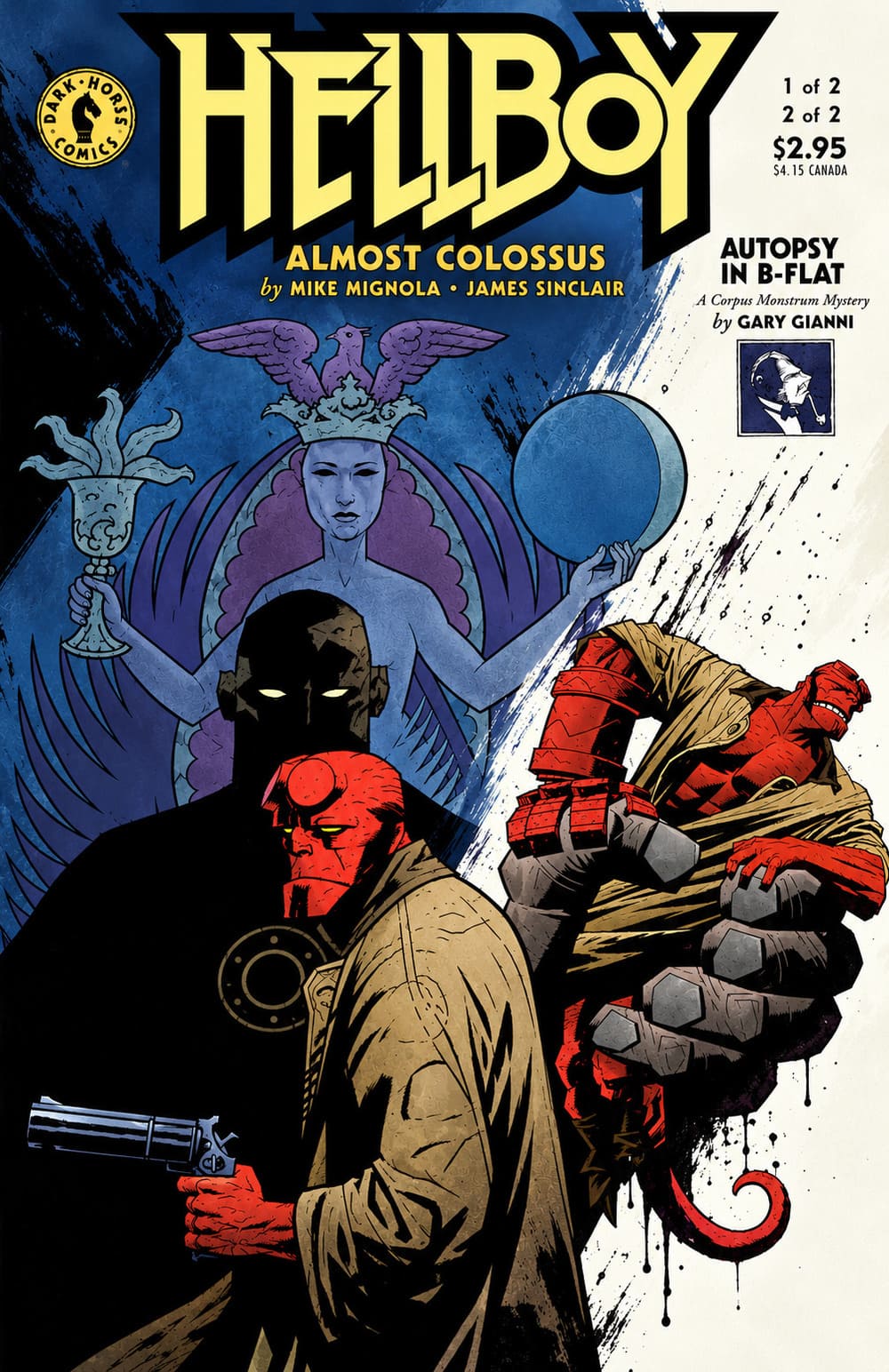
Hellboy: Almost Colossus (by Mike Mignola) Horror Review


“I pray to God to kill me.” — Roger

Mike Mignola’s Hellboy: Almost Colossus gets its best mileage out of a simple question: what makes someone a monster once you look past the body they were born—or built—into? This two-issue miniseries takes the unfinished business of Hellboy: Wake the Devil and turns it into a compact Gothic adventure with a surprisingly tender center. There are disturbed graves, shadowy ruins, unnatural bodies, and a villain whose ambitions are considerably bigger than his conscience. But underneath that familiar horror setup is a story about two artificial beings who respond to their existence in very different ways. One wants to make the world suffer. The other barely knows how to face it.

The immediate problem is Liz Sherman’s deteriorating condition. During Hellboy: Wake the Devil, her fire brought an ancient homunculus to life, but the transfer left her without the powers that had sustained her. Now Hellboy and Kate Corrigan need to find the creature and discover whether that process can be reversed. It is a clean, urgent premise that gives the story direction without requiring another elaborate explanation of Hellboy’s destiny. The stakes are personal rather than cosmic. Liz is dying, and Hellboy is not about to stand around waiting for someone else to fix it.

That smaller scale is one of the comic’s biggest strengths. Hellboy: Wake the Devil has the pleasure of watching several supernatural threats overlap, but Hellboy: Almost Colossus benefits from having less to juggle. Mignola takes an incident that could have remained a disturbing subplot and follows its consequences. Liz’s awakening of the homunculus was not just another strange encounter in a haunted castle. It created a life while endangering another, and the people involved now have to deal with that imbalance. The supernatural events feel consequential because they leave emotional damage behind.
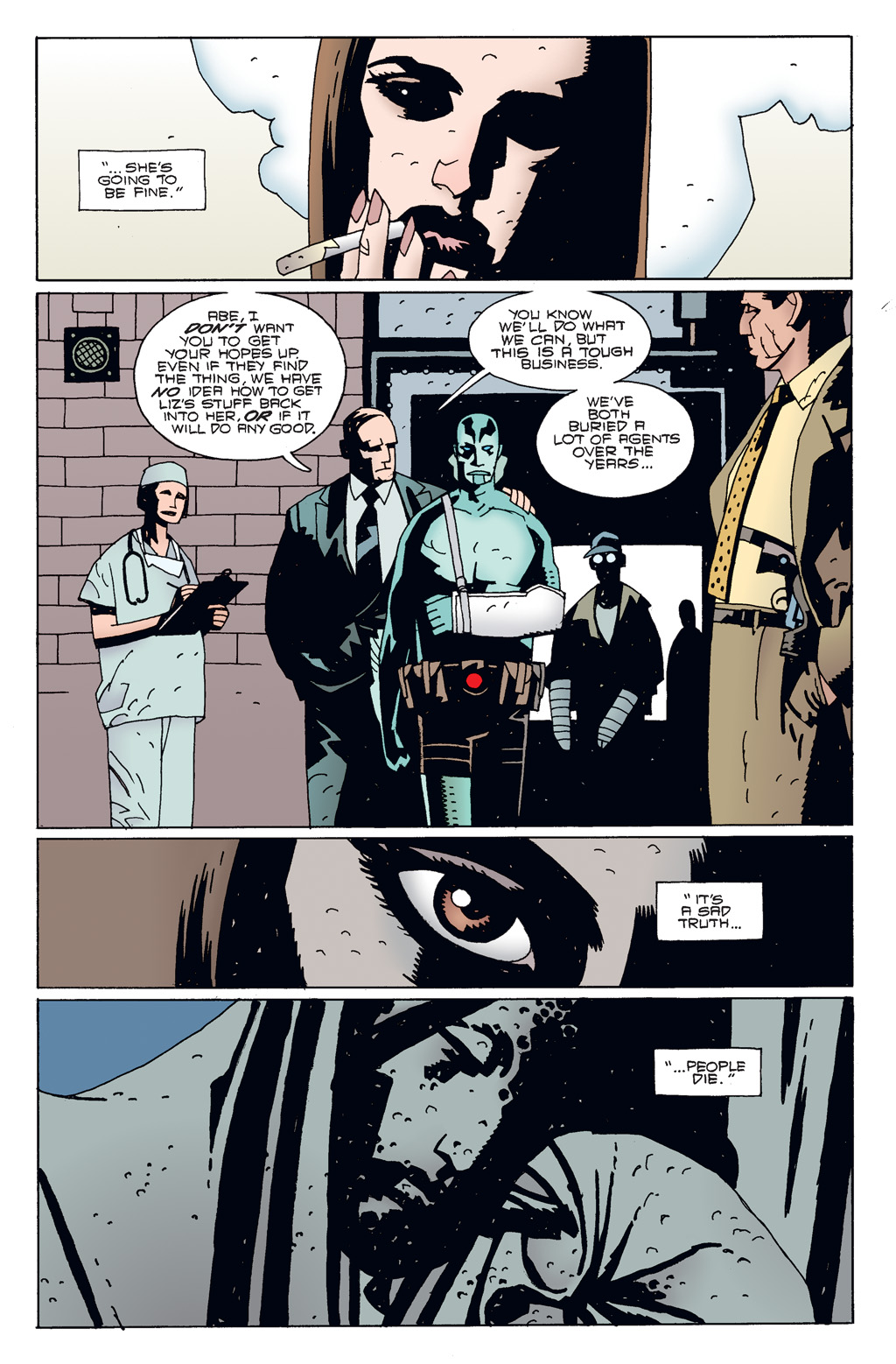
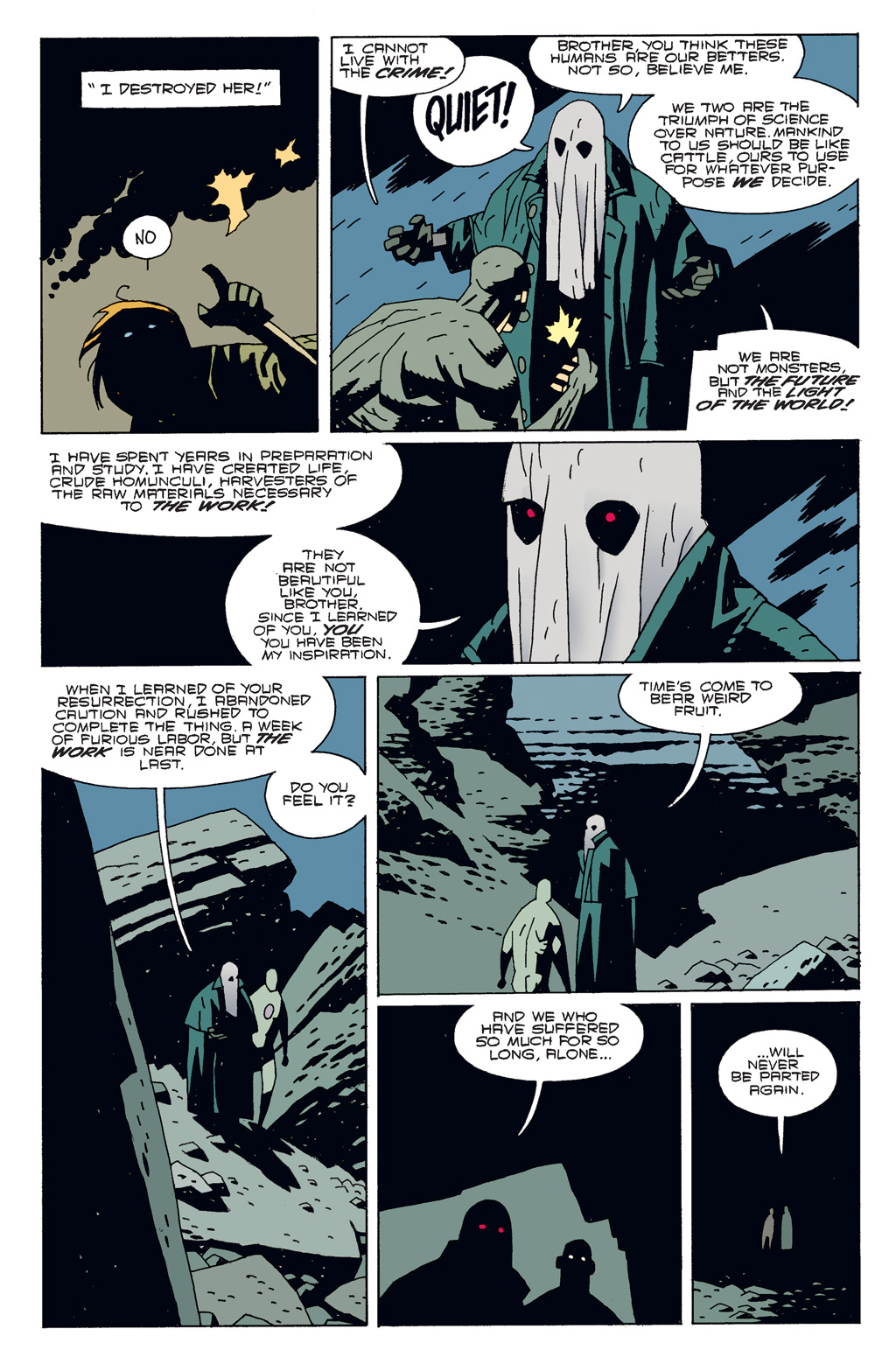
The homunculus, Roger, is the heart of the story. His physical appearance initially places him within the familiar territory of the lumbering artificial monster, but Mignola quickly complicates that impression. Roger is not thrilled to be alive. He is frightened, confused, and overwhelmed by guilt over the suffering connected to his awakening. His desire for death gives the story an unsettling sadness. Life has arrived before understanding, and he has no idea what to do with either. Rather than making him immediately lovable, Mignola allows his distress to remain awkward and uncomfortable, which makes his eventual choices more affecting.

Roger’s older brother provides the nasty counterpoint. Another homunculus created through alchemy, he has responded to his origins with resentment and grandiosity. His solution to feeling wronged is to build himself into something powerful enough to dominate everyone else. Other bodies become material for his ambitions, and other lives become expendable. He is grotesque not simply because of what he is, but because of how casually he reduces people to things. The contrast with Roger is sharp: one brother is horrified by the possibility of causing harm, while the other treats harm as a necessary step toward greatness.

That distinction gives the comic its moral backbone. Mignola does not suggest that unnatural creation automatically produces evil, nor does he make suffering an excuse for cruelty. Both brothers have reasons to feel alienated, but they still make different decisions. Roger’s brother converts his grievances into a claim of superiority. Roger must learn that guilt does not have to end in surrender or self-destruction. It can become responsibility. That is a substantial idea for such a short adventure, and the story makes it tangible through the brothers’ behavior rather than stopping to explain its own message.

The Frankenstein influence is easy to recognize, particularly in the loneliness and resentment surrounding manufactured life. What makes this more than a familiar variation is how naturally those concerns fit Hellboy himself. His appearance suggests danger, and his origins carry implications he refuses to accept as instructions. Roger’s predicament echoes that larger conflict without turning the miniseries into another extended discussion of prophecy. Hellboy becomes an example of the difference between what someone looks like and what someone chooses to do. He is not delivering inspirational speeches, either. He is simply trying to save a friend.
His blunt attitude helps keep the material from becoming too mournful. Hellboy can move through an ancient horror as though it is an especially irritating assignment, and that practical impatience gives the comic some welcome personality. The humor does not erase the danger; it makes his concern feel less theatrical. Kate also helps ground the investigation. Her presence supplies a human perspective beside Hellboy’s familiarity with the bizarre, and her vulnerability gives the confrontation immediate stakes beyond the brothers’ argument. Their partnership makes the supernatural setting feel inhabited rather than merely arranged for atmosphere.

Visually, Mignola makes the ruins and artificial bodies feel like parts of the same uneasy world. His heavy blacks and simplified forms give stonework a looming presence, while the homunculi look assembled, weighty, and uncomfortable in their own shapes. The pages do not need elaborate detail to suggest history. A dark opening or a fragment of architecture can imply whole rooms of forgotten experiments. James Sinclair’s coloring supports that starkness, allowing the drawing’s silhouettes and shadows to carry the mood. The result feels closer to a grim illustrated folktale than a glossy superhero adventure.

The two-issue format does leave some limitations. Liz functions mainly as the reason for the mission, and the older brother’s ambitions could have supported more development. Reading Hellboy: Wake the Devil first also gives the opening greater emotional weight. Still, the brevity keeps the story from diluting its strongest material. The climax matters because Roger has to decide what kind of being he will become, not simply because something enormous needs to be punched. Hellboy: Almost Colossus delivers the Gothic spectacle, but its real achievement is making compassion feel like an active choice. The most human figure in the story may be the one who has the least idea how to be human.

Hellboy Saga
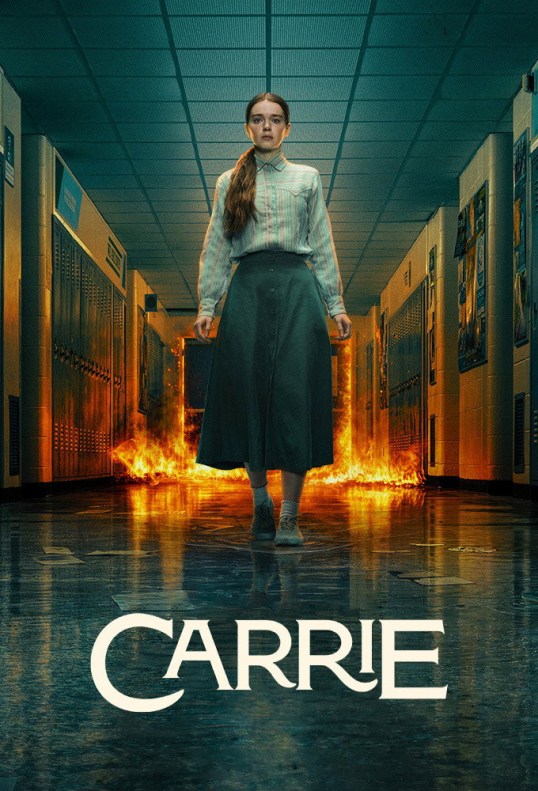
Icarus File No. 34: Carrie (dir by Mike Flanagan, Kate Siegel, Axelle Carolyn, Kyra Sedgwick, Hiromi Katana)


If I had to choose two words to describe Mike Flanagan’s “reimagining” of Carrie, they would probably be “fan fiction.”

In fact, it’s sometimes humorous just how obviously this miniseries is a work of fan fiction. Carrie White (blandly played by Summer Howell) may be a bullied and sheltered girl with telekinetic powers, but now she has a best friend, Emaline (an equally bland Thalia Dudek, who looks less like a 2026 teenager and more like the bassist in a 1990s riot grrrl band), who also has a power and always has the best advice and the snarkiest comebacks! What would Carrie do without her best friend Emaline? And while Margaret White (Samantha Sloyan) is still present as an overprotective and paranoid force in Carrie’s life, there’s now another maternal figure named Adelaide (Kate Siegel) who exists to talk about how those with secret powers are always being held down by a society that’s just not capable of accepting how important they are. Adelaide opens each episode with a monologue that feels like it was written by a 2017 college freshman who has just watched Linda Sarsour on YouTube. Watching the miniseries, one gets the feeling that Flanagan and his writers really wanted to make a show called Emaline and Adelaide and decided to graft them onto Carrie.

Ever since this miniseries was announced, there’s been a lot of talk about how Flanagan has updated the story. In this case, that means there’s an emphasis on phones and social media, as if teenagers couldn’t find a way to hurt each other even before technology caught up with them. In fact, social media is pretty much to blame for everything that happened. The audience is meant to violently roll their eyes at Margaret White for believing in conspiracy theories and religion while, at the same time, accepting a portrayal of the dangers of social media that makes Aaron Sorkin look even-handed and calm. One gets the feeling that if this show had been made just a few years earlier, it would have found a way to blame Margaret White and Chris Hargensen for the January 6th riots. There is a riot in the sixth episode, but it just involves all of the students doing a massive walkout to protest Chris Hargensen’s secret Instagram account. “Death to Hargensen!” the students chant, and it briefly seems like maybe Flanagan is going to make a bigger point about how the bullies can become the bullied, but ultimately, this is too much of a work of fan fiction to delve too deeply into anything that complex. It’s also too much of a work of the streaming era to introduce an idea that can’t be neatly summed up in 15 seconds.

Yes, this is a new version of Carrie. If King’s novel and De Palma’s film gave us a Carrie White who was never happy until that one prom night and who lashed out after that happiness was stolen from her, the Mike Flanagan miniseries gives us a Carrie who becomes the most popular girl in school even before prom night. No longer does Tommy (Joel Oulette) ask Carrie to prom as a favor to his guilt-ridden girlfriend, Sue Snell (Siena Agudong). Instead, he asks Carrie as a friend. Carrie’s no longer sheltered and shy. Instead, she’s somewhat smug and annoying. She sneaks out of the house many times before prom night. She goes to a party. She goes to the junkyard and curses like a sailor while showing off her powers. Her best friend Emaline is impressed. What would Carrie do without her best friend, Emaline? Of course, by changing all of this, Flanagan robs the story of all of its emotional power. This is probably the first version of Carrie where I’ve actually found myself getting annoyed with Carrie as a character. Towards the end of the miniseries, she just becomes so smug and self-righteous, like the girl at school who used to sweetly pull you aside to tell you that your skirt was too short. This is a version of the story that lets Carrie off the hook. Emaline is the one who suggests that she use her powers to get revenge. Adelaide and her dumbass cult are the ones who accidentally set fire to the school. Carrie dances in the street with Emaline and, for a few seconds, you actually find yourself wishing for the calming hand of Ryan Murphy.

Yes, I know that Stephen King has endorsed Mike Flanagan’s changes. That doesn’t mean that I have to. The fact of the matter is that Stephen King has consistently shown that he will endorse just about anything, and it’s also been a while since King has written anything that can match the power of his earlier work. There’s a world of difference between the youngish and struggling writer who originally wrote Carrie and the wealthy boomer who is now probably better known for his angry tweets than his more recent literary output. As well, it’s obvious that King likes Flanagan. Flanagan is the ultimate fan. And yet, considering that Flanagan’s best film, Hush, was also his simplest, one can’t help but feel that Flanagan would do well to stop adapting his heroes and maybe just try to focus on creating unapologetic suspense.

It’s the curse of elevated horror. Right now, the critics who hate entertaining horror love slow-moving elevated horror. They go on and on about the subtext, as if there wasn’t subtext to be found in the horror movies that were made in the past. The truth of the matter is that the subtext is usually the least interesting thing about these films and series. Making a film or a show that is critical of capitalism and religion is hardly the radical act that the critics seem to think it is. There’s nothing particularly interesting or special to be found between the lines when it comes to this version of Carrie. Indeed, for all the time and effort that the series puts into villainizing Margaret White and Chris Hargensen, they’re ultimately the most interesting characters because Samantha Sloyan and Alison Thornton are the only two performers who are allowed to break free from the show’s rigid ideological structure. (Samantha Sloyan especially deserves a lot of credit for finding a hint of reality in her portrayal of Margaret.) Chris and Margaret are compelling because they’re the only characters who don’t just parrot the accepted lines and the accepted thinking. They’re the only characters who seem to have a life and an outlook that was formed by something other than the demands of the show. We’re meant to shake our heads when Margaret becomes an online celebrity with a podcast, but instead, we’re interested and almost happy for her because Margaret is actually doing something unexpected and making an effort to take actual control of her life. It’s hard not to feel that this version of Margaret White deserved a better ending than what the show gave her. In the end, Margaret feels less like a villain and more like a victim of the show’s writers and their own feelings about religion and politics. (One wonders if the writers realize that their show ultimately makes the case that all of the tragedy could have been avoided if the government had simply stayed out of it and just allowed Margaret to continue to homeschool her daughter.) If previous versions of Carrie seemed to be designed to appeal to shy outsiders, this version of Carrie is designed to compliment self-styled victims who don’t have the self-awareness necessary to realize that they are now the bullies.

In the end, Carrie feels like a forgotten Showtime series from 2018 and, if it had been made by anyone other than Mike Flanagan, no one would care.

Previous Icarus Files:

  1. Cloud Atlas
  2. Maximum Overdrive
  3. Glass
  4. Captive State
  5. Mother!
  6. The Man Who Killed Don Quixote
  7. Last Days
  8. Plan 9 From Outer Space
  9. The Last Movie
  10. 88
  11. The Bonfire of the Vanities
  12. Birdemic
  13. Birdemic 2: The Resurrection 
  14. Last Exit To Brooklyn
  15. Glen or Glenda
  16. The Assassination of Trotsky
  17. Che!
  18. Brewster McCloud
  19. American Traitor: The Trial of Axis Sally
  20. Tough Guys Don’t Dance
  21. Reach Me
  22. Revolution
  23. The Last Tycoon
  24. Express to Terror 
  25. 1941
  26. The Teheran Incident
  27. Con Man
  28. Looker
  29. 1776
  30. Here
  31. The Adventures of Brisco County, Jr.
  32. The Cable Guy
  33. A Chorus Line


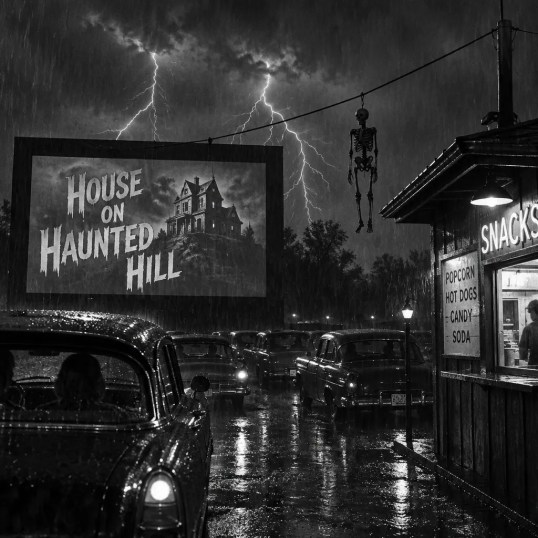
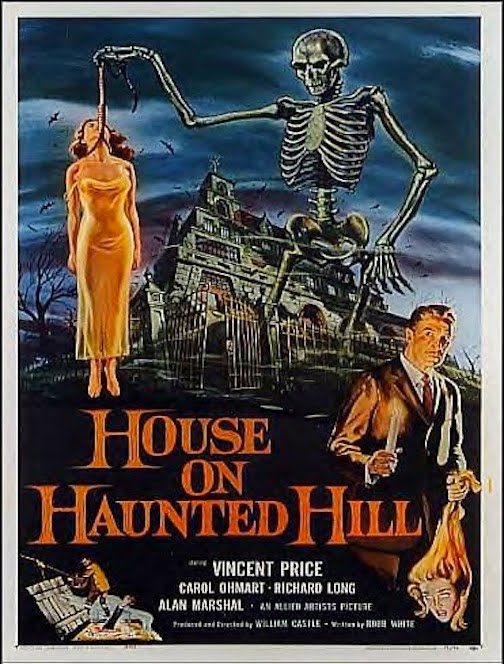
Horror On The Lens: The House On Haunted Hill (dir by William Castle)


Watching the original House on Haunted Hill is a bit of a Halloween tradition here at the Shattered Lens.

First released in 1959, The House on Haunted Hill features Vincent Price as a millionaire who invites five people to a party that he and his wife are throwing in a supposedly haunted house.  Price explains that anyone who can actually make it through the entire night will receive $10,000.  (That’s the equivalent of a $110,000 today.)   Is the house truly haunted?  The groundskeeper (Elisha Cook, Jr.) certainly seems to think so!

This is a classic haunted house movie, featuring Price at his best and a number of genuinely fun twists.  Even if you’ve seen it a hundred times, you need to watch it again.  Here is …. THE HOUSE ON HAUNTED HILL!


Horror Song of the Day: Mater Tenebrarum by Keith Emerson


Inferno (1980, dir by Dario Argento, DP: Romana Albano)

Today’s horror song of the day comes from Keith Emerson’s soundtrack of Dario Argento’s Inferno.  Emerson did not have an enviable task, having to follow up Goblin’s soundtrack for Suspiria.  But Emerson pulled it off, crafting a score that compliments Goblin’s earlier work while maintaining an identity of its own.

Horror Scenes That I Love: The Opening of House on Haunted Hill


Today’s horror scene that I love comes from 1959’s House on Haunted Hill.  As the film opens, Vincent Price takes a moment to speak directly to the audience and introduce the characters who are coming to spend the night at the house.  Price, who is one of the patron saints of October, delivers his lines with such relish that it’s impossible not to stick around to see who survives the night.

4 Shots From 4 Horror Films: October 11th


4 Or More Shots From 4 Or More Films is just what it says it is, 4 shots from 4 of our favorite films. As opposed to the reviews and recaps that we usually post, 4 Shots From 4 Films lets the visuals do the talking!

4 Shots From 4 Horror Films: October 11th

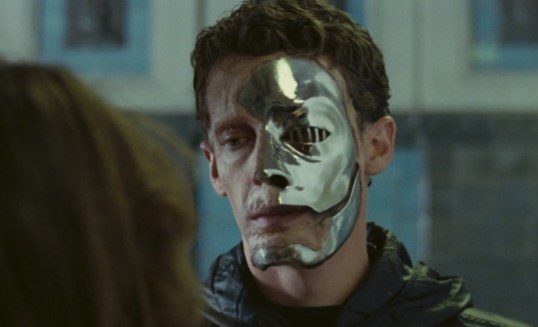
Phenomena (1985, dir by Dario Argento)

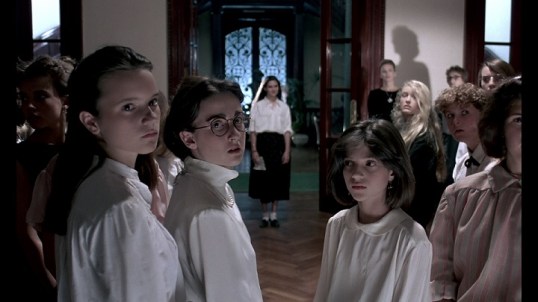
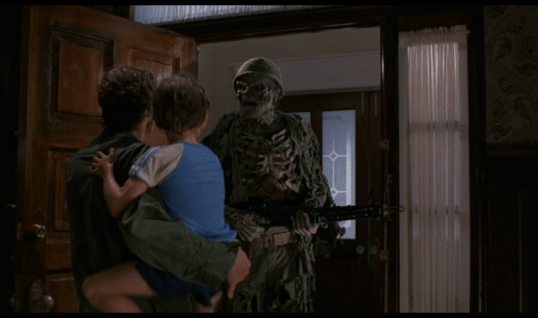
House (1985, dir by Steve Miner)

Demons (1985, dir by Lamberto Bava)

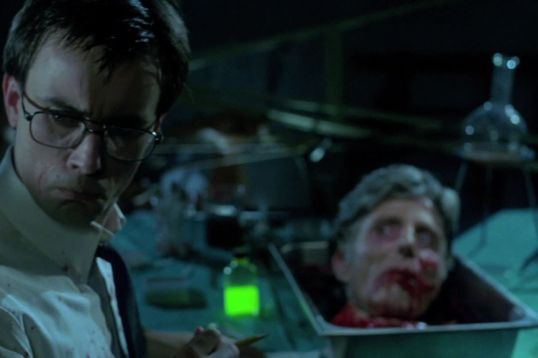
Re-Animator (1985, dir by Stuart Gordon)

Music Video of the Day: Spellbound by Siouxsie and the Banshees (1981, directed by Clive Richardson)


Spellbound was the lead single off of Siouxsie and the Banshee’s fourth studio album, Juju.  In later interviews, Siouxsie would describe Juju as being an accidental concept album as all of the songs dealt with dark themes and subject manner.  Juju was a horror-themed album but the horror was psychological and not supernatural.  As a sign of that theme, Spellbound was named after an Alfred Hitchcock film about a man who is troubled by disturbing dreams.

Clive Richardson directed several videos from Siouxsie and the Banshees.  He also worked with Depeche Mode, Steve Winwood, Big Country, and Tears for Fears.

Enjoy!

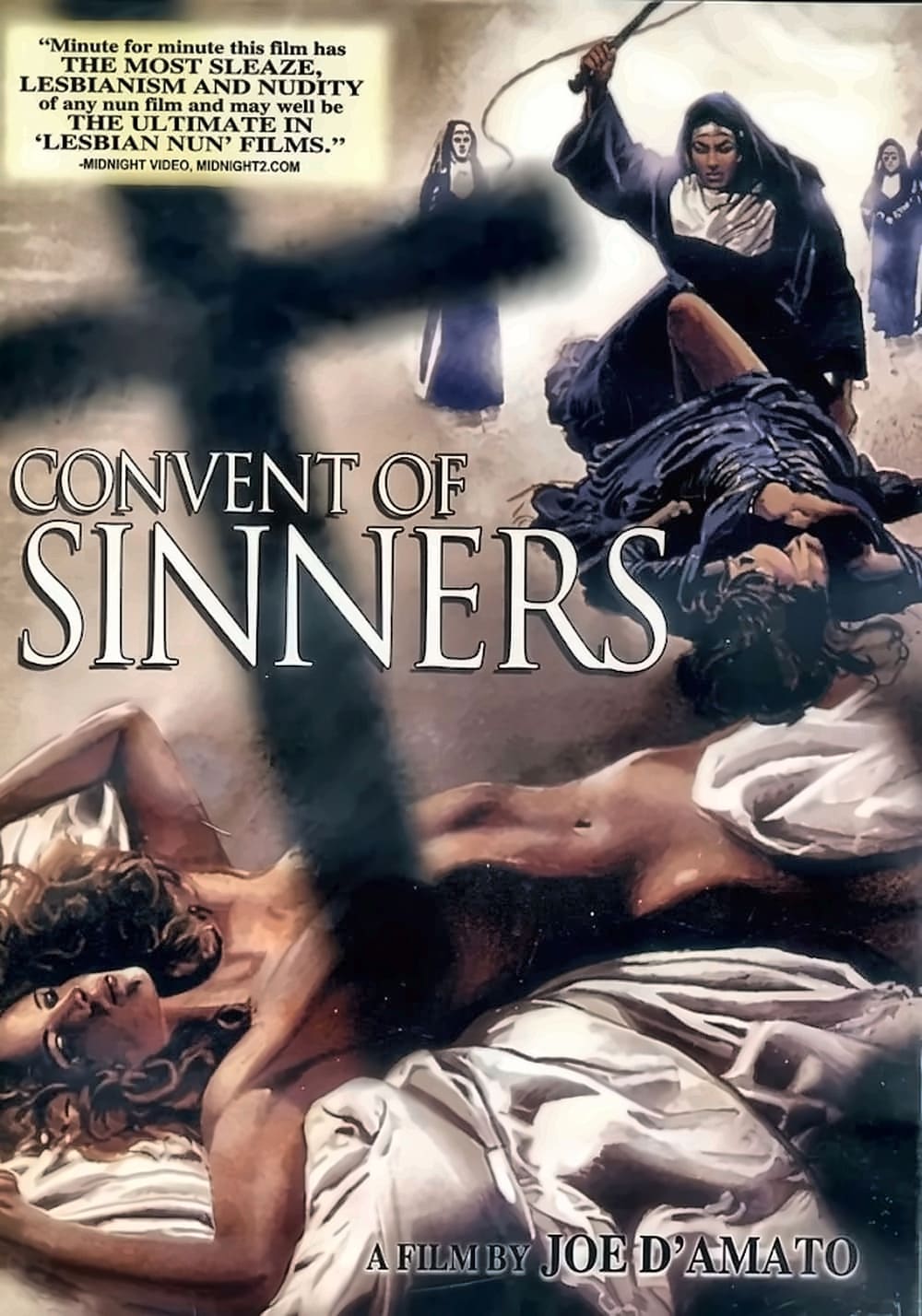
Horror Guilty Pleasure No. 133: Convent of Sinners (dir. by Joe D’Amato)


Convent of Sinners (1986) wants to expose the corruption behind convent walls, but Joe D’Amato keeps getting distracted by what he can undress inside them. That tension defines this erotic nunsploitation horror film, an atmospheric guilty pleasure with enough religious hypocrisy and malicious intrigue to suggest a sharper movie buried beneath the sleaze. D’Amato recognizes the dramatic possibilities of an institution where frustrated desire disguises itself as moral authority. He also leans so heavily on sexual titillation that his criticism struggles to compete with his exploitation instincts. The result is entertainingly disreputable, occasionally disturbing, and considerably less insightful than its premise promises.

Susanna, played by Eva Grimaldi, enters the convent after suffering sexual abuse at home, only to discover that her supposed sanctuary contains another collection of people determined to control her. The Mother Superior develops an attachment to her, a priest offers forbidden affection, and Sister Teresa resents the attention she receives. Loosely adapted from Denis Diderot’s La Religieuse, the story follows a vulnerable woman whose needs remain secondary to the desires of those claiming to protect her. Susanna becomes the object of affection, suspicion, and punishment without gaining much say in any of it. Escape from one abusive environment simply delivers her into another.

There is a strong foundation here for a bitter examination of institutional corruption. The convent’s inhabitants cannot acknowledge their feelings honestly, so attraction becomes favoritism, jealousy becomes accusation, and cruelty becomes spiritual correction. Susanna exposes tensions that already exist, but blaming her allows everyone else to avoid examining themselves. Religious authority gives ordinary resentment extraordinary reach. Someone who merely dislikes you can make life unpleasant; someone who claims your suffering serves God can make resistance look like further evidence against you. The film understands that distinction, even if it does not consistently develop it beyond another opportunity for humiliation.

Its place within the nunsploitation tradition makes that limitation especially noticeable. Ken Russell’s The Devils combines sexual obsession, religious hysteria, and institutional violence with a larger examination of political power. D’Amato uses related ingredients without approaching Russell’s ambition or furious visual imagination. Convent of Sinners concentrates on private jealousies and forbidden attachments, which could have supported a more intimate account of how authority becomes abusive. Instead, its serious implications repeatedly compete with scenes designed primarily to provoke or titillate. The comparison is useful because it demonstrates that lurid material and meaningful criticism can coexist, provided the filmmaking gives both a purpose.

Bruno Mattei’s The Other Hell offers the trashier comparison, turning a convent into a breeding ground for sinister secrets, violence, and supernatural horror. Both films exploit the reversal of sacred refuge into dangerous confinement, but Mattei foregrounds the horror-show possibilities while D’Amato emphasizes erotic melodrama. Convent of Sinners builds on this established genre territory through its mixture of religious imagery, repressed appetites, and punitive authority. Yet its reliance on sexual spectacle makes the corruption feel less like something being investigated than something supplying the next scandalous situation. The convent is an effective setting, but D’Amato does not always look beyond its exploitation value.

Karin Well’s Sister Teresa gives the persecution a concrete emotional motive. She resents the Mother Superior’s interest in Susanna, and her wounded pride feeds her vindictiveness. Underneath the religious vocabulary is someone furious about losing influence. The institution lets her disguise retaliation as moral responsibility, making her more dangerous than an openly spiteful rival. These dynamics provide some of the film’s strongest material because they reveal how easily a hierarchy can accommodate personal grudges. Teresa does not need to confess her jealousy when she can insist that Susanna is the problem. Her authority supplies the explanation her conscience ought to question.

Grimaldi gives Susanna a sympathetic presence, but the screenplay is far more interested in what happens to her than in who she is. Her longing for tenderness is understandable, and apparent affection offers a believable temptation in such an oppressive environment. Unfortunately, every refuge becomes another trap, and the repeated victimization eventually starts to flatten her character. D’Amato leans way too heavily on the sexual titillation and lurid exploitation of Susanna, weighing down whatever commentary he is attempting about religious hypocrisy and institutional corruption. Her suffering becomes an attraction in itself. The film wants us to condemn those treating her as an object while rarely resisting that temptation itself.

That mixture also connects it to The Convent of Hell, the erotic graphic novel written by Ricardo Barreiro and illustrated by Ignacio Noé. Its forbidden appetites, convent confinement, cruelty, and supernatural grotesquerie belong to the same imaginative tradition. Whether or not its creators would acknowledge these particular predecessors, the family resemblance to The Devils, The Other Hell, and Convent of Sinners is persuasive. This is a critical reading of their shared sensibility rather than a documented claim of direct influence from every film. Still, the progression makes sense: sacred imagery becomes a framework for escalating erotic excess, sometimes overshadowing whatever criticism accompanies it.

Ultimately, Convent of Sinners works better as an uneven guilty pleasure than as a convincing indictment of religious abuse. Its period atmosphere and enclosed setting lend weight to the melodrama, while its malicious characters keep the intrigue moving even when the pacing sags. There is enough solemn hypocrisy and shameless sleaze to satisfy a taste for Italian exploitation, but Susanna’s treatment grows repetitive and uncomfortable. D’Amato has found a subject with genuine dramatic bite; he simply keeps sacrificing that bite to another dose of titillation. The film peers behind the convent’s respectable façade, then becomes so absorbed in the scandal that it neglects the corruption it originally promised to expose.

Previous Guilty Pleasures

  1. Half-Baked
  2. Save The Last Dance
  3. Every Rose Has Its Thorns
  4. The Jeremy Kyle Show
  5. Invasion USA
  6. The Golden Child
  7. Final Destination 2
  8. Paparazzi
  9. The Principal
  10. The Substitute
  11. Terror In The Family
  12. Pandorum
  13. Lambada
  14. Fear
  15. Cocktail
  16. Keep Off The Grass
  17. Girls, Girls, Girls
  18. Class
  19. Tart
  20. King Kong vs. Godzilla
  21. Hawk the Slayer
  22. Battle Beyond the Stars
  23. Meridian
  24. Walk of Shame
  25. From Justin To Kelly
  26. Project Greenlight
  27. Sex Decoy: Love Stings
  28. Swimfan
  29. On the Line
  30. Wolfen
  31. Hail Caesar!
  32. It’s So Cold In The D
  33. In the Mix
  34. Healed By Grace
  35. Valley of the Dolls
  36. The Legend of Billie Jean
  37. Death Wish
  38. Shipping Wars
  39. Ghost Whisperer
  40. Parking Wars
  41. The Dead Are After Me
  42. Harper’s Island
  43. The Resurrection of Gavin Stone
  44. Paranormal State
  45. Utopia
  46. Bar Rescue
  47. The Powers of Matthew Star
  48. Spiker
  49. Heavenly Bodies
  50. Maid in Manhattan
  51. Rage and Honor
  52. Saved By The Bell 3. 21 “No Hope With Dope”
  53. Happy Gilmore
  54. Solarbabies
  55. The Dawn of Correction
  56. Once You Understand
  57. The Voyeurs 
  58. Robot Jox
  59. Teen Wolf
  60. The Running Man
  61. Double Dragon
  62. Backtrack
  63. Julie and Jack
  64. Karate Warrior
  65. Invaders From Mars
  66. Cloverfield
  67. Aerobicide 
  68. Blood Harvest
  69. Shocking Dark
  70. Face The Truth
  71. Submerged
  72. The Canyons
  73. Days of Thunder
  74. Van Helsing
  75. The Night Comes for Us
  76. Code of Silence
  77. Captain Ron
  78. Armageddon
  79. Kate’s Secret
  80. Point Break
  81. The Replacements
  82. The Shadow
  83. Meteor
  84. Last Action Hero
  85. Attack of the Killer Tomatoes
  86. The Horror at 37,000 Feet
  87. The ‘Burbs
  88. Lifeforce
  89. Highschool of the Dead
  90. Ice Station Zebra
  91. No One Lives
  92. Brewster’s Millions
  93. Porky’s
  94. Revenge of the Nerds
  95. The Delta Force
  96. The Hidden
  97. Roller Boogie
  98. Raw Deal
  99. Death Merchant Series
  100. Ski Patrol
  101. The Executioner Series
  102. The Destroyer Series
  103. Private Teacher
  104. The Parker Series
  105. Ramba
  106. The Troubles of Janice
  107. Ironwood
  108. Interspecies Reviewers
  109. SST — Death Flight
  110. Undercover Brother
  111. Out for Justice
  112. Food Wars!
  113. Cherry
  114. Death Race
  115. The Beast Within
  116. Girl Series
  117. Gone in 60 Seconds
  118. Swordfish
  119. Marked For Death
  120. The Internship
  121. The Angry Red Planet
  122. 2012
  123. Old School
  124. No Escape
  125. In Death Series
  126. Alligator
  127. Little Annie Fanny
  128. Wicked Wanda
  129. Congo
  130. The 13th Warrior
  131. Sudden Death
  132. The Convent of Hell

October Positivity: Abel’s Field (dir by Gordie Haakstad)


In 2012’s Abel’s Field, Kevin Sorbo plays the role of Abel.  He’s the new groundskeeper at a small town high school, one of those places where football is king.  No one in town really seems to know much about Abel and that’s fine with Abel.  He keeps to himself and he prefers not have long conversations with people.  He works hard, he tries to stay out of trouble, and he spends a lot time writing in a notebook on which he keeps a very close eye.

And let’s give credit where credit is due.  Kevin Sorbo actually gives a very good performance as Abel.  I know that some people will snicker when they read that.  At this point, Kevin Sorbo is so associated with a certain type of politics and a certain type of religion and a certain type of movie that merely mentioning his name will send some self-appointed cultural critics into a frothing rage.  That said, Sorbo is one of the better actors to have found a niche in the faith-based film industry and he does a good job playing the role of Abel.  He’s convincing as a man who doesn’t want to get close to anyone but who is still kind enough to reach out to people who need help.

Seth McArdle (Samuel Davis) is someone who could definitely use some help.  A 17 year-old high school senior, Seth has had to step up and take on an enormous amount of responsibility.  With his father having vanished and his mother having died, Seth is taking care of his two younger sisters.  He attends high school, he works two jobs, and then when he finally returns home, he just hopes that he has enough money to pay the babysitter.

When Seth yells at the arrogant high school quarterback after the latter runs a stop sign and nearly hits Seth’s sisters, the entire football team starts to target Seth.  The team is struggling on the field this season so they decide to take their frustrations out on Seth.  Seth can’t even walk down the school hallway without the team attacking him.  Because Seth fights back, he’s the one who ends up getting in trouble.  Seth is told that he has two options.  He can either help Abel install a new sprinkler system for the football field or he can just drop out of school.

(Wow, that’s harsh.)

You can guess where this is going.  After an awkward beginning, Abel eventually becomes a mentor to Seth.  Abel and Seth discover they have something in common.  They’re both down-on-their luck and their both kind of miserable.  When the bank threatens to foreclose on Seth’s house, Abel is there to try to keep Seth from breaking the law in order to pay.  They share a lot of pain but they also share a common faith and, eventually, Abel even shares the dark secret from his past.  How much that secret surprises you will depend on how much you know about the stories of the Biblical Cain and Abel and Seth.

Abel’s Field is a surprisingly effective film.  Yes, it’s a religious film but it’s nowhere near as preachy as some of the other films of the genre that I’ve seen.  The characters are portrayed as being flawed individuals who are trying to do their best in difficult situations.  Both Davis and Sorbo give good strong performances.  Believe it or not, it’s a good movie.