As some of our regular readers undoubtedly know, I am involved in a few weekly watch parties. On Twitter, I host #FridayNightFlix every Friday and I co-host #ScarySocial on Saturday. On Mastodon, I am one of the five hosts of #MondayActionMovie! Every week, we get together. We watch a movie. We tweet our way through it.
Tonight, at 10 pm et, I will be hosting #FridayNightFlix! The movie? Sudden Death!
If you want to join us this Friday, just hop onto twitter, find Sudden Death on Prime, start the movie at 10 pm et, and use the #FridayNightFlix hashtag! I’ll be there happily tweeting. It’s a friendly group and welcoming of newcomers so don’t be shy.
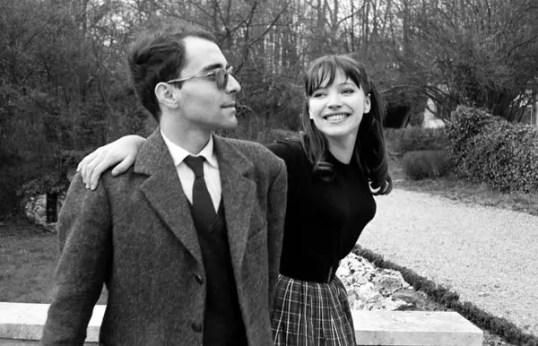
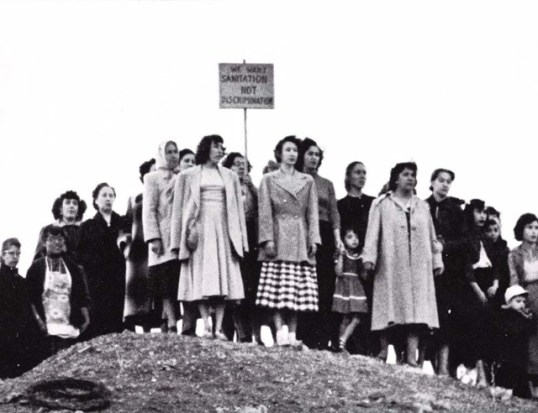
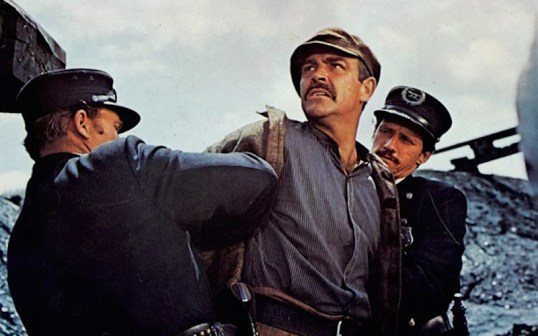
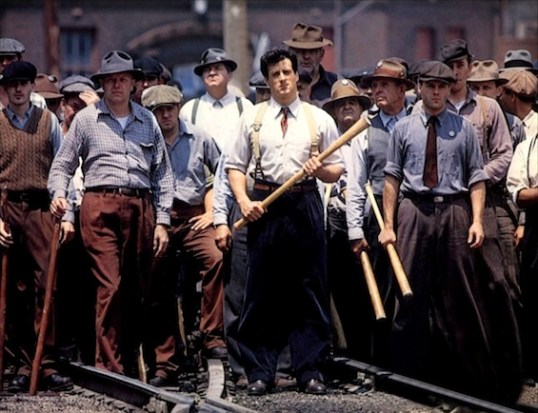
4 Shots From 4 Films is just what it says it is, 4 shots from 4 of our favorite films. As opposed to the reviews and recaps that we usually post, 4 Shots From 4 Films is all about letting the visuals do the talking.
4 Shots From 4 Striking Films
Salt of the Earth (1954, directed by Herbert J. Biberman)
The Molly Maguires (1970, directed by Martin Ritt)
This song, one of the first hit rap songs about drugs, is often mistakenly described as being a collaboration between Grandmaster Flash and Melle Mel. Grandmaster Flash actually had nothing to do with the song. He had already left Sugar Hill Records before the song was even recorded. When the single was first released, it was credited to “Grandmaster and Melle Mel,” in order to create the impression that Flash was involved. In his autobiography, Flash wrote that he once heard the song was while he was on the way to buy crack and, at that moment, he felt that Melle Mel was specifically speaking to him.
This video was shot by Spike Lee, who was a film student at NYU at the time and yes, that is Laurence Fishburne. Fishburne appeared in this video shortly after playing Cutter in Death Wish II and he has the same look in the video as he did in the movie.
Welcome to Late Night Retro Television Reviews, a feature where we review some of our favorite and least favorite shows of the past! On Thursdays, I will be reviewing Hunter, which aired on NBC from 1984 to 1991. The entire show is currently streaming on Tubi and several other services!
This week, Hunter and McCall get involved in a gang war in Chinatown!
Episode 2.2 “Night of the Dragons”
(Dir by James Whitmore, Jr, originally aired on September 28th, 1985)
McCall’s desire to try out a Chinese restaurant leads to her and Hunter witnessing a shootout and an apparent murder in Chinatown. (It’s “apparent” because the body disappears in all the confusion.) A war is brewing between two gang lords, the Chinese Chang (James Hong) and the Vietnamese Mr. Nim (Arsenio “Sonny” Trinidad). However, when Hunter and McCall try to investigate, they’re told to let the “Asian Affairs Unit” handle things.
Hunter suspects that an old friend, Detective Raymond Lau (Clyde Kusatsu), has gone crooked and is now working for Chang. It turns out Hunter is half-right. Lau is giving information to Chang, but only because Chang has kidnapped his daughter and is holding her hostage. Chang, it turns out, likes to kidnap people. For instance, he kidnaps McCall. How often can McCall get kidnapped? It seems to happen fairly frequently.
This was another action-packed episode of Hunter. Every few minutes, someone is either shooting a gun or threatening to. Meanwhile, McCall just wanted to find a nice Chinese place to eat. It’s obvious that, with the second season, the show had found a formula that worked for it and was determined to stick to it. This episode benefited from strong guest performances from Hong, Trinidad, and especially Clyde Kusatsu.
That said, I do wish this episode had explored its themes a bit more deeply. It’s mentioned that Hunter served in Vietnam, but it’s mostly just a throwaway reference used to explain how Hunter knew that the bullets recovered from a crime scene had been fired by Mr. Nim’s gang. The rivalry between the Chinese Chang and the Vietnamese Nim also serves as a reminder of the Vietnam War, but again, the episode doesn’t really dig into it. At one point, Chang says that Lau is weak because he was born not in China but in America, and again, it’s hard not to feel that the episode missed an opportunity to dig deeper with both men.
(I’ll also mention that, at one point, McCall compares one of the Chinese gangsters to Godzilla. Godzilla, needless to say, is part of Japan’s culture and not China’s.)
This was a good episode of Hunter that felt like it had the potential to be so much more.
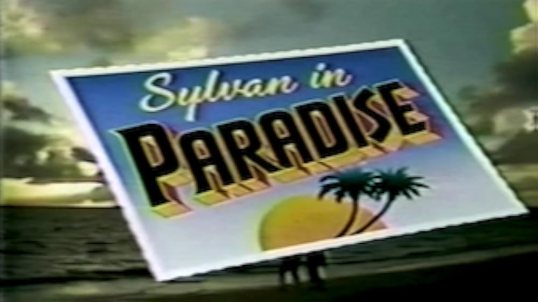
Welcome to Retro Television Reviews, a feature where we review some of our favorite and least favorite shows of the past! This Thursday, I will be reviewing Sylvan in Paradise, which aired its only episode on NBC in 1986. The show can be found on YouTube!
Episode 1.1 “Pilot”
(Dir by Terry Hughes, originally aired on August 2nd, 1986)
“Welcome, welcome, welcome,” says Sylvan Sprayberry (Jim Nabors) to the guest checking into the Hawaiian hotel that employs him. Sylvan is tall, goofy, and talkative, and it’s never really made clear how he somehow became the head bellboy at a hotel in Hawaii. At one point, even Sylvan says he can’t believe he’s gone from “pickin’ cotton in Alabama” to working in paradise.
The uptight owner of the hotel, Clinton Waddle (Brent Spiner), fears that Sylvan will embarrass him when the Vice Consul of New Zealand (Michael Ensign) checks in. Sylvan is more concerned with making sure his niece, Lucy Apple (Courteney Cox), has a wonderful wedding when she marries another bellboy, Sparky McCann (Glenn Withrow).
When a guest who claims to be named Roy Rogers (Pat McCormick) gives Sylvan a statue to deliver to “a man in a green jacket,” Sylvan hands the statue off to Sparky so Sparky can get the tip. Unfortunately, both Roy Rogers and the man in the green jacket turn out to be drug smugglers, and the statue is full of cocaine. Sparky’s going to jail! “Golly!” Sylvan says.
Sylvan sure does feel bad about ruining Lucy’s wedding and getting Sparky sent to jail. Plus, the Vice Consul is now insisting on checking out of the hotel. When Sylvan insists on helping the Vice Consul with his luggage, one of the suitcases opens and reveals that the Vice Consul of New Zealand is himself a drug smuggler. Ha! Take that, New Zealand!
Somehow this leads to Sparky getting out of jail. No one has any hard feelings against Sylvan because he’s such a nice guy. Personally, I would have hard feelings, because just about everything that happens in this episode could have been avoided if Sylvan weren’t so stupid. Jim Nabors gives the same performance here that he gave as Gomer Pyle in the 1960s. The only problem is that Gomer was supposed to be young, whereas Sylvan is in his late 50s and looks older. He really has no excuse for not knowing any better. Would you hire someone who screws everything up to be your head bellhop?
The pilot did not become a series. Today, the only thing really interesting about it is that it featured a pre-Star Trek Brent Spiner and a pre-Friends Courteney Cox. Cox is stuck playing a one-dimensional role, but at least Spiner gets to express some annoyance with Sylvan. He was probably speaking for the entire audience.
“Imagine the good this boy could do. I know what he is, what he might grow into, maybe even what he’s meant to be. But I also see what he can be. He just needs a little guidance and someone to set a proper example.” — Trevor Bruttenholm
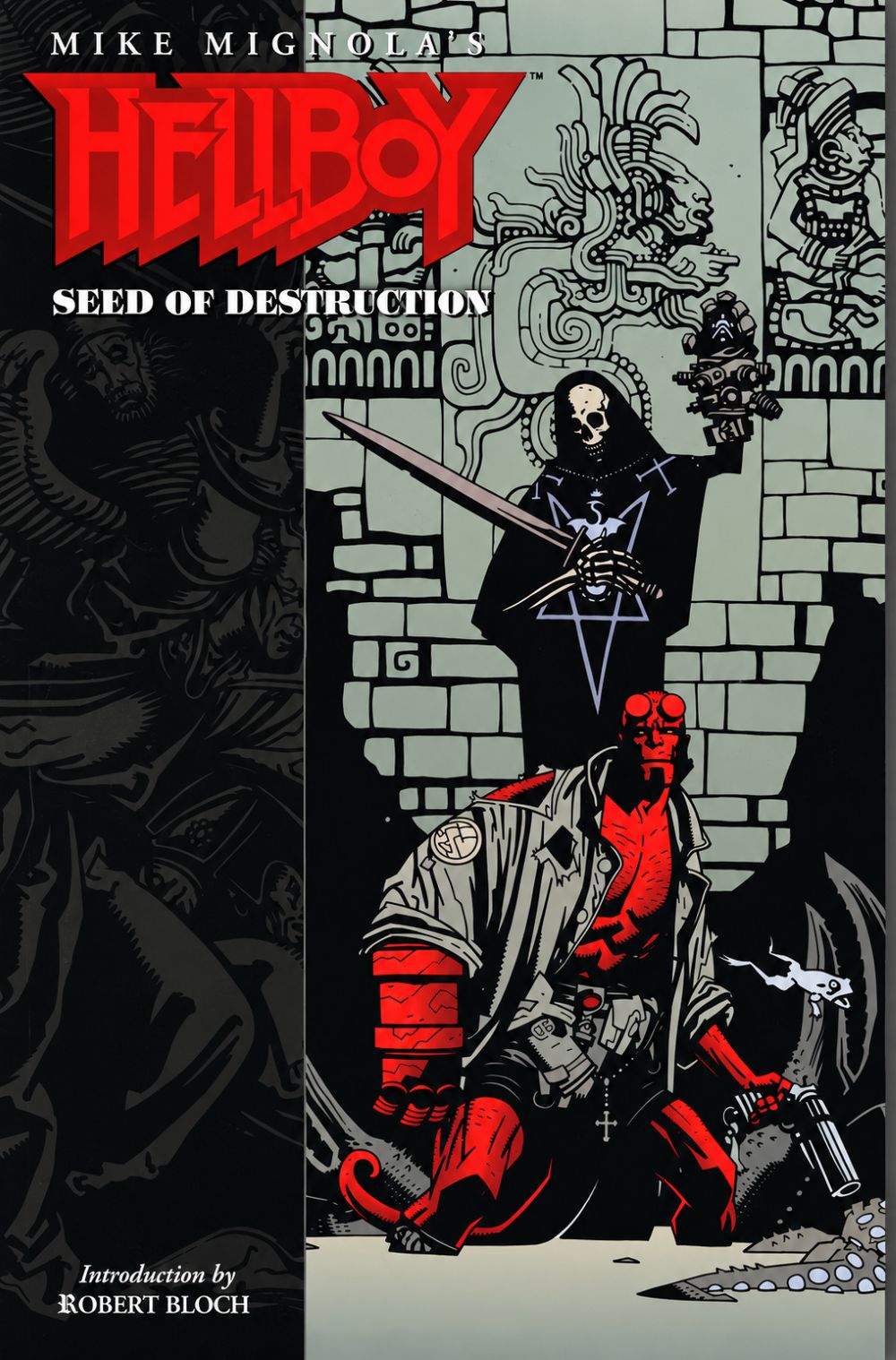
Mike Mignola’s Hellboy: Seed of Destruction is more than the opening chapter of a popular comic-book universe. It is a foundational work of supernatural adventure, combining pulpy monster fiction, wartime conspiracy, Gothic imagery, Lovecraftian apocalypse, and a surprisingly human story about identity and free will. First published as a four-issue miniseries in 1994 and co-plotted with John Byrne, the graphic novel introduces Hellboy with striking confidence. The mythology already feels vast, the visual identity is fully recognizable, and the title character arrives as one of the most distinctive heroes in modern comics: a cigar-smoking red demon with a stone right hand, a sarcastic sense of humor, and a stubborn refusal to become the monster everyone expects him to be.
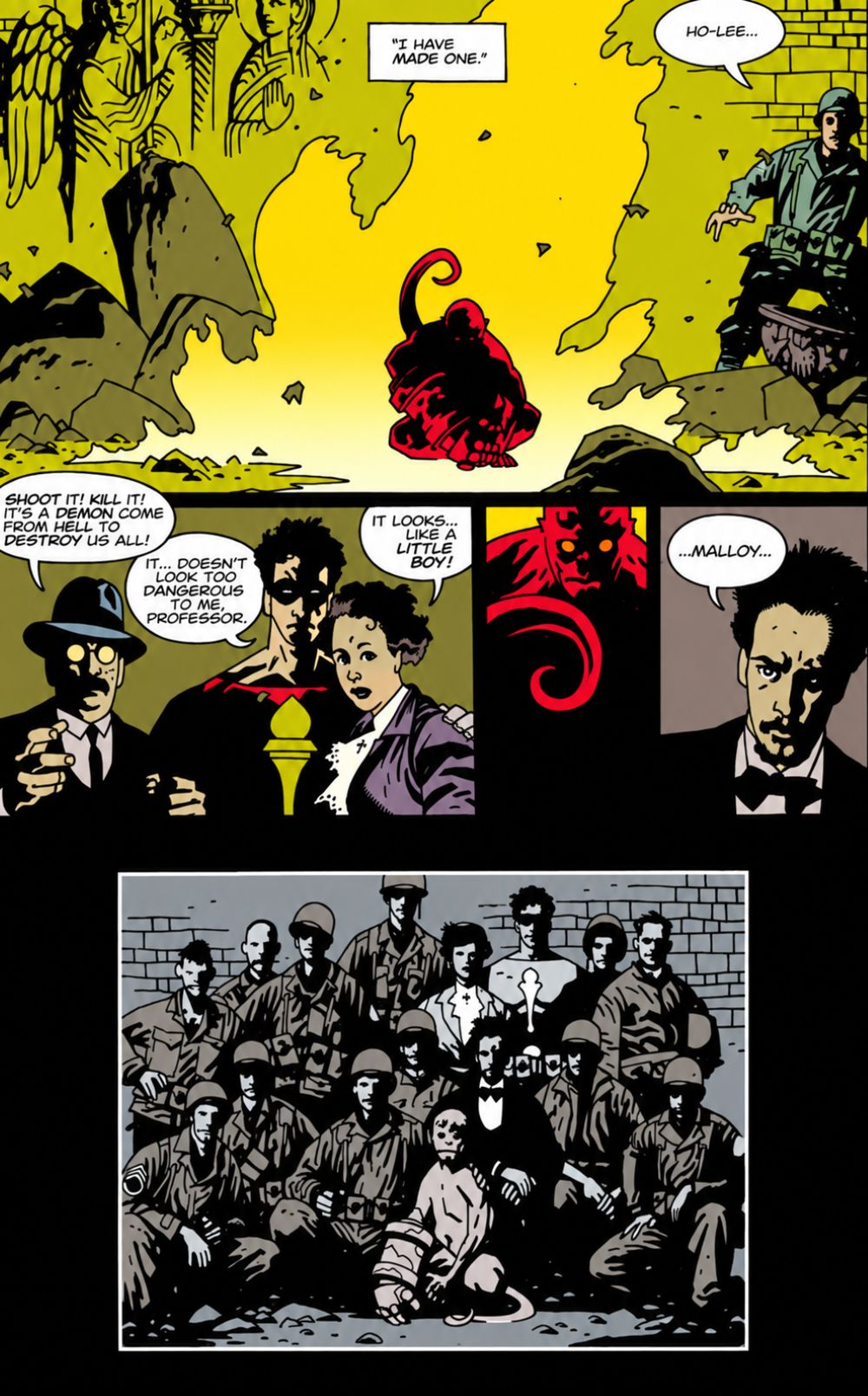
The premise is immediately compelling. In the final days of World War II, Nazi occultists conduct an elaborate ritual intended to summon a weapon powerful enough to alter the war’s outcome. The ceremony is overseen by Grigori Rasputin, who is reimagined here not simply as the notorious Russian mystic but as a servant of ancient, world-ending forces. Allied soldiers disrupt the ritual, but instead of the apocalypse the Nazis hoped to unleash, they discover a small red-skinned demon child transported to Earth. That child becomes Hellboy. He is taken in by Professor Trevor Bruttenholm, founder of the Bureau for Paranormal Research and Defense, and raised not as a weapon or scientific specimen, but as a son.
That decision gives Hellboy: Seed of Destruction its emotional center. Hellboy looks like the obvious villain of his own story. He has red skin, filed-down horns, a tail, cloven feet, and the massive stone right hand known as the Right Hand of Doom. He appears as though he should stand alongside Dracula, Frankenstein’s monster, or Satan himself. Yet Mignola’s central idea is that origin does not have to determine destiny. Hellboy may have entered the world through an act of evil, and powerful supernatural forces may expect him to fulfill an apocalyptic role, but he chooses another path. As an adult, he works for the B.P.R.D., investigating paranormal threats and protecting humanity from the very kinds of monsters he might be expected to join.
The main story takes place decades after Hellboy’s arrival and begins when a death close to him forces the past back into the present. The loss gives the investigation a personal urgency and propels Hellboy toward the hidden truth behind his own origins. As he follows the trail, he becomes entangled in a conspiracy involving Rasputin’s return, surviving Nazi occultists, forgotten rituals, buried secrets, and the terrifying possibility that Hellboy himself may have a role in an event far greater than any single monster attack. The plot steadily expands from a personal mystery into a threat with apocalyptic implications, but it never completely loses sight of Hellboy as a character caught between the person he has chosen to be and the fate others want to impose upon him.
Hellboy is joined by fellow B.P.R.D. agents Abe Sapien and Liz Sherman. Abe, an amphibious investigator with a calm, analytical nature, provides an effective contrast to Hellboy’s bluntness and impatience. Liz, a pyrokinetic woman whose connection to fire comes with emotional burdens of its own, brings a more vulnerable and tragic element to the team. In this first volume, they are not yet as richly developed as they would become in later stories, but their presence establishes the B.P.R.D. as something more interesting than an ordinary superhero team. These are not polished celebrity heroes in colorful costumes. They are unusual, damaged, and often isolated people employed to confront dangers that the public cannot know exist.
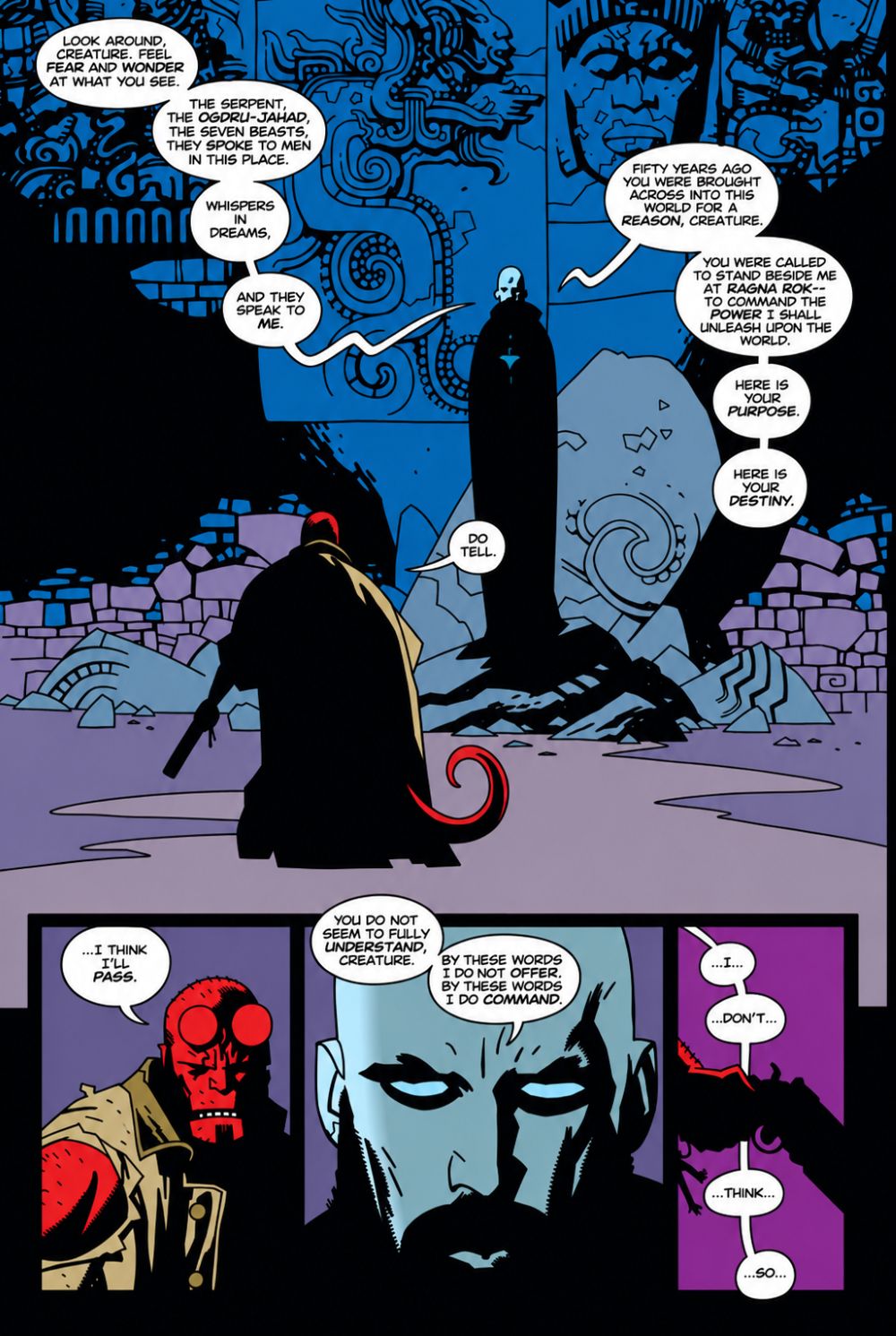
Mignola’s art is the graphic novel’s defining achievement. Even among the strongest comics of the 1990s, Hellboy: Seed of Destruction feels visually singular. At a time when much of mainstream superhero art emphasized intricate rendering, oversized muscles, and hyperactive action, Mignola worked through silhouette, shadow, stark design, and carefully controlled negative space. His figures are often blocky and stylized, but they are never lifeless. A few lines can convey fear, exhaustion, anger, or resignation. A large black shape can become a doorway, a corridor, an abyss, or a threat the reader cannot fully see.
Mignola does not use darkness merely to make the comic look moody. His shadows are active storytelling tools. Characters disappear into them, monsters emerge from them, and entire environments seem to exist only partially in the light. A seemingly empty room can become frightening because its far wall is swallowed by blackness. A frozen landscape can feel ominous because it leaves its characters exposed beneath an enormous blank sky. His layouts often evoke old pulp-horror illustrations, German Expressionist cinema, Gothic architecture, folklore engravings, and vintage monster movies. Rather than presenting a sleek modern superhero world, Mignola creates a universe that feels ancient, secretive, and half-buried under centuries of superstition.
The color work deepens that atmosphere. The pages use earthy browns, faded blues, icy whites, sickly greens, and vivid flashes of red to create a world that feels both dreamlike and decayed. Hellboy’s red skin makes him instantly recognizable within Mignola’s compositions, especially when he stands against a field of black shadow. He often resembles a burning ember in a world of darkness: visually connected to the supernatural realm around him, yet refusing to be extinguished by it. That visual contrast captures the character’s place in the story. Hellboy belongs to the darkness in a literal sense, but he continually chooses to stand against it.
The writing is more exposition-heavy than some later Hellboy stories, but it serves an understandable purpose. Hellboy: Seed of Destruction has to introduce Hellboy, the B.P.R.D., Rasputin, the Nazi occultist threat, the supernatural cosmology, and the significance of the Right Hand of Doom in a relatively short space. John Byrne’s scripting helps organize the material and gives the narrative forward momentum. Certain explanations have the recognizable rhythm of early-1990s genre comics, but the story’s atmosphere remains strong enough that the mythology rarely feels like a dry information dump. Mignola and Byrne create the impression that readers are seeing only a small piece of an immense occult history, one filled with ancient gods, forgotten disasters, and forces that have been waiting in darkness for centuries.
The pacing is deliberate rather than relentlessly action-driven. Mignola allows scenes to breathe, lingering over ruined architecture, old artifacts, empty corridors, haunted chambers, and moments of tense silence. The dread accumulates gradually. When action erupts, it tends to be sudden, heavy, and physical. Hellboy is not an acrobatic hero who glides through combat with effortless grace. He breaks through doors, trades blows with monsters, absorbs punishment, and keeps moving forward. His heroism has a blue-collar quality. He treats fighting the impossible as difficult, unpleasant work that nevertheless needs to be done.
That quality makes him especially effective within the story’s Lovecraftian framework. Traditional cosmic horror often centers on human helplessness in the face of forces too vast, ancient, and indifferent to comprehend. Hellboy: Seed of Destruction preserves that feeling, particularly in its suggestions of ancient beings and apocalyptic forces beyond normal understanding. However, it gives readers a protagonist willing to confront that terror rather than collapse before it. Hellboy cannot necessarily understand every supernatural threat, and he cannot erase the ominous circumstances of his birth, but he can refuse to cooperate with the fate laid out for him. His defiance is not naïve optimism. It is a hard-earned, practical moral stance: he will not let anyone turn him into a weapon, and he will not stand aside while innocent people are endangered.
The relationship between Hellboy and Bruttenholm gives that moral stance its weight. Bruttenholm represents the compassion that allowed Hellboy to become something other than an instrument of destruction. He does not deny Hellboy’s demonic origins, but he refuses to treat those origins as a permanent verdict. Their bond lends real emotion to the graphic novel without overwhelming it with melodrama. Mignola’s best moments of feeling are often restrained, expressed through silence, body language, or a brief line rather than a lengthy speech. This restraint suits Hellboy himself. He is not a character who easily verbalizes grief, fear, or tenderness, but those feelings are present beneath his rough exterior.
The graphic novel also has an important place in Hellboy’s larger cultural legacy because it served as the basis for Guillermo del Toro’s live-action film Hellboy. The adaptation draws from the comic’s wartime origin, B.P.R.D. framework, Rasputin-centered occult threat, and larger supernatural mythology, helping bring Mignola’s character and visual world to a wider audience. Even so, Hellboy: Seed of Destruction stands firmly on its own as the original expression of that world: darker, quieter, and more reliant on the power of shadow, silence, and graphic design than any adaptation could fully reproduce.
Hellboy: Seed of Destruction is not entirely flawless. The exposition can occasionally be dense, and Abe and Liz are not yet given the emotional complexity they receive in later Hellboy stories. The book also has the understandable burden of establishing a great deal of lore in a short opening arc. Yet those limitations are minor beside its achievements. Mignola creates a complete aesthetic universe from the beginning, one populated by ancient horrors, occult conspiracies, cryptic prophecies, and damaged people trying to do the right thing in a world that often seems hostile to human life.
Ultimately, Hellboy: Seed of Destruction remains a landmark graphic novel because it places mood, design, and character above conventional superhero spectacle. It is not simply about a demon punching monsters, even though it delivers that pleasure exceptionally well. It is about a creature born under the shadow of evil who insists on defining himself through his choices. Hellboy’s greatest strength is not his stone fist, supernatural durability, or ability to survive encounters with horrors beyond human comprehension. It is his refusal to become what he was made to be.
Hi, everyone! Tonight, on Mastodon, I will be hosting the #TubiThursday watch party! Join us for 1985’s anti-communist masterpiece, Rambo: First Blood Part II!
You can find the movie on Tubi and you can join us on Mastodon at 9 pm central time! (That’s 10 pm for you folks on the East Coast.) We will be using #TubiThursday hashtag! See you then!