On Strike for Christmas (Dir Robert Iscove), Review by Case Wright


On Strike for Christmas was fun because I got to live tweet it with Lisa and that’s always a blast. The story is straight forward- Joy (Daphne Zuniga), a SAHM, is fed up with being unappreciated for her hard work in prepping for Christmas; so, she goes full-commie and strikes/organizes the other moms to fall into the perils of communism by unionizing the moms to stop all Christmas prep! Honestly, I could’ve reviewed this film for Horrorthon based upon the Marxist plot line!

I want to stay as positive as I can because it’s Christmastime but the film took a WEIRD left turn! First, the grandmother, the mom, the dad, AND the two sons were really close in age; so, you had serious teen mom vibe. Second, it was obvious that ALL of the actors had the hots for each other! It was like infamous Folgers ad (see below ).

If you are unfamiliar with the Folgers ad above, the plot is that a brother returns from Africa and the actors couldn’t help but show their attraction for one another. The same distracting event happened in this film too and not just once or twice – no no no – the sexual tension in this film was like Madmen season 1 levels and in nearly every scene.

There was one scene where the mom dressed up and the son gushed on how hot she was and it was very uncomfortable. I swear, find someone who looks at you like these actors looked at each other!!!

There were some funny parts to the film; such as, the obligatory trope that the boys and dad tried to make cookies and it’s a disaster. However, it really felt like the family had a lot of problems before this because the mom proceeded to not only go on strike, but to talk to journalists about all of her family were just POSs. I mean really if you’re already at the point where you feel comfortable going to the press about what garbage people your husband is and your son’s, the marriage is already over. And in her case, it certainly was awkward at Valentine’s Day when her dad and sons/boyfriends gave her chocolate all at the same time!!! I can only imagine what the hallmark card would look like!!!

Lisa noticed that the mom wasn’t just going on strike herself, but she proceeded to break up every family in the town. Joy needs to be stopped! I mean, it’s bad enough that she’s led all these poor people down the path of socialism and communism, which is just painful for me, but she’s also splitting up all these families!

Maybe that’s what happened in Russia? It was all just a big kerfuffle over cookies and icing and the next thing you know – nukes are pointed right at the good old US of A!!!

It should be noted that eventually the strike does end and the families try to pick up the pieces of their shattered lives. I think that was very insensitive of Joy because she always had her son/boyfriend’s number to fall back on during those cold winter nights!!!

Scenes That I Love: David Bowie and Bing Crosby Sing A Duet in Bing Crosby’s Merrie Olde Christmas


In this scene from Bing Crosby’s Merrie Olde Christmas, David Bowie stops by the home of his old friend, Sir Percival Crosby, and meets Sir Percy’s long-lost American relative, Bing Crosby!  A discussion of modern music and parenting techniques leads to them performing a duet of Peace On Earth/Little Drummer Boy.

This was Bing’s final Christmas special and he died just five weeks after filming completed.  This scene is a holiday classic and has been described. by the Washington Post, as “one of the most successful duets in Christmas music history.”

When asked about David Bowie, Bing said he was “clean-cut kid and a real fine asset to the show. He sings well, has a great voice and reads lines well.”

Enjoy!

Retro Television Review: Homicide: Life On The Street 4.16 “Stakeout”


Welcome to Retro Television Reviews, a feature where we review some of our favorite and least favorite shows of the past!  On Sundays, I will be reviewing Homicide: Life On The Street, which aired from 1993 to 1999, on NBC!  It  can be viewed on Peacock.

This week, the detectives take over someone else’s house.

Episode 4.16 “Stakeout”

(Dir by John McNaughton, originally aired on March 15th, 1996)

When a young man confesses to helping an older man carry out a series of murders, the Homicide Squad stakes out the older man’s house.  Jim True-Frost and Kate Walsh play the owners of the home that the squad takes over.  The husband is out of work.  The wife has a habit of oversharing.  While they try to adjust to having cops hanging out in their living room, the detectives adjust to the idea that Bayliss may be leaving them.

Once again, Bayliss is thinking about leaving Homicide.  This has been a recurring theme with Bayliss, ever since he failed to close the Adena Watson case.  (In this episode, he mentions that his number one suspect — Risley Tucker — has recently died.)  Bayliss’s complaint is that he still feels like he barely knows the other detectives.  He mentions that he’s never even been to Pembleton’s house.  Pembleton asks if Bayliss is really that surprised that Pembleton might want time to himself when he’s not on the clock.  Bayliss talks about how the Vice Squad regularly has barbecues.  He talks about the comradery that he felt when he was on the Governor’s security detail.  But Homicide tends to attract the misanthropes and the eccentrics.

Of course, Bayliss doesn’t leave Homicide.  At the end of the episode, he takes one look at the board and sees that he still has one open case.  “I can’t leave until the Lambert case is closed,” Bayliss says while Pembleton smiles.

Giardello, meanwhile, is struggling with the knowledge that his daughter is getting married to a man that he’s never even met.  Giardello has been invited to the wedding in San Francisco but he keeps finding excuses not to go.  Pembleton finally convinces Giardello that he needs to go to his daughter’s wedding.  Unfortunately, when Giardello arrives at the airport, he’s told that all flights have been grounded due to the weather.  So, Giardello misses the wedding regardless.

Eventually, the killer returns to his home.  He’s a stout man who looks like he should be selling insurance.  Bayliss and Pembleton arrest him and the stakeout ends.  The husband, who has been out looking for a job, pulls up just as Bayliss and Pembleton are leaving.  Life goes on for everyone but the dead.

This episode was okay.  I appreciated that it was a return to the character-driven drama of the earlier seasons.  The snowy imagery brought a lot of atmosphere to the episode and director John McNaughton (of Henry: Portrait of a Serial Killer fame) did a good job framing scenes that could have come across as being excessively talky in lesser hands.  That said, the husband and the wife were not that interesting and I never really bought the idea that they would pour out all of their marital woes to a bunch of strangers in their living room.

This is my final Homicide review for 2025.  Retro Television Reviews is taking a break for the holidays!  Homicide will return on January 11th, 2026.

Late Night Retro Television Review: Saved By The Bell 1.6 “Aloha Slater”


Welcome to Late Night Retro Television Reviews, a feature where we review some of our favorite and least favorite shows of the past!  On Saturdays, I will be reviewing Saved By The Bell, which ran on NBC from 1989 to 1993.  The entire show is currently streaming on Prime and Tubi!

This week, Zack has a chance to get ride of his main frenemy!

Episode 1.6 “Aloha Slater”

(Dir by Don Barnhart, originally aired on September 23rd, 1989)

Zack Morris used to be the “top dog” at Bayside but now that Slater has arrived, no one cares about Zack’s pathetic little third place ribbon that he got at a track meet.  Instead, they care about the giant trophy that Slater won at his latest wrestling match.

However, there may be hope on the horizon!  Slater’s father, Major Martin Slater (Gerald Castillo), has been offered a transfer to Hawaii.  When Major Slater tells Belding that he will be removing AC from school, Screech listens from inside a filing cabinet.  Major Slater can’t wait to go to Hawaii but AC isn’t so sure.  He’s finally got friends and he’s winning trophies!  Major Slater leaves it up to his son.  If AC Slater wants to go to Hawaii, the family will transfer.  If AC wants to stay in California, they will.

Zack decides that AC has to go to Hawaii.  He convinces Lisa, Kelly, and Jessie that AC is dying of a mysterious disease and that his only hope for survival is moving to Hawaii.  Zack sprinkles fire ants on AC’s back to make AC herk and jerk, as if he’s having a spasm.  “This is study hall, not soul train!” the teacher announces.  That teacher, by the way, was played by Dustin Diamond’s father.

Zack convinces everyone to treat AC like crap.  He also steals AC’s wrestling trophy.  AC announces that he’s going to Hawaii.  Kelly replies, “And I’m going with him!”

Zack is stunned.  I’m stunned, as well.  How exactly is Kelly going to go with him?  Are her poor, salt-of-the-Earth parents okay with moving to one of the most expensive states to live in?  At least the Slaters have a home and a good job waiting for them in the Aloha State.

(Actually, now that I think about it and I remember Saved By The Hell Hawaiian Style, Kelly did have that uncle who lived in Hawaii so I guess it’s not as out-there a development as I initially though.)

Kelly tells Slater that she knows he’s dying.  Slater realizes that he’s been set up.  It’s time for another prank!  AC’s father turns out to be remarkably okay with staying in California.  He’s also okay with pretending to be insane and throwing a grenade at Zack.

Watching this episode, it occurred to me that, during the first season at least, Mario Lopez was clearly the star of the show.  While Mark-Paul Gosselaar was still trying a little bit too hard (and he wasn’t helped by some overwritten dialogue) and Dustin Diamond looked like he was about 10 years old, Mario Lopez gave a believable performance as a teenager who had finally found a home and didn’t want to leave it.  Slater’s the compelling character, the one who actually gets to grow and deal with real problems.  (Gosselaar, of course, has grown tremendously as an actor since the first season of SBTB.)

Fortunately, Slater stays in California.  Yay!  It’s hard to imagine Bayside without him.

This is my final Saved By The Bell review of 2025.  Retro Television Reviews is taken a break for the holidays so that I can focus on Awards Season and Christmas movies!  Saved By The Bell will return on January 10th, 2026.


Lisa Marie’s Week In Television: 11/30/25 — 12/6/25


Frosty the Snowman (Thursday, NBC)

This holiday special makes me cry.  Everytime.

How The Grinch Stole Christmas (Thursday, NBC)

Oh, I love this one!  Seriously, Boris Karloff and Christmas are a great combination!

Rudolph the Red-Nosed Reindeer (Friday, NBC)

Why is Santa Claus so mean in this one?  This special has always been my least favorite of the classic Christmas specials because it makes the North Pole look like a terrible place to work.

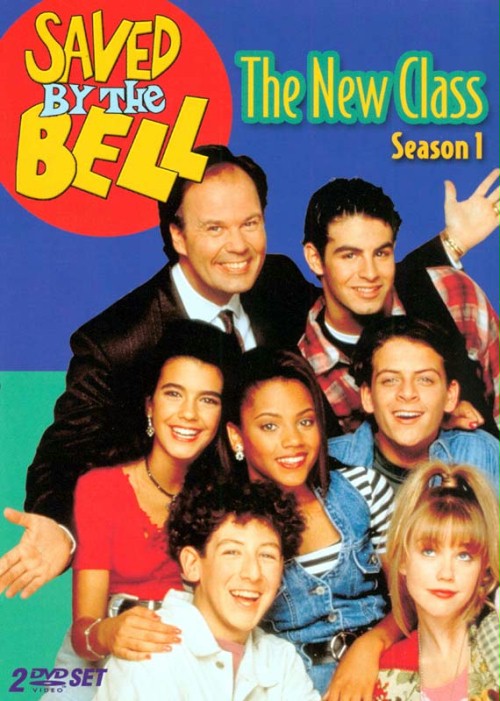
Saved By The Bell: The New Class (Prime)

I’ve been struggling with insomnia this week but I discovered that, if I put SBTB: The New Class on as background noise, it actually eases me into sleep.  This week, I slept through seasons 6 and 7.  I had totally forgotten that, after Richard Lee Jackson left, they brought in yet another blonde transfer student from Valley to step into the Zack role.  As I said last week, this show was the version of Saved By The Bell that I grew up with and I have a certain nostalgia for it.  It’s not good but it’s oddly comforting in its terrible way.

Sean Combs: The Reckoning (Netflix)

I watched this docuseries on Friday and Saturday.  It’s always so weird to me how people just kind of shrug off rap feuds turning violent, as if all the death is just a part of the entertainment.  As for the series itself, it obviously had an agenda but that doesn’t make Sean Combs any less sleazy.

Retro Television Review: Baywatch 1.7 “The Cretin of the Shallows”


Welcome to Retro Television Reviews, a feature where we review some of our favorite and least favorite shows of the past!  On Saturdays, I will be reviewing Baywatch, which ran on NBC and then in syndication from 1989 to 2001.  The entire show can be viewed on Tubi.
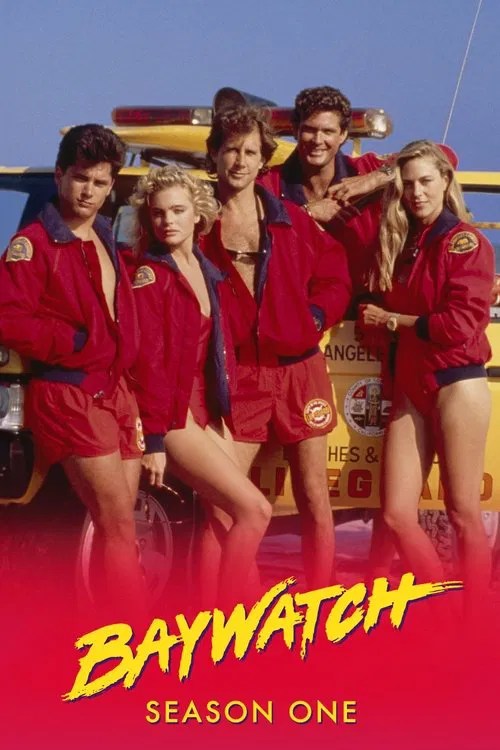
This week, there’s a lot happening on the beach!

Baywatch 1.7 “The Cretin of the Shallows”

(Dir by Vern Gillum, originally aired on December 1st, 1989)

Eddie gets his wisdom teeth taken out.  Feverish and on pain-killers, he has a hallucination in which Gina Pomeroy (Holly Gagnier) kisses him.  Eddie spends the entire episode nervous that Craig is going to discover that he’s having an affair with his wife but actually, Eddie isn’t having an affair.  It’s not until the end of the episode that Gina tells Eddie that they never kissed and Eddie finally starts to relax.  Gina promises not to tell Craig because “I think it’s sweet.”  Myself, I’m just curious as to how stupid Eddie actually is.

Shauni and Jill deal with a teenage boy who has made a bet with his friends that he’ll be able to get a kiss from both of them.

And a horrifying serial killer (Robert Trebor) is stalking the night, brutally murdering people on the beach.

One of these storylines is not like the other!

The first season of Baywatch was seriously weird.  Light-hearted lifeguard hi-jinx would be mixed in with scenes of people being murdered.  Mitch and Craig weren’t just lifeguards.  They were also cops who solved mysteries (Kind of like Baywatch Nights!) and they put their lives at risk to do so.  Remember how I mentioned that Gina told Eddie that they never kissed?  She told him that after she had been rescued from the serial killer.  Gina nearly died!  Neither Gina nor Craig seemed to be too upset about that, though.  I would be a little bit traumatized but that’s just me.

This episode really didn’t work for me.  Personally, I like the light-hearted stuff.  It’s dumb but, at heart, Baywatch’s appeal is that it’s a dumb show with nice scenery.  Tossing a serial killer into the mix just made things unpleasant.  It didn’t feel like it belonged on a show about people running on the beach in red bathing suits.

This is my last Baywatch review of 2025.  Retro Television Reviews will be taking a break for the holidays so that I can focus on Awards Season and Christmas movies!  Baywatch will return on January 10, 2026.

Late Night Retro Television Review: Freddy’s Nightmares 1.18 “The Art of Death”


Welcome to Late Night Retro Television Reviews, a feature where we review some of our favorite and least favorite shows of the past! On Fridays, I will be reviewing Freddy’s Nightmares, a horror anthology show which ran in syndication from 1988 to 1990. The entire series can be found on Tubi!

This week’s episode is actually decent.

Episode 1.18 “The Art of Death”

(Dir by Ken Wiederhorn, originally aired on March 12th, 1989)

Jack (Carey Scott) is a talented artist and college student who has a crush on Joan (Laura Schaefer).  When Joan’s jock boyfriend humiliates Jack, Jack suddenly finds himself approached by The Phantom (Judd Omen), a masked figure who claims that he can kill Jack’s enemies if Jack draws a picture of him doing it.  After the jock is killed in a treadmill accident, Joan sees the picture that Jack drew and decides she doesn’t want anything to do with Jack.  The Phantom suggests drawing a picture of him surprising Joan in the shower.  Jack refuses, just to discover that the picture has already been drawn and the Phantom is now holding Joan prisoner in a boiler room.  Jack draws a picture of the Phantom being sucked down a hole.  The Phantom vanishes but …. oh no, now Jack’s wearing the mask!  Jack was the Phantom all along!

As for the second story, Joan struggles to recover from the trauma.  In typical Freddy’s Nightmares fashion, she has a series of hallucinations that lead to her killing her psychiatrist.

This episode actually worked!  The first story was genuinely creepy.  The second story was predictable but it featured a good performance from Laura Schaefer and the action moved at a decent pace.  I’m going to give the majority of the credit to director Ken Wiederhorn, who previously directed one of my favorite zombie films, 1977’s Shock Waves.

This is my final Freddy’s Nightmares review for 2025.  Retro Television Review is taking a break for the holidays, so I can focus on Awards Season and Christmas movies!  Freddy’s Nightmares will return on January 9th.

Retro Television Review: St. Elsewhere 3.3 “Two Balls And A Strike”


Welcome to Retro Television Reviews, a feature where we review some of our favorite and least favorite shows of the past! On Fridays, I will be reviewing St. Elsewhere, a medical show which ran on NBC from 1982 to 1988.  The show can be found on Daily Motion.

This week, the nurses go on strike.  Fire all of them!, I say.

Episode 3.3 “Two Balls and a Strike”

(Dir by David Anspaugh, originally aired on October 3rd, 1984)

It’s another depressing few days at St. Eligius.

When negotiations break down, all of the nurses — except for Shirley Daniels — go on strike.  Led by Nurse Rosenthal, they march out of the hospital and join a picket line in the rain.  Triumphant music plays on the soundtrack  Rosenthal gets on her bullhorn and announces that anyone making deliveries to the hospital will be crossing the picket line and not showing solidarity with the union.  Honestly, though?  Screw the union.  It’s a hospital!  It needs supplies.  There are people dying inside of that building and they’re not even going to have the dignity of clean linen because of Nurse Rosenthal and her stupid union.  And another thing …. Rosenthal is the head of union at St. Eligius.  So, why isn’t she marching in the rain and carrying a sign?  Why does she get to stand in the doorway and shout at people?  Get out there and suffer for your union, you British commie!

Obviously, the show wanted me to be inspired by Rosenthal and the union.  Whenever it switched over to the picket line, triumphant music started playing.  I’m with Nurse Daniels on this one, though.  Daniels didn’t vote the union so why should she have to suffer in the rain?  She stays on the job.  “Good luck,” Rosenthal tells her, “you’ll need it.”  And all I can say to that is that at least Shirley Daniels isn’t deserting the hospital’s patients.

While the nurses are on strike, Dr. Canavero is attacked by a hulking man wearing a ski mask.  Canavero is able to fight him off.  Westphall and everyone else at the hospital immediately assumes that the man was Peter White but Peter has an alibi.  He was in radiology when Canavero was attacked.  So, is there a new ski mask rapist haunting the hospital?  The first ski mask rapist storyline was pretty disturbing, especially since Peter got away with it.  I’m not sure I want to go through a second one.

Dr. Craig and Ellen went to couples therapy.  As usual, Dr. Craig got annoyed with the whole thing.  There’s really nothing more fun than watching Dr. Craig get annoyed.  No one gets annoyed better than William Daniels.  Still, it seemed to do Dr. Craig and Ellen some good, with Ellen making plans to go to Hawaii and Dr. Craig acknowledging that he’s not always the easiest person to deal with.

As for Dr. Westphall …. he spent most of this episode depressed.  Westphall is always depressed.

This is my final St. Elsewhere review for 2025.  Retro Television Review is taking a break for the holidays, so I can focus on Awards Season and Christmas movies!  St. Elsewhere will return on January 9th.

Review: The Manipulated


“Truth is whatever I say it is. You can scream innocence all you want, but in my world, your words are just noise.” — An Yo-han

The Manipulated is a Korean revenge thriller that successfully combines familiar genre elements with a fresh sense of intensity and emotional depth, making it a standout in the crowded field of dark legal dramas. The series centers on Park Tae-jung (played by Ji Chang-wook), a seemingly ordinary delivery driver whose life is shattered when he is wrongfully accused and framed for a horrific crime. Overnight, he transitions from a hardworking, everyday man to a desperate prisoner, and eventually, to a determined figure plotting revenge against those who manipulated his fate—most notably, the cold, calculating antagonist An Yo-han (Do Kyung-soo). The show delivers a layered narrative that explores not just personal vengeance but the broader ramifications of power, control, and corruption within societal institutions.

The heart of the story revolves around the idea of manipulation itself—who pulls the strings, who is controlled, and what lengths are necessary to reclaim agency when everything has been taken away. Tae-jung is depicted as a relatable character: a caring older brother, a man running a humble flower café, and someone leading an ordinary life with steady relationships. The show effectively uses this normalcy to heighten the emotional impact when his world falls apart. The transformation from this everyday existence to being cast into the brutal prison environment is stark and compelling. It’s not subtle, but this unrelenting descent works well to justify the fierce anger and resolve that Tae-jung ultimately channels toward his quest for justice. For viewers who appreciate stories where an underdog is pushed to their limits and beyond, this setup resonates and provides an accessible entry point.

The series’ portrayal of prison life is integral to its gripping atmosphere. Tae-jung’s time behind bars is fraught with constant threats, both physical and psychological. The squalid environment where gang hierarchies dominate adds a layer of tension and realism. The prison gang leader, Deok-su, represents the harsh realities of this closed world, embodying a constant source of danger and oppression for Tae-jung. This portrayal forces the protagonist to quickly learn the unspoken rules of survival. Alongside the violence, the show introduces layered secondary characters such as Kim Sang-rak, Tae-jung’s public defender, and volunteer No Yong-sik, which deepens the emotional dimension of the story. These figures help flesh out the narrative, showing the human cost behind the legal system’s failures and the recurring motif of false accusations beyond just the main plotline.

What sets The Manipulated apart is the growing psychological duel between Tae-jung and the enigmatic antagonist An Yo-han. The series takes its time introducing Yo-han—creating an anticipation that pays off as the character’s cold, detached cruelty reveals itself. Do Kyung-soo brings a chilling, almost theatrical presence to the role, portraying Yo-han as masterful in manipulation and strategic cruelty. His actions throughout the series reflect a bored yet brutal puppeteer’s mindset, someone who views others’ lives as mere pawns in a twisted game. This stark contrast with Tae-jung’s raw, increasingly calculated rage adds a heavy psychological layer to the narrative, enriching what might otherwise have been a more straightforward revenge story.

The Manipulated manages pacing impressively well. The tension is maintained through effective plot twists and steadily unfolding backstory without excessive filler or drawn-out sequences. While some plot elements do follow recognizable thriller tropes—such as coincidental rescues or dramatic last-minute revelations—the show executes them with enough style and emotional weight to prevent these from feeling clichéd. Instead, the narrative leans into moral ambiguity rather than offering a simplistic “hero gets revenge” conclusion. This adds complexity and invites viewers to question the true cost of revenge and justice in a corrupt system.

Visually and technically, the series is polished and cohesive. The direction uses tight framing and muted colors to underscore the claustrophobia and hopelessness Tae-jung experiences, both inside prison walls and within the wider society controlled by manipulative elites. Cinematography favors shadows and long corridor shots, mirroring the themes of entrapment and surveillance woven through the plot. The editing is sharp and intelligent, with effective use of flashbacks and visual clues to assist storytelling without losing narrative momentum. Complementing this is a subtle but atmospheric sound design, featuring a restrained score that amplifies suspense without overstepping into melodrama. Additionally, the quiet moments stripped of music—such as tense interrogations or confrontations—allow the powerful performances to carry emotional weight.

As the series progresses, it becomes clear that The Manipulated attempts to comment on deeper societal issues. It highlights the fragility of truth and the ways in which legal and political institutions can be systematically weaponized to protect the powerful while crushing the vulnerable. The manipulation extends beyond a single framed protagonist to suggest a broader pattern of societal decay and complicity. However, compared to a show like Squid Game, which powerfully and provocatively portrayed the rich and powerful as architecting deadly games to maintain control and stay above the law, The Manipulated’s treatment of these issues feels less nuanced and less impactful. Squid Game uses vivid symbolism, sharp social critique, and a global cultural resonance to expose how elites manipulate systems to preserve their power, whereas The Manipulated deals with similar themes in a more subdued and conventional manner, making its social commentary less striking and memorable.

However, the show is not without its flaws. Despite solid performances and sharp writing for the lead characters, some secondary roles feel underdeveloped. The wider cast representing institutional forces and corrupt entities often serve more as plot devices than fully realized individuals. A deeper exploration of these characters’ motivations would have enriched the story’s critique of systemic injustice and added emotional heft. Additionally, certain plot coincidences and rapid character shifts—while not uncommon in the genre—sometimes strain credibility, potentially pulling viewers out of the experience. These issues are minor but noticeable, especially in a series that otherwise invests heavily in creating a believable psychological and social landscape.

The completed season also confirms the show’s willingness to embrace a darker tone, with unflinching depictions of violence, mental torment, and systemic abuse. This brutal realism distinguishes The Manipulated from softer or more melodramatic legal dramas, catering to viewers who appreciate gritty and hard-edged storytelling. At the same time, this can be emotionally demanding, with some sequences feeling excessively harsh, particularly when multiple intense scenes are stacked together without relief. This makes the series less accessible for viewers sensitive to graphic content or those preferring more hopeful narratives.

The performances of Ji Chang-wook and Do Kyung-soo are central to the show’s success. Ji brings charisma and intense emotional range to Tae-jung, portraying his shift from vulnerable victim to ruthlessly driven avenger with nuance and depth. His portrayal steers clear of caricature, allowing audiences to empathize with Tae-jung’s pain and determination. Do Kyung-soo’s portrayal of Yo-han is equally compelling, embodying the detached menace and intricate mind games of a master manipulator. Their dynamic elevates the series, creating a tense, compelling interplay that holds viewers’ attention even through moments anchored in procedural details or legal maneuvering.

The Manipulated is a strong addition to the landscape of Korean crime thrillers, marked by solid performances, sharp production, and a thematically rich narrative. It successfully balances the emotional core of its protagonist’s journey with a wider critique of institutional corruption and manipulation, providing more than just surface thrills. While it plays safely within the revenge thriller template and occasionally leans on genre conventions, it executes these elements with enough skill and emotional intelligence to maintain engagement across its full season. However, while it raises potent societal questions, its critique of how the rich and powerful manipulate the world around them to stay above the law is less impactful and vivid than the powerful, globally resonant portrayal found in Squid Game. Fans of dark, intense psychological dramas with complex characters will find much to appreciate here. Be prepared for a brutal, sometimes exhausting ride into the gritty realities of power and vengeance—but one that delivers a satisfying and thought-provoking experience in return. This series is highly recommended for those who enjoy charged atmospheres, moral ambiguity, and slow-burning tension wrapped in polished storytelling.