Welcome to Retro Television Reviews, a feature where we review some of our favorite and least favorite shows of the past! On Mondays, I will be reviewing Miami Vice, which ran on NBC from 1984 to 1989. The entire show can be purchased on Prime!
This week, the British are coming!
Episode 5.11 “Miami Squeeze”
(Dir by Michelle Manning, originally aired on February 17th, 1989)
There’s a new drug lord in Miami. He’s a British dandy named Sebastian Ross (Robert Joy) and it’s impossible to take him seriously as a legitimate threat. The show continually tells us how dangerous Sebastian is. When the son (Daniel Villarreal) of anti-drug Congresswoman Madeleine Woods (Rita Moreno) attempts to double-cross Sebastian, Sebastian blackmails the Congresswoman and also tries to make Castillo look like a dirty cop. Castillo ends up getting shot, all as a result of Sebastian’s schemes.
And yet, despite all of that, it’s impossible to take Sebastian seriously. He’s just a ridiculous character, a drug dealer who dresses like an Edwardian gentleman and who carries a can and who speaks with a remarkably bad British accent. (Robert Joy is himself Canadian. I should mention that Joy is also a very good character actor. He’s just miscast here.) As a character, Sebastian threw off the entire episode. When you include Rita Moreno acting up a storm, this episode almost felt like a self-parody.
Joey Hardin (Justin Lazard), the undercover cop from Line of Fire, returned in this episode. Sonny recruited him to go undercover in order to infiltrate Sebastian’s organization. Considering that Joey was a returning character and that there was a lengthy scene of Sonny asking if Joey felt confident enough to put his life on the line, it was kind of surprising that Joey didn’t really do much in this episode. One got the feeling that perhaps this was meant to be a backdoor pilot for a show featuring Joey as an undercover cop who could pass for a teenager. There’s nothing wrong with that, of course. Who wouldn’t want to keep a franchise going? But Joey ultimately felt like a red herring and a bit of a distraction.
“If pain and suffering were the kisses of Jesus, then he kissed the living fuck out of my mother.” — Roderick Usher
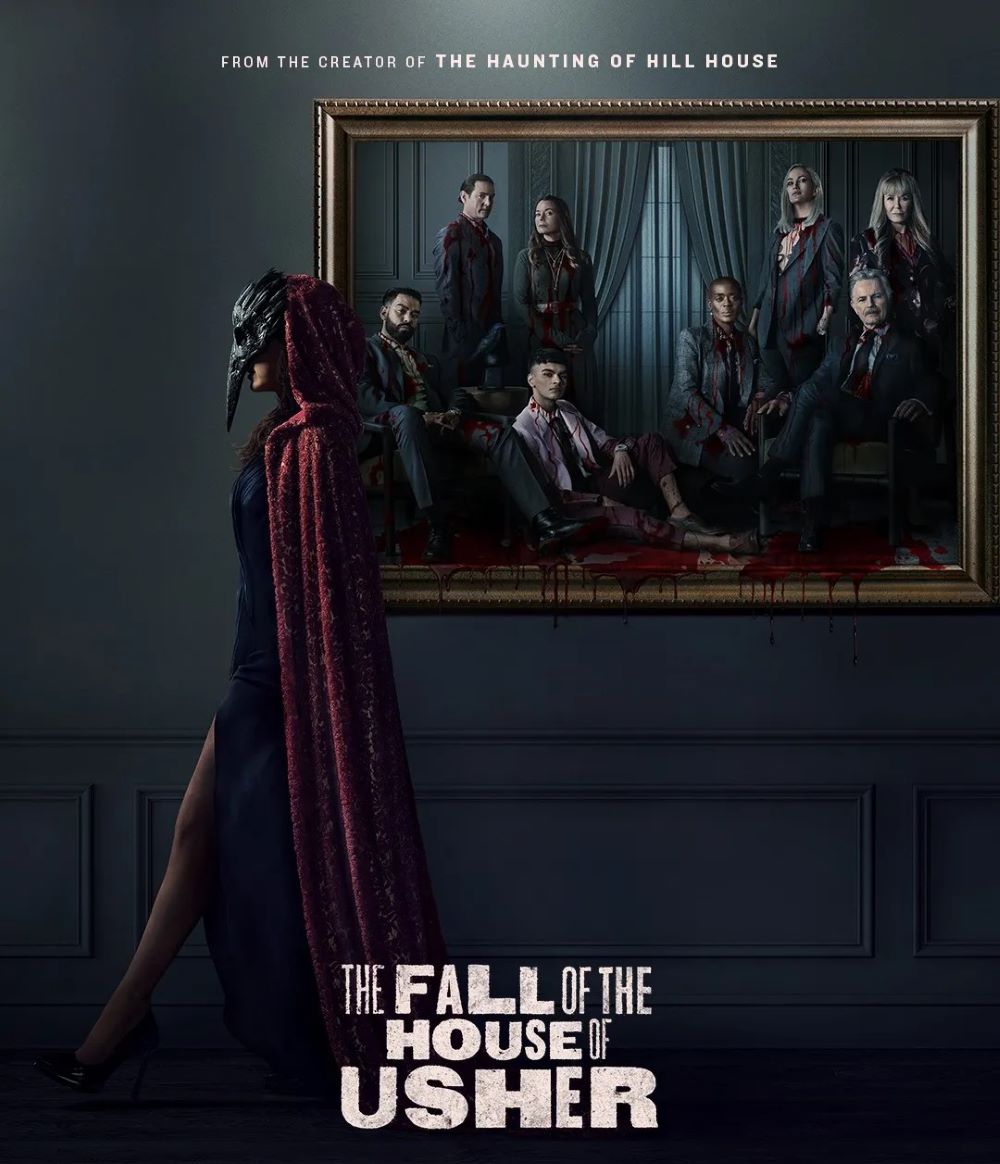
The Fall of the House of Usher delivers Mike Flanagan’s signature blend of gothic dread and modern moral reckoning, reimagining Edgar Allan Poe’s tales as a savage family implosion tied to corporate excess. This Netflix miniseries unfolds over eight taut episodes, framing the confessions of a pharmaceutical tycoon as his bloodline meets grisly, poetic ends. It balances sharp satire with emotional undercurrents, though its heavy-handed messaging and repetitive structure occasionally blunt the impact.
Roderick Usher, now a hollowed-out patriarch, recounts his empire’s collapse to a relentless prosecutor in the crumbling family mansion, flashing back to decades of ambition, betrayal, and supernatural intervention. His twin sister Madeline, the brains behind their Fortunato Pharmaceuticals fortune, shares equal narrative weight, their pact with a enigmatic figure sealing a curse that claims each heir in turn. The setup echoes Poe’s original story but explodes it into a sprawling anthology, with every installment riffing on a different work from the author’s macabre catalog. This structure keeps the momentum high, turning personal flaws into fatal traps, yet it risks formula once the pattern of vice-reveal-demise becomes predictable.
A standout early episode channels The Masque of the Red Death, where a debauched heir’s orgiastic gala spirals into carnage, blending excess with infectious horror in a sequence that’s equal parts thrilling and grotesque. Later, Goldbug skewers influencer wellness culture through a sibling’s pyramid-scheme downfall, its tech-glitch kills inventive and on-theme. These Poe-infused vignettes shine when they lean into visceral spectacle—impalements, immolations, animalistic frenzies—elevating routine family feuds into something operatic. However, weaker entries, like those fixated on lab accidents or courtroom paranoia, feel more procedural than poetic, diluting the supernatural menace amid procedural tangents.
Flanagan’s direction thrives in the atmospheric details: opulent sets that rot from within, shadows pooling like guilt, a score that swells with mournful strings underscoring inevitable doom. Performances anchor the excess, with Carla Gugino’s shape-shifting Verna stealing scenes as a devilish facilitator—charming one moment, apocalyptic the next. Bruce Greenwood lends Roderick a defeated majesty, his monologues on greed and legacy landing with gravitas despite their length. Mark Hamill’s fixer adds gravelly comic menace, a cold pragmatist navigating the Ushers’ moral sewer. The younger cast fares variably; some heirs pop as vicious caricatures—the coke-fueled playboy, the ruthless scientist—while others blur into interchangeable privilege.
Thematically, the series wields Poe’s obsessions—entombment, madness, retribution—against Big Pharma’s sins, drawing parallels to real-world opioid scandals without subtlety. Roderick and Madeline’s rise from rags via a addictive painkiller mirrors ethical shortcuts in pursuit of immortality, their “house” both literal estate and dynastic delusion. Verna embodies karmic balance, not mindless evil, her interventions exposing how wealth insulates sin until cosmic debt collectors arrive. This critique bites, especially in rants decrying humanity’s commodification of suffering, but preachy asides can halt the dread, turning horror into TED Talk territory. Flanagan fans will recognize his grief motifs, here twisted into generational poison rather than personal catharsis.
Pacing falters in the midsection, where flashbacks to the Ushers’ origin drag against the ticking present-day trial. The frame narrative, while elegant, withholds twists too long, making early hours feel like setup over payoff. Gorehounds get inventive set pieces, from pendulum blades to heart-pounding pursuits, but scares prioritize irony over outright terror—less Hereditary shocks, more Final Destination comeuppance. For a one-season arc, it wraps tightly, circling back to Poe’s raven as a symbol of unending loss, though the finale’s revelations feel more intellectually tidy than emotionally shattering.
As adaptation, it honors Poe’s spirit over fidelity, cherry-picking motifs from tales like The Tell-Tale Heart, The Black Cat, and The Pit and the Pendulum to fuel a contemporary revenge saga. Purists might chafe at the liberties—Poe’s claustrophobic intimacy traded for ensemble sprawl—but the result captures his misanthropy, updating crumbling aristocracy to cutthroat capitalism. It’s Flanagan’s angriest work, swapping supernatural melancholy for gleeful vengeance, yet retains his humanism: even monsters get poignant final beats, hinting at redemption’s flicker amid ruin.
The Fall of the House of Usher polarizes like much of Flanagan’s output—loved for audacity, critiqued for indulgence. Its ensemble and kills draw praise, but detractors note tonal whiplash between camp and sincerity. For horror enthusiasts craving literary flair over found-footage tropes, it’s a feast; casual viewers may tire of the lectures. Compared to Flanagan’s Hill House or Midnight Mass, it’s less introspective, more punitive, trading tears for dark laughs at the mighty’s tumble.
Ultimately, the miniseries succeeds as pulpy prestige, a bloody valentine to Poe that indicts modern excess without fully escaping melodrama’s clutches. Its highs—Gugino’s tour de force, baroque deaths, thematic ambition—outweigh the bloat, making it binge-worthy for gothic fans. In Netflix’s crowded horror slate, it stands out for wit and wickedness, a flawed but ferocious reminder that some houses, and legacies, deserve to fall.
Welcome to Late Night Retro Television Reviews, a feature where we review some of our favorite and least favorite shows of the past! On Wednesdays, I will be reviewing 1st and Ten, which aired in syndication from 1984 to 1991. The entire series is streaming on Tubi.
This week, the playoffs continue.
Episode 2.9 “A Family Affair”
(Dir by Burt Brinckerhoff, originally aired on January 13th, 1987)
A playoff game against Denver is approaching. Denver is coached by a former protegee of Denardo’s and Denardo is obsessed with winning. He’s so obsessed that he alienates the players and Coach Grier (Stan Kamber). Grier is tempted to take a job as Houston’s head coach. Denardo says he doesn’t care until Diane reveals that Grier has turned down several other jobs out of loyalty to Denardo.
As for the other assistant coach, T.D. Parker (OJ Simpson) has problems of his own. His youngest son is acting out and the only thing that’s kept him out of juvenile detention is the fact that the cops are all fans of T.D. and the Bulls. T.D. tells his son that he’s not allowed to leave the house. When T.D.’s wife says that she thinks T.D. is being too strict, T.D. tells her to back off. T.D. gets really mad in this episode but none of it is convincing because OJ Simpson was too amiable an actor to really come across as being threatening. That’s something that would prove helpful to OJ in the years to come.
Meanwhile, the players all invest in the stock market. The stock doesn’t do well. The player who recommended the stock is chased out onto the field before the start of the big game against Denver. Ha ha, those players are all broke now. Good luck dealing with life after the game.
This show, I never know what to make of it. Is it a comedy? Is it a drama? Why is it so oddly edited? How many scenes were cut for syndication? Why do storylines start and then just disappear? For that matter, why do characters suddenly vanish? Dr. Death was a huge part of the show during the first half of the second season but I haven’t seen him during the second half. Did he get traded? Did he get injured? Seriously, what’s going on with this show?
Welcome to Retro Television Reviews, a feature where we review some of our favorite and least favorite shows of the past! On Wednesdays, I will be reviewing the original Love Boat, which aired on ABC from 1977 to 1986! The series can be streamed on Paramount Plus!
This week, Doc Bricker gets a surprise!
Episode 7.3 “Bricker’s Boy/Lotions of Love/The Hustlers”
(Dir by Jerome Courtland, originally aired on October 8th, 1983)
Doc Bricker has a son!
Well, actually, it’s more a case of David (Timothy Patrick Murphy) claiming to be Doc’s son. It turns out that David’s mother was one of Doc’s ex-girlfriends. By the end of the cruise, Doc has fully accepted David as his son but then David admits that he’s been lying the whole time. Doc is not his father. However, he wishes that Doc was his father. So, Doc — who has got to be the most understanding guy on the planet — adopts him. Vicki has a crush on the loser and Captain Stubing seems to be okay with that, despite the fact that David is a liar who took a cruise without even bothering to buy a ticket. Seriously, I’m kind of worried about Vickie at this point. She’s so bereft of friends her own age that she falls in love with every teenage boy who boards the ship.
While Vicki is busy making a bad decision, gigolo Gary Thomas (Ted McGinley) is traveling with his employer, Arlene (Vera Miles). Gary falls for Fran (Constance Forslund), who is traveling with her sugar daddy, Roy (Chuck Connors). Luckily, Arlene falls for Roy, which frees Gary up to date Fran. Wow, what a sleazy story! I mean, it’s probably as close to real life as this show ever got but still….
Finally, advertising executive Andy O’Neal (Brodie Greer) works on a perfume campaign and ends up falling in love with his client’s flighty daughter (Lydia Cornell). Good for them!
Yeesh. I usually love The Love Boat but this sure was a bland episode! Not even Ted McGinley pretending to be a gigolo could liven this one up. I will say that Bernie Kopell once again proved himself to be far better than the material that he had to work with. But otherwise, this episode was pretty dull.
How coked up was Julie? Obviously nowhere near enough.
“Where I come from, which is America, the House always wins.” — Robert House
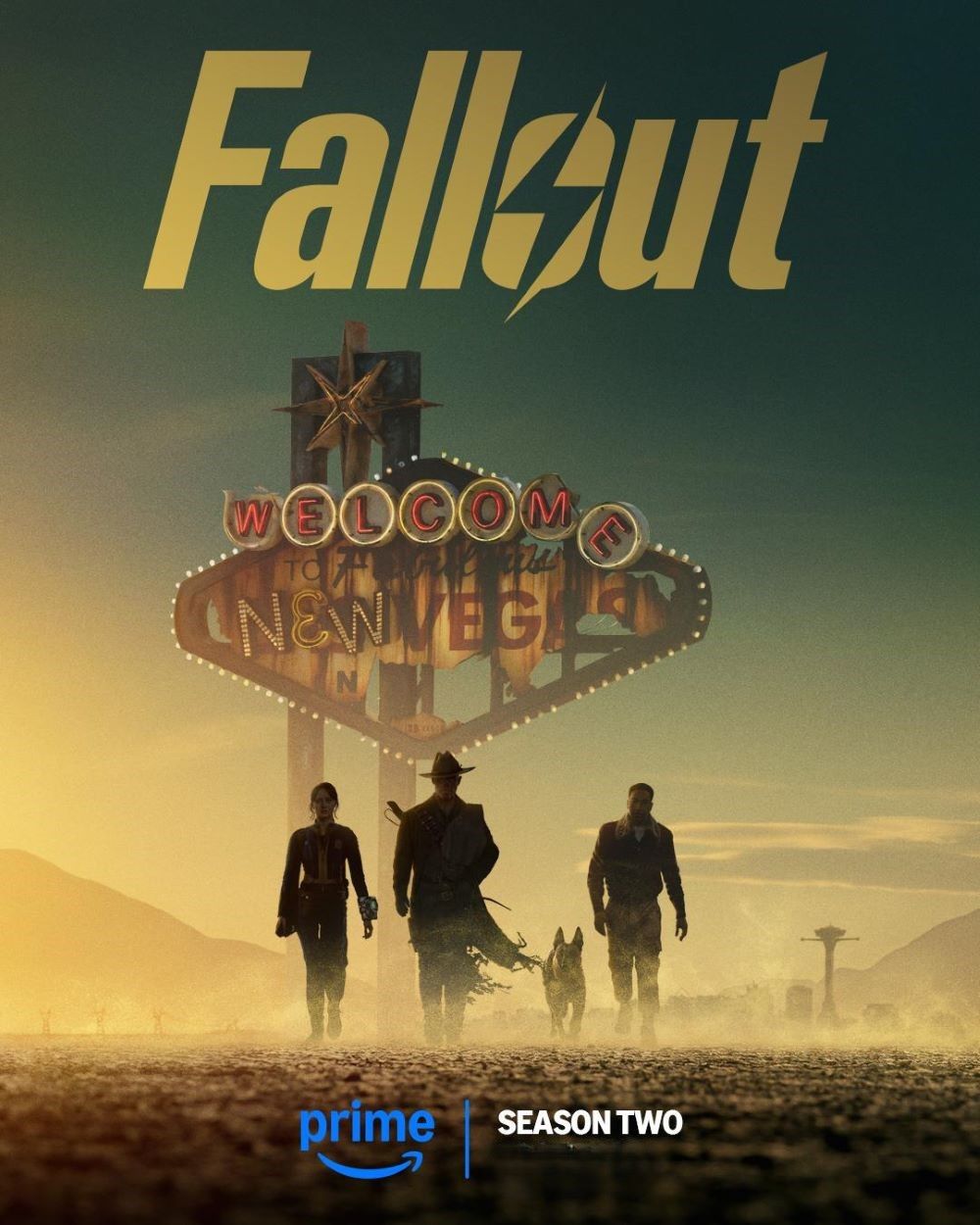
Episode 5 of Fallout Season 2 (“The Wrangler”) is the point where the show stops flirting with heartbreak and finally commits to it, using a brutally inevitable betrayal to crack open its core relationships while quietly escalating the bigger myth arc in the background. It is not the flashiest hour of the season, but it is one of the most emotionally coherent, and that focus is both its biggest strength and its main limitation.
Most of the episode’s weight lands on the dynamic between Lucy and The Ghoul, and the writers lean hard into that “we knew this was coming” tension without turning it into a cheap twist. The Ghoul’s choice to hand Lucy over to Hank in exchange for the continued survival of his cryo-frozen family feels properly miserable: the kind of decision that is logically defendable and morally ugly at the same time. Watching Lucy slowly clock that she’s been a bargaining chip this whole time, right after she and Coop finally seemed to be in sync, gives the betrayal some sting beyond the spectacle of her Power Fist launching him out the window and onto a pole. The performances sell it; Ella Purnell plays Lucy’s hurt as a mix of disbelief and exhaustion, while Walton Goggins lets just enough regret bleed through the monster façade to make it clear that this is hurting him, too, even as he pulls the trigger on the plan.
Structurally, the episode benefits from narrowing its scope to a few intersecting tracks instead of trying to cover the entire wasteland at once. On the Strip, Lucy’s Buffout fallout continues, sending her hunting for Addictol and instead into a mess involving price-gouging, a fake Sonny, and a very dead real Sonny in a bucket. That sequence walks the line between dark comedy and horror in a way that fits Fallout nicely, turning a simple “go buy meds” errand into a reminder that every familiar storefront can hide a fresh corpse and a new trauma. In parallel, The Ghoul drifts toward his fateful deal at the hotel bar, framed as a guy who has been running for two centuries and finally hits a wall he can’t brute-force his way through. The pacing is patient without feeling sluggish, and the way these threads converge in the final act makes the ending feel earned rather than engineered.
The big lore bomb this week is less about who’s shooting whom in New Vegas and more about who actually ended the world and what Vault-Tec was really doing. Mr. House’s scenes with pre-Ghoul Cooper ramp up the paranoia by suggesting that Barb may not be the one who actually pushed the apocalypse over the edge, hinting at “another player at the table” tied to the creation of Deathclaws and bigger, unseen forces. It is classic Fallout conspiracy energy: corporations within corporations, shadow projects like FEV and “Future Enterprise Ventures,” and a corporate end-of-the-world plan that feels less like a singular villain’s choice and more like the outcome of a lot of self-interested people nudging the same disaster. The episode does not over-explain any of this, which is smart; it plants a few specific clues—like Norm’s discovery that Vault-Tec’s phase two revolves around genetic testing and forced evolution—and then lets your mind connect it to everything from Deathclaws to the vault experiments we have already seen.
Norm’s storyline, which could easily feel like a cutaway from the “real” show, actually rebounds this week by giving the corporate plot teeth. His trip with the defrosted junior executives to Vault-Tec HQ mixes bleak humor—finding Janice’s corpse still at her desk, complete with coworkers sniping about her work ethic—with genuine dread as he starts to piece together that FEV is basically a “gene-altering agent for organism supercharging.” It is not subtle, but it works, especially when you realize how neatly it dovetails with what Hank is doing with that head-device in New Vegas: mind control, memory wiping, and turning humans into tools that fit Vault-Tec’s objectives better than their original personalities ever would. Norm getting choked out just as he starts to get real answers is a little on-the-nose as a cliffhanger, yet it keeps his thread from feeling aimless and promises that his office snooping will matter more than it might initially seem.
On the spectacle side, the episode plays a funny trick: it teases what looks like a huge Deathclaw set piece on the Strip and then has Lucy and The Ghoul do what any sensible player has done in the games—run like hell and load into a different area. For anyone hoping for a full-on Deathclaw brawl, it is bound to be a letdown, especially since three of them are staged as this major escalation and then promptly sidestepped. That said, the choice is thematically on point; the show leans into the fear of the creatures rather than the mechanics of fighting them, and seeing The Ghoul genuinely terrified ties nicely back to his first encounter with one in Alaska two centuries ago. New Vegas itself feels more alive here, with Freeside looking busier and the Strip more dangerous, even if the action is more about near-misses and quick exits than big choreographed battles.
The humor is hit-and-miss but usually lands on the right side of weird. The Snake Oil Salesman’s return, only to be drafted as Hank’s “voluntary” guinea pig for a head gadget that can pop skulls or wipe memories, leans into the show’s nastier comedic streak. His eagerness to forget a life full of sleaze says a lot about him in a single, darkly funny beat, while also underlining how casually Hank treats human minds as raw material. Not every gag works—some of the junior exec bits feel like they are chasing a joke about tech-bro sociopathy we have already seen before—but the episode keeps the comedy tightly woven into character and plot instead of dropping in random skits.
If there is a legitimate knock against this episode, it is that the emotional gut-punch between Lucy and The Ghoul is so strong that almost everything else can feel like setup by comparison. The supposed “answer” about who dropped the bombs is really more of another mystery box, and viewers looking for a clearer reveal may feel strung along. The Deathclaw fake-out also risks feeling like the show talking a big game and then refusing to spend the budget to pay it off, even if the character beats that replace the fight are strong. And while Norm’s storyline is finally paying off, it still sometimes plays like a slower, less visceral series running parallel to the one in New Vegas, which might frustrate anyone hooked primarily on Lucy and The Ghoul’s arc.
Still, as a midpoint episode, this is exactly where Fallout needs to hurt. The Ghoul’s betrayal is painful precisely because the show has spent so much time making Lucy good for him, setting her up as the one person who makes his humanity flicker back on—and then forcing him to choose the ghosts of his past over the partner standing right in front of him. Episode 5 might not deliver the biggest action of the season, but it gives the story a necessary emotional crash-out, sharpens the larger Vault-Tec conspiracy, and leaves nearly every character in a worse, more interesting place than they started.
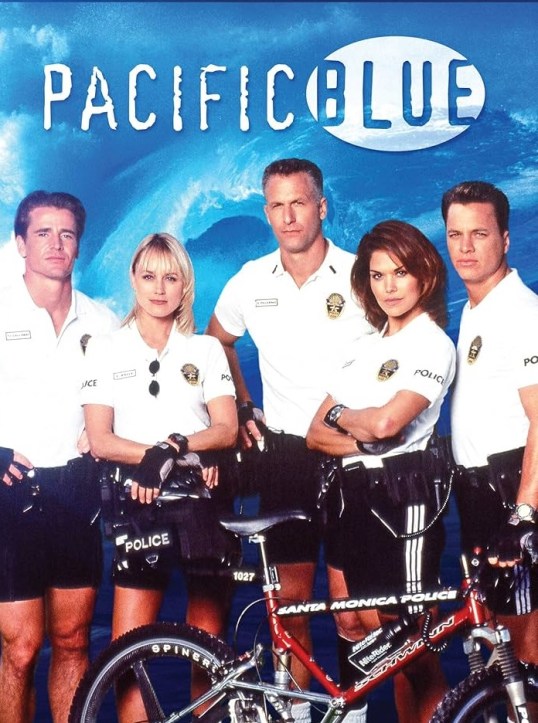
Welcome to Late Night Retro Television Reviews, a feature where we review some of our favorite and least favorite shows of the past! On Tuesdays, I will be reviewing Pacific Blue, a cop show that aired from 1996 to 2000 on the USA Network! It’s currently streaming everywhere, though I’m watching it on Tubi.
This week, Lt. Palermo has a lot to deal with.
Episode 3.10 “Only In America”
(Dir by Charles Siebert, originally aired on November 9th,1997)
Lt. Palermo has a lot going on in this episode.
When we first see Palermo, he’s playing basketball near the beach. As has been established in the past, Palermo, a middle-aged white guy, is apparently the best basketball player in all of Santa Monica. In this episode, he discovers that he’s now the second best. Jamal Rasheed (Elimu Nelson), who has just moved to town and who spends most of his time sitting in the stands and reading, turns out to be an even better player than Tony Palermo! Palermo is enthusiastic about Jamal until he discovers that Jamal is a former college player who was suspended when it was discovered that he was shaving points to pay for his drug habit. Jamal claims that he’s now clean and that he’s taught himself to read. Palermo isn’t sure that he trusts Jamal …. and if you’re asking how this is any of Palermo’s business, you’re having the same reaction that I had while I watched this episode.
Palermo is also concerned about a young, roller-blading Romanian named Dimitri Radu (Nathan Anderson), who keeps committing crimes and declaring that he has diplomatic immunity. It turns out that Dimitri wants to exchange his diplomatic immunity for political refugee status. Palermo discovers that Dimitri’s father is a big time arms dealer and that his former partners are looking to take out both him and his son. He also learns that the U.S. government is going to give Dimitri’s father citizenship in exchange for him testifying against his partners. Palermo is outraged!
And again, Palermo — you’re a bicycle cop! You wear those stupid shorts every day. Nobody cared about your opinion, dude!
This episode featured some truly horrendous acting on the part of the guest cast. It also featured a shoot-out in which Cory killed one of the arms dealers. Usually, an officer involved shooting would lead to the officer being on desk duty while the shooting is investigated. Instead, Cory hops on her bicycle and continues to look for Dimitri. This was a pretty dumb episode but it’s Pacific Blue so I wasn’t expecting anything different.
Welcome to Retro Television Reviews, a feature where we review some of our favorite and least favorite shows of the past! On Tuesdays, I will be reviewing the original Fantasy Island, which ran on ABC from 1977 to 1984. The show is once again on Tubi!
It’s time for one last trip to Fantasy Island.
Episode 7.22 “Surrogate Mother/The Ideal Woman”
(Dir by Don Weis, originally aired on May 19th, 1984)
All things must come to an end. For the original Fantasy Island, the final episode of the seventh season was also the final episode of the series.
The show didn’t get a grand finale. Instead, it was a typical episode with two fantasies. In one fantasy, Charo — yes, Charo — played a woman who had been hired to be a surrogate mother for a childless couple (John Saxon and Juliet Mills). In the other one, Ben Saunders (Shea Farrell) tried to win back his ex-fiancee (Mary Kate McGeehan) while judging a Fantasy Island beauty pageant. (How many pageants did Fantasy Island host?) Two men (Don Galloway and David Sheiner) demanded that Ben pick their girlfriends as the Ideal Woman. (Both of the girlfriends materialized on the Island, one from a painting and one from a block of stone. It was a weird fantasy.) Ben picked his ex, declaring her to be the “ideal woman.” Neither fantasy was great, though I will say that Charo gave a surprisingly sincere performance and it was nice that frequent Fantasy Island guests stars John Saxon and Juliet Mills appeared on the last episode. It was an okay trip to the Island, particularly when compared to some of the other season 7 episodes. Still, the whole thing felt a bit tired.
I have to admit that it’s hard for me to believe that I just reviewed the final episode of the original Fantasy Island.I started reviewing Fantasy Island on September 6th, 2022. It was one of the original shows that I picked for Retro Television Reviews. Now that I’m finishing the show up in 2026, The Love Boat is the only one of my original picks that I still have episodes left to review. I’ll be reviewing The Love Boat for a while.
(To be honest, I’m stunned that I’ve stuck with these reviews. I don’t think anyone was expecting me to get all the way to end of Hang Time, let alone Fantasy Island.)
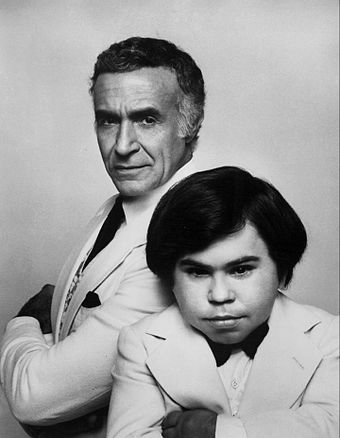
My thoughts on Fantasy Island? I loved the first four seasons. The fifth season, with its introduction of Julie and it’s frequent side-lining of Tattoo, was when the show started to go downhill. The biggest mistake that the show made was, needless to say, not agreeing to pay whatever was necessary to get Herve Villechaize to come back for season 7. Season 7, the season without Tattoo, felt odd from the start. Christopher Hewett and Ricardo Montalban never had the right chemistry and the stories themselves were largely recycled from earlier episodes. The perfect ending for Fantasy Island would have been the season 6 clip show.
What’s next? On television, Fantasy Island was revived twice. In the 90s, Malcolm McDowell played a version of Mr. Rourke. And then, more recently, there was an attempt to revive it on Fox but, after an enjoyable first season, that show became a self-parody. I may review both of them in the future. For now, though, I’m still considering several shows to start reviewing next week. I’ll reveal my pick next Tuesday!
For now, let us say goodbye to Fantasy Island. Thanks for the laughs, the tears, and the fantasies!
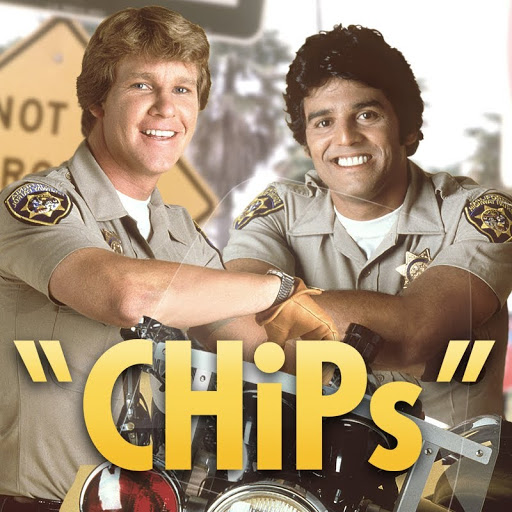
Welcome to Late Night Retro Television Reviews, a feature where we review some of our favorite and least favorite shows of the past! On Mondays, I will be reviewing CHiPs, which ran on NBC from 1977 to 1983. The entire show is currently streaming on Prime!
This week, Baker has a new partner!
Episode 5.4 “The Killer Indy”
(Dir by Leslie H. Martinson, originally aired on October 25th, 1981)
When a group of bikers start holding illegal street races, Getraer wants it stopped before someone is seriously hurt! Jon Baker and his partner Steve McLeish decide to end the races by any means necessary, especially since Steve’s brothers are involved….
Wait, who?
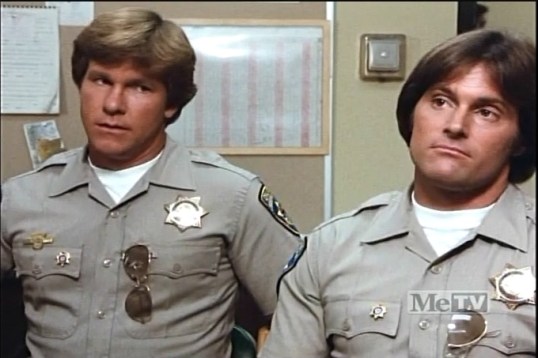
Played by a pre-transition Caitlyn Jenner, Steve McLeish serves as Baker’s partner in this episode. We don’t really get much of an introduction as to who Steve is or why he’s even riding with Baker. Everyone just acts as if Steve has always been there. Ponch is not even mentioned and it’s difficult not to notice that Larry Wilcox seems a bit more cheerful than usual in this episode. For once, he’s the one who gets to do all of the cool stuff while everyone else watches.
This was the first of several episodes that Erik Estrada missed during the fifth season, the result of being injured during a stunt gone wrong. Jenner, who was then best-known as an Olympian, was brought in to play Steve McLeish. Judging from this episode, Jenner was a remarkably bad actor. Compared to everyone else in the episode, Jenner comes across as being awkward and stiff. Like many nonprofessional actors, it’s obvious that Jenner was not sure what do when not delivering dialogue. Jenner stands there, hands awkwardly positioned and occasionally trying to react to the other actors. It’s really almost painful to watch.
It’s obvious that this episode was written with Ponch in mind. Like Ponch, Steve has two brothers and used to be a motorcycle-racing delinquent when he was younger. His older brother (who is played by the legendary character actor Robert F. Lyons) is named Toro, which might make sense if he was Ponch’s brother but, as it is, you really do have to wonder about the parents who would name one son Toro and the other sons Steve and Ted. Ted, incidentally, is played by Kevyn Major Howard. Howard, Lyons and Jenner have next to no features in common, leading one to wonder how they could possibly all be members of the same family?
There was some good motorcycle chase action in this episode. There was also so much dialogue about the importance of wearing a helmet that, as soon as the gang’s leader announced he didn’t need a helmet, the most viewers had to know that he was doomed to ultimately be thrown from his motorcycle and crash headfirst into the pavement. “He hit his head,” Getraer says and that’s the last we hear about the guy.
As for this episodes comedic subplot, Grossman begged his fellow patrol people to join him and his nieces at the waterpark. While Baker, Steve, and everyone else took care of his nieces, Grossman hung out with his two bikini-clad neighbors. Grossman winked at the camera as the CHiPs theme music started to play.
Welcome to Retro Television Reviews, a feature where we review some of our favorite and least favorite shows of the past! On Mondays, I will be reviewing Miami Vice, which ran on NBC from 1984 to 1989. The entire show can be purchased on Prime!
The 100th episode of Miami Vice finds Crockett and Tubbs pursuing separate stories.
Episode 5.10 “To Have And To Hold”
(Dir by Eugene Corr, originally aired on February 10th, 1989)
When Sonny learns that his now-teenage son (Clayton Barclay Jones) is acting out at school, he hops on a plane and flies to wherever it is that his ex-wife (Belinda Montgomery) and her new husband (Parris Buckner) are supposed to be living now. Sonny discovers that his ex-wife is pregnant and that his son is having a hard time adjusting to the idea of being an older brother. He also doesn’t get along with his stepfather. Sonny and his son watch the original, Boris Karloff-starring Frankenstein in a movie theater and have a discussion about family.
(Sonny’s son says that he relates to the Monster because the Monster doesn’t mean to kill people but he does. Today, that would probably lead to the kid getting suspended from school and sent to a boot camp. In 1989, though, that just meant the kid was feeling misunderstood.)
With Crockett gone, it falls to Tubbs — using his “Cooper” persona and his fake Jamaican accent — to investigate who is responsible for killing a just-married drug kingpin. Tubbs meets the kingpin’s ruthless son (Miguel Ferrer, looking intense) and he also falls in love with the kingpin’s widow (Elpidia Carrillo). Tubbs is in love and thinking of leaving Vice? Needless to say, the widow is dead by the end of the episode.
This episode concludes with Tubbs and Crockett fishing on Crockett’s boat. They’re both feeling disillusioned. Crockett is still in love with his ex-wife. Tubbs is realizing that he’ll probably never find happiness as long as he’s working undercover in Miami. It’s a bit of a bittersweet ending. Neither Crockett nor Tubbs seems to be particularly happy. Miami Vice was always at its best when it ended on a down note.
This episode managed to give Crockett and Tubbs an equal amount of screentime and both Don Johnson and Philip Michael Thomas gave good performances. Unfortunately, the divided format of the episode meant that both stories ended up feeling a bit rushed and incomplete. The ending was effective and Miguel Ferrer gave a typically strong performance but otherwise, this was a pretty uneven episode.
Welcome to Late Night Retro Television Reviews, a feature where we review some of our favorite and least favorite shows of the past! On Wednesdays, I will be reviewing 1st and Ten, which aired in syndication from 1984 to 1991. The entire series is streaming on Tubi.
Time to get back to 1st & Ten. To be honest, with all the excitement of the holiday season, I totally forgot that I was reviewing this show.
Episode 2.8 “Easy Come, Easy Go”
(Dir by Burt Brinckerhoff, originally aired on January 6th, 1987)
This is yet another episode of 1st & Ten that felt as if it was put together almost at random.
Mad Dog (Tony Longo) has a one night stand with a lawyer named Molly (June Chadwick) and he ends up becoming obsessed with her. He shows up at a fancy cocktail party being hosted by Molly’s law firm. “This man is stalking me!” Molly yells. All of the men at the party are like, “Mad Dog! You’re my favorite player!” Now, I will say that this is a realistic portrayal of how most men act whenever they see a professional athlete but it still felt a bit icky to watch.
Jethro takes a blood test and discovers that little Tommy is not his son. But he still wants to be a part of the kid’s life.
Yinessa sees a tabloid newspaper headline about his “nude pictures” and starts yelling at a supermarket manager for selling the paper.
Waldren is in financial trouble because he’s been tossing money around. A group of gamblers approach him and offer to pay to shave points. OJ Simpson (in the role of offensive coordinator T.D. Parker) tells Waldren, “I’m keeping my eye on you.” Oh no! LOOK OUT, WALDREN!
However, Waldren does not shave points. Instead, he catches the ball that seals the Bulls victory in their first playoff game. Woo hoo! Go, Waldren!
A lot happened but, in typical 1st & Ten fashion, none of it added up to much. It could be because the streaming episodes were edited for syndication but this is just a weird show. Every episode feels as if their huge chunks of plot missing.