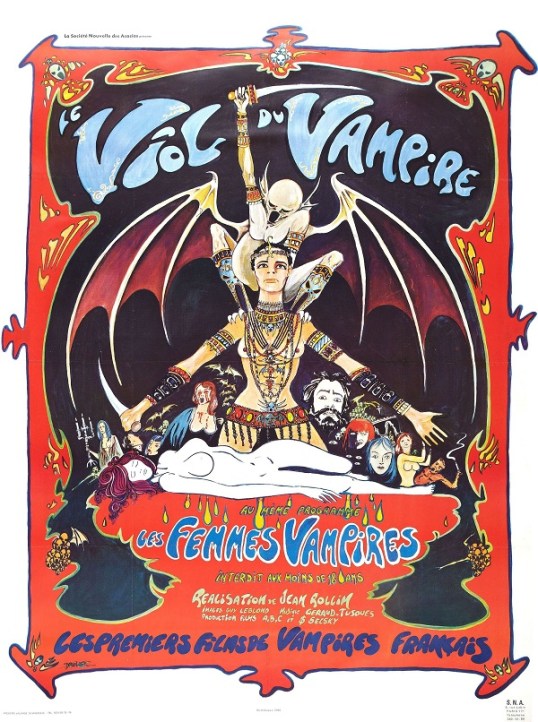
Critique Cinématographique: Le Viol du Vampire (dirigé par Jean Rollin)


Don’t worry, I’m not going to review this film in French.

I wish I could because this was the feature film debut of Jean Rollin, who made horror films that were uniquely French in both their vision and their execution.  A decade ago, I probably could have written an at least 300-word review in vaguely passable French but, unfortunately, my language skills have gotten a bit rusty as of late.  “But Lisa, what about Google translate?”  Uhmmm ….. yeah, that’s not a good idea.  The comprehension powers of Google translate are a bit overstated.

Anyway, on to the film!

I absolutely love the wonderfully surreal films of Jean Rollin.  At his best, Rollin was responsible for some of the most visually impressive and narratively incoherent films ever made.  Believe it or not, I don’t mean incoherent in a bad way.  A Rollin film creates its own unique world, one in which things don’t necessarily have to make much sense.  A Jean Rollin movie is like a filmed dream, one in which the stories continually seem to loop back to the same group of obsessions.  There’s always an emphasis on memory and the importance of the past.  The countryside is always beautiful but also always full of menace.  There’s always a scene or two at the beach.  It’s not unusual for a Rollin film to end with the water washing away the evil, like some sort of fairy tale.  There’s usually a house in the country and Rollin’s camera loved old French architecture just as much as it loved images of people making love.  Rollin’s films often very sincerely celebrated female friendship while, at the same time, continually returning to the theme of lesbian vampires.  In fact, I think it can be argued that the best way to appreciate Rollin’s films is to sit down and watch all of them, one after another.  So many theme reoccur from film to film that ultimately, they all become a part of giant and very strange tapestry of lust, secrets, and the paranormal in France.
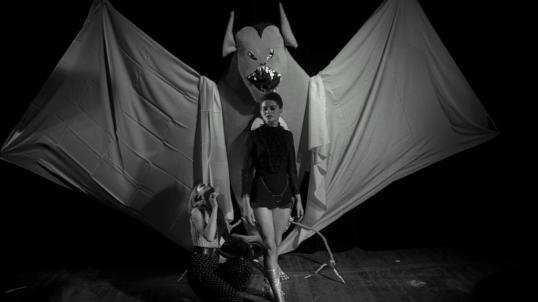
Le Viol du Vampire (which translates to The Rape of the Vampire in English) was Rollin’s feature directing debut.  It started out as a 30-minute short film, one that more or less made sense.  A producer then offered Rollin some money to expand the short into a feature film.  The end result was a deeply strange but visually stunning film, one in which characters who clearly died in the original short film mysteriously came back to life so that they could take part in the second part of the film.

During the first 30 minutes of the film, three Parisians are called out to a country château (because it’s not a Rollin film without a château) to investigate four sisters who believe that they’re vampires.  (One of the sisters is blind and says she became a vampire after being raped by the local peasants, hence the film’s title.)  The Parisians believe that the sisters are being manipulated by an evil old man.  The sisters believe that they are all vampires.  It turns out that they’re all right!

As I said, that part of the film makes sense.  But then suddenly, a vampire queen appears and suddenly there’s all these other vampires running around and some of them are dressed like court jesters and there’s a doctor working at a clinic who thinks that he can cure vampirism and then there’s a revolution against the queen and there’s a car chase and you’re never really sure who is who or what it is that they’re doing or why they’re doing it.  Rollin was a noted fan of the old serials and that’s how directs the final 60 minutes of Le Viol du Vampire.  Cliffhanger after cliffhanger follows twist after twist and, again, you find yourself wondering if even Rollin was able to keep up with it all.
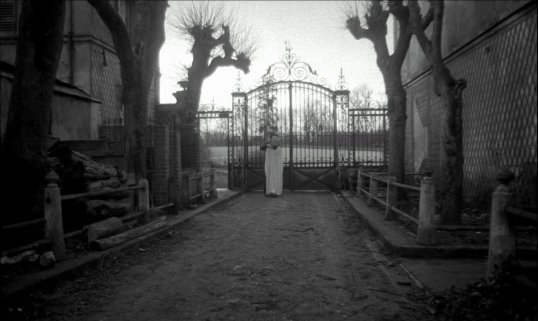
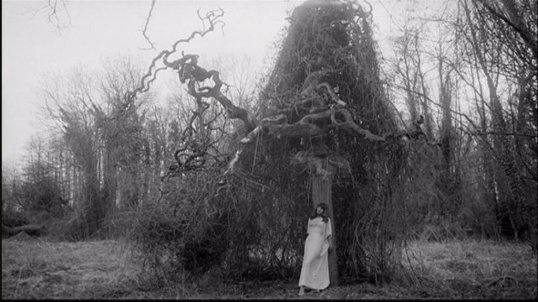
And yet, it remains a compelling film because Rollin was such a gifted visual artist and the black-and-white cinematography is so atmospheric that it’s very easy to ignore the plot and instead just enjoy looking at the film.  I would actually suggest waiting to watch this film until you’ve seen some of Rollin’s other films.  Once you’ve experienced Rollin’s unique aesthetic vision, it’s easy to watch Le Viol du Vampire and say, “There’s the beach!  There’s the clowns!  There’s the lesbian vampires!  There’s everything that we’ve come to expect from Jean Rollin!”

Le Viol du Vampire was released in 1968.  It was released at a time when political turmoil had brought much of the French film industry to a halt.  As a result, Le Viol du Vampire was the only film playing several theaters.  If you were in France during the summer of 1968 and you wanted to go to the movies, Le Viol du Vampire was often the only option available.  As a result, a huge number of people went to this movie.  Audiences were reportedly so angered by the film’s intentional incoherence that they rioted and threw things at the screen.  It was quite a scandal but it also made Rollin a bit of a star.

Seen today, the film is still incoherent but it’s also a chance to see where one of the most interesting horror directors of the 20th Century got his start.
4 Shots From 4 Films: Castle Freak, Lord of Illusions, Species, Village of the Damned


4 Shots From 4 Films is just what it says it is, 4 shots from 4 of our favorite films. As opposed to the reviews and recaps that we usually post, 4 Shots From 4 Films lets the visuals do the talking!

This October, we’re using 4 Shots From 4 Films to look at some of the best years that horror has to offer!

4 Shots From 4 1995 Horror Films

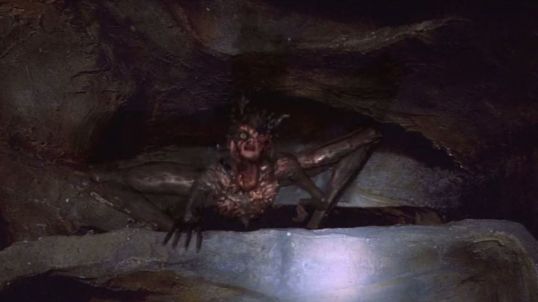
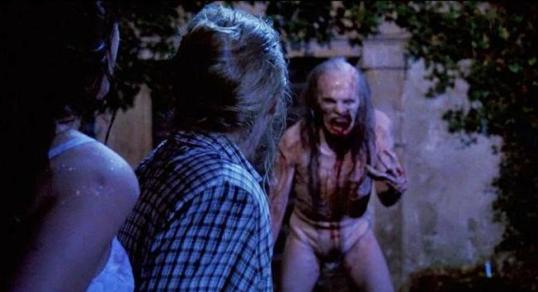
Castle Freak (1995, dir by Stuart Gordon)

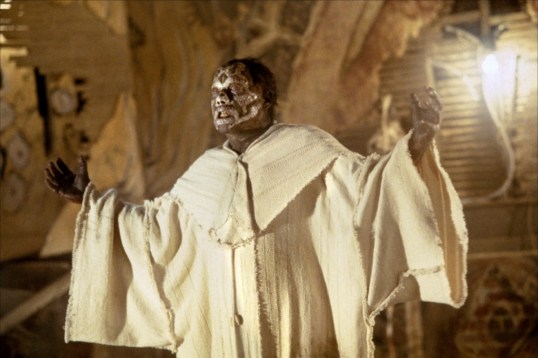
Lord of Illusions (1995, dir by Clive Barker)

Species (1995, dir by Roger Donaldson)

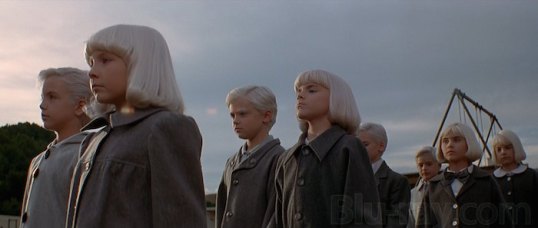
Village of the Damned (1995, dir by John Carpenter)

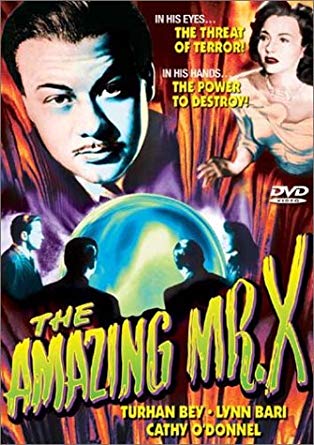
Horror Film Review: The Amazing Mr. X (dir by Bernard Vorhaus)


A woman named Christine (Lyn Bari) walks along the beach when she thinks that she hears the voice of her husband calling out her name.  The only problem is that her husband has been dead for two years.  Christine’s sister, Janet (Cathy O’Donnell), says that Christine is just hearing things and that she needs to move on from mourning.  After all, her boyfriend, Martin (Richard Carlson), is on the verge of asking Christine to marry him….

And yet, Christine can’t escape the feeling that her husband is trying to contact her from beyond the grave.  During another walk along the beach, she runs into a handsome man who introduces himself as being Alexis (Turhan Bey).  Alexis says that he’s a medium and that he has the power to speak to the dead.  Furthermore, he tells Christine that he can speak to her dead husband for her.

Despite the fact that Alexis owns a really impressive crystal ball, Martin is skeptical of his claims.  Martin even goes so far as to hire a private investigator (Harry Mendoza) to investigate Alexis’s past.  Meanwhile, though she has her suspicions, Janet finds herself falling in love with the charming Alexis….

Released in 1948, The Amazing Mr. X is an unjustly obscure little mystery film.  Though I guess it’s open to debate whether it should be considered a horror film or just a noirish thriller, The Amazing Mr. X is full of creepy atmosphere and eerie moments.  Employing expressionistic camera angles and dark lighting, director Bernard Vorhaus turns The Amazing Mr. X into a dream of dark and forbidden things.  Some of the black-and-white shots are simply stunning and the seance sequence is brilliantly done.

The film is also well-acted by a cast of actors who deserve to be better remembered.  Lynn Bari is perfectly fragile and sympathetic as the haunted Christine while Cathy O’Donnell turns the potentially boring Janet into a compelling character.  The film even makes good use of Richard Carlson’s reliable dullness by casting him as the one character who is meant to be a force of stability in Christine’s otherwise neurotic life.

That said, the entire film is stolen by Turhan Bey.  Born in Austria and of Turkish descent, Turhan Bey was nicknamed the “Turkish Delight” during his film career and, watching The Amazing Mr. X, you can see why.  Bey is so charming and so handsome that you can understand why even those who should know better would want to believe that Alexis could talk to the dead.  The Amazing Mr. X was one of the last films that Bey filmed in the United States.  He retired a few years later and returned to his native Austria, where he ran a cafe.  (40 years later, the now elderly Bey did come out of retirement and made a few appearance of television before passing away, at the age of 90, in 2012.)

Like all good mysteries, The Amazing Mr. X has a third act twist that you probably won’t see coming and it ends with the proper combination of tragedy and redemption.  The Amazing Mr. X is currently in the public domain and can be viewed on YouTube so check it out!  You won’t be sorry!

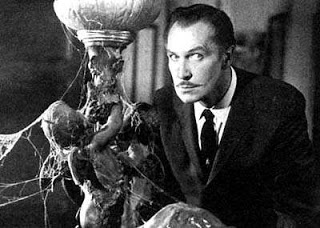
Horror On The Lens: The House On Haunted Hill (dir by William Castle)


The original The House on Haunted Hill is a classic and one that we make it a point to share every Halloween.  And since October is nearly halfway over, now seems like the perfect time to do so!

Be sure to check out Gary’s review by clicking here!

Enjoy Vincent Price at his best!

Music Video Of The Day: Fate by Boy Harsher (2018, dir by Bryan M. Ferguson)


I’m not sure if the main character in this video is an actual vampire or just someone with an addiction for raw meat and blood.  Either way, it’s obviously not an easy life.

This video was shot in Glasgow, Scotland and the atmospheric cinematography was credited to George Harwood.  It’s like a filmed nightmare, which is my favorite type of nightmare.

Enjoy!

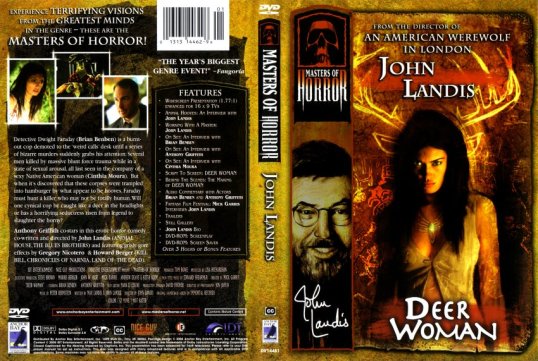
Masters of Horror, “Deer Woman”, Dir. John Landis


dw.jpg

Happy Horrorthon! There’s a Half-Deer woman (DeerTaur?) on the loose and only Martin Tupper…I mean Detective Dwight Faraday can stop her…maybe. Many of you don’t remember Dream On from the late 80s-early 90s on HBO, but it was awesome.  Benben played this kinda cranky book editor Martin Tupper who always thought in movie clips and seeing him act again was like being a wee kid again who quietly watched Dream On after his parents fell asleep.  Dream On BTW was hilarious and created by John Landis- Check it Out!  Yes, The American Werewolf in London director and he did Thriller.

Well, in the early 2000s Mick Garris got a lot of the greats from the 80s and 90s to do short horror films and Deer Woman was one of them.  In Deer Woman, Drunk dudes are getting trampled to death and Detective Faraday is assigned to the case.

Faraday is a down and out detective who no one respects.  Martin Tupper was a down and editor who no one respected.  Faraday is actually not a terrible detective.  He follows up leads and sees where they go.  He checks with the coroner and sees that the bodies are riddled with hoof prints.  You know what makes hoof prints? Deer-Taurs!!!!

Also, men are really portrayed as dumb and horny.  The Deer-Taur picks her next victim up at a hotel bar without speaking a word, but the dudes don’t seem to mind.  Once the seduction is on, she tramples him with her hooves! Yes, hooves.  I love this show!

What’s not to like?! Deer-Taurs, Detectives, and hooves!  There’s also a great dream sequence when Faraday imagines how the kill went down where a Deer in flannel carries off a victim Creature from Black Lagoon style.  It’s hilarious.  This is what’s great about Landis; his horror is always interspersed with great comic relief.

Anywho, bodies keep dropping and they’re so beat up that their arms are found on rooftops! AWESOME!!! Does Detective Faraday stop the Deer-Taur? Who Cares?! It’s got Deer-Taurs and Brian Benben! I would definitely recommend finding this show however you can.  Pretty much all of the Masters of Horror episodes are great. Cheers!

yuou

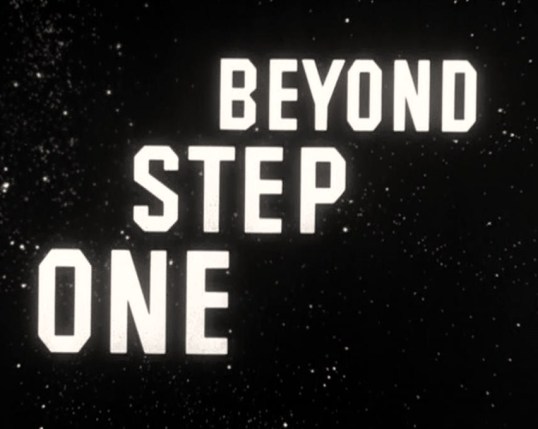
Horror On TV: One Step Beyond Episode 1.4 “The Dark Room” (dir by John Newland)


On tonight’s episode of One Step Beyond, Cloris Leachman plays Rita Wallace, an American photographer in France.  She’s looking for a model whose face will serve as the ultimate symbol of the country.  One day, a haunted-looking man (Marel Dalio) shows up at her apartment.  She thinks he’s a model.  The truth, needless to say, is something quite different….

This episode features good performances from both Leachman and Dalio.  In real life, Dalio was an icon of French cinema and a favorite of Jean Renoir’s.  When the Nazis invaded France, the Jewish Dalio fled Paris and, after a harrowing journey, eventually made it to America.  In America, he played the croupier in Casablanca and appeared in several other films.  Tragically, the rest of his family did not escape and were murdered by the Nazis.  Dalio returned to France after the end of the war and remained an in-demand character actor for several more decades, making his final film appearance in 1980.

The Darkroom originally aired on February 10th, 1959.

The TSL’s Horror Grindhouse: Psycho III (dir by Anthony Perkins)


Norman Bates is back!

Released in 1986 and directed by Anthony Perkins himself, Psycho III picks up a few months after Psycho II ended.  Norman (Anthony Perkins, of course) is still free.  He’s still got his motel.  He’s still talking to his dead mother.  Of course, at the end of Psycho II, Norman was told that the woman who Norman thought was his mother actually wasn’t his mother.  Instead, Emma Spool told Norman that she was his mother, which led to Norman promptly hitting her with a shovel and then keeping her preserved body hidden away in the motel.  Got all that?  Great, let’s move on….

In Psycho III, business suddenly starts booming at the Bates Motel!  All sorts of people come by to visit.

For instance, there’s the obnoxious tourists who show up at the motel so they can watch a football game and get drunk.  Future director Katt Shea plays one of the unfortunate tourists, who ends up suffering perhaps the most undignified death in the history of the Psycho franchise.  Shea later ends up being stored in the motel’s ice chest.  At one point, the local sheriff grabs a piece of ice and tosses it in his mouth without noticing that it’s covered in blood.

And then there’s Duane Duke (a young Jeff Fahey!), who is superhot but also super sleazy.  For reasons that are never quite clear, Norman hires Duke to be the assistant manager at the motel.  Duke turns out to be thoroughly untrustworthy but he’s Jeff Fahey so he remains strangely appealing even when he shouldn’t be.

Red (Juliette Cummins) shows up at the motel so that she can have sex with Duke and then get stabbed to death while taking off her top in a phone booth.  That, I guess, is Psycho III‘s equivalent of the first film’s shower scene.  Later, Duke comes across Norman mopping up all the blood in the phone booth but he doesn’t say anything about it.  Duke knows better than to ask why there’s blood in the phone booth.

Tracy Venable (Roberta Maxwell) is a journalist whose sole purpose in life is to prove that Norman murdered Emma Spool.  Tracy’s main function in this film is to explain just why exactly so many different women have claimed to be Norman’s mother.  It’s a rather complicated story and you’ll get a migraine if you think about it for too long.

And finally, there’s Maureen (Diana Scarwid), the former nun who has lost her faith and her sanity.  She shows up at the motel and stays in Marion Crane’s old room.  She takes a bath instead of a shower and slits her wrists.  When Norman storms into the room to kill her, the barely lucid Maureen mistakes him for the Virgin Mary and sees his knife as being a crucifix.  Maureen survives and Norman is hailed as a hero for rescuing her.  Later, Norman and Maureen fall in love.  You can guess how that goes.

When compared to the first sequel, Psycho III is much more of a standard slasher film and there’s certainly never any doubt over who is doing the killing.  However, Perkins again does a great job in the role of Norman, making him both sympathetic and creepy.  Fahey, Scarwid, Maxwell, and Hugh Gillin (as the hilariously clueless sheriff) all provide good support.  There’s really not a single character in this film who doesn’t have at least one odd or memorable quirk.  Duane Duke, for instance, is one of the most amazingly sleazy characters in the history of American cinema.  Just when you think that the character can’t get any worse, he proves you wrong.

As mentioned above, Perkins directed this film.  It was one of two movies that Perkins would direct before his death.  As a director, Perkins had a good visual sense, even if he did allow the narrative to meander a bit.  There’s nothing particularly subtle about Perkins’s direction and several of the scenes — like the sex scene between Duke and Red — are so over the top that they become rather fascinating to watch.  That said, there was really no longer any need to be subtle when it came to Norman Bates and his story.

With the exception of the weird Gus Van Sant remake with Vince Vaughn, Psycho III would be the last Psycho film to be released into theaters.  It would also be Perkins’s second-to-last time to play Norman.  (The last time would be in a 1990 made-for-TV sequel, Psycho IV: The Beginning.  Despite it’s title, Psycho IV pretty much ignored everything that happened in the previous two sequels.)  Perkins passed away in 1992, at the age of 60 but the character of Norman Bates would live on, both in his own performances and in the later work of Freddie Highmore in Bates Motel.

Missed Opportunities: Alien Nation (1988, directed by Graham Baker)


Alien Nation starts out with an intriguing premise but sadly doesn’t do enough with it.

In 1988, a spaceship lands in Mojave Desert.  Inside are 300,000 humanoid aliens, known as the Newcomers.  Intended to serve as intergalactic slaves, the Newcomers are now stuck on Earth.  (Of course, in the view of many humans, it’s Earth that’s stuck with them.)  Three years later, the Newcomers have settled in Los Angeles and they have adopted human names.  Some of them, like businessman William Harcourt (Terrence Stamp), have become successful and have been accepted by the human establishment.  The majority remain second-class citizens, facing discrimination and feeling alone in a world that doesn’t seem to want them.

Detective Matthew Sykes (James Caan) does not like the Newcomers but, after his partner is killed by one of the aliens, he ends up working with one.  Sam Francisco (Mandy Patinkin) is the first Newcomer to have been promoted to the rank of detective and is eager to prove himself.  Sykes renames him George and enlists him to investigate a series of recent Newcomer deaths.  Sykes’s real goal is to use Francisco’s Newcomer connections to investigate the death of his partner.  What the two of them discover is that the deaths are linked to a drug called Jabroka, which has no effect on human but was previously used to keep the Newcomers enslaved.

Alien Nation starts out with an intriguing premise.  I love the early scenes of Sykes driving down the streets of Los Angeles and seeing Newcomer prostitutes, Newcomer families, and even a Newcomer dance studio.  There is a lot promise in those scenes and they capture the feeling of a familiar world that has been irrevocably changed.  Both Caan and Patinkin give good performances and the alien makeup is still impressive.  Unfortunately, once Sykes and George start their investigation, the movie becomes a standard-issue police movie with a plot that could easily have been lifted from a Lethal Weapon rip-off.  So many interesting ideas are left unexplored, making Alien Nation an intriguing missed opportunity.  (There was later a television series based on the movie, which explored the Newcomer culture in greater detail.)

Alien Nation still has a strong cult following and I wouldn’t be surprised if it influenced District 9.  In 2016, it was announced that Jeff Nichols would be writing and directing a remake.  Nichols seems like the ideal director for a film like this and this is the rare case of a remake that I’m actually looking forward to.

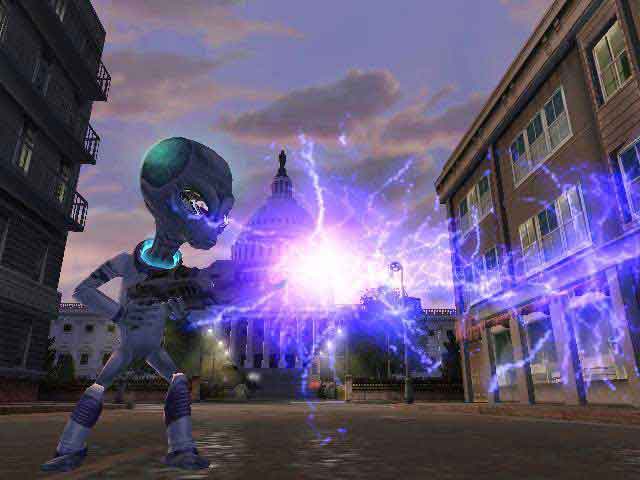
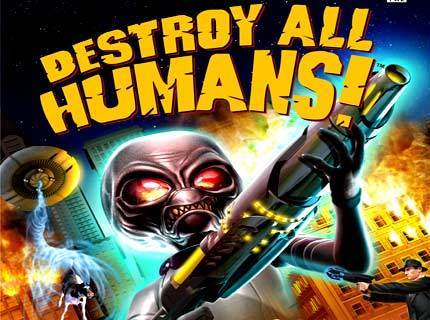
Retro Game Review: Destroy All Humans! (2005, THQ)


I’m looking forward to 2020 for one reason and one reason only and it’s not the presidential election.

No, I’m looking forward to 2020 because that’s when I’ll finally be able to play Destroy All Humans! again!  The classic alien invasion game will be getting a full remake in 2020 and, once again, players will be able to help Crypto steal Furon DNA and conquer the planet.  It probably won’t be a minute too soon, either.  If 2019 is any indication, 2020 is a year that’s probably going to inspire a lot of people to wish they could beam up to their spaceship and blow things up.  With the remake of Destroy All Humans!, they should have the opportunity to do just that without causing any real world damage!

Back in the day (the 2005 day), Destroy All Humans! was the best reason to have either an Xbox or Playstation 2.  Crypto was a little grey man who sounded suspiciously similar to Jack Nicholson.  He came to Earth in 1959, on a quest to harvest brain stems, blow up cows, disrupt pool parties, and battle a mysterious government agency known as Majestic.  Though the game had a storyline and missions, it was also a sandbox game.  Once a location was unlocked, you could revisit and blow it up whenever you wanted to.  I lost track of how many times I took out Turnipseed Farm.  Being an industrious race, the humans always rebuilt as soon as you flew away.  It never seemed to occur to them to add any extra security precautions, no matter how many times you returned.

Because the game was set in 1959, it featured a full-on barrage of pop cultural references.  Crypto could read minds and it turned out that people all over America were thinking about Marilyn Monroe, Elvis, and whether or not they really liked Ike.  Crypto could also temporarily disguise himself as a human but, after a certain amount of time, he always reverted back to his original form.  If he reverted back while surrounded by humans, panic would ensue as the humans shouted that they were being invaded by “space commies!”

Of course, Earth was a dangerous place in the 1950s and it was common for Crypto to get killed.  Luckily, every time he died, a new Crypto clone took over and was even more eager to destroy all humans!

This was my favorite game on the Xbox and it’s one of the few that I really miss playing.  (I still have the game and the Xbox.  While the Xbox works, the controller’s seen better days and, whenever I do play one my old Xbox games, it seems like I spend the majority of the game trying to keep characters like Crypto and Tommy Vercetti from running over to the left side of the screen.)  I’m looking forward to once again taking control of Crypto and invading this lousy planet!

Is it 2020 yet?

(By the way, Case Wright once reviewed Tom Abernathy, the writer of Destroy All Humans!  Read that interview here.)