
Happy birthday, Martin Scorsese!
To this day, I cannot see a garbage truck without hearing the Layla piano coda.
I always feel bad for Frankie Carbone. He was such a loyal soldier.
Happy birthday, Martin Scorsese!
To this day, I cannot see a garbage truck without hearing the Layla piano coda.
I always feel bad for Frankie Carbone. He was such a loyal soldier.

4 Shots From 4 Films is just what it says it is, 4 shots from 4 of our favorite films. As opposed to the reviews and recaps that we usually post, 4 Shots From 4 Films lets the visuals do the talking.
Today, the TSL wishes a happy birthday to one of the greatest director working today, the one and only Martin Scorsese! And that means that it’s time for….
26 Shots From 26 Martin Scorsese Films
(That’s right. We usually do 4. Scorsese gets 26. He deserves a hundred.)
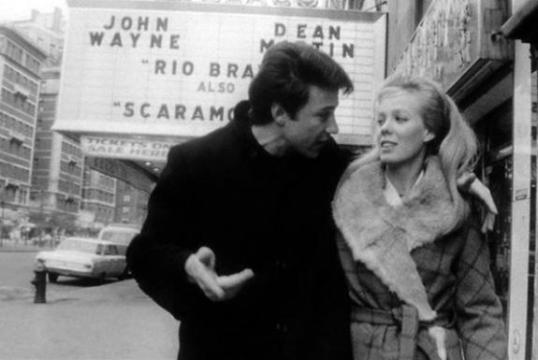
Who’s That Knocking On My Door (1967, dir by Martin Scorsese)
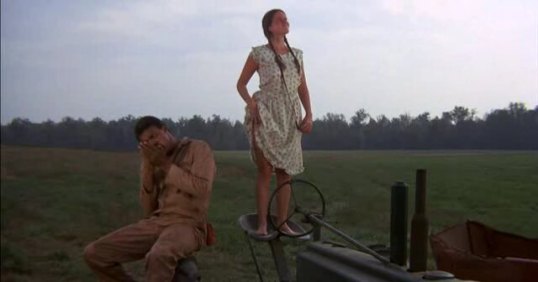
Boxcar Bertha (1972, dir by Martin Scorsese)
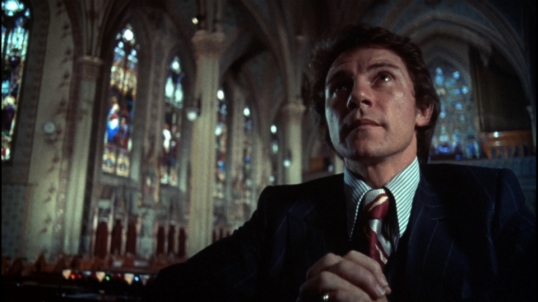
Mean Streets (1973, dir by Martin Scorsese)

Alice Doesn’t Live Here Anymore (1974, dir by Martin Scorsese)
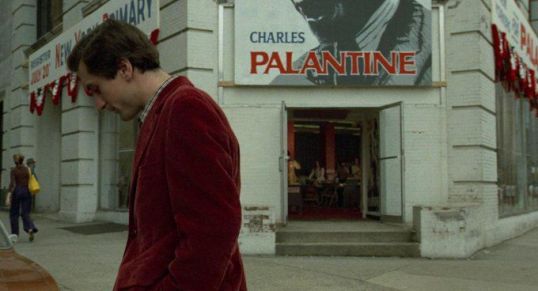
Taxi Driver (1976, dir by Martin Scorsese)
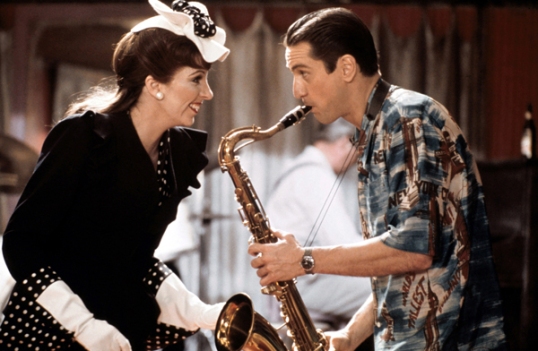
New York New York (1977, dir by Martin Scorsese)

The Last Waltz (1978, dir by Martin Scorsese)
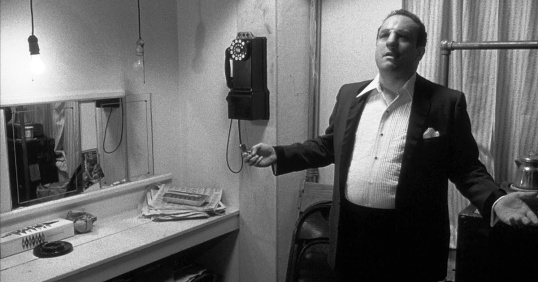
Raging Bull (1980, dir by Martin Scorsese)
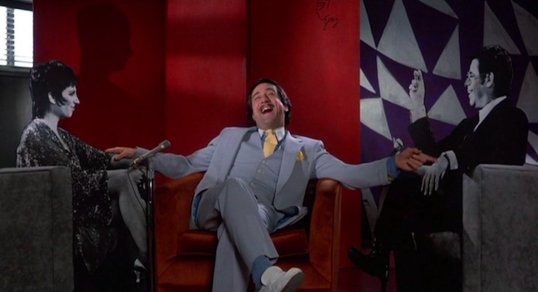
King of Comedy (1982, dir by Martin Scorsese)
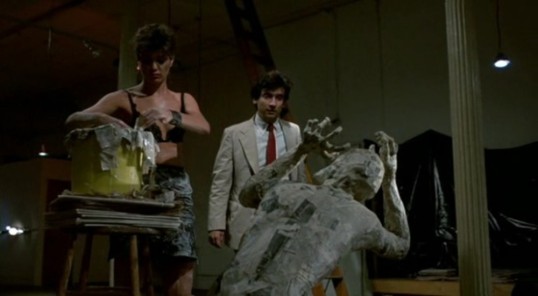
After Hours (1985, dir by Martin Scorsese)

The Color of Money (1986, dir by Martin Scorsese)
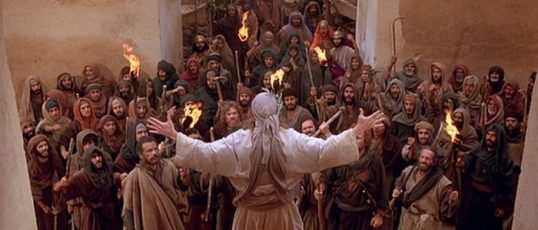
The Last Temptation of Christ (1988, dir by Martin Scorsese)
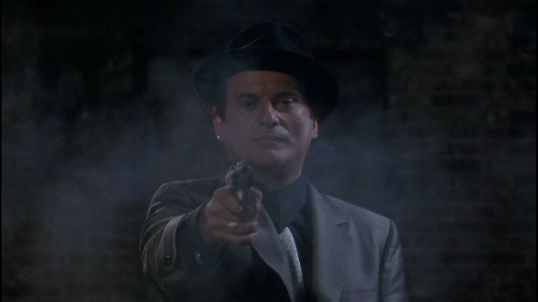
Goodfellas (1990, dir by Martin Scorsese)
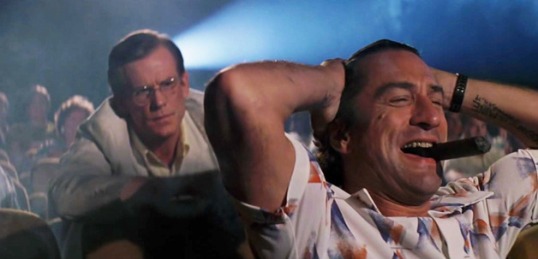
Cape Fear (1991, dir by Martin Scorsese)

The Age of Innocence (1993, dir by Martin Scorsese)
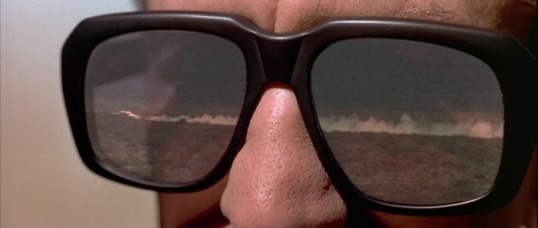
Casino (1995, dir by Martin Scorsese)

Kundun (1997, dir by Martin Scorsese)

Bringing out the Dead (1999, dir by Martin Scorsese)

Gangs of New York (2002, dir by Martin Scorsese)

The Aviator (2004, dir by Martin Scorsese)

The Departed (2006, dir by Martin Scorsese)
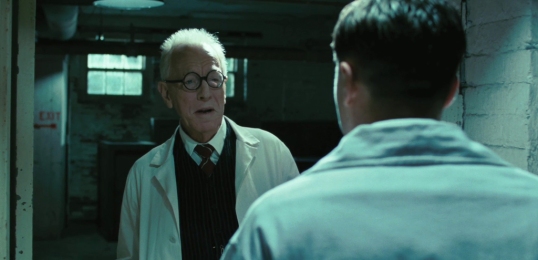
Shutter Island (2010, directed by Martin Scorsese)

Hugo (2011, dir by Martin Scorsese)
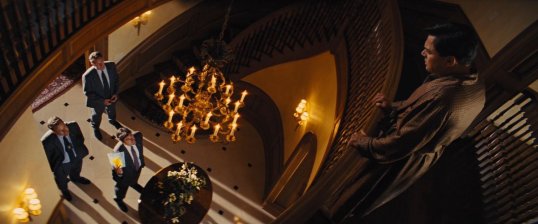
The Wolf of Wall Street (2013, dir by Martin Scorsese)

Silence (2016, dir by Martin Scorsese)

The Irishman (2019, dir by Martin Scorsese)
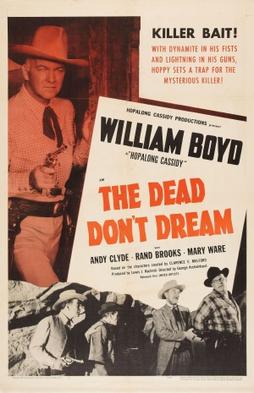 From 1935 to 1948, actor William Boyd played the role of upright, Sarsaparilla-drinking cowboy Hopalong Cassidy in over sixty films. Though most of these films were standard western programmers, they were still better produced than the average B-western and, despite having never been one in real life, Boyd was considered to be one of the most believable cowboys on the silver screen.
All good things, however, must come to an end and, by 1944, the Hopalong Cassidy films were no longer bringing in the audiences that they once did. After United Artists announced that they weren’t planning on producing any more Cassidy films, William Boyd bought the rights to character from producer Harry Sherman and then proceeded to produce and distribute Cassidy’s final film adventures himself. The Dead Don’t Dream was the 62nd Hopalong Cassidy and it was also one of the last. Only four more films would follow it.
Though The Dead Don’t Dream is set in the old west and features Hoppy and his two usual sidekicks, Lucky (Rand Brooks) and California (Andy Clyde), it’s hardly a standard western. Instead, it’s an Agatha Christie-style murder mystery, taking place in a western inn and even featuring William Boyd announcing, “The killer is in this room!” Hoppy, Lucky, and California are in town for Lucky’s wedding but, when Lucky’s future father-in-law turns up dead, the wedding turns into a murder investigation. Two other men disappear and are presumed to be dead and with everyone apparently dropping like flies, it’s up to Hoppy to solve the case, catch the killer, and prove that it’s neither him nor Lucky. The only clue is that all of the men spent a night in the same room.
The Dead Don’t Dream is diverting programmer. Though the low-budget means that there aren’t a lot of of suspects and the killer’s identity is pretty easy to figure out, Boyd does a good job playing detective and the method that was used to commit the murders is surprisingly inventive. There’s a lot more talking the shooting in The Dead Don’t Dream, which might disappoint some western fans. But personally, I enjoyed the film’s change-of-pace approach to the genre. It was interesting to see old west heroes solving mysteries instead of just shooting bad guys,
Though Strange Gamble, the final Hopalong Cassidy film, was released just a few months after The Dead Don’t Dream, Boyd would keep the character alive on both the radio and television. Boyd was considered to be the first western TV star and every western program that followed owed him an immeasurable debt. After finally retiring from acting in 1954, Boyd went on to make millions in real estate before eventually dying, at the age of 77, in 1972. For the rest of this life, he refused to do interviews or photographs, preferring the people always remember him as Hopalong Cassidy.

The Gotham nominations were announced on Thursday and I totally missed them!
Seriously, that’s how crazy this year has been.
Anyway, with so much up in the air, it’s probably debatable how much anything can be gleaned about the state of the Oscar race from these nominations. In fact, even in a normal year, the Gothams aren’t exactly known for being Oscar precursors. However, they do honor worthy independent films and often, they encourage us to track down films that we may have otherwise missed.
Only film with a budget under $35 million were eligible for a Gotham nomination. So, don’t look at this list and go, “OH MY GOD, WHERE’S MANK!? WHERE’S TENENT!?” They’re not eligible.
Anyway, here are the Gotham nominations:
Best Feature
“The Assistant”
“First Cow”
“Never Rarely Sometimes Always”
“Nomadland”
“Relic”
Best Documentary
“76 Days”
“City Hall”
“Our Time Machine”
“A Thousand Cuts”
“Time”
Best International Feature
“Bacurau”
“Beanpole”
“Cuties (Mignonnes)”
“Identifying Features”
“Martin Eden”
“Wolfwalkers”
Bingham Ray Breakthrough Director Award
Carlo Mirabella-Davis, “Swallow”
Rhada Blank, “The Forty Year Old Version”
Andrew Patterson, “Vast of Night”
Channing Godfrey Peoples, “Miss Juneteenth”
Alex Thompson, “Saint Frances”
Best Screenplay
“Bad Education,” Mike Makowsky
“First Cow,” Jon Raymond and Kelly Reichardt
“The Forty-Year-Old Version,” Radha Blank
“Fourteen,” Dan Sallitt
“The Vast of Night,” James Montague and Craig Sanger
Best Actor
Riz Ahmed, “Sound of Metal”
Chadwick Boseman, “Ma Rainey’s Black Bottom”
Jude Law, “The Nest”
John Magaro, “First Cow”
Jesse Plemons, “I’m Thinking of Ending Things”
Best Actress
Nicole Beharie, “Miss Juneteenth”
Jessie Buckley, “I’m Thinking of Ending Things”
Yuh-Jung Youn, “Minari”
Carrie Coon, “The Nest”
Frances McDormand, “Nomadland”
Breakthrough Actor
Sidney Flanigan, “Never Rarely Sometimes Always”
Jasmine Batchelor, “The Surrogate”
Kelly O’Sullivan, “Saint Frances”
Orion Lee, “First Cow”
Kingsley Ben-Adir, “One Night in Miami”
Breakthrough Series – Long Form
“The Great”
“Immigration Nation”
“P-Valley”
“Unorthodox”
“Watchmen”
Breakthrough Series – Short Form
“Betty”
“Dave”
“I May Destroy You”
“Taste the Nation”
“Work in Progress”
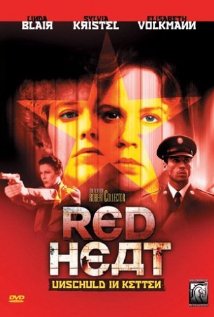 At the height of the cold war, college student Christine Carlson (Linda Blair, of course) travels to West Germany to marry her fiancée, Lt. Mike Grainger (William Ostrander). Mike has spent the last few years in West Berlin but, with his time in the army coming to an end, that means that he will be able to return to the United States with Christine. The only problem is that Mike doesn’t want to do that. Instead, Mike has decided to spend a few more years in the army and to put the marriage off for a while.
Christine is so upset that she goes for a walk to clear her head. Unfortunately, while walking around West Berlin, she witnesses a defector being abducted by the Stasi. For unclear reasons, the Stasi decided to kidnap Christine as well. Soon, Christine is in East Berlin, where she’s forced to falsely confess to being a CIA agent. Christine is sentenced to three years in prison and finally, after 20 minutes of build-up, Red Heat settles into being a typical Women In Prison film.
All of the usual WIP tropes are present. Sylvia Kristel plays Sofia, the lesbian gang leader who immediately targets Christine. The political prisoners (like Christine) are preyed upon by the common criminals, some of whom work with crooked guards to maintain order in the prison. There’s the usual collection of fights, shower scenes, and suicides, all mixed with scenes of Mike trying to get a group together to sneak across the border and rescue his fiancée. The only thing that really distinguished Red Heat from every other WIP film ever made is that it takes place in a communist-controlled prison so, in between fighting off Sofia and her crew, Christine has to watch propaganda films.
Linda Blair appeared in a lot of films like this and, by the time she made Red Heat, she was clearly getting bored with the genre. Both Blair and Kristel go through the motions and supply the obligatory nudity but neither one of them really seems to be that into the movie, with Sylvia Kristel especially appearing to be bored. Both Blair and Kristel were better in other films and, despite the uniqueness of the cold war angle, Red Heat is never as strange or as memorable as Blair’s best WIP film, Chained Heat. Red Heat is ultimately for Blair and Kristel completists only.
(In a perfect world, Red Heat would have been made in the 70s with Pam Grier in Blair’s role, Glynn Turman as Mike, Barbara Steele as Sofia, and Sid Haig as one of the guards. Now that would have been something to see!)

This 1955 film tells the story of a murder.
When we first meet Carolyn Elleson Grant (Marie Windsor), she refuses to give her husband, Harlow Grant (John Archer) a divorce, despite the fact that they’ve been separated for several years and Harlow now wants to marry Louise Nelson (Nancy Gates) and Carolyn is now involved with an art critic named Wayne Vincent (Patrick Knowles). Carolyn only married Harlow for his money and, while she has other rich lovers, she just enjoys making Harlow’s life as difficult as possible. It’s hard to blame her because Harlow is kind of whiny.
However, Carolyn has grown bored with Wayne Vincent and she’s now decided that she would rather get involved with Dick Sawyer (Richard Crane), who is rich and owns a boat. However, Dick is engaged to Carolyn’s personal assistant, Betty (Jill Jarmyn). Carolyn thinks it would be perfectly amusing to not only seduce Dick but to also destroy Betty’s happiness.
Why?
As one character put it, Carolyn is “a witch!”
(Someone then adds that Carolyn is a word that “rhymes” with witch. They don’t actually say the word because this film was made in 1955 but still….)
With Carolyn casually trying to destroy everyone’s lives and happiness, is it really a shock when some unseen person shows up at her art studio late at night and shoots her?
With Carolyn dead, it falls to Detectives Colton (Louis Jean Heydt) and Wells (John Gallaudet) to figure out the identity of the murder. They immediately suspect that it had to have been Harlow Grant. Not only does he have the motive and the opportunity but his name is Harlow Grant and I defy you to find anyone named Harlow Grant who hasn’t subsequently turned out to be involved in something shady. Harlow, however, insists that he’s innocent and the investigation is about to get a lot more complicated….
Well, okay, maybe not a lot more complicated. To be honest, it’s really not that difficult to figure out who the murderer actually is No Man’s Woman but that’s okay. The investigation itself only takes the last third of this 70-minute film. No Man’s Woman is a like a low-budget version of Gosford Park. The murder is less important than all of the drama surrounding it.
And make no mistake, there’s a lot of drama! This is a fun movie, specifically because Carolyn is such a wonderfully evil character and Marie Windsor has so much fun playing her. Carolyn doesn’t really have any deep motivation for why she does the terrible things that she does. She just does them because she can and she believes that she can get away with it. A good deal of the film’s entertainment comes from just seeing how bad Carolyn can be. In fact, you’re a bit disappointed when she’s murdered because Carolyn is the most enjoyable character in the movie. She’s someone who is literally willing to do and say anything and she makes an apologies for her actions. You wouldn’t necessarily want to work with her but she’s fun to watch.
The rest of the cast is adequate. John Archer and Nancy Gates are a bit on the dull side as the “good” characters but I liked the performances of the other suspects. Richard Crane and Jill Jarmyn, in particular, are memorable as Dick and Betty. I loved how going out on someone’s boat was apparently the height of decadence in 1955.
No Man’s Woman is an entertaining mix of noir and soap opera. Find it on Prime!

There’s been a murder!
Another one?
Yes, indeed. It would seem that during the 1940s and the 1950s, people were just dropping left and right. Mysterious murders were just a part of everyday life and you can be sure that every murder would bring with it an effort would be made to frame an innocent man. The 1947 British noir, The Mysterious Mr. Nicholson, opens with Peggy Dundas (Lesley Osmond) stumbling across a dead body. The body belongs to a man who was planning on changing his will and disinheriting his nephew. It seems like the nephew should be the obvious suspect, right?
Except …. the dead man has a letter pinned to his chest! And the letter is signed by VLS, a notorious cat burglar who, in the days before World War II, was famous for robbing the French and then sending the authorities taunting letters. So, obviously, VLS must be back and he must now be a murderer!
Except …. why would you kill a man and then leave behind a note letting everyone know that you did it? That makes no sense at all. Especially since VLS is actually a man named Mr. Nicholson (Anthony Hulme) and this mysterious Mr. Nicholson not only helped the British defeat the Germans but he also has a solid alibi for where he was on the night of the murder. Obviously, VLS is innocent!
Except …. Peggy says that she saw a man who looked exactly like Mr. Nicholson at the scene of the crime!
Could the Mysterious Mr. Nicholson have a look-alike? Yes, actually, he does. We learn this very early in the film so it doesn’t count as a spoiler. The murderer is man named Raeburn (also played by Anthony Hulme). Raeburn just happens to look exactly like Mr. Nicholson and he figured he would use that resemblance to his advantage by framing Nicholson for the crime!
So now, Nicholson has to not only prove his innocence but also track down the man who looks exactly like him!
That’s a lot of plot for a low-budget, 78 minute film. What’s odd is that, even with all of that scheming and the short running time, The Mysterious Mr. Nicholson still has some odd moments of blatant padding. In the middle of the film, all of the action comes to a halt so that we can watch a lengthy dog act. This is followed by a musical interlude. Why? Who knows? Neither adds much to the plot.
Anyway, I was actually kind of hoping that The Mysterious Mr. Nicholson would turn out to be one of those really fun, old movies that you just happen to stumble across on Prime or on TCM late at night. But it’s actually pretty boring. There’s only a handful of locations in the film, which gives the whole thing a stagey feel and, though short, the movie often seems to drag. Another huge problem is that Hulme plays Nicholson and Raeburn the exact same way, so it’s often difficult to keep track of which is which. I was hoping for at least some split photography so Hulme could act opposite himself but we don’t even get that. Instead, Nicholson and Raeburn are rarely on screen at the same time and, whenever they are, it’s obvious that a stand-in was used for the other man.
From a historical point of view, the film is interesting in that it was obviously made while London was still rebuilding from World War II. The few location shots reveal a city that’s in the process of being recreated. Nicholson is presented as being someone who was basically reformed as a result of fighting on the side of the good guys during World War II. As one Scotland Yard inspector explains it, Nicholson may have been a criminal before the war but, once the war started, he remembered that was British first and he did what had to be done to help defeat Germany. It’s a nice touch.
The historical aspect aside, The Mysterious Mr. Nicholson is pretty forgettable. When it comes to British noirs, I’ll take The Criminal.
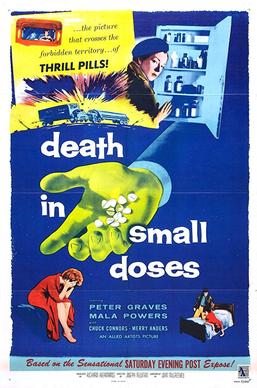
Ah, speed.
I have to admit that I always find films about amphetamines to be fascinating because I take them for my ADD. I’ve been taking Dexedrine since I was in middle school and it has always amused me how people who don’t have ADD seem to think that the meds will give you super powers. For instance, every season of Big Brother, there’s people online who get outraged over certain houseguests taking Adderall. “She had an unfair advantage!” someone will say, “Because she’s taking Adderall!” What can I say? People who don’t have ADD just don’t get it. Yes, if you have ADD, the meds can help you focus but it’s not like they’re going to give you any sort of special power that’s not available to any other person.
(I will admit that there is a slight difference between me on my meds and me off my meds. Actually, my family says that there’s a huge difference but I think they’re exaggerating. It is true that I’m a lot more focused when I take my Dexedrine. My mind wanders a bit less than usual and I’m also usually in better control of my frustrations. When I take my meds, I can finish any project. When I don’t take them, I can talk about finishing any project.)
Dexedrine focuses me but apparently, it does the opposite for those who don’t have ADD. The 1957 film, Death in Small Doses, features a truck driver named Mink Reynolds who, despite not having ADD, pops too many capsules and ends up playing really loud music and trying to force a waitress to dance with him. He also hallucinates seeing a car and then grabs a knife and tries to kill another truck driver. To be honest, that seems a bit extreme to me. In fact, I’d almost argue that Mink’s behavior would indicate that the filmmakers really didn’t know much about amphetamines. Making things even stranger is that Mink is played by Chuck Connors, who was a remarkably inexpressive actor. Watching Connors, with his stone face, trying to dance and jump around is an interesting experience. Mink is supposed to be a jazz-crazed, speed-abusing hepcat but instead, he comes across like an animatronic mannequin. You can almost hear the gears shifting whenever he has to move across the screen.
Mink’s fellow truck driver is Tom Kaylor (Peter Graves), a seemingly upright man who is usually seen wearing a tie and who looks like he would be more comfortable working behind a desk than driving a truck. Of course, that’s because Tom is actually an FBI agent! He’s working undercover, pretending to be a truck driver so that he can smash a ring of drug dealers! Of course, the problem here is that everything about Peter Graves’s screen presence shouts out, “Narc!” With his square jaw and his perfect haircut and his stiff but authoritative delivery of his dialogue, he seems like he was created in a lab that specifically set out to develop the most stereotypical FBI agent imaginable. There’s not a single rough edge to him and it’s hard to buy that the other truck drivers wouldn’t see straight through him.
While Tom tries to bust the ring, he also finds time to possibly fall in love with two different women, both of whom seem as if they might know more than they’re letting on. Amy (Merry Anders) is the waitress who has developed a drug habit of her own. Val (Mala Powers) owns the boarding house when Tom and Mink live. Can Tom trust either one of them? And will Tom not only undercover the identity of the head of the drug ring but also survive long enough to bring the dealers to justice?
So, here’s the thing. During its worst moments — i.e., whenever Chuck Connors is jumping all over the place and talking about how much he loves his friend “benny” — this is a campy and rather silly film that makes Reefer Madness look subtle by comparison. However, during its best moments, this is a tough and entertaining noir that features good performances from Merry Anders and Mala Powers. Both Anders and Powers manage to transcend the film’s sillier moments and they actually bring a charge of reality to the story. And while director Joseph M. Newman may not have known much about drugs, he did know how to shoot a fight scene. Making good use of its desolate locations (the truck drivers spend a lot of time driving through the desert) and setting many of the film’s best moments at night, Newman overcomes some of the script’s weaker moments. In the end, it makes for a rather uneven but entertaining viewing experience. Despite the film’s cluelessness about drugs and the miscasting of both Graves and Connors, this lesser-known noir is worth tracking down.
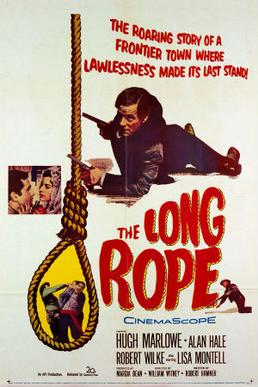 The time is the late 19th century and there’s been a murder in the territory of New Mexico. Someone has gunned down Jim Matthews (Steve Welles) and store owner Manuel Alvarez (John Alonzo) has been arrested. Everyone in town says that Jim was fooling around with Manuel’s beautiful wife, Alicia (Lisa Montell). Manuel insists that he’s innocent but Jim was the brother of the town’s most powerful and richest land owner, Ben Matthews (Robert J. Wilke). Ben is already having a gallows built so that Manuel can be hanged in the town square and it doesn’t look like there’s anything that Sheriff John Millard (Alan Hale, Jr. — yes, the Skipper) can do to stop him.
However, Federal Judge Jonas Stone (Hugh Marlowe) is determined to make sure that Manuel gets a fair trial. When it becomes obvious that the Matthews family has no intention of letting that happen, Judge Stone launches his own investigation. Believing Manuel to be innocent, Stone knows that he has to find the real killer before the gallows are built and Manuel is lynched by the mob.
A low-budget western with a 61-minute running time, The Long Rope is a surprisingly adult western, one that comes out strongly and directly against both lynching and the town’s racism. With the Matthews family representing the brutal “old ways,” and Judge Stone representing a more enlightened and fair system of justice, it’s up to the town to decide who they will follow. Hugh Marlowe brings a lot of gravitas to his role as the stern but compassionate Judge Stone while Lisa Montell makes a strong impression as Manuel’s rebellious wife. Robert J. Wilke is an effective villain and even Alan Hale, Jr. gives a good performance once you stop thinking of him as being the Skipper.
One final note of interest: John A. Alonzo, who played Manuel in The Long Rope, went on to become an award-winning cinematographer. Among Alonzo’s credits, as a cinematographer: Harold and Maude, Chinatown, The Bad News Bears, Black Sunday, Scarface, Norma Rae, and Close Encounters of Third Kind.
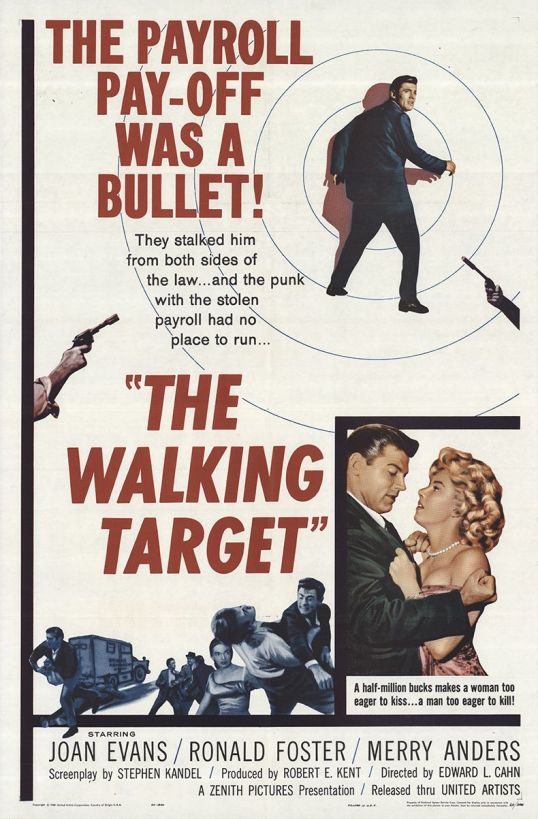
In this 1960 noir, Nick Harbin (Ronald Foster) is a walking target!
That’s because he’s just been released from prison. As the only survivor of a gang that pulled off a daring payroll robbery, Nick has done his time and he’s ready to get on with his life. He even got himself an education while he was behind bars. He’s decided to reform and no longer be the angry criminal that he once was.
But first, there’s a little matter of some money.
Only Nick knows where he buried the loot from the robbery. Everyone wants it. The press wants to know because it’ll make a great story. A nosy detective wants to know because he’s convinced that Nick hasn’t changed his ways. Susan (Merry Anders), who used to be involved with one of Nick’s criminal associates, wants to know because she’s only in it for the cash. Susan’s current boyfriend, Dave (Robert Christopher) wants to know because …. well, again, it all comes down to greed. Greed is also what’s motivating a local gangster to provide backing for Susan and Dave in their quest to find the money. Dave is even willing to send Susan to seduce Nick.
However, all Nick wants to do is find the money and then split it with Gail (Joan Evans). Gail is the widow of one of the robbers and Nick wants to do the right thing for her. Of course, Nick is himself kind of in love with Gail. Can Nick get the money, find love with Gail, and avoid slipping back into his criminal ways? It won’t be easy. Life is never easy when you’re….
THE WALKING TARGET!
Okay, that was a little bit melodramatic on my part but then again, it’s a melodramatic film. Everyone is constantly plotting and double-crossing. Appropriately, it all leads to a battle in the desert as modern-day outlaws prove themselves to be no more trustworthy than their vintage ancestors.
The Walking Target is a low-budget noir, one that clocks in at only 70 minutes and which, as a result, doesn’t waste much time when it comes to jumping into its story. That’s one good thing about these B-movies. They had neither the budget nor the time for red herrings. As a result, you pretty much know what you’re going to get before the movies even begins. The Walking Target features all of the usual tough dialogue and morally ambiguous characters that you would expect to see in a noir. Merry Anders is an adequate femme fatale, though I do wish that Susan had been a smarter character. (Nick sees through her way too easily.) The film opens with the prison’s warden telling Nick that, even though he’s done his time, he’ll always be a no-good crook and that’s the perfect way for a noir to open. Unfortunately, the film’s cinematography doesn’t really have the right noir look. There aren’t enough shadows and the film often looks like it could just be an episode of an old TV show. I guess that’d due to the budget but it really does keep the film from making the transition from being good to being great.
The Walking Target is a diverting-enough film. I liked Ronald Foster’s uneasy performance as Nick and it was enjoyable to watch everyone plotting and scheming. The Walking Target is currently available on Prime and I recommend it to anyone looking for a good, if lesser-known, B-noir.

