As some of our regular readers undoubtedly know, I am involved in a few weekly live tweets on twitter. I host #FridayNightFlix every Friday, I co-host #ScarySocial on Saturday, and I am one of the five hosts of #MondayActionMovie! Every week, we get together. We watch a movie. We tweet our way through it.
Tonight, for #ScarySocial, I will be hosting Jim Wynorski’s 976-Evil II!
If you want to join us on Saturday night, just hop onto twitter, start the film at 9 pm et, and use the #ScarySocial hashtag! The film is available on Prime! I’ll be there co-hosting and I imagine some other members of the TSL Crew will be there as well. It’s a friendly group and welcoming of newcomers so don’t be shy!
Today, the Shattered Lens wishes a happy birthday to one of the better actresses of her generation, Jennifer Lawrence. This scene that I love comes from 2009’s Winter’s Bone. I still think this is Lawrence’s best performance.
4 Or More Shots From 4 Or More Films is just what it says it is, 4 shots from 4 of our favorite films. As opposed to the reviews and recaps that we usually post, 4 Shots From 4 Films lets the visuals do the talking!
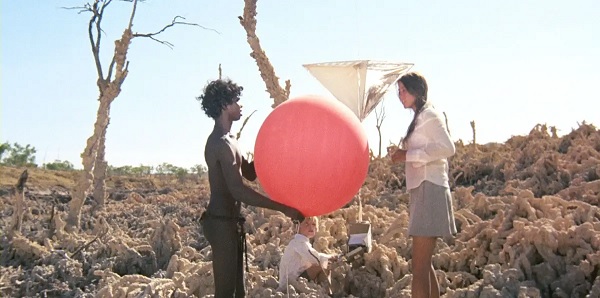
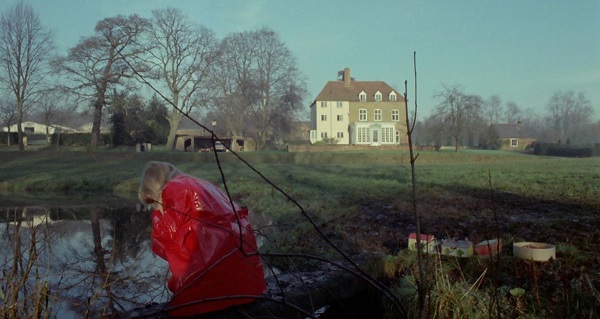
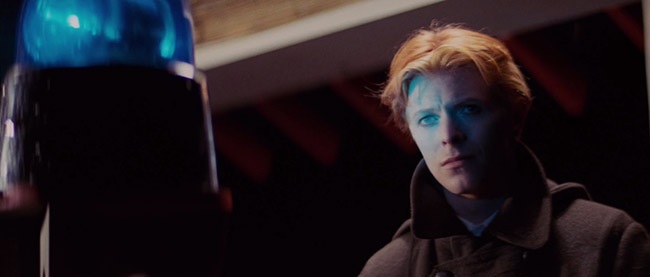
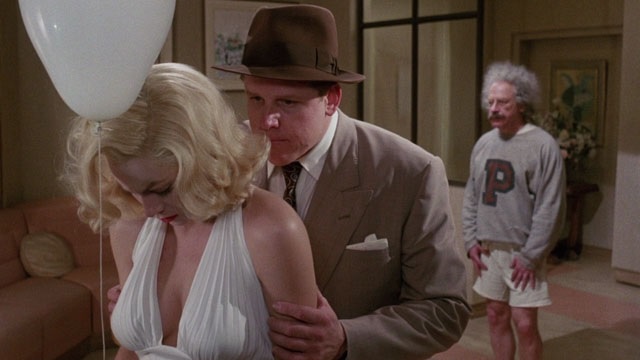
Today would have been the 98th birthday of the great and enigmatic director, Nicolas Roeg. As both a cinematographer and a director, Roeg was responsible for some of the most visually striking films ever made. Today, we honor his legacy with….
4 Shots From 4 Nicolas Roeg Films
Walkabout (1971, dir by Nicolas Roeg, DP: Nicolas Roeg)
Don’t Look Now (1973, dir by Nicolas Roeg, DP: Anthony Richmond)
The Man Who Fell To Earth (1976, dir by Nicholas Roeg, DP: Anthony Richmond)
Insignificance (1985, dir by Nicolas Roeg, DP: Peter Hannan)
As some of our regular readers undoubtedly know, I am involved in a few weekly watch parties. On Twitter, I host #FridayNightFlix every Friday and I co-host #ScarySocial on Saturday. On Mastodon, I am one of the five hosts of #MondayActionMovie! Every week, we get together. We watch a movie. We tweet our way through it.
Tonight, at 10 pm et, I will be hosting #FridayNightFlix! The movie? In memory of Reggie Bannister, we have 1979’s Phantasm!
If you want to join us this Friday, just hop onto twitter, find Phantasm on Prime, start the movie at 10 pm et, and use the #FridayNightFlix hashtag! I’ll be there happily tweeting. It’s a friendly group and welcoming of newcomers so don’t be shy.
Today, the Shattered Lens wishes actor and comedian Steve Martin a happy 81st birthday. Originally from Texas, Martin has been a cultural mainstay for longer than I’ve been alive. He’s a master of both comedy and drama, as anyone who has watched the two seasons of Only Murders In The Building can tell you.
And he can sing too!
Here he is, performing Maxwell’s Silver Hammer in 1978’s Sgt. Pepper’s Lonely Hearts Club Band. Though this was not Martin’s film debut, it was his first “big” role. Steve Martin was 33 years old here. Remarkably, he only seems to have aged a few years in the decades since appearing in this film.
4 Or More Shots From 4 Or More Films is just what it says it is, 4 shots from 4 of our favorite films. As opposed to the reviews and recaps that we usually post, 4 Shots From 4 Films lets the visuals do the talking!
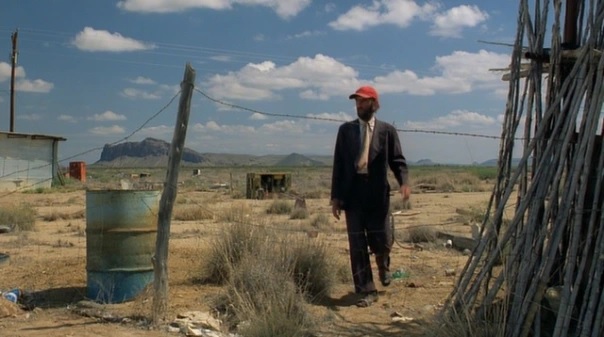
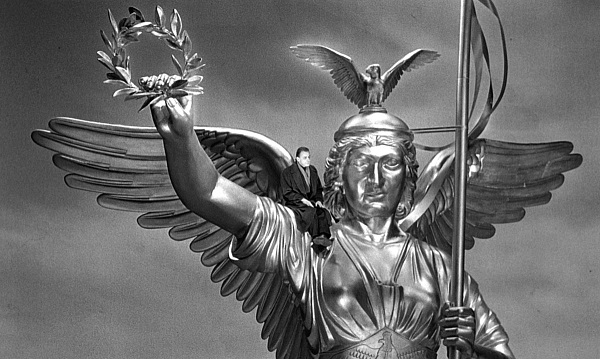
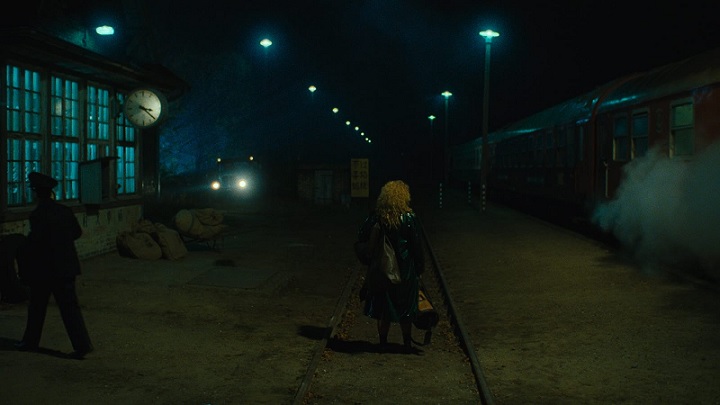
Today, the Shattered Lens wishes a happy 79th birthday to the great German director, Wim Wenders! It’s time for….
4 Shots From 4 Wim Wenders Films
The American Friend (1976, dir by Wim Wenders, DP: Robby Muller)
Paris, Texas (1984, dir by Wim Wenders, DP: Robby Muller)
Wings of Desire (1987, dir by Wim Wenders, DP: Robby Muller)
Until the End of the World (1991, dir by Wim Wenders, DP: Robby Muller)
“You got problems with the whole fuckin’ world.” — Officer Bob Hodges
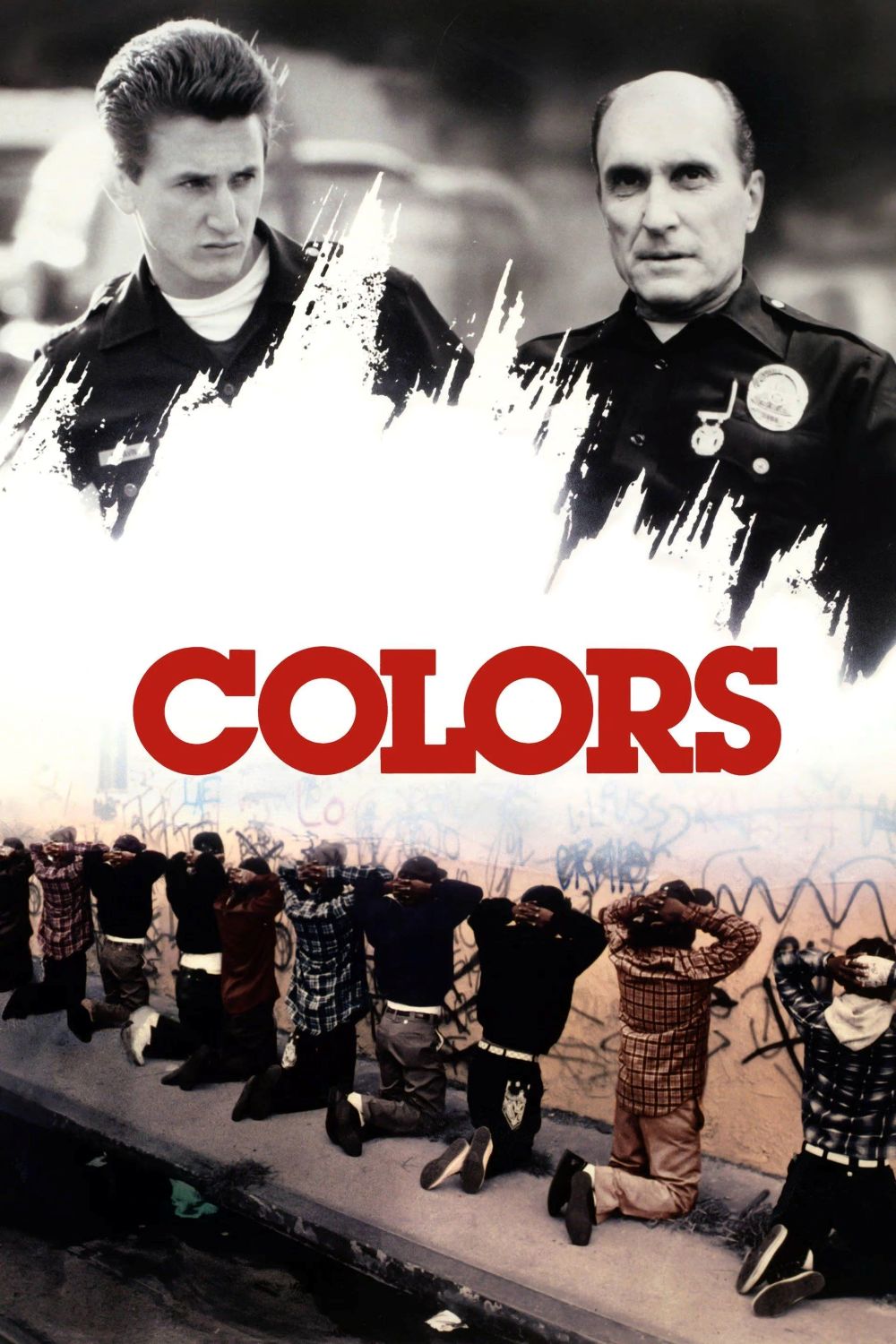
Consider, for a moment, the cultural landscape of 1988. Inner-city gang violence was hardly a new phenomenon, but it remained largely relegated to local news broadcasts and distant urban nightmares for most of the country. Dennis Hopper’s Colors changed that dynamic almost overnight, serving as a brutal, unfiltered introduction to a world that mainstream America had collectively chosen to ignore. Hopper, whose own countercultural credentials were cemented decades earlier with Easy Rider, took a considerable risk here, and while the final product is undeniably uneven, its cultural footprint is impossible to overstate. The film functions simultaneously as a historical document, a cautionary tale, and a cinematic watermark that forever altered how audiences perceived the volatile landscape of Los Angeles.
The basic setup is old-school buddy-cop material. Robert Duvall plays Bob Hodges, a seasoned LAPD officer in the CRASH unit—Community Resources Against Street Hoodlums—who has spent enough years policing Los Angeles to understand that aggression does not automatically produce respect. Sean Penn plays Danny McGavin, his hotheaded new partner, a guy who approaches every situation like he has something to prove. They are assigned to patrol neighborhoods divided by Bloods, Crips, and Chicano gangs, attempting to keep retaliation killings from escalating into full-scale warfare. The main plot is not especially complicated, and that is probably intentional. Hopper is less interested in a twist-heavy police procedural than in dropping the viewer into a city where tension seems to hang over every street corner, traffic stop, and act of public bravado.
Duvall is the film’s anchor. Hodges is not written as a saint—he is still a cop working inside a hostile and often brutal institution—but Duvall gives him a weary, almost paternal quality that makes him more compelling than the standard “veteran teaching the rookie a lesson” archetype. He understands that policing gangs is not as simple as walking in, making arrests, and congratulating yourself afterward. He has a kind of street fluency, knowing when to talk, when to threaten, and when to step back before a small humiliation becomes a body count. Penn, meanwhile, is all sharp edges. McGavin is reckless, racist in ways he may not fully recognize, and always a half-second away from making a situation worse. Penn can be exhausting here, but that is the point. His character embodies the movie’s fear that a badge, a gun, and an appetite for confrontation can be as combustible as any gang rivalry.
Hopper directs Colors with a lot of energy and an almost documentary-like alertness to its setting. The film’s Los Angeles feels sun-blasted, crowded, and perpetually unstable, not the glossy dream factory of postcards and celebrity magazines. Haskell Wexler’s cinematography does huge work in making the city feel tactile and lived-in. Hopper also has a sharp ear for the way music, cars, clothing, graffiti, and neighborhood boundaries become a visual language of identity. The title is not subtle, but it works: colors signify affiliation, pride, danger, and the instantly visible lines people are willing to kill or die over. The film’s soundtrack, including Ice-T’s title song, further locks it into the cultural moment, giving the movie a rawness that separates it from more generic police thrillers.
What makes Colors uncomfortable is also what makes it valuable. Its attention to gangs was controversial from the beginning, with critics and community voices arguing that it risked sensationalizing violence and reducing Black and Latino communities to dangerous backdrops for a cop story. The criticism is fair. The film sees gang life largely from the windshield of the LAPD cruiser; its gang-affiliated characters are often treated as threats, symbols, or tragic consequences rather than people granted the same interiority as Hodges and McGavin. Even at its strongest, Colors can make complex social realities feel like an arena in which two white cops test their methods and masculinity.
Still, it would be wrong to dismiss it as empty exploitation. Colors does not really romanticize its violence. Hopper shoots drive-bys, funerals, and retaliations with a nasty abruptness; nobody comes out looking triumphant. The gang members are not cleanly divided into monsters and victims either. Some are cruel, some are frightened, some are locked into a status they may not know how to escape, and some clearly enjoy the power that comes with being feared. The movie may not fully examine poverty, segregation, institutional racism, the drug economy, or generational trauma, but the instability of its world comes through. The police are not presented as saviors, either. They are frequently antagonistic, operating through intimidation and humiliation, while McGavin’s actions repeatedly demonstrate how easily law enforcement can intensify exactly the conflict it claims to contain.
This is where Colors matters most historically. Before it, movies had certainly depicted urban crime, racial conflict, and youth violence, but Hopper’s film made contemporary L.A. gang culture recognizable as a major studio subject. It helped bring gang culture, strained police-community relations, and inner-city issues into a much wider popular conversation. The film did not invent the genre that followed, but it helped clear a path for the wave of gang-related and urban-crime movies that arrived in the late ’80s and especially the ’90s. Films such as Boyz n the Hood, American Me, South Central, New Jack City, and Menace II Society inherited some of its urgency, its focus on neighborhoods under siege, and its refusal to pretend gang violence was merely a distant news-story problem.
The major difference is that many of those later movies also corrected Colors’ biggest limitation: they shifted the point of view inward. Boyz n the Hood does not treat South Central as a backdrop for police work; it makes the residents’ friendships, families, dreams, grief, and daily routines the emotional center. American Me follows the historical and institutional roots of Chicano gang identity with a scope Colors never attempts. South Central turns toward redemption, fatherhood, and the possibility—however fragile—of interrupting the cycle. In that sense, Hopper’s film can feel like an important opening statement rather than the final word. It showed mainstream audiences the subject; the films that followed increasingly demanded that audiences understand the people living inside it.
Its influence can also be felt internationally, though it is best understood as part of a broader transnational exchange of urban-crime cinema, hip-hop culture, and anti-police sentiment rather than a simple one-to-one blueprint. Mathieu Kassovitz’s La Haine is far more formally daring and politically focused than Colors, but both films draw power from a city divided by territory, race, policing, and simmering retaliation. La Haine brought France’s banlieues to mainstream French audiences and put police violence and marginalized youth at the center of the frame. Where Colors views the street crisis through law enforcement’s eyes, La Haine makes its young Black, Jewish, and Arab protagonists the whole point. Yet the resemblance is there in the oppressive sense of escalation, the combustible police encounters, and the idea that one violent incident can send an already alienated community toward catastrophe. Colors helped establish a mainstream vocabulary for this kind of story, while La Haine transformed that vocabulary into something more intimate, stylized, and politically devastating.
In the end, Colors is messy, dated in places, and frustratingly narrow in its perspective, but those flaws are part of why it is worth revisiting. It captures a Hollywood industry beginning to confront an issue it did not fully understand, using the sturdy frame of a cop thriller to look at a social wound much larger than its plot. Dennis Hopper brings volatility, Duvall brings soul, Penn brings danger, and Los Angeles itself does the rest. It is not the definitive gang film—later movies would surpass it in depth, perspective, and emotional force—but it is a crucial precursor. Colors made the subject visible to the mainstream, and the films that came after kept pushing the camera closer to the people trapped inside the picture.
Hi, everyone! Tonight, on Mastodon, I will be hosting the #TubiThursday watch party! Join us for a true classic, 1990’s The Forbidden Dance!
You can find the movie on Tubi and YouTube and you can join us on Mastodon at 9 pm central time! (That’s 10 pm for you folks on the East Coast.) We will be using #TubiThursday hashtag! See you then!
It’s not just The Birds that cause chaos in this scene from Alfred Hitchcock’s 1963 film of the same name. I will never understand why that gentleman decided that he just had to light up a cigar at that particular time. And if he had used a lighter instead of a match, he could have prevented a lot of trouble.
You do have to respect the Birds for somehow knowing that he would do exactly that and therefore, making sure that the gasoline ended up right around his feet. Those birds are clever!
Seriously, though, this scene really creeps me out. I think it’s because there’s so many birds and, as this scene showed, there was absolutely no way the humans on that island were going to be able to win this particular battle.
4 Or More Shots From 4 Or More Films is just what it says it is, 4 shots from 4 of our favorite films. As opposed to the reviews and recaps that we usually post, 4 Shots From 4 Films lets the visuals do the talking!
127 years ago, the master of suspense was born in England. Today, we honor the career and legacy of the great Alfred Hitchock with….
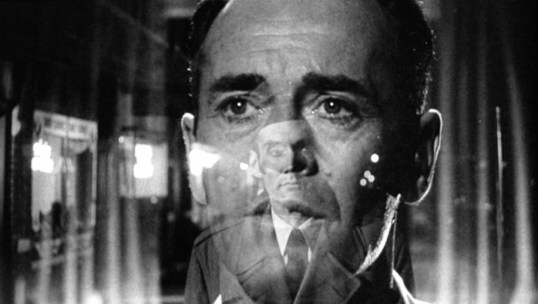
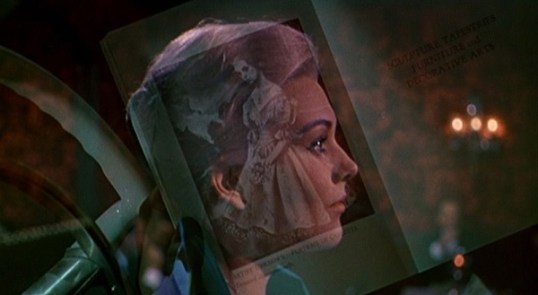
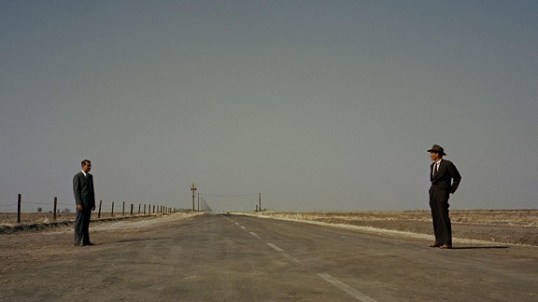
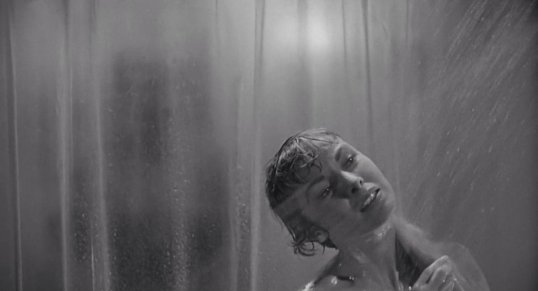
12 Shots From 12 Alfred Hitchcock Films
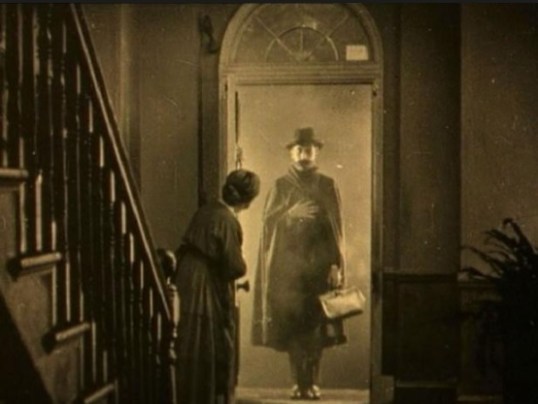
The Lodger (1926, dir by Alfred Hitchcock)
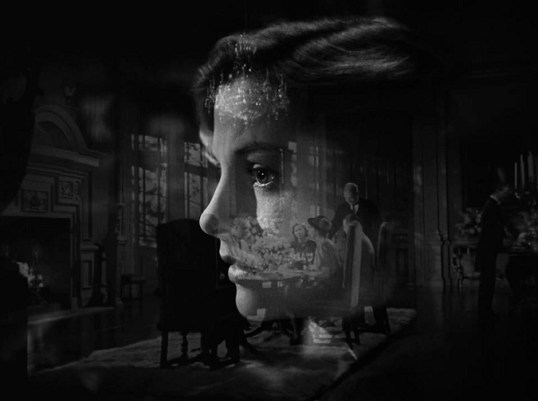
Rebecca (1940, dir by Alfred Hitchcock, DP: George Barnes)
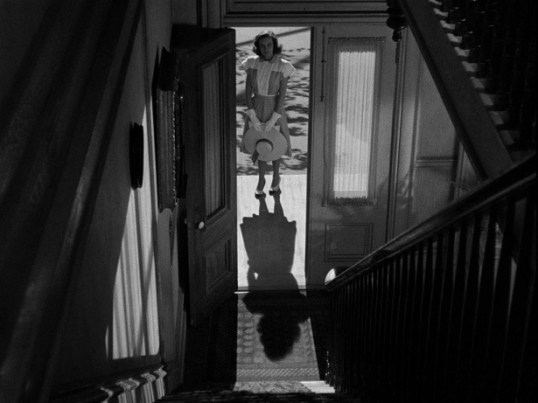
Shadow of a Doubt (1943, directed by Alfred Hitchcock, DP: Joseph A. Valentine)
Notorious (1946, dir by Alfred Hitchcock, DP: Ted Tetzlaff)
Spellbound (1945, dir by Alfred Hitchcock, dir by George Barnes))
Rear Window (1954, dir by Alfred Hitchcock, DP: Robert Burks)
The Wrong Man (1956, Dir. by Alfred Hitchcock, DP: Robert Burks)
Vertigo (1958, dir by Alfred Hitchcock, DP: Robert Burks)
North by Northwest (1959, dir by Alfred Hitchcock, DP: Robert Burks)
Psycho (1960, dir by Alfred Hitchcock, DP: John L. Russell)
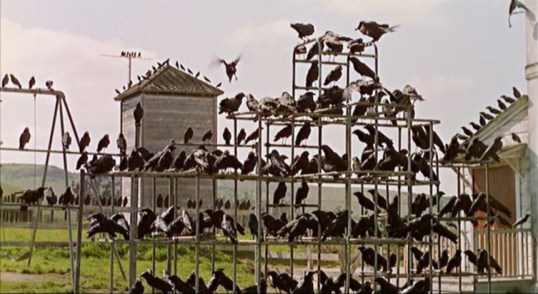
The Birds (1963, dir by Alfred Hitchcock, DP: Robert Burks)
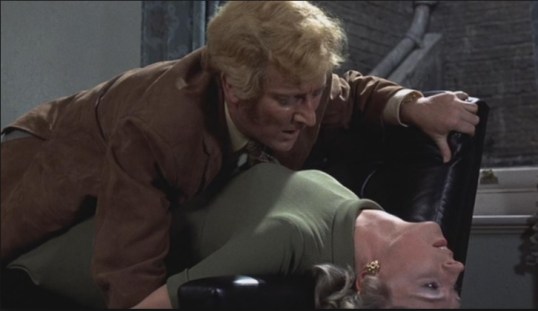
Frenzy (1972, dir by Alfred Hitchcock, DP: Gil Taylor))