As I try to put into words my reaction to the new film Dream House, one phrase comes to mind:
Bleh.
Dream House is about this guy played by Daniel Craig who we’re told, at the start of the film, is a writer. He’s moved out to his “Dream House” out in the middle of one of those cinematic suburban communities. He shares his dream house with his wife Libby (Rachel Weisz) and his two little girls. However, things aren’t quite what they seem. The girls keep seeing a shadowy figure watching them. Teenagers keep performing Satanic rituals in the basement. Craig’s neighbor looks just like Naomi Watts. Oh no! Has he been sucked into Mulholland Drive!?
No, not quite. Instead, he’s just found himself trapped in a painfully slow movie that takes itself and it’s half-baked plot way too seriously. This film is being advertised as if it’s a horror movie but there’s nothing scary about it and it’s almost as if the film itself is refusing to lower itself to providing us with any “cheap” thrills. The film instead is a mystery but it’s one of those mysteries where we discover the solution not through any artfully placed clues but instead by random characters showing up and having flashbacks.
There’s a big twist about 80 minutes into this 99 minute film and, as a reviewer, I know that it would not be right for me to spoil that twist. Fortunately, however, Morgan Creek Productions decided to include that twist in the film’s trailer so, if you want to know, here you go:
Again, it takes this film 80 minutes to reach the twist that the trailer reveals after 1 minutes and 17 seconds. So, as a result, you spend the first 80 minutes going, “Okay, we know…” Once the twist is revealed, there’s only 18 minutes to wrap up the film’s plot and this is done in the clumsiest way imaginable.
Now, one reason for this might be that the film’s producers reportedly clashed with director Jim Sheridan and eventually took the film away from him. Sheridan, Craig, and Watts have all refused to do any promotion for the film and have publicly stated that they hate the version that has been released. I don’t know. My natural impulse has always been to side with the artists as opposed to the corporate people. After all, we’ve all heard about what happened to Erich Von Stroheim’s original cut of Greed and about what Terry Gilliam went through with Brazil. Still, it’s hard to look at the assembled footage and see any hint that this film could have been anything more than the film that’s currently playing at your local theater.
When I told Arleigh about my feelings towards Dream House, he asked me if I felt it was the “worst one of the year.” I wouldn’t go quite that far. Dream House is forgettable but it’s not as pompous as The Conspirator or as insulting as Straw Dogs.
For decades, the zombie film genre has been defined by the rules established by the grandfather of the modern zombie story, George A. Romero. His 1968 landmark horror film Night of the Living Dead transformed what had once been a gothic creature rooted in the voodoo folklore of Haiti and the Caribbean into an apocalyptic force symbolizing social collapse and human weakness. The film not only terrified audiences but also laid the foundational blueprint for every zombie movie that followed. Romero’s zombies weren’t merely monsters — they were a reflection of humanity’s fears, prejudices, and inner decay. His influence has remained so pervasive that, even today, filmmakers working in horror are inevitably responding to his legacy, whether they realize it or not.
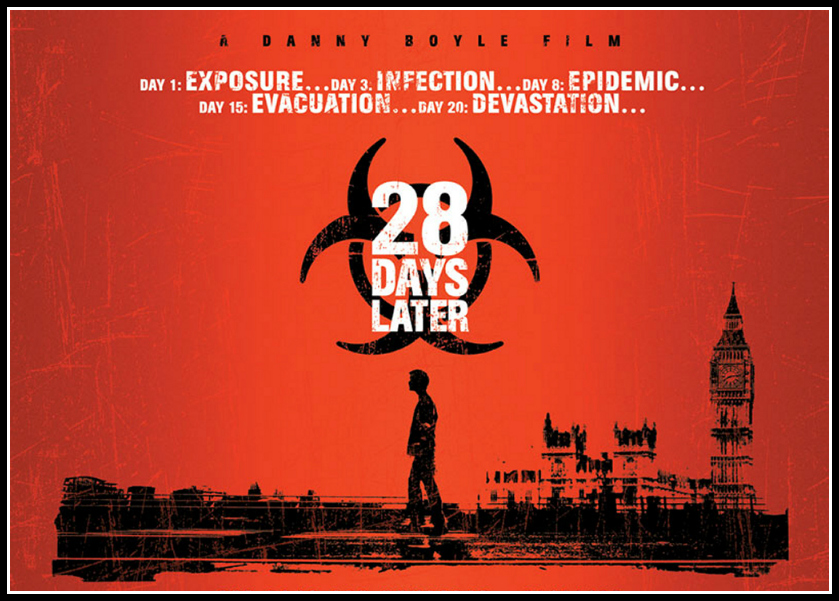
Through the years, there have been numerous attempts to deviate from Romero’s formula. The most prominent early success came in the 1980s with the Return of the Living Dead series — a clever horror-comedy franchise that infused dark humor and punk aesthetics into the genre. Yet even that beloved cult entry eventually lost steam. True reinvention did not arrive until 2002, when British filmmaker Danny Boyle and screenwriter Alex Garland collaborated on 28 Days Later, a project that both revitalized the zombie genre and split its devoted fan base down the middle. Was it truly a “zombie” film, or something else entirely? That very debate remains unresolved more than twenty years later.
Boyle’s film begins not with a supernatural curse or the reanimation of the dead, but with a catastrophic act of human arrogance. A group of naïve animal-rights activists break into a research laboratory to rescue chimpanzees subjected to bureaucratic cruelty. However, they find that these animals have been injected with a rage-inducing virus — the product of bioengineering rather than black magic. One of the activists, horrified by what she witnesses, ignores the pleas of a desperate scientist and frees a chimp, unleashing a pandemic that will decimate Britain within weeks. This opening sequence is both economical and horrifying: the origins of the apocalypse come from compassion twisted into recklessness. Boyle establishes his tone immediately — quick editing, grainy digital video, and an oppressive sense of realism create a world that feels disturbingly possible.
The narrative then leaps forward twenty-eight days. In a now-iconic sequence, the protagonist Jim (played by Cillian Murphy) awakens from a coma in an abandoned London hospital. His disorientation mirrors that of the audience: sterile hallways littered with trash, flickering lights, a haunting silence broken only by the hum of wind through the empty city. When Jim emerges into the sunlight, the camera captures a London entirely devoid of people, its majestic landmarks standing as hollow monuments to civilization’s sudden collapse. This is one of cinema’s most unforgettable depictions of isolation. The haunting score by John Murphy and the use of Godspeed You! Black Emperor’s instrumental “East Hastings” heighten the apocalyptic stillness, transforming London into a ghost metropolis.
Jim’s bewilderment only deepens when he seeks refuge in a church — a setting traditionally associated with salvation — only to find it desecrated by carnage. His presence awakens a horde of infected individuals who charge at him with terrifying speed. Unlike Romero’s slow, lumbering undead, Boyle’s infected are human beings transformed by a virus that amplifies their aggression to animalistic extremes. They move like predators, sprinting at prey with berserk fury. Jim narrowly escapes thanks to two survivors, Selena (Naomie Harris) and Mark (Noah Huntley), who introduce him to the brutal new rules of existence: infection spreads through blood contact, turning victims within seconds, and hesitation means death.
The trio’s uneasy alliance soon crumbles after Mark becomes infected, forcing Selena to kill him without hesitation. This harrowing moment establishes her as one of the film’s strongest and most pragmatic characters — a refreshing departure from the damsel archetype that has long haunted horror cinema. Jim and Selena later encounter Frank (Brendan Gleeson), a good-natured taxi driver, and his teenage daughter Hannah (Megan Burns), who have been surviving in a fortified apartment building. Together they form a fragile surrogate family and travel in search of a military broadcast promising safety and a potential cure.
Boyle deftly blends moments of human warmth amid horror. Scenes like the group’s scavenging trip through an abandoned grocery store — a darkly comic echo of Dawn of the Dead’s consumer satire — offer glimpses of joy and normalcy. The countryside sequences, shot with a painterly eye, contrast the urban decay of London with the serene beauty of a world reclaiming itself from human control. Nature, the film quietly suggests, endures long after people have vanished.
Their journey leads them to a fortified mansion commanded by Major Henry West (Christopher Eccleston), a British officer whose soldiers claim to have “the answer to infection.” The supposed sanctuary quickly reveals a darker truth. West’s band of men have descended into moral depravity, promising their commander that the promise of “women” will restore morale. The film shifts from survival horror to psychological thriller as the real threat emerges — not the infected outside, but the monstrousness within human beings when order collapses. In this descent into militaristic patriarchy and madness, Boyle channels the spirit of Romero’s Day of the Dead, where the military’s illusion of control becomes the true source of terror.
Boyle and Garland’s reinvention of the zombie mythos was revolutionary. Longtime fans of Romero’s shambling undead initially resisted the notion that 28 Days Later even qualified as a zombie movie. After all, its creatures weren’t reanimated corpses but living people overtaken by an uncontrollable virus. Yet their function within the story — relentless, dehumanized embodiments of contagion and rage — served the same thematic role as zombies always had: mirrors for society’s breakdown. The debate over whether the infected “count” as zombies is less important than the fact that Boyle redefined the genre’s emotional and kinetic language. His infected didn’t just pursue victims; they hunted them. Their blistering speed and screams injected pure chaos into what had once been slow, creeping dread.
The technical and artistic choices heightened the film’s intensity. Shot largely on digital video with handheld cameras, 28 Days Later looked raw and immediate, more like found footage than polished fiction. This realism bridged the gap between old-school horror and the new century’s fixation on viral outbreaks and global instability. Coming in the post-9/11 era, its images of deserted cities and military lockdowns felt eerily prescient, foreshadowing later fears of pandemics and authoritarian control.
The performances ground the film emotionally. Cillian Murphy’s portrayal of Jim evolves from bewildered innocence to hardened survivor, serving as the audience’s emotional compass. Naomie Harris delivers one of the genre’s most capable female performances, blending vulnerability with ferocity. Brendan Gleeson, always magnetic, brings compassion and tragedy to Frank — a man whose paternal instincts ultimately lead to heartbreak. Christopher Eccleston’s Major West stands as a chilling embodiment of human corruption in crisis: the soldier who insists he is saving civilization while replicating its worst impulses.
Despite being produced on a modest budget of roughly eight million dollars, Boyle’s film achieved a scale and impact far greater than its resources suggested. The empty London shots — achieved by closing key streets at dawn for only minutes at a time — remain astonishing feats of logistical precision and cinematic audacity. More importantly, the film’s minimalist production enhanced its believability. Everything about 28 Days Later feels lived-in, grimy, and plausible.
Two decades on, 28 Days Later continues to stand as one of the most influential horror films of the 21st century. Its success reinvigorated a genre that had grown stale and inspired a wave of imitators across film, television, and video games, from Zack Snyder’s Dawn of the Dead remake to AMC’s The Walking Dead. Beyond its cultural impact, it remains a haunting meditation on rage — personal, societal, and political. Boyle and Garland transformed horror into a canvas for existential dread, exploring how quickly civility unravels when survival becomes the only law.
Whether one calls it a zombie film or not hardly matters anymore. 28 Days Later breathed new life into the undead myth, shattering old rules and redefining what modern horror could be. The debate it sparked continues, but one truth is undeniable: the genre has never been the same since Jim first walked through that silent, ruined London — a world devoured not by the dead, but by the terrifying rage of the living.
When I swore to myself that I would write a review of every new film I saw in 2011, I failed to take into consideration that 1) I see a lot of films, 2) I have a day job, and 3) I’m like Ms. ADHD. So, as part of my effort to catch up, here’s 6 quickie reviews.
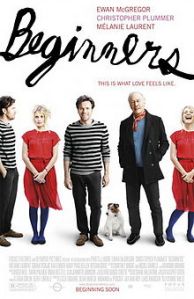
Beginners opened with a lot of critical hype earlier this year and, though it’s not quite as great as it’s being made out to be, it still deserved the majority of that praise. At the very least, I retain better memories of Beginners than I do this summer’s other similarly hyped film, A Better Life. Ewan McGregor is an artist who struggles to come terms with the death of his gay father (Christopher Plummer) while falling in love with a French actress (Melanie Laurent). The autobiographical film effortlessly shifts from flashbacks to Plummer’s life in-and-out of the closet to McGregor’s relationship with Laurent and the end result is a meditation on love, secrets, and life. Most of the pre-release buzz dealt with Plummer’s performance but, honestly, Plummer is good but you never forget you’re watching Christopher Plummer and Goran Visnjic, who plays Plummer’s boyfriend, overacts. The film really belongs to Ewan McGregor who gives one of his best performances in this film. Seriously, does any actor fall in love as wonderfully as Ewan McGregor?
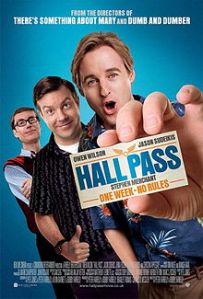
Best friends Owen Wilson and Jason Sudekis are given a “hall pass” (i.e., permission to cheat) by their spouses (Jenna Fischer and Cristina Applegate). The film’s forgettable but seriously, guys, don’t go asking us for a hall pass, okay? One interesting point is that this film was co-written by the guy who won the first season of Project Greenlight. Remember that show?
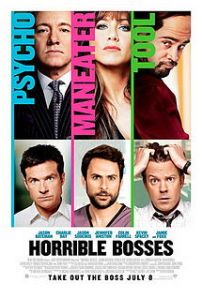
Jason Sudekis also appeared in another comedy this year and if Hall Pass is one of the year’s most forgettable comedies, than Horrible Bosses is one of the best. Basically Jason Bateman, Charlie Day, and Sudekis are stuck working for horrible bosses (played by Kevin Spacey, Colin Farrell, and Jennifer Aniston) and they decide that the only way to handle the situation is to commit mass murder. There’s a lot I could say about this film but chances are, you’ve already seen it. Therefore, you already know that this is a rare dark comedy that actually has the guts to be truly dark. You also know that the entire cast brings an almost heroic sincerity to their often bizarre roles with Charlie Day’s misunderstood sex offender as an obvious stand-out. Probably the best advice that I can give in this review is to enjoy and appreciate this film while you can before the inevitable sequel comes out and screws up all these good memories.
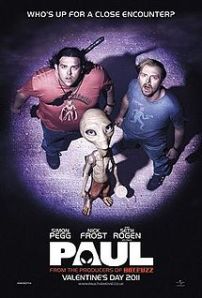
I didn’t see Paul when it was first released in theaters because the trailer really made it look kinda awful. However, I did eventually give it a shot OnDemand and I was pleasantly surprised. Two English sci-fi fanboys (played by Simon Pegg and Nick Frost) are taking a road trip to visit all of the major UFO sites in the U.S. This leads to them meeting an alien named Paul (voiced by Seth Rogen) who is being pursued by the typical guys in black suits. Anyway, this is a predictable film and the balance between the serious and comedic is often a bit awkward. However, it’s still a likable film and how can’t you enjoy watching Pegg and Frost? They can make even the lamest of jokes hilarious. Kristen Wiig steals the film as a fundamentalist who, upon being enlightened about the nature of the universe by Paul, embraces blasphemy with endearing enthusiasm.
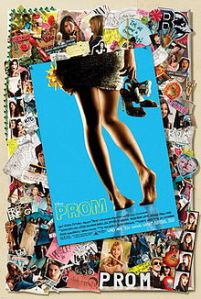
No, I did not force Jeff to take me to see this when it was first released in theaters back in April. I tried, mostly be saying things like, “Wow, Prom looks like it would be a funny movie to see and spend the whole time making mean jokes about and making all the little tweens in the audience cry…” but he saw through my ruse and, if memory serves me correct, I ended up seeing the second worst film of 2011 (a.k.a. The Conspirator) instead. Anyway, I ended up seeing Prom OnDemand last month and it’s not really that bad. It’s not good either. It’s just kinda there. In other words, Prom is incredibly meh and that’s one thing prom night should never be. (I loved my proms, by the way, and, whenever things seem overwhelming, I often think to myself, “If only every night could be Prom Night…”) Prom is forgettable and inoffensive but come on, tweens deserve better films. They are the future, after all.
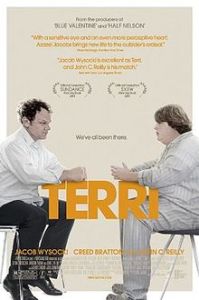
Terri made me cry and cry and was one of my favorite movies of the summer. It’s a surprisingly poignant film that worked wonders with material that, at first glance, seemed awfully conventional. Terri (played by Jacob Wysocki) is a sensitive, obese teenager who is taken under the wing of an unconventional assistant principal (John C. Reilly). It’s a familiar story but director Azazel Jacobs tells this story with care and sensitivity and Wysocki and Reilly bring their characters to life with such skill that you can’t help but get caught up in their story. Terri’s loving but senile uncle is played by Creed Bratton, who proves here that he’s capable of doing a lot more than just parodying himself on The Office. When I went to this movie, two old women sitting behind me went, “Awwww!” at a scene where Wysocki spontaneously hugs Reilly. The film earns the sentiment.
Most of these films are available via OnDemand or are currently available on DVD. Horrible Bosses and Terri are scheduled to be released in October while Beginners will come out in November.
Here’s one thing I’ve learned about relationships – sometimes, you have to compromise. Sometimes, you have to do things for your man that you’d rather not do and you have to pretend like you’re enjoying it and sometimes, you even have to do it several times before you get what it is that you want. Case in point: I recently went to two sports films with Jeff.
Now, I have to be honest. I don’t know much about sports in general and quite frankly, I really have next to no desire to know. Why am I so indifferent to this thing that most men appear to be incapable of living without? Well,
1) I have asthma and therefore, I never got to play any of the games that all the other kids were playing. This led to me becoming bitter towards those who could actually breathe and have fun at the same time and,
2) I’m a girl.
My indifference to sports tends to extend even to cinematic sports. Seriously, most sports-related films either put me to sleep or lead to me making a lot of snarky comments under my breath. However, I recently forced Jeff to accompany me to see One Day, which is one of the most girly movies ever made. In fact, it was such a girly movie that I’ve had to see not one but two sports movies with Jeff. The first was Warrior and the second (which we saw on Saturday) was Moneyball.
I don’t quite feel qualified to review Moneyball because, to be honest, I couldn’t make heads or tails of what was going on during most of the film. Normally, I would just say that this was a sign of failure on the film’s part but the audience around me really seemed to love this film and so did Jeff. So, I’m going to refrain from judging Moneyball too harshly. Instead, I’ll simply state that this film was not for me but if you’re a baseball fan (and you really love to get into the nitty gritty details of how a baseball team is put together), chances are that you’ll enjoy this film.
Fortunately, there are a few things that help make Moneyball a tolerable experience even for a sport illiterate like me. The film tells the story of Billy Beane, the general manager of the Oakland A’s and how he turned the A’s into a winning team by revolutionizing the way that teams are put together. I’m not really sure what he did that was revolutionary because the film itself really doesn’t spend too much time explaining how his method is different from the previous method. It spends a lot of time telling us that his approach is different but Aaron Sorkin’s script seems to assume that everyone in the audience already knows how baseball works. (That’s not necessarily a slam against the film, either. It’s a baseball movie, after all.) Luckily, Brad Pitt, who gives such a mature and multi-faceted performance here that you hope that Billy succeeds even if, like me, you’re not really sure what he’s talking about half the time, plays Billy Beane. Seriously, this was the first time I’ve ever watched Brad Pitt and forgotten that I was watching Brad Pitt. Pitt is ably supported by Jonah Hill, who plays his assistant and is largely responsible for introducing Pitt to the “new” system. Hill plays his scenes with all the enthusiasm of a high school nerd who has finally forced the cool kids to acknowledge how much smarter he is than them. It’s a truly endearing performance and again, you find yourself rooting for Hill even if you can’t quite understand what he’s going on about half the time.
Again, if you’re a sports fan or a fan of statistics (which I am not because seriously, math is just one big bleh to me), you’ll find a lot of to enjoy in Moneyball. I wish the film had been a bit more accessible for someone like me but obviously, I’m not that target audience and, regardless of whether you’re a sports fan or not, director Bennett Miller keeps the action moving quickly and the performances of Pitt and Hill both hold your attention.
Warrior takes place in the world of “mixed martial arts,” which I assume is the new big sport. I say assume because I actually know even less about the world of mixed martial arts than I do about baseball. Before going in to see Warrior, all I knew about MMA and the Ultimate Fighting Championship was that Russell – one of the most unlikable Big Brother houseguests ever – was apparently a UFC contender. Or maybe it was Jesse. I don’t know. I have trouble keeping all the Big Brother houseguests straight, to be honest.
Warrior is the story of two brothers. One of them is a bitter, pill-popping ex-Marine who fights because he’s angry at the world. Tom Hardy plays him. The other is played by Joel Edgerton and is presented as a happily married teacher who is fighting because he’s flat broke and in danger of losing his home. The two brothers haven’t spoken in years and about the only thing they have in common (beyond the fact that they’re both good at fighting) is a shared hatred for their father (a quite poignant Nick Nolte, doing wonders in a role that seems almost too perfect for him), a recovering alcoholic who sees his sons as his only hope for redemption. Ultimately, the parallel fighting careers of the two brothers leads to a surprise family reunion in Atlantic City where they find themselves both competing in the same brutal, winner-take-all tournament.
Warrior tells a pretty familiar story and there are a few plot developments (such as Hardy’s AWOL status from the Marines) that feel undeveloped but the film still works about a hundred percent better than it has any right to. Director Gavin O’Connor wisely takes a low-key approach to the film’s more melodramatic moments and brings a sense of gritty realism to the beginning of the film that provides quite a contrast to the later gaudiness of Atlantic City. Nolte and Edgerton both give excellent performances and, after years of being best known for his mug shot, it’s nice to see what a strong and multifaceted actor Nick Nolte actually is. However, the film truly belongs to Tom Hardy. In this film, Hardy is a true force of nature and gives a performance that is both frightening and sympathetic at the same time. You want to reach out and give the poor guy a hug even though you know he might end up killing you in response.
Coming out of Warrior, I still didn’t know much about MMA but I did know that I had just seen a well-made, emotionally satisfying film.
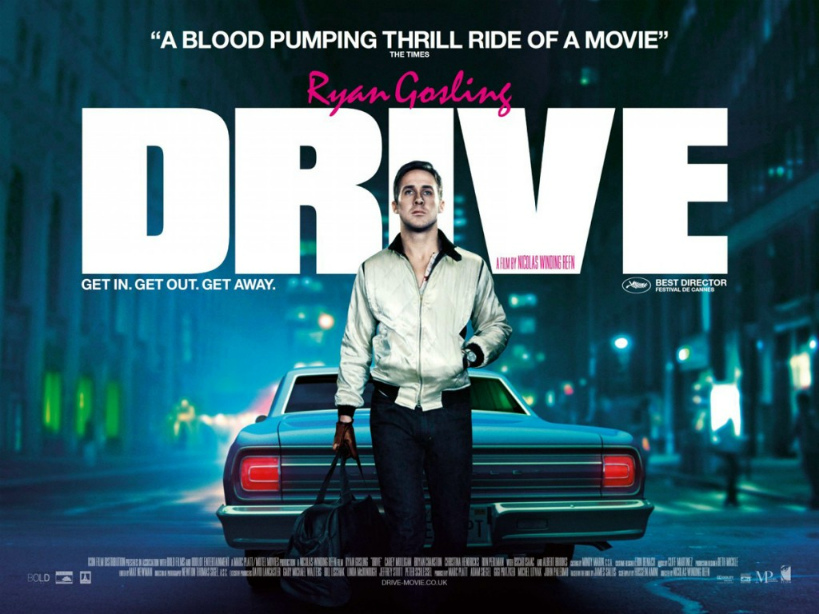
Danish filmmaker Nicolas Winding Refn has made just a handful of films with most staying under the radar of most of the general film-going public. He first caught the attention of indie film fans with his Pusher Trilogy over in Denmark, but he really caught the attention of these fans with his explosive collaboration with Tom Hardy on the Bronson biopic. He would follow that film with the violent existentialist Viking film Valhalla Rising. It would take another major collaboration with another rising star in Ryan Gosling for Winding Refn to finally have his major breakout film which has caught the attention of not just the indie film fans and cineaste crowd, but the general public at-large.
Drive was first screened over at this year’s 2011 Cannes Film Festival where it premiered “in competition” for the Palme d’Or. While the film didn’t win the top prize for best film at Cannes it didn’t garner Nicolas Winding Refn “Best Director” award and his work on this film more than merits such an accolade. The film would begin to screen at other major film festivals before landing at the Toronto International Film Festival before making it’s major public release in North America. Everywhere the film went the consensus reaction to the film has ranged from positive to calls for the film as one of 2011’s best.
So, it would seem most everyone has been quite positive with their reaction to Refn’s Drive. Is this film just another indie arthouse title which the elitist film fans have begun to hype up to levels that would border on cosmic? Or is this film actually as good as it has been talked up to be by such film fans and those of the general public who have seen it? I think the answer lies somewhere in-between.
Drive has been called an action-drama to crime-thriller to film noir and even an existentialist meditation of the film variety. Some have even called it a modern urban fairy tale from the many traditional tropes and themes inherent in fairy tales. The film actually seems to defy genre labels as it’s all those and even more. Nicolas Winding Refn has made a film with so much variety in its cinematic DNA from other classic films and storytelling styles that watching the film once is not enough to find them all.
The film makes a strong statement with it’s introduction of the character who remains nameless but could be called “The Driver” or “The Kid”. Ryan Gosling’s performance in this opening sequence will set the foundation for his character from beginning to end. His driver role is not much for chit-chat and unnecessary talking with those who have hired him to be their expert getaway driver. He’s meticulous with his equipment and intractable when it comes to the rules he has set down for his clients. He would be theirs for the five minutes they need him to drive them away from their criminal acts. Whatever they do before or after those five minutes doesn’t matter to him and he sticks to this rule explicitly. Another rule which he lays down is that he will not be carrying a firearm. These rules have had some audiences bring to mind Jason Statham’s Transporter character and they would not be totally wrong to say so. What Gosling’s driver has over Statham’s is the air of realism to the role. It’s a realism that borders on hyper-reality as the film moves on to it’s climactic conclusion, but real nonetheless. Gosling’s “driver” will not do extensive and elaborate fighting skills the way Statham’s would.
The film would move from it’s powerful introduction and into a much more calm and somewhat serene section as the nameless driver gradually gets to know his next door neighbor in the form of Irene as played by Carey Mulligan. Their relationship will form the core of the film’s narrative and it’s the driver’s growing affection not just for Irene but her young son that would dictate some of the decisions he would make right up to the end of the film. It’s a relationship built not on extensive dialogue banter but mostly on meaningful glances and silent understanding between two characters who seem to have found a kindred kinship between them. It’s this growing relationship between the two and Irene’s son which almost look like a familial unit forming until the return of Irene’s incarcerated and newly-released husband Standard. This is a character played by Oscar Isaac as a man desperate to take full advantage of his last chance at normalcy and redemption, but ultimately doomed to fail.
Standard doesn’t just become the only wrench in the happy life Gosling’s character seems to want to have with Irene and her son. Into the picture also happens to come in is his mentor and business partner Shannon (Bryan Cranston doing a great job as the good-natured, but opportunistic fool character many Shakespearean tragedies always seem to have) and Shannon’s even seedier acquaintances in Hollywood mogul-turned-mob boss Bernie Rose (Albert Brooks in a chilling performance) and his more boisterous, but not as smart partner in Nino (Ron Perlman).
The film seems to settle on the low gears for the first hour of the film, but it’s during a botched robbery attempt where the driver becomes embroiled in that Drive finally moves into the high gears and stays there until the very end. Refn’s decision to use the first hour to round out and build the characters in this film definitely pays off in the end. The audience becomes quite clear as to who the players are and what motivates them to do what they do the rest of the film. Even the most secondary and tertiary roles in this film has a part to play. Even Christina Hendricks in the role of a low-level moll to a gang of criminals gets to have her time to shine if just briefly.
Once the narrative shifts from character study to an almost Cronenbergian exercise in violence and brutality does the film finally able to hook in the last few audiences who may have still been iffy about Drive. Not to say that the final 45-minutes of the film was a non-stop action film, but it does move at a consistently higher gear pace than the first hour. We see the driver having to show to the audience that he’s not just an expert wheelman for Hollywood (stunt driver by day) and the criminal underground (getaway driver by night). It serves the film well that Gosling’s character has the barest minimum of lines of dialogue. We see all we need to know about this character through his behavior that brings to mind roles played by such past luminaries as Steve McQueen and Clint Eastwood.
Most likely it would be in the second half of the film that should satisfy the action junkies. While the action scenes are not of the Michael Bay-type they do show that Refn has a fine grasp of what makes an action scene thrilling. Whether the scene calls for some of the most well-done car chase on film since Frankenheimer showed everyone how to properly do it in Ronin or scenes of sudden brutal violence which calls to mind similar scenes from Cronenberg’s last two films (A History of Violence and Eastern Promises). Both types of action were done efficiently with little to no glamour to gloss over things. The burst of violence actually adds to the mystique of Gosling’s “Man With No Name” role. One particular scene in the apartment elevator where Gosling, Mulligan and a goon sent by the mob makes for one of the best scenes in the film and of 2011.
As much as these scenes of action and violence will be the ones to get the most attention from the general film-going public in the end it’s the excellent screenplay by Hossein Amini of the James Sallis’ novel of the same name which really holds everything together in conjunction with some top-notch performances from everyone involved. The film makes or breaks itself on Gosling’s performance as the driver and he delivers on all cylinders. His performance was quite reminiscent of past performances such as James Caan as Frank in Michael Mann’s Thief, Steve McQueen also as Frank in Bullitt, but in my opinion Gosling’s work in this film brings to mind young Clint Eastwood as “The Man With No Name” in Sergio Leone’s spaghetti western trilogy. Both characters were the type to let their actions speak for them and were both full of quiet confidence not to mention restrained violence which would erupt when needed.
Much has been said about Albert Brooks’ turn as the mob boss Bernie Rose. how the role was quite the 180-degrees from people’s perception of the actor who usually did comedic roles. I say that Albert Brooks always had a dark side to his comedic talent. I mean he was and is megamaniacal villain Hank Scorpio from The Simpsons. In all seriousness, Brooks’ as the mob boss was the other pillar which held all the other performances focused. In fact, Gosling’s character and Brook’s Bernie Rose could almost be considered mirror-images of each other. They were characters who had found their place in the world and the role they would play and didn’t struggle against it. Everyone else in the film struggled against their lot in life. It was also these characters who had the bulk of the film’s dialogue.
Drive has been hyped (for some overhyped) since it first premiered at this year’s Cannes Film Festival, but it’s one of those rare films which has more than earned and surpassed the hype which has preceded it’s general release to the general public. It’s a film which bucks traditional genre labels by combining the themes, ideas and foundations from many different film and storytelling genres. For fans of action there’s enough thrilling action to sate them. For those who are fans of film noir this film definitely carries within it the DNA set down by the film noir of the 40’s, 50’s and 60’s. For some who wish to watch a film which explore existential themes then Refn’s film has that too. In the end, Drive manages to be a film which caters to so many different audiences without ever pandering to them or dumbing the story down. It’s a film made by a filmmaker who continues to impress and who has made his best film to date.
Drive is a film that is not for everyone, but it’s also a film that everyone should see and experience at least once. It is also one of the year’s best films and, so far, my top film of 2011.
“No one does it like the teenager do it…” This kinda looks like Dazed and Confused as directed by a Crazies-era George Romero. I actually like this trailer a lot. It has this vaguely threatening subtext to it.
Have you seen The Guard yet? If you haven’t, you need to. This deceptively simple (and violent) Irish film is one of the best films of the year so far. It’s also one of my personal favorites.
Boyle (played by the great Brendan Gleeson) is a casually corrupt but well-meaning Irish policeman who appears to have settled into a life of quiet complacency. He spends his time caring for his aging mother, bragging (and perhaps lying) about his past career as a competitive swimmer, entertaining prostitutes, and taking the occasional acid trip. As there’s little real crime taking place in the small coastal village that he calls home, Boyle is free to spend his workday playing video games and ignoring his far more serious partner, a rookie named McBride (played by Rory Keenan). McBride is married to a mail order bride and, beneath his straight-laced exterior, has a secret of his own. Things start to pick up for Boyle and McBride when an unidentified man is brutally murdered in a manner that suggests he fell victim to Satanists. Meanwhile, cocky FBI agent Wendell Everett (Don Cheadle) is in the village, searching for three viscous drug smugglers (played by Liam Cunningham, Mark Strong, and David Wilmot). Despite Wendell’s condescending attitude and Boyle’s own casual racism, the two of them soon discover that their two cases are connected and that there’s more to Boyle than originally meets the eyes…
In almost every way, The Guard is a triumph. Director John Michael McDonagh (whose brother Martin directed Gleeson in In Bruges) finds a perfect balance between comedy and tension and manages to maintain it throughout the entire film. McDonagh has a wonderful eye for detail and the entire film is full of memorable characters who are quirky without ever being silly. Though the villains (and their ultimate evil scheme) will be familiar to anyone who has ever seen an action film, Cunningham, Strong, and Wilmot are all believably ruthless and intimidating. Don Cheadle is perfectly cast as the straight-laced Wendell and the film has a lot of fun with his “fish-out-of-water” attempts to bring American justice to the Irish coast.
However, ultimately, this film is all about Brendan Gleeson. For decades, Gleeson has been one of the most dependable character actors in the movies. Whether he was playing a villain or a hero and regardless of the size of his role, Gleeson has always made an impression and he’s always left filmgoers like me wanting to see more of him. Well, in The Guard, Gleeson gets to show us exactly what he can do and the result is one of the best performances of the year. Whether he’s greeting a prostitute in an immaculate three-piece suit or having a secret meeting with the local representative of the IRA, Gleeson dominates the entire film and, most importantly, keeps us guessing about just who Boyle is. Gleeson triumphs in The Guard and the end result is one of the best films of 2011.
So, the long-delayed “found footage” horror film Apollo 18 was finally released at the beginning of this month and critics, both mainstream and not-so-mainstream, have been having a collective orgy in expressing their hated for the film. It currently has a “rotten” rating over on Rotten Tomatoes. Roger Ebert — a man who gave the god-awful remake of Straw Dogs a positive review (“better than the original!”) — didn’t care much for it. Over at Hitfix.com, the appropriately named Drew McWeeny practically popped a blood vessel expressing his hatred of the film. (McWeeny followed this up by giving Shark Night 3-D a positive review.) The toadsuckers at AwardsDaily.com haven’t even acknowledged that Apollo 18 exists. (Then again, the folks in charge of that movie site have lately been more obsessed with Barack Obama’s reelection chances than with film.) Yes, everyone’s been busy hating on Apollo 18 but you know what?
I kind of enjoyed it.
As the film’s trailer makes pretty obvious, Apollo 18 is the latest example of the mockumentary horror film. At the start of the film, we get a title card telling us that the film has been edited together from long-classified footage of a secret NASA mission to the moon. At the end of the film, we get another title card inviting us to visit a web site that, presumably, will have more information about how this footage was discovered. The found footage shows us two pleasantly bland astronauts who, once they’ve landed on the moon, find themselves being stalked by some sort of shadowy creature that always seems to be hanging out just slightly out of camera range.
As many critics pointed out, this film’s plot — once you get pass the novelty of where it takes place — is pretty much standard as far as “found footage” horror movies are concerned and yes, Apollo 18 would never have been made if not for the success of Paranormal Activity. However, I still enjoyed Apollo 18 because — unlike the Paranormal Activity films — Apollo 18 is truly an homage to the Grindhouse heart that beats within the whole found footage genre. Whether it’s the gimmicky nature of the film’s storyline or even the attempt to recreate both the Space program and the moon for next to no money, Apollo 18 is a film that belongs in a double feature with some other critically reviled but fun horror film. Much like Ruggero Deodato did with Cannibal Holocaust, director Gonalo Lopez-Gallego artfully uses scratched and overexposed film stock to create the feeling that we actually are watching footage that somebody just happened to come across out in the middle of the desert. The film’s plot is predictable and there’s not a lot of jump-out-of-your-seat scares but, like many good grindhouse films, Apollo 18 does create a palpable feeling of doom that doesn’t let up until the end credits. Even the film’s tongue-in-cheek claims to being factual are, in the end, rather likable.
Apollo 18 may not be a great film but it’s certainly doesn’t deserve the amount of hatred that it’s received. It’s an occasionally enjoyable film that was made by people who, at the very least, seem to understand why the old films of the grindhouse era are still being watched and rediscovered today.
This review is not one filled with spoilers but I’d just warn that one can better understand the points I’m trying to make if they have seen the film. Obviously everything I say below is my own opinion and interpretations of the film and many will disagree. I’m writing this second review because in order to sustain my recent obsession with Nicolas Winding Refn’s latest film ‘Drive’, I have been reading a lot of interviews with the director so that I could both better understand the motivation and ideas surrounding its creation as well as to better appreciate its style and themes so that I can add that onto my already huge admiration and love for the film to better articulate how I felt and express why I think it is the second best film of the year, the first being ‘The Tree of Life’ which was the only other I have seen in 2011 that has caused me to do a second write up like this one and although ‘Drive’ might not be as “deep”, I do believe it is much more complex than some make it out to be and a second viewing caused me to think about it none stop and there are just something’s I need to say.
Since this past weekend when I did see it that second time, the thing that I have come to understand that really caused me to view the entire film in a much different perspective was that my very simple explanation in my other review of it being some sort of character study in the vein of ‘The American’ mixed with ‘Taxi Driver’, though in some ways true, does not even begin to acknowledge the fact that what ‘Drive’ really is, and what Refn decided to create, is a film with a fairy tale archetype guided by an old fable whose themes of love, nature, brutality and heroism shed a new light on the character’s romance and exploits, as well as makes the stories ending that much more emotional.
Refn considers this idea of it being a fairytale to be true, and has said it multiple times, because that is ultimately what he wanted to create. In his words ‘Drive’ is a fairytale set in Los Angeles, whose characters are larger than life figures representing “pure emotion” as he put it; which explains why the love is so pure and the violence is so brutal and there is rarely a middle ground, they are exaggerations of real emotions to add to its fantastical tone.
The first half is the serene and pure story of the innocent young maiden lost in the woods who falls for a “Knight in shining armor”. When evil appears and violates their world of purity and love and threatens the young maiden’s wellbeing, they must be punished by the Knight which brings out a much darker side to the story, in the vein of the Grimm fairytales. The young maiden of course being Irene (Carey Mulligan), a single mother raising her son alone while her husband is in prison. The Knight she falls for has no name but is referred to as simply the Driver (Ryan Gosling). A quiet and mysterious man who is a mechanic and stuntmen by day and a getaway driver by night. He is lonely and most enjoys being out on the road, but easily falls for the beautiful Irene and her son, who offer a chance to be human and evoke emotions he rarely feels. This simple story of love is interrupted when Standard (Oscar Isaac), Irene’s husband, reappears. Not only does he cause a divide but his past resurfaces which has connections to two dangerous gangsters (Albert Brooks, Ron Perlman). In order to do whatever he can to protect Irene and her son, the Driver offers his services to Standard for a heist. It ultimately goes horribly wrong and the two gangsters look to cover it all up by getting rid of all involved, which includes the Driver and Irene.
From here that much darker side appears as the Driver is forced to fight back and protect the things he cares about. This half of the story is guided by the fable of “The Scorpion and the Frog”, about a scorpion who asks a frog to carry him across a river. The frog is afraid to do so because he does not want to be stung but the scorpion tells him that if he were to sting the frog they’d both drown, so the frog agrees. Halfway across the scorpion does in fact sting the frog dooming them both and when the frog asks why he did so the scorpion replies that it is in his nature. The idea being for some creatures their behavior is irrepressible and so cannot be controlled no matter what the consequences. For the scorpion his nature was to sting, he does things instinctively and without much thought. When in a situation where this instinctive nature must come to the surface, when cornered or in this case when those people the Driver cares for are threatened, he reverts to that aggressive scorpion nature and stings, hard and violent no matter the consequence which in this case means losing himself or the ones he cares for.
The elevator scene is really that tipping point where the stinger comes out and not surprisingly one of the best scenes in the entire film. It is when he puts his human emotion and love aside in order to fully protect Irene. After he kisses her goodbye he knows he is about to reveal his true nature. After viciously killing the man who had put him into that corner he looks at Irene and knows it is over which is his ‘great sacrifice’, letting the one he loves go in order to protect her, and what makes him a true hero. The elevator door closes and the two are separated for good. He must now do whatever he can to distance himself and all this evil from Irene and her son.
What is interesting about the idea of the Driver as being a hero is the sort of duel personalities he evokes. One could say he is human by day, working a normal job, shopping and falling in love but a “hero” by night, though not helping the right people. When the story really becomes interesting is when he has to blend the two personas to become something more which is why Refn and Gosling have described it as their ‘superhero’ film. He is a man with the capacity to be a “real hero” and it is only when he can bring his human emotion to that more aggressive and skillful side that he does become this sort of superhero-like character. Obviously it is difficult for him. It isn’t a smooth transition and at times he has trouble controlling it, which comes through as he shakes as his anger and adrenaline builds when talking to Nino on the phone and of course when he brutality stomps the life out of one of Nino’s hitmen in the elevator scene mentioned earlier. This is that scorpion nature coming through, this aggressive nature is the key to his power, and why it is most fitting that his ‘custom’ is a jacket with a scorpion logo on the back.
Though his actions seem necessary he still does not want to lose his ‘human’ side and puts on the mask towards the end because he must fully embrace this more aggressive side to get the job done, to quell his emotions and settle the battle raging between both persona’s and essentially become a lifeless and aggressive vessel with one objective. This way he can do what needs to be done, evoke a bit of fear from his target, but cover up and shield his human persona and not completely lose himself. Throughout this he becomes someone we empathizes with, even if his methods seem to be so extreme. The outcome to it all, although somewhat ambiguous, is a fitting and emotional conclusion where some people do in fact live happily ever after.
What makes this all work so effectively is the fact that ‘Drive’ is a film in which things don’t need to be spoken to be said. One where characters express more through silence, short but poignant dialogue and the interactions they have together. Refn brilliantly creates a dreamlike and contemplative exploration of the serene and the hyper violent set within a fairytale like story that happens to be a slow burning character study of the ‘scorpion’ where everything is just below the surface and it all builds up, through a series of quiet and calm moments, only to erupt into brutal violence. Nothing is handed to you, there is no blatant exposition, you don’t always know what is going on in a characters head and it helps create a level of tension and actually requires one to think. This isn’t some sort of mindless action thriller, it’s much more contemplative and complex than one would expect. He polishes it all off with a retro varnish evoking a different time, helping to set it apart from reality and add to its moody atmosphere, but still keeping it grounded enough to feel real and have that emotional punch. Add onto that all of that the fantastic performances: Ryan Gosling’s brilliantly effective and charismatic performance as the Driver, Carey Mulligans charming and sweet portrayal of Irene, Ron Perlman’s brutish and aggressive Nino, Albert Brooks as the ruthless but understandable Bernie, Bryan Cranston as the downtrodden but humorous Shannon, Oscar Isaac as Irene’s husband who needs help to avoid his past; and what you are left with is a masterful, beautiful and complex film. It truly is a modern day fairytale, perfect in every way, and a film that I couldn’t help but fall in love with.
It’s probably a bit too early to answer that question. After all, we’ve still got 3 months left to go in the year and Roland Emmerich’s take on Shakespeare (a.k.a. Anonymous) hasn’t been released yet. So, no, Rod Lurie’s remake of Straw Dogs cannot be called the worst film of 2011 yet. Instead, it’s just the worst film so far.
Straw Dogs is a remake of the 1971 Sam Peckinpah film. In the Peckinpah film, David Sumner (played by Dustin Hoffman) is a pacifist who, upon moving to the childhood home of his wife Amy (Susan George), is repeatedly harassed by the locals until he finally takes his very brutal revenge. It’s a flawed and uneven film that still carries quite a punch. I wouldn’t say I’ve ever enjoyed watching Peckinpah’s Straw Dogs but it’s undeniably powerful film. As for the remake, Peckinpah has been replaced with Rod Lurie, Hoffman by James Marsden, and Susan George’s controversial character is now played by Kate Bosworth. None of these changes are for the better.
Lurie’s version of Straw Dogs almost slavishly follows the plot of the original. He’s made just a few changes and none of those changes are for the better. The most obvious change is that, while the first Straw Dogs took place in rural England, Lurie’s version takes place in Mississippi. It’s pretty easy to guess Lurie’s logic here. Lurie, after all, previously created the television show Commander-in-Chief in which President Geena Davis heroically struggled to save the nation from fundamentalists with Southern drawls. Lurie’s vision of Mississippi is some sort of Blue State nightmare where everyone drives a pickup truck, goes to church, cheers at football games, and makes supportive comments regarding the War in Iraq. In the original Straw Dogs, David Sumner is a truly a stranger in a strange land, an American who doesn’t realize just how out-of-place he is in rural England. In the remake, David Sumner is just a guy on vacation from the West Coast. He really has no excuse for being quite as dense as he is when it comes to not pissing off the locals. By changing the locale, Rod Lurie essentially just makes his film into yet another example of Yankee paranoia. This wouldn’t be such a problem except that Lurie seems to be taking it all so seriously. He really seems to feel that he’s making a legitimate contribution to the whole Red State/Blue State divide. Watching the film, I had to wonder if Rod Lurie truly believed that it’s impossible to get a cell phone signal in Mississippi.
The other big difference is that in Lurie’s version, David Sumner is no longer a mathematician. Instead, he’s now a Hollywood screenwriter who is apparently working on an epic screenplay about the Battle of Stalingrad. (“I figured out a way to get Khrushchev in on the action!” he says at one point.) To be honest, David’s screenplay sounds kinda boring and it’s hard not to sympathize with the “hillbilly rednecks,” (as David calls them) who ask him why anybody would want to watch his movie. (The rednecks also ask him if he thinks that God had anything do with the Battle of Stalingrad. Speaking as a nonbeliever, I have to say that this film was almost hilariously paranoid about any sort of religious belief.) Part of the power of the first Straw Dogs came from the fact that David was an academic. He was a man whose life was about theory and that made it all the more shocking to see him explode into action. It also explained his non-existent social skills, because he was, after all, the product of a very insular, intellectual existence. However, in the remake, David just becomes a condescending jerk who’s working on a screenplay for a film that most viewers would have little interest in actually sitting through. (Add to that, it was hard not to feel that this new David was just Rod Lurie’s Mary Sue.)
David is in Mississippi because it’s the childhood home of his wife, Amy. The character of Amy is problematic in both versions of Straw Dogs but, to be honest, I found her character to be even more illogical and insulting in Lurie’s remake. In the original Straw Dogs, Amy is portrayed as an idiot who flirts with every man she sees, taunts her husband to the point of violence, and (by that film’s logic) puts herself in a situation that leads to her rape. The character is, in many ways, an insulting stereotype but at least she’s a consistent insulting stereotype. The remake’s Amy is presented as being a considerably stronger character. She doesn’t openly flirt with the local rednecks, she and her husband are a lot more obnoxiously lovey dovey, and (as opposed to in the first film), it’s never suggested that she actually enjoys being raped. Kudos to Lurie for trying to make her a stronger character. Yet, at the same time, the remake’s Amy still does a lot of the same illogical things as the original Amy. The original Amy at least had the excuse of being an idiot. The remake’s Amy just comes across as being an inconsistent, poorly-concieved character. Eventually, it becomes obvious that director Lurie wasn’t trying to make Amy into a stronger character as much as he was just trying to be politically correct. (Another thing that the two Amys have in common is that neither one of them wears a bra. It made sense in the original film because the original Amy was presented as being something of a wannabe flower child. In the remake, it just comes across as Lurie’s dirty boy excuse to get a peek at Kate Bosworth’s nipples. Seriously, who goes jogging without a sports bra?)
Anyway, the remake follows the path of the original. David and Amy return to Amy’s home village where they meet Amy’s ex-boyfriend Charlie Venner (played by an amazingly hot and sexy Alexander Skarsgard). David hires Charlie and his redneck buddies to repair the roof of an old barn. Charlie, who is obviously still attracted to Amy, spends the entire first part of the movie subtly humiliating David and basically being a bully. Somebody strangles Amy’s cat. Amy says it was Charlie and his friends. David replies, “I can’t just accuse them.” Eventually, David is taken on a deer hunt by Charlie’s friends and while he’s gone, Charlie and his buddy Chris rape Amy.
(In the original it was a snipe hunt and the sight of Dustin Hoffman searching for a nonexistent creature while his wife is being raped was quite disturbing and perfectly symbolized his character’s impotence. In the remake, David is once again left alone in the woods but this time, he shoots and kills a deer and, unfortunately, James Marsden isn’t a good enough actor to let us know what that means.)
Amy never tells David that she was raped, nor does she go to the authorities. (This makes a sick sense in the original. In the remake, it just seems like an effort by Rod Lurie to degrade a previously strong woman.) The next night, David ends up sheltering the local sex pervert in his house while Charlie and his drunken friends attempt to break in. This leads to David revealing that, as opposed to being “a coward,” he’s actually as vicious a killer as everyone else in the film.
In the original version, this was a disturbing revelation if just because Sam Peckinpah emphasized not so much the killing as the fact that, as the siege progresses, David begins to enjoy the killing more and more. Once Peckinpah’s David has given into the reality that he too is an animal, you realize that it’ll be impossible for him to return to being the essentially decent man that he was before. In the original, you start out cheering David’s revenge but soon, you just want it to stop. Much like the originalTexas Chainsaw Massacre, the film is so thematically nightmarish that you end up thinking you’ve seen a lot more blood than you actually have. It sticks with you.
However, since Lurie’s remake is a film devoid of nuance or subtlety, the sudden explosion of violence on David’s part is neither surprising nor all that exciting. And since James Marsden is no Dustin Hoffman (to put it lightly), you don’t see any change in David once the violence begins. He’s not a man turning into an animal as much as he’s just a 90210 reject with a scowl on his face. He kills a lot of men but he looks oh so pretty doing it and Amy cheers him on every step of the way. (In the original, Amy was terrified of her husband’s new side. I would be too.) Since Lurie isn’t a good enough director to generate a sincere emotional response to seeing David turn into a killer, he instead lingers over all the blood and gore like a pervert struggling to catch his breath while secretly looking at a snuff website. In short, the original Straw Dogs condemned violence by pretending to celebrate it. The remake celebrates it by pretending to condemn.
Okay, you may be saying, so it’s not a great film. But is it really the worst of 2011 so far? After all, Alexander Skarsgard gives a charismatic, bad boy performance and James Woods has a few good scenes as a venomous former football coach. And director Lurie, while he may be incapable of keeping the action moving at a steady pace, does manage to make Mississippi look pretty. That’s all true but I still say that Straw Dogs is the worst movie of the year so far. Why?
Because it’s not only a remake of a film that didn’t need to be remade but it’s also a remake that was apparently made by people who don’t have a clue about what made the original an important film to begin with. It’s a film that’s gloriously unaware of its own tawdriness, a sordid mess that can’t even have fun with the possibilities inherent in being a sordid mess. Arrogantly, director Lurie invited you to compare his film to Sam Peckinpah’s by not just ripping off the film’s story (as countless other enjoyable films have done) but by claiming the title as well. It’s a film that represents Hollywood at its worst and for me, that’s why it’s earned the title of worst film of 2011 so far.
(One positive note: Perhaps this terrible, insulting remake will encourage someone to track down the original Straw Dogs and see how this story was meant to be told.)