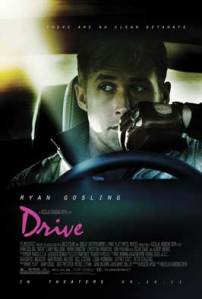
Quick Review: Drive (dir. by Nicolas Winding Refn)


Here at the Shattered Lens, we’ve been eagerly awaiting Nicolas Winding Refn’s Drive, which has picked up some major buzz over the last few months. So note that this will not be the only review you’ll see for the film. As the other reviews come in, I’ll update this paragraph to link to them.

Addendum: 

Leonth3duke has added his Drive Review, which examines the film from a lens closer to the director’s point of view and remains spoiler free. Definitely worth reading!

Arleigh has also added his Drive Review – which compares the film to both Michael Mann and David Cronenberg’s styles.

*  *   *   *  *

I was so excited by Drive that I treated my extended family to it (just in case the film went sour, it would be easy to apologize). This is going to be a quick review, because I’m going to ramble.

To quickly sum it up, Drive is a beautiful, artistic film that hits all the right buttons when it comes to the crimes it showcases. It occasionally explodes between quiet reflection and ultra violent action. Even the music was sweet. It’s just a shame though that all that coolness is wrapped up in dialogue and scenes where the pacing……moves……as……………slow…………..as………………this. Honestly, the book this was adapted from felt like it must have been about 50 pages, at best.

Drive is the tale of Driver (Ryan Gosling), a stuntman for the movies by day, and a Wheelman by night. His partner, Shannon (a nice performance by Breaking Bad’s Bryan Cranston) gets involved with a mobster (Albert Brooks) on a business venture. After getting caught up in a heist that goes awry, Driver has to try to protect himself along with the woman and child he’s recently befriended.

Drive has a fantastic sequence before we actually see the opening credits. Everything about that opening is downright sharp and creative. I haven’t seen that cool an opening to a film in quite a while. What a way to hook the audience in.

Overall, the film feels great and unique, but it suffers from one problem that I’ve only seen a few people actually mention. It feels like there’s this pause between every statement between Driver and Irene (Carey Mulligan). Imagine having one character say “Hello”, and then having someone pause the movie for a few minutes before picking it up from there. Drive ended up doing this quite a bit.  I can understand if Driver is a soft spoken, man of action,  but there were moments where I wanted to shake both Gosling and Mulligan to communicate more. I’m not saying they had to move in a particular direction, but they had a lot of patience waiting for replies from each other.  There were other scenes where I felt Refn should have considered adding just a few cuts to the film to increase the speed of the film. The slow pace keeps it from becoming The Transporter, but most of this movie felt like that 3rd act in Heat after the robbery (or the multiple endings in Return of the King) to me. The film felt more like it was in love with itself than anything.

I understand that Drive is an independent film, and with independent filmmaking, there’s a bit more freedom to do things artistically instead of having movie marketers breathe down your throat. While I may lack the film appreciation skills to effectively grasp the artistic impact of Drive on screen, I can say that as a dialog or story driven piece, the movie suffers that one hiccup. Others may see the movie differently than I did.

Pacing aside, Drive is easily worth seeing, and is in some ways similar to some of Michael Mann’s films like Thief and the aforementioned Heat. Ryan Gosling was cool, but knowing that you’re not going to get the kind of emotion from his character compared to maybe Blue Valentine helps to brace you. Working from Mann’s concept of movies, you could relate Driver to a Neil McCauley. In Heat, DeNiro’s McCauley took action when he needed to. If someone forced his hand, the response was harsh. Driver felt like he had something of the same approach, which I really did like.

Visually speaking, I loved it, but it just has areas where Refn appears to be in love with a shot so much that he lingers longer than he needs to. If you never told me who directed this, I might assume it was David Lynch.  The driving scenes themselves are done very well, and the action is also explosive, breaking the silence in the film a number of times. The silence is so strong that something as simple as a gunshot caused most of the audience to jump, which I found interesting.

The other performances in Drive are interesting, especially Albert Brooks and Oscar Issac, particularly. I didn’t even recognize him in this film, compared to his bad guy role in Sucker Punch. Christina Hendricks, though nice to see, didn’t really do too much here.

So with Drive, you can go see it. I may see it again myself. I’m not saying you shouldn’t, but if you yawn somewhere down the line, don’t say I didn’t warn you.

One other thing I had to add here. The Marketing for this film a few months ago (including the original trailer) is closer to the impact of the actual film than some of the marketing that’s being done now. Most of the recent posters and tv ads push Drive as something of an action piece. I would consider it more of a Drama with action occasionally spliced in.
The Overrated Film of 2011: Lisa’s Take On Contagion (dir. by Stephen Soderbergh)


Both Leonard and Arleigh have already written detailed (and positive) reviews of Contagion so I’m going to keep my review short and simple. 

I say this with the greatest amount of respect for my fellow reviewers and to all of our readers who are probably going to vehemently disagree with me:

Contagion sucked.

Big time.

With this film, director Stephen Soderbergh takes material that is ripe for exploitation and histrionics and he presents it in a very clinical, low-key fashion and the result is a draggy film that takes itself way too seriously.  Seriously, if you’re going to end the world, have some fun with it.

Soderbergh assembles an impressive cast and then he pretty much just strands them out in the middle of nowhere.  I appreciate the fact that the director and the cast are trying to keep things rooted in reality but oh my God, the reality here is so boring.  Most of the cast does an okay job but Jennifer Ehle, who plays one of the scientists looking for a cure, gives such an annoyingly mannered performance that watching her was like listening to some little kid running around in squeaky shoes.  Seriously, if I had to hear one more artfully placed stammer from her, I was going to scream.

Finally, this is yet another film where the villain is a blogger.  I mean, he’s even English, that’s how evil Jude Law’s blogger is.  I mean, I’m sorry that all the old folks out there are so threatened by the Internet but this blogger-as-villain trend is just petty.

With its all-star cast and its pretensions towards being an  “important film,” Contagion should have been a fun, tawdry little romp.  It should have been like a 21st Century Airport or Towering Inferno.  Kate Winslet and Laurence Fishburne should have been having an adulterous affair.  2nd-rate television actors should have been dropping like flies.  There should have been melodramatic music and dialogue like, “Excuse me, did you say the nurse was conducting the operation?”

In short, Contagion should have been fun.

Unfortunately, it’s not.

Scenes I Love: Jim James Sings Goin’ To Acapulco in I’m Not There


When I’m Not There was first released in 2007, most critics gave most of their praise and attention to Cate Blanchett’s performance as one of the film’s six different representations of Bob Dylan.  In fact, Blanchett was even nominated for Best Supporting  Actress for grabbing her crotch and wearing a painfully fake mustache.  When I first saw I’m Not There, I thought that Blanchett’s performance was overrated.  Having recently rewatched it on DVD, I’ve changed my opinion slightly.  I now think that her performance as “Jude Quinn” is probably the worst performance she’s ever given.  Once you get over the fact that Cate Blanchett’s playing a man, the quicker it becomes obvious that she’s not a very convincing man. 

In fact, on subsequent viewings, I’ve come to realize that the only part of the film that really works for me is the final section.  This is the section where an aging Bob Dylan is played by (of all people) Richard Gere.  This is the section where Gere is known as Billy the Kid and he ends up wandering through a surrealistic frontier town while searching for his dog.  The town is full of people who look like they escape from an especially grim Fellini film and Bruce Greenwood pops up as Pat Garrett.  When I first saw I’m Not There, this final sequence seemed drawn out and rather silly.  However, on subsequent viewings, I’ve come to appreciate the fact that, with this end sequence, director Todd Haynes is at least finally being honest about being pretentious.

Another point in this sequence’s favor is that it features a haunting performance of Dylan’s Goin’ To Acapulco by Jim James and Calexico.  The contrast between the heartfelt delivery of the song, the intellectual pretensions of the entire film, and the inherent Hollywood slickness of Richard Gere all add up to create a scene that I truly love.

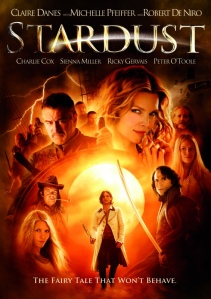
Quick Review: Stardust (dir. by Matthew Vaughn)


Just after getting Layer Cake out, director Matthew Vaughn decided to work on an adaptation on Neil Gaiman’s Stardust along with Jane Goldman. Of the four movies he’s made so far, Stardust maybe the most low profile Vaughn film, but next to Layer Cake, it actually is one of my favorites. It’s a strange but enjoyable fairy tale that evokes memories of films like It’s a Mad, Mad, Mad, Mad World or Without a Paddle in some ways. What makes it special is that it an idea that only Gaiman could have come up with, really. Understanding the world of Stardust requires a little suspension of belief, which is normal, given that it’s a fantasy film. Gaiman’s story is definitely a strong one, but may not be the easiest to follow.

Like Contagion, Stardust has multiple characters going after a single goal. On his deathbed, the king of a faraway land (played by Peter O’Toole) decides that his seven sons (named Primus through Septimus, respectively) aren’t quite ready to take the throne when he passes. Taking the family jewel around his neck, he gives them a challenge. The first heir to successfully find the stone will be named King. He launches the stone out to the heavens for them to find. The stone hits a star and causes both to fall from the sky.

A trio of witches, lead by Lamia (Michelle Pfeiffer a villain role she plays like she’s enjoying it) witness the falling star and set off to reclaim it, as stars have the ability to regenerate their youth. Our hero, Tristan Thorn (Charlie Cox) also goes after the star to impress the girl of his dreams, Victoria (Sienna Miller) and pull her away from Tristan’s rival, Humphrey (The Tudors’ Henry Cavill).

The race for the Star becomes a little more complex when we find that Stars, which crashing down actually appear to be human. Yvaine (Claire Danes) is simply looking to get to her place in the night sky when the chase begins.

Although many of the roles in Stardust are done well, Mark Strong is easily the standout of this film as Prince Septimus. With this role, it’s easily understandable as to how Vaughn tapped him for Kick-Ass. Though his screen time isn’t as strong as Pfieffer’s, he’s memorable in all of this scenes. Pfeiffer also a number of moments where she appeared to have fun with her role. Stardust also contains a few cameos with Robert DeNiro and Ricky Gervais. Fans of other Vaughn films will find other actors from his movie, such as Jason Flemyng and Dexter Fletcher.

Stardust is a fun film, but being a fantasy one, it has the potential be lost on some viewers. Still, it boasts what feels like a familiar theme wrapped up in new story, which actually serves to be one of Stardust’s stronger traits.

Quick Review: Contagion (dir. by Steven Soderbergh)


Note that this isn’t the only review for Contagion.

Arleigh has an in-depth review of the film, which is also available to see, whereas this is more of a summary. As it’s for the same film, I’ve used the same tags that were in Arleigh’s post.

Before I start, I have to say that I haven’t had a theatre be so quiet during a film since I went to see Mirrors, and that was because there was no one there. My showing for Contagion was packed, but no one made a sound throughout the film. I coughed twice (because I had to), and you wouldn’t believe how many heads turned in my general direction. If nothing else, it shows that the movie had some impact to the audience, and that’s always (okay, usually) interesting to see. By the time the movie is over, you will probably pay attention to how many times you touch your face or the objects around you.

If there’s one thing I can give director Steven Soderbergh, it’s that he has a great ability to work with ensemble casts. He did a great job in getting everyone to work together on the Oceans Eleven remake and sequels. He also walked away with a Best Director Oscar for Traffic. His films have the ability to avoid having his stars chew up enough screen time that they appear to be an actual center character. Catherine Zeta-Jones’ had a character who’s story was just as strong as Benecio Del Toro’s.

On this, Contagion is no different. In essence, it’s almost like watching cameos in a miniseries.

Although the film is peppered with various actors, no one person can be considered the main character of the film. Soderbergh is able to get them all to play their roles well. He and Scott Z. Burns – one of the writers on The Bourne Ultimatum and a collaborator with Soderbergh – give us a number of perspectives for this story and damn, the whole thing is very tight overall. The movie has very little wasted space.

Like the story itself, the movie moves at a great pace, opening with Elizabeth Emhoff (Gwenyth Paltrow) on her second day after exposure to the virus after returning from a trip to Hong Kong. This eventually escalates to other infections reported in other areas around the world. In an effort to contain and understand what they’re dealing with, the Center for Disease Control starts an investigation. Lead by Dr. Ellis Cheever (Lawrence Fishburne), he sends Dr. Erin Mears (Kate Winslet) to Minnesota to determine the scale of the problem.

In addition to the CDC’s efforts, the World Health Organization also gets involved, sending their own field agent to Hong Kong, played by Marion Cotillard. Both doctors come up with information that appear to be helpful for the overall investigation in various ways.

The other two angles in the film are through a conspiracy theory blogger / investigative reporter played by Jude Law and Mitch Emhoff (Matt Damon), who has to deal with the impact of his wife’s sickness. Enrico Colantoni, Brian Cranston, Sanaa Lathan, Elliot Gould and Jennifer Ehle round out the cast. It should be noted that Ehle is the daughter of Kenneth Branaugh’s Hamlet actress Rosemary Harris, who looks remarkably like her mother. That’s just something that caught my eye.

In terms of the Kid Factor, I would be hesitant to take kids to see this unless they had a pretty clear handle on death or getting sick. Teens and adults could probably handle the film, but anyone under than that may freak out a little. Mind you, there’s very little gore in this film. When I think about it, there’s not even a whole lot of blood. There is some violence though as the story escalates and humanity goes wild, but it’s not that far a cry from many zombie movies. It’s up to the parents discretion on whether their kids should see this.

I should also point out that the music in this film is also very good. Cliff Martinez, who also worked on the score for Drive (also out this month) did an impressive job with an electronic score that sits in the background of the film, but also fits the pacing of the film well. It’s worth giving it a listen if at all possible. This quick review was actually written to the Contagion score.

Contagion is definitely worth seeing, easily recommended, but if you happen to be particular about germs, note that this may not be the most comfortable film to watch. Don’t be shocked if you end up hugging yourself while watching this in the theatre. With Soderbergh moving away from film directing to pursue other interests, Contagion is a nice final bow to his career.

Review: Contagion (dir. by Steven Soderbergh)


In a world where almost every season news media both traditional and on-line warn the population of what could be an outbreak of a new super-virus that could cause a new pandemic similar to the Spanish Flu of 1918. This was a pandemic which occurred before transcontinental travel was the norm and the virus still managed to kill 1% of the world’s population. Now, it’s 2011 and with warnings of swine flu, bird flu, Ebola, SARS and any number of infectious diseases still in the public’s consciousness we get a new film from filmmaker Steven Soderbergh which seriously explores a world discovering a new deadly disease and how the world responds and deals with the crisis.

Contagion begins with a simple “Day 2” caption as we see one Beth Emhoff (Gwyneth Paltrow) awaiting her flight to board in O’Hare at Chicago. There’s a bit of character building about this character who we see as already in the early stages of what looks to be the flu. From there Soderbergh does an interesting bit where he lets the camera linger for just a split second longer whenever Beth touches something. Soderbergh does this many times that the audience will soon get used to it and forget the significance of the act. We see Beth get a ride home from a colleague back to her home where she’s welcomed home by her husband Mitch and her young son Clark who runs to her and gives her a big hug.

The story really hits the ground running as Beth and soon those she has come into contact with begin to show similar symptoms and quickly die. The CDC and it’s head administrator, Dr. Ellis Cheever (Laurence Fishburne), soon begin to see a pattern to the deaths and the similarity to their symptoms. We soon see another aspect of the story begin with the arrival of Dr. Erin Mears whose job is to investigate the circumstance which seems to be leading into a cluster case starting with Beth and the area she lives in.

The third aspect of this film throws in internet news blogger Alan Krumwiede (Jude Law) who begins to suspect that several deaths around the world looks to be interconnected in someway and that the government, the CDC and the WHO (World Health Organization) are trying to hide these disturbing facts from the general public. Krumwiede becomes the purveyor of unfiltered news which seems to do more harm than good as more and more people begin to believe his conspiracy theories about what looks to be a growing global pandemic cause by an unknown virus every expert brought in to help cannot seem to figure out.

Let me just first say that to call Contagion a thriller in the traditional sense would be flimsy at best. Soderbergh and the film’s writer, Scott Z. Burns, have made a thriller but in a sense that it skews heavily on using realism and an almost docudrama style to push the film’s narrative. The thriller aspect comes from the notion that this film’s plot is not far off from actually becoming a real event. There’s no usage of dramatic tropes from past disaster and apocalyptic films to manipulate the audience. The film as a thriller would be quite mundane when stacked up against films like Outbreak and The Andromeda Strain. It’s the realness of the story, the events taking place on the screen which gives the film it’s dramatic heft.

We begin to see what Soderbergh is trying to accomplish with this film. How transcontinental travel which took weeks during the 1918 Spanish Flu pandemic now can spread a highly infectious disease in a manner of less than a day’s plane flight over one ocean. The film shows in disturbing detail just how easily we as a people can spread a disease just by doing the most innocuous thing like absently touching one’s face many times a minute then transferring whatever we had to any surface we touch. Contagion definitely will add to the paranoia of those who already have an unhealthy habit of disinfecting everything before they even touch it.

The film doesn’t just touch upon the medical side of solving the growing crisis, but also explores how the governmental response and sociological reaction to the epidemic. For the former we see how protocols and the need to slowly disseminate information to the public only adds to the public’s mistrust of the very agencies created to help them in case of such an event. Soderbergh doesn’t condemn or praise these agencies for their bureaucracy. We see the reason why places like the CDC take their time to finally inform the public as we get the unfiltered and manipulative news blog side of the news media in the form of Krumwiede’s blog. While he does dare to ask the questions other more traditional news organizations fail to ask he also becomes too enamored with how many people read his blog that he’s willing to manipulate the news itself in order to gain more followers.

Contagion hits the second half of the film with the world in full crisis mode and the film taking on a more apocalyptic tone. We see streets in San Francisco full of garbage bags as agencies who used to pick them up have either gone on strike or have stopped their daily runs in fear of infection. Then there are the riots at pharmacies and stores as interstate commerce grounds to a halt and no new supplies of goods and sundries make it to stores. Society itself begin to devolve as everyone and every group start to look after their own and begin to turn on others for the dwindling supplies.

It’s here in the second half that we see the film take on some of the more traditional aspects of a thriller, but even here Soderbergh doesn’t seem to want to linger on the more sensational side of the story. He continues, for good or ill, on the narrative style he began with and that’s to see the epidemic from beginning to conclusion in as clinical a manner as possible. It’s for this reason that at times the more intimate and personal side of the film’s story involving the Emhoff family seemed like it was from a different film. The Emhoff’s end up becoming the heart of the film, but it’s this emotional center that never seemed to fit with the sterile and cold narrative style Soderbergh chose to tell the film’s story.

The performances by the star-studded cast was quite good, but no one person really stood out. If I had to choose one it would have to be Kate Winslet’s Dr. Mears who goes out into the field early in the crisis investigating the early stages of the epidemic. We see her frustration at having to deal with local governmental agencies who fear the hit a quarantine would put on local economies (as if people dying in droves wouldn’t be a bigger hit) and the very danger of contracting the disease itself since having no knowledge of how it works she must use means of protection that may or may not protect her. While her story-arc in the film was just one of several it was her’s which really showed a major impact at how impersonal can be and how no one is truly safe.

Contagion is a film that tells a story about the possibility of such an event occurring and does it well, if not in a very clinical way, but it also shows just how unprepared we truly are when it comes to the smallest of creatures who sees us as nothing more than living forms of intercontinental travel. It’s exploration of such a global crisis in all it’s aspects (medical, research, governmental, media and sociological) makes it seem more like a docudrama more at home in the Discovery Channel, The Science Channel and the like instead of a cinema multiplex. It’s all due to Soderbergh’s storytelling skills that he’s able to pull off such a non-traditional thriller and make people more afraid about their surroundings coming out of the film than they were going into it. It’s not one of Soderbergh’s best films, but it’s a strong offering from him and one of the better films to come out in 2011.

6 Trailers From Out of the Past


From out of the shadows of our shared exploitive past comes 6 more of Lisa Marie’s Favorite Grindhouse and Exploitation Trailers.

1) Dirty Mary, Crazy Larry (1974)

This is a fun trailer.  It comes with its own theme song.  There’s no type of love Dirty Mary won’t make.

2) The Night Evelyn Came Out Of The Grave (1971)

This is one of those public domain films that seems to show up in every other Mill Creek Box Set.  It’s a guilty pleasure of mine and the trailer is all tacky goodness.  Plus, Erika Blanc’s in it.  (And the title has allowed me to have a lot of fun at my friend Evelyn’s expense.)

3) Four of the Apocalypse (1975)

Before he was hired to direct Zombi 2,  Lucio Fulci directed this spaghetti western.  Not surprisingly, it’s one of the darkest, most cynical westerns ever made.

4) Massacre Time (1966)

Nine years before Four of the Apocalypse, Fulci directed another western, this one with Franco Nero.  Have I mentioned the things I would let Franco Nero do to me if I could get my hands on a time machine?  Mmmmm….Franco Nero.

5) 99 Women (1969)

From director Jesus Franco comes “99 women  … without men.” 

6) Ilsa, Harem Keeper of the Oil Shieks (1976)

Don’t watch this trailer if you’re a toadsucker.  Or easily offended.

6 Quickies In A Row: American, Buck, Exporting Raymond, The Greatest Movie Ever Sold, Resurrect Dead, and Senna


As part of my continuing effort to get caught up on reviewing all of the movies that I’ve seen so far this year, allow me to offer up 6 very quick reviews of 6 very different documentaries that I’ve recently seen.  Two of these documentaries — Buck and Senna — are still playing in theaters.  The other four — American, Exporting Raymond, The Greatest Movie Ever Sold, Resurrect Dead— are all available On Demand and on DVD and Blu-ray.

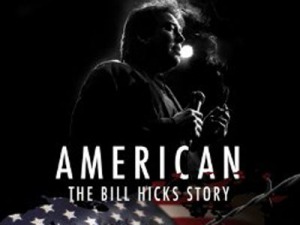
1) American: The Bill Hicks Story(dir. by Matt Harlock and Paul Thomas)

This heartfelt documentary about the life of the late comedian Bill Hick and it shows why his defiantly anarchistic humor is even more relevent today as it was during his heyday.  Here, his story is told through the use of cut-and-paste animation and it’s surprisingly poignant.  I didn’t know a thing about Bill Hicks before I saw this film but I was crying by the end of it.

2) Buck (dir. by Cindy Meehl)

Buck is a portrait of both the real-life horse whisperer Buck Brannaman and the various ranchers and horse owners who come to his various “clinics.”  The documentary covers Brannaman’s own abusive childhood and shows how he managed to turn the worst circumstances into something good.  The film works best when it just allows the charismatic Buck to talk about his life and his beliefs.  It’s less succesful when Hollywood phony Robert Redford pops up to talk about his feelings towards Buck.

3) Exporting Raymond (dir. by Phillip Rosenthal)

This is an interesting documentary in that it manages to be both entertaining and annoying at the same time.  Phillip Rosenthal was the creator of one of the most oddly durable sitcoms of all time, Everybody Loves Raymond.  In this documentary, which was directed by Rosenthal, we watch as he goes to Russia and deals with the resulting culture clash as he tries to adapt Raymond for Russian television. If you’re like me and you’re fascinated by all the behind-the-scenes production aspects of television and film,  then you’ll find a lot to enjoy in this documentary.  Unfortunately, Rosenthal himself is a bit too self-satisfied and, often times, he comes across like an almost stereotypical “ugly American.”  There’s something annoying about watching a wealthy, American television producer going over to a country that’s perpetually on the verge of self-destruction and then bitching about how ugly all the buildings look.

4) The Greatest Movie Ever Sold (dir. by Morgan Spurlock)

In The Greatest Move Ever Sold, Morgan Spurlock sets out to make the “Iron Man of documentaries,” a documentary that is completely and totally funded by product placement.  The documentary itself becomes about Spurlock’s attempts to find the corporate sponsors needed to make his documentary and the results are often hilarious and the film does succeed in getting you to think about how we are constantly bombarded with advertisements.  At the same time, this is also a good example of a “Who cares?” documentary.  Spurlock shows us how advertising works but he never really convinces us that it’s as big a problem as old toadsuckers like Ralph Nader and Noam Chomsky seem to think.  In many ways, Morgan Spurlock is a more likable version of Michael Moore in that he primarily makes documentaries for people who already agree with him. 

5) Resurrect Dead: The Mystery of the Toynbee Tiles (dir by John Foy)

This is a fascinating documentary about the mysterious Toynbee Tiles.  The Toynbee Tiles are, to quote Wikipedia, “messages of mysterious origin found embedded in asphalt of streets in about two dozen major cities in the United States and four South American capitals.”  That message is:

TOYNBEE IDEA
IN Kubrick’s 2001
RESURRECT DEAD
ON PLANET JUPITER.

These tiles first appeared in the 1990s and they’ve remained a perplexing unsolved mystery.  Nobody’s sure what the mysterious message means, who wrote the message, or even how the tiles were embedded into the asphalt.  This documentary is about not only the mysterious tiles but also the men who have, over the years, become obsessed with them and how that obsession has gone on to effect their own perception of reality.  The movie even offers up a plausible theory of who is responsible for the tiles.  Seriously, this is one of the most fascinating documentaries that I’ve ever seen.

6) Senna (dir. by Asif Kapadia)

Senna tells the life story of Ayrton Senna, a Brazilian formula one racer who was the world champion for three years before his own tragic death during a race.  I have to admit that I don’t know much about Formula One racing and, as a result, I had some trouble following Senna.  But Senna, seen in archival footage, is a charismatic and sometimes enigmatic figure and the racing footage is both exciting and, occasionally, frightening.

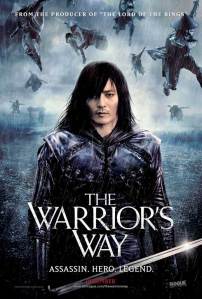
Quick Movie Review: The Warrior’s Way (dir. by Sngmoo Lee)


I’ll admit that I didn’t give The Warrior’s Way that much thought when we picked it up from the rental store the other day. At first glance, it didn’t seem to have much of an identity to it. Was it trying to be something serious like a House of Flying Daggers or something more humorous like Kung Fu Hustle? I guess one could say that it’s really a little of both and although the movie may be a little too strange for it’s own good, it was really worth going through the first hour or so just to get to the last 30 minutes. The film really picks up steam from there going forward.

In the film, Yang (Jang Dong Gun) becomes the Greatest Swordsman in the World after defeating the original Greatest Swordsman ever. After doing so, he’s given an order to kill a family by his clan. Managing to kill everyone but a young baby named April, Yang decides to let it live and to take care of it, giving the movie a Lone Wolf and Cub / Shogun Assassin feel.

And basically, what the film boils down to is Yang trying to leave behind the life he had in order to protect the baby he’s found. He finds himself in a Wild West town and meets a number of individuals who help him hide his identity. In return, he helps them gain the courage to find themselves. Kate Bosworth’s character, Lynne, is a knife thrower with a bit of talent, but without any focus. Geoffrey Rush is something of a drunkard, but in watching what Yang is doing in the town, he sets aside his drinking ways in place of sniper rifle. Both actors are okay in their roles, but I found myself wondering why they went with these, honestly.

One of the standouts of this film (if one could say there’s a standout, because the movie really could be better than what it was) was Danny Houston. Despite some of the bad movies he’s been in (X-Men Origins: Wolverine instantly comes to mind), he carries his characters with this really weird style – his voice has this sense of authority, much like a Liev Schreiber – his villain is the classic evil cowboy, which normally would do him a lot of justice. Here, he does okay in his scenes, but doesn’t really have a whole lot to work with.

Yang is also being pursued by his former master, Saddest Flute, named after the sound one’s throat makes when it’s cut. Saddest Flute and his ninjas manage to make their way to the town, which culminates in a really cool battle which is one part Rango, one part Ninja Scroll and even a little like Samurai Jack. And all of that really needs to be seen, all 25 to 30 minutes of it, even if it happens to be just as a clip.

Overall, The Warrior’s Way is the kind of movie you end up watching if you’re planning to take a nap on a Sunday afternoon or if you really like cinema of this type. It’s not worth taking the whole ride for, but it ends with such a bang that one may not consider it a total loss.

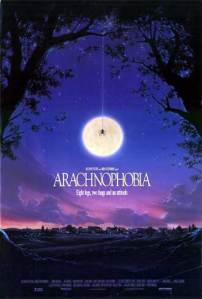
Quick Movie Review: Arachnophobia (dir. by Frank Marshall)


When I was a kid, my grandmother used to keep this clear shower curtain of a large black web, complete with a big red spider on it. It scared me so bad that I was actually more willing to brave the darkness of the basement bathroom than to have to deal with that monstrosity in the well-lit one. Between that, my brother’s EC comics and the original “The Fly” with Vincent Price, it’s how I developed Arachnophobia. It’s a fight or flight reflex that occurs when anything spider related appears. It seems fitting that as I’m writing this from a location that’s full of Black Widows, Arachnophobia is the topic for this review.

Arachnophobia marked the first directing attempt by Frank Marshall, long time producer of many of Steven Spielberg’s films. The film turned out to be a success when released, and manages to feature one the greatest Human vs. Tarantula battles ever filmed.

Although the film has some horror elements, it’s kind of hard to classify Arachnophobia as an actual horror film, despite the deaths that are in the film. There are some humorous moments (particularly from John Goodman), and the scares don’t come too often. For anyone who’s bothered by spiders, though, there are a number of jumpy moments that occur without being excessively gory. The story is a little misleading. It starts in Venezuela, South America, where a deadly tarantula manages to sneak its way on board a trip back to California. You’d think that from here, the Tarantula would end up finding another Tarantula, and thus pull a Kingdom of the Spiders with a whole town full of spiders. The writers, however, end up making a mistake in having a Tarantula mate with a common house spider, thus breeding dozens of other smaller spiders.

That’s like a Tiger trying to mate with a house cat. I’m not exactly sure if that’s even possible, but I’m getting off track. This actually ends up helping the story because now the town has to deal with all of these smaller spiders that are easy to hide around. I always considered that to be pretty effective.

Jeff Daniels character, Dr. Ross Jennings suffers from Arachnophobia in the worst way. Moving to the town of Canaima with his family, he trades the big city for a more relaxed, rural setting. Of course, it’s a happy ideal situation until various deaths start happening around town. Eventually, he and the authorities come to realize just how bad things really are. John Goodman’s character was an interesting touch as a funny exterminator, but really wasn’t used as much as he could have in this film. Then again, when he does tend to steal the scenes he’s in. Arachnophobia has a number of other supporting actors, but the film mainly belongs to Daniels, Goodman and the the spiders.

Chris Walas, who won an Oscar for his effects and make up work in The Fly helped to create some of the more mechanical spiders and close-ups when necessary. While you can tell where you’re dealing with real tarantulas and their synthetic counterparts, he did a great job in getting the fear factor out there, especially during the final standoff of the film. Without giving much away, the last 20 minutes of the movie are brilliant in that the final battle is much more than the simple “find it and squash it” scenario from Kingdom of the Spiders. It’s almost a violent chess match.

Arachnophobia is a treat. It may not be the best film about spiders in general, but if you do suffer from the condition or know someone who does, it definitely worth seeing, just to jump and squirm now and then. It’s much better than knowing there are real Black Widows to contend with.