Film Review: The Poltergeist Diaries (dir by József Gallai)


“They wanted me to laugh when I wanted to cry,” Jacob Taylor (András Korcsmáros) says at one point during the upcoming horror film, The Poltergeist Diaries.

Jacob is attempting to explain why he’s recently abandoned not only his job but also the closeness of his girlfriend and his family and retreated to an isolated house in the middle of the woods.  And really, who can’t relate to what Jacob’s feeling?  We’ve all been in that situation at some point.  We’ve all felt that we were expected to conform to some arbitrary standard and that our honest emotions were not welcome.  Not all of us have chosen to go off the grid and isolate ourselves but there’s probably not a single person reading this who has not, at some point, been tempted.

We learn quite a bit about Jacob over the course of The Poltergeist Diaries.  We learn that he was always something of an outsider.  He was a seeker, a brilliant student who wrote stories and made films and who always seemed to be trying to discover some sort of hidden truth.  We learn that he was also close to his mother.  In fact, it was her worsening health that apparently led to Jacob leaving the city and heading out to the country.  He got a big house for a surprisingly cheap price.  He often filmed himself as he walked around the woods that surrounded his new home.  He saw things in the woods and he heard things in the house.

Of course, the main thing that we learn about Ben is that he’s missing.  The film opens with a statistic, telling us that thousands of people disappear every year in the United States and that only 15% of them are recovered alive.  Jacob Taylor is among the missing and whether or not he’s among that lucky 15% is anyone’s guess.

The Poltergeist Diaries is set up as a documentary, featuring interviews with the people who knew Jacob along with footage that Jacob himself shot of the woods and his house.  Among those interviewed are Jacob’s girlfriend (Kata Kuna) and his brother (Péter Inoka), along with a police detective (Dávid Fecske) who has his own reasons for taking a particular interest in Jacob’s mysterious disappearance.  Eric Roberts even makes a brief appearances, playing Jacob’s apologetic stepfather.  As I’ve said many times on this very site, any film the features Eric Roberts is automatically going to be better than any film that doesn’t.

It’s an effectively creepy film, one that makes good use of the faux-documentary format.  (Jacob being a frustrated artist helps to explain why, even with things getting increasingly strange in the house, he keeps filming.)  The first half of the film is dominated by interviews with people who knew Jacob and who are haunted by his disappearance.  By the time the film switches over to showing us the footage that Jacob filmed in the house and the woods, the audience is definitely ready to discover what happened.  András Korcsmáros plays Jacob as just being unstable enough to leave some doubt as to whether or not he’s really stumbled across something supernatural or if he’s just allowing the isolation to get to him.  He’s at his best when he’s trying to articulate what he’s feeling.  His performance captures Jacob’s desperation and makes him into an intriguing protagonist, one who is both sympathetic and enigmatic.  You’re never quite comfortable Jacob but you still hope the best for him.

Visually, director József Gallai does a good job of creating and maintaining a properly ominous and threatening atmosphere.  The woods that surround Jacob’s house are creepy because they really do appear to stretch on forever and it’s very easy to imagine that they’re could be someone (or something) hiding behind every tree.  The imagery leaves you feeling uneasy and every time that Jacob went outside, I found myself anticipating an attack.  The inside of the house is just as creepy, full of dark hallways and menacing shadows.  This is a film that keep you watching for any hint of unexpected or mysterious movement.

It makes for an effectively intense and dream-like horror film, with the final 15 minutes providing a number of effective jump scares.  It’s a film that will inspire you to take a second look at every shadow and jump at every bump in the night.  It’s a seriously creepy movie.  Don’t watch alone.

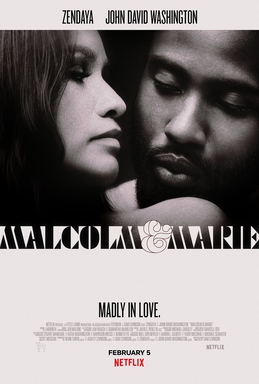
Film Review: Malcolm & Marie (dir by Sam Levinson)


Eh, Malcolm & Marie.  

John David Washington is Malcolm, a director who has been called the next Spike Lee though he would rather be known as the next William Wyler.

Zendaya is Marie, an actress and former drug addict who is Malcolm’s girlfriend and the inspiration for his latest film.

Malcom & Marie is the first Hollywood production to be filmed during the COVID-19 lockdowns.  It was shot largely in secret and the announcement that it even existed took many people by surprise.  This is pandemic filmmaking: a small cast working with a small crew in one location and it’s all stagey as Hell.

Indeed, Malcolm & Marie feels like an interminable play and one can easily imagine future acting students performing the film’s monologues on dingy stages in low-lit classrooms.  That it’s a talky film is, I guess, unavoidable.  When you’ve only got two characters and no one’s trying to rob a bank or kill the Avengers, there’s not really much to do other than to talk.  To be honest, this is the type of film that some of us have spent the past few years repeatedly asking for: it attempts to deal with big issues, it features two characters with their own separate ways of looking at the world, and it debates all the issues of art and commerce. There’s no explosions.  There’s no CGI.  There’s not post-credits scene designed to get us to spend money to see a sequel.  When we asked for a film like this, did we realize that the end result would be so monotonous and boring?  The obvious answer is that we didn’t but a part of me wonders if there’s not a certain group of critics who look at a film like Malcolm & Marie and think to themselves, “It’s so dull that it has to be good!  It’s either that or else we admit that we just wasted two hours of our life in the middle of a pandemic.”

(Seriously, everyone — life is short and you only get so many hours.  You don’t get those hours back, either.  Two hours may not seem like a lot but when you’ve only got 168 hours to live, those wasted hours start to add up.)

The film open with Malcolm and Marie returning from the premiere of his latest film.  Malcolm is excited because the premiere went well.  Marie is upset because Malcolm failed to thank her when he gave his post-film speech.  (Of course, there’s more to her anger than that.)  Malcolm and Marie bicker and then they laugh and then they go back to arguing again.  They start to make love several times, just to stop as one of them inevitably brings up what happened at the premiere.  Malcolm spends a lot of time complaining about the critics and how they insist on trying to categorize him as being solely a black filmmaker or a political filmmaker or a male filmmaker when he just wants to be known as a great filmmaker.  Malcolm compares himself to William Wyler and George Cukor.  Marie continually calls him out for being so full of himself, perhaps because she knows that neither Wyler nor Cukor would have allowed Malcolm to indulge in so many endless rants.  One especially gets the feeling that William Wyler, who directed The Best of Years Of Our Lives and who risked his life filming World War II, would have told Malcolm to get a grip.

Watching the film, one gets the feeling that the entire production is basically just a two-hour therapy session for director Sam Levinson.  When Malcolm vents about the critics, Sam Levinson is venting about the critics.  When Marie calls out Malcolm and talks about how selfish he is, it comes across as Levinson saying, “See, I’m actually a lot more self-aware than you realize!”  And when Marie stays with Malcolm despite the fact that he’s a pompous blowhard, it comes across as Levinson letting us know that he’s decided that he’s worth the trouble.

And really, that’s fine.  Insecurity can be a painful thing and it’s something that everyone has to deal with.  Far too often, people assume that just because you’re attractive or you’ve got a lot of money or you’ve found success in your field, that means you magically no longer have to deal with any self-doubt.  In fact, the opposite is true.  The more attractive you are and the more successful you are and the more honest you are about both your strengths and your weaknesses, the more time you spend wondering if people like you or if they just like being associated with you.  To paraphrase a frequently heard saying, with great talent comes great insecurity.  So, I certainly don’t blame the film’s director for spending the pandemic putting together a two-hour therapy session.  But that still doesn’t make the film particularly interesting to watch.

Even though Sam Levinson’s keeps the camera moving, Malcolm & Marie ultimately feels more theatrical than cinematic.  For all the yelling and the anger and the failed attempts at sex, it’s just a bit dull.  Far too many scenes are both overwritten and, in Washington’s case, overacted.  John David Washington never convinces us that Malcolm is worth all of the trouble.  When he’s supposed to be compelling, he just comes across as being a blowhard.  Zendaya, on the other hand, proves herself to be a major talent by giving a compelling performance even in this mess of a film.  Even when her dialogue is awkward, Zendaya manages to find some sort of emotional truth in her character.  She’s relatable and, as opposed to Washington, she makes Marie’s complaints into something universal.  We can understand her frustration and her anger because, in our own individual ways, we’ve all been there.  We all know what it’s like to be underappreciated.  We all know what it’s like to wonder where we fit in.  Of course, it also helps that both Zendaya and the viewer spend the majority of the movie annoyed with Malcolm.

Malcolm & Marie is essentially a two-hour argument and watching it is about as much fun as …. well, listening to two people argue for two hours.  Zendaya proves her talent but otherwise, this is one private discussion that need not be heard by the public.

Lisa Marie Picks The 30 Top Films of 2020


Well, it’s finally time!  It’s time for me to announce my picks for the best films of 2020.

Before we begin, there is one thing I want to make clear.  Unlike the Academy, I did not extend my eligibility window.  Films like Nomadland, Minari, and The Father (amongst others) will undoubtedly be competing for the Oscar for Best Picture of 2020.  However, as far as I’m concerned, those are all 2021 films.  And I imagine that a few of them will probably appear on my best films of 2021 list.  However, the list below are my picks for the best films of 2020.  You’ll probably agree with some of my picks and disagree with some of the others.  As always, I welcome any and all comments.

Also, be sure to check out my picks for 2010, 2011, 2012, 2013, 2014, 2015, 2016, 2017, 2018, and 2019!  Wow, I’ve been doing this for a while!

And now, in descending order, my favorites of 2020!

30. Money Plane (dir by Andrew Lawrence) — Okay, I can sense that you’re already rolling your eyes at my list by seriously, Money Plane is such a cheerfully absurd and self-aware little B-movie that there’s no way I couldn’t include it.  Seriously, how can you not love a film that features Kelsey Grammer always a gangster known as the Rumble?  Basically, as soon as I heard that priceless declaration of “We are going to rob the Money Plane!,” this movie had me under its spell.

29. Ma Rainey’s Black Bottom (dir by George C. Wolfe) — Though this adaptation of August Wilson’s play never quite escapes its theatrical roots, no one can deny the powerful performances of Viola Davis, Colman Domingo, Glynn Turman, and especially Chadwick Boseman.  Boseman dominates the film from the minute that he makes his first appearance, playing an ambitious, troubled, and undeniably talented trumpeter.  Viola Davis plays Ma Rainey with the self-awareness of someone who knows that the record producers need her more than she needs them.  She has the power and she’s not going to let anyone get away with forgetting it.

28. The Invisible Man (dir by Leigh Wannell) — Before the Academy announced that they would be changing their rules to considers streaming movies, many critics speculated that one of the results of the pandemic would be The Invisible Man winning all of the Oscars.  Though they may have been joking, it was not as outlandish an idea as they seemed to think.  The Invisible Man is a horror film that proves that being a genre film does not mean that film can’t also be a good and thought-provoking work of art.  The Invisible Man breathes new life into a somewhat hokey premise and Elisabeth Moss gives a great performance as a woman stalked by her abusive (and now invisble) ex.  The Invisible Man features one of the best ending scenes of 2020.

27. The Hunt (dir by Craig Zobel) — Delayed due to a manufactured controversy and released to critical bafflement, The Hunt is a clever satire of our hyper-partisan and hyper-polarized society.  The film’s final twist is a clever commentary on social media drama and Hillary Swank steals the show with an unexpected cameo.

26. One Night In Miami (dir by Regina King) — I went back and forth on this one.  Based on a stage play, this film imagines what happened the night that Malcolm X, Jim Brown, Sam Cooke, and Muhammad Ali met in a Miami motel room.  There are a few times that the film is undoubtedly a bit too stagey for its own good and, early on, some of the dialogue is a bit too on the nose.  But the film has a cumulative power and, despite a few uneven moments, it’s ultimately an intriguing look at race, celebrity, and political activism in America.  A good deal of the film’s power is due to the ensemble.  While most of the awards chatter seems to be focused on Leslie Odom, Jr. as Sam Cooke, it’s Aldis Hodge’s Jim Brown who truly anchors the film.
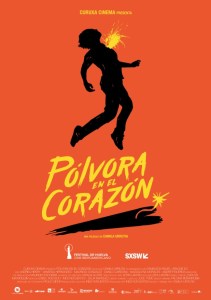
25. Gunpowder Heart (dir by Camila Urrutia) — This raw and angry film from Guatemala was one of the more powerful films to be featured at 2020’s virtual South By Southwest.  In Guatemala City, Maria and her girlfriend Claudia are assaulted by three men.  Maria wants revenge, no mater what.  Claudia, the more cautious of the two, knows that Maria’s plans are going to end in tragedy and disaster but she also knows that there’s nothing she can do to stop her.  Gunpowder Heart isn’t always easy to watch but it’s undeniably powerful.

24. The Shock of the Future (dir by Marc Collin) — Taking place in 1978, this French film follows one day in the life of a composer named Ana (Alma Jodorowsky).  It’s a typical day — Anna wakes up, a friend comes by with the latest albums, Anna tries to compose music, she goes to a party, and she hears the newest music.  It’s a simple but effective celebration of both music and the thrill of having your entire creative life ahead of you.  Alma Jodorowsky is brilliant in the role of Anna.

23. She Dies Tomorrow (dir by Amy Seimetz) — This a disturbing mood piece about a woman who is convinced that she is going to die in a day.  Everyone who she meets also becomes convinced that they’re going to die within 24 hours.  Some of them go out of their way to make sure that it happens while others just wait for death to come.  Is it a mass delusion or is it something else?  The atmospheric film may raise more questions than it answers but it will definitely stick with you.

22. Driveways (dir by Andrew Ahn) — Kathy (Hong Chau) and her young son, Cody (Lucas Jaye), move into the home that was owned by Kathy’s deceased sister.  In his final film appearance, Brian Dennehy plays the gruff but caring neighbor who befriends both Cody and his mother.  This is a low-key but emotionally resonant film, elevated by Dennehy’s heartfelt performance.

21. Figurant (dir by Jan Vejnar) — Clocking in at 14 minutes, this unsettling but powerful French/Czech co-production tells the story of a quiet man (Denis Levant) who follows a group of younger men into a warehouse and who soon finds himself in uniform and on a battlefield.  Or is he?  It’s not an easy question to answer but this intriguing short film will keep you watching, guessing, and thinking.

20. What Did Jack Do? (dir by David Lynch) — David Lynch interrogates a monkey in an expressionistic train station.  The monkey talks about a chicken and sings a song about true love’s flame.  “Are you now or have you ever been a member of the communist party?” Lynch asks.  It’s a brilliant short film and really, it’s the sort of thing that only David Lynch, with his mix of earnestness and eccentricity, could have pulled off.  Technically, this film was made a few years ago but it only got it’s official premiere in 2020, when Netflix released it on Lynch’s birthday.

19. Red, White, and Blue (dir by Steven McQueen) — Steve McQueen’s Small Axe was made up of five short films.  Three of them appear on this list.  There’s been a lot of debate about whether or not the Small Axe films should be considered individual features or if they should be considered a miniseries.  Obviously, I see them as being individual features but, in the end, they’re brilliant and thought-provoking regardless of whether they’re television or film.  Red, White, and Blue takes a nuanced look at institutional racism and features an excellent lead performance from John Boyega.

18. Mr. Jones (dir by Agnieszka Holland) — A film that deserved more attention than it received, Mr. Jones tells the story of Gareth Jones, the Welsh journalist who, in 1933, discovered the truth about the state-sponsored famine that was killing millions in the Ukraine.  Despite his efforts, the press refused to report on what was really happening in the Ukraine and instead, an odious propagandist named Walter Duranty was awarded a Pulitzer prize for writing pro-Stalin stories that were later determined to be full of deliberate lies.  An important and heartfelt film, Mr. Jones features a subtle but effective lead performance from James Norton and a memorable supporting turn from Peter Sarsgaard, who plays Walter Duranty as a smug snake.
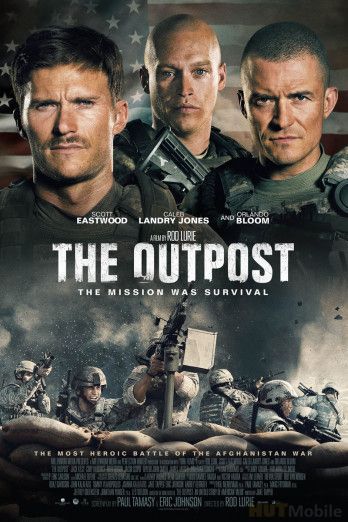
17. The Outpost (dir by Rod Lurie) — Based on a true story and directed by Rod Lurie, this film pays tribute to the men who have fought and died in America’s forgotten conflict, the War in Afghanistan.  Well-acted and doggedly unsentimental, The Outpost will literally leave you breathless.

16. Emma (dir by Autumn de Wilde) — The latest adaptation of Jane Austen’s much-adapted novel, Emma has a playful spirit that is lacking in so many other literary adaptations.  It also has a great performance from Anya Taylor-Joy, who makes the character of Emma Woodhouse her own.

15. Never Rarely Sometimes Always (dir by Eliza Hittman) — Two teenagers, Autumn (Sidney Flanigan) and her cousin Skylar (Talia Ryder), travel to New York City from Pennsylvania so that Autumn can get an abortion without having to get her parent’s consent.  Though I’m occasionally a bit skeptic of cinema verite, Never Rarely Sometimes Always makes good use of the style.  Far more than just being a film about abortion, it’s a character study of two people trying to survive in a harsh world.  The scene where the previously withdrawn Autumn is prodded to open up about her past is one of the most powerful of the year.

14. Possessor (dir by Brandon Cronenberg) — Brandon Cronenberg’s disturbing sci-fi/horror hybrid is not an easy film to explain or to even describe.  Questions of identity and betrayal are mixed with grotesque images of body horror and societal neglect.  By the end of the film, you’ll find yourself reconsidering everything that you previously assumed about the movie.  This one sticks with you, even though you may not want it to.  (How’s that for a recommendation?)
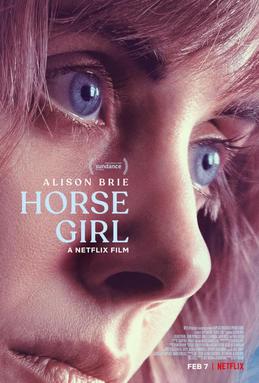
13. Horse Girl (dir by Jeff Baena) — This is a film that definitely deserved a bit more attention than it received.  Alison Brie gives a brave and sympathetic performance as someone who believes that she’s a clone who has been abducted by aliens.  Is she suffering from delusions brought on by a combination of loneliness and too much television?  Or is she right?  The film will leave you guessing.  While Brie is at the center of almost every scene, Molly Shannon also gives a good performance as one of Brie’s only friends.

12. Sound of Metal (dir by Darius Marder) — Riz Ahmed plays an occasionally obnoxious drummer who goes deaf.  Worried that Ahemd is going to relapse into drug use, his girlfriend and musical partner (Olivia Cooke) checks him into a rehab center for the deaf.  With the help of a sympathetic but no-nonsense counselor (Paul Raci), Ahmed struggles to come to accept the loss of sound and music from his life.  The three main performances elevate this film, making it one of the year’s best.  In the film’s best moments, we hear the world through Ahmed’s ears and experience what he’s experiencing.

11. Mangrove (dir by Steve McQueen) — The first film in Steve McQueen’s Small Axe anthology tells the story of a true life court case.  Politically charged from beginning to end and leaving no doubt as to what the true stakes were in the case, Mangrove is the film that Trial of The Chicago 7 should have been.

10. Soul (dir by Peter Docter) — The latest from PIXAR made me cry as only a great PIXAR film can.  A music teacher named Joe (voices by Jamie Foxx) falls down a manhole shortly after winning his dream job in a jazz band.  Unwilling to die before performing on stage, Joe finds himself in the Great Before, assigned to teach an unborn soul named 22 (voiced by Tina Fey) what it means to be human …. okay, you know what?  This film has one of those plots that sounds silly if you try to explain it.  What matters is that it’s a heartfelt film that celebrates every minute of life.  Foxx and Fey both do wonderful voice work and the animation is as clever as always.  Plus, there’s a cat!

9. The Vast of Night (dir by Andrew Patterson) — This low-budget film is a wonderfully atmospheric look at what may or may not be an alien invasion taking place in the 1950s.  Featuring wonderfully naturalistic performances and an intelligent storyline, The Vast of Night is a triumph of the independent spirit.  I can’t wait to see what Andrew Patterson does next.

8. Lovers Rock (dir by Steve McQueen) — The 2nd film is Steve MQueen’s Small Axe anthology, Lovers Rock centers on one exhilarating house party.  Though the world outside of this party may be harsh and full of oppression and racism (a group of white teens shout racial slurs at one partygoer when she steps outside of the house), the world inside of the party is one of love, music, and celebration.

7. i’m thinking of ending things (dir by Charlie Kaufman) — A riddle wrapped in an enigma, i’m thinking of ending things features great performance from Jessie Buckley, Jesse Plemons, Toni Collette, and David Thewlis.  What starts out as an awkward drive to visit Plemons’s parents grows increasingly more and more surreal until the audience is left to wonder what is real, what is fantasy, and whether the majority of the film’s characters even exist.  This film plays out like a dream and stays with you long after it end.

6. Palm Springs (dir by Max Barbakow) — Perhaps the ultimate twist on Groundhog Day, Palm Springs is a thought-provoking comedic gem from Lonely Island Classic Pictures.  Andy Samberg, J.K. Simmons, and Cristin Milioti find themselves living the same day over and over again.  Each one reacts to their predicament in a different way.  It’ll make you laugh and then it’ll make you cry.  Revealing too much else about the plot would be a crime.  It’s on Hulu so go watch it.

5. The Assistant (dir by Kitty Green) — This infuriating and ultimately tragic film follows one day in the life of Jane (Julia Garner), a production assistant at a film company.  Though he’s never seen, Jane’s boss is clearly meant to be a fictionalized version of Harvey Weinstein.  Should Jane save her career or try to warn the actress that her boss has clearly set his eyes upon as his next victim?  The scene where the head of HR assures Jane that she needn’t worry about her boss’s behavior because “you’re not his type,” rings all too horribly true.  The Assistant was obviously designed to be a rallying call for #MeToo but sadly, today, it feels more like an obituary.

Bad Education

4. Bad Education (dir by Cory Finley) — All year, I have been lamenting the fact that Bad Education was bought by HBO and not Netflix.  If it had been released on Netflix, it would probably be an Oscar contender and Hugh Jackman would be in the hunt for his first Best Actor Oscar.  Instead, it aired on HBO and it had to settle for limited Emmy recognition.  It’s a shame because this film, which centers on embezzlement at one suburban school, was one of the best of 2020.  At a time when we’re being told not to question authority, Bad Education encourages us to question everything.  Along with being thought-provoking, it’s also occasionally laugh out loud funny.  Jackman is brilliant in the lead role.  Allison Janney is award-worthy as his partner-in-crime.  Ray Romano takes another step in proving that he’s more than just a sitcom actor.  All in all, this was a great movie.

3. First Cow (dir by Kelly Reichardt) — This melancholy tale follows two men who meet in Oregon in the 1820s and who become unlikely business partners.  Unfortunately, being partners means stealing milk from Toby Jones’s cow and thievery was even less appreciated in the 1820s than it is today. Featuring outstanding lead performances from Jon Magaro and Orion Lee, First Cow is a rewarding work of historical fiction.  Kelly Reichardt makes you feel as if you’ve woken up in the 1820s, even as she uses the past to comment upon the present.  This probably isn’t a film for everyone.  Reichardt’s style has always been more about observing than passing judgment.  But for viewers willing to stick with it, this deliberately paced film is a rewarding experience.

Finally, when it comes to the best film of the year, I’ve been going back and forth between two films.  In the end, I have to declare a tie.  In alphabetical order by title, here are the two best films of 2020:

2. The Girl With A Bracelet (dir by Stéphane Demoustier) — This French film is about a teenage girl who is on trial for murdering her best friend.  Whether or not she’s guilty is ultimately less important than why everyone has been so quick to accuse her in the first place.  Featuring an outstanding ensemble and an intelligent script, The Girl With A Bracelet will leave you thinking about …. well, everything.  It can currently be viewed on Prime.

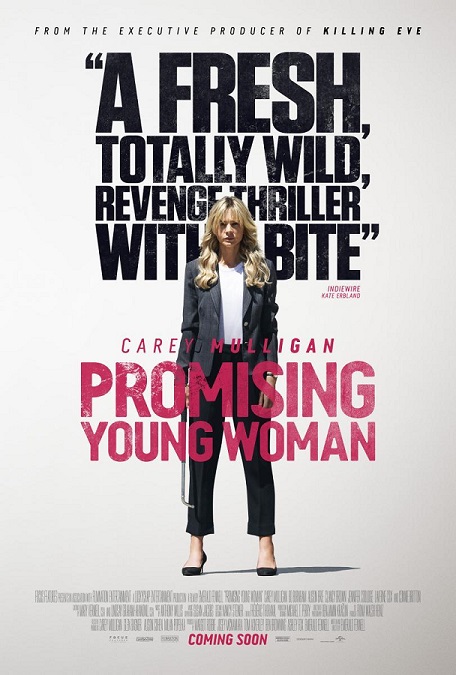
1. Promising Young Woman (dir by Emerald Fennell) — When I first started watching this film, I worried that it might be too stylized to be effective.  But it soon became apparent the director/screenwriter Emerald Fennell and star Carey Mulligan both knew exactly what they needed to do to tell this story.  Mulligan plays a med school drop-out who is seeking her own unique style of revenge against not only the men who raped her best friend in college but also the people who Mulligan feels subsequently let her friend down.  Bo Burnham plays the pediatrician who asks Mulligan out on a date and who appears to be the perfect nice guy, the adorably awkward boyfriend who you you would expect to find in a 90s rom com.  Neither character turns out to be exactly who they initially appeared to be.  Promising Young Woman mixes genres that normally don’t go together, smashing together drama and comedy, and it’s just audacious enough to be one of the best films of the year.


TSL Looks Back at 2020:

  1. 2020 In Review: The Best of Lifetime (Lisa Marie Bowman)
  2. 12 Good Things I Saw On Television in 2020 (Lisa Marie Bowman)
  3. Lisa Marie’s Top 8 Novels of 2020 (Lisa Marie Bowman)
  4. Lisa Marie’s Top 8 Non-Fiction Books of 2020 (Lisa Marie Bowman)
  5. Lisa Marie’s 20 Favorite Songs of 2020 (Lisa Marie Bowman)
  6. Lisa Marie’s 16 Worst Films of 2020 (Lisa Marie Bowman)
  7. My Top 20 Albums of 2020 (Necromoonyeti)
  8. 25 Best, Worst, and Gems That I Saw In 2020 (Valerie Troutman)
  9. Top 10 Vintage Collections (Ryan C)
  10. Top 10 Contemporary Collections (Ryan C)
  11. Top 10 Original Graphic Novels (Ryan C)
  12. Top 10 Ongoing Series (Ryan C.)
  13. Top 10 Special Mentions (Ryan C.)
  14. Top Ten Single Issues (Ryan C)

2020 In Review: The Best of Lifetime


As chaotic as 2020 may have been, one thing remained unchanged!  Lifetime provided me with a lot of entertainment!  Below, you’ll find my picks for the best Lifetime films and performances of the past year!

(For my previous best of Lifetime picks, click on the links: 2014201520162017, 2018, and 2019!)

Best Picture:

  1. Mile High Escorts
  2. Escaping My Stalker
  3. Sleeping With Danger
  4. Beware of Mom
  5. Abducted On Air
  6. Killer Competition
  7. Remember Me, Mommy?
  8. A Predator’s Obsession: Stalker’s Prey 2
  9. Cheer Squad Secrets
  10. Deadly Mile High Club

Best Director:

  1. Jeff Hare for Beware of Mom
  2. Sam Irvin for Mile High Escorts
  3. David Weaver for Sleeping With Danger
  4. Linden Ashby for Escaping My Stalker
  5. Colin Theys for A Predator’s Obsession: Stalker’s Prey 2
  6. Doug Campbell for Deadly Mile High Club

Best Actress:

  1. Wendie Malick in Deranged Granny
  2. Elisabeth Rohm in Sleeping With Danger
  3. Sydney Myer in Remember Me, Mommy?
  4. Ezmie Garcia in Escaping My Stalker
  5. Anita Brown in Cheer Squad Secrets
  6. Crystal Allen in Beware of Mom

Best Actor:

  1. Houston Stevenson in A Predator’s Obsession: Stalker’s Prey 2
  2. Antonio Cupo in Sleeping With Danger
  3. Panos Vlahos in Psycho Yoga Instructor
  4. Nick Ballard in Psycho Escort
  5. Andrew James Allen in Escaping My Stalker
  6. T.C. Matherne in A Murder to Remember

Best Supporting Actor

  1. Damon K. Sperber in Deadly Mile High Club
  2. Jim Klock in Secrets in the Woods
  3. Gord Rand in Abducted on Air
  4. Brandon Howell in Beware of Mom
  5. Mark Jude Sullivan in Sinfidelity
  6. Jeff Schine in A Mother Knows Worst

Best Supporting Actress

  1. Cristine Prosperi in Killer Competition
  2. Perrey Reeves in Abducted on Air
  3. Mariette Hartley in Escaping My Stalker
  4. Christina Moore in Mile High Escorts
  5. Christie Burson in Ruthless Realtor
  6. Cristina Rosato in No Good Dead Goes Unpunished

Best Screenplay:

  1. Stephen Romano for Escaping My Stalker
  2. Richard Blaney and Gregory Small for Sleeping with Danger
  3. S.L. Heath for Beware of Mom
  4. Barbara Kymlicka for Abducted on Air
  5. Daniel West for Killer Competition
  6. Adam Rockoff and Zachary Valenti for Remember Me Mommy

Best Score:

  1. Andrew Morgan Smith for Sinfidelity 
  2. David Findlay for Revenge For Daddy 
  3. Christopher Cano for The Pom Pom Murders
  4. Fantom for Mile High Escorts

Best Editing:

  1. Maxime Chalifoux for Abducted on Air
  2. Seth Johnson for The Pom Pom Murders
  3. Bryan Capri for A Predator’s Obsession: Stalker’s Prey 2
  4. Kelly Herron for Sleeping With Danger

Best Cinematography:

  1. Branden James Maxham for A Predator’s Obsession: Stalker’s Prey 2
  2. Nate Spicer for Mile High Escorts
  3. Thomas M. Harting for Sleeping With Danger
  4. David Dolnik for Deadly Mile High Club

Coming up next (tomorrow at the latest — maybe sooner, depending on how much time I can devote to watching 6 movie today): My picks for the best films of 2020!  Finally!

TSL Looks Back at 2020:

  1. 12 Good Things I Saw On Television in 2020 (Lisa Marie Bowman)
  2. Lisa Marie’s Top 8 Novels of 2020 (Lisa Marie Bowman)
  3. Lisa Marie’s Top 8 Non-Fiction Books of 2020 (Lisa Marie Bowman)
  4. Lisa Marie’s 20 Favorite Songs of 2020 (Lisa Marie Bowman)
  5. Lisa Marie’s 16 Worst Films of 2020 (Lisa Marie Bowman)
  6. My Top 20 Albums of 2020 (Necromoonyeti)
  7. 25 Best, Worst, and Gems That I Saw In 2020 (Valerie Troutman)
  8. Top 10 Vintage Collections (Ryan C)
  9. Top 10 Contemporary Collections (Ryan C)
  10. Top 10 Original Graphic Novels (Ryan C)
  11. Top 10 Ongoing Series (Ryan C.)
  12. Top 10 Special Mentions (Ryan C.)
  13. Top Ten Single Issues (Ryan C)


Lisa Marie’s 10 Worst Films of 2021


Also be sure to check out my picks for 2020, 201920182017201620152014201320122011, and 2010!

10. Paradise Cove (dir by Martin Guigi)
9. Eternals (dir by Chloe Zhao)
8. Spiral: From the Book of Saw (dir by Darren Lynn Bousman)
7. Space Jam: A New Legacy (dir by Malcolm D. Lee)
6. Falling (dir by Viggo Mortensen)
5. Deadly Illusions (dir by Anna Eizabeth James)
4. Being the Ricardos (dir by Aaron Sorkin)
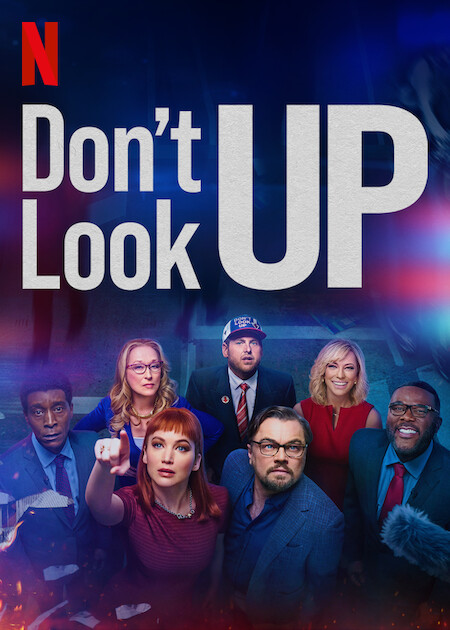
3. Don’t Look Up (dir by Adam McKay)
2. After We Fell (dir by Castille Landon)
1. Malcolm & Marie (dir by Visionary Sam Levinson)

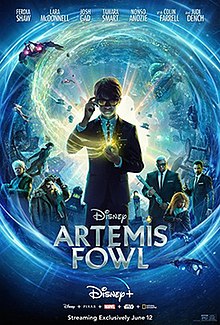
The Films of 2020: Artemis Fowl (dir by Kenneth Branagh)


What exactly is Artemis Fowl about?

Basically, it opens with news reports about the home of millionaire businessman Artemis Fowl (Colin Farrell) being raided by the police and the discovery that Fowl has apparently been stealing ancient artifacts from across the world.  A bearded man named Mulch Diggums (Josh Gad) is arrested at the house and is interrogated by …. someone.  I guess he’s being interrogated by an intelligence agency, I don’t know.  Mulch explains that he’s a dwarf and that he’s about to tell a story that will prove that magic exists which …. okay, I guess.

The story is about Artemis Fowl’s 12 year-old son, who is also named Artemis Fowl (Ferdia Shaw).  The younger Artemis Foul is a criminal mastermind, just like his father, and he wears a suit and dark glasses and basically, he looks like a 12 year-old who dressed up like one of the Men In Black for Halloween.  Artemis Fowl the younger is investigating the disappearance of Artemis Fowl the older which leads to a search for a missing magical object.  Somehow, it all involves faeries and other magical figures. Judi Dench pops up a few times, looking stern.  There’s a lot of chase scenes and a few fight scenes, none of which really make much of an impression.

The plot of Artemis Fowl is pretty much impossible to follow, especially if you haven’t read (or, in my case, recently reread) the books on which the film is based.  A huge part of the problem is that the film itself doesn’t really develop any sort of individual personality.  For a film about a 12 year-old wearing a suit and concocting criminal schemes, Artemis Fowl is surprisingly bland.  It feels like a collection of scenes from other YA adaptations.  We get the slow motion fight scenes.  We get the magical scenes that feel as if they were lifted from a lesser entry from the Harry Potter series.  Indeed, a huge chunk of the film seems to be made up of discarded scenes from director Kenneth Branagh’s previous excursion into the world of fantasy and vaguely defined magic, Thor.  The film moves quickly but since nothing interesting or unusual is happening, you find yourself wishing that maybe the film would slow down for a just a minute or two and spend a bit of time exploring the world in which the two Artemis Fowls live.  It’s a remarkably undetailed fantasy world that Artemis Fowl presents us with.  I spent the majority of the movie wondering whether Judi Dench was supposed to be an elf or a faerie.  One of the great actress, Dench spends the entire film wearing pointed ears and looking rather annoyed.

Much like Dolittle, Artemis Fowl ends with the promise of more cinematic adventures, though it’s doubtful that promise will actually be fulfilled.  Also — and again like Dolittle — it’s hard not to feel that Artemis Fowl would have worked much better as an animated film than as a live action spectacular.  Unfortunately, Artemis Fowl is just too bland and borderline incoherent to really make much of a lasting impression.

The Films of 2020: Dolittle (dir by Stephen Gaghan)


Dolittle tells the story of Dr. Dolittle (Robert Downey, Jr.), the eccentric doctor who can talk to the animals and who hasn’t had much use for humans ever since the tragic death of his wife, Lily (Kasia Smutniak).  Dolittle would be happy to just spend his entire life locked away in his estate, talking to Poly the Parrot (voice of Emma Thompson) and Chee-Chee the Gorilla (voice of Rami Malek) and all of the other animals but Dolitle has to eventually leave his home because otherwise, there wouldn’t be a movie.

When Queen Victoria (Jessie Buckley) is mysteriously taken ill, only Dolittle can save her.  Dolittle quickly realizes that the Queen has been poisoned and that the only cure for the poison is to be found on a tree that’s located on an island that no one has ever seen before.  Soon, Dolittle and the animals are sailing in search of the island.  Accompanying them is Tommy Stubbins (Harry Collett), a sensitive teen who hates to hunt and who hopes to become Dolittle’s apprentice.  Pursuing Dolittle is the evil Dr. Blair Mudfly (Michael Sheen), who went to college with Dolittle and who is in cahoots with the conspirators who are trying to do away with Queen Victoria.

Got all of that?  I hope so because we haven’t even gotten to the dragon with a set of bagpipes crammed up her ass.  Yes, you read that correctly.

Last year, Dolittle was one of the few major studio productions to actually get a wide release before COVID-19 closed down all the theaters.  It was released in January, which is traditionally the time when studios release the films that they hope everyone will have forgotten about by the time April rolls around.  January is traditionally the month when studios release the films that they know aren’t any good.  And, indeed, the reviews of Dolittle were overwhelmingly negative.  Not only did the critics hate Dolittle but audiences were also rather unenthusiastic and the film bombed at the box office.  Indeed, under normal circumstances, the reaction to Dolittle and its subsequent box office failure would be considered one of the year’s biggest disasters.  However, 2020 was a year of disasters.  Compared to everything else that ended up happening over the past 12 months, Dolittle’s lukewarm reception seems almost quaint now.

Earlier today, I finally watched Dolittle on HBOMax.  I was expecting the film to be terrible but it’s actually not quite as bad as I had been led to believe.  I mean, don’t get me wrong.  Dolittle has a ton of problems.  The tone is all over the place as the film tries to mix cartoonish humor with thrilling adventure in a style that owes more to the Pirates of the Caribbean franchise than it does to Dr. Dolittle.  Despite a few self-consciously manic moments, Robert Downey, Jr. seems remarkably bored in the lead role.  Many of the jokes fall flat and the awkward attempts to shoehorn the usual message of “be true to yourself” into the film just felt awkward.  That said, the CGI animals were cute enough to hold my interest and that’s really the most important thing when it comes to a film like Dolittle.  Cute animals — even computer generated ones — help to make up for a lot of flaws.

Dolittle’s final scene hints at a sequel or even a franchise.  Considering the reaction to the first film, I doubt we’ll get a second.  I do think Dr. Dolittle could make for an enjoyable PIXAR film but it might be time to give the live action adaptations a rest.

The Films of 2020: Let Them All Talk (dir by Steven Soderbergh)


Let Them All Talk is the latest film from Steven Soderbergh.  Meryl Streep plays Alice Hughes, a novelist who is traveling to London on the Queen Mary so that she can accept a literary prize.  Accompanying her are two friends from college, Roberta (Candice Bergen) and Susan (Dianne Wiest), both of whom have far less glamorous lives than Alice’s.  Roberta is also still angry because she feels that Alice used details from Roberta’s life in one of her novels.

Also on board the Queen Mary are Alice’s nephew, Tyler (Lucas Hedges, who overacts to such an extent that it’s almost as if he’s daring the Academy to take back that nomination for Manchester By The Sea) and Karen (Gemma Chan), who is Alice’s new agent and who is trying to figure out what Alice’s next book is going to be about.  (Karen hopes that it’ll be a sequel to her first novel, the one that was full of details stolen from Roberta’s life.)  Though Alice keeps insisting that she wants Tyler to keep Roberta and Susan entertained while she works on her latest book, Tyler is far more interested in getting to know Karen.

The film was shot on the Queen Mary, while the ship was actually making the voyage across the Atlantic.  Though the actors had a story outline, the majority of the dialogue was improvised and Soderbergh essentially just sat in a wheelchair with his camera and followed the actors around.  In short, this is a film that you probably could have shot, the only difference being that you probably wouldn’t have been able to get Meryl Streep to agree to appear in it.  I’m tempted to say that the story of the production is actually more interesting than the film itself but, to be honest, Steven Soderbergh shooting an improvised film isn’t that interesting.  Soderbergh’s always had a weakness for gimmicks like improv.  You may remember that, decades ago, he and George Clooney insisted on trying to produce largely improvised television shows for HBO.  Though the shows got a lot of hype before they premiered, both K Street and Unscripted mostly served to prove that improv is often more interesting in theory than in practice.

That’s certainly the case with Let Them All Talk, which is one of the most mind-numbingly dull films that I’ve ever sat through.  I think the assumption was that Meryl Streep, Candice Bergen, and Dianne Wiest would automatically be interesting to watch no matter what they said but it doesn’t work out that way.  Meryl Streep, in particular, is so excessively mannered that she comes across like a retired drama teacher playing the lead in the community theater production of Mame.  Candice Bergen does a bit better but Dianne Wiest is stranded with a role and subplot that seems almost like an afterthought.  In the end, the film just isn’t that interesting.  The “just start filming and see what happens” approach has its limits.

To be honest, as I watched Let Them All Talk, I found myself wondering if maybe Steven Soderbergh was deliberately trolling everyone by seeing how bad of a film he can make before critics stop reflexively praising everything that he does.  Let Them All Talk currently has a score of 89% at Rotten Tomatoes so Soderbergh still has a ways to go.


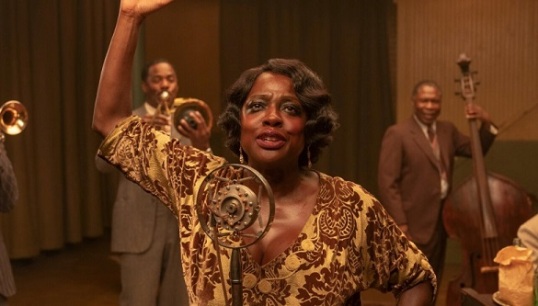
The Films of 2020: Ma Rainey’s Black Bottom (dir by George C. Wolfe)


The year is 1927 and the place is Chicago.  6 men are in a claustrophobic recording studio, waiting for the arrival of blues singer Ma Rainey (Viola Davis).  While Ma’s agent, Irv (Jeremy Shamos) and studio owner Mel Sturdyvant (Johnny Coyne) wait upstairs, the members of Ma’s band gather in the rehearsal room.  They’ve been given a list of songs to rehearse.  As is quickly made clear, the band doesn’t have much say about which songs they’re going to perform and record.  In fact, Irv and Mel pretty much go out of their way to have as little contact with the black musicians as possible.

The band is made up of Cutler (Colman Domingo), Slow Drag (Michael Potts), Toledo (Glynn Turman), and a trumpet player named Levee (Chadwick Boseman).  Cutler may be their unofficial leader but Levee is the most outspoken.  Levee is sick of playing what he calls “jug band music.”  He’s written his own songs and he’s shown them to Sturdyvant.  He’s convinced that he’s going to start his own band and that he’s going to become a bigger star than Ma Rainey ever was.  The rest of the band views Levee with a mix of humor and distrust.

As for Ma, she arrives an hour late, accompanied by her girlfriend Dussie (Taylor Paige) and her nephew, Sylvester (Dusan Brown).  She doesn’t apologize for being late and, as soon as she arrives, she starts to make her voice heard.  She wants Sylvester to perform a spoken word intro on the record, despite the fact that Sylvester stutters.  When Irv and Sturdyvant fail to bring her a coke, she brings recording to a halt until she gets one.  She argues about which songs she wants to record and she reprimands Levee for trying to change the arrangement of one of her songs.  Ma’s difficult but, as she explains it, she has to be difficult.  Irv and Sturdyvant don’t care about her, they don’t care about what her music is actually about, and they certainly don’t care about paying her what she deserves.  Irv may claim to care about her but, as Ma tells Cutler, he’s only invited her to his home once and that was so she could sing for his white friends.  When they’re in the recording studio, Ma has all of the power and she’s not going to let anyone forget it.

Meanwhile, the members of the band continue to talk among themselves with the conversation always coming back to what it takes to survive in a society run by white people.  The three older men seem to have accepted that the world is what it is and that’s it’s never going to change but Levee believes that he has a future.  When the other members of the band poke fun at him for the obsequious way that he talks to Sturdyvant, Levee discusses the horrifying trauma of his past.  As the recording sessions continues, tempers start to flare until finally, the film climaxes in an act of sudden violence.

Ma Rainey’s Black Bottom is based on a play by August Wilson and, despite a few efforts to open up the story by including a few scenes on the streets of Chicago, it’s an undeniably stagey film.  You never forget that you’re essentially watching a film version of a theatrical experience.  Fortunately, the performances are so powerful and the dialogue is so sharp that it’s easy to forgive both the film’s staginess and the occasional lapses in pace.

In his final performance before his tragic passing, Chadwick Boseman transforms Levee into a character who manages to be frustrating, sympathetic, and occasionally frightening.  From his powerful monologue about what he and his family experienced during his youth to the film’s final anguished moments, Boseman holds your attention every second that he’s on screen.  Boseman captures not only Levee’s anger and his ambition but also Levee’s fragile confidence.  At the start of the film, he may be bitter about having to play Ma’s music but he’s also perhaps the most hopeful musician in that recording studio and there’s something undeniably tragic about watching him come to realize the truth of his situation.  He’s a character about whom many viewers will have mixed feelings but Boseman is never less than compelling.  Viola Davis, as well, gives a powerful performance as Ma Rainey, playing her as someone who knows that she can’t afford to show a single moment of weakness.  Ma knows that the white men who are in charge of the studio need her more than she needs them and she’s not going to let them forget it.  Of the rest of the cast, Glynn Turman is a stand-out as a piano player who knows and understands history in a way that his bandmates don’t.

Ma Rainey’s Black Bottom is currently streaming on Netflix.


The Films of 2020: The Outpost (dir by Rod Lurie)


The Outpost, which is currently streaming on Netflix and which deserves far more attention than it’s been given, is a film that left me breathless.  Seriously, as the film came to its conclusion, I realized that I was so emotionally overwhelmed by what I had just seen that I actually had to stop for a few minutes and catch my breath.  Once I was breathing again, I started to cry.  I cried all the way through the end credits.  That’s the sign of a powerful film.

Based on a true story, The Outpost takes place in 2009.  PRT Kamdesh is an American military outpost in Northern Afghanistan.  The post is located in a valley.  The mountains, which rise high up into the sky, are not only beautiful but they also provide the perfect cover for the Taliban.  The outpost is attacked on a nearly daily basis.  At the start of the film, we’re told that one military strategist said that the base should have been named after George Custer because it was impossible to defend and that, should a big attack ever truly come, all 53 of the man on the base would essentially be sitting ducks.

The Outpost follows those 53 men as they go about their daily lives on the base.  Commanders die and are replaced.  The soldiers try to hold onto their sanity, even though they know that the “big attack” is inevitable.  Though more than a few of the men have families back home, they try not to think about them.  They can’t risk the distractions.  Even the act of adopting a dog is seen as being a potentially dangerous move.  The humor is dark, to the extent that the base’s theme song is “Everybody Dies.”  While dealing with daily attacks, the base’s commanders try to win the support of the local villagers.  One of the local elders asks if the Americans are the same invaders who have been in Afghanistan for the last 40 years.  “No,” the flummoxed commander tries to explain, “those were the Russians.”  It quickly becomes apparent that the soldiers and the villagers have at least one thing in common: no one is quite sure why the Americans are there or if they’ll ever able to leave.  Orders are sent down by faceless generals and the men of PRT Kamdesh wait for the attacks that they all know are coming,

When the attack does come, it leads to one of the most visceral battle scenes that I’ve ever seen.  There’s nothing glamorous about the way that The Outpost portrays war.  Instead, it’s a confusing, loud, and terrifying nightmare.  The Outpost establishes early on that anyone can die, an important lesson when you consider how many action movies have been made about heroes who are mythically impervious to even the slightest of injuries.

For roughly the final hour of the film, The Outpost puts us into the middle of the Battle of Kamdesh.  The film pays tribute to the soldiers who fought in the battle, showcasing their bravery and the quick thinking that kept the battle from being even more of a disaster than it was.  At the same time, it also reminds us that war is not fun and that the scars of combat are not just physical.  When a soldier breaks down into tears while trying to talk about the battle, the film treats his feelings with the respect that they deserve.  It’s been said that few people are as anti-war as the people who have actually experienced combat and The Outpost shows us why that is.

The Outpost is an important film.  It’s especially important now that we have a new president and the national media is probably going to go back to ignoring whatever happens in Afghanistan for at least the next four years.  For far too many people, it’s become the forgotten war, even though it’s still ongoing.  The Outpost is a film that reminds us that no war and no soldier should ever be forgotten.

I’ve been pretty critical of director Rod Lurie in the past but, with The Outpost, he’s given us one of the best films of 2020.