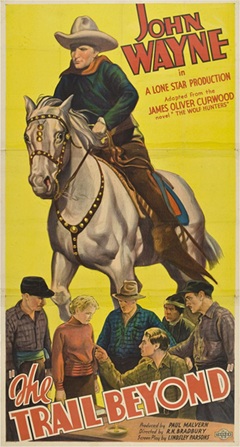
The Trail Beyond (1934, directed by Robert N. Bradbury)


Falsely accused of murder, Rod Drew (John Wayne) and his buddy Wabi (Noah Beery, Jr.) jump off a train and end up in the Canadian wilderness, where they eventually find a deserted cabin, a map to a gold mine, and plenty of trouble when French-Canadian outlaw Jules LaRocque (Robert Frazer) decides that he wants the map and kidnaps Wabi’s girlfriend, Felice (Verna Hillie), to get it.

This was one of the many B-westerns that John Wayne made in between 1930’s The Big Trail and 1939’s Stagecoach.  The film finds the youngish Wayne playing a slightly less upright character than usual.  He’s still the hero but he’s also wanted by the police and spends much of the film fleeing from them.  The movie is only 55 minutes long and the action moves quickly.  The film’s Canadian locations and Robert Frazer’s over-the-top villain gives The Trail Beyond a slightly different and quirkier flavor than most the Duke’s 1930s output.  I think this might be the only film to feature Wayne working with the Mounties.  Even in this low-budget production, John Wayne is a strong hero who just looks like he belongs on a horse and traveling across the frontier.  For someone who was the president of his high school’s Latin Club., Wayne had an automatic authenticity when it came to playing cowboys, even in the years before Stagecoach made him one of the biggest stars in the world.  This is also one of the few films to feature both Noah Beery Sr. and Noah Beery Jr.  While Beery Jr. plays Wayne’s sidekick and is in the film almost as much as John, Berry Sr.’s role is much smaller.  He’s the store owner who is also Felice’s father.

Obviously, this is a film for fans of the genre only but it’s a good example of how John Wayne could make even his Poverty Row productions entertaining and watchable.
His Private Secretary (1933, directed by Phil Whitman)


Business tycoon Mr. Wallace (Reginald Barlow) is sick and tired of his hard-drinking, hardy-partying son refusing to act in a responsible manner.  Hoping to teach Dick Wallace about the value of hard work, Mr. Wallace sends Dick to a small town with instructions to collect a debt from the local preacher (Alec B. Francis).  Dick, however, is more interested in the preacher’s daughter, Marion (Evelyn Knapp).  After Dick finally convinces Marion that he’s not as bad his reputation, they got married.  Mr. Wallace is disgusted and refuses to meet his new daughter-in-law, convinced that she’s a golddigger.  Without revealing his true identity, Marion gets a job as Mr. Wallace’s private secretary and attempts to repair the relationship between father and son.

This is a creaky romantic comedy from the early days of sound film and it would probably be forgotten if not for the fact that Dick Wallace is played by John Wayne.  Wayne was 26 when he played Dick Wallace and already a screen veteran, though most of his roles had been in B-westerns and had featured Wayne riding a horse and carrying a gun.  Wayne actually gives a pretty good performance as Dick.  He’s better and more natural here than he was in many of the singing cowboy films that he was making at the time and this film suggests an alternate timeline where Wayne become known as a romantic comedy star instead of a screen cowboy.  Wayne is especially good in the early scenes, when he’s still a no-good, hard-drinking, no-account lout.  I get the feeling he enjoyed not having to be the upright hero for once.

His Private Secretary definitely shows its age but it’s worth watching for a chance to see a young John Wayne in an unexpected role.

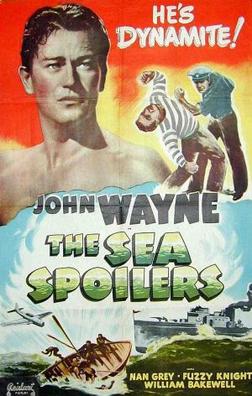
The Sea Spoilers (1936, directed by Frank R. Strayer)


Bob Randall (John Wayne) is a coast guard boatswain, headquartered in Alaska where he and the members of his crew battle evil seal poachers like oily Phil Morgan (Russell Hicks).  When Randall returns to port after his latest patrol, he has to deal with two disappointments.  First off, he is passed over for a promotion to commanding officer, even though everyone knows that he deserves it.  Instead, the promotion goes Lt. Commander Mays (William Blakewell), the son of a commander (George Irving).  Mays doesn’t even want the job.  He’s scared of the water and he’d rather fly airplane as a part of the Coast Guard’s aviation force.  Bob is disappointed but he’s a professional and he’s going to support Mays.  Secondly, Bob’s girlfriend (Nan Grey) witnesses a murder and is kidnapped by Phil Morgan.  Bob and his sidekick (dependable western mainstay Fuzzy Knight) go undercover as fisherman to try to find her.

The Sea Spoilers was the first of six B-movies that John Wayne did for Universal.  Wayne, who had been stuck in the B’s for a while, was trying to prove that he was more than just a singing cowboy so, in this one, he plays a tough and ready sailor.  Wayne is convincing in the role, even if the movie is really just a western set in what was then modern day Alaska.  Though only 30, Wayne shows the no-nonsense professionalism that would become his trademark once he became one of the world’s biggest movie stars.  Unlike some of Wayne’s early films, it’s possible to see the icon that John Wayne would eventually become while watching him here.  The Sea Spoilers is only 66 minutes long but fans of the Duke should enjoy it.

Finally, The Sea Spoilers was written by George Waggner.  Waggner would later go on to direct the original Wolf Man.

Music Video of the Day: Stand Up by David Lee Roth (1988, directed by ????)


Today’s music video of the day is for David Lee Roth’s Stand Up.  Stand Up was the second single to be released from Dave’s second solo album, Skyscraper.  This video finds David Lee Roth driving an fancy car, picking up beautiful women, and driving to a fancy city.  It’s just a typical day in the life of Diamond Dave and a reminder that Van Halen’s original success was as much about Roth’s showmanship as Eddie’s technical virtuosity.

At 70, David Lee Roth is still with us, though he says he’s retired from touring.  Roth, by the way, is a state-trained emergency medical technician in New York, a pilot, a visual artist, and a martial artist.

Enjoy!

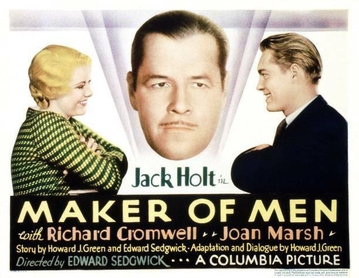
Maker Of Men (1931, directed by Edward Sedgwick)


Bob Dudley (Richard Cromwell) is the wimpy son of Coach Dudley (Jack Holt), who is in charge of the local college’s football team.  Bob joins the team out of a sense of family obligation but he turns out to be a cowardly player who would rather fumble the ball than take a hard hit.  Coach Dudley is disgusted with his son.  Bob’s girlfriend (Joan Marsh) dumps him.  Bob drops out of school and disappears for two years and no one seems to care. Then, on the day of a big game, Bob reappears playing for another college.  Despite Coach Dudley’s team being led by All-American Dusty Rhoades (John Wayne!), Bob leads the rival team to victory.  He’s won Coach Dudley’s respect.  Coach Dudley is probably going to get fired.

This was one of the weirdest sports films that I’ve ever seen.  Usually, you would expect Coach Dudley to bring out the best in his son or to understand that his son is just not meant to be a football player.  Instead, Bob is forced to drop out of college!  Bob returns just so he can defeat his father.  The slight Richard Cromwell is not a convincing football player.  On the other hand, John Wayne is a convincing football player but his role is tiny.  The movie is a little over an hour long and 20 minutes of that running time is taking up with grainy footage of an actual football game.

The best thing about the film?  It reminds us that everyone, even John Wayne, had to start somewhere.

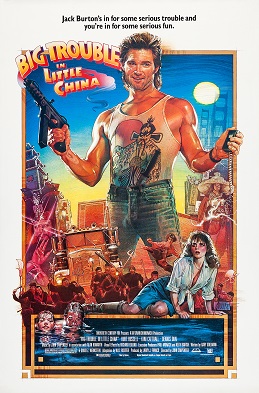
Big Trouble In Little China (1986, directed by John Carpenter)


Jack Burton (Kurt Russell) is not a complicated person.  He drives a truck for a living.  He’s loyal to his friends.  He likes a good beer and a pretty girl.  He tries to do the right thing so when the fiancée of his best friend, Wang Chi (Dennis Dun), is kidnapped, he teams up with Wang to rescue her.  And when Jack’s truck gets stolen after he runs over an evil, ancient Chinese sorcerer named Lo Pan (James Hong), Jack just wants to get his truck back.  Instead, Jack finds himself in the middle of an ancient battle between good and evil as Lo Pan searches for a green-eyed woman to sacrifice so that he can defeat a curse that was put upon him centuries ago.

Big Trouble In Little China is one of John Carpenter’s most exuberant films.  It mixes kung fu action with special effects and a good dose of physical humor from Kurt Russell.  When Lisa and I watched this movie a few months ago, Lisa commented that this film was Kurt Russell’s “Bruce Campbell movie,” and the more I think about it, the more I agree.  Russell plays Jack with a mix of cockiness and klutziness that should be very familiar to anyone who has followed the adventures of Ash Williams.  While Dennis Dun gets to do the typically heroic stuff that you would expect from the star of a movie like this, Russell is just someone who wants to get his truck back and who is consistently weirded-out by the magic around him.  Carpenter makes sure that the movie is full of action as he pays tribute to the kung fu films that he watched when he was still in film school. James Hong is great villain and the rest of the cast, including Kim Cattrall as lawyer Gracie Law, all match the energy of Russell, Hong, and Dun.  Complete with flying swordsmen, demons with glowing eyes, and a lightning-wielding warrior that probably inspired Mortal Kombat‘s Raiden, Big Trouble In Little China is a fun slice of 80s action.

Unfortunately, the film was not appreciated when it was first released.  Stung by the critical reaction to the film, Carpenter abandoned working for the studios and instead become an  independent filmmaker.  Big Trouble In Little China, however, has stood the test of time and has become better appreciated with age.  Today, it’s rightly viewed as one of Carpenter’s best films.

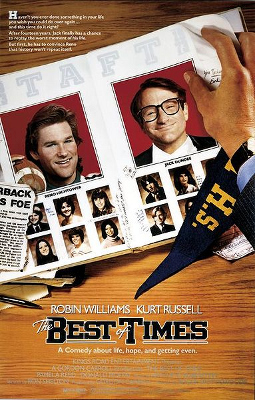
The Best Of Times (1986, directed by Roger Spottiswoode)


For years, banker Jack Dundee (Robin Williams) had been haunted by a pass that he dropped in high school.  The pass was perfectly thrown by quarterback Reno Hightower (Kurt Russell) but Jack couldn’t bring it in and, as a result, Taft High lost to its rival, Bakersfield.  Adding to Jack’s humiliation is that he now works for The Colonel (Donald Moffat), a confirmed Bakersfield fan who also happens to be Jack’s father-in-law.  When Jack visits a “massage therapist” (Margaret Whitton) and tells her about his problems, she suggests that he needs to replay the game.  Getting everyone interested in replaying the game is not easy.  No one wants to be humiliated a second time and Reno, who now fixes vans for a living, fears the he’s lost his edge.  Jack dresses up in the Bakersfield mascot’s uniform and vandalizes the town.  Finally, everyone is ready for the game.  Now, it’s a matter of town pride.

The Best of Times is a likable comedy about getting older and wishing you could have just one more chance to be young again and to have your entire future ahead of you.  Jack is haunted by that one dropped pass, feeling that it has cast a cloud over his entire life.  Reno is still a town hero but he’s struggling financially and in debt to Jack’s bank.  Replaying the game isn’t going to fix their lives but it is going to give them one last chance to relive their former glory and maybe an opportunity to learn that, even if they are getting older, they’re still living in the best of times.  The world that these two men live in is skillfully drawn and believable, with character actors like Moffat, M. Emmet Walsh, R.G. Armstrong, and Dub Taylor adding to the local color.  Jack and Reno’s wives are played by Holly Palance and Pamela Reed and they are also strong and well-developed characters.  Finally, Robin Williams and Kurt Russell are a strong comedic team.  Russell is perfectly cast as the aging jock and Williams gives one of his more restrained performances as Jack, allowing us to see the sadness behind Jack’s smile.

The stakes aren’t particularly high in The Best Of Times.  It’s just a football game between some middle-aged men looking to regain their youth.  But the story sticks with you.

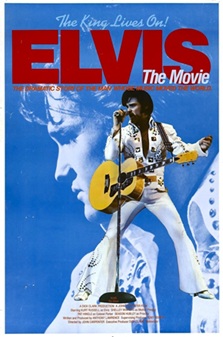
Elvis (1979, directed by John Carpenter)


Elvis, not to be confused with the later film starring Austin Butler, is a historically-interesting film for a number of reasons.

Made for television, it was the first of many biopics to be made about the King of Rock and Roll.  Seeing as how it went into production just a year after Elvis’s death and that its script was vetted and approved by Priscilla Presley herself, it’s not surprising that Elvis doesn’t really delve into the darker aspects of his life.  Elvis shoots a television, gets frustrated with his bad movies, and wonders who he can trust but we don’t see him get fat nor do we see him popping pills.  The movie ends with Elvis making his comeback in 1969, allowing a happy ending for the title character.

The film was directed by John Carpenter.  It was his first film to be released after the monster success of Halloween, though Carpenter actually started work on Elvis before Halloween was released.  Though the film’s television origins means there aren’t many examples of Carpenter’s signature style in Elvis, Carpenter does a good job recreating Elvis’s performances and, most importantly, he comes up with a film that holds your interest for three hours.

Finally, the role of Elvis is played by Kurt Russell, who was at the time still struggling to prove himself as being something more than just a Disney star.  Russell, who made his film debut kicking Elvis in the shins, throws himself into playing the role and captures the look, the swagger, and the voice of Elvis without ever descending into caricature.  His singing voice is dubbed for the performances but Russell is still convincing as the King.  It takes skill to wear that white jumpsuit without looking like you’re wearing a bad Halloween costume.  While this film showed that Russell was capable of more than just Disney films, it even more importantly launched his friendship with John Carpenter.  Escape From New York, The Thing, and Big Trouble In Little China all began with Elvis.

The movie doesn’t really tell us anything that we didn’t already know about Elvis but its entertaining and it has a big, colorful cast that include Pat Hingle as Tom Parker, Shelley Winters as Elvis’s mother, and Bing Russell (Kurt’s father) as Elvis’s father.  Priscilla is played by the beautiful Season Hubley, who married Kurt Russell shortly after filming.  (They divorced in 1983.)  Joe Mantegna, Ed Begley Jr., Ellen Travolta, and Dennis Christopher all appear in small roles and do their part to bring Elvis’s world to life.  Elvis is a fitting tribute to the King of Rock and Roll, one that gave Elvis a happy ending and started a great collaboration between a director and his star.

The Deadly Tower (1975, directed by Jerry Jameson)


Made for television, The Deadly Tower is a recreation of the terrible day in 1966 that a 25 year-old former Marine named Charles Whitman shot his wife and mother and then climbed to the top of the tower at the University of Texas in Austin and started to indiscriminately firing on the people below.  It was one of the first mass shootings of its kind.  What drove All-American boy Charles Whitman, who was eventually taken down by the police, to start his rampage is not known though the autopsy revealed that he did have a small brain tumor at the time of his death.

The Deadly Tower focuses mostly on the efforts of the policeman Ramiro Martinez (Richard Yinguez) and civilian Allan Crum (Ned Beatty) to get to the top of the tower and stop Whitman’s shooting rampage.  (Pernell Roberts, John Forsythe, and Clifton James all appear as other police officials, trying to deal with what was then an almost unheard of occurrence.)  Martinez risks his life to stop Whitman’s rampage while Allan worries that other shootings will follow.  One of the first examples of a true crime event being turned into a movie for television, The Deadly Tower a tense and effective docudrama.  Kurt Russell, who was then still known for being Disney’s top-paid star, plays Whitman.  Russell doesn’t have much dialogue in the film.  He’s blandly friendly while buying bullets and, when he’s sitting up in the tower with his rifle, he could just as easily pass for a teenager out hunting with his father during deer season.  Russell’s clean-cut appearance made him ideal for playing the role of someone who no one would have ever suspected could be capable of committing such a terrible crime.  It took courage to cast an actor then known for Disney films as one of America’s worst mass murderers and it also took courage for Russell to accept a role that was the total opposite of his family-friendly image.

The Deadly Tower used to show up on television frequently when I was a kid.  It’s still a scary movie, even if you know how it’s going to end.  Whitman may have been one of the first of his kind but sadly, he wouldn’t be the last.

Far and Away (1992, directed by Ron Howard)


The year is 1892 and Joseph Donnelly (Tom Cruise) is a poor tenant famer in Ireland, used and exploited by the wealthy landowners.  Joseph falls in love with Shannon Christie (Nicole Kidman), the rebellious daughter of his landlord.  Shannon dreams of going to America, where rumor has it that land is being given away in the territory of Oklahoma on a first come/first serve basis.  Shannon even has some valuable spoons that she can use to raise money once they arrive in America.  Joseph, after being challenged to a duel by the Christies’ money manger, Stephen Chase (Thomas Gibson), also decides that heading to America might be a good idea.

Life in America is not as easy as Joseph and Shannon thought it would be.  They first end up in the dirty town of Boston, where Shannon loses her spoons and Joseph works for a corrupt political boss (Colm Meaney) and makes money as a bare-knuckles boxer.  They’ll reach Oklahoma eventually but not before Stephen and the Christies come to Boston and Joseph ends up working on the railroad and getting called “that crazy mick” multiple times.

Far and Away was Ron Howard’s attempt to make an American epic, in the style of John Ford.  It doesn’t work because Tom Cruise is too contemporary to be believable as a 19th century Irish immigrant and Howard tries so hard to push everything to an epic scale that it just makes it even more obvious how slight and predictable the movie’s story is.  Far and Away is full of big movie moments but it lacks the small human moments necessary to really engage its audience.  I will always remembers Far and Away because it was one of those films that seemed to take up permanent residence on HBO when I was growing up.  I didn’t really care about the film’s flaws back then.  Nicole Kidman was attractive and tall and she had wild red hair and back then, that’s all a movie needed to hold my attention.  Unlike Cruise, Nicole Kidman can effortlessly move between historical and contemporary films and, of the two leas, she comes off the best.  The movie is really stolen, though, by Colm Meaney, playing a ruthless political boss who could have taught Boss Tweed a thing or two.

Tomorrow is St. Patrick’s Day, when we will be celebrating the legacy of immigrants like the Christies and the Donnellys.  Far and Away tries to pay tribute to their courage and their refusal to give up, even when things were tough and deadly on the frontier.  For me, though, Far and Away will always just make me think of HBO in the 90s.