4 Or More Shots From 4 Or More Films is just what it says it is, 4 shots from 4 of our favorite films. As opposed to the reviews and recaps that we usually post, 4 Shots From 4 Films lets the visuals do the talking!
Today the Shattered Lens wishes a happy birthday to one of the pioneers of American independent cinema, Gus Van Sant!
It’s time for….
4 Shots From 4 Gus Van Sant Films
Drugstore Cowboy (1989, dir by Gus Van Sant, DP: Robert Yeoman)
To Die For (1995, dir by Gus Vant Sant, DP: Eric Alan Edwards)
Gerry (2002, dir by Gus Van Sant, DP: Harris Savides)
Elephant (2003, dir by Gus Van Sant, DP: Harris Savides)
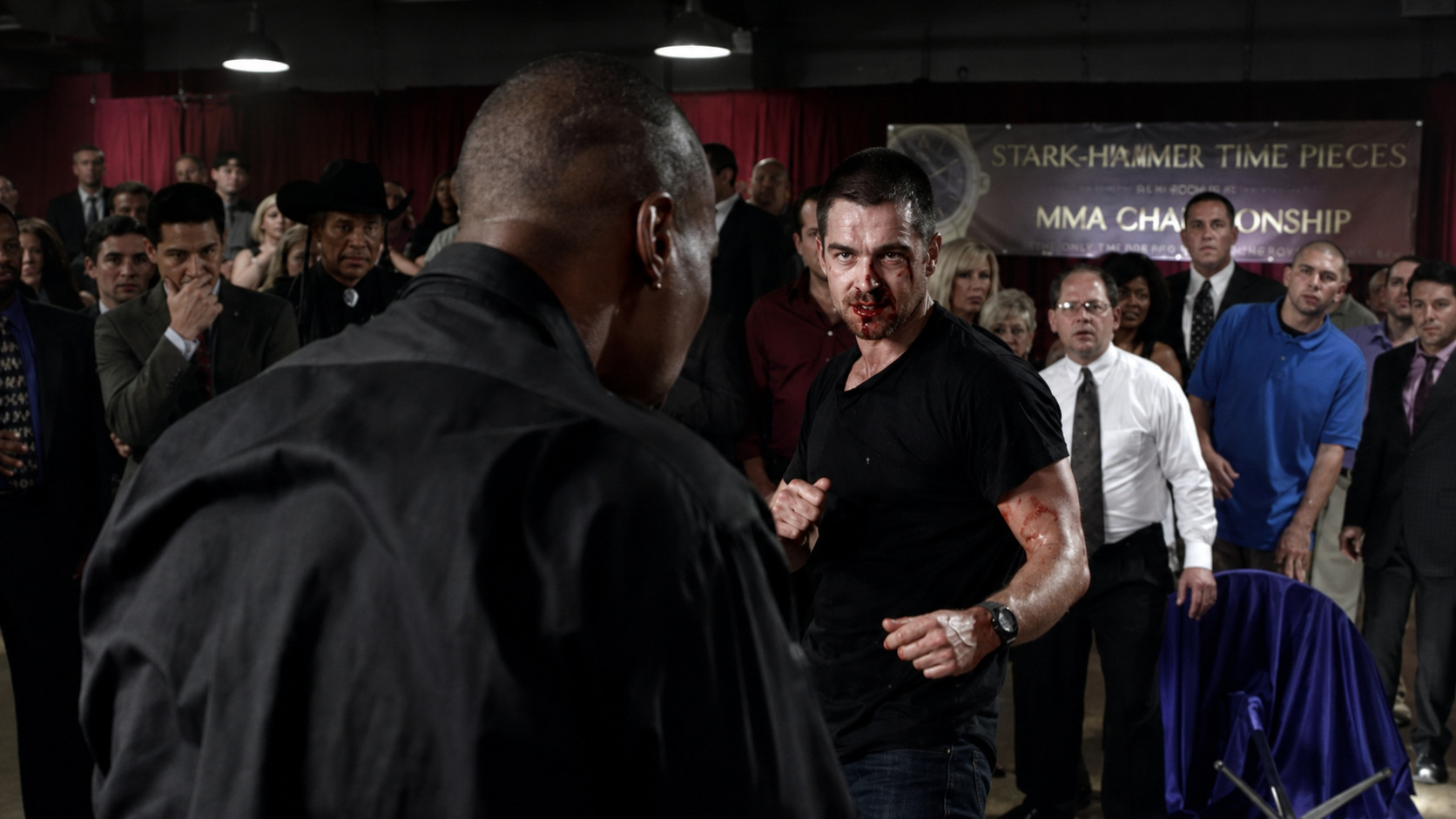
The Hood vs. Damien Sanchez fight in Season 1, Episode 3 is the moment Banshee stops teasing its brutality and just commits to it—and that’s why it sells you on the series. It isn’t stylized, choreographed “hero wins clean” violence; it’s ugly, exhausting, and morally messy, exactly the kind of sequence that tells you this show won’t flinch. Once Hood (played by Antony Starr who will later portray Homelander in the show The Boys) walks into that casino floor and picks a fight with a professional MMA fighter, the series effectively says: “This is what we are. If you’re still here after this, you’re one of us.”
What makes the scene so gripping is how it reframes both characters through pure physical storytelling. Sanchez starts off dismissive, treating Hood like a joke, and for a good chunk of the fight he is outclassed—technically superior, faster, and more precise. But Hood’s violence isn’t about skill; it’s about will, rage, and a complete disregard for his own body. The moment he shifts from “trying to win a fight” to “I will break you even if I break myself” is the thesis of the whole show: in Banshee, power doesn’t come from being the better fighter, it comes from being the one most willing to go too far. That raw, pragmatic brutality—elbows, smashes, no rules—feels shockingly real compared to typical TV brawls, and it cements Hood as a man whose moral code is written in concussions and blood.
This is also the scene that locks in the show’s tone for the long haul. It’s not just “violent”; it’s specifically consequential violence. Hood walks away badly hurt, Sanchez’s career is effectively over, and the repercussions ripple into Hood’s relationship with Kai Proctor and the wider power structure of the town. For you as a viewer, that’s the hook: the series proves it will follow its own logic to brutal ends, and that the stakes aren’t just emotional but physical and permanent. Once you’ve seen Hood willingly turn himself into a weapon against a trained professional fighter and pay the price, you know Banshee won’t pull punches later—so if you loved this scene, you were already braced for everything the rest of the series throws at you.
The lyrics to this Thomas Dolby song seem to be self-explanatory. When they were teenagers, the narrator met a girl named Europa, they fell in love while spending their days walking along the beach, and then Europa moved away. (Dolby sings that “the war” took her away, which sounds ominous but which makes sense when you consider that Dolby’s 1982 album, TheGoldenAgeofWireless, was based on the idea of him being a part of the first generation since World War II. “The war took her away” is probably meant to be a comment on how relationships that were once ended by a world war were now just being ended by a parent getting a new job in a new country or town.) Years later, Europa’s a star and Dolby tries to see her, just to be ushered away by one of her bodyguards. But, in Dolby’s heart, they’ll always be pirate twins on the beach.
The video has come to be considered a classic example of early 80s music videos, mixing the future and the past and allowing Dolby to capitalize on his nerdy but cool persona. The machines link the song to the future but the black-and-white images bring us to the past, capturing the feel of Dolby’s song.
Welcome to Late Night Retro Television Reviews, a feature where we review some of our favorite and least favorite shows of the past! On Thursdays, I will be reviewing Hunter, which aired on NBC from 1984 to 1991. The entire show is currently streaming on Tubi and several other services!
This week, we have part one of a two part story.
Episode 1.13 “Snow Queen: Part One”
(Dir by Tony Mordente, originally aired on March 23rd, 1985)
This week’s episode features two tough guys who are both named Dennis.
Dennis Farina appears as Vic Terranova, a gangster who owns a nightclub and who loves country music. McCall is working undercover as a country-western singer in order to take both him and his cocaine-dealing operation down.
Meanwhile, Dennis Franz appears as Sgt. Jackie Molinas, a sleazy detective from New York who comes to Los Angeles to extradite Sally LaPone (Lycia Neff), a former New York drug dealer who relocated to Los Angeles after she witnessed a murder in the Big Apple. Sally is now the exclusive drug dealer for rock star Darby Slash (Brendan Hughes). When she’s arrested at a raid on one of Terranova’s clubs, Molinas demands that she be turned over to him. Correctly assuming that Molinas is planning on killing her, Sally escapes his custody. Molinas’s search for Sally leads to him apparently killing both Darby Slash and also one Hunter’s informants.
Hunter can’t prove that Molinas is the killer but he suspects it. It seems like he could just ask his Mafia relatives if Molinas is working for the Mob but this show has kind of forgotten that Hunter has relatives in the Mafia.
This episode was part one of two so this review is going to feel incomplete. When the episode ended, McCall had gotten a job singing for Terranova and Molinas was closing in on Sally. We’ll see how it all plays out next week. For this week, I’ll simply say that Dennis and Dennis delivered. Dennis Farina was properly smooth as Terranova. Meanwhile, Dennis Franz turned Jackie Molinas into one of the sleaziest, most obnoxious characters that I’ve ever seen. He’s the type of guy who walks into a place, insults all of the men, crudely hits on all of the women, and then attempts to murder a stranger. Franz made Molinas into a character worthy of loathing.
I always find it interesting when Rick Hunter has to deal with a bad cop. It’s like the show is saying, “Yes, Rick kills a lot of people but at least he’s not that guy!”
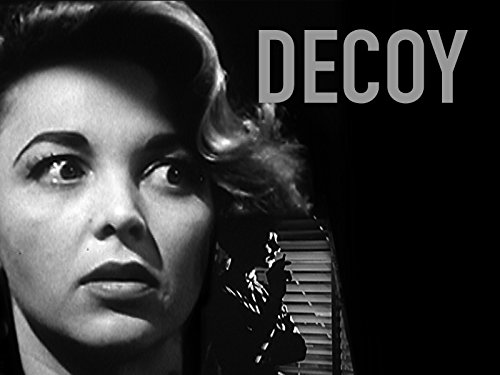
Welcome to Retro Television Reviews, a feature where we review some of our favorite and least favorite shows of the past! On Thursdays, I will be reviewing Decoy, which aired in Syndication in 1957 and 1958. The show can be viewed on Tubi!
This week, Decoy comes to an end.
Episode 1.39 “The Lost Ones”
(Dir by Arthur H. Singer, originally aired on July 7th, 1958)
The final episode of Decoy finds Casey dropping in on Elsa Kramer (Phyllis Newman), a recently-released juvenile offender who Casey previously arrested. Casey just wants to check on her and to welcome her back to society. But, when Casey steps — unannounced, which may be okay in New York but seems rather rude to my Texas sensibilities — into the family’s small kitchen, she discovers Elsa’s abusive father is dead and Elsa is holding the gun. Elsa makes a run for it. Elsa’s mother (Adelaide Klein) and brother (Morton Lighter) say that Elsa shot her father in self-defense.
Casey doesn’t think Elsa pulled the trigger and is determined to find Elsa and learn the truth before Elsa is arrested again. Not surprisingly, Casey’s right. It was her brother who killed their father. Elsa took the blame because her brother was going to medical school whereas Elsa really didn’t have much of a future to lose.
In some ways, this episode is an appropriate send-off for Casey and Decoy. It has some location footage of New York, which was always the show’s main appeal outside of Beverly Garland’s lead performance. It features Casey trying to prove that a seemingly guilty person is actually innocent. That’s certainly preferable to what we saw last week.
At the same time, this episode had some of the same flaws that were present in quite a few of Decoy’s final episodes. The dialogue was a bit overbaked. Even worse, the acting from the supporting cast was not particularly impressive. Morton Lighter was so twitchy as Elsa’s brother that there wasn’t much doubt as to who the guilty party was. This episode also featured Casey meeting with the least intimidating street gang in New York history. The whole thing lacked the authenticity that distinguished Decoy at its best. I’m not really sure if the show’s producers knew that this would be the final episode of the series. If they did, they allowed to show to end on a bit of anticlimactic note.
So, that’s it for Decoy. For the most part, it was a good show. The last few episodes were perhaps a bit too melodramatic for their own good. One got the feeling that the show’s writers were under orders to “liven” things up. But the early episodes made great use of the New York setting and, throughout the series, Beverly Garland gave a great performance as the tough but compassionate Casey Jones.
What will I be watching next? I’ll let you know next week!
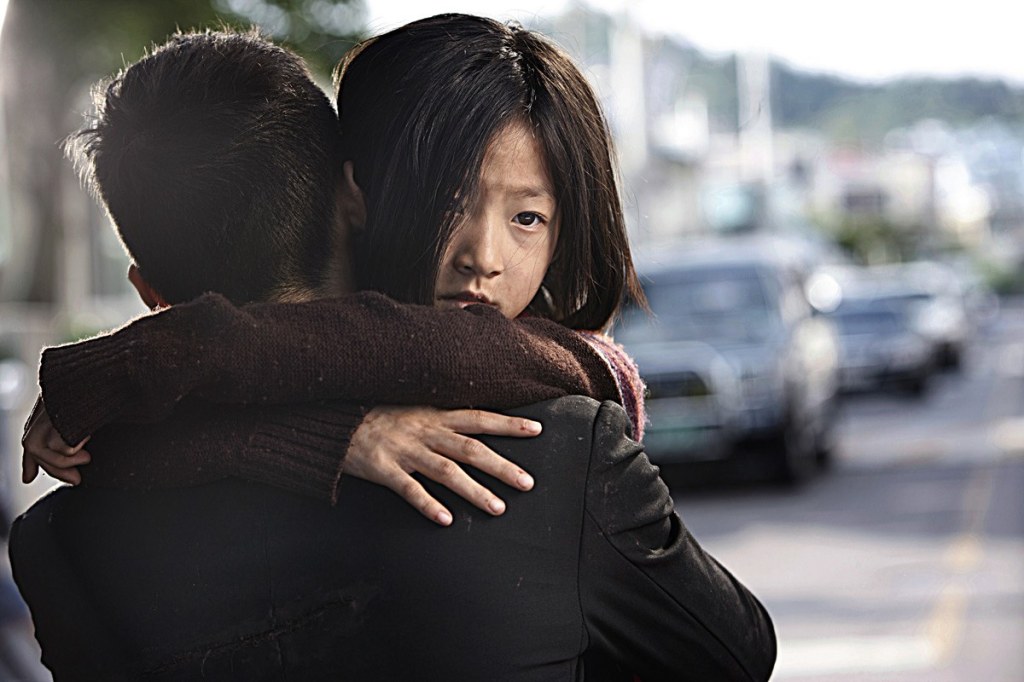
Do y’all remember when Best Buy had a good selection of DVD’s and blu-rays? This was sometime around the turn of the century and every time we’d go to Little Rock, I’d stop by Best Buy and check for the newest titles. I remember running across the South Korean movie SHIRI (1999), and the description on the cover made it sound like it would be an amazing action film. I didn’t know anything about South Korean cinema, but it looked good, so I bought it. And I absolutely loved it. I spent the next decade immersed in the country’s film industry, watching every movie that looked good to me. Titles like JOINT SECURITY AREA (2000), OLDBOY (2003), A BITTERSWEET LIFE (2005) and so many others became staples of my movie watching life. I remember when I first read about THE MAN FROM NOWHERE. It looked like it would be right down my alley…
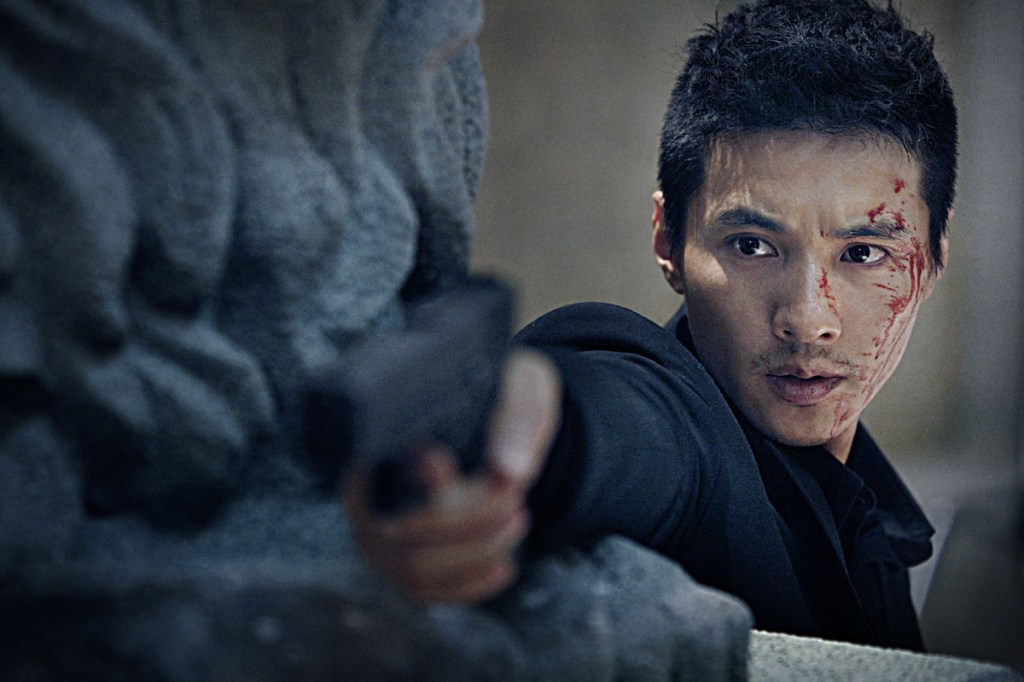
Won Bin stars as Cha Tae-sik, a quiet pawnbroker who seems completely content spending all of his time by himself. He makes one exception, and that’s for So-Mi (Kim Sae-ron), the neglected young girl who lives next door and has no friends. She likes Tae-sik though and we see them slowly building a sweet relationship. When So-mi is kidnapped because her addicted mother steals from a drug dealing, organ harvesting criminal organization, we find out that Tae-sik possesses incredible fighting skills, and he will use them in every way possible to get her back. What starts as the quiet story of an unlikely friendship will soon turn into a brutal quest to find the girl before it’s too late.
As far as I’m concerned, THE MAN FROM NOWHERE is a must watch for several reasons. The best South Korean films for my money can accurately be described as “slow burners.” Writer-Director Lee Jeong-beom really takes his time setting up the story. We get scenes that help set up the action, but his focus for the first thirty minutes is the developing relationship between two broken human beings in Tae-sik and So-Mi. By the time she is put in danger, we care about her and understand why he will do whatever it takes to save her. Even as the action and violence kicks in hard, the story continues to pause long enough to let us learn more about Tae-sik’s past. Based on what we’ve learned about the characters, every fist punch, knife slash, and fired bullet acts as both a means to finding So-Mi and a cathartic emotional release.
If you enjoy brutal, badass action like I do, this delivers in spades. The action itself is extraordinary, some of the best in the cinema of South Korea, and the world, for that matter. There is gunfire at times, but this film mostly relies on close-quarter combat and the use of sharp blades. The fighters kick ass, but they also end up exhausted and in a lot of pain, often accompanied by a lot of blood. Because these scenes are somewhat grounded in reality, they’re both powerful and hard to watch at times. The film builds to a final knife fight between Tae-sik and Ramrowan (Thai actor Thanayong Wongtrakul), and when it finally comes, we can see and feel the two experts in violence engaged in a battle to the death. The action is tense and bloody, saving its very best for last.
THE MAN FROM NOWHERE has an excellent cast, led by Won Bin, possibly the most selective superstar in the history of cinema. I knew him from his prior South Korean hits GUNS & TALKS (2001), TAE GUK GI: THE BROTHERHOOD OF WAR (2004), and MOTHER (2009). As of today in 2026, he has only six film credits to his name, and he has not acted in another film since this one. He’s excellent here as Cha Tae-sik, even if I don’t like his haircut for most of the film. It’s a very satisfying moment when he grabs some clippers and gets all that hair out of his eyes! He says very little, but beneath his cold exterior is a man carrying deep pain. It’s a restrained performance that exudes more emotional turmoil than pages and pages of dialogue ever could. And he’s a badass action performer when the time comes as well. I hope he comes back at some point, but if he never does, he goes out on top!
Kim Sae-ron, who was ten years old at the time, is very effective as So-mi. Her performance is very natural and vulnerable, stealing our hearts with ease, and I think we can all understand why Tae-sik would want to protect her. On a very sad note, while doing research for this review, I discovered that she took her own life on February 16, 2025, at just twenty-four years of age. Watching her in the film and discussing her work feels different now, serving as a poignant reminder of both her incredible talent at such a young age and the complexity of the human condition.
THE MAN FROM NOWHERE was a massive hit in South Korean cinemas in 2010, with only the worldwide smash AVATAR having more ticket admissions. Between Won Bin’s transformative performance, the irresistible “protect the innocent child” dynamic, and the brutal, in your face action, the film still had me on the edge of my seat when I watched it again this week. If you like your action filled with blood, sweat, and tears, I can’t recommend this more highly.
As of the date of this review, it’s streaming on Amazon Prime.
Hi, everyone! Tonight, on Mastodon, I will be hosting the #TubiThursday watch party! Join us for Disco Godfather, starring Rudy Ray Moore!
You can find the movie on Tubi or Prime and you can join us on Mastodon at 9 pm central time! (That’s 10 pm for you folks on the East Coast.) We will be using #TubiThursday hashtag! See you then!
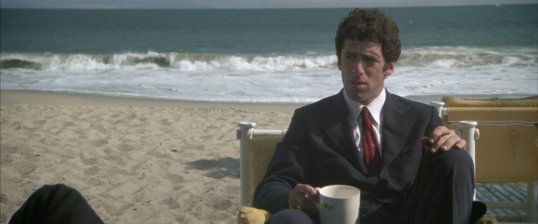
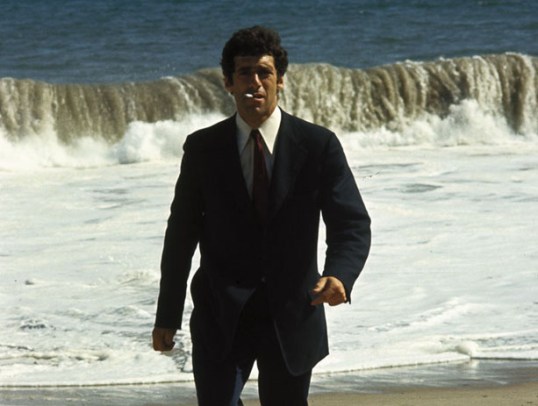
The Long Goodbye (1973, dir by Robert Altman, DP: Vilmos Zsigmond)
4 Shots From 4 Films is just what it says it is, 4 shots from 4 of our favorite films. As opposed to the reviews and recaps that we usually post, 4 Shots From 4 Films is all about letting the visuals do the talking.
Today is the anniversary of the birth of Raymond Chandler. That means that it’s time for….
4 Shots From 4 Philip Marlowe Films
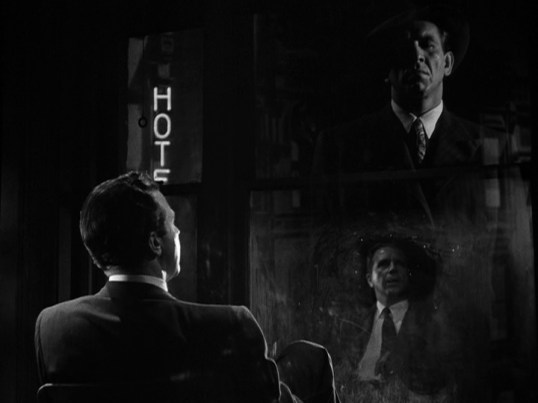
Murder, My Sweet (1944, dir by Edward Dmytryk, DP: Harry J. Wild)
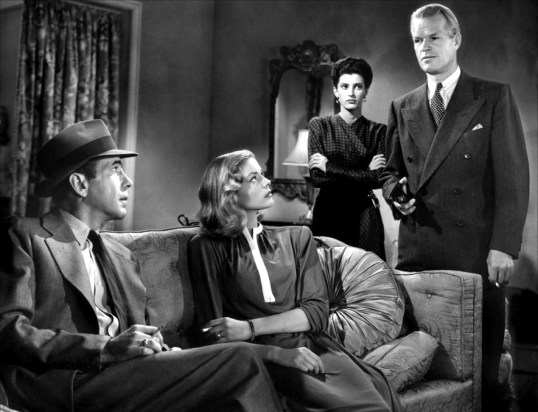
The Big Sleep (1946, dir by Howard Hawks, DP: Sidney Hickox)
The Long Goodbye (1973, dir by Robert Altman, DP: Vilmos Zsgimond)
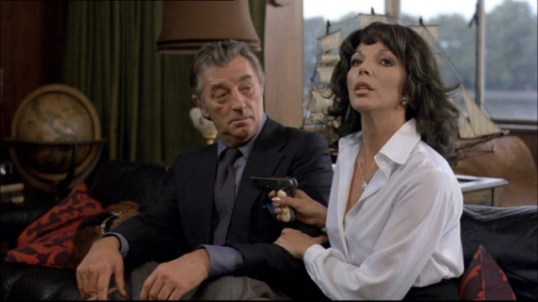
The Big Sleep (1978, dir by Michael Winner, DP: Robert Payner)