As some of our regular readers undoubtedly know, I am involved in a few weekly live tweets on Twitter and Mastodon. I host #FridayNightFlix every Friday, I co-host #ScarySocial on Saturday, and I am one of the five hosts of #MondayActionMovie! Every week, we get together. We watch a movie. We tweet our way through it.
Tonight, at 10 pm et, #ScarySocial presents DEMONWARP (1988)!
If you want to join us this Saturday, just hop onto twitter, start the movie at 10 pm et, and use the #ScarySocial hashtag! It’s a friendly group and welcoming of newcomers so don’t be shy.
Though the band may have been named after Chicago, the park referred to in this song is New York’s Central Park. Robert Lamm enjoyed spending the 4th of July in the park and he went on to write this song about it. It became one of Chicago’s biggest hits and it also became a song that was regularly featured in various Time Life musical compilations. Back in the day, anytime a Time Life infomercial came on TV, you knew that you were going to get this song’s chorus stuck in your head.
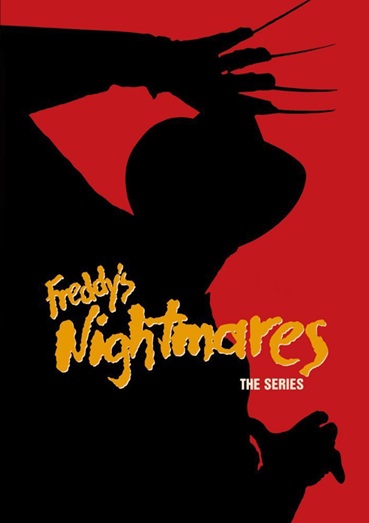
Welcome to Late Night Retro Television Reviews, a feature where we review some of our favorite and least favorite shows of the past! On Fridays, I will be reviewing Freddy’s Nightmares, a horror anthology show which ran in syndication from 1988 to 1990. The entire series can be found on Tubi!
The cannibals are back!
Episode 2.20 “Dust to Dust”
(Dir by Bill Froehlich, originally aired on February 25th, 1990)
Tony Dow, Amy Lyndon, and Sandahl Bergman, the three cannibals from Prime Cut, are back! They are now all living together and are members of Cannibals Anonymous. For months, they have resisted the urge to taste human flesh. But, when an escaped prisoner breaks into their home, they give into temptation and have a good meal.
Uh-oh, it turns out that escaped prisoner was actually an astronaut who returned to Earth infected with a space virus that eventually reduces its victims to dust. And now, the cannibals all have the virus! The government abducts them and takes them to an underground lab where a group of scientists dispassionately watch as they become hypersexual before going insane and turning into dust. One scientist (Tim Russ) sympathizes with the cannibals and soon, the entire lab is infected.
This episode had potential but it ultimately failed because it couldn’t decide whether it wanted to be funny or scary. There’s a lot of terror to found in the idea of being held prisoner until your transformed into blue dust. At the same time, the symptoms of the space virus were so over-the-top and the actors went so overboard in performing those symptoms that it was hard to really care about any of it. Having the victims quote a movie before turning into dust probably seemed like a good idea but it doesn’t work in execution. The whole thing ultimately felt like a community theater production of The Andromeda Syndrome.
Not even Freddy appeared to be that interested in this episode.
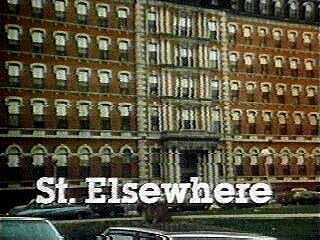
Welcome to Retro Television Reviews, a feature where we review some of our favorite and least favorite shows of the past! On Fridays, I will be reviewing St. Elsewhere, a medical show which ran on NBC from 1982 to 1988. The show can be found on Daily Motion.
I apologize for the delay in posting this review. I was feeling under the weather last week. This week, I feel well enough to share this review of one of the most emotional hours of television that I’ve ever watched.
Episode 4.3 “Haunted”
(Dir by Mark Tinker, originally aired on October 23rd, 1985)
This episode begins where the previous one ended. After crashing his car, Stephen Craig and his wife, Yvonne, are rushed to the Emergency Room. Despite the best efforts of Drs. Chandler and Axelrod, Stephen dies in the ER. Yvonne goes into labor, eventually giving birth to Dr. Craig’s granddaughter. Dr. Mark Craig and Ellen show up shortly after Stephen has been pronounced dead. While Ellen immediately slips into denial (“That’s not Stephen!”), Dr. Craig calmly tells Chandler that he knows Chandler did everything that he could.
Throughout the episode, Ellen struggles with her grief while Mark holds back his emotions. He suspects that Stephen was once again using drugs and he even goes to the autopsy to see for himself. While Stephen’s organs are being weighed, Dr. Craig starts to talk about how he was never close to his son but how, when Stephen was young, they used to read Dr. Seuss together. “Thank you Sam I Am,” Dr. Craig recites under his breath, right before hearing that Stephen had used cocaine shortly before dying.
For Dr. Craig, Stephen’s renewed drug use is an excuse to refuse to mourn for him. For Ellen, Stephen’s drug use is proof that his father was too critical and pushed him too hard. Ellen tells Mark that he never cared about Stephen except for when Stephen said he wanted to be a doctor. As the episode ends, Dr. Craig sits in his office and thinks about the words of Dr. Seuss and finally, he starts to cry.
I cried too. I cried a lot while watching this episode. This was the most emotional episode of St. Elsewhere that I’ve watched so far. Both William Daniels and Bonnie Bartlett were heartbreaking as a couple who each dealt with their grief in their own way. It was hard to watch Ellen fall apart in the Emergency Room but it was even harder to watch Dr. Craig fall apart as he realized that his wife was right. When Stephen was young, the only time they were close was when they read that Dr. Seuss book. And now, that memory is all Dr. Craig has left.
There were other things that happened in this episode, of course. One thing about St. Elsewhere is that there are always several stories going on at once. Elliot worried about his weight, even after discovering that his girlfriend liked the fact that he wasn’t thin. Dr. Caldwell spent the weekend at a recently purchased house in Cape Cod and Fiscus showed up unannounced. Dr. Morrison encouraged the other male residents to donate sperm. Dr. Westphall continued to try to push through his efforts to make St. Eligius a community-centered hospital. But none of the other stories could match the power of Mark and Ellen Craig losing their son. In fact, I found myself resenting being taken away from the Craigs. “Who cares about Cape Cod!?” I said, “The Craigs have lost their son!”
This was not an easy episode to watch but, in the end, it was powerful, it was touching, and it made me cry.
I’m not sure how many of you are aware of this, but I love Charles Bronson. I don’t mean I just enjoy his movies, either. I have been obsessed with him for most of my life, well at least for about the last 40 years. During that time, I have watched all of his movies, I have driven 17 hours just to watch a Bronson triple-feature at the drive-in, I’ve visited the Colorado filming locations of MR. MAJESTYK, and I’ve visited his gravesite in Vermont. I’m currently a co-host of the “This Week in Charles Bronson Podcast” where I’ve been able to be parts of interviews with his co-stars and even a family member. For a man in his early 50’s, I think an awful lot about a movie star who passed away over 20 years ago. I call it a healthy obsession, but you can feel free to draw your own conclusions.
Well, it all began sometime in ’84 or ’85 when I stayed up one night with my Dad, and we watched the late movie. The movie that night was the TV edit of the Bronson classic, DEATH WISH. Before that night I had never heard of Bronson, but as the movie progressed and bad things happened to his family, Dad assured me that Bronson would take care of the bad guys. Looking back now, it’s ironic since Bronson didn’t kill any of the actual bad guys who brutalized his wife and daughter. Regardless, I didn’t know anything about Bronson, but my Dad certainly did, and that intrigued me as a boy. This also coincided around the same time when our family got our first VCR. Every time we’d go to the video store, I’d see that same guy from DEATH WISH, and I would beg mom and dad to rent one of his movies. I can assure you that no junior high kid in Arkansas knew as much about Charles Bronson in the 80’s than I did.
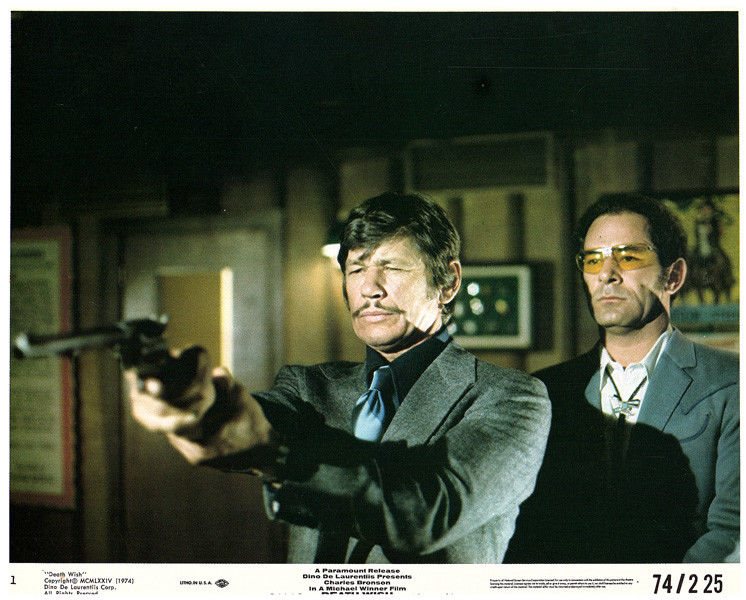
DEATH WISH premiered at the movies on July 24, 1974! It was an immediate, controversial smash hit, and in today’s dollars, it earned the equivalent of around $150 Million in America and approximately $300 Million around the globe. It cemented Bronson as a bonafide box office star in his home country and spawned the series that he would be most connected with for the remainder of his career. In honor of the 52nd anniversary of DEATH WISH, I’m sharing this iconic scene from the classic:
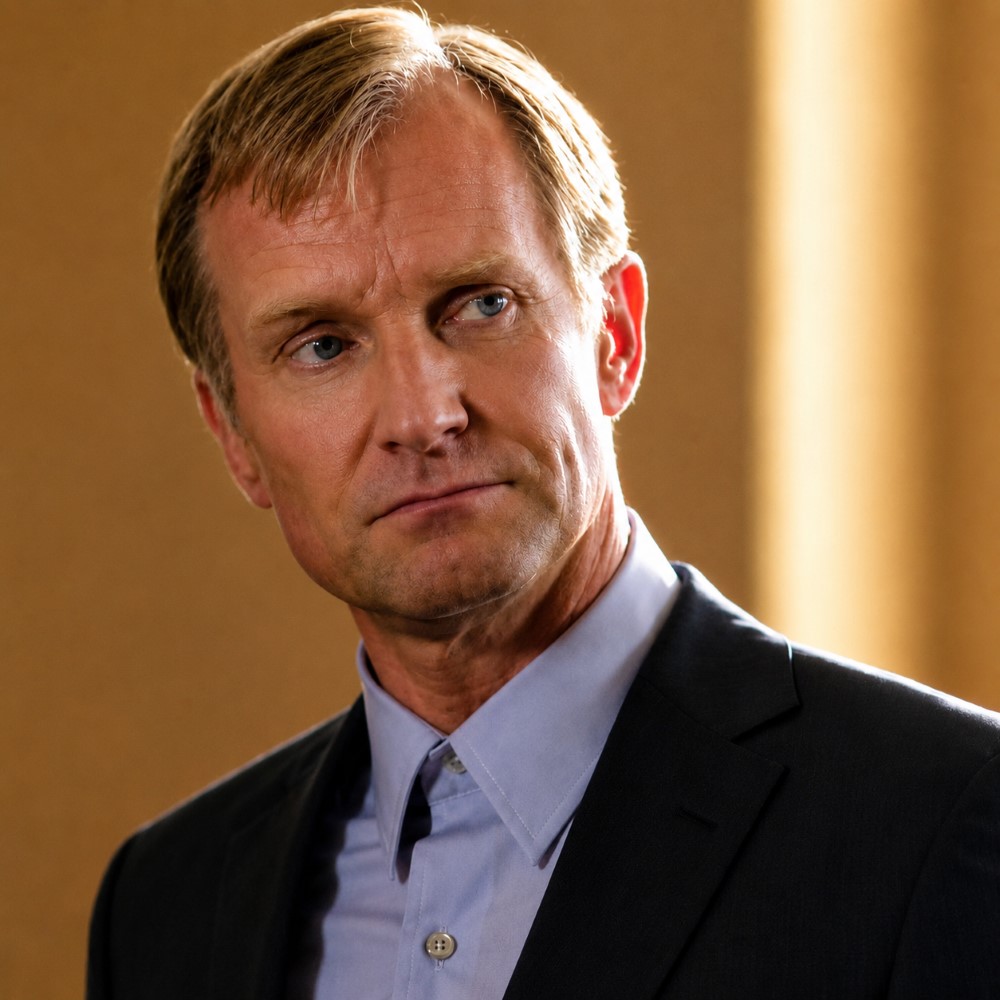
“At some point, in the very near future, you’ll be made to understand how badly you misjudged me today. And when that time comes and you’re begging me for mercy, I want you to remember this moment because this is the moment you’ve sealed your fate.” — Kai Proctor
Banshee’s Kai Proctor, played with quiet menace by Ulrich Thomsen, distinguishes himself from the familiar lineup of television crime bosses precisely because his authority is defined by contradiction. On the surface, he fits the archetype: a man who controls Banshee’s underworld through legitimate fronts, compromised law enforcement, and an unflinching readiness for brutality. Yet what makes Proctor compelling isn’t the structure of his empire—it’s the tension beneath it, the sense that every assertion of control doubles as a form of self-justification for a man who has never truly stopped answering to the community he claims to have left behind.
That tension is rooted in his Amish upbringing. Proctor’s departure from that world was not a clean break but something closer to an amputation. He retains its language, discipline, and moral rigidity even as he has constructed a life in direct opposition to its teachings. He speaks Pennsylvania Dutch, invokes scripture, and adheres to a personal code of order and restraint that feels almost monastic against the backdrop of his violence.
At the same time, that code should not be mistaken for conventional morality. Proctor is, first and foremost, a brutal crime lord. He traffics in narcotics, prostitution, and murder—violence he is fully willing to carry out with his own hands—and sustains his power through a network of entrenched criminal enterprises. His discipline does not temper his cruelty; it organizes it.
This contradiction becomes even more pronounced in the alliances he chooses to make. The same man who carries remnants of Amish restraint will readily conduct business with Colombian drug cartels or neo-Nazi gangs if it strengthens his control over Banshee and the surrounding counties. His worldview is not governed by external ethics but by an internal logic that allows him to reconcile seemingly irreconcilable acts in service of power and order.
What further complicates Proctor is the way that same internal logic extends beyond self-interest. Time and again, he protects the Amish community that excommunicated him, intervening against outside threats on behalf of people who refuse even to acknowledge him. He does this without expectation of gratitude or reconciliation, suggesting that what drives these actions is not redemption but something more instinctive—an inherited sense of duty he cannot discard. In effect, he continues to guard a flock that has already cast him out.
By the series’ end, Proctor remains a man without a true home—too violent for the Amish world, yet too disciplined and burdened by it to fully belong to the criminal one. His arc does not resolve these contradictions so much as deepen them, and that unresolved tension is precisely what makes him endure. He is not simply a crime boss or a villain, but a figure defined by the uneasy coexistence of brutality and belief, control and longing—someone whose humanity, however obscured, keeps him from ever becoming reducible to a monster.
As some of our regular readers undoubtedly know, I am involved in a few weekly watch parties. On Twitter, I host #FridayNightFlix every Friday and I co-host #ScarySocial on Saturday. On Mastodon, I am one of the five hosts of #MondayActionMovie! Every week, we get together. We watch a movie. We tweet our way through it.
Tonight, at 10 pm et, I will be hosting #FridayNightFlix! The movie? Avalanche Sharks!
If you want to join us this Friday, just hop onto twitter, find Avalanche Sharks on Prime, start the movie at 10 pm et, and use the #FridayNightFlix hashtag! I’ll be there happily tweeting. It’s a friendly group and welcoming of newcomers so don’t be shy.