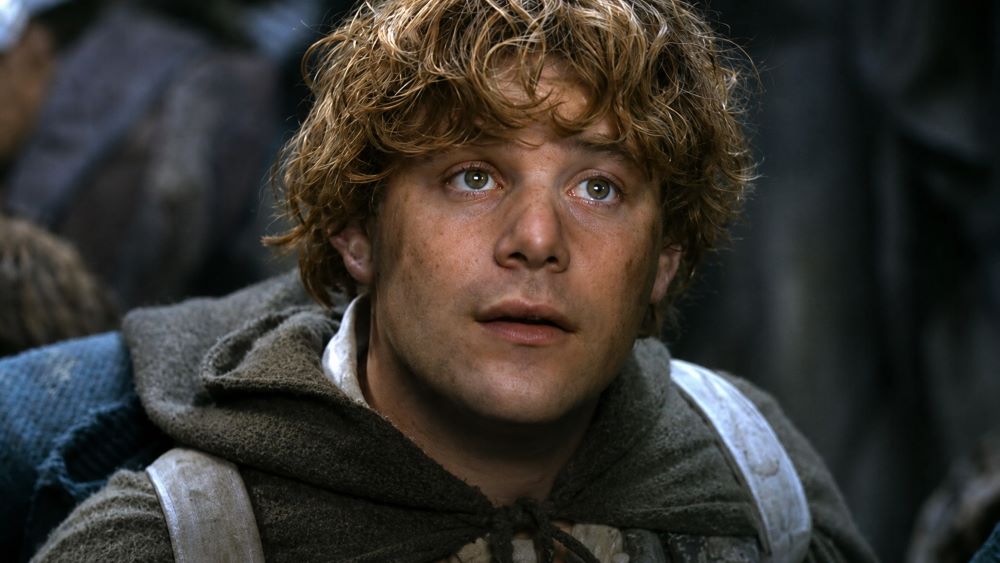
Hero of the Day: Samwise Gamgee (The Lord of the Rings)


“Don’t you leave him, Samwise Gamgee. And I don’t mean to.” — Samwise Gamgee

Samwise Gamgee stands as one of the most compelling and deeply human characters in J.R.R. Tolkien’s The Lord of the Rings, a figure whose quiet strength and unwavering loyalty redefine the very notion of heroism. Unlike the noble Aragorn or the wise Gandalf, Sam is an ordinary hobbit—grounded, humble, and devoid of grand ambitions. His heroism does not stem from swordplay or sorcery, but from his steadfast devotion to Frodo Baggins and the simple, unshakable belief that even the smallest person can change the course of the future. Tolkien uses Sam to illustrate that true courage is not the absence of fear, but the resolve to act despite it, a theme that resonates throughout the epic narrative of The Lord of the Rings.

Traditional fantasy heroes are often defined by their extraordinary abilities or grand destinies, but Sam’s greatness is rooted entirely in his profound normalcy. He is not driven by a prophetic calling or a desire for glory; rather, his initial motivation is simply the fear of losing his master and friend, Frodo Baggins. Tolkien uses Sam to demonstrate that heroism is not the absence of fear, but the choice to push forward in spite of it. When Sam is forced to temporarily take up the burden of the One Ring in The Return of the King, his inherent simplicity becomes his greatest weapon. Unlike the great lords of Men, Sam lacks the ambition and desire for power that the Ring exploits, allowing him to willingly surrender it back to Frodo—a testament to the incorruptible nature of the common folk.

At the heart of Samwise’s character is an unparalleled loyalty that elevates him from a mere sidekick to the true savior of the quest. As Frodo is progressively broken down by the physical and psychological toll of the journey to Mordor, it is Sam who serves as the emotional anchor preventing his total collapse. Sam’s devotion reaches its zenith on the slopes of Mount Doom, where his refusal to let Frodo fail results in one of literature’s most iconic declarations: “I can’t carry it for you, but I can carry you.” In this moment, Sam embodies the purest form of love and sacrifice. He does not save Middle-earth by striking down a dark lord, but by literally carrying the weight of his friend’s despair when Frodo can no longer stand.

Furthermore, Sam provides a vital, grounded perspective that prevents the narrative from becoming lost in its own high-fantasy majesty. His deep connection to the Shire, to the soil, and to the simple joys of life—like a good meal or a smoke—acts as a tether to goodness in a world being consumed by shadow. This “salt of the earth” wisdom allows Sam to perceive the true horror of Mordor and the Ring not in abstract, philosophical terms, but as a direct threat to the innocent, everyday life he holds dear. By viewing the apocalyptic conflict through the eyes of a gardener, Tolkien makes the stakes feel remarkably intimate, reminding the reader that the ultimate goal of the quest is not to establish a new empire, but to preserve the quiet beauty of the natural world.

Ultimately, Samwise Gamgee endures as one of literature’s greatest heroes because he represents the best of what ordinary people can achieve under extraordinary circumstances. He begins the story as a timid, provincial hobbit terrified of leaving his hometown, yet he ends it as a resilient warrior, a loving husband, and a civic leader. Tolkien, a veteran of the brutal trenches of World War I, understood that the world is often saved not by brilliant generals or chosen ones, but by the quiet courage of everyday people doing their duty. Through Sam, The Lord of the Rings delivers a timeless and deeply moving message: that in the face of insurmountable darkness, the most powerful force in the world is a stubborn, unassuming love.

Hero of the Day
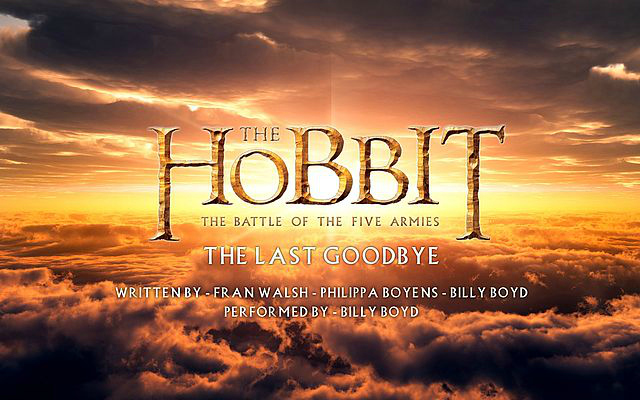
Song of the Day: The Last Goodbye from The Hobbit: The Battle of the Five Armies (by Billy Boyd)


TheHobbitTheLastGoodbye

It’s been 13 years since the first film in what will ultimately become Peter Jackson’s Middle-Earth Saga and now we’re in the stretch run. The Hobbit: The Battle of the Five Armies is set to arrive in North America this December 17. The film premiered in London on December 1, 2014.

Kids who first saw The Fellowship of the Ring in 2001 are now young adults. For adults who have returned time and time again to the world Peter Jackson built for over a decade of limitless imagination and hard work of thousands this final film will be the culmination of watching what many in years past have called unfilmable.

So, it’s with both joy and sadness that the book finally closes on Peter Jackson’s Middle-Earth journey and what better way than the final end credits song “The Last Goodbye” written and recorded by Peregrin Took himself, Billy Boyd.

The video itself mixes in scenes from both The Battle of the Five Armies and the previous five films. We also get some behind-the-scenes footage of the cast making their final farewells as filming closes to an end.

Damn people cutting onions.

The Last Goodbye

I saw the light fade from the sky
On the wind I heard a sigh
As the snowflakes cover my fallen brothers
I will say this last goodbye

Night is now falling
So ends this day
The road is now calling
And I must away
Over hill and under tree
Through lands where never light has shone
By silver streams that run down to the sea

Under cloud, beneath the stars
Over snow one winter’s morn
I turn at last to paths that lead home
And though where the road then takes me
I cannot tell
We came all this way
But now comes the day
To bid you farewell
Many places I have been
Many sorrows I have seen
But I don’t regret
Nor will I forget
All who took the road with me

Night is now falling
So ends this day
The road is now calling
And I must away
Over hill and under tree
Through lands where never light has shone
By silver streams that run down to the sea

To these memories I will hold
With your blessing I will go
To turn at last to paths that lead home
And though where the road then takes me
I cannot tell
We came all this way
But now comes the day
To bid you farewell

I bid you all a very fond farewell.

Scenes I Love: The Lord of the Rings: The Fellowship of the Ring


“I would have would have followed you, my brother… my captain… my king.” – Boromir, Captain and High Warden of the White Tower

It’s been five days since the season finale of the first season of Game of Thrones and the withdrawal symptoms are definitely starting to kick in. Season two of this fabolous series won’t be back for at least ten months. To help alleviate some of the withdrawal symptoms I decided to go on The Lord of the Rings Trilogy marathon all weekend. Tonight will be The Fellowship of the Ring (Extended Edition). It’s from this first leg of the trilogy that I choose today’s scene that I love.

The scene I have chosen is very close to the end of the film and it’s a scene between Viggo Mortensen’s Aragorn and Sean Bean’s Boromir. It’s soon after the attack of Saruman’s Uruk-Hai on the group. Boromir valiantly tries to protect and save Merry and Pippin from the Lurtz and his band of Uruk-Hai. It’s the scene which arrives after that really hits home for me just how great Peter Jackson’s adaptation of the first part of Tolkien’s massive tome.

This quiet and heartbreaking scene between Aragorn and Boromir cements Viggo’s performance as the reluctant hero moving towards embracing his legacy and destiny while at the same adding complexities to Sean Bean’s performance as Boromir being a flawed and tragic hero in his own right. It is a scene that will cause more than just a few tears to be shed.