Guilty Pleasure No. 104: The Parker Series (by Richard Stark)


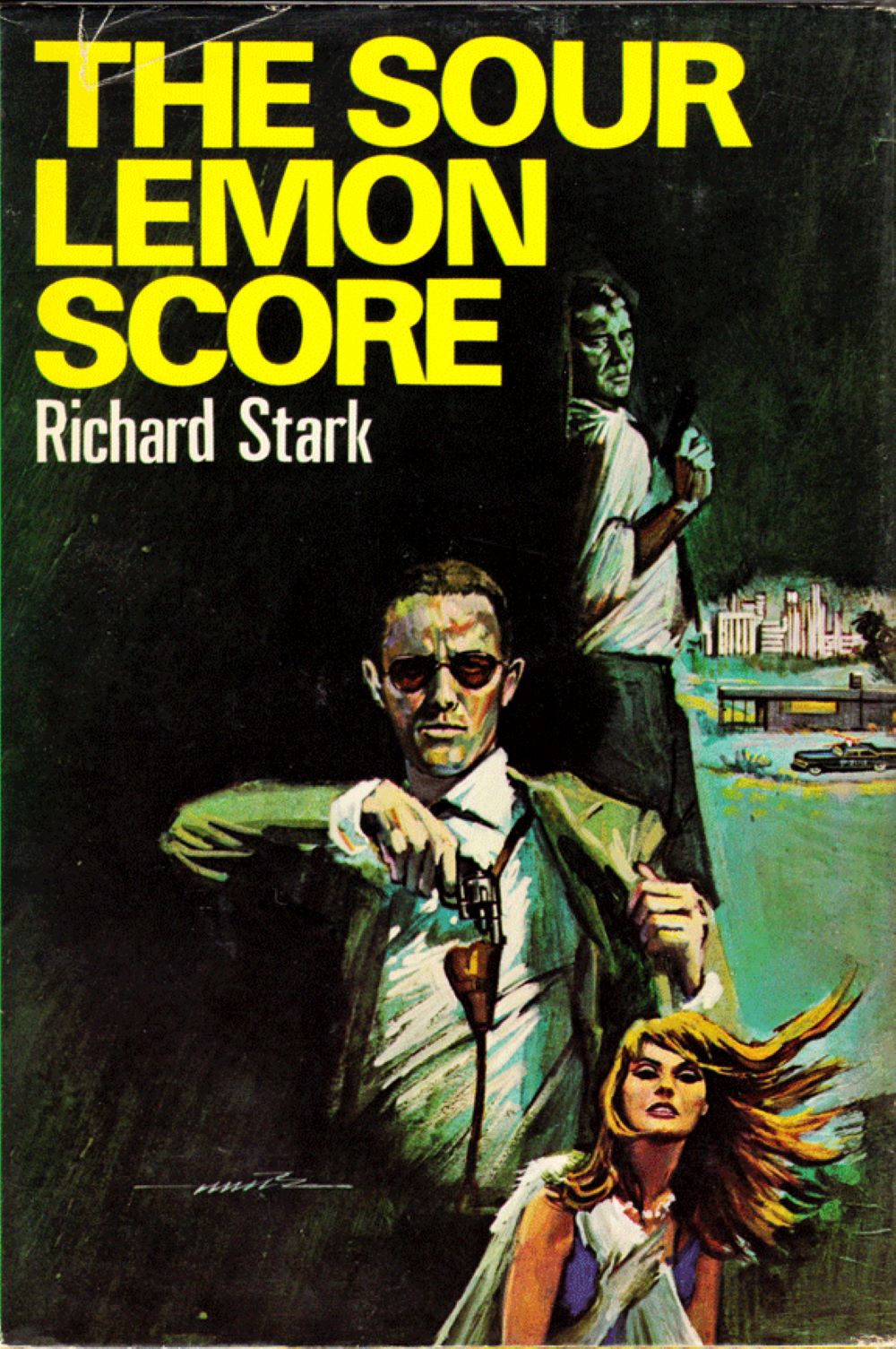
Richard Stark’s Parker novels are the kind of crime fiction that feel like they’re bad for you in all the right ways: lean, mean, amoral heist stories that work as both clinical studies of professional thieves and utterly shameless page‑turners. Taken across the 24-book run, from The Hunter in 1962 through Dirty Money in 2008, the series is remarkably consistent, yet also strange and jagged enough that you never quite relax into it. Reading Parker is like chain‑smoking noir paperbacks—self‑aware guilty pleasure with just enough bite and bleakness that you can pretend it’s good for you.

The basic premise barely changes, and that’s part of the appeal. Parker is a professional robber who prefers big, high‑yield scores: armored cars, payrolls, entire towns temporarily cut off from the world. He’s not an antihero in the modern prestige‑TV sense so much as a working stiff whose job happens to be violent crime, a man who approaches robbery with the same cold professionalism most people reserve for accounting. In The Hunter, the novel that kicks everything off, he’s double‑crossed by his wife and partner, shot, and left for dead, and the story is essentially one long act of payback as he claws his way back to New York and into the orbit of the Outfit, the crime syndicate that ultimately ends up with his money. That mix of stripped‑down revenge and procedural detail sets the tone for almost everything that follows, even when the later books drift away from personal vendetta into cleaner, job‑of‑the‑week capers.

What makes the series work—what makes it weirdly addictive—is how mercilessly Donald Westlake (under the Stark pseudonym) commits to Parker as an almost inhuman constant in a chaotic world. He’s often described by fans as a kind of force of nature, and that tracks with how he moves through these books: stoic, unadorned, perpetually assessing angles, crew members, and exit routes. Traditional redeeming qualities—sentimentality, guilt, even much curiosity about other people—just aren’t there; what you get instead is a kind of brutal efficiency that, perversely, becomes its own charisma. The guilty‑pleasure element kicks in because the novels quietly invite you to enjoy watching a ruthless pro outthink and outmuscle everyone in his path, even though the moral framework is closer to nihilism than romantic outlaw fantasy. There’s pleasure in the competence and in the clean lines of the plotting, even as you’re aware you’re rooting for someone who treats human beings like moving parts in a job.

Formally, the books have a recognizable skeleton that Stark keeps returning to and subtly bending. Most of the novels are divided into four sections: first, Parker’s point of view as he’s planning or executing a job; second, a continuation that usually ends with a betrayal or reversal; third, a shift into the perspective of whoever is double‑crossing or hunting him; and finally, a return to Parker as he fixes what’s gone wrong and settles accounts. This architecture does a couple things. It gives the series a strong procedural rhythm that fans can relax into—you know there will be a job, a screw‑up, and a payback—but it also keeps the tension high by delaying gratification until that fourth‑quarter rampage. You get both the chess match and the inevitable explosion. It’s formulaic in the same way a great blues progression is formulaic: you come for the structure, you stay for the particular variations each time.

The prose is another major part of the series’ guilty‑pleasure charge. Westlake pares the language down to something close to bare steel; the description is sparse, the sentences short, the dialogue practical and unfussy. Reviewers frequently point to how there’s “not a wasted word,” and that seems right: you feel like every line is there to move money, people, or bullets into position. In an age where a lot of thriller writing leans on verbosity and constant internal monologue, Parker’s tight focus can feel almost cleansing. At the same time, that same spareness means the violence can land with an extra jolt—there’s no cushioning around it, no moral throat‑clearing, just the fact of what Parker decides to do when someone gets in his way.

Across the series, the quality is not perfectly even, and that’s where a fair, balanced take has to admit some dips. The early stretch—The HunterThe Man with the Getaway FaceThe OutfitThe Score, and The Jugger—has a raw momentum and a sense of discovery as Westlake works out how far he can push a protagonist this cold. Later titles, especially in the first run up to Butcher’s Moon, often expand the canvas, giving more time to side characters and to elaborate, multi‑phase heists. Some readers and critics consider The Score, with its audacious robbery of an entire mining town, a high‑water mark; others see it as simply a particularly well‑executed entry in a series where the baseline is already high. Then, after the long break between the 1970s and the 1990s revival with Comeback and Backflash, you can feel Westlake adjusting the formula to a slightly different era, with Parker still fundamentally the same but the world around him updated. Those later books are often solid and occasionally excellent, but the sheer shock of the early ones is hard to recapture.

From a modern perspective, one of the more interesting tensions in reading Parker is the question of identification. The books are not satire, and they aren’t quite celebrations; they’re closer to case files written with a strong sense of style. The theme that emerges most strongly is the amoral logic of criminal enterprise: loyalty is provisional, greed is constant, and institutions—whether the Outfit or banks or small‑town cops—are just different power systems to be exploited. There’s no sentimental criminal code here, only practical rules about not talking, not freelancing, and not getting sloppy. That worldview can be bracing and, frankly, kind of fun to inhabit for a few hundred pages at a time, particularly because Westlake doesn’t ask you to endorse it; he just drops you in and lets you watch how it operates.

At the same time, that detachment and hardboiled minimalism can turn some readers off. If you need emotional growth, redemptive arcs, or a sense that the universe punishes the wicked, Parker is going to feel either empty or actively hostile to your expectations. The closest the series comes to sentiment is in Parker’s occasional, grudging respect for other professionals who do their job well—safecrackers, drivers, heist planners—and even that is strictly bounded by the demands of survival and profit. Women, in particular, can feel underwritten or instrumental in some entries, especially the earlier books, reflecting both the genre conventions of the time and the series’ focus on Parker’s narrow, self‑interested worldview. It’s possible to argue that this is part of the point—these are Parker’s stories, and he does not care about anybody’s inner life—but it does mean the books can feel airless if you’re reading a bunch in a row.

Still, that’s the strange magic of Parker: for all the limitations and repetitions, you finish one and almost immediately think about the next job, the next crew, the next betrayal. The series taps into a very specific pleasure center: watching a ruthlessly competent person navigate systems stacked with corruption and stupidity, using only planning, discipline, and a willingness to hit back harder than anyone expects. It’s not aspirational, and it’s not comforting, but it is undeniably gripping. If you can accept an unapologetically amoral center and you have a taste for stripped‑down crime fiction with a strong procedural spine, Parker is easy to devour and just as easy to feel a little guilty about enjoying as much as you do.

Previous Guilty Pleasures

  1. Half-Baked
  2. Save The Last Dance
  3. Every Rose Has Its Thorns
  4. The Jeremy Kyle Show
  5. Invasion USA
  6. The Golden Child
  7. Final Destination 2
  8. Paparazzi
  9. The Principal
  10. The Substitute
  11. Terror In The Family
  12. Pandorum
  13. Lambada
  14. Fear
  15. Cocktail
  16. Keep Off The Grass
  17. Girls, Girls, Girls
  18. Class
  19. Tart
  20. King Kong vs. Godzilla
  21. Hawk the Slayer
  22. Battle Beyond the Stars
  23. Meridian
  24. Walk of Shame
  25. From Justin To Kelly
  26. Project Greenlight
  27. Sex Decoy: Love Stings
  28. Swimfan
  29. On the Line
  30. Wolfen
  31. Hail Caesar!
  32. It’s So Cold In The D
  33. In the Mix
  34. Healed By Grace
  35. Valley of the Dolls
  36. The Legend of Billie Jean
  37. Death Wish
  38. Shipping Wars
  39. Ghost Whisperer
  40. Parking Wars
  41. The Dead Are After Me
  42. Harper’s Island
  43. The Resurrection of Gavin Stone
  44. Paranormal State
  45. Utopia
  46. Bar Rescue
  47. The Powers of Matthew Star
  48. Spiker
  49. Heavenly Bodies
  50. Maid in Manhattan
  51. Rage and Honor
  52. Saved By The Bell 3. 21 “No Hope With Dope”
  53. Happy Gilmore
  54. Solarbabies
  55. The Dawn of Correction
  56. Once You Understand
  57. The Voyeurs 
  58. Robot Jox
  59. Teen Wolf
  60. The Running Man
  61. Double Dragon
  62. Backtrack
  63. Julie and Jack
  64. Karate Warrior
  65. Invaders From Mars
  66. Cloverfield
  67. Aerobicide 
  68. Blood Harvest
  69. Shocking Dark
  70. Face The Truth
  71. Submerged
  72. The Canyons
  73. Days of Thunder
  74. Van Helsing
  75. The Night Comes for Us
  76. Code of Silence
  77. Captain Ron
  78. Armageddon
  79. Kate’s Secret
  80. Point Break
  81. The Replacements
  82. The Shadow
  83. Meteor
  84. Last Action Hero
  85. Attack of the Killer Tomatoes
  86. The Horror at 37,000 Feet
  87. The ‘Burbs
  88. Lifeforce
  89. Highschool of the Dead
  90. Ice Station Zebra
  91. No One Lives
  92. Brewster’s Millions
  93. Porky’s
  94. Revenge of the Nerds
  95. The Delta Force
  96. The Hidden
  97. Roller Boogie
  98. Raw Deal
  99. Death Merchant Series
  100. Ski Patrol
  101. The Executioner Series
  102. The Destroyer Series
  103. Private Teacher

Song of the Day: Sister Suffragette


There aren’t many songs for Susan B. Anthony Day so I guess Sister Suffragette from Mary Poppins will have to suffice!  This song is about the struggle of women to get the vote in England so it mentions Emmeline Pankhurst instead of Susan B. Anthony.

In America, the 19th Amendment, guaranteeing all women the right to vote, was ratified in 1920.  Thank you, Susan B. Anthony!


4 Shots From 4 Films: Celebrating The Silhouette…Again!


4 Or More Shots From 4 Or More Films is just what it says it is, 4 shots from 4 of our favorite films. As opposed to the reviews and recaps that we usually post, 4 Shots From 4 Films lets the visuals do the talking!

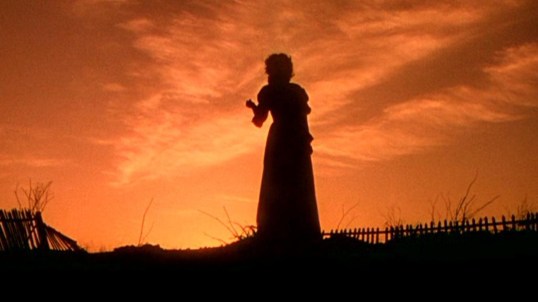
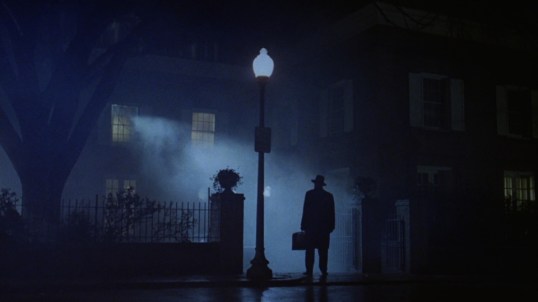
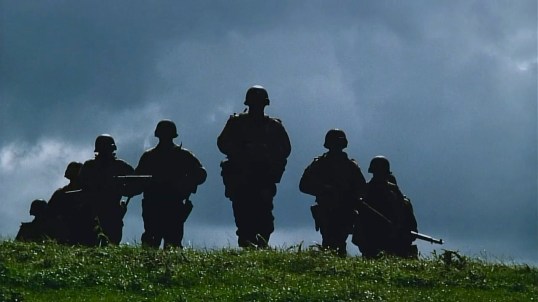
As a photographer, I love a good silhouette shot.  Here are some more of my favorites.

4 Shots From 4 Films

Nosferatu (1922, Dir. by F.W. Murnau)

Gone With The Wind (1939, Dir. by Victor Fleming)

The Exorcist (1973, Dir by William Friedkin)

Saving Private Ryan (1998, Dir. by Steven Spielberg)

Late Night Retro Television Review: Saved By The Bell 1.12 “The Mamas and the Papas”


Welcome to Late Night Retro Television Reviews, a feature where we review some of our favorite and least favorite shows of the past!  On Saturdays, I will be reviewing Saved By The Bell, which ran on NBC from 1989 to 1993.  The entire show is currently streaming on Prime and Tubi!

This episode, a select few are getting married.

Episode 1.12 “The Mamas and the Papas”

(Dir by Don Barnhart, originally aired on November 11th, 1989)

For a class project, the students are all spending a week seeing what it’s like to be married.  What’s odd is that there are only three couples despite the fact that there are a bunch of other students in the class.  Basically, six people are taking part in the project and the rest of the class is just there to watch.  That sounds like an incredibly boring week for the rest of the class but whatever.

Zack has been paired up with Kelly.  Slater has been paired up Jessie.  Lisa has been paired up with Screech.  When Lisa complains about having to be Screech’s wife, Mr. Belding says that the couples were selected alphabetically.  However, if that were true, Screech Powers would be married to Jessie Spano and A.C. Slater would be married to Lisa Turtle.  Seriously, Mr. Belding’s a liar.  How much did Screech pay him?

Lisa starts to twitch violently whenever Screech is near.  When Screech announce that he’s moving into her bedroom, she nearly has a seizure and, quite frankly, I don’t blame her.  This is a terrible class project.  Because the project is putting Lisa’s health at risk, she is allowed to annul her marriage to Screech.  Yay!  Instead, she is reassigned to be Slater and Jessie’s daughter while Screech becomes Zack and Kelly’s son.  When Kelly sees how negatively Zack reacts to being Screech’s father, she wonders if he’s the man to whom she wants to be fake married.

The stuff with Kelly and Zack and Lisa and Screech is pretty dumb.  Slater and Jessie is where the action’s at.  This is the first episode to really establish that Slater is a sexist pig and the Jessie is a straw feminist.  Jessie wants to keep her maiden name.  Jessie wants to have a job outside of the home.  Jessie feels that she should be an equal partner in the marriage.  What’s funny is that I agree with Jessie on all of these matters and yet I still laughed whenever Slater said, “Oink oink, baby.”  That’s largely due to the fact that Jessie was written to be so strident and shrill that her feminism and her politics often felt rather performative.  Slater may have been a chauvinist but at least he was honest about it and he was loyal to his friends.  Plus, he was cute.  (It’s high school, folks.  People are shallow in high school.)

This episode ends with Jessie apologizing to Mr. Belding for not being able to make her marriage to Slater work.  Belding says that sometimes, two people just aren’t meant to be together and there’s no shame in that.  (As a child of divorced parents, I always appreciated the fact that this episode was honest about the fact that not every marriage can be saved.)  Zack and Kelly’s marriage survives, at least until the project ends.

This episode …. actually, it really wasn’t that bad.  By the standards of Saved By The Bell, it was actually one of their better episodes.  As a general rule, the more time that is spent with Jessie and Slater fighting, the better the episode.  Still, forcing Lisa to marry Screech …. that’s just mean.

Lisa Marie’s Week In Television: 2/8/26 — 2/14/26


The Winter Olympics (All week, Peacock and NBC)

I wrote about Korey and Cory this week.  On Tuesday, I watched as they won the Silver Medal in a match with Sweden and I have to admit that I was depressed for the rest of the day.  That’s nothing against the Swedish team.  They did a good job and they earned the win.  It’s just that I had gotten so invested in Korey and Cory that it was hard for me to accept that 1) it was over and 2) it ended with them coming in second.

I’ve watched the Olympics off-and-on since then but I have to admit none of the other athletes have really captured my attention the way that Korey and Cory did.  I do like our hockey teams, because they’re all blue collar and they don’t talk badly about my country.  Our skiers appear to be a bunch of spoiled rich kids.

I’ll definitely rewatch the figure skating.

Also watched and reviewed:

  1. Baywatch (Tubi)
  2. CHiPs (Prime)
  3. Decoy (Tubi)
  4. Degrassi: The Next Generation (Tubi)
  5. 1st & Ten (Tubi)
  6. Freddy’s Nightmares (Tubi)
  7. Highway to Heaven (Tubi)
  8. Homicide (Peacock)
  9. The Love Boat (Paramount Plus)
  10. Miami Vice (Prime)
  11. Pacific Blue (Tubi)
  12. Saved By The Bell (Tubi)
  13. Saved By The Bell: The New Class (Prime)
  14. St. Elsewhere (Daily Motion)

So, I Watched The Last Song (2010, Dir. by Julie Anne Robinson)


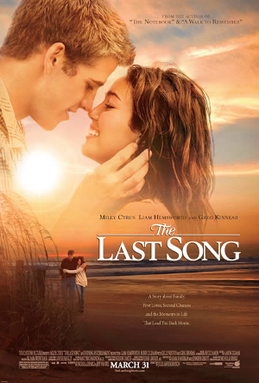
Ronnie Miller (Miley Cyrus), who is 17 and way too rebellious to be likable, travels to Georgia to spend the summer with her father, a former concert pianist named Steve (Greg Kinnear).  Ronnie is a sarcastic brat up until she discovers that a racoon is trying to eat a nest of turtle eggs.  She tries to protect the turtles.  The aquarium sends over a volunteer named Will (Liam Hemsworth) to watch over the turtle eggs and he and Ronnie fall in love over the course of several nights on the beach.  Ronnie starts to straighten out her life but then she learns that her father has cancer and that the reason he invited her and her brother to Georgia was so he could have one last summer with her.

This is a Nicholas Sparks story so, of course, someone has to die.  I always tell myself that I’m not going to cry whenever I watch a Nicholas Sparks movie and then I do.  Greg Kinnear was really likable as Steve and Liam Hemsworth was really cute as Will and I know I would have fallen in love with him too if we were protecting turtle eggs together.  When the eggs hatched, the baby turtles were adorable.

It’s too bad Miley Cyrus can’t act because her performance was so bad that it ruined the movie.  Even the racoon that tried to steal the turtle eggs outacted her.  I got tired of Ronnie and her attitude.  No matter what happened, Ronnie had to be sarcastic about it.  Even when she finally realized that the world didn’t revolve around her, Miley still delivered all of her lines in the same flat, smartass tone of voice so I didn’t buy her change of heart at all.

I’m glad the turtles made it back to the ocean.

Retro Television Review: Baywatch 1.13 “Home Cort”


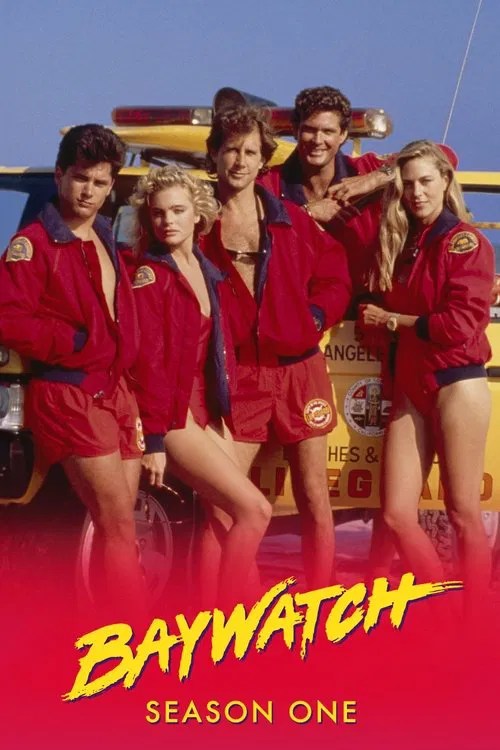
Welcome to Retro Television Reviews, a feature where we review some of our favorite and least favorite shows of the past!  On Saturdays, I will be reviewing Baywatch, which ran on NBC and then in syndication from 1989 to 2001.  The entire show can be viewed on Tubi.

This week, we meet John D. Cort.

Episode 1.13 “Home Cort”

(Dir by Paul Schneider, originally aired on January 12th, 1990)

There’s a new lifeguard on the beach!

His name is John D. Cort (John Allen Nelson) and he’s a former Navy SEAL with a dark and mysterious past.  He drives a motorcycle.  He wears a cowboy hat.  He has a quick smile.  He’s dangerous and he’s now a member of the cast.  I’m going to guess that he was added to bring some mystery to the show.  Originally, Eddie Kramer was supposed to be the dangerous lifeguard with the mysterious past but Billy Warlock was just too earnest and young to really pull that off.  John D. Cort, on the other hand, is at least 40.

Now, I said that Cort was the “new lifeguard on the beach.”  That’s not quite true.  It turns out that he’s actually an old lifeguard who was a friend of Mitch’s and Craig’s.  In fact, it’s insinuated that their friendship is legendary amongst the lifeguards.  Of course, no one’s ever mentioned Cort before but whatever.  Baywatch was never exactly known for its continuity.

Cort says that he’s returned to the beach so that he can work as a lifeguard for ten days and keep his eligibility.  Actually, he’s been hired to retrieve a mysterious package that’s at the bottom of the ocean.  He recruits his old friend, Sam (Bruce Fairbairn), to take him out into the ocean so that he can retrieve the package.  However, an explosion costs Sam his life and forces Cort to deal with the fact that someone wants him dead.  Who wants Cort dead?  Some guy named Jack Burton (Drew Snyder).  Why does he want Cort dead?  Who cares?  I got bored with the whole thing so I missed his motive.  I could go back and find out but, as far as I’m concerned, if the answer was worth knowing, I wouldn’t have gotten bored the first time around.  The story is really just an excuse to introduce Cort.  At the end of the episode, he inherits Sam’s surf shop and makes peace with being a regular member of the cast for at least the rest of the season.

As for the B-plot, Shauni and and Jill go into business selling sandwiches on the beach!  They take a lot of business away from crooked sandwich hustler Buddy Semple (played by George Clooney’s future production partner, Grant Heslov).  Buddy reacts by hiring two women in bikinis to hand out his sandwiches.  That’s the entire plot.

Oh, this episode.  I’ll be so happy when the first season of Baywatch is over with and the show fully and cheerfully embraces the stupidity of its concept.  Until then …. welcome to the beach, John Cort!