Review: The Amazing Spider-Man (dir. by Marc Webb)


It was in the summer of 2002 that the superhero film genre finally entered it’s Golden Age (or Silver Age for some). X-Men had come out two years before to positive acclaim and, most importantly, in the box-office. It wasn’t until Sam Raimi released the first in what would be his trilogy in the Spider-Man film franchise that superhero comic book films became the power in Hollywood it remains to this day. The first film from Raimi easily captured the pulp and campy sensibilities of the source material and for an origin story film it was done quite well in that it introduced the titular character and what made him tick. In 2004, Raimi and company released what many consider the best comic book film with Spider-Man 2. The film brought a level of Greek tragedy to the fun of the first film and it definitely brought one of the best realized comic book villains on film with Alfred Molina as Dr. Octopus. Then the franchise hit a major bump in 2007 with Raimi third entry in the franchise with the bloated Spider-Man 3.

Sony Pictures, who owned the film rights to the Spider-Man franchise, were so quick to churn out a fourth film, but in doing so lost the filmmaker and cast that made the trilogy happen. In the studios’ thinking they needed to get a fourth film up and running in order to keep the rights to the film from reverting back to Marvel and Disney. So, out goes Sam Raimi, Tobey Maguire and Kirsten Dunst and in comes Marc Webb, Andrew Garfield and Emma Stone. Instead of getting Spider-Man 4 we get The Amazing Spider-Man which doesn’t continue what Raimi had established with the first three films, but reboots the franchise all the way to the beginning.

Marc Webb takes the screenplay worked on by a trio of screenwriters (James Vanderbilt, Alvin Sargent, Steve Kloves) and reboots the origin story of Peter Parker’s transformation into Spider-Man. We find Peter Parker back in high school as a student and still getting bullied by Flash Thompson while remaining awkward around girls (especially one Gwen Stacy played by Emma Stone). yet, before we even get to this part of the film we get an introductory coda where we find a preadolescent Peter Parker playing hide and seek with his scientist father. These early scenes show hints that the enhanced spider thatwill bite and give eter his abilities may have had his father’s research and work written all over it.

This intro influences much of the storyline and leaves a huge impact on the character of Peter Parker which the previous three films never explored. The rest of the film has Peter investigating the circumstances of his parent’s disappearance and his adjustment to having been given the superhuman abilities by the spider that his father may or may not have been responsible in breeding.

First off, the film does a good job in re-establishing Peter Parker as a high school student. The original film spent some time in this part of Peter Parker’s life but never truly explored it. We see Peter not just the class genius, but also one who also shows an affinity for photography (something that the original trilogy never really explained other than he needed the job and money). There’s also some added layers to the character as this version of Peter Parker is more than willing to stand up to the bullies picking on the weaker students other than himself. It’s a huge departure from the meek and geeky Peter Parker of the past. We still get a geeky and smart Peter, but one who is also a sort of a well-intentioned slacker. We also get a proper introduction for Gwen Stacy (something the third film criminally mishandled)

The film introduces once again many of the characters the first film in the series had already done. From Uncle Ben (played by Martin Sheen this time around) and Aunt May (Sally Field) right up to the robber who runs into Uncle Ben and changes Peter Parker’s outlook on his role as a hero forever. Again these were character that had already been explored by the first three films and they’re scenes that had an air of familiarity to them though Sheen performance as Uncle Ben added more layers to the character who becomes Peter Parker’s moral center.

Another thing that the film did a good job with was the design of the film. It has been ten years since the first film and the technology in CGI-effects has leapfrogged exponentially since. The look of the OsCorp Tower was a beautiful piece of architectural design. The building loomed over New York City like something dark with a hint of malice. There were changes to the suit Peter wears that really harkens back to the McFarlane years of the Spider-Man comics. Even the return of the web-shooters was a nice surprise that I had some reservations when first hearing about it.

A third good thing about the film was the extended montage when Peter Parker realizes he has gained new abilities and begins to test them out. It’s familiar territory from the first film, but Marc Webb and Andrew Garfield adds a new level of youthful exuberance to the proceedings. Even the use of parkour by Peter Parker to show his growing abilities didn’t come off as silly. Garfield’s performance as Peter Parker in this montage was pretty great. One could believe at how much fun he was having at discovering each new level of abilities. Even some of the growing pains he goes through after getting bit were some of the more hilarious moments in the film that ultimately lacked much of it in the end.

Which brings us to what made this entertaining film end up becoming a failure in the end.

I admit that the film entertained me in the end, but there were things aboutThe Amazing Spider-Manwhich nagged at me throughout and afterwards. While the film was entertaining the story self and most of the characters were inconsistently written. Once one looked past the action and some of the witty dialogue in the beginning the film’s many plot-holes and head-scratching moments become too glaring to ignore.

The character of Peter Parker does get some new layers of characterization in the beginning, but as the film played out the more the Peter Parker of this film began to stray away from not just what Raimi had created and guided through the first three films but also most of the character’s decade’s long growth in the comics. Yes, we see Peter Parker as the science-genius and even moreso than the one portrayed by Tobey Maguire, but we also don’t get the awkward teen who grows into his abilities, but most importantly, one who learns through tragedy that he has a responsibility to the people around him to protect them even if it means sacrificing his wants and dreams to do so. We don’t just see Peter Parker saving people, but also one who seemed to relish beating up and abusing those who used to do the same to him and/or others. Spider-Man in this film acts more like a bully than a reluctant hero by film’s end. Even the events that should’ve taught him the lessons of self-sacrifice and heeding the needs of the many fail to make much of an impact on the teen superhero. All one has to look at as the perfect example of this darker and more selfish turn to the character was Peter’s whisper to Gwen about promises not being kept being the best ones.

Other characters get inconsistencies in how they’re written. The other big one being Dr. Curt Connors who begins the film as a scientist so intent of not just curing his disability but also helping the world. It’s a character similar in tone to Alfred Molina as Dr. Octopus, yet where that villain remained a tragic one throughout the film and we could see the path which led him to become a villain with Dr. Connors in this fourth film there’s such a huge turnabout in the character’s motivations that whatever sympathy we may have had for Connors was squandered.

Not every character fails to impress. Martin Sheen and Denis Leary as Uncle Ben and Capt. Stacy respectively were fully realized characters who become Peter Parker’s moral centers and voice of reason. In fact, both Sheen and Leary helped anchor the scenes they appeared in and thus made their characters’ fate have the sort of emotional impact that a growing hero needs to move from being reluctant to accepting of his lot in life. It’s a shame that the writers failed to capitalize on the performances of these two character actors to help make Peter Parker more a hero and less a teenager more in love with what he can do instead of realizing that he has more to offer those who are weakest.

This is not to say that the performances by the cast was bad. From Garfield and Stone right up to Ifans, Sheen, Leary and Field, the cast did a great job with an uneven and inconsistent script that was too full of themes and ideas but no focus on any one of them. It’s a wasted opportunity to build on what the previous cast of the three films had created. Even the third film which many would agree as being a huge, bloated mess actually had a singular focus. It was a story that tried to explore Peter Parker’s darker side andhow his life as a superhero negatively impacts everyone around him he cares for. With this Marc Webb production we get a Peter Parker who at times was compassionate when it came to others being bullied and then we get one who relished on doing the same to those he now sees deserving of payback. Even Parker’s hunt for his uncle’s killer which the film spent a considerable time following just got dropped without any sort of resolution. One of the most significant events in Peter’s life gets dumped to the wayside to concentrate on finally pitting Spider-Man against the film’s Lizard.

Did The Amazing Spider-Man need to have gotten made? The answer to that would be a yes.

Did Marc Webb, the three writers in Vanderbilt, Sargent and Kloves and the new cast get the reboot correctly? I would say no.

This was a film that spent too much time reintroducing characters both comic book and film fans already knew intimately. The storyline itself shared many similarities to the second film in the series yet none of the cohesiveness which made that first sequel such an instant classic the moment it premiered in 2004. The Amazing Spider-Man spent so much time trying to come off as a grittier and edgier version of the character (I call this the Christopher Nolan-effect) that what should’ve been coming off as a fun-loving, albeit self-sacrificing hero, came off as a dick once he finally got the full costume on. The people in charge of this reboot sacrificed what was fun about the film franchise for realism that the character and his universe were never steeped in to begin with.

Gritty, edgy and realism may work for Nolan’s take on the Batman film franchise, but for Spidey it fails and just turns what could’ve been a fresh new take on the franchise into another entertaining, but ultimately forgettable entry in the series. Maybe it’s time Sony just realize that it’s just pushing this franchise downhill and let the rights revert back to Marvel who seem to have found a balance between pulpy camp and serious realism.

Okay, So I Saw “The Avengers”


Or should that be “Okay, so I saw Marvel’s The Avengers ?”

In any case, I wasn’t going to. I was determined not to participate in the so-called “biggest event of the summer” because I’m flat-out tired of seeing Marvel (and, by extension, Disney) rake in hundreds of millions, if not billions, of dollars off the fruits of Jack Kirby’s imagination while “The King’s” estate gets more or less nothing (although in fairness — or should that be unfairness — they do get some sort of pittance for anything featuring Captain America in it, since he’s officially recognized as Cap’s co-creator along with Joe Simon). Stan Lee’s recent comments about Jack didn’t do much to up my enthusiasm level for this latest blockbuster either, and basically reaffirmed my opinion that he’s a major-league asshole who was lucky enough to glom onto the works a true creative genius that now he doesn’t even have the decency to acknowledge, much less thank, so yeah — it’s fair to say I was pretty cool to this whole thing and found most of the absolute gushing over it that’s been infecting the internet, Twitter in particular, to be annoying in the extreme.

But then the folks who are trying to put together The Jack Kirby Museum came up with a novel idea — donate the price of your ticket to their brick-and-mortar fund, so that future generations can have an actual, physical place to go and experience first-hand the power of the unfettered creative genius that everyone else but his family has gotten rich off. That sounded good to me, so for the price of a $7.50 admission and a matching $7.50 donation, my conscience was suitably assuaged  — hey, I guess I always knew there was some price at which my principles could be sold out, but it’s rather depressing to think that it could be so cheap. Still, best not to spend too much time dwelling on that —

Anyway, before I kick over the hornet’s nest of fan opinion, let me state for the record that I found The Avengers to be a perfectly fun, generally-well-executed, thoroughly entertaining superhero romp. But (and you knew there was a “but” coming, didn’t you?) — that’s all it is.

Sorry, assembled hordes of fandom, but it’s not “groundbreaking,” it’s far from “the best superhero movie ever,” (hello? The Dark Knight? Batman Begins? Spider-Man 2? Superman :  The Movie?) much less “the best comic book adaptation ever,” (hello again? American Splendor? Ghost World? Sin City? A History Of Violence?) and it doesn’t “prove” that co-writer/director Joss Whedon is a “visionary,” or the “new master of the superhero genre.”

And all those quotes I  pulled are, frankly, just a sampling of some of the less effusive praise I’ve seen bandied about online in regard to this flick. I’ve also seen it called “the new benchmark by which all others will be judged,” “the summer blockbuster to end them all,” “a singular work of astonishing breadth and scope,” and “the defining cinematic statement from the undisputed master of the craft.”

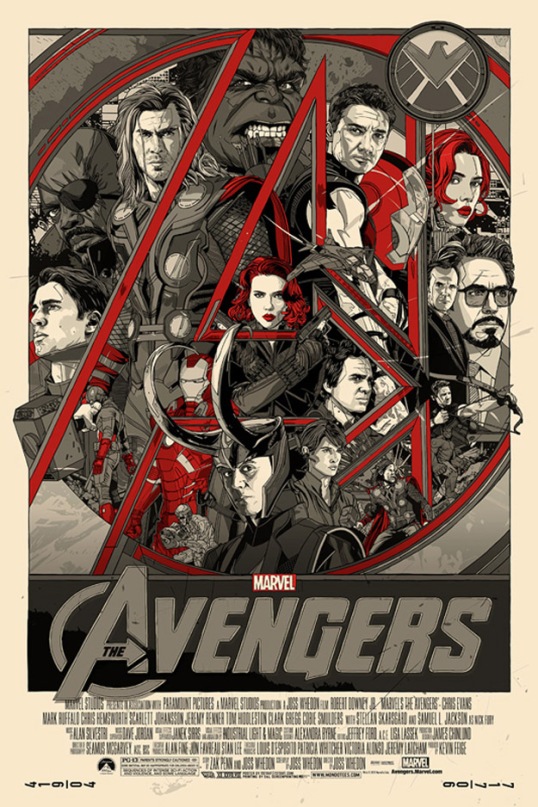
In this armchair critic’s opinion, unpopular as saying so is bound to make me, it’s none of those things. Not even close. Whedon has concocted a nice little script and brought it to life in an appealing and pleasant manner, but this isn’t a movie that bears any authorial signature whatsoever — if the credits were blank and someone told you it was directed by, say, Jon Favreau, you’d believe it, because it plays out pretty much exactly the same, in tone and style, as either of the two Iron Man films, and it doesn’t have anything like the individualistic flair of Kenneth Branagh’s Thor or Joe Johnson’s Captain America : The First Avenger. Hell, it even completely overuses the tedious inside-the-helmet perspective shots of Robert Downey Jr.’s head that Favreau is so annoyingly fond of.

In addition, our guy Joss shows no particularly deft touch with his cast. The acting ranges from surprisingly good (Mark Ruffalo positively nails it as Bruce Banner) to completely lethargic (Scarlett Johansson is completely listless as the Black Widow and is the least-convincing Russian superspy in movie history). Downey plays himself, as always, and the talented Jeremy Renner is criminally underutilized as Hawkeye, while both Chris Hemsworth’s Thor and Tom Hiddleston’s Loki, the central villain of the piece, came off much better in Branagh’s flick. Samuel L. Jackson pretty much owns every scene he’s in as Nick Fury, but I don’t think there was ever really any doubt that he would. All told,  the whole thing has the feeling of a director who just told his cast “okay — have at it” and then let the cameras roll.

In his favor, fandom’s newest and biggest crush does do a nice, pacy job with the action sequences, of which there are many (although even he can’t make the bog-standard CGI alien invaders that attack the Earth at the end and, yawn, double-cross Loki seem interesting), and doesn’t overplay his hand in the pathos department — he gives each and every character a nice little individual “story arc” that never taxes the imagination too much and remains dimly interesting without seeming intrusive vis-a-vis the “bigger picture” — which is, of course, to show all these folks coming together and fighting a menace big enough to require their assembled talents and abilities. And while Whedon has an annoying habit of defusing every potentially tense situation with a pithy little quip of some sort, on the whole the interplay between the various characters is reasonably well-handled and plausible (as far as these things so).

So The Avengers has some pluses in its favor, as well as some minuses working against it. It’s good, solid, mindless summer entertainment with a nifty, if thoroughly uninspired, visual sensibility; it plays to what the fans want in a generally competent manner; and it keeps you at least modestly interested in the proceedings throughout. It doesn’t have the mythic scope of Donner’s Superman, nor does it redefine the possibilities inherent in the superhero genre in the way Nolan’s Batman films do. It doesn’t take the time to examine the gap between what these characters symbolize and who they actually are in the way that Marvel’s two far superior summer blockbusters of last year (again, Thor and Captain America : The First Avenger) did — hell, it doesn’t even have much of anything to say about the human condition, much less the superhuman condition. And while it’s all pretty fun to look at by and large, it doesn’t have the inventive, groundbreaking, downright operatic visual flair of Burton’s forays into Gotham City. So it’s fair to say that even the things this movie does well have been done a lot better in other films of this same genre.

But it is fun. Not as fun, or as immediate, or as dramatic, or as dynamic, as the classic Avengers stories brought to life by Jack Kirby that it’s essentially a modernized (and, frankly, watered-down — proof that “The King” could do more with a pencil than Whedon can with a couple hundred million bucks) rehash of, but a good time nonetheless — and in a society as desperate for diversion and spectacle as the one we live in, I can certainly understand why it’s such a big hit. But please. Let’s stop pretending it’s anything more than what it is — modestly-well-realized, lively,  big-budget summer fun that doesn’t demand anything from its audience apart from kicking back and enjoying the ride. And let’s stop venerating Joss Whedon for what’s essentially a director-for-hire project executed in what’s basically become Marvel’s “house style.” Sure, there’s a good possibility that the financial success of The Avengers means he might be able to write his own ticket in Hollywood from here on out — and more power to him if that’s the case since other projects he’s helmed (most notably the excellent sci-fi TV series Firefly) do indeed show that he’s capable of distinctive, highly imaginative drama — but it’s just as likely that Marvel will replace him on this film’s inevitable sequel with some youthful up-and-comer who can deliver essentially the same product and will work for half the price.

Once the novelty of having all these superheroes on screen together wears off, I predict that we’re going to realize we’ve been had a little bit here — but seeing as how we had a pretty good time in the process, there’s no real harm done.

AVENGERS ASSEMBLE!


Avengers did what I previously thought was impossible… it Leonidas-kicked Iron Man 1 off its throne and now reigns on my all-time favorite comic inspired movie. Nolan has a tough act to follow. The gauntlet has been dropped. I attribute this remarkable feat to Joss Whedon’s screenplay and the cast for the most part.  I will not spoil the film and simply state what I enjoyed in a vague manner.

What I loved:

  1. The cast embodied the characters that I grew up reading, especially Downey and Pines
  2. The incorporation elements of Mark Millar and Bryan Hitch’s version of Avengers (in my opinion at least) in the film
  3. The revelation of the Other’s Master
  4. The Other’s design and connection of the comic version of Fantastic Four
  5. The nod to the classic Thor and Hulk relationship
  6. Clark Gregg’s Phil Coulson
  7. Tom Hiddleston captured all the resentment, sense of entitlement and bitterness that represents Marvel’s iteration of Loki
  8. The more humane and decent version of Ultimate Nick Fury (he’s a rotten & ruthless so & so on Millar’s book)

Minor quibbles:

  1. The Black Widow’s lack of a Russian Accent (but it didn’t take away from Scarlett’s performance
  2. The lack of a Loki betrayal, he’s the god of evil after all


Jack Kirby: The Man, The Myth, the Legend


Jacob Kurtzberg, known to the world as Jack “The King” Kirby, was the unappreciated artistic genius and innovator. I hold him in the same regard as the equally legendary Osamu Tezuka, kamisama no manga (god of comics)/godfather of anime/Japanese Walt Disney. Both men revolutionized their respective fields, inspired and continue to inspire many generations.

Joe Simon and Jack created Captain America (the first Avenger) and the Cap Parody, Fighting American.  Kirby created Nick Fury, the Mighty Thor, Iron Man, Black Panther, the X-Men, the Incredible Hulk, the Fantastic Four, and the Avengers with Stanley Lieber, known to the world as Smiling Stan Lee.  OMAC, Silver Surf, Kamandi, The Last Boy On Earth, X-51, the Eternals, Devil Dinosaur, Etrigan the Demon, Challengers Of The Unknown, Kobra, and the entire Fourth World mythology were his solo creations.  The King was responsible for the character design of Thundarr the Barbarian and Goldie Gold & Action Jack.

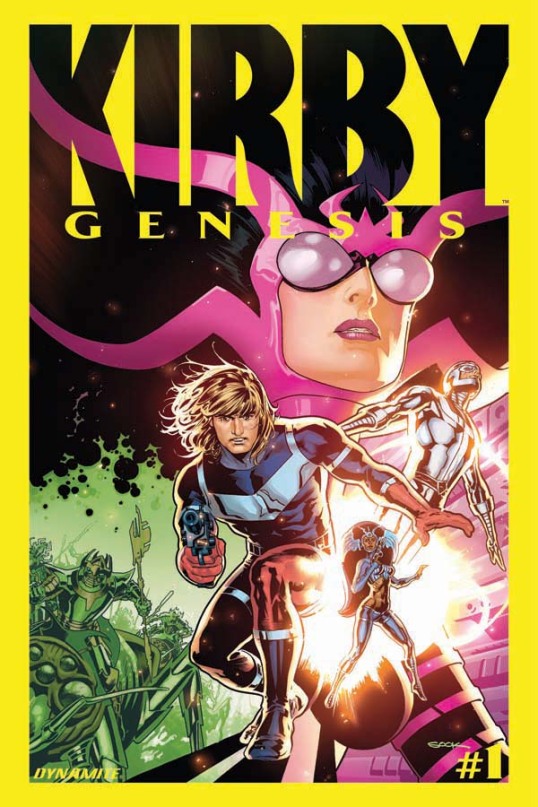
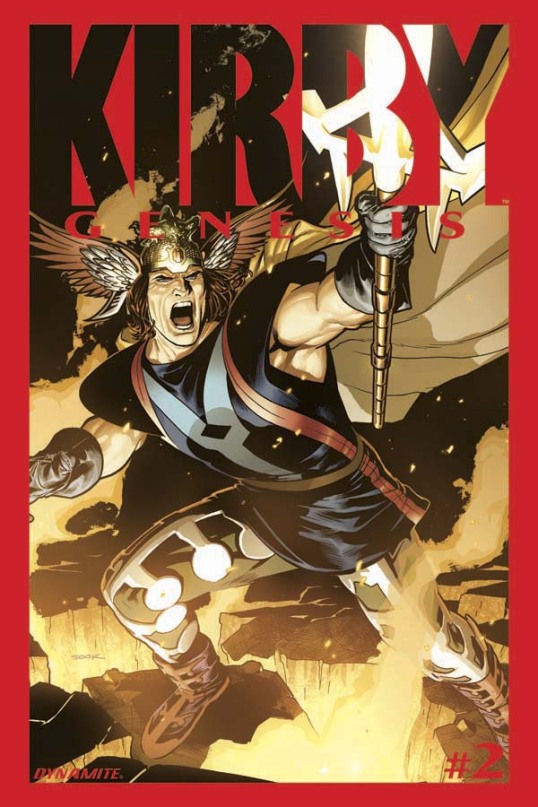
As a wee lad, I was captivated by his level of detail and imagination.  Now that I am in my 30’s, I continue to appreciate his work and be perpetually in awe of how his work showed that he wasn’t afraid to dream big. I am delighted to see the Kurtzberg Legacy live on through books Godland by Joe Casey, Tom Scioli and the epic yet short-lived Jersey Gods by Glen Brunswick and Dan McDaid, and Kirby Genesis by Kurt Busiek, Alex Ross And Jackson Herbert.

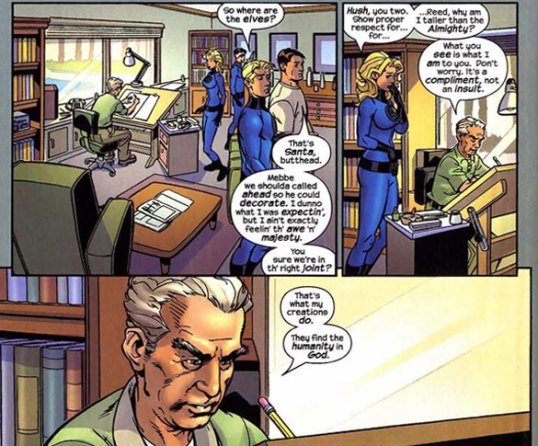
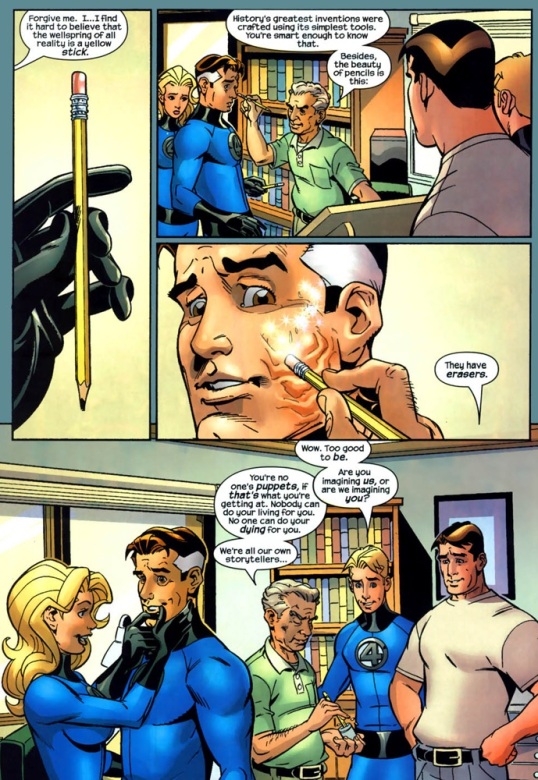
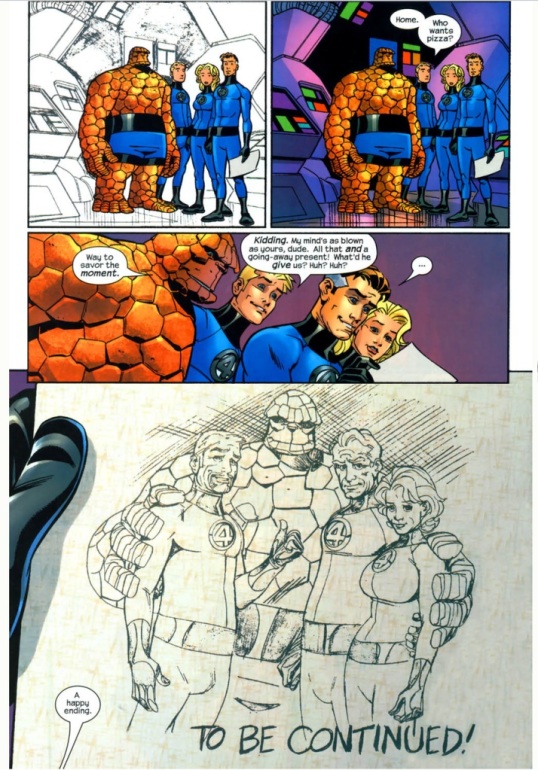
Below is Mark Waid and the late Mike Wieringo’s tribute to Jack during their Fantastic Four.

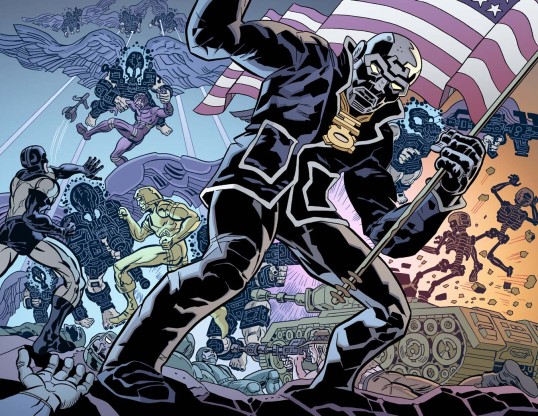
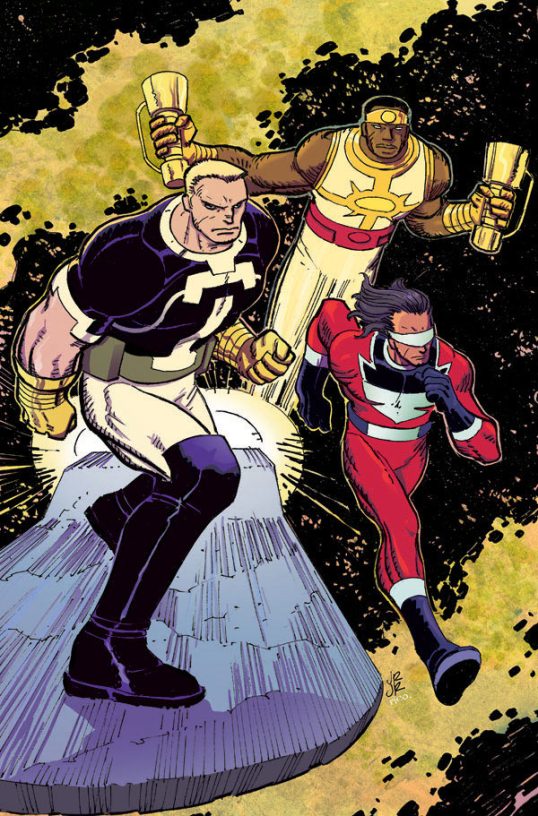
Here are some examples of the King’s work.


Here are some examples of the work inspired by him.

Jack’s cameo on the Incredible Hulk

Here is one Kirby Documentary


TV Spot: The Avengers “Head Count”


We’re just a month away from the release of Marvel Studios’ long-awaited superhero team action film The Avengers. It’s a film that’s been many years in the making with five other Marvel Studio films released prior to it introducing the many characters who will form the ensemble for this project.

It’s not going to be much of a surprise to see many tv spots and on-line releases of 30-second clips to help hype a film that needs no more hyping. While it seems all these incoming tv spots just rehash the same scenes from the several trailers already released once in awhile we see a quick new scene that should help excite the fan-base even more. This time around that new scene is one of the Hulk himself taking on a couple of Loki’s alien army. All that is missing is the Hulk saying “Hulk Smash!” as he simply smashes one of these alien bastards.

The Avengers (retitled Avengers Assemble to differentiate itself from the awful The Avengers film adaptation of the British spy tv series of the same name) will have it’s world premiere on April 11, 2012 in Hollywood with a general wide release on May 4, 2012 starting in the US.

Trailer: The Avengers (2nd Official)


We’re just a little over two months away from the release one of this summer’s most-anticipated films. It’s a film that’s been 4 years in the making. The first pieces that set it up were 2008’s Iron Man and The Incredible Hulk. This was followed up by 2010’s Iron Man 2 then finished up by the double-shot of 2011’s Thor and Captain America: The First Avenger.

It’s now 2012 and those five films will finally see it’s culmination with Joss Whedon’s The Avengers. It’s a superhero ensemble film starring each lead from all the aforementioned films with only Mark Ruffalo replacing Edward Norton in the role of Dr. Bruce Banner and his Hulk persona.

This latest official trailer from Marvel Studios gives a bit more insight as to the meat of The Avengers story. Where the previous teasers and trailer just showed the Avengers team in action with explosions happening around them this new one shows some of the initial dysfunctions which will plague the team when it first goes into action against a resurgent Loki and his invading alien army. We also get more scenes with Mark Ruffalo as the Hulk not to mention some action sequences involving Captain America, Iron Man and Thor.

To say that the release of this trailer elicited a global geekgasm would be an understatement. Even now the interwebz is rife with theories as to what is the huge serpent-looking machine that chases Iron Man before the trailer ends.

The Avengers is set for a release date of May 4, 2012.

Review: Captain America: The First Avenger (dir. by Joe Johnston)


It is called the “Marvel Cinematic Universe” and it’s a world-building program that’s been in the making for almost half a decade. It first began when Kevin Feige and the powers-that-be at Marvel Entertainment decided to forgo licensing out the rest of their comic book characters to other studios to play with (Spider-Man, X-Men, Wolverine, Fantastic Four, Daredevil, etc.). Marvel Entertainment was getting rich off of these films without having to help finance any of the films, but the results of these films where hit-or-miss and recently they’ve been really misses (X-Men: Last Stand, X-Men Origins: Wolverine, Fantastic Four: Rise of the Silver Surfer, Ghost Rider to name a few). So, the decision was made for Marvel to open up their own film studio, Marvel Studios, and use money from those licensed films to adapt the remaining characters in the Marvel Universe the Marvel way.

The first film to come out with Marvel Studios as the primary company was 2008’s Iron Man which was followed very closely with a reboot of the Hulk with The Incredible Hulk later that same summer. Iron Man 2 arrived in 2010 (though it was a mixed bagged depending on who one asks about this sequel) and in 2011 two more Marvel Studio films arrived to continue building this so-called “Marvel Cinematic Universe”. In early May 2011, the first one was Kenneth Branagh’s Thor hitting the big-screen which was widely-acclaimed to be a good and fun entry to this cinematic universe. The final piece and the second Marvel Studio film to arrive in 2011 is the Joe Johnston-helmed film adaptation of one of Marvel Comics’ most iconic characters. The “Marvel Cinematic Universe” finally finds it’s last piece before 2012’s arrival of Marvel Studios’ superhero team film, The Avengers.

Captain America: The First Avenger was being predicted as a film that could fail because of the character itself. Steve Rogers aka Captain America is the All-American G.I. who was straight-laced and never morally ambiguous. This was a character sure of himself and saw the world through a moral prism of black and white. The film that came out of the work by Joe Johnston and his capable film crew was one which surprised most everyone by it’s retro and nostalgic look at action serials of the past but without becoming to beholden to those tropes and losing all the fun in the story. This film played out like a throwback to those very serial action films of the 40’s and 50’s before cynicism and snark took over Hollywood and most of the entertainment industry.

Joe Johnston and his screenwriters, Christopher Markus and Stephen McFeely (and an uncredited Joss Whedon whose strength with dialogue could be seen in this film), were able to make an origin tale which didn’t seem too rushed in laying out just who Captain America was and his early adventures during World War II. It was a great decision to keep most of the film set in World War II since Captain America’s origins would be the hardest to pull off and even harder to convince audiences too used to conflicted and unsure superheroes in their superhero films.

The film begins in current Marvel times as an expedition finds Captain America’s shield in the frozen ice floes of Greenland in what looks to be the wreck of a giant flying wing-type aircraft. Once the shield’s discovery was made the film quickly transitions back in time to 1942 where we get to see first-hand the evil mastermind Johann Schmitt aka the Red Skull (Hugo Weaving) whose obsession and search for ultimate power finally garners him the Tesseract from Odin’s weapon’s vault (the Cosmic Cube last scene in Thor). He would use this cosmic power to power the superweapons being developed by his Nazi-funded splinter group, HYDRA, and it’s lead scientist in Dr. Armin Zola (Toby Jones).

Both Markus and McFeely actually wrote the film to be two storylines running concurrently with Red Skull and HYDRA running in one storyline and the other with Steve Rogers (Chris Evans) as the 90-lbs Brooklyn-native weakling whose attempt to enlist in the Army gets shotdown each and every time he tries. Rogers is just not the type of man the US Army requires no matter how much courage and heart his asthmatic and weak body may hold within. But this very non-physical quality of Rogers is what gets the attention of the US Army’s own research division headed by German scientist and expatriate, Dr. Abraham Erskine, who believes Rogers is the perfect candidate for his super-soldier serum program.

Much of the Roger’s storyline in the early-going brings much comedic dialogue and scenes which made Captain America such a fun film. While Roger’s appearance and situation was never played off for laughs, it was how those around him outside of a few people whose reaction never get past the weakling standing in front of them. Once Rogers does become Captain America the film continued to have fun with the character as he’s drafted by politicians who sees him as the perfect pitchman for the government’s program to sell war bonds. This entire part of the character’s arc even got the full Busby Berkeley musical dance number reminiscent of Steven Spielberg’s musical number to start off Indiana Jones and The Temple of Doom (this won’t be the first time Johnston would pay homage to the Indiana Jones series).

Once Captain America moves past his war bond selling phase the film’s two concurrent running storylines of the Captain and the Red Skull converge to begin the second-half of Captain America. While the comedic dialogue and sequences take a back seat the film still remains very fun as Johnston ramps up the action. He begins with the Rogers disobeying orders and attacking a HYDRA base to rescue not just his boyhood friend Bucky Barnes (Sebastian Stan) from the clutches of HYDRA, but all the prisoners held in the same weapons manufacturing base. The action sequences were filmed in an almost old-school fashion. There’s no tricks of fast editing and quick cuts to make the battles and action chaotic and real, but brought to mind more the action scenes from the Indiana Jones films of the 80’s which Johnston was a part of. All the action sequences in this film were choreographed to be seen and understood, but at the same time with a sense of fun energy that most action films seem to have lost in the last decade.

Captain America was also the first film in the “Marvel Cinematic Universe” which added to the fun by creating a genuine romantic subplot for it’s main lead. The relationship between Steve Rogers and British agent Peggy Carter was written quite beautifully as one between two people who saw each other as equals. This relationship unfolded very organically and not forced onto the two characters and to the audience. There was no manipulation to create a false couple. Steve Rogers gradually grew to not just admire Peggy Carter as a strong-willed, capable, but still feminine woman who saw beyond his initial weakling appearance, but by film’s end as a person who he truly had feelings for. It wouldn’t have worked if the Peggy Carter was just written to be a damsel in distress which she wasn’t and this character’s own journey to admiring Roger’s courage and tenacity in the face of impossible odds to mutual admiration once he became Captain to full-blown love by the end really added the emotional punch to the film. It’s no wonder that the bittersweet ending to the film between these two characters had such an emotional impact. The audience followed these two characters’ in their growing relationship from sweet beginnings to the tragic and bittersweet climactic finish.

It’s that very writing which made Captain America: The First Avenger more than just another superhero film. This was a film that went beyond just superhero action sequences, but a film which brought to mind not just the retro film of such films as Johnston’s own 1991 retro-futurist superhero film, The Rocketeer, but also the fun inherent in the serialized action films of the 40’s and 50’s which Spielberg did paid homage to with Indiana Jones and The Raiders of the Lost Ark. The action, explosions and witty (though without the snark and cynicism) dialogue didn’t dominate the film but became supports for the well-written characters. Characters that were well-played by it’s cast of exceptional actors.

This film, like any other superhero film of the past quarter century, lives and dies by how it’s hero and villain were played. It’s a great thing to have not just Hugo Weaving playing the Red Skull with such relish (with a voice that sounded like a mash-up of Werner herzog and Klaus Kinski), but the surprise was Chris Evans as Captain America himself. Evans had the tougher role since he was the titular character. He was an actor who was more well-known as playing wiseass and jokester roles, but in this film he plays Steve Rogers straight with a sense of unabashed goodness and confidence that he became Captain America without having to be unsure of his abilities, conflicted about his new role as a hero. Evans showed depth and range that was only hinted at in films such as Sunshine.

Another delight in the film would be Hayley Atwell as Peggy Carter. She could’ve been the weak-link in this film and no one would’ve noticed, but she became the moral anchor and strength for the film as she became not just Steve Rogers’ eventual love interest but also his sounding board whenever doubts creeped in. She kept not just him, but the film on course and it helped that she was just as much as kickass as Captain America. Also, to say that Atwell as Peggy Carter was gorgeous to the point of blinding would be an understatement. It’s no wonder Captain America fell for her.

The rest of the supporting cast were up to the challenge no matter the size of the role. Stanley Tucci and Tommy Lee Jones were great as the compassionate mentor and grizzled commanding officer respectively. Jones’ Col. Phillips actually got some of the best one-liners in the film. When Tommy Lee Jones plays such a character as well as he does it’s no wonder he’s the go-to-guy for such roles. He just lives the part and pulls off the lines with such great comedic timing. Dominic Cooper as the young Howard Stark (father of Tony Stark/Iron Man) brought images of the suave and debonair Howard Hughes while Sebastian Stan as Bucky Barnes did a great job in making the character not just a sidekick, but also show hints of why he would become the Winter Soldier later on in the Captain America stories. It’s Stan’s role as Bucky which gives me hope that future Captain America sequels would tap and mine this character’s own journey from sidekick to potential rival as the Winter Soldier.

Captain America: The First Avenger is Marvel Studios’ last puzzle piece in what would transition into 2012’s The Avengers by Joss Whedon and it more than delivers the goods which was a testament to the creative forces led by Joe Johnston, Chris Evans and everyone involved. This was a fun, rollicking good time which brought back the concept that films were ultimately started as a form of mass entertainment. Not every film had to explore the meaning of life and existence. Not every film had to be a journey into the light and dark of existential themes. Films could be a couple hours spent entertaining and allowing it’s audiences to have a fun and good time. Captain America: The First Avenger was able to deliver this type of experience and do so with not a cynical gene in its code. It’s definitely Marvel Studios’ best film to date and one of the best films of the summer.

(Leonard Wilson’s review of Captain America)

As an added bonus below are some of the character and propaganda-type posters released for the film.

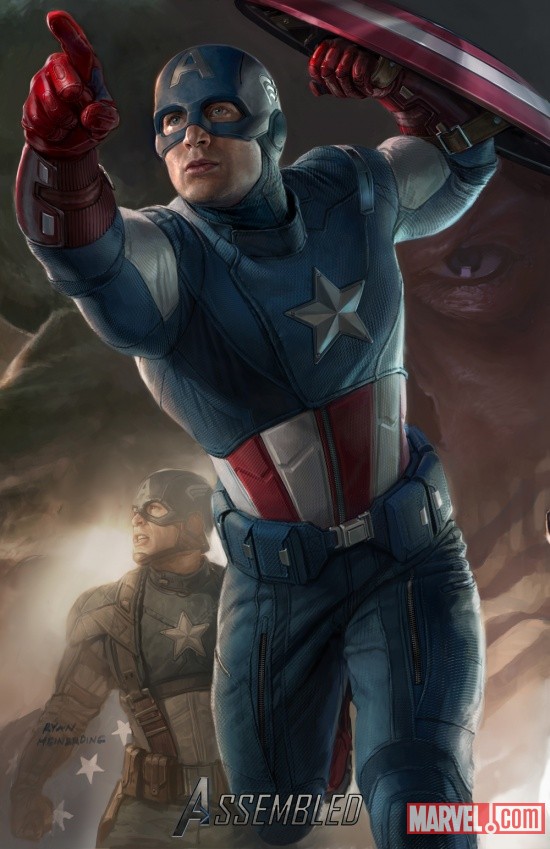
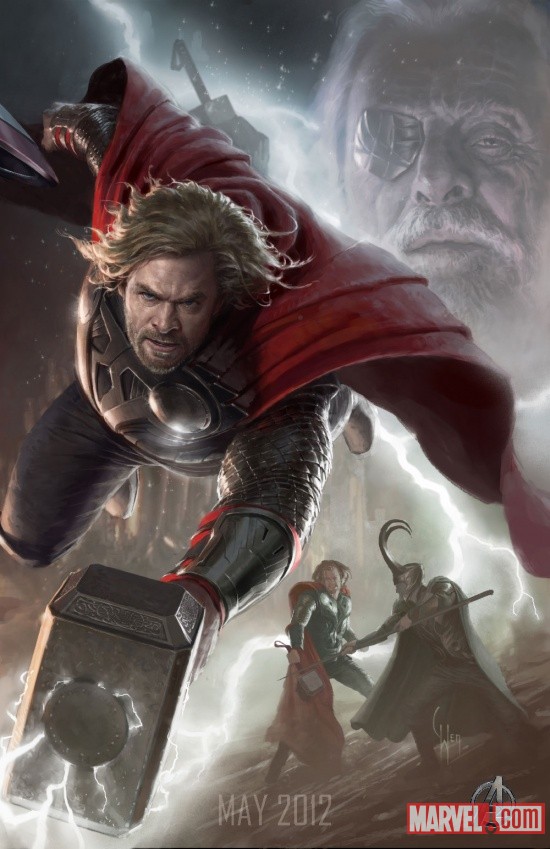
SDCC 2011: The Avengers Line-Up Concept Art Posters


One great thing Marvel has done this year for San Diego Comic-Con 2011 was the begin the major media and ad campaign for their 2012 summer tentpole blockbuster in The Avengers. This is a superhero team project which has been 3-4 years in the making. It all began with 2008’s Iron Man and finally concludes with 2011’s Captain America: The First Avenger. In-between these two films we got other members of Marvel Comics’ iconic Avengers team make their introduction through their own films and/or make appearances in all the films like Thor, the Hulk, Nick Fury, Black Widow, Hawkeye and SHIELD.

One of the coolest things to come out of the Marvel Studios/Paramount Pictures part of Comic-Con 2011 was the release of the concept art posters for not just The Avengers but for all the characters who make up the team. Each character poster shows each team member (even SHIELD gets their own with Nick Fury leading the agents) in a striking pose with background images showing scenes from past films which comprises what is being called “Marvel’s Cinematic Universe”. That term is just one way of saying that these films do not follow the timelines set down in the primary Marvel Comics universe (Marvel-616).

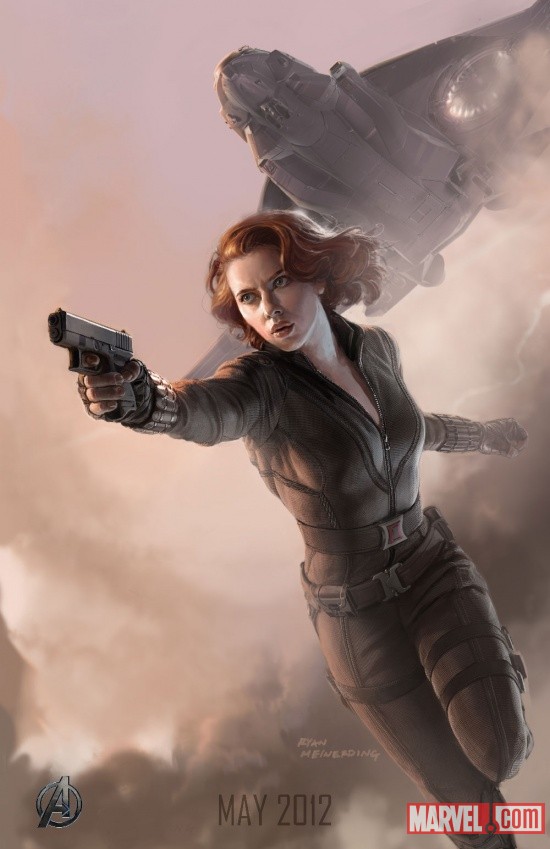
I’m not exactly sure who was the artist responsible for these concept art, but they’re great and brings to mind such cover artwork as Alex Ross, Drew Struzan and Dave Dorman. I’m sure someone over on Twitter or on Facebook will be able to figure out just who this awesome artist is. Some of the details in the background should make the comic book fans quite happy like the Quinjet in the Black Widow poster and the SHIELD Helicarrier which appear in both the Hawkeye and SHIELD posters.

With Comic-Con winding down the hype machine for The Avengers will definitely be on full swing with New York Comic-Con this October up next. Captain America: The First Avengers is now out in the theaters earning universal acclaim. The Avengers will assemble for a May 4, 2012 release date.

Source: Marvel

Trailer: The Amazing Spider-Man (Official)


San Diego Comic-Con is just less than a day away from official opening up it’s doors for 2011 and already we’ve gotten the official trailer for the fourth film in the Spider-Man film franchise, The Amazing Spider-Man. This time around the trio of Sam Raimi, Tobey Maguire and Kirsten Dunst have been replaced by Marc Webb, Andrew Garfield and Emma Stone as the franchise goes through a major franchise reboot.

The trailer pretty much shows a new take on the Peter Parker/Spider-Man origin story. There looks to be some changes in this version of the character’s origin. For one thing there’s no Mary Jane Watson to be seen as this reboot takes a page from the first issues of the Stan Lee and Steve Ditko comics as Gwen Stacy comes in as Peter Parker’s love interest. Emma Stone as a blonde still needs some getting used to, but then again she’s Emma Stone and I haven’t seen her in anything where she didn’t rock. Another major change to this origin story in the inclusion of Peter Parker’s biological parents in the early scenes before Uncle Ben and Aunt May make their entrance.

The question really is how does Andrew Garfield look as Peter Parker. He definitely looks the part to a certain degree, but from some of the scenes shown of him being Peter it looks like the filmmakers may be going a tad too much on the angst-part of Peter’s personality. Hopefully, Peter’s initial awkwardness and goofy attitude didn’t get toned down too much. If there’s anything about Peter Parker’s personality which long-time fans will agree on it’s that Peter’s always been a goofball and all-around smartass which is why Spider-Man was always a fan-favorite. He was never a brooding, emo-driven character.

Did the trailer blow me away or raise my anticipation for the film which is still a year away from release? Sadly, I will have to say no. The trailer looked good, but showing scenes of another take on the origin story that everyone who saw the first film already knows may be a misfire decision. I had trepidation about both X-Men: First Class and Green Lantern before those films’ releases. The former surprised me with how well the filmmakers pulled off that franchise’s reboot while the latter was a major disappointment despite having such positive buzz after WonderCon 2011.

Will The Amazing Spider-Man be the former or the latter? We shall find out in a year when the film official comes out on July 3, 2012.


Trailer: Captain America: The First Avenger (Theatrical)


The summer of 2011 has been called the Summer of Superhero Films. In early May we had Marvel Studios’ Thor film premiere to good reviews and it has had a certain level of success (though not the level of The Dark Knight success rabid fanboys and jaded film bloggers think every comic book-based film should be doing). Then next up was the fourth X-Men film from Twentieth Century Fox by Matthew Vaughn that seem to reboot the franchise from it’s downward spiral begun by the third film and the Wolverine origins film. This film garnered even higher praise than Thor and many saw it as equaling or surpassing the X2. While it’s box-office success has been good it didn’t make the sort of money previous films in the franchise have made in years past. Then we come to the recently released Green Lantern from Warner Brothers and DC Entertainment.

This film was to be the next crown jewel to join DC’s successful Batman film franchise and iconic Superman series which seems to be the only DC properties to have had a successful live-action adaptation. While the film did very good in it’s first weekend the reviews of the film range from “ok and fun” at best to “downright awful” at its worst. All three films have huge budgets and, most likely, all three will be a profit for their studios, but not runaway hits.

Maybe the public has begun to tire of superhero films as a cause for the less than cosmic box-office returns. One other reason could be that too many people have been blinded by the massive box-office success of Christopher Nolan’s The Dark Knight that every superhero film must now be compared to that one fair or not. This makes the job much harder for Marvel Studios’ second film of the summer, Captain America: The First Avenger, as that film looks to cement the foundation for next summer’s major blockbuster ensemble superhero film, The Avengers.

I don’t see Captain America doing TDK level money, but early screenings of the film has earned it some major positive buzz that had been missing from Thor. That early positive buzz and this latest trailer which really showcases the action of this period piece of a superhero film should help push Captain America to be a success no matter if it makes 200million dollars domestic or more.

One thing I’m sure of is that this latest trailer should be more people excited for Captain America: The First Avenger when it comes out on July 22, 2011.