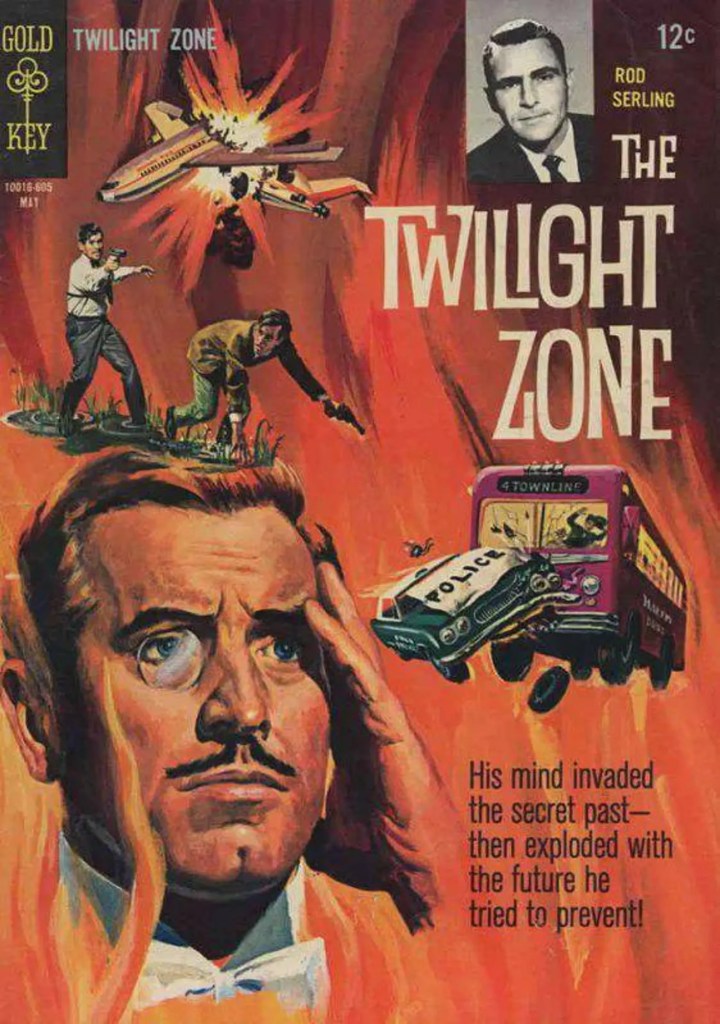
This cover is from 1961.
This cover is from 1961.
The 1978 film, Attack of the Killer Tomatoes, opens with a title card that would make James Nguyen proud. It informs us that people laughed when they first watched a film called The Birds. Then, years later, a flock of birds went mad and started attacking people. No one is laughing now.
As for the rest of the film, it opens with a housewife being menaced by a giant tomato and then it just keeps rolling on from there. Something is causing normal, everyday tomatoes to go on a rampage and no one can figure out what. The government is powerless. (The government’s competence is best exemplified by a scene where a helicopter crashes. Reportedly, the helicopter crash was not scripted but the film’s director decided to keep the scene anyway.) The president puts Mason Dixon (David Miller) in charge of defeating the tomatoes.
The film is one gag and one song after another. Mason has a group of eccentric people working for him, including a superstar gymnast and a man who is always dragging a parachute behind him. The streets are soon running red with tomato juice while clueless teenagers continue to listen to absolutely terrible song called Puberty Love….
In the past, I’ve struggled to define how a pleasure can be guilty but I think Attack of the Killer Tomatoes is actually one of the rare films that truly can live up to the label. It’s a pleasure because it’s just so silly and cheerfully stupid that it’s hard not to smile at it. It’s guilty because, premise aide, the film itself is never really as funny as you want it to be. Comedy — even when its something as silly as this film — is all about timing and Attack of the Killer Tomatoes never nails the timing of its gags. Instead, it plays out like a stoned daydream, amusing to talk about but a bit boring to actually witness.
That said, the film deserves some sort of award for its title and also for going on to inspire not only a few sequels but also a cartoon series. Producer Stephen Peace went on to have a successful career in California politics. Good for him.
Previous Guilty Pleasures

by George Wilson
The sea is a dangerous place indeed.
 Writer George Plimpton (Alan Alda) is a Park Avenue sophisticate who practices “participatory” journalism. He has already written about pitching in an exhibition all-star game and getting knocked out by Sugar Ray Robinson. He is having trouble coming up with his next stunt until he goes to Central Park and plays a touch football game with his girlfriend Kate (Lauren Hutton) and his editor, Oscar (David Doyle). Oscar sees George throwing the ball and decides that George should write about going to a professional football team’s training camp as a player.
George, who fantasizes about throwing the game-winning touchdown, is enthusiastic. Most of the teams that George approaches are less enthusiastic but finally, the Detroit Lions agree to sign him as a quarterback. Once the other players realize that George is a writer and not a professional athlete, there’s a lot of resentment. As Guard John Gordy (playing himself) puts it, he could easily get injured while protecting an inexperienced quarterback like George. George can always go back to Park Avenue but, for the rest of the players, the game is their life and they don’t like the idea of some outsider coming in and treating it all like a joke. At first, only the fearsome defender Alex Karras (also playing himself) is willing to support George but eventually, George’s refusal to give up wins over the rest of the team. They even let him score a touchdown during practice.
When the preseason begins, George waits for his opportunity to take the field. How many yards can he lose in three plays?
Paper Lion is based on a true story. In 1963, George Plimpton did attending training camp and play a scrimmage for the Lions and he later wrote a book about the experience. The movie changes the time period from ’63 to ’67 so that all of the then-members of the Lions could play themselves. (Though Karras was a friend of Plimpton’s, he was actually suspended during the 1963 season and, unlike in the movie, never joined Plimpton on the practice field.) The film plays Plimpton’s football career largely for laughs, celebrating every guy’s fantasy of being a sports star while also showing why it’s probably best to leave the actual game to the professionals. Alan Alda doesn’t imitate Plimpton’s famous Mid-Atlantic accent but he does capture the excitement of a man getting to live out his fantasy.
Paper Lion was made with the full cooperation of the NFL and a good deal of the film’s final third is made up footage that was shot for an actual game. Seen today, it’s interesting to see how positively Paper Lion portrays both the game and its players and to contrast it with how the game is usually portrayed today. There’s no talk of steroids or fears of multiple concussions. All of the players are clean-cut, friendly, witty, and helpful. Even the training camp hazing is all done is good fun. Paper Lion introduces us to the nicest people in the world and they’re all football players!

by George Wilson
This cover is from 1978.
Published by Gold Key Comics, Boris Karloff Tales of Mystery ran from 1963 to 1980. The first few issues contained stories based on episodes of the Boris Karloff-hosted anthology series, Thriller, but later issues featured original tales of horror, science fiction, and mystery, all of which were introduced by a comic book version of Boris Karloff. Today, to help us celebrate Halloween, here is a sampling of the covers of Boris Karloff Tales of Mystery!

Artist Unknown

Artist Unknown

by George Wilson

by George Wilson

by George Wilson

by George Wilson

by George Wilson

by George Wilson

by Jesse Santos

by Luis Dominguez

by Luis Dominguez
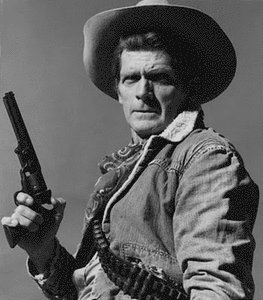
Who was Steve Holland?
He was one of the most familiar faces in the world of the pulps. An actor and a model, Holland’s rugged good looks inspired a countless number of magazine and paperback covers. Over the course of his career, Holland served as the model for everyone from tough private investigators to prehistoric warriors to futuristic adventurers to suburban husbands.
Check out just a few of the adventures of Steve Holland below:

by David Bergen

by James Elliott Bama

by George Wilson

by Jack Faragasso

by Stanley Borack


by Mort Kunstler


by Robert Maguire

by Robert Maguire


by Stanley Borack


by Victor Prezio

