Embracing the Melodrama Part II #75: Witness (dir by Peter Weir)


Witness_movieLast night, I was lucky enough to watch Witness, a best picture nominee from 1985.

Taking place in Pennsylvania, Witness tells the story of what happens when an Amish widow named Rachel (Kelly McGillis) and her 8 year-old son Samuel (Lukas Haas) decide to take a trip to visit Rachel’s sister.  Traveling on an Amtrak train, Samuel is amazed by his first view of the world outside of the close-knit and insular Amish society.  However, Samuel’s excitement soon turns to horror when they arrive in Philadelphia and he witnesses a man being brutally murdered.

Detective John Book (Harrison Ford, who received his first and, to date, only Oscar nomination for this film) is assigned to the case and arranges for Rachel and Samuel to stay with his sister.  John soon discovers that the murder was committed by two crooked cops, McFee (Danny Glover, who is pure evil in this film) and Ferguson (Angus MacInnes).  John goes to his superior officer, Chief Schaefer (Josef Sommer) with his evidence.  Soon after, McFee attempts to kill and seriously wounds John.  John realizes that Schaefer must be corrupt as well.

Book manages to drive Rachel and Samuel back to their farm in Lancaster County but, after dropping them off, he passes out from blood loss.  Knowing that sending John to the hospital would reveal Rachel and Samuel’s location to Schaefer, Rachel’s father (Jan Rubes) reluctantly allows John to stay at the farm.

And so, while McFee, Ferguson, and Schaefer search for him, John temporarily pretends to be Amish.  He works in the fields.  He helps to build a barn.  He becomes something of a surrogate father to Samuel and he begins a forbidden flirtation with Rachel.

He also goes to town, where he watches as an idiotic local bullies the Amish, knowing that their religion forbids them from fighting back.  John responds by punching a bully, upsetting both the Amish and the a local store owner who yells that this will be terrible for the tourism.  In many ways, the scene is played for laughs and applause but there’s a very serious subtext here, as it would appear that the area’s main appeal to tourists is that you can humiliate the Amish without having to worry about any sort of retaliation.

While we, as viewers, definitely get some satisfaction from seeing John punch that jackass, it also allows Schaefer to discover where he and Rachel are hiding.  One morning, McFee, Ferguson, and Schaefer pull up outside the farm.  They get out of their car and, as the sun rises and with beautiful green fields on either side of them, the three men hold up their shotguns and start to walk down the road….

Witness may technically be a cop film but it’s actually so much more.  It’s a character study of a deeply cynical man who finds himself changed by simple and innocent surroundings.  It’s a love story, with Ford and McGillis illuminating the screen with their chemistry.  It’s a celebration of community, with the harshness of Philadelphia being contrasted with life among the Amish.  It’s a film full of beautiful images and it also features an excellent performance from Harrison Ford.

It’s a good film.  I’m glad that I witnessed Witness.

In Memory of Robin Williams #1: Dead Poets Society (Dir by Peter Weir)


Robin Williams

Last Monday, after I first heard that Robin Williams had committed suicide, I struggled to find the right words to express what I was feeling.  Finally, I ended up posting this on Facebook:

I keep trying to write something about Robin Williams but the words aren’t coming to me. It’s all too big and strange and sudden and I can’t find the words to sum up my feelings. I feel like a part of my childhood died today. So, instead of trying to be more eloquent or wise than I actually am, I’m just going to say R.I.P., Robin WIlliams.

Finally, a little over a week later, I still don’t know what to say.  How do you sum up a life in just a few words?  I don’t think that they can be done for anyone.  It certainly can’t be done for as iconic a figure as Robin Williams.  So, instead of trying to do the impossible, I’ve spent the last few days watching and reviewing a few of Robin Williams’ films.

And, of course, one of those films had to be the 1989 best picture nominee Dead Poets Society.
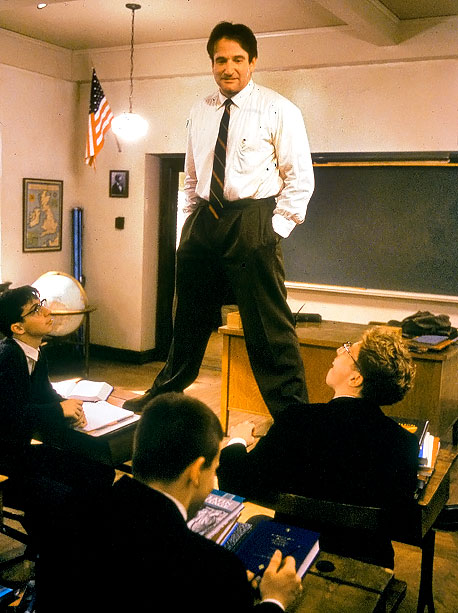
DEAD-POETS-SOCIETY

Now, a quick warning.  The review below is going to contain spoilers.  I’m going to talk about some very important plot points.  But surely you’ve seen Dead Poets Society already.  And even if you haven’t seen it, surely you’ve heard what the film is about and surely, you know what happens.  After all, who doesn’t?  But if you are one of those people who does not know or who has not seen the film — well, why haven’t you?

The first time I ever saw Dead Poets Society was in a high school creative writing class.  Our teacher — who, it quickly became apparently, considered herself to be the real-life version of the teacher played by Robin Williams — showed it to us, over the course of three class periods, as an introduction to writing poetry.  I enjoyed the film but the rest of the class absolutely loved it.  Especially the guys.  For the rest of the class year, I would listen to those guy as they bragged about how they were seizing the day.  I remember one day, the classroom was empty except for me and one of the boys.  I can’t remember what led to him doing it (and it could very well have been my suggestion that he try) but he eventually ended up standing on top of a desk just like the students at the end of the film.  Unfortunately, public high school desks aren’t quite as sturdy as private school desks and my friend soon ended up crashing to the floor as the desk slipped out from underneath him.

Ah, memories.
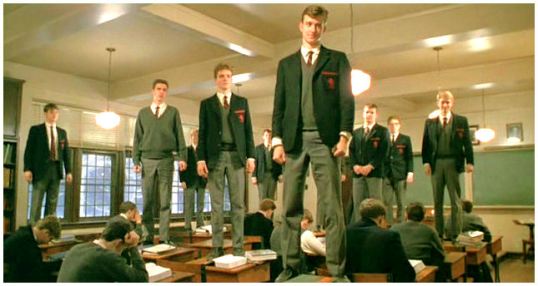
dead-poets-society (1)

Yes, Dead Poets Society is one of those films.  It’s a film that everyone seems to have seen, loved, and found to be inspirational.  And I have to admit that I’ve grown to appreciate it more over the years since I first saw it back in creative writing class.  With each subsequent viewing, I find myself less critical of the film’s melodramatic and predictable moments and more willing to accept the film for what it is — a celebration of life, poetry, and teaching.  Dead Poets Society, from the very moment that Robin Williams makes his first appearance sitting at the end of a line of stodgy old men and flashing an unapologetically impish smile, is a film that defies easy cynicism.  It’s a film that embraces you and you have to be very hard-hearted not to embrace it back.

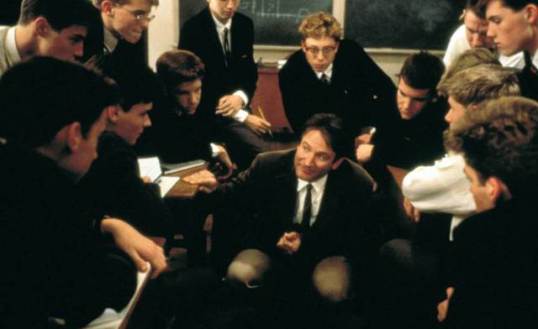
Dead Poets Society, of course, tells the story of a private school in the 1950s and what happens when a new teacher (Robin Williams, naturally) encourages his students to celebrate creativity, to “seize the day” as the saying goes.  Not surprisingly, just about every other adult thinks that the students would be better off not seizing the day but instead preparing for a life of WASPy conformity.  This leads to a few of Mr. Keating’s students forming a secret society where they can read poetry, talk about their feelings, and basically do their best to honor the memory of Walt Whitman.

poetrybeauty gif

There are seven members of the Dead Poets Society:

There’s Gerard Pitts, who doesn’t really make much of an impression.  The main thing that I always notice about Gerard Pitts is that he looks like a young version of Sam Waterston.  This made sense when I checked the end credits and I discovered that he was played by James Waterston, son of Sam.

Stephen Meeks (Allelon Ruggiero) is another one who doesn’t actually get to do much (beyond boast about the fact that he has a genius I.Q. and create a makeshift radio) but, with his cute glasses, unruly hair, and friendly manner, it’s impossible not to like him.

Of the three main villains in Dead Poets Society, none of them are quite as loathsome as Richard Cameron (Dylan Kussman).  The stern headmaster (played by Norman Lloyd) and the judgmental father (played by Kurtwood Smith) at least have the excuse of being old and set-in-their-boring-ways.  Cameron, however, starts out as a member of the Dead Poets Society but still has absolutely no problem betraying them.  As opposed to the adults in the movie, Cameron is someone who still had a chance to be something more than a worm. That being said, Dylan Kussman makes Cameron into a memorable worm.

Then there’s Knox Overstreet (played by Josh Charles, who appears to have only aged a year or two in between this movie and the first season of The Good Wife).  We know that Knox is rich because his name is Knox Overstreet.  Knox has a crush on a girl who goes to the local high school.  Knox’s subplot doesn’t really amount to much but it’s impossible not to like him because Josh Charles was (and is) simply adorable.

Charlie Dalton (played, quite well, by Gale Hansen) is the one who most enthusiastically embraces the idea of seizing the day.  He’s the one who pretends to get a tattoo, who demands to be known by a new name, who attempts to protest the school’s out-dated traditions, and who ultimately is punished with expulsion after he physically attacks Cameron.  (And, as sorry as I was to see Charlie leave the movie, Cameron totally deserved it.)  For a few months in 2008, Gale Hansen was a very active participant on the IMDB message boards, answering questions, giving advice, and generally just being a very gracious guy.  However, he suddenly stopped posting and, just as mysteriously, all of his previous posts were subsequently deleted.  Hansen, himself, hasn’t acted since 1998 and that’s a shame because he really did do a good job as the enthusiastic, idealistic, and not-quite-as-worldly-as-he-thinks Charlie Dalton.

Neil Perry (played by Robert Sean Leonard) is the one who, inspired to seize the day, appears in a local production of A Midsummer Night’s Dream and, as a result, earns the wrath of his overbearing father.  Seen now, in the shadow of Robin Williams’ tragic death, the scene where Neil commits suicide takes on a terrible poignance and it no longer feels as melodramatic as it did the first time that I saw it.  Whereas, originally, it seemed hard to believe that a character played by the energetic and charismatic Leonard would end up committing suicide over a play, we now know that energy and charisma do not necessarily equal happiness.

And finally, there’s Todd Anderson (played by a very young Ethan Hawke), who is pathologically shy and who, at the end of the film, finally finds the strength to climb up on his desk.  After years of seeing in him in various Richard Linklater films, it’s strange to see the usually verbose Hawke playing such an introverted character.  But he does a good job, turning Todd into the film’s moral center.

Robin Williams In DPS

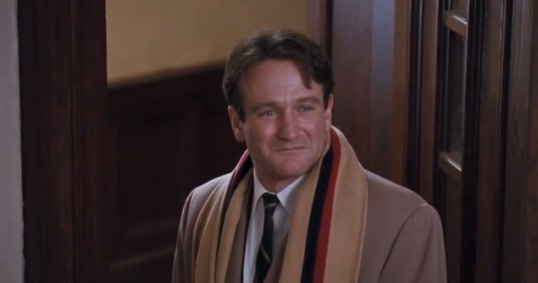
And then there’s their teacher, John Keating who, quite frankly, might as well be named Robin Williams.  That’s not to say that Williams doesn’t give a good performance as Keating.  Indeed, Williams is the glue that holds the film’s ensemble together and his performance so dominates the entire film that, every time that I’ve seen it, I’ve always been surprised to discover just how little screen time he actually has in Dead Poets Society.  As embodied by Robin Williams, John Keating becomes the type of teacher that everyone wishes they could have had just once.  The power of his performance comes from the fact that he not only inspires the viewers to “seize the day” but he actually makes you believe that the day is worth holding on to.  Without Robin Williams, Dead Poets Society would be easy to dismiss as just being a film about a bunch of privileged teenagers reading poetry and pretending to be rebels.  With Williams, however, the film becomes a celebration of life.

Robin Williams, R.I.P.
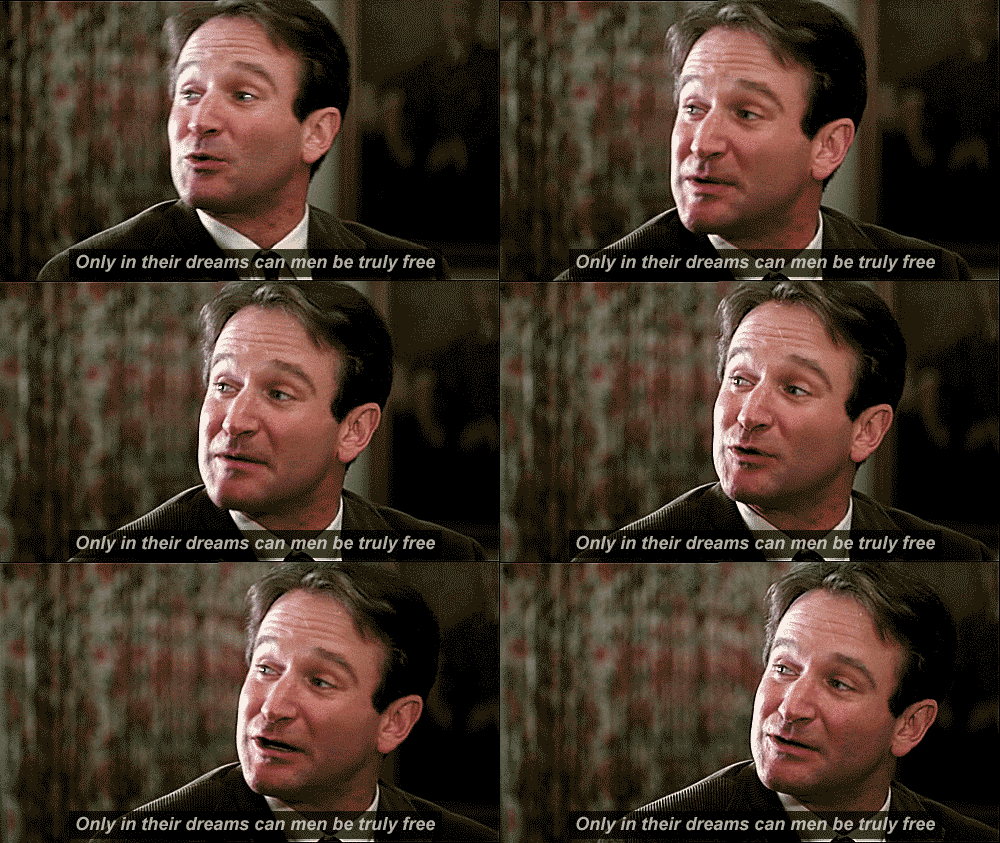
RW in DPS


Scenes I Love: Dead Poets Society (dir. by Peter Weir) R.I.P. Robin Williams


dead-poets-society-your-verse

With each passing year I get older and part of that process means many of the people I grew up admiring and looking to for inspiration has passed. They’ve all left an indelible mark on me and continue to push and prod me in making my own mark on the world before my own time comes to pass.

So, it was with a sad heart when I found out that Robin Williams passed away today. As to the manner of his passing I won’t dwell on it, but instead on how he has made an impact on my life and on the world. He might have just been a comedian and an actor known to have entertained several generations of people, but he would always be John Keating to me, first and foremost.

I was already a fan of Williams from watching his hit show Mork & Mindy. I’ve even been a fan of his films, but I truly began to admire the man after his performance as English teach John Keating in 1989’s Dead Poets Society. He was able to take his rapid-fire gift for gab but meld it with such a poignant and emotional performance as a teacher in a tradition-bound prep school who really cared about the kids in his charge.

I would say that his performance and this film was instrumental in opening up the world of literature and the joys of the written word to my teenage self. This film and his work in it showed me that literature shouldn’t be something to be endured, but instead something that should nurture and inspire me.

To say that Robin Williams has been an inspiration to me would be an understatement.

Rest in peace, my captain and you’ve certainly left your verse on this world.

Quickie Review: Master and Commander: The Far Side of the World (Peter Weir)


If there was a film which deserved better when it first came out in 2003 it would be Peter Weir’s epic adaptation of the Patrick O’Brian seafaring novels starring the character of Capt. Jack Aubrey. It was just bad luck on the part of Weir’s film that it came out the same year and month as the juggernaut that would sweep through not just the box-office for the 2003 holiday season, but all through the award-season. If Master and Commander: The Far Side of the World had only come out a year later there’s a great chance it would’ve been the frontrunner for 2005 Academy Awards for Best Picture, Best Director, Best Adapted Screenplay and many more. But the juggernaut that was Peter Jackson’s Lord of the Rings: The Return of the King would not be denied after two previous years when Jackson and his magnum opus were passed over.

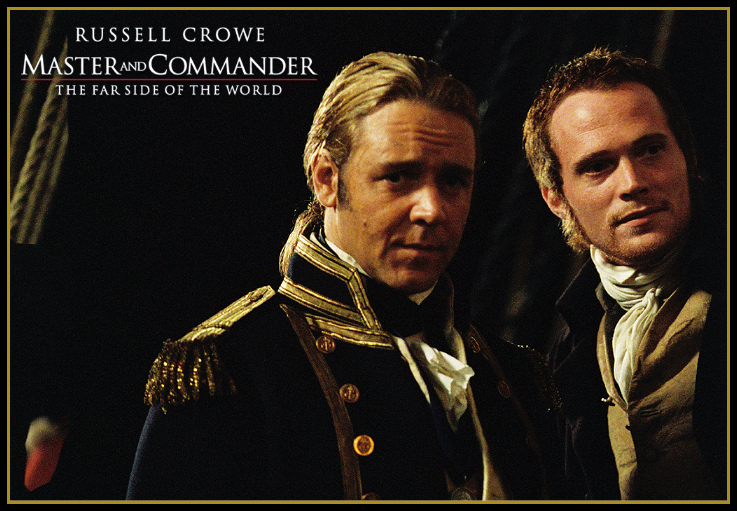
To say that Peter Weir was at the top of his game with Master and Commander would be an understatement. Working from a script written by Weir himself and John Collee, the film would take several episodes from the Patrick O’Brian Aubrey-Maturin novels and combine them to make a coherent and thrilling period piece that rarely ever get made anymore. This was epic filmmaking at its finest with Weir’s direction keeping the long-running time of the film from becoming too tedious. Yet, he was also able to keep the film from becoming one battle setpiece following another. There was enough of a balance between the quiet storytelling, especially between the characters of Capt. “Lucky” Jack Aubrey (played by Russell Crowe in what had to be his best role ever) and his close friend and ship’s doctor Stephen Maturin (Paul Bettany matching Crowe scene for scene) to keep the film grounded in reality.

Master and Commander is set during the Napoleonic Wars when France and England battle it out on land and in the high seas. On one side is the HMS Surprize captained by Jack Aubrey which patrols the sea lanes from French privateers looking to attack and loot the rich English whaling ships to help fund Napoleon’s ambitions. The film is actually a cat-and-mouse thriller wrapped around a character piece as Aubrey’s ship and crew, outgunned and less armored than the French frigate Acheron it has come across during its patrol, must not just try and survive but find a way to beat it’s larger opponent. It’s during the quiter scenes in-between sea engagements that the film actually becomes stronger. We see life onboard the HMS Surprize as being quite harsh and primitive and not so glamourous as past films about sailing life would have audiences believe. The film shows how this harsh life for volunteers and press-ganged crew ratings creates a strong bond of fellowship amongst the crew members that when they believe someone is jeopardizing their lives they quickly turn on that individual. But it’s through the near-dictatorial handling of his crew which keeps both ship and crew from devolving into mutiny. Crowe does a great job of giving Jack Aubrey that balance of ruthless taskmaster whose word is law onboard, but also gives his captain that bon vivant flair which when used accordingly makes Aubrey a hero to the very men he has to lord over.

This benevolent dictator was balanced out by Bettany’s Dr. Maturin who acts not just as the scientific counter to Aubrey’s militaristic personality, but also as the conscience of the ship who looks first to the crew’s well-being. This dynamic between Crowe and Bettany kept the film anchored and stabilized as we see the long-standing friendship between these two get tested not just by the crisis they find themselves in but also the vast ideological differences between the military man and the scientist. Yet, despite all their problems and difference when things became rough the two would settle it amicably and concentrate on their shared task with their bond of friendship intact and much stronger after.

The film doesn’t shirk it’s thrills as Master and Commander provides audiences with some of the most thrilling and accurate portrayal of naval combat during the Napoleonic era. There are no steel-hulls or rapid-fire guns. The engagements between the HMS Surprize and the Acheron were all brutal affairs from the first time the latter ambushes Aubrey’s ship early in the film to the final battle which sees not just ship-to-ship fighting but boarding actions as the crew of the Surprize attempt a desperate gamble to take the fight to the bigger French privateer. It’s a testament to Weir’s direction that even through the chaotic nature of each battle he’s able to keep each scene easy to follow and allow for main characters to stand out for audiences to recognize.

It’s a shame that the film didn’t succeed in the box-office more than it did. Master and Commander: The Far Side of the World showed that there was still old-school epic filmmaking left in Hollywood with filmmakers willing to tell a grand story with bigger-than-life characters on a broad canvas. The fact that it took an even more epic film to surpass Peter Weir’s film shouldn’t detract from this film’s accomplishments.

Poll: Who should direct “The Hobbit”?


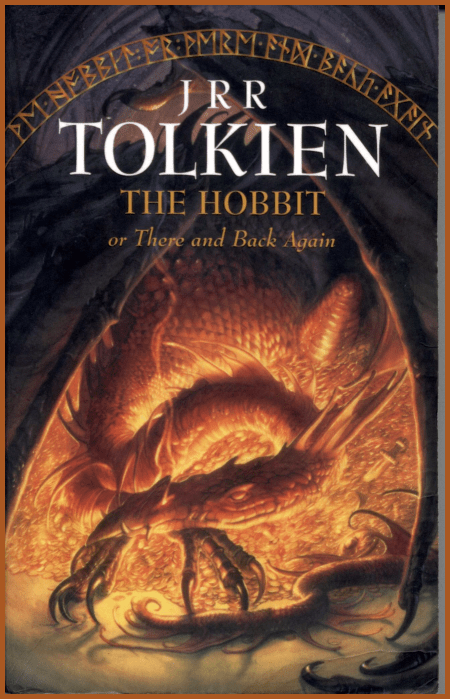
Now that Guillermo Del Toro has made it official that he’s leaving The Hobbit as director there’s now a scramble to find who will be replacing him on the project. Del Toro was universally hailed as the best choice the first time around when Peter Jackson made it known that he would only produce the two-part film and not get back to directing them. The many delays due to MGM’s financial troubles, script still not completed and casting still not done forced GDT to back away and could shelve the project for good.

The only thing keeping the project afloat is the fact that this project has a major fan-base already clamoring to see it made. With the huge success both critically and commercially of Jackson’s The Lord of the Rings Trilogy this two-part film adaptation of The Hobbit is pretty much a lock to do the same in the hands of the right filmmaker.

Jackson and studio heads holding the rights to the project will not want just any director. While Peter Jackson was still a little-known director and an outsider from the Hollywood scene when he began work on the original trilogy, this time around studio people will want a marketable name or, at the very least, a filmmaker who has the skills to follow Jackson’s work. Guillermo Del Toro was the perfect choice now someone else has to take up the baton.

Some have mentioned Peter Jackson as the only choice if he’d back off comments that he won’t direct but only produce. There’s a camp that say now’s the time to sign Sam Raimi who recently has left another mega-franchise and now available. Raimi is an interesting choice in that knows how to handle huge blockbuster projects and he definitely needs a home-run to follow-up a bad end as helmer of the Spider-Man franchise.

Another name to come up which I would welcome if Jackson doesn’t return as director is Guillermo Del Toro’s fellow countryman and one of his best friends: Alfonso Cuaron. Cuaron has shown himself to be one of his generation’s best. He’s done fantasy as helmer of the third Harry Potter film (universally seen as the best in the franchise) and may see tackling this blockbuster project as a major artistic challenge. I, for one, would hope Cuaron takes the job if offered.

The one dark horse name which has begun making the rumor mill about who may replace GDT is Jackson’s own protege, wunderkind filmmaker Neill Blomkamp. He’s worked with Jackson already and his first feature-length film, District 9, shows he has the storytelling and directing chops. The only drawback to him accepting the job if offered is that this will be a major-budgeted studio film which means it could turn into another Halo-clusterfuck where he commits and the project dies due to problems within the studio.

Other filmmakers have been mentioned like Brad Bird, Jean-Pierre Jeunet, Andrew Adamson, Tim Burton and Peter Weir just to name a few. In the end, my money is on either Jackson just taking the reins on the film if he thinks no one else would give the necessary commitment to the project it deserves, Cuaron takes on the job as a way to challenge himself or Jackson protege Blomkamp tackling something bigger as a way to add more cred to his growing reputation as one of the best young filmmaker of his generation.

Who do you think should take charge of The Hobbit now that Guillermo Del Toro has left?