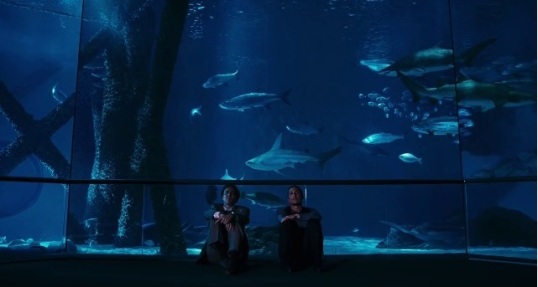
6 Shots From 6 Ken Russell Films


4 (or more) Shots From 4 (or more) Films is just what it says it is, 4 (or more) shots from 4 (or more) of our favorite films. As opposed to the reviews and recaps that we usually post, 4 (or more) Shots From 4 (or more) Films lets the visuals do the talking.

This October, we’re using this feature to highlight some of our favorite actors and directors, all of whom have made invaluable contributions to the horror genre!  Today, we pay tribute to the iconoclastic British director Ken Russell with….

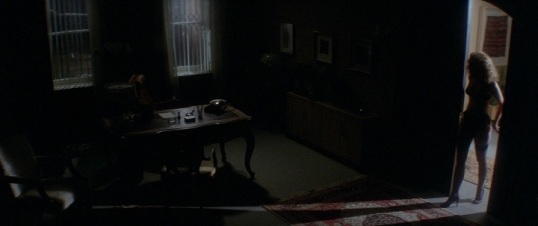
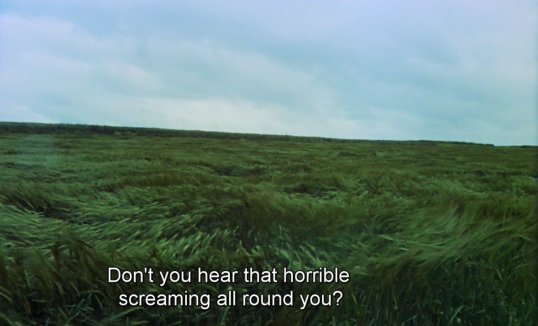
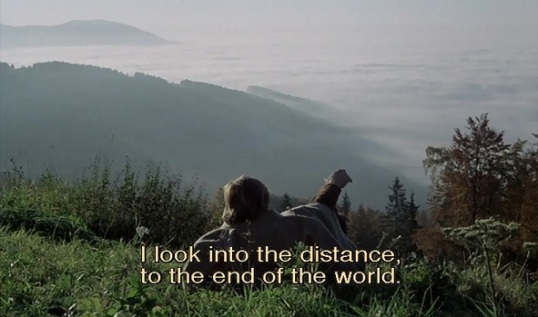
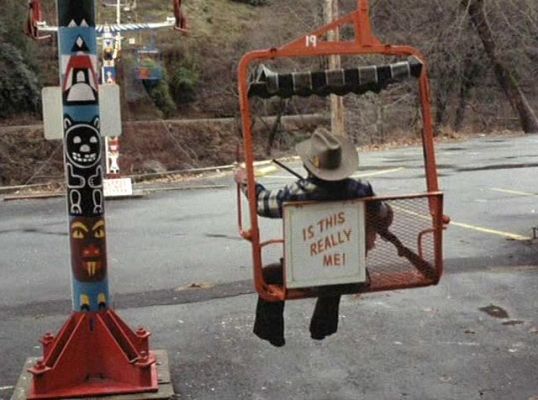
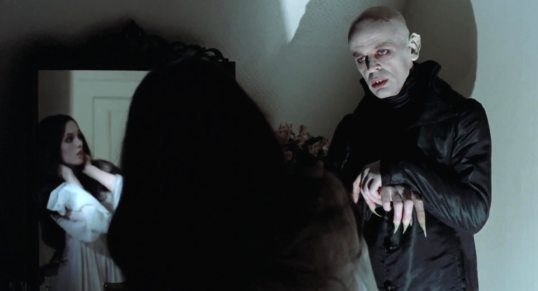
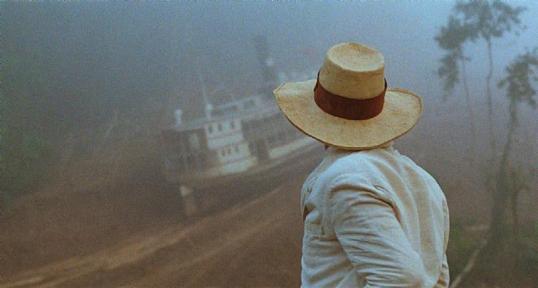
6 Shots From 6 Ken Russell Films

The Devils (1971, directed by Ken Russell, DP: David Watkin)

Altered States (1980, dir by Ken Russell, DP: Jordan S. Croneweth)

Crimes of Passion (1984, dir by Ken Russell, DP: Dick Bush)

Gothic (1986, dir by Ken Russell, DP: Mike Southon)

Salome’s Last Dance (1988, dir by Ken Russell, DP: Harvey Harrison)

The Lair of the White Worm (1988, dir by Ken Russell, DP: Dick Bush)

Horror Film Review: The Devils (dir by Ken Russell)


In 17th Century France, Louis XIII (Graham Armitage) may be king but it’s the devious Cardinal Richelieu (Christopher Logue) who holds the power. Richelieu has convinced that king that every walled city in France should have its walls blown up, the better to keep track of what’s actually happening within the city. Unfortunately, for Richelieu, Louis XIII promised the Governor of Louden that he would never harm any structure in the city, leaving its walls untouchable. While Louis XIII concentrates on throwing outdoor parties where murdering protestant is the main source of entertainment, Richelieu searches for an excuse to destroy the walls of Loudon.

Along with being frustrated by the fact that Loudon retains its walls, Richelieu is also upset that the unofficial leader of the city is Ubrain Grandier (Oliver Reed), a decadent priest who has not only criticized the discipline of clerical celibacy but who has also publicly opposed the Cardinal’s efforts to increase his own political power. Grandier has made it clear that, as long as he’s in control, the walls of Loudon will never came down and the people of Loudon, fearful of the plague that is ravaging the world outside of the walls, support him.

Among Grandier’s many admirers is Sister Jeanne des Agnes (Vanessa Redgrave), a hunchback who is also the abbess of the local convent. Having become sexually obsessed with Grandier, Agnes requests that he become the confessor of the convent. When Grandier refuses, it sets off a chain reaction that eventually leads to Grandier being accused of worshipping the Devil and “bewitching” Sister Agnes and several other nuns. With the arrival of Father Barre (Michael Gothard), a fanatical witch hunter, the city of Loudon descends into darkness and decadence.

Directed by the infamous (and, let’s just admit it, brilliant) Ken Russell and first released in 1971, The Devils is not an easy film to see. When the film was originally released in Britain, it was controversial for its uncompromising depiction of 17th century torture and its combination of religion and sexual imagery. (This, of course, was a recurring theme in almost all of Russell’s work.) The British censors demanded a few minor cuts before agreeing to approve the film for release. While the British censors focused on the scenes of violence, Warner Bros. also removed several sexually explicit scenes, the most infamous of which was a sequence in which a group of naked nuns sexually defiled a statue of Christ. Also removed was a scene of a priest masturbating while watching the nuns and finally, a scene in which Sister Jeanne masturbated with a charred femur bone. Russell was not happy with the changes and, needless to say, he was even more upset when Warner Bros. removed an additional three minutes before releasing the film in the United States.

In the U.S., The Devils was even more controversial than it had been in the United Kingdom and, while many critics praised it as being a powerful attack on hypocrisy, others described it as merely being pornographic. Despite the cuts that were made, the American version of The Devils was slapped with an X rating and Warner Bros. attempted to distance itself from the controversy that had developed around the film. As of this writing, The Devils has never been given a proper Region 1 DVD or Blu-ray release. It’s rare that ever shows up on any streaming platforms. Even YouTube has only a handful of scenes. If you want to watch The Devils in America, you’re going to have to track down a VCR player and watch it on VHS. And, even then, you’ll only be seeing the version that was cut for the U.S.

Will Ken Russell’s original, uncut version ever be seen in America? It’s a question that many film students have asked themselves. In 2002, a 117-minute edition of The Devils played in London, featuring some of the footage that was cut from the film’s original release. However, that version is still considered to be incomplete and it’s certainly not available here in the United States. The Devils does occasionally show up on Shudder, which is how I saw it earlier this year. Of course, the Shudder version was the cut American version, which Russell repeatedly disowned.

Watching the film, I could understand Russell’s anger. It wasn’t just that scenes had been cut out of the film. It was that the scenes were often edited out with such a lack of finesse that it made the film seem disjointed. Russell was a director known for his hallucinatory and deliberately over-the-top style. When the film abruptly cuts away from showing us its most shocking images, it feels antethical to everything that Russell was about as a filmmaker. On the one hand, it’s easy to say, “Who cares if a scene of Vanessa Redgrave masturbating with a charred femur bone has been removed from the film? Who wants to see that?” But if you watch The Devils, it becomes apparent that it’s not about what would be pleasant to see. Indeed, in many ways, The Devils is meant as a deliberate attack on the senses, one in which shocking imagery is used to awaken the audience from their complacency. As such, the controversy about how the film was cut is not about what’s acceptable. Instead, it’s about the fact that Russell has created a world where it somehow makes total sense that Sister Jeanne would pick up the femur and make use of it. By editing the scene so that it abruptly ends with Jeanne merely looking at the bone, Warner Bros. forced The Devils to not be true to itself.

And yet, despite all of that, The Devils remains a powerful and disturbing film, a hallucinatory collection of nightmarish images and haunting scenes. The excessive stylization that was Ken Russell’s trademark is perfect for this story of an entire community caught up in a frenzy of paranoia and repression. Though a period film (and based on a true story), Russell’s Loudon resembles an alien landscape, an almost expressionistic city of pristine walls and dirty streets. Vanessa Redgrave’s twisted nun stalks through the film like an ominous spirit, both wanting and hating Grandier at the same time. When the “possessions” begin, the possessed finally have the excuse to do what they truly want and to live just as wantonly as the men who previously controlled their lives. Because they’ve come to believe that they’re no longer responsible for their own actions, they can indulge in every depravity. But with Louis XIII casually murdering protestants for sport at his estate and Richelieu manipulating church policy to his own ends, the film asks why the people’s actions are more worthy of condemnation than the actions of the people who rule them.

The Devils has reputation for being blasphemous. It is, of course, nothing of the sort. After I watched the film, I did a little research and I was not surprised to discover that Ken Russell was a practicing Catholic because only a Catholic could make a film that both celebrated what the Church could be while also condemning it for so often falling short. While Richelieu represents the people who use religion as a vehicle for their own drive for power and Sister Jeanne and the witch-hunter Father Barre represents the fanatics who use church doctrine to justify their own madness, it is the sinner Father Grandier who represents what the Church should be. It is Grandier who is ultimately forced to put his own life at risk to protect the people of Loudon.

Is The Devils are horror film? Some would probably argue with my claim that it is. They would probably claim that it’s a historical drama with a heavy political subtext, However, for me, the imagery itself is disturbing enough to justify calling The Devils a horror film. The possessed of Loudon eventually prove themselves to be as mad as any of the infected people from George Romero’s The Crazies and the torture that Grandier suffers is frightening specifically because it’s all based on fact. There really was a town named Loudon that had walls. There really was a priest named Grandier who was accused of practicing witchcraft and who suffered the most vile torture as a result.. The Devils is a film about people driven made by a combination of repression and fanaticsm. It’s a horror film because it’s true and, needless to say, the madness that possessed Loudon didn’t die out in the 17th Century. It’s continued into the present day.

Oliver Reed may seem like an odd choice to play a priest but he gives one of his best performances as the charismatic but foolishly cocky Grandier. Vanessa Redgrave is frightening as the disturbed Sister Jeanne and British actor Murray Melvin is alternatively sympathetic and pathetic as a priest who comes to believe in Grandier’s innocence. For me, though, the film is stolen by Michael Gothard, who plays the fanatical witch hunter, Father Barre. With his long hair and his glasses, Father Barre bears a definite resemblance to John Lennon and the film portrays him as being the 17th century equivalent of a rock star, an arrogant and sensual man who encourages people to indulge in their most secret desires so that he can then declare them to be possessed and in need of an exorcism. Gothard had a magnetic screen presence, allowing him to steal scenes from even formidable talents like Oliver Reed and Vanessa Redgrave. Gothard would go on to play the silent assassin in the James Bond film, For Your Eyes Only and was, again, memorably threatening. Sadly, Gothard took his own life in 1992.

Someday, perhaps the full unedited version of The Devils will be available. Until then, even the edited version retains its power to shock, disturb, and make you think. Today, more than ever, its portrait of hypocrisy and mass madness feels relevant. The modern age is still ruled by hysteria and paranoia and our leaders are still looking for any excuse to take down any walls that might protect us from having to submit to their will. How different is Sister Jeanne from the people who are currently hurling accusations on social media? How different is Father Barre from the the people who were are currently told have all the answers? We may no longer burn people at the stake but we’ve found new ways to silence voices of dissent. The film may have been set in 17th Century France and first released in 1971 but Ken Russell’s masterpiece is all about the modern age. The Devils in not an easy film to watch or find but it is more than worth the effort to track down.


Horror on the Lens: Robot Monster (dir by Phil Tucker)


Hi there and welcome to October!  This is our favorite time of the year here at the Shattered Lens because October is our annual horrorthon!  For the past several years (seriously, we’ve been doing this for a while), we have celebrated every October by reviewing and showing some of our favorite horror movies, shows, books, and music.  That’s a tradition that I’m looking forward to helping to continue this year.

Today’s horror film is a true classic of its kind, the 1953 science fiction epic Robot Monster.

Now, I should admit that this is not the first time that I’ve shared Robot Monster in October.  I share it every year and, every year, YouTube seems to pull the video down in November.  That sucks because Robot Monster is one of those weird films that everyone should see.  So, I’m going to share it again.  And, hopefully, YouTube will let the video stay up for a while.

As for what Robot Monster is about…

What happens with the Earth is attacked by aliens?  Well, first off, dinosaurs come back to life.  All of humanity is killed, except for one annoying family.  Finally, the fearsome Ro-Man is sent down to the planet to make sure that it’s ready for colonization.  (Or something like that.  To be honest, Ro-Man’s exact goal remains a bit vague.)

Why is Ro-Man so fearsome?  Well, he lives in a cave for one thing.  He also owns a bubble machine.  And finally, perhaps most horrifically, he’s a gorilla wearing a diver’s helmet.  However, Ro-Man is not just a one-dimensional bad guy.  No, he actually gets to have a monologue about halfway through the film in which he considers the existential issues inherent in being a gorilla wearing a diver’s helmet.

Can humanity defeat Ro-Man?  Will Ro-Man ever get his intergalactic supervisor to appreciate him?  And finally, why are the dinosaurs there?

Despite the film’s reputation for being borderline incoherent, most of those above questions actually are answered if you pay attention to the first few scenes of Robot Monster.  In fact, one could even argue that Robot Monster is maybe a little bit more clever than it’s often given credit for.  Of course, it’s still a zero-budget mess of a film but it’s also undeniably fun and, in some sections, unexpectedly dark.  If you’ve never seen it before, you owe it to yourself to set aside an hour and two minutes in order to watch it.  You’ve never see anything like it before.

Finally, I should note that Robot Monster’s hero was played by George Nader, who actually did go on to appear in several mainstream films.  Despite his good looks and talent (which may not be obvious in this film but which he did have), George Nader struggled to get starring roles in Hollywood, where he was often dismissed as just being a member of Rock Hudson’s entourage.  (It’s been theorized that Nader struggled because the studios feared that giving him too big of a role would lead to the gossip magazines writing about Nader’s relationship with Hudson, though the two were just friends.  Nader was in a relationship with Hudson’s private secretary, Mark Miller, from 1947 until Nader’s death in 2001.)  Nader finally left Hollywood and went on to have a pretty successful career in Europe.  He was perhaps best known for playing secret agent Jerry Cotton in a series of films in the 60s.

Happy October and enjoy Robot Monster!

(On another note, this movie was a favorite of TSL Contributor Gary Loggins.  Gary passed away a year ago today so this showing is dedicated to his memory.  We miss you, Gary!)

Cleaning Out The DVR: Bad Girl (dir by Fin Edquist)


When is a Lifetime film not a Lifetime film?

When it’s an Australian film, of course!

Bad Girl takes place in rural Australia.  A family has just bought a new home.  Peter (Ben Wispear) and Michelle (Felicity Price) are minor celebs, the type whose houses are often featured in magazines.  They have a 17 year-old, adopted daughter named Amy (Sara West).  When the film begins, Amy is the bad girl of the title.  She has a bad attitude, she dressed in all black, she considers smoking crack as soon as they arrive at the news house, and she’s continually told that she’s being given “one more chance.”  Amy takes one look around the house and decides that she doesn’t want that chance.  Soon, she’s trying to run away.

Fortunately, it appears that Amy has made a new friend!  Chloe (Samara Weaving) says that she lives next door.  Chloe appears to be everything that Amy isn’t.  Chloe is polite.  She’s respectful.  She doesn’t smoke crack cocaine.  She doesn’t try to run away.  She doesn’t regularly threaten to commit suicide.  I mean, is she even a teenager!?  At first, Peter and Michelle are happy that Chloe is Amy’s friend.  Chloe might just be the good influence that Amy needs.  But — wait a minute!  What if …. what if Chloe is the bad girl!?

Well, you can probably already guess the answer to that one.  Here’s one thing that I’ve learned from both the movies and real life: anyone who appears to be perfect is secretly screwed up.  Chloe appears to be such an idealized friend that she might as well have psycho written across her forehead.  In other words, it’s no spoiler to tell you that Chloe has an agenda of her own and soon, Amy is going to be faced with the unenviable task of trying to convince her parents that the perfect girl is actually the bad girl.

There’s a lot about Bad Girl that’s predictable and the parents aren’t particularly sympathetic.  Even though Amy has, admittedly, given them reason to be concerned, they’re still way too quick to side against her as far as I’m concerned.  It’s totally possible that may have been intentional on the part of the filmmakers but it still makes it difficult to really care about what happens to Peter and Michelle.

That said, Bad Girl does work when it just focuses on the relationship between Amy and Chloe.  They have an interesting dynamic.  Chloe wants to live what she believes Amy’s life to be while Amy secretly wants to be the person who she initially believes Chloe to be.  However, neither Amy nor Chloe are really who everyone assumes that they are.  Trapped out in the middle of nowhere, Amy and Chloe have both built up fantasies about what life is like out in the rest of the world.  The only difference is that Amy, for all of her problems, can tell the difference between reality and fantasy while Chloe is so determined to live the fantasy that she’s willing to destroy reality.  Sara West and Samara Weaving both do a great job of bringing Amy and Chloe to life.  In fact, they do such a good job acting opposite each other that you kind of regret that their friendship is going to have to end.  You find yourself wishing that all of their fantasies could have come true.

Bad Girl has its flaws but it worth watching for the performances of West and Weaving.

Insomnia File #48: Malice (dir by Harold Becker)


What’s an Insomnia File? You know how some times you just can’t get any sleep and, at about three in the morning, you’ll find yourself watching whatever you can find on cable or Netflix? This feature is all about those insomnia-inspired discoveries!

If you were having trouble getting to sleep last night around 12 midnight, you could have turned over to the Cinemax and watched the 1993 thriller, Malice.  And then you could have spent the next few hours trying to figure out what you just watched.

Seriously, there’s a lot going on in Malice.  The screenplay is credited to Aaron Sorkin and Scott Frank and while it has enough overly arch dialogue and untrustworthy women to plainly identify it as being a product of Sorkin’s imagination, it’s also filled with a mini-series worth of incidents and subplots and random characters.  This is also one of those films where no one can simply answer a question with a “yes” or a “no.”  Instead, it’s one of those movies where everyone gets a monologue, giving the proceedings a rather theatrical feel.  It’s the type of thing that David Mamet could have pulled off.  (Check out The Spanish Prisoner for proof.)  Harold Becker, however, was a far more conventionally-minded director and he often seems to be at a loss with what to do with all of the film’s Sorkinisms (and, to be fair, Frankisms as well).

The film starts out as a thriller, with a serial rapist stalking a college campus and Prof. Andy Safian (Bill Pullman) becoming an unlikely suspect.  Then it turns into a domestic drama as Andy and his wife, Tracy (Nicole Kidman), talk about starting a family.  Then Andy meets a brilliant surgeon named Jed Hill (Alec Baldwin) and the film turns into a roommate from Hell story after Jed moves in with them.  Then it becomes a medical drama after a mistake by Dr. Hill leaves Tracy unable to have children.  Then it returns briefly to the campus rapist story before then turning into a modern-day noir as Andy discovers that Tracy has secrets of her own.  (Whenever one watches a film written by Aaron Sorkin, you can practically hear him whispering, “Women are not to be trusted….” in the background.)  Even as you try to keep up with the plot, you find yourself distracted by all of the cameos.   George C. Scott glowers as Jed’s mentor.  Anne Bancroft acts the Hell out of her role as a drunken con artist.  Peter Gallagher is the lawyer you distrust because he’s Peter Gallagher.  Tobin Bell shows up as a handyman.  Gwynneth Paltrow, in one of her first roles, plays dead convincingly

It’s a big and busy and messy film and it too often mistakes being complicated for being clever.  Bill Pullman is a likable hero but you have to be willing to overlook that the script requires him to do some truly stupid things.  Nicole Kidman is always well-cast as a femme fatale but again, the script often lets her down.

Surprisingly enough, it’s Alec Baldwin who comes out of the film unscathed.  Watching Baldwin in this film, it’s hard to believe that he’s the same actor who has since become something of a bloated self-parody.  Yes, he’s playing an arrogant character (which is pretty much his trademark) but, in Malice, he actually brings a hint of subtlety and wit to his performance.  Baldwin does very little bellowing in the film, despite playing a role that one would think would naturally appeal to all of his bellowing instincts.  Malice is a mess but it’s nice to see the type of actor that Alec Baldwin once was.

Previous Insomnia Files:

  1. Story of Mankind
  2. Stag
  3. Love Is A Gun
  4. Nina Takes A Lover
  5. Black Ice
  6. Frogs For Snakes
  7. Fair Game
  8. From The Hip
  9. Born Killers
  10. Eye For An Eye
  11. Summer Catch
  12. Beyond the Law
  13. Spring Broke
  14. Promise
  15. George Wallace
  16. Kill The Messenger
  17. The Suburbans
  18. Only The Strong
  19. Great Expectations
  20. Casual Sex?
  21. Truth
  22. Insomina
  23. Death Do Us Part
  24. A Star is Born
  25. The Winning Season
  26. Rabbit Run
  27. Remember My Name
  28. The Arrangement
  29. Day of the Animals
  30. Still of The Night
  31. Arsenal
  32. Smooth Talk
  33. The Comedian
  34. The Minus Man
  35. Donnie Brasco
  36. Punchline
  37. Evita
  38. Six: The Mark Unleashed
  39. Disclosure
  40. The Spanish Prisoner
  41. Elektra
  42. Revenge
  43. Legend
  44. Cat Run
  45. The Pyramid
  46. Enter the Ninja
  47. Downhill

Lisa Marie’s Oscar Predictions for September


Well, it’s the time of the month again.

No, not that time!  That time ended two days ago.  I’m talking about the fact that it’s time for me to once again share my monthly Oscar predictions.  Thanks to the festival circuit, we’ve finally gotten some advance word on the big Oscar contenders that will be coming out over the next few months.

Belfast, as of right now, sounds like the prohibitive favorite to win it all.  At first, it seemed like the reaction to The Power of the Dog was a bit mixed but later reactions were almost overwhelmingly positive.  It sounds like the type of film that will be nominated even if it won’t necessarily win.  Maggie Gyllenhaal’s The Lost Daughter is coming on strong, as is Spencer.  For me, the biggest surprise has been the amount of acclaim that Dune has been getting.  I was a bit dismissive of its Oscar chances earlier this year but now it definitely sounds like it will be in the hunt.

West Side Story has been seen by no one but I continue to list it because it’s a Spielberg film and, with all the musicals that are being released this year and which have subsequently struggled with either critics or audiences or both, it still seems the most likely to pick up a nomination.  I’m a little bit skeptical on whether or not Nightmare Alley is going to be an “Oscar picture” but the trailer was nice to look at so I’m giving it the benefit of the doubt.  House of Gucci is three hours long and full of stars so it’s either going to be an Oscar nominee or a complete bomb.

You may notice a lack of predicted nominations for Licorice Pizza. Licorice Pizza is a film that I fully expect to love but the trailer definitely feels a bit more like Inherent Vice than The Phantom Thread.  I still think that the actors could get nominated but the rumor right now is that Bradley Cooper’s role is actually very small.  That’s why I no longer have him listed as a supporting actor nominee.

Again, keep in mind that I’m not an expert.  The picture is a bit clearer but I don’t claim to have any inside information or anything like that.  These are just my guesses, for better or worse.  To see how my thinking has evolved,  check out my predictions for March and April and May and June and July and August!

Best Picture

Belfast

CODA

Dune

House of Gucci

The Lost Daughter

Nightmare Alley

The Power of the Dog

Spencer

The Tragedy of MacBeth

West Side Story

Best Director

Kenneth Branagh for Belfast

Jane Campion for The Power of the Dog

Guillermo del Toro for Nightmare Alley

Steven Spielberg for West Side Story

Denis Villeneuve for Dune

Best Actor

Clifton Collins, Jr. in Jockey

Benedict Cumberbatch in The Power of the Dog

Peter Dinklage in Cyrano

Will Smith in King Richard

Denzel Washington in The Tragedy of MacBeth

Best Actress

Jessica Chastain in The Eyes of Tammy Faye

Olivia Colman in The Lost Daughter

Penelope Cruz in Parallel Lives

Frances McDormand in The Tragedy of MacBeth

Kristen Stewart in Spencer

Best Supporting Actor

David Alvarez in West Side Story

Willem DaFoe in Nightmare Alley

Ciaran Hinds in Belfast

Jason Isaac in Mass

Kodi Smit-McPhee in The Power of the Dog

Best Supporting Actress

Jessie Buckley in The Lost Daughter

Dame Judi Dench in Belfast

Ann Dowd in Mass

Kirsten Dunst in The Power of the Dog

Marlee Matlin in CODA

4 Shots From 4 Films: Special Michael Powell Edition


4 (or more) Shots From 4 (or more) Films is just what it says it is, 4 (or more) shots from 4 (or more) of our favorite films. As opposed to the reviews and recaps that we usually post, 4 (or more) Shots From 4 (or more) Films lets the visuals do the talking.

Today, TSL celebrates the 116 anniversary of the birth of Michael Powell, the British visionary who changed the face of cinema, both on his own and through his collaboration with Emeric Pressburger.  It seems appropriate that we pay tribute to Powell on the day before October, as his 1960 film Peeping Tom is considered by many to be the first slasher film.  (It’s not but it’s influence on the genre cannot be overstated.)

In honor of Michael Powell, TSL is proud to present….

4 Shots From 4 Michael Powell Films

The Thief of Bagdad (1940, dir by Michael Powell, Tim Whalen, and Ludwig Berger, DP: George Perinal)

Black Narcissus (1947, dir by Michael Powell and Emeric Pressburger, DP: Jack Cardiff)

The Red Shoes (1948, dir by Michael Powell and Emeric Pressburger, DP: Jack Cardiff)

Peeping Tom (1960, dir by Michael Powell, DP: Otto Heller)


4 Shots From 4 Films: Special Nicolas Winding Refn Edition


4 (or more) Shots From 4 (or more) Films is just what it says it is, 4 (or more) shots from 4 (or more) of our favorite films. As opposed to the reviews and recaps that we usually post, 4 (or more) Shots From 4 (or more) Films lets the visuals do the talking.

Today, the Shattered Lens wishes a happy 51st birthday to Danish director Nicholas Winding Refn!  Drive was one of the first films to really be celebrated on this site, receiving reviews from several contributors.  Personally, I preferred The Neon Demon.

In honor of of the man and his work, it’s time for….

4 Shots from 4 Nicolas Winding Refn Films

Bronson (2008, dir by Nicolas Winding Refn, DP: Larry Smith)

Drive (2011, dir by Nicolas Winding Refn, DP: Newton Thomas Sigel)

Only God Forgives (2013,dir by Nicolas Winding Refn, DP: Larry Smith)

The Neon Demon (2016, dir by Nicolas Winding Refn, DP: Natasha Braier)

4 Shots From 4 Films: Special Arthur Penn Edition


4 (or more) Shots From 4 (or more) Films is just what it says it is, 4 (or more) shots from 4 (or more) of our favorite films. As opposed to the reviews and recaps that we usually post, 4 (or more) Shots From 4 (or more) Films lets the visuals do the talking.

99 years ago today, Arthur Penn was born in Philadelphia.  In the 50s, Penn was one of the new crop of directors who made a name for themselves directing for television.  Like most of his colleagues, he transitioned into film.  Unlike many of his colleagues, he remained a fiercely iconoclastic director, one who was willing to challenge the conventions of Hollywood.  While his early films often struggled at the box office, he was respected by actors and hailed as a visionary by the directors of the French New Wave.

In 1967, he and Warren Beatty changed the course of American cinema with Bonnie and Clyde.  Penn followed up that classic film with movies like Alice’s Restaurant, Little Big Man, Night Moves, and a handful of others.  When he died in 2010, Penn was hailed as one of the most influential (if sometimes underrated) directors of all time.

Today, in honor of the anniversary of his birth, the Shattered Lens offers up….

4 Shots From 4 Arthur Penn Films

Mickey One (1965, dir by Arthur Penn, DP: Ghislain Cloquet)

Bonnie and Clyde (1967, dir by Arthur Penn, DP: Burnett Guffey)

Little Big Man (1970, dir by Arthur Penn, DP: Harry Stradling Jr)

Night Moves (1975, dir by Arthur Penn, DP: Bruce Surtees)

Film Review: Out of Bounds (dir by Richard Tuggle)


Just a country boy

Born and raised in South Des Moines

He took the midnight bus to anywhere….

That’s the story of Darryl Cage, the protagonist of the 1986 film, Out of Bounds.  Played by Anthony Michael Hall, Darryl is an Iowa farm boy who goes to Los Angeles to live with his brother.  Unfortunately, when his flight lands, Darryl’s suitcase is switched with another one that’s full of cocaine!  Darryl becomes an accidental drug mule and end up getting his brother killed!  WHAT A DUMBASS!

So now, Darryl is on the run.  He’s a small town farmer in the big city, trying to avoid bad guy Roy (Jeff Kober) and the police, led by Lt. Delgado (Glynn Turman).  Fortunately, Darryl meets an aspiring actress named Dizz (Jenny Wright).  Dizz gives him a makeover and introduces him to the Los Angeles club scene.  Siouxsie and the Banshees make a cameo appearance at one club.  They perform one song and fortunately, it’s Cities in the Dust.  Unfortunately, they don’t actually get involved in the plot of the film.  I would have liked to have seen Siouxsie beat up Jeff Kober.  But it doesn’t happen.

Out of Bounds is one of the many films that came out in the mid-to-late-80s in which the actors who were (somewhat unfairly) considered to be Brat Packers attempted to prove that they were capable of doing more than just projecting teen angst.  Judd Nelson and Ally Sheedy, for instance, starred in a forgettable neo-noir called Blue City.  Andrew McCarthy starred in an interesting but ultimately uneven film called Kansas.  Emilio Estevez not only starred in Wisdom but he directed it too.  And Anthony Michael Hall starred in Out of Bounds.

Anthony Michael Hall was best-known for playing nerdy characters in Sixteen Candles and The Breakfast Club and it’s probable that he was attempting to escape being typecast when he took his role in Out of Bounds.  This was Anthony Michael Hall’s chance to play an action hero!  Unfortunately, Anthony Michael Hall made the same mistake that many of his peers made while trying to give the performance that would allow them to break free of the Brat Pack label.  He tried too hard.  While Glynn Turman, Jeff Kober and Jenny Wright obviously understood the type of  rather silly movie that Out of Bounds was going to be and they modified their performances accordingly, Anthony Michael Hall apparently tried to duplicate the method intensity of Marlon Brando or James Dean.  In other words, Hall took the film far more seriously than it deserved to be taken.

Out of Bounds get off to a bad start as soon as it opens with Anthony Michael Hall on the farm in Iowa.  There’s absolutely nothing about the young Anthony Michael Hall that leaves on with the impression that he’s ever spent any time on a farm.  Everything about him screams Hollywood before he even lands in Los Angeles.  Hence, it gets difficult to really buy him as being the wide-eyed innocent that everyone else views him as being.  Since a good deal of the film’s plot is dependent upon Hall being naïve, that’s a problem.  He may be a farm boy but he certainly doesn’t freak out after shooting someone.  He’s also somehow learned how to throw a knife straight into someone’s gut.  Out of Bound‘s director, Richard Tuggle, directed two films for Clint Eastwood so he obviously knew how to frame a fight scene but Hall is so miscast that it’s impossible to really get into the movie.

The film is pretty much stolen by Jenny Wright and Jeff Kober.  Kober is properly menacing and, just as she did in Near Dark and I, Madman, Jenny Wright works wonders with a role that could have just been formulaic.  Jenny Wright has apparently retired from acting.  Jeff Kober still shows up in movies and on television, usually playing villains.  (Earlier this year, he played yet another drug trafficker on General Hospital.)  Watching them give compelling performance in a film like Out of Bounds, it’s hard not to feel that both of them deserved bigger career than they had (or, in Kober’s case, still have).

The film is also stolen by its soundtrack, which is very 80s but in the best possible way.  Adam Ant, The Smiths, the aforementioned Souixsie and the Banshees, they all make an appearance and provide the film with a bit of narrative momentum that it would otherwise lack.  Watching the film, 80s Los Angeles comes across like a fun place.  No wonder Darryl Cage wanted to stay even though everyone was trying to kill him.

Out of Bounds is ultimately pretty forgettable and it didn’t make Anthony Michael Hall into an action star.  But, that’s okay.  Like a lot of former Brat Packers, he’s proven himself to be a reliable character actor.  There is life after high school.  Even more importantly, there’s also life after Iowa.