In New York City, someone is ritualistically murdering the men who are placing rhyming personal ads in a tabloid newspaper. Assigned to the case is Frank Keller (Al Pacino), an alcoholic burn-out whose wife just left him for another cop. Keller and his partner (John Goodman) decide to go undercover. Frank places a rhyming personal ad of his own and then goes to a restaurant to see who shows up. When Helen Cruger (Ellen Barkin) answers the ad, it leads to a relationship between Frank and Helen. Frank is falling for Helen but what if she’s the murderer?
Sea of Love is a superior thriller, even though it doesn’t really work as a mystery. As soon as you see a certain person’s name in the cast list, you’re going to guess who the killer is because that person is always the killer. Sea of Love isn’t really about the mystery, though. It’s about people looking something that’s missing from their lives and realizing that the world is passing them by. The movie works because of the performances of Al Pacino and Ellen Barkin, cast as two lonely middle-aged people who are desperately looking for some sort of connection. Helen and Frank are both in their 40s and wondering if their current situation is really as good as it’s going to get. The film uses Frank’s fear that Helen could be the killer as a metaphor for the fear that anyone feels when they are first starting to open up to someone. Both Pacino and Barkin give emotionally raw and poignant performances. I don’t think I’ve ever seen Al Pacino look as miserable as he did for the majority of Sea of Love. This was Pacino’s first film role after the disaster of Revolution and the movie’s box office success was revived Pacino’s career and convinced him to give movies a try again.
Director Harold Becker captures the feel of New York at its grittiest and least welcoming and Richard Price’s script is full of priceless dialogue. This is one of the rare films in which everyone has something intelligent or meaningful to say. Featuring a strong supporting cast and career-best performances from Ellen Barkin and Al Pacino, Sea of Love is much more than just another cop film.
Today, the Shattered Lens wishes a happy birthday to the great character actor, Michael Rooker.
For today’s scene that I love, we’ve got a fairly silly scene from a fairly silly movie. Micahael Rooker and Tom Cruise play racing rivals in 1990’s Days Of Thunder. In this scene, we see just how dedicated they are to always trying to be the first to make it to the finish line.
Though the Academy of Motion Picture Arts and Sciences claim that the Oscars honor the best of the year, we all know that there are always worthy films and performances that end up getting overlooked. Sometimes, it’s because the competition too fierce. Sometimes, it’s because the film itself was too controversial. Often, it’s just a case of a film’s quality not being fully recognized until years after its initial released. This series of reviews takes a look at the films and performances that should have been nominated but were, for whatever reason, overlooked. These are the Unnominated.
I have come around on Tombstone.
The first time I watched this 1993 film, I was a bit confused as to why so many of my friends (especially my male friends) worshipped the film. To me, it was a bit too messy for its own good, an overlong film that told a familiar story and which featured so many characters that it was difficult for me to keep track of them all. Perhaps because everyone I knew loved the film so much, I felt the need to play contrarian and pick out every flaw I could find.
And I still think those flaws are there. The film had a troubled production, with original director Kevin Jarre falling behind in shooting and getting replaced by George Pan Cosmatos, a director who didn’t have any real interest in the material and whose all-business approach rubbed many members of the cast the wrong way. Kurt Russell took over production of the film, directing the actors and reportedly paring down the sprawling script to emphasize the relationship between Russell’s Wyatt Earp and Val Kilmer’s Doc Holliday. On the one hand, this led to a lot of characters who really didn’t seem to have much to do in the finished film. Jason Priestley’s bookish deputy comes to mind. On the other hand, Russell was right.
The film’s heart really is found in the friendship between Wyatt and Doc. It doesn’t matter that, in real life, Wyatt Earp was hardly as upstanding as portrayed by Kurt Russell. It also doesn’t matter that the real-life Doc Holliday was perhaps not as poetic as portrayed by Val Kilmer. Today, if you ask someone to picture Wyatt Earp, they’re probably going to picture Kurt Russell with a mustache, a cowboy hat, and a rifle. And if you ask them to picture Doc Holliday, they’re going to picture Val Kilmer, sweating due to tuberculosis but still managing to enjoy life. Did Doc Holliday every say, “I’ll be your huckleberry,” before gunning someone down? He might as well have. That’s how he’s remembered in the popular imagination. And it’s due to the performances of Russell and Kilmer that I’ve come around to eventually liking this big and flawed western. With each subsequent viewing, I’ve come to appreciate how Russell and Kilmer managed to create fully realized characters while still remaining true to the Western genre. If Wyatt Earp initially fought for the law, Doc Holliday fought for friendship. Kilmer is not only believable as a confident gunslinger who has no fear of walking into a dangerous situation. He’s also believable as someone who puts his personal loyalty above all else. He’s the type of friend that everyone would want to have.
That said, I do have to mention that there are a lot of talented people in the cast, many of whom are no longer with us but who will live forever as a result their appearance here. When Powers Boothe delivered the line, “Well …. bye,” he had no way of knowing that he would eventually become a meme. Boothe is no longer with us, I’m sad to say. But he’ll live forever as long as people need a pithy way to respond to someone announcing that they’re leaving social media forever. Charlton Heston appears briefly as a rancher and he links this 90s western with the westerns of the past. Robert Mitchum provides the narration and it just feels right. The large ensemble cast can be difficult to keep track of and even a little distracting but there’s no way I can’t appreciate a film that manages to bring together not just Russell, Kilmer, Boothe, Heston, and Mitchum but also Sam Elliott, Bill Paxton, Michael Biehn, Michael Rooker, Billy Bob Thornton, Frank Stallone, Terry O’Quinn, and even Billy Zane! The female roles are a bit underwritten. Dana Delaney is miscast but Joanna Pacula feels exactly right as Doc Holliday’s lover.
But ultimately, this film really does belong to Val Kilmer. When I heard the sad news that he had passed away last night, I thought of two films. I thought of Top Gun and then I thought of Tombstone. Iceman probably wouldn’t have had much use for Doc Holliday. And Doc Holliday would have resented Iceman’s attitude. But Val Kilmer — that brilliant actor who was so underappreciated until he fell ill — brought both of them to brilliant life. In the documentary Val, Kilmer attends a showing of Tombstone and you can say he much he loves the sound of audience cheering whenever Doc Holliday showed up onscreen.
Tombstone was a flawed film and 1993 was a strong year. But it’s a shame that Val Kilmer was never once nominated for an Oscar. Tombstone may not have been a Best Picture contender but, in a year when Tommy Lee Jones won the Oscar for Best Supporting Actor for his role in the similarly flawed The Fugitive, it seems a shame that Kilmer’s Doc Holliday was overlooked.
Tombstone (1993, dir by George Pan Cosmatos (and Kurt Russell), DP: William Fraker)
1988’s Mississippi Burning opens on a lonely Mississippi backroad in 1964. A car is pulled over by the police. Inside the car are three young men, one black and two white. Judging from their nervous expressions and the sound of the people who stopped them and the fact that they’re in Mississippi during the 60s, we can guess what is about to happen to the people in the car.
With the three men, who were civil rights activists who were involved in voter registration efforts, officially considered to be missing, the FBI sends down two agents to find out what happened. The two agents are Alan Ward (Willem DaFoe) and Rupert Anderson (Gene Hackman). Ward is a Northerner who does things by the book and who resents having to deal with lax Southern law enforcement. He is serious-minded and, just in case we need a reminder of how serious he is, he wears bar-rimmed glasses that make him look like the world’s most fearsome IRS agent. Anderson is from Mississippi. He’s a talkative good ol’ boy who was a sheriff before he joined the FBI. “You know what has four eyes but can’t see?” Anderson asks, “Mississippi.” It’s a tense partnership, as Ward sometimes disapproves of Anderson’s methods and Anderson thinks that Ward doesn’t understand how things work in Mississippi.
From the first minute we meet local law enforcement, we know that they’re the killers. Just the fact that one of them are played by Brad Dourif is evidence enough. However, no one in town is willing to say a word against the police or their cronies. The white citizens are either too intimidated or they agree with what happened to the three civil rights workers. (The three men are often referred to as being “outside agitators.”) The black townspeople live in fear of the Klan and have no reason to trust the word of white FBI agents like Ward and Anderson.
Ward and Anderson investigate the case, hoping that they can find some bit of evidence that will prove the guilt of Sheriff Stuckey (Gailard Sartain), Deputy Pell (Brad Dourif), KKK leader Clayton Townley (Stephen Tobolowsky), and maybe even the town’s mayor (R. Lee Ermey). One advantage that the FBI has is that the murderers are incredibly stupid. Another is that Deputy Pell’s abused wife (Frances McDormand, giving the film’s best performance) might be persuaded to testify against her husband.
Mississippi Burning is an example of both powerful filmmaking and problematic history. Like Ridley Scott, director Alan Parker got his start making commercials and he brought the same sensibility to his movies. He knew what audiences wanted to see and he made sure to give it to them. Mississippi Burning looks fantastic and is full of memorable performances. (Both McDormand and Hackman received Oscar nominations). The action moves quickly and the villains are so hateful that watching them end up getting humiliated really does bring about a sort of emotional release.
At the same time, this is a film about the Civil Rights era that presents the FBI as being the heroes. And while it’s true that the FBI did investigate the real-life murders that inspired this film, Mississippi Burning leaves out the fact that the FBI was just a rigorous in harassing and wire tapping Martin Luther King as they were in keeping an eye on the leaders of the Klan. It’s a film about racism in which the heroes are as white as the villains. Gene Hackman gives a good performance as Rupert Anderson but the film never really delves all that deeply into Anderson’s feelings about racism in the South. We’re told that he was a sheriff in Mississippi but we never learn much about what type of sheriff Anderson was. He’s opposed to the Klan but, historically, the same can be said of many segregationists in the 60s, many of whom felt the Klan’s activities brought unwanted federal attention to what was happening in their home states. By not delving into Anderson’s own history as a member of Mississippi law enforcement or the FBI’s own more problematic history when it comes to the civil rights movement, the film provides viewers with the escape of viewing the bad guys as being aberrations as opposed to being the norm in 1964. In the end, Mississippi Burning is an effective thriller with strong heroes and hateful villains. Just don’t watch it for historical accuracy.
Mississippi Burning was nominated for Best Picture but it lost to Rain Man.
In 1990’s Days of Thunder, Tom Cruise plays Cole Trickle, a talented but headstrong racecar driver who is recruited by businessman Tim Daland (Randy Quaid) to become a NASCAR champion and to also provide some publicity for Daland’s Chevrolet dealership. Tim convinces Harry Hogge (Robert Duvall) to come out of retirement and serve as Cole’s crew chief. Harry builds cars in his barn and then he talks to them, whispering sweet nothings into their side mirrors. (This happens quite a bit.) Both Cole and Harry have something to prove. Cole has to prove that he’s the best. Harry has to prove, to himself, that an accident that killed one of his driver was not his fault. Harry also has to prove that he’s not insane. That’s not an easy thing to do when you’re always in the barn, talking to a car.
At first, Cole’s rival is Rowdy Burns (Michael Rooker) but, after Rowdy is seriously injured in a crash and told that he will never race again, Rowdy becomes Cole’s closest friend and supporter. With Rowdy off the circuit, Russ Wheeler (Cary Elwes) becomes Cole’s main rival. We know that Russ is a bad guy because he never has a hair out of place and he’s played by Cary Elwes, who for some reason was always cast as the smug bad guy in films like this despite having a rather charming screen presence.
Cole’s love interest is Dr. Claire Lewicki (Nicole Kidman), who is there to help Cole deal with his anger issues and who is surprisingly forgiving of all the times that Cole acts like a complete and total jerk. That happens quite a bit. Cole is a bit of brat but eventually, with the help of everyone around him, he learns how to be a great driver.
The first time I ever saw Days of Thunder, I was pretty dismissive of it. The film was producer and directed by the same people who were behind Top Gun and it pretty much tells the same story, except the jets are replaced with cars and the stakes are a bit less than saving democracy. Like Top Gun, it was a film where Tom Cruise played a character who wants to be the best but who has to learn how to set aside his own ego and take control of his impulsive nature. The first time I saw the film, I shrugged and said that, while Nicole Kidman and Tom Cruise had a lot more chemistry than Cruise and Kelly McGillis, it was still nothing that I hadn’t seen before.
But I have to admit that, since then, I’ve rewatched the film a few times. It’s one of those movies that I never specifically seek out but if I see it playing somewhere on cable, I’ll usually watch a bit of it. Some of it is because the race scenes actually are exciting, even if they do get a bit repetitive after a while. Tony Scott was a director who knew how to film action. The other major reason why I often find myself watching Days of Thunder is for the totally over-the-top performances of Robert Duvall and Randy Quaid.
“We looked like a monkey fucking a football out there!” Quaid exclaims, not once but twice. It’s a phrase that doesn’t make the least bit of sense and it’s one of those lines of dialogue that reminds us that Days of Thunder went into production with a script that was being written and rewritten on a daily basis. But Randy Quaid’s delivery is so emphatic that line works despite being totally stupid.
As for Robert Duvall, his performance here is a perfect example of how much fun it can be to watch a legitimately great actor overact. There’s nothing subtle about his performance and I doubt Days of Thunder will ever be a film that shows up when people are talking about the highlights of his legendary career. But when Duvall talks to his car, you believe every minute of it. It’s such a silly scene but Duvall pulls it off like the pro that he is.
Finally, if you’re going to watch a movie about two cocky race car drivers who are constantly taunting each other, wouldn’t you want them to look like Tom Cruise and Cary Elwes? Good lookin’ guys in fast cars, drivin’ around Southern racetracks, what’s not to love?
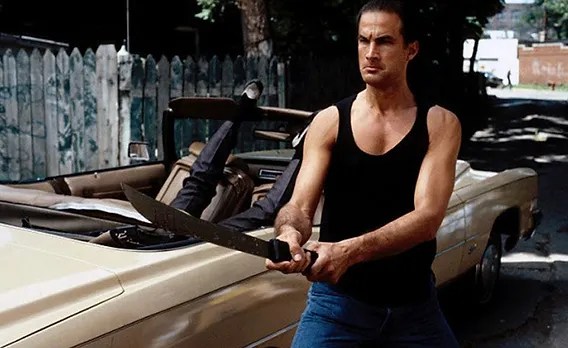
Did any actor have a better opening act than Steven Seagal? His first five movies are all star turns in high quality, enjoyable action films, beginning with ABOVE THE LAW, and then moving forward to HARD TO KILL, MARKED FOR DEATH, OUT FOR JUSTICE and UNDER SIEGE. While UNDER SIEGE has been described as “Die Hard on a boat” and OUT FOR JUSTICE occupies the top spot as my personal favorite Steven Seagal film, today we will focus on the movie that started it all, ABOVE THE LAW, from 1988.
ABOVE THE LAW begins with Nico Toscani (Steven Seagal) providing a voiceover of his early years as a kid in Chicago who became obsessed with the martial arts and who found himself studying with the masters in the orient by the age of 17. He’s clearly a badass. By 22, he’s been recruited by the CIA and is completing missions in Viet Nam. While on a mission, he runs into Zagon (Henry Silva), a CIA torturer, who seems to be able to do whatever he wants with no consequences. After knocking the crap out of Zagon, Toscani quits on the spot and heads back to Chicago to become a tough cop and marry Sara (Sharon Stone). While working a touchy family situation in the Windy City, he stumbles upon a potential drug deal going down soon in the city. He and his partner Delores (Pam Grier) set up the bust, but the product of choice turns out to be C4 explosives, not drugs. Wouldn’t you know that the folks behind these C4 explosives are the CIA and Toscani’s old pal Zagon. Can he stop his old adversary this time and still protect his family?!!
My favorite Chuck Norris film is from 1985 and is called CODE OF SILENCE. I mention that because there are quite a few similarities between ABOVE THE LAW and CODE OF SILENCE. First, Andrew Davis directed both films. He’s a talented filmmaker who would later direct such solid action films as THE PACKAGE (Gene Hackman & Tommy Lee Jones), UNDER SIEGE (Seagal & Tommy Lee Jones), and THE FUGITIVE (Harrison Ford and an Oscar winning Tommy Lee Jones). I wonder now how this film was made without Tommy Lee Jones?!! Second, both films feature a tough cop who practices martial arts and beats the crap out of corruption within law enforcement. In the case of CODE OF SILENCE, it was the police force itself; in ABOVE THE LAW, it’s the Central Intelligence Agency. It’s my personal opinion that CODE OF SILENCE is Chuck Norris’ finest hour. Steven Seagal gets this same kind of bravado and credibility in his very first film role. That’s truly unique. And finally, both movies feature the awesome Henry Silva as the bad guy. Silva has been a bad guy in so many movies, and he’s just damn good at it. I recently watched him in THE TALL T with Randolph Scott from way, way back in 1957. Damn, his Chink’s a psycho. Combine that with his turn as Billy Score in SHARKY’S MACHINE with Burt Reynolds, and you have a guy who deserves to be in the villain hall of fame. These tried and true elements all help produce a fine feature film debut for Seagal!
Just one final comment about the movie’s theme… we all would like to think that no one is above the law in the real world. Unfortunately, all we have to do is watch the news to know that’s simply not the case. Our world is full of people who actually are above the law. One of the best things about a movie like ABOVE THE LAW is that we can watch the movie, munch our popcorn, and just pretend for 100 minutes that justice does exist. It may not be completely realistic, but it’s definitely a satisfying thought!
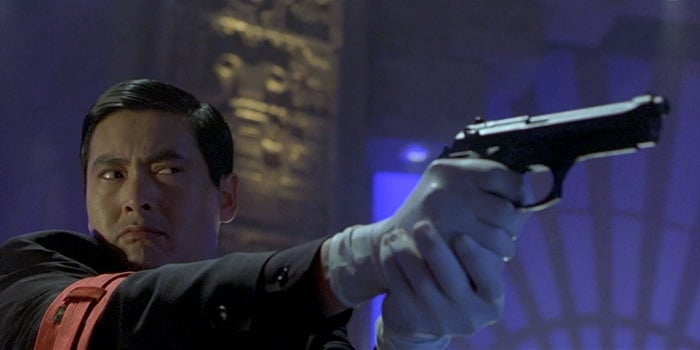
Every Monday night at 9:00 Central Time, my wife Sierra and I host a “Live Movie Tweet” event on X using the hashtag #MondayMuggers. We rotate movie picks each week, and our tastes are quite different. I decided early on that I would only program movies that have meant something to me over the years. Tonight, Monday November 18th, we’re watching THE REPLACEMENT KILLERS starring Chow Yun-fat, Mira Sorvino and Michael Rooker.
So why does THE REPLACEMENT KILLERS mean something to me, you might ask?! The main reason is a matter of timing and its star, Chow Yun-fat. I personally discovered Hong Kong actor Chow Yun-fat in the late spring of 1997 and was in full obsession mode when I read that he was making his American film debut with THE REPLACEMENT KILLERS in early 1998. To say I was pumped about this movie would be quite the understatement, and I was at a theater in Conway, Arkansas the very day of its wide release on February 6, 1998. Director Antoine Fuqua, making his directorial debut, tried to make a stylish film that would appeal to fans of John Woo, who served as Executive Producer on THE REPLACEMENT KILLERS. It worked on me, and over the next few years I purchased the movie in every format imaginable. I’ve owned it on bootleg VHS, regular VHS, DVD, and special edition blu ray. Looking back on the film now, I realize that it’s an exercise in style over substance, but that’s certainly okay. It doesn’t take away the fact that it came out at a time in my life when I was primed for maximum movie impact. You can never go back and replicate those times in your life, but you can celebrate them. Sierra and I will be doing just that tonight on #MondayMuggers at 9:00 CST. THE REPLACEMENT KILLERS is available for streaming on Amazon Prime. Join us if you’d like!
Horizon: An American Saga: Chapter One is the rather unwieldy title of the first part of what Kevin Costner has said will be an epic four-part movie about the settling of the American frontier.
It’s very, very long.
It has a running time of three hours, during which time a lot of characters are introduced and a lot of plotlines are initiated but, because this is the only first chapter, none of them come to a close. In fact, as the film ends, it’s still a mystery as to how some of the characters are even related. I watched all three hours and I took my ADD meds this morning so you can be assured that I was actually paying attention. That said, I still struggled to keep track of who everyone was or even where they were in proximity to each other. Indeed, it was only towards the end of the film that I realized that several years were supposed to have passed over the course of the first chapter’s running time.
That’s not to say that the film is a disaster. While it’s not quite the nation-defining epic that Costner obviously envisioned it as being, it’s also not quite the cinematic atrocity that several critics made it out to be. It’s a throwback of sorts, to the epic westerns of old. As such, the film features taciturn gunslingers, a woman with a past, dangerous outlaw families, fierce Indian warriors, and a wise Indian chief who has dreamed of the coming of the white man. The film is full of actors — like Michael Rooker, Sienna Miller, Sam Worthington, Danny Huston, Will Patton, James Russo, Dale Dickey, and Kevin Costner himself — who feel as if they belong to a different era of filmmaking. Just about everyone in the film is heading to the settlement of Horizon, which sits in Apache territory. Despite the efforts of the Indians to kill every settler who shows up, they keep coming. As one army officer explains it, the Indians have made the mistake of thinking that the settlers will come to believe the land is cursed while the settlers, all of whom are full of American optimism, instead chose to believe that the previous settlers were unlucky but that the next wave of settlers will make it work. Costner has the right visual sensibility for a western. The film reveals a director who is obviously in love with the Western landscape and the film is at its best when it simply frames the characters against the beauty of the frontier. But when it comes to actually telling a compelling story, he struggles. There are a lot of moving parts to the first chapter of Horizon and the problem is not that they don’t automatically connect but instead that Costner never gives us any reason to believe that they’ll ever connect. There are no visual clues or bits of dialogue to assure the viewer that everything they’re watching is going to eventually pay off. Costner asks his audience to have faith in him and remember that he directed Open Range and Dances With Wolves while forgetting about The Postman.
The first hour, which features a brutal raid on the settlement by a group of Indians, is the strongest. It really drives home the brutality of what we now call the old west. In the style of Michael Cimino’s The Deer Hunter, Costner closely observes the individual customs of the film’s settlers and carefully introduces several appealing characters who leave the viewer feeling as if they’ve met a very special and very unique community of people. That makes it all the more devastating when the majority of those characters are subsequently wiped out with casual cruelty in a raid led by the Indian warrior Pionsenay (Owen Crow Shoe). (Later — much later — a tracker played by Jeff Fahey will show similar brutality while wiping out a group of Apaches.) The first hour establishes the frontier as being beautiful but also dangerous and it also drives home the mix of determination, desperation, and even madness that led so many to follow Horace Greeley’s advice and “Go west!” Though the film was shot in early 2023, the brutality of the raid brought to mind the terrible images of the October 7th attacks on Israel. The subsequent scenes in which Pionesenay and his followers ridiculed those in the tribe who wanted peace mirrored the current schism that’s driving apart the worldwide Left. The U.S. Army, for their part, arrives a day late and can only offer up not-so subtle condescension. The surviving settlers, however, remain determined to make a home for themselves.
The second hour focuses on Hayes (played by Costner), who rides into a mining town and gets involved with a family of outlaws who are looking for the woman who shot their father. The second hour is a bit more of a traditional western than the first hour, though some of the violence is still shockingly brutal. (Even being comedic relief won’t save you in this film.) Abbey Lee gives a good performance as the woman with a past and a baby and Kevin Costner is …. well, he’s Costner. He could play this type of role in his sleep.
The third hour is a mess, introducing a wagon train and featuring a miscast Luke Wilson as the leader of the settlers and Jeff Fahey giving a strong performance as a ruthless tracker. The third hour meandered as a whole new set of characters were introduced and I was left to wonder why the film needed new characters when the characters from the first two hours were perfectly adequate. It was during the third hour that I started to really get impatient with the film and its leisurely approach to storytelling.
The film ends with a montage of what we can expect from the next few chapters of Horizon and I will say that the montage actually looked pretty cool. That’s because the montage was almost totally made up of action scenes, with none of the padding that caused Chapter One to last an unwieldy three hours despite only having 90 minutes worth of story. Still, one has to wonder if we’ll actually get to see the next three chapters. The first chapter bombed at the box office and didn’t exactly excite critics. Costner is producing and financing the films himself and I doubt he’ll give up on them. The Horizon saga will be completed but will it made it to theaters or will it just end up on streaming? Personally, I think the whole thing would work best as a miniseries but who knows? (If Horizon was airing on Paramount, it would probably be a Yellowstone-style hit.) All I really do know is that Chapter Two has yet to be released. And that’s a shame because, for all of Chapter One‘s flaws, I’d still like to see how the story turns out.
I was in a medically-approved Vicodin haze yesterday so I missed the fact that it was Gene Hackman’s birthday! Well, let’s make up for it today with a scene of Hackman being a righteous badass in 1988’s Mississippi Burning.
If you need any proof that Gene Hackman is one of our best actors, just consider that it’s been nearly 20 years since he retired from acting and he’s rarely seen out in public (reportedly due to just naturally being a very private man) yet he remains a popular performer who earns new fans every day. In this scene, Hackman plays an FBI agent who lets a bunch of racists know that just because he might share their accent, that doesn’t mean that he shares their beliefs. No one could go from friendly to intimidating with as much style as Gene Hackman.
(And yes, that is a young Michael Rooker getting put in his place, along with Brad Dourif.)
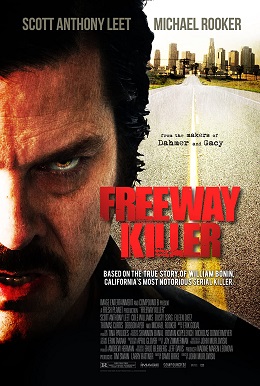
The 2010 film, Freeway Killer, opens with a desperate woman named Ruth (Debbon Ayer) visiting a man named William Bonin (Scott Anthony Leef).
Bonin, who has a quick smile and a mustache that makes him look like a wannabe porn star, is an inmate on California’s Death Row. In just a few days, Bonin is scheduled to be the first man to be executed by lethal injection in the state of California. Ruth explains that she has done everything that she can to try to save Bonin’s life. She has written to the review board. She had written to the governor. She has asked that Bonin be spared and she’s even used the exact words that Bonin suggested that she use in her letters. However, she’s gotten no response. Still, she now wants Bonin to uphold his side of the bargain. She wants to know if her son was among the thirty-six men that Bonin is suspected of having murdered.
William Bonin merely smirks and points out that he never actually agreed to tell Ruth anything. He suggested that Ruth write the letters but never did he say that he would actually do anything in return. That was just something that he allowed Ruth to assume. Even while sitting on Death Row and facing an inevitable execution, Bonin enjoys the power that he gets from manipulating people. Instead of telling Ruth about her son, he tells the story of his life as a serial killer.
The film flashes back to 1980, when William Bonin has already started his career as a murderer. A Vietnam vet who has a war story for every occasion, he cruises the freeways of California and picks up young hitchhikers. Sometimes, he is accompanied by an accomplice. Vernon Butts (Dusty Sorg) is a self-styled occultist who wears a wizard hat at home and who knows more about Dungeons and Dragons than real life. When they’re not killing hitchhikers, Bonin and Vernon tend to bicker. Vernon constantly points out that Bonin was not the great war hero that he claims to have been. Bonin makes fun of Vernon’s hobbies. At times, they seem to genuinely despise each other but one of the few times that Bonin shows any emotion is when Vernon tries to kill himself in a pique of hurt feelings.
One night, Bonin sees a teenager named Kyle (Cole Williams) being yelled at by both his boss and his girlfriend. As he does with all of his victims, Bonin pulls up in his van and asks Kyle if he wants a ride. However, when Kyle gets in the van, it turns out that Bonin doesn’t want to kill him. Instead, he sees Kyle as a kindred spirit and soon, he’s recruited Kyle as his second accomplice. Unlike Vernon, Kyle believes all of Bonin’s stories. However, Kyle grows more confident with each murder and soon, he’s even suggesting that Bonin should kill Vernon. Frustrated with both Kyle and Vern, Bonin search for a third accomplice, an act that ultimately leads to his downfall.
Watching Bonin, Vern, and Kyle, I was reminded of a creepy group of older men who always seemed to be hanging out on campus when I was in college. Though none of them were enrolled in classes and all of them were notably older than the majority of the people on campus, they still spent all of their time hanging out around the student union, smoking cigarettes, and trying to impress people who were half their age. They approached me and my friend a few times, making awkward comments about whatever we happened to be talking about or studying at the moment. One thing that I quickly learned was that being rude would not get rid of them. Instead, you had to literally stand up and walk somewhere else to get away from them. (They had no problem approaching people but were too lazy to follow after them.) At the time, my friends and I used to joke that they were probably serial killers. Most realistically, they were probably just three losers who didn’t want to have to grow up. Still, they definitely gave off a bad vibe.
Based on a true story, Freeway Killer focuses on the relationship between Bonin, Vernon, and Kyle. Though he’s their self-declared leader, Bonin is incapable of doing anything without the help of Vernon and Kyle. At the same time, the film leaves us to wonder if Vernon and Kyle would have become killers if they hadn’t fallen under William Bonin’s influence. One gets the feeling that if Bonin and Vernon had never met each other, they both would have spent the rest of their lives as obscure losers, living alone and working a dead-end job. Certainly, if Bonin and Vernon had never met, Bonin would never have subsequently felt the need to recruit Kyle into their activities. But, because they did meet, at least 30 innocent people were murdered in California. The film is unsettling, not just because of the murders (of which only a few are discreetly portrayed) but because of the feeling that the murders themselves would never have happened if only William Bonin had not served an earlier prison sentence at the same time as Vernon Butts.
Scott Anthony Leet gives a good performance as William Bonin, playing him as man whose quick smile is just a cover for the raging feelings of inadequacy that are churning just below the surface. Dusty Sorg and Cole WIlliams are also well-cast as, respectively, Vernon and Kyle. Sorg, especially, makes Vernon into a monster who is frightening because it’s very easy to imagine running into him (or someone like him) in everyday life. Michael Rooker brings his quiet intensity to a small role as the detective who investigates the Freeway Killer murders.
The real-life William Bonin was executed in 1996. I’m against the death penalty because I don’t think we should normalize the idea of the government killing anyone but that still doesn’t mean that the world isn’t better off without William Bonin in it.
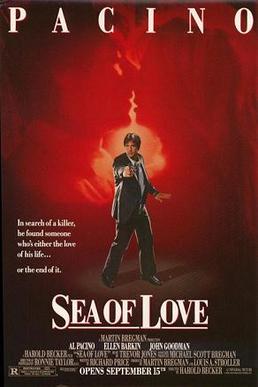 In New York City, someone is ritualistically murdering the men who are placing rhyming personal ads in a tabloid newspaper. Assigned to the case is Frank Keller (Al Pacino), an alcoholic burn-out whose wife just left him for another cop. Keller and his partner (John Goodman) decide to go undercover. Frank places a rhyming personal ad of his own and then goes to a restaurant to see who shows up. When Helen Cruger (Ellen Barkin) answers the ad, it leads to a relationship between Frank and Helen. Frank is falling for Helen but what if she’s the murderer?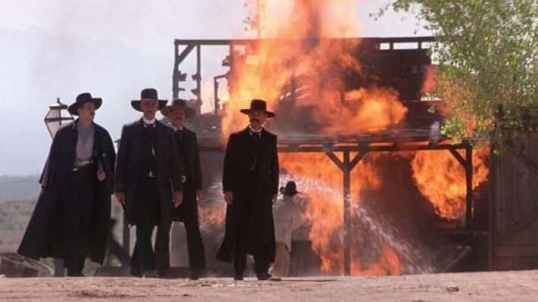
 Through the Shattered Lens