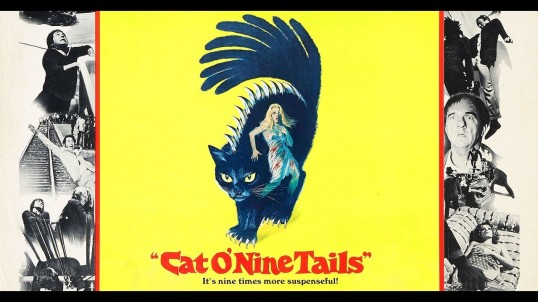
Today’s song of the day the main theme from Dario Argento’s The Cat O’Nine Tails. Ennio Morricone’s score brought a lot of atmosphere to Argento’s classic giallo.
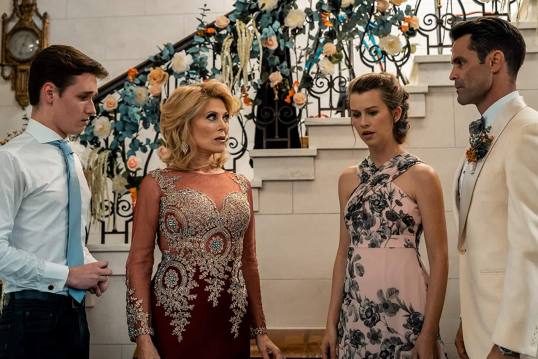
After dating for a very long time, Deanna (Anna Hutchison) and Karl (Jason-Shane Scott) are finally getting married!
Yay! Everyone loves a big wedding!
And, even before Karl asks Deanna to marry him, he’s purchased a large house for them to live in!
Yay! Everyone loves a big house!
But first, Deanna needs to meet Karl’s family and that means going to an even bigger house!
YAY! EVERYONE LOVES AN EVEN BIGGER HOU….
Wait a minute …. Deanna hasn’t met Karl’s family, yet?
Seriously, everyone, that should be a big red flag. I don’t care how rich your boyfriend is, you don’t accept his marriage proposal before you’ve met his family. After all, his family could be …. well, the could be crazy. Or they might meet you and then decide that they don’t like you or maybe they like you but they still think that their son (or brother or stepbrother) could do better. Or — and this especially happens in Lifetime movie — someone might start murdering all the members of your wedding party.
All of that happens in Engaged To A Psycho. Engaged To A Psycho premiered on the Lifetime Movie Network back in May but, according to the imdb, the film was actually around a while before making it’s official LMN premiere. It played in Canada back in 2018 and then, in 2019, it showed up on television in the UK, Spain, and France. At the time, it was known as Murder at the Mansion. By the time it premiered here in the States, the name had been changed to Engaged To A Psycho. (Lifetime was going through a Psycho cycle. Try saying that six times fast.)
Anyway, regardless of the title, Engaged To A Psycho is a fun little movie. As soon as Deanna shows up at, she meets Karl’s mother, Ivy (Audrey Landers) and his adopted sister, Ruby (Melissa Bolona). Ivy makes it clear that she thinks her son could have done better than Deanna. Ruby, meanwhile, is almost too friendly and seems to be trying way too hard to convince Deanna that Deanna is welcome in the family. It soon becomes obvious, than even though the family is living in a gigantic mansion, the rooms and the hallways are full of secrets, lies, and murder. Soon people are dying all over the place.
One thing I liked about Engaged To A Psycho is that there were plenty of POV shots from the killer’s point of view. It gave the whole a film a sort of giallo feel while also hiding the killer’s identity. It also led to a lot of scenes of people looking straight at the camera and saying stuff like, “I knew it was you! Wait here while I go tell everyone!” Well, needless to say, the killer isn’t big on waiting.
The other thing I liked about Engaged To A Psycho is that it had a sense of humor about itself. Ivy is so extremely unimpressed by Deanna that it actually becomes rather hilarious how dismissive she is. It doesn’t matter how many times Deanna nearly gets killed, Ivy refuses to accept her word that there’s something strange going on.
I liked Engaged to a Psycho. There were a lot of murders, a lot of archly delivered dialogue, and a lot of big houses. What more can you ask for?
4 Shots From 4 Films is just what it says it is, 4 shots from 4 of our favorite films. As opposed to the reviews and recaps that we usually post, 4 Shots From 4 Films lets the visuals do the talking!
Today, we wish a happy 60th birthday to Texas’s greatest filmmaker, Richard Linklater!
That means that it’s time for….
4 Shots From 4 Films
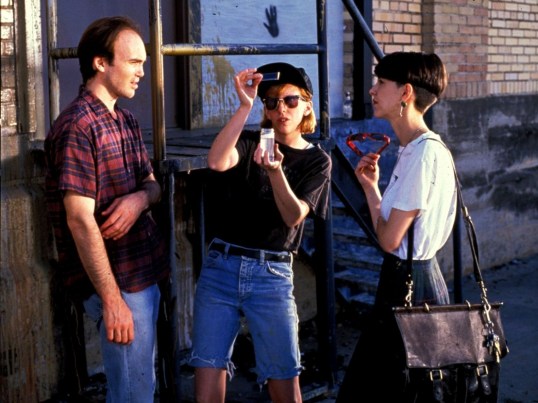
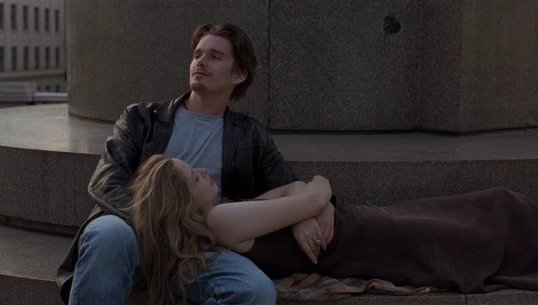
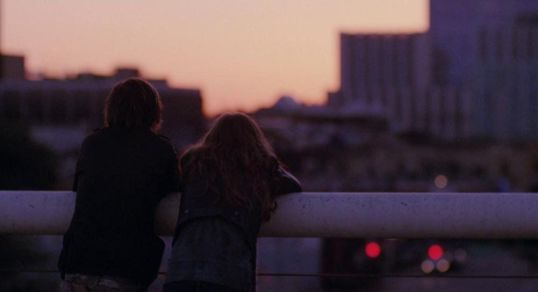
Slacker (1991, dir by Richard Linklater)
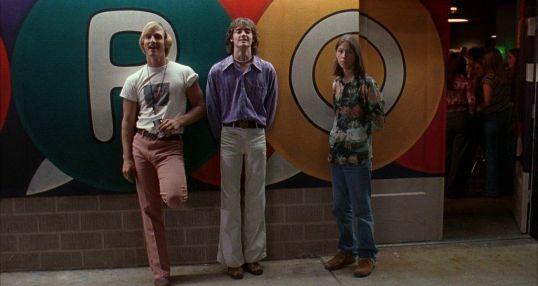
Dazed and Confused (1993, dir by Richard Linklater)
A few weeks ago, I was looking through the Guide and I noticed that MeTV had apparently started airing a show called The Powers of Matthew Star.
The name immediately intrigued me, though I wasn’t quite sure why. I think that some of it just had to do with how silly it sounded. The Powers of Matthew Star. Of course, someone named Matthew Star would have powers. But what type of powers? Since his last name was Star, it would probably be a good guess that they would be extraterrestrial powers and since his first name was Matthew, it stood to reason that he was either an angel or a human-alien hybrid, or perhaps an alien pretending to be a human.
As I pondered just who Matthew Star could be and what his powers were, I suddenly realized the real reason why the title jumped out at me. I had actually heard of this show before. Several years ago, while I was reviewing all of the Friday the 13th films for this site, I came across several references to The Powers of Matthew Star. That was because the show had featured by Amy Steel (who survived Friday the 13th Part II) and Peter Barton (who did not survive Friday the 13th — The Final Chapter).
Because The Powers of Matthew Star airs at four in the morning (Sunday morning, to be exact) I set the DVR to record it. I’ve now watched a handful of episodes and I like the show, even though I’m still not really sure what’s going on.
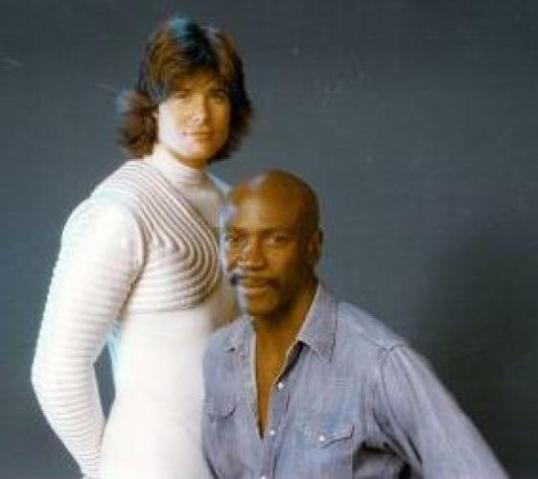
As I suspected, Matthew Star (played by Peter Barton) is an alien who is pretending to be a human. Each episode opens with a narrator explaining how Matthew Star ended up on Earth but I have to admit that I’ve found the narration next to impossible to actually follow. As far as I can tell, Matthew Star is actually a member of alien royalty but, after his home planet was either conquer or blew up, he had to go to Earth in order to hide out from another alien race that wants to destroy him. Because he looks like a teenager, Matthew has to go to high school and deal with high school stuff while, at the same time, solving crimes for the government. As far as his powers are concerned, he can apparently move stuff with his mind but he has to be careful about moving too much because then his cover might get blown and the aliens that are searching for him might destroy Earth.
Matthew’s guardian is Walt Shepherd (Louis Gossett, Jr.), who is a teacher at the high school and who knows about Matthew’s powers. I think Walt is actually supposed to be another alien, though the episodes I’ve seen have not exactly been clear about this. Matthew’s best friend is Pam (Amy Steel), who is the editor of the school newspaper. Matthew has a crush on her but he’s not sure if he can ask her to prom because he’s an alien and he’s got other aliens looking for him.
From what I’ve seen, the show’s a bit silly. For instance, one episode featured Matthew and Shepherd going to Italy on some sort of top secret government job. The very next episode featured Matthew using his powers to win a high school football game and it ended with a message about the importance of education. Despite my love of Italy, I preferred the football game episode to the secret agent episode. The football game episode was so achingly sincere that it was hard not to enjoy it.
And really, from what I’ve seen, that’s the main appeal of The Powers of Matthew Star. It’s silly and the plot is difficult to follow but there’s an overwhelming sincerity to the show’s portrayal of Matthew as an alien who just wants to save the Earth, enjoy high school, and work up the courage to ask Pam out on a date. If I had been alive and like 13 years old in 1982, I would have had such a huge crush on Peter Barton. Barton is incredibly likable as Matthew Star and he and Amy Steel are a cute couple whenever the show allows them to get together.
Unfortunately, according to Wikipedia, it appears that the whole high school angle of the show was dropped after the first 12 episodes. (MeTV is only 7 episodes in.) Starting with the 13th episode, Matthew was no longer a high school student, Amy Steel was no longer on the show, and every episode featured Matthew and Shepherd exclusively using their powers to defeat terrorists and other criminals. That doesn’t sound like it’ll be as much fun. I’ll probably stop DVRing the show once that happens.
Until then, though, I’m enjoying the adventures of Matthew Star, alien royalty-turned-high school student!
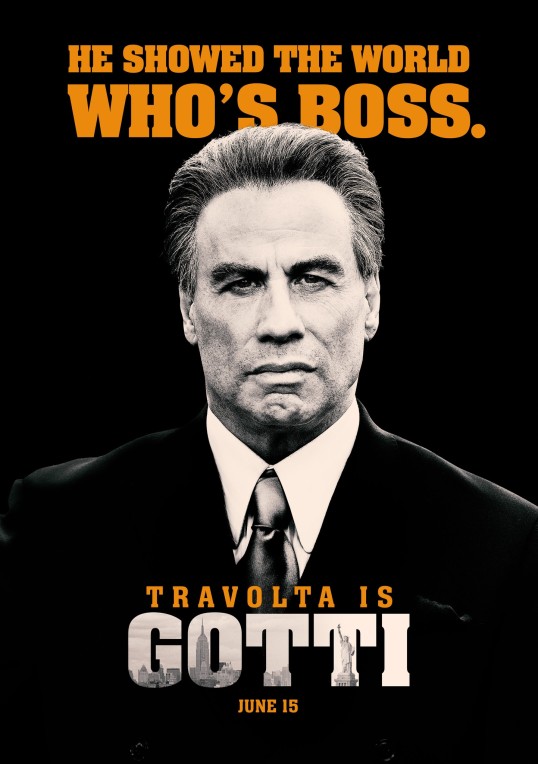
Few recent films have been as misunderstood as Gotti.
When this film was first released in 2018, it was slammed by critics and it flopped at the box office. On Rotten Tomatoes, it managed a score of 0% from the critics. At the same time, the opening day audience score was 80%. (Over subsequent days, the audience score would drop to 46%.) This disparity was blamed on studio employees inflating the audience score, though I think it’s more likely that, after months of negative press about the film’s troubled productions, critics were already looking forward to slamming the film before they even had a chance to see it. At the same time, the buzz on Gotti was so bad that the opening day audience was made up of a combination of John Travolta die-hards (whoever they may be) and people who were expecting such a trainwreck that all Gotti had to do to surpass their expectations was to occasionally be in focus.
Then again, it could be that some members of the audience understood what I instinctively understood when I first watched Gotti. Gotti is not really a film about John Gotti, the flamboyant New York mob boss who ruled the streets with an iron fist and who eventually ended up dying of cancer in prison. Instead, whether it was the filmmaker’s actual intention or not, Gotti is a film about the audience’s fascination with not only gangsters but also the movies that have been made about them.
It’s true that John Travolta may be playing someone namned John Gotti but the film goes out of its way to remind you that he’s not the real John Gotti. The film is full of archival news footage of the real John Gotti, either laughing it up with reporters or smirking while sitting in a courtroom. Every time that we’re shown footage of the real John Gotti, we’re reminded of the fact that, at not point during the film, does Travolta look anything like John Gotti. Add to that, the real Gotti is always smirking whereas Travolta always looks somewhat grim. At the time this film came out, many claimed that this was evidence of lazy filmmaking but I viewed it as being a Brechtian distancing device. Whenever the real Gotti makes an appearance, we’re reminded that we’re just watching a movie and then we’re encouraged to ask ourselves why we would want to watch a movie about such a disreputable figure.
The movie opens with John Travolta standing next to the Brooklyn Bridge and speaking directly to the camera. Though Travolta is meant to be speaking to us as John Gotti, the sight of him standing near a bridge in New York will automatically remind some viewers of a previous Travolta film, Saturday Night Fever. The character that Travolta played in Saturday Night Fever, Tony Manero, has come to epitomize New York in the 70s. The film suggests that, in much the same way, Gotti epitomized New York in the 80s and 90s. Gotti, the film is saying, is as much of an icon of the popular imagination as Tony Manero dancing in a white suit.
Why is Gotti speaking directly to us in that scene? It may seem like a framing device until, a few minutes later, we see a bald and sickly Gotti in a prison meeting room, telling his life story to his son, John, Jr. (Spencer LoFranco). Gotti talking in prison is then established as the narrative’s other framing device. So, why was Gotti speaking to us on the bridge and why did he look so healthy and have a full of head of hair when the film has made it clear that the newly bald Gotti is going to die in prison? When I first saw the film, my initial thought was that the Gotti who speaks directly to the audience was meant to be a ghost. But then it occurred to me that he’s actually not meant to be John Gotti at all. Instead, the Gotti who talks to us on the bridge is meant to be our popular conception of what gangsters like John Gotti as like. He’s what we imagine gangsters to be — i.e., tough-talking, well-dressed, and played by an iconic actor. As such, the film’s narration is not being provided by John Gotti. Instead, it’s being provided by the person that we imagine someone like Gotti to have been.
Is the imprisoned Gotti meant to be the real Gotti? Perhaps. However, it’s hard not to notice that, over the course of the film, Gotti’s son never ages. Though several decades pass, Gotti’s son always looks like he’s in his mid-twenties. When he visits his father in prison and talks about having teenage children of his own, it feels odd because he barely looks old enough to be out of high school. That may seem like lazy filmmaking but again, I would argue that this is a distancing device. It’s a reminder that we’re not watching reality. Instead, we’re choosing to watch actors pretending to be gangsters.
Once you accept that Gotti is a film not about John Gotti but instead about those of us in the audience who are watching, the film makes a lot more sense. The film’s cliches about life in the Mafia are revealed to be not so much the result of an uninspired script as they’re an homage to American folklore. Of course, there’s going to be a scene where Gotti tells his children never to rat on their friends. Of course, there’s going to be random shootings and burly men demanding respect. This is a gangster movie, after all. By populating the cast with people who you normally wouldn’t expect to see playing members of the Mafia — Stacy Keach, Chris Mulkey, Pruitt Taylor Vince — Gotti continually reminds you that you’re watching a movie. The real mafia isn’t like this, Gotti is saying, but the mafia of the popular imagination is. Why are we horrified by real-life crime and yet we flock to movies that claim to recreate it for our entertainment? This is the issue at the heart of Gotti.
Gotti’s flaws are there to remind us that we’re just watching a movie. They’re also there to make us wonder why we’re watching that particular movie. Gotti asks us why audience idolize killers like John Gotti. Why do we turn them into folk heroes? Is it because we imagine them to be characters in films as opposed to actual human beings? Whether or not one feels that the film succeeded in its goal, this is an offer that you cannot refuse.
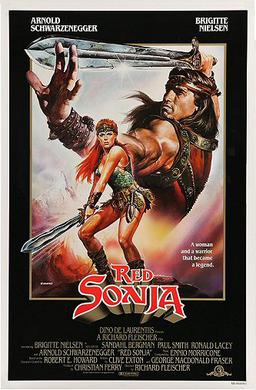
Today’s song of the day comes from a film that may not be good but which is kind of fun, 1985’s Red Sonja. Ennio Morricone’s score for this film was enjoyably silly, much like the film itself. The main theme finds Morricone in a playful mood so listen and enjoy!
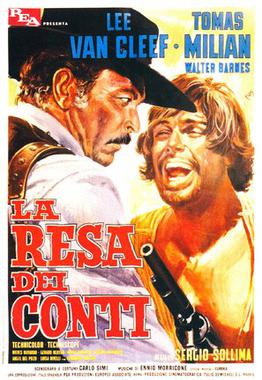
Today’s selection in our on-going tribute to the memory of Ennio Morricone comes to us from the score for Sergio Sollima’s 1966 film, The Big Gundown.
Even though Morricone may be best known for his work with Sergo Leone, he provided scores for several different Spaghetti western directors. The epic grandeur of the Italian westerns has as much to do with Morricone’s music as it does with any individual director or even any individual star. For many, Morricone was the composer of the mythological old west.
Does it never occur to anyone in a Lifetime movie to not let a stranger move into their house?
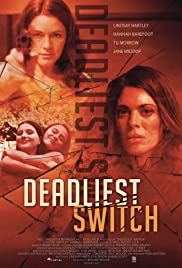
That was my main thought as, earlier today, I watched Deadly Daughter Switch. Deadly Daughter Switch, which I DVR’d off of the Lifetime Movie Network back in April, tells the story of two families. One family is rich and lives in a really nice house and sends their daughter to a really nice school. The other family is not rich, which means that they live in a slightly smaller house and the mother has to work at a coffee shop.
When Brooke (Lindsay Hartley) and Carter Jenkins (Matthew Pohlkamp) discover that their teenage daughter, Hailey (Tu Morrow), is not actually their daughter, they take their story to the media. They ask that anyone who was born on the same night and at the same hospital as Hailey take a DNA test. It turns out that Hailey is actually the daughter of Alexis (Hannah Barefoot) and that Alexis has been raising Brooke’s biological daughter, Breanne (Jane Widdop)!
If that’s not complicated enough, a counselor at the hospital comes up with the bright idea that Hailey should spend time with Alexis while Breanne should spend time with Brooke and then the girls can decide by whom they ultimately want to be raised. Alexis points out, quite reasonably in my honest opinion, that Brooke obviously has more money than her and that she probably lives in a better school district and that the end result of this experiment will probably be Brooke having two daughters and Alexis having no one. Still, they all agree to take the counselor’s advice because I guess the counselor is the voice of God or something and you have to do what she says even if it doesn’t make any sense.
Anyway, it turns out that Alexis was right about Breanne wanting to get away from her. However, it’s not just that Alexis has less money than Brooke and Carter. It’s also that Alexis is a little bit insane. Alexis loses her job at the coffee shop after she kills her boss. Then Alexis kills the volleyball coach who she claims is Breanne’s biological father. Then Alexis kills her alcoholic, white trash boyfriend. Alexis, of course, manages to make all of these deaths look like accidents because Alexis may be poor-ish and she may be dangerously unstable but she’s not stupid.
Anyway, seeing as how everyone in her life is dead, the Carters invite Alexis to come stay with them. “Do you think we trust Alexis too much?” Brooke asks Carter. Gee, Brooke, why would you ask that? Is it because Alexis is obviously plotting to murder you?
Anyway, if it sounds like I’m being critical of Deadly Daughter Switch, I’m not. I actually rather enjoyed it. A part of loving Lifetime films is that you come to accept all of the strange premises and the melodramatic plot twists. You don’t ask why. You don’t question logic. You just accept it and follow it to its conclusion. These films are meant to be the cinematic equivalent of a paperback novel that read over the course of an afternoon. Hence, the more melodramatic the better. Hannah Barefoot was an energetic killer and the Carter house was really big and nice and it looked like it would be a fun place to live. And really, isn’t that all you need?
Seriously, though, don’t invite just anyone to come live with you. You never know what they might be secretly plotting.