6 Trailers to Carry Us To March


PCAS

Hi, everyone.  It’s time for another edition of Lisa Marie’s Favorite Grindhouse and Exploitation Film Trailers!

1) Youth Aflame (1944)

I love  out-of-control youth films.  It’s one of the oldest genres of exploitation, as can be seen by watching this trailer from 1944.

2) Gambling With Souls (1936)

However, even before youth was aflame, youth was gambling with souls.

3) The Strip-Tease Murder Case (1950)

This trailer has to be included for the title alone.

4) Dark Star (1974)

This was the feature film debut of  director John Carpenter.

5) Tentacles (1977)

Nature goes wild!

6) Escape From New York (1981)

Finally, I had to feature this trailer at least once.  You’re welcome, Arleigh.

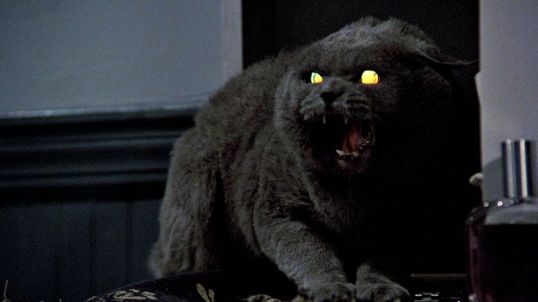
What do you think, Trailer Kitty?

annoyed-tabby-cat

Horror Music


I suppose if I asked most people what music they identified with horror, John Carpenter’s “Halloween Theme” and Mike Oldfield’s “Tubular Bells” (The Exorcist) would come up first. After that, you’d get a lot of Rob Zombie and Glenn Danzig. So right off the bat, you’re looking at an enormous variety of sounds and styles connected mainly by association. While John Carpenter’s work was intentionally composed for the film in which it appeared, “Tubular Bells” was originally a 50 minute progressive rock opus that was anything but sinister or foreboding in its full form. Misfits was a goth punk band that happened to favor horror themes. White Zombie’s horror imagery was more a matter of crudeness and vulgarity in the spirit of GWAR; their sound was a frontrunner in the emergence of industrial groove metal, and the greatest “horror” associated with Rob was the countless terrible nu metal spinoffs. A couple of “top ten horror songs” lists I stumbled upon even list Bobby Boris Pickett’s “Monster Mash” and Richard O’Brien’s “Time Warp”. I mean, “Monster Mash” is a fun Halloween song, sure, but horror? Really? And the Rocky Horror Picture Show does make me want to vomit, but we have to draw the line somewhere.

Suffice to say, “horror” music is not a genre at all. Simply associating a song with a scene or theme is enough to relate them; Huey Lewis and the News will probably make me smile and think of Christian Bale chopping people to bits in his apartment for the rest of my life. But there are definitely certain musical attributes that conjure in us a less glitzy feeling of dread than Hellbilly Deluxe. That skittering cockroach beat in the background of Halloween is completely unnerving; Carnival music is way creepier than Stephen King’s It; Black Sabbath’s appreciation for diabolus in musica virtually invented heavy metal; and it took a firm dose of the blues in 1988 for Danzig to capture a sense of the sinister that Misfits could never convey.

I don’t believe that any particular musical formula is the coalescence of evil. The music we find most haunting is derived from association too, but it connects in more subtle ways than say, the fact that a particular song appears in a horror film or mentions witches in the chorus. The real deal distorts what comforts us, denies our sense of order, and pries upon our innocence. Through a musical medium as through any other, horror focuses on shattering the lens through which we perceive reality as an ordered, logical construct. It reminds us of the real nightmares in life while nullifying our means to counteract them. It takes us to the world of the child, where emotional extremes enhance our senses of comfort and terror alike.

The carnival tune and music box are prime targets, conjuring in our minds a time when fear was more potent. The brief piano loop, the simple hum, the monotone drone–these bring us to solitude and isolation through minimalism. Effective horror themes offer no comforting symphony or rock ensemble to encase us in a nuanced world. They surround us with something singular and far from warm, or with nothing at all. The wind chimes warn of a storm; when none is coming, the darkness is all the more unnatural. The cathedral bell, a sign of fellowship on a Sunday morning, also tolls for death. A twitch, a buzz, a repeated knocking, a bit of static–things that would otherwise annoy us–exploit the close connection between discomfort and tension.

Or else we can completely overwhelm the senses with noise that strips away the familiarity which typically diminishes extreme music’s effect, leaving us a nervous wreck. When Blut Aus Nord chose to employ programmed, industrial blast beats in their 777 trilogy, they effectively eliminated the one element of the music that would have sounded too familiar to disturb. Instead, the epileptic guitar finds companionship in a persistent, unnatural clatter designed to place us permanently on edge.

Other bands have found other means to the same end. Peste Noire’s unique “black ‘n’ roll” sound enlivens a standard formula for “evil” music with a pep and a grin, giving the brutalizer a human face in the spirit of medieval sadism. Sunn O))) are inclined to drone on for ages, developing a false sense of comfort before infusing their deep buzz with a caterwaul of shrill pitches and clattering chimes. (I actually had a guy start freaking out on me at work one day when “Cry For The Weeper”, which he didn’t even notice playing, hit the 3:55 mark.)

And lastly, we can’t forget the power of lyrics to render a song gruesome. The stereotypical lines of a black metal song–nonsense about necromoonyetis and an appeal to Satanism far less disturbing than the average Christian commentator on Fox News–are pure cheese, and they entertain us in a manner similar to your typical zombie flick. But when you first heard Smashing Pumpkin’s “x.y.u.”, you probably got a feeling more akin to Henry: Portrait of a Serial Killer.

Horror in lyrics is something a bit the opposite of horror in sound; it strikes us most deeply when we can be convinced that there is absolutely nothing supernatural about it. There are certainly a few exceptions–Townes Van Zandt’s tall tale in “Our Mother the Mountain” chills me to the bone–but generally speaking, the real atrocities committed throughout human history far exceed the limits of our imaginations. Vlad Tepes was worse than any vampire, and from Elizabeth Bathory and Ariel Castro to Hernando Cortes and Adolf Hitler, we are flooded by examples of direct personal cruelty and dehumanized mass slaughter. When a song manages to make us think of these individuals and events beyond the safety blanket of historical narrative, an authentic feeling or horror is hard to deny.

What Horror Lisa Marie Watched Last Night #53: Halloween II (directed by Rick Rosenthal)


Last night, I watched Halloween II.  No, I’m not referring to the rather disturbing Rob Zombie movie that came out in 2009.  Instead, this Halloween II was the original sequel to the original Halloween.  This version was written by John Carpenter and Debra Hill.  It was released in 1981 and I saw it in 2012, via Cinemax.

Why Was I Watching It?

Because it’s October, of course!  It’s horror month and Halloween is one of the great horror movies.  Would Halloween II turn out to be another great horror movie?  Well, to be honest, I figured it probably wouldn’t but I decided to watch it anyway.

What Was It About?

Halloween II picks up exactly from where the first Halloween ended.  The sole surviving babysitter, Laurie Strode (Jamie Lee Curtis), is being rushed to the hospital by two paramedics, one nice (Lance Guest) and one kinda crude and pervy (Leo Rossi).  Two guesses which one of our two paramedics eventually ends up dead.  Meanwhile, Michael Myers has apparently survived being shot six times and falling out of a second story window and he’s still wandering around Haddonfield, Indiana.  Best of all, Dr. Sam Loomis (Donald Pleasence) is still running around all over the place, telling anyone who will listen that it wasn’t his idea to allow Michael to be released.  (In one of the film’s best running jokes, everyone responds to Loomis’ protestations by saying stuff like, “Damn you for letting him out!”  “Uhmm, I didn’t…” Dr. Loomis mutters at one point.)  It quickly becomes apparent that Michael’s rampage wasn’t quite as random as it seemed in the first film.  He’s after Laurie and, once he breaks into the local hospital, it seems like he might very well get her.  Why?  Because, for the most part, it appears that every single citizen of Haddonfield is a total and complete moron.

What Worked?

Halloween II is actually one the better of the slasher sequels of the early 80s.  While it can’t compare to the first Halloween, it’s still a fairly suspenseful little film and Michael Myers is just as frightening as ever.  However, what truly makes this film memorable, is Donald Pleasence’s unhinged performance as Dr. Loomis.  Whereas in the first film, Pleasence played Loomis as just being somewhat testy and annoyed, his performance here suggests that, in the minute or so between shooting Michael and then looking out the window at the end of the first film, Loomis has managed to totally lose his mind.  Pleasence gives one of the most mannered, over the top performances in film history in Halloween II and it works perfectly.  Whenever the film starts to drag, Pleasence shows up and injects a nice bit of crazy into the proceedings.  My favorite moment comes when Loomis suddenly yells at a policeman, “What is it you guys you usually do?  FIRE A WARNING SHOT!?”

Lance Guest, who plays the nice paramedic, was really quite likable.  I know there’s some debate as to the ultimate fate of his character but I chose to believe that he survived.

The Halloween theme music is still probably one of the most effective horror soundtracks to have not been composed by Goblin or Riz Ortolani.  When it came on the TV last night, our cat Doc actually got scared and ran out of the room.

What Didn’t Work?

It’s not the first Halloween.

While the film nominally stars Jamie Lee Curtis, Laurie spends most of the film catatonic and she never really gets to do much other than run from Michael.  Say what you will about how Laurie kept dropping her weapons at the end of the first Halloween, she still at least fought back.  In Halloween II, Laurie is reduced to being a stereotypical victim.

“Oh my God!  Just like me!” Moments

I have to admit that I kinda related to the three nurses who were on call at the hospital.  I related to Karen (Pamela Susan Shoop) because, like her, I have, in the past, shown a weakness for bad boys who insist on making out in a hot tub even while there’s a merciless serial killer wandering about.  I related to Jill (Tawny Moyer) because, like her, I tend to look at my nails whenever I get bored at work.  Most of all, I related to Janet (Ana Alicia), because she couldn’t figure out how to use a walkie talkie.  (And, seriously, what type of name is walkie-talkie anyway?  It sounds like a cutesy robot.)

So, as opposed to most other slasher films, I was able to find instant empathy with not one but three characters!  Unfortunately, all three of those nurses were dead by the end of the film so, seriously … agck!

Lessons Learned:

I would not survive a slasher film.

Horror Scenes I Love: Christine


Here we are again ghouls and ghoulettes. Time for another one of my favorite horror scenes. Some might say that the film I chose my latest favorite scene from is not truly a horror film but more a thriller are so definitely wrong. Both in it’s original novel form and in Carpenter’s film adaptation, Christine is definitely a horror film that eschews overt scenes of gore and violence and goes about it’s scares in a more round-a-bout way. It’s a horror film of a Boy-meets-Girl gone wrong. My own review of the film over a year ago show’s my positive take on this 80’s classic.

One of my favorite scenes from Christine happens midway through the film that also serves as the final clue that something may just be a tad different with Archie’s car named Christine. While the scene itself is not one of horror it does show the supernatural side of this film’s plot (a bit more simplified than the original novel’s but still keeping the theme of possessed inanimate objects giving life to itself). The combination of Christine showing Archie just what she’s capable of and Carpenter’s electronic film score as it segues into a seductive tune adds to the awesomeness of this scene.

Once this scene is over the audience now knows that Archie is fully gone over to Christine’s side and that the story will end not in a very happy note, but until that happens we see just how much this particular Boy seem to have finally met his ideal Girl.

Song of the Day: Escape from New York – Main Theme (by John Carpenter)


Just got back from watching what one would call a revisionist historical film (though I would also call it a speculative fiction) called Abraham Lincoln: Vampire Hunter. Such fiction have always caught my interest. Maybe it’s the use of historical fact as the backdrop for fantastical fiction (horror, sci-fi, fantasy, etc…) that makes them fun to read and/or watch. Most tend to be average to awful, but once in awhile something great happens to come along. My latest “Song of the Day” comes from one of the great speculative fiction there is and also one of my favorite films ever: John Carpenter’s Escape from New York.

The “Main Theme” to this cult-classic is considered one of the most iconic piece of film score for a sci-fi/action film there is. The moment the synthesizer-based notes begin to play into the thumping bass line intro people know exactly what film it belongs to. It’s a testament to the creative genius that is John Carpenter that we have such a great piece of music. He didn’t just write and direct the film. He also composed the film’s score (with help from Alan Howarth) which contains the trademark synthesizer-heavy music Carpenter has made his trademark style for most of the films he’s worked on.

Horror Review: Christine (dir. by John Carpenter)


During the late 1970s and early 1980s, one could hardly step into a theater during the fall or winter movie season without seeing a trailer for the newest Stephen King adaptation. His name had become synonymous with cinematic horror, and nearly every year brought a new film promising supernatural terror or psychological unease.

Among this wave of adaptations came a 1983 film that united two masters of the genre—Stephen King, the reigning literary giant of horror, and John Carpenter, the filmmaker who had already cemented his reputation with Halloween and The Thing. Their collaboration resulted in the sleek, deadly story of a boy and his car: Christine.

The film opens on the assembly line of a Plymouth factory in 1957, immediately signaling that something is off about this particular 1958 Plymouth Fury. From the first note of the retro rock soundtrack to the gleam of that deep crimson paint, Carpenter frames the car with both nostalgia and menace. The lighting in this opening feels almost clinical—bright, sterile, mechanical—yet Christine’s red sheen cuts violently through it, a visual omen that this machine is infused with something beyond metal and chrome. Carpenter wastes no time making it clear that this car is not an inanimate prop; it’s a living entity from the moment it’s born.

We’re soon introduced to the film’s human core—Arnie Cunningham (Keith Gordon), a shy, bookish teenager tormented by bullies and smothered by his controlling parents, and his best friend Dennis Guilder (John Stockwell), the confident star athlete who often looks out for him. One afternoon, during their drive home from school, Arnie spots a rusting, decrepit Plymouth Fury in the front yard of an old man named Roland D. LeBay. Where Dennis sees a heap of junk, Arnie sees perfection. Ignoring his friend’s concerns—and later, his parents’ outrage—Arnie buys the car and names it Christine.

As Arnie begins restoring Christine to her former glory, a transformation occurs—not just in the car, but in Arnie himself. The once timid, acne-scarred teenager grows into a confident, even arrogant young man, donning slicker clothes, sharper speech, and a darker aura. Christine becomes his obsession, his refuge, and ultimately, his identity.

Carpenter crafts this metamorphosis with eerie precision, pairing the car’s physical renewal with Arnie’s psychological decay. The cinematography shifts accordingly—the lighting grows darker, drenched in neon reds and shadowy blues, mirroring Christine’s two faces: seductive allure and demonic possession. Carpenter’s score, a pulsing blend of electronic rhythm and minimalistic dread, underscores these shifts. It functions almost like Christine’s heartbeat—steady, mechanical, and ominously sensual.

Between the vintage rock tracks that accompany Arnie’s moments of infatuation and the electronic motifs that follow Christine’s predatory stalks, Carpenter manipulates sound to blur the lines between teenage romance and supernatural horror. Every rev of the engine feels rhythmic, almost musical, as if the car itself communicates through vibration and tone rather than words.

Arnie’s newfound confidence even earns him Leigh Cabot (Alexandra Paul), the most desired girl in school—a relationship that initially feels like a symbol of his triumph. But Christine is no fairy tale. When Arnie’s bullies vandalize his beloved car, the story turns from eerie to vengeful.

In a now-iconic sequence, Christine repairs herself before Arnie’s stunned eyes—the crumpled metal expands, glass re-forms, headlights ignite like eyes opening from a nightmare. Carpenter lights the scene with a soft, golden underglow that turns mechanical resurrection into a hauntingly beautiful transformation. It’s both horrifying and hypnotic—a perfectly scored ballet of vengeance set to the hum of machinery and the director’s unmistakable electronic pulse.

What follows is a furious killing spree. Christine prowls the night streets for retribution, a creature of fire and gasoline more alive than metal should ever be.

While Carpenter’s adaptation diverges from King’s novel, it remains faithful to its emotional and thematic essence. King’s book delves deeply into the idea of objects absorbing the evil of their owners, suggesting that malevolence can linger in things as much as in people. Carpenter, however, turns the focus inward.

His version becomes a tragic character study—a battle for Arnie’s soul between the cold, seductive power of obsession and the fragile warmth of human connection. In one corner stands Christine, the car that offers Arnie unconditional love but demands total possession. In the other are Dennis and Leigh, desperate to save the friend they’re rapidly losing to something they can’t fully understand.

Carpenter’s signature touches—his electronic score, minimalist framing, and cynical tone—imbue the film with a dark romanticism. Christine is less a haunted object than a femme fatale: a mechanized embodiment of jealousy and desire. The film’s atmosphere bridges two eras, combining the nostalgic vibe of 1950s Americana with the grim realism of Reagan-era suburbia.

By the end, Christine becomes both a story of supernatural obsession and a commentary on teenage identity—the hunger to shed weakness, to command respect, and to control one’s fate, even at the cost of one’s soul.

Upon its release in December 1983, Christine performed modestly at the box office but was far from a failure. Over time, it has developed a strong cult following, cherished by both Carpenter devotees and Stephen King fans. Though often overshadowed by Carpenter’s heavier-hitting works like The Thing or Escape from New York, Christine remains one of his most technically polished films. It also stands as a fascinating bridge between studio horror and Carpenter’s independent sensibilities—where the shine of a Hollywood production mingles with the grit of a B-movie heart.

If Christine teaches any lesson, it’s that love and possession are two sides of the same coin. Arnie’s tragedy lies not in falling for the wrong woman, but in falling for one that burns with literal hellfire. In Carpenter’s vision, the road to damnation isn’t paved with good intentions—it’s lined with chrome, lit by headlights, and always hungry for one more ride.

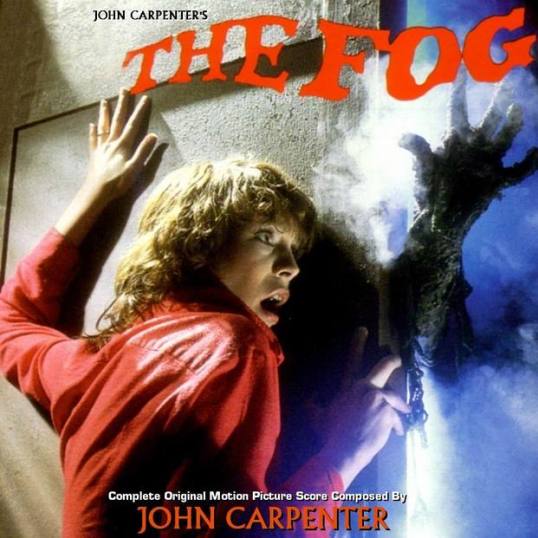
Quick Horror Review: John Carpenter’s The Fog


I have something of a tradition with John Carpenter’s The Fog. Every year, I try to watch the film on the date and time where the story starts – April 20th, at around 11:55pm. It’s not the scariest of stories, but it does have a spooky atmosphere that lends itself well to Halloween – or any late quiet night. I love this movie.

The Fog marked the first film that John Carpenter worked on after Halloween, collaborating with the late Debra Hill, who also produced the movie. She’d go on to also produce both Escape From New York and Escape from L.A for Carpenter. While it didn’t really have the impact of Halloween, it held up until Escape from New York came out the following year.

Here’s the story:

In the town of Antonio Bay, an old captain (John Houseman) explains to some children about the ill-fated Elizabeth Dane (what a beautiful name, I might add), a ship that belonged a rich of crew of lepers led by someone named Blake. The heads of the town conspired to steal the gold by setting up the ship to crash against the docks. It works out for the Conspirators, as they are “aided by a unearthy fog” that blinds the Leper ship’s navigators. and the gold they collect helps to form the great town the kids play in to this day.

What they don’t realize is that vengeance is coming in the form of that very same fog, as the ghost of the Lepers have come to claim the lives of the six conspirators…or their direct descendants.

As a kid, I had a problem with that. You mean because my great great grandparents messed up somewhere ages ago, I have to get killed for it? I remember thinking that it really wasn’t fair, but I’m kind of diverging from the topic here. The story gives you four points of view. You have Nick (Tom Atkins, sans his signature mustache) and a hitchhiker he picks up played by then scream queen Jamie Lee Curtis. You have Curtis mother, Janet Leigh, who’s character is working on the anniversary party for the town and her assistant, Sandy, played by Nancy Loomis (who appeared in the first three Halloween films). The third comes from Adrienne Barbeau’s character, Stevie Wayne, who works for the local radio station. Her character acts as the warning voice for the town and she starts to notice that something’s going on when her son gives her a piece of Driftwood that later echoes Blake’s warning. The final viewpoint comes from Father Malone (Hal Holbrook), who discovers Blake’s diary and learns the truth about what happened 100 years ago. His character helps to piece the mystery together, somewhat.

Carpenter and Hill gathered many of their friends, who went on to work on other films for this. Tommy Lee Wallace went on to direct Halloween III: Season of the Witch (and coincidentally did the voice of the Silver Shamrock ad-man in the commercial) and Vampires: Los Muertos. Wallace’s name was given to Carpenter fan favorite Buck Flower. Nick Castle’s name was given to Tom Atkins character. Makeup Wizard Rob Bottin (who also played Blake in the film) went on to do some of the effects in The Thing.

The makeup effects in this film were okay. The lighting and fog did more to obscure than to actually help one see what was doing the attacking, but it really worked for some of the shadowing in the film. If the movie has any drawbacks, it’s that there’s a really low body count to the film. In essence, there are only 6 people the ghosts are after, so these are only the ones they actually get. It would have been interesting if there were a few random deaths, or more individuals in danger, but I supposed it worked out well for the time period.

The Fog is a nice film to catch late at night. You won’t find it at the upper rankings of top horror films, but it’s one to try, at least. Don’t even bother with the Remake for this one. It’s not even work talking about.

Lisa Marie Is Confused By The Demons of Ludlow (dir. by Bill Rebane)


Last night, after I finished with The Alpha Incident, I decided to watch yet another Bill Rebane film from the Mill Creek 50 Chilling Classics box set, 1983’s The Demons of Ludlow.

The Demons of Ludlow

Ludlow is a tiny New England town that is celebrating its 200th birthday.  Now, when I say tiny, I mean that there appears to be about 17 people living in the town.  Anyway, a mysterious piano is sent to the town as a birthday present and, uh-oh — guess what’s possessed with the angry spirit of a warlock who happened to be murdered by the citizens of Ludlow 200 years ago?  Anyway, this warlock has a whole lot of other angry ghosts with him and soon, they’re exacting revenge on the citizens of Ludlow. 

Okay, I think I can hear Arleigh going, “Uhmmm…Lisa Marie, remember a little film called The Fog!?” and yes, I guess the plot is a bit similar to John Carpenter’s film.  It’s also reminiscent of another 1983 horror film called The Devonsville Terror.  While The Devonsville Terror was directed by the infamous Ulli Lommel, Bill Rebane is listed as being one of the “associate producers.”  I’m sure there’s probably a story there.

But anyway, back to The Demons of Ludlow.  This is very much a horror film of the 80s, which means that it has a real nasty streak.  As opposed to The Alpha Incident, where Rebane actually did appear to have a higher purpose in mind, the Demons of Ludlow is pretty much all about killing people.  Yet, this lack of higher purpose actually makes Demons of Ludlow a far more entertaining film to watch.  It helps that none of the 17 citizens of Ludlow are actually likable enough for you to get too upset once they die. 

A shocking scene of demonic vengeance...or something.

The demons of Ludlow themselves are far more interesting, if just because they challenge logic by their very existence.  As the reviewer known as Scarina pointed out in her own excellent review, the film’s own internal logic states that the ghosts that are helping out the warlock in the piano are the exact same ghosts who ran him out of Ludlow in the first place.  So, therefore, why are they helping him? Now, if pressed, I can accept that perhaps he used his warlock powers to take control of their ghosts.  I mean, he’s had to kill 200 years doing something, right?

But what’s odd is that we’re told that Ludlow is 200 years old.  Seeing as the film came out in 1983, let’s give the movie the benefit of the doubt and say that Ludlow was founded in 1782.  Okay, that would mean that Ludlow was established during the final year of the American Revolution.  Therefore, why are half the ghosts of Ludlow dressed like pilgrims from a community theater Thanksgiving pageant?   I say half because the other half are dressed like decadent nobles from pre-Revolutionary France.  Seriously, they’ve got the powdered wigs and the fake moles and everything!  And then, to top it off, five pirate ghosts show up at the end of the movie.  I mean, my God, I would have loved to have been back in Ludlow in 1782.  Apparently, it was like the New Orleans of colonial New England.

Pilgrims of LudlowPirates of Ludlow

Marquis De Sade of Ludlow

 Still, I have to admit I enjoyed the Demons of Ludlow.  It doesn’t drag as much as The Alpha Incident and this is a film that definitely has more than enough “What the Fuck” appeal to be watchable.  There’s even one sequence — in which one unfortunate citizen ends up getting shot by a musket-holding Pilgrim who suddenly shows up in a mirror — that is actually rather effective.  This is one of those films that people like me tend to defend by citing its “dream-like” qualities.  That may be going a bit too far in this film’s case but it’s still a definite success d’estime.

Trailer: The Thing “Prequel” (Official)


If there’s one film which genre fans have been up in arms about being remade it would be John Carpenter’s The Thing. It’s one of those films which just continues to gain a loyal and zealous following despite being a major flop in the box-office when it was first released in 1982. One way producers were able to drop the remake idea was just to set a film as a prequel to the Horror Master’s classic sci-fi horror.

Using a screenplay by Eric Heisserer (which used elements from Ronald D. Moore’s own script for a possible prequel/sequel), 2011’s The Thing will be a prequel set on the ill-fated Norwegian Antarctic Research Station. Dutch-filmmaker Matthijs van Heijningen, Jr. will be doing the directing duties with Mary Elizabeth Winstead, Joel Edgerton and Ulrich Thomsen leading a cast half of which are Norwegian.

The film has been in production since March 2010 and was suppose to have a 2010 October release date. Problems either with the film’s post-production or just problems within Universal Pictures shelved the film for almost a year.

The Thing definitely looks to use Carpenter’s Steadicam and minimalist-style and the trailer shows scenes that seemed lifted right out of Carpenter’s own film. Maybe it was how the trailer was cut, but it also seemed to have more jump-scares than the ’82 classic. Some people will never accept this film even without seeing the final product. I, who consider Carpenter’s film one of the best films ever made in that era, will give this film a look-see before making a final judgement. I thought remaking Dawn of the Dead was going to be a disaster, but that film more than lived it to it’s predecessor and was very good on its own merits. I hope Matthijs van Heijningen, Jr.’s prequel also does just as well.

The Thing is set to have an October 14, 2011 release date.

Site Review’s of Carpenter’s The Thing: Arleigh’s and Leonard’s

Horror Review: Prince of Darkness (dir. by John Carpenter)


“Say goodbye to classical reality, because our logic collapses on the subatomic level… into ghosts and shadows.”

John Carpenter’s Prince of Darkness is a criminally underrated entry in his canon—a blend of philosophical, apocalyptic horror and supernatural mystery that’s as unsettling as it is deliberately strange. Released in 1987, the film often gets eclipsed by Carpenter classics like The Thing and In the Mouth of Madness. Even so, it stands out as a unique organic link between science-driven paranoia and cosmic horror—the sort of film that grows on you as you unravel its layers.

The setup is simple but immediately offbeat: In a derelict Los Angeles church, Father Loomis (Donald Pleasence, always at his nervous best) stumbles on a swirling green cylinder hidden away in the basement. Loneliness and age hang over Loomis as he realizes this is no mere relic but possibly the essence of absolute evil—the literal embodiment of Satan. Sensing he’s in over his head, the priest reaches out to Professor Birack (Victor Wong), a physicist whose rational mindset is quickly tested by the uncanny. Birack arrives with a diverse team of grad students and lab techs, each bringing curiosity, skepticism, and just enough personality to keep things lively.

What starts as an academic investigation quickly goes off the rails. Strange, shared dreams trouble the researchers—fragmented transmissions from the future, warning of disaster in unsettling, VHS-glitch style. Meanwhile, the area outside the church transforms into a kind of urban wasteland: homeless people, gripped by an unseen force, stumble with zombie-like intent, trapping the group inside. Inside, members fall prey to unsettling phenomena, from unexplained possession to increasingly grotesque violence. There’s a sense that the evil in the cylinder isn’t content to simply stay put—and the combination of supernatural implication and scientific uncertainty gives everything a persistent, gnawing tension.

Carpenter directs the film with measured, stifling precision. His color palette—rotting yellows, bruised greens, washed-out sunlight—creates a perpetually uneasy mood. He uses slow tracking shots and carefully composed frames to ratchet up suspense, and the score (co-composed with Alan Howarth) pulses with ominous synths that buzz beneath all the dialogue, making even the film’s quieter moments feel restless and charged with threat. Compared to the gooey spectacle of The Thing, the terror in Prince of Darkness is more metaphysical—less visible monsters, more eroding reality.

Sound and image work together to keep the audience on edge: moments of unsettling silence are punctuated by visual oddities, like swarms of bugs or the warped geometry of the church’s shadows. The group’s scientific attempts to decode the evil—a jumble of quantum theory, apocalyptic Christian lore, and unsettling mathematics—do more to ramp up anxiety than offer answers. Carpenter seems to delight in ambiguity; the revelations never clarify so much as deepen the void, giving shape to a primordial kind of fear.

The film’s most iconic device is its recurring nightmare sequence, where the group—cut off from the world—witnesses a cryptic, shadowy figure emerging from the church, broadcast as a tachyon transmission from the future. It’s classic Carpenter: deeply unsettling, oddly hypnotic, and open to any number of interpretations. The blending of science fiction and theological horror feels fresh and ambitious, and it’s fair to say these sequences alone have ironically kept the film alive in horror culture discussions and remixes.

The cast, featuring Pleasence and Wong, manages the film’s shifts in tone—moving from banter about theoretical physics to genuine terror with surprising ease. The grad students are likable enough for you to root for, especially Lisa Blount and Jameson Parker, who carry the emotional brunt as things collapse. Alice Cooper’s cameo as a silent, menacing street dweller further anchors the film’s reputation for “unexpected creepy” in the best way possible.

While there are flashes of gore—possessions, injuries, even some memorable stabbings—Carpenter resists making violence the centerpiece. The real horror here is psychological: paranoia, loss of agency, and the collapse of foundational beliefs. Where The Thing was about trusting (or not trusting) your friends, Prince of Darkness is about grappling with a world where even faith and science seem powerless and interchangeable in the face of the unknown.

Thematically, this is Carpenter at his most cerebral and bleak. The notion that neither faith nor science can adequately tackle the unfathomable echoes Lovecraft, yet Carpenter grounds it all in urban decay and deadpan dialogue rather than Gothic flourish. The questions get bigger—what good is faith if truth is poisonous, and what does science matter against a force older than logic? Dialogue about quantum uncertainty and theological paradoxes isn’t there to solve anything, but to make everything less secure.

If the film has a flaw, it’s that its pacing feels deliberately patient—some might say slow. Tension accumulates gradually, and you’re invited to sit in the discomfort as the group loses sleep, loses one another, and loses touch with reality. As the stakes escalate, the line between dream and waking life shreds, leading to an ending that’s haunting, ambiguous, and deeply open-ended. There’s no neat wrap-up or cathartic victory—only trauma, unsolved terror, and a lingering sense that evil never really left, just waited.

It’s this refusal to explain or comfort that gives Prince of Darkness its lasting cult appeal. Carpenter puts cosmic pessimism front and center: knowledge itself stands as a kind of curse, and both faith and reason bend beneath the weight of mystery. Rather than offer solutions, the movie warns about the dangers of peeling back reality’s surface—a theme that’s only grown more unsettling in the years since it was made.

Watching Prince of Darkness now, the film may not fit everyone’s idea of a fun Friday-night scarefest. But if you want horror that’s slow, dense, and sticks with you, this is essential viewing. Carpenter delivers a bleak, hypnotic nightmare about what happens when explanations fail—when the universe itself seems ready to swallow us whole. Whether you’re a die-hard genre fan or someone looking for something different, Prince of Darkness is cult horror at its most unshakable—proof that the scariest stories are often those that leave their deepest secrets unexplained.