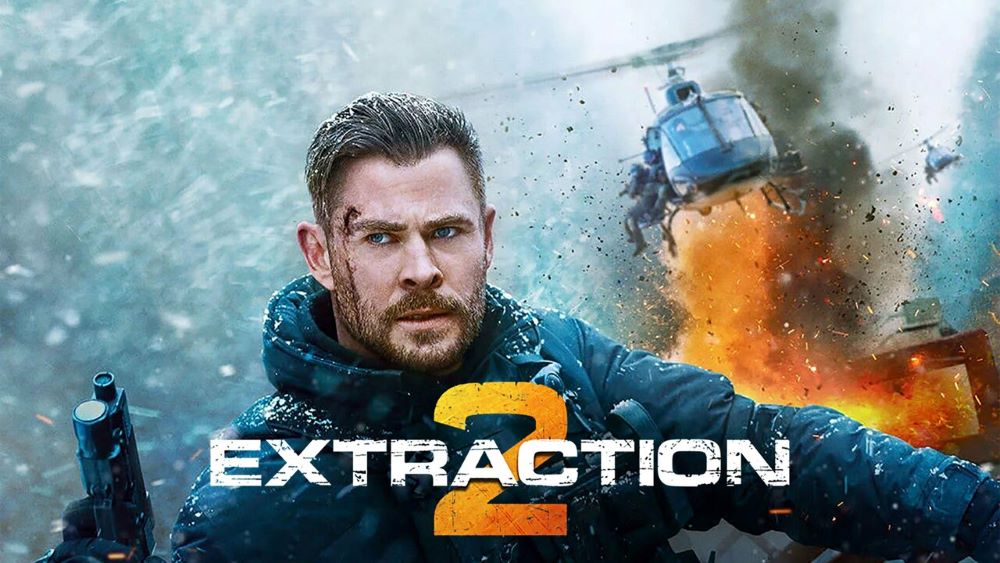
Review: Extraction 2 (dir. by Sam Hargrave)


“I will not stop.” — Tyler Rake

Extraction 2 drops you right into the thick of things, cranking the intensity way past the first film. To quickly recap, the original Extraction introduced Tyler Rake, a gritty mercenary with a troubled past played with undeniable grit by Chris Harmsworth. The story was simple but effective—a high-stakes rescue of a kidnapped boy in Dhaka, Bangladesh, filled with edge-of-your-seat action and those now-iconic, almost balletic long-take fight sequences. It was raw, realistic, and emotionally grounded. Harmsworth’s portrayal anchored the chaos in human vulnerability, helping the film stand out from the typical action fare.

Now, the sequel’s aim is clear—it wants to go bigger, bloodier, and more relentless, and it pulls that off in many ways. The standout here is definitely the action choreography. Sam Hargrave, the director, really flexes his muscle with several jaw-dropping sequences, especially a breathtaking 21-minute continuous take that makes you feel like you’re running alongside Rake, dodging bullets and throwing punches in real time. It’s an impressive technical feat but, more importantly, it’s incredibly immersive. The fights have that gritty realism where each blow counts, and the camera work lets you see every tense moment clearly instead of hiding behind shaky cuts.

Chris Hemsworth, once again, owns the role. This time around, you can see a bit more of the toll the mercenary life has taken on Rake. Hemsworth brings a subtle layer of weariness mixed with fierce determination. His physicality is on full display—he’s convincing in those brutal hand-to-hand combats without ever feeling like a stuntman stand-in. He does it all, and it’s clear he’s not just punching air; this is a man fighting for something beyond just survival. The emotional beats land a bit more naturally this time around, helped by Hemsworth’s grounded performance, which balances the nonstop action with moments of quiet reflection.

Visually, the film is a significant step up. The settings shift from humid, congested streets to icy, oppressive Georgia, and the cinematography makes the most of this change. The chilly, bleak palette fits perfectly with the film’s mood—harsh, unforgiving, and tense. The camera work is bold yet measured; it takes its time to show us the fights fully, letting the choreography breathe without rushing or confusing the viewer. This clarity turns the action scenes into mini-masterpieces, where every movement, every shot, and every punch feels deliberate and impactful.

That said, not everything clicks perfectly. The plot plays it safe with familiar revenge and rescue-mission beats, and the supporting characters don’t get much development beyond their utility to the story. Golshifteh Farahani steals a few scenes as Nik, adding fresh energy and complexity as a tough and capable ally, but others around her mainly exist to get the body count up. There’s a formulaic feel to the storyline—with plenty of high-stakes tension but little in the way of surprise. If you go in looking for deep storytelling or rich character arcs, you might be left wanting.

The film truly embraces the “bigger is better” mantra, and in many ways, it pays off spectacularly with larger, more intricate action sequences and expanded scale. This escalation brings a fuller, more thrilling spectacle that keeps you hooked from start to finish. However, this increase in scope leads to a trade-off: the narrative feels more convoluted and sometimes weighed down by its own ambition. The plot introduces multiple new characters and intersecting agendas, which lengthens the storyline unnecessarily and complicates what could have been a more straightforward mission. This convolution makes the story not only more formulaic but also harder to follow, detracting from the lean storytelling charm that made the first movie so effective.

Tone-wise, the movie trades some of the first film’s grounded grit for a flashier, more stylized look and feel. Some sequences stretch believability—Rake’s near-indestructibility and certain stunt setups can pull you out of the moment. Still, if you’re willing to accept that and enjoy the ride, the movie delivers on adrenaline and spectacle in full force.

One of the most refreshing things about Extraction 2 is how well it balances raw, physical combat with moments of emotional depth. Between the intense fight scenes, there are small windows into who Tyler Rake is and what drives him. These touches give the film a heartbeat beneath all the explosions and punches. Rake is no cookie-cutter action hero; he’s a broken man clawing his way toward redemption, and that gives the film a surprising amount of emotional weight for a movie mainly about violence and chaos.

Ultimately, Extraction 2 isn’t reinventing the wheel, but it doesn’t need to. It knows its audience and delivers exactly what it promises: high-octane, impeccably executed action sequences tied together by a thread of humanity. Hemsworth’s portrayal elevates it beyond just a flashy romp, lending it a gritty soul. The villains feel suitably menacing, and the stakes are convincingly high, which keeps the tension ticking throughout.

If you loved the first Extraction for its mix of brutal realism and emotional punch, the sequel will feel familiar but amplified—more intense, more expansive, and a bit louder. If you’re new to the series, Extraction 2 still stands solid on its own as a showcase of what well-choreographed action cinema looks like today—raw, precise, and emotionally resonant with just enough story to keep you invested without dragging you down.

In short, Extraction 2 is a wild, thrilling ride with a surprisingly human heart beating beneath all the chaos. It’s a film that knows how to entertain, showcasing Chris Harmsworth at his physical and emotional best and proving that action movies can still push creative boundaries while keeping viewers hooked. The movie brings bigger and bolder set pieces that truly live up to the “bigger is better” slogan, but this comes at the cost of making the plot more convoluted and overly complicated than it needed to be. While the intricate story layers may strain some viewers, the explosive action and solid performances make it a must-watch for any fan of visceral, edge-of-your-seat thrillers. If you want a no-nonsense blockbuster with a pulse, Extraction 2 delivers in spades.
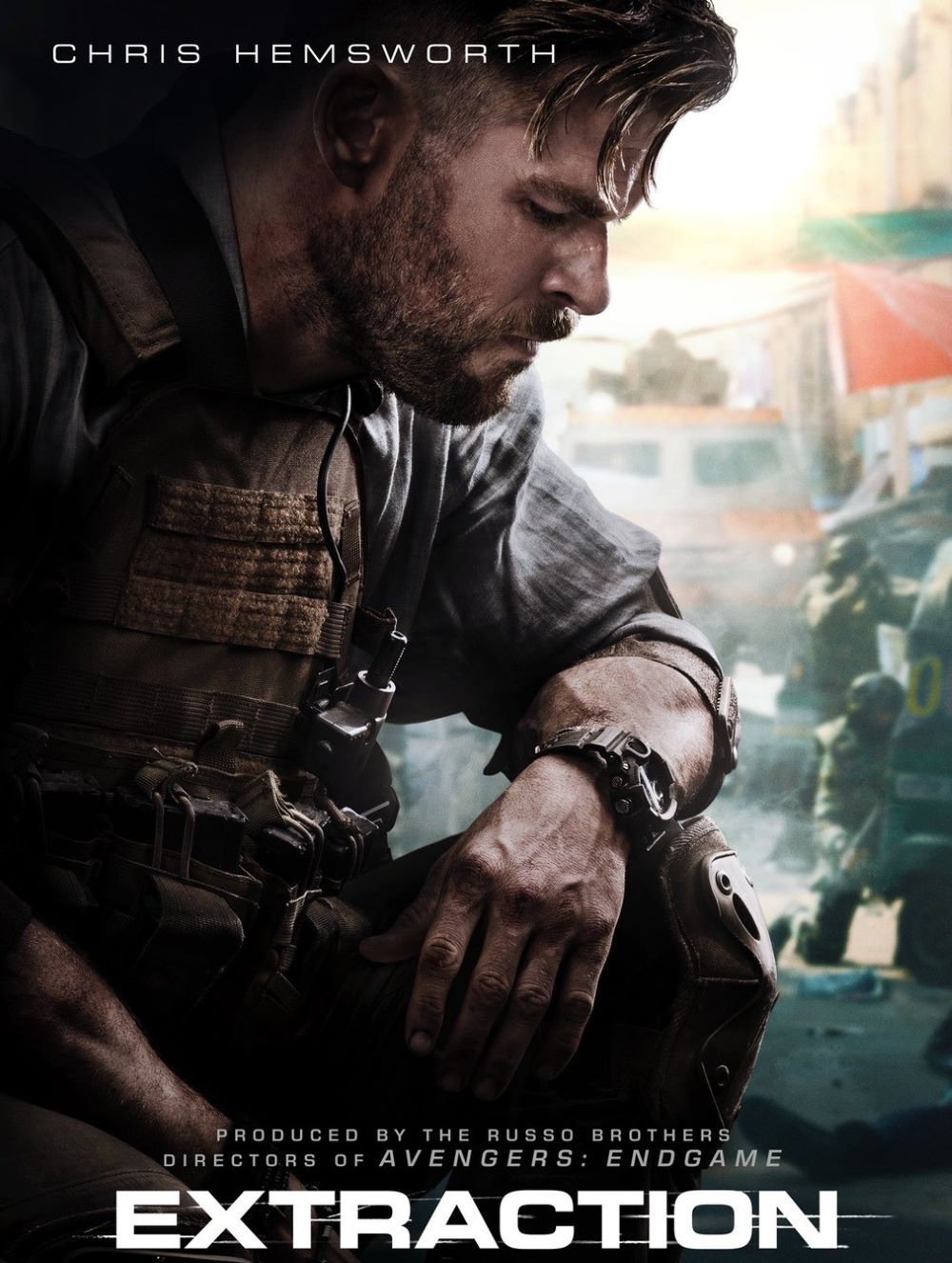
Review: Extraction (dir. by Sam Hargrave)


“Move fast. Stay low.” — Tyler Rake

Extraction (2020) is an action film directed by Sam Hargrave and written by Joe Russo, centering on a high-stakes rescue mission led by Chris Hemsworth’s character, Tyler Rake. The story comes from the graphic novel Ciudad, following Rake, a hardened mercenary tasked with rescuing Ovi Mahajan—the kidnapped teenage son of a Mumbai drug lord—from a rival gang in Dhaka, Bangladesh.

The biggest highlight of the film is undoubtedly the action. Sam Hargrave’s background as a stuntman and stunt coordinator heavily shapes the film’s visceral, grounded fight scenes and chase sequences. Before directing Extraction, Hargrave worked extensively in Hollywood, doubling for Chris Evans as Captain America in several Marvel movies like Winter Soldier and Endgame, and choreographing stunts for The AvengersPirates of the Caribbean, and The Hunger Games. This experience shows in the film’s impressive physicality and well-structured action set pieces.

One of the film’s standout moments is a roughly 15-minute continuous shot that follows Rake through escalating fights, car chases, and shoots without cuts, putting the audience right in the middle of the chaos. Cinematographer Newton Thomas Sigel maintains great clarity during this complex sequence, making it easy to follow the action without losing tension or momentum.

Chris Hemsworth’s Tyler Rake is a mix of toughness and quiet emotion. While Rake is the typical stoic, skilled mercenary with a haunting past, Hemsworth brings enough charisma and subtlety to keep him interesting. Rudhraksh Jaiswal’s Ovi balances vulnerability and resilience, and their relationship adds some emotional depth to an otherwise action-heavy film.

The setting of Dhaka plays a significant role in creating tension. The crowded streets and claustrophobic urban spaces add a feeling of danger and urgency. The production design and score contribute to this gritty atmosphere, making the world feel lived-in and tense.

Violence in Extraction is brutal and unflinching, not shying away from the grim realities of its story. The R rating is earned through graphic fights, gun battles, and some harsh moments involving bystanders, including children. This unrelenting approach to violence adds a raw edge to the film but can also feel overwhelming at times.

However, the movie’s major drawback comes from its story and character development, which are fairly thin and formulaic. The plot is straightforward: a mercenary protecting a kidnapped kid while fighting off enemies. Most of the supporting characters are underdeveloped, with the villain Amir portrayed as a one-dimensional bad guy without much backstory or nuance. Although Randeep Hooda’s character Saju adds some tension and complexity, other roles feel functional rather than memorable.

The film attempts to add emotional weight through Rake and Ovi’s bond, but the effort sometimes falls flat. Key moments meant to build character feels like typical exposition, and some plot points are rushed or underexplored. A subplot involving David Harbour’s character feels tacked on and doesn’t quite fit into the narrative flow.

Pacing also hinders the film, especially in the middle act, where the story slows down and struggles to balance action with character moments. This section can feel tedious compared to the rest of the film’s adrenaline-fueled sequences.

The ending, while action-packed and satisfying in terms of spectacle, also features a somewhat questionable twist and a final shot that feels like a cheat, leaving some ambiguity that may frustrate viewers seeking clear resolution.

In summary, Extraction delivers on what fans of intense, well-executed action expect. It’s a showcase for Hargrave’s stunt expertise and Hemsworth’s physical performance but falls short when it comes to storytelling and character depth. The film is a gripping, high-energy ride with brutal, creative fight and chase scenes—but if you’re looking for a nuanced plot or fully fleshed-out characters, it’s lacking. Fans of pure action films like John Wick or The Raid will find much to enjoy here, but others may find the story too simplistic and the constant violence numbing over time.

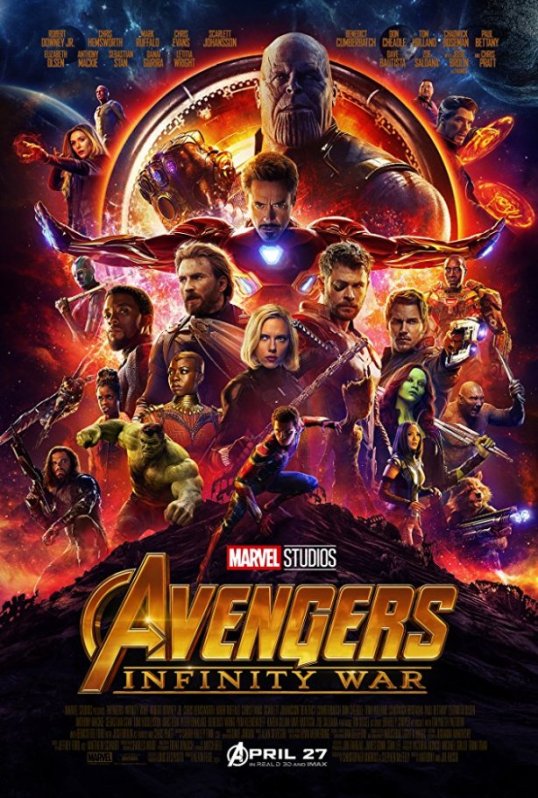
Lisa Reviews Avengers: Infinity War (dir by Joe and Anthony Russo)


(Warning: There are spoilers in this review.  They’re not necessarily huge spoilers but they’re there.  Read at your own risk.)

Avengers: Infinity War is a lot of things.  It’s big, it’s thrilling, it’s emotional, it’s colorful, it’s loud, it’s flamboyant, and, clocking in at two and a half hours, it’s occasionally a bit exhausting.  It’s overwhelming but it’s never boring.  It’s a nearly perfect example of pure cinema, where the story is less about what happens and more how it’s told. It’s a tribute to not just the Marvel Cinematic Universe but also to the audiences who have been flocking to each movie since Iron Man was first released way back in 2008.  Avengers: Infinity War is a pop art masterpiece, one that provides the first part of a climax to a saga that’s been unfolding for ten years.

In the days leading up to the release of Avengers: Infinity War, the main selling point was the assumption that this movie would feature every single character that’s been introduced as a citizen of the MCU so far.  Though the film comes close to including everyone, there are still a few characters who are notable for their absence.  Ant-Man and the Wasp are nowhere to be seen.  None of the Marvel Television characters show up, which is a shame because I’m sure Jessica Jones would have had some choice words about the potential end of the universe.  Two familiar SHIELD agents make a brief appearance, though you have to wonder where they were when New York and Wakanda were being invaded.

That said, all of the big heroes show up.  Tony Stark (Robert Downey, Jr.) flies into space with Dr. Strange (Benedict Cumberbatch) and Spider-Man (Tom Holland).  Thor (Chris Hemsworth) teams up with Rocket Racoon and Groot (voiced by Bradley Cooper and Vin Diesel, respectively).  When Wakanda is attacked, Black Panther (Chadwick Boseman), Captain America (Chris Evans), The Falcon (Anthony Mackie), White Wolf (Sebastian Stan), the Hulk (Mark Ruffalo), Rhodey (Don Cheadle), and Natasha (Scarlett Johansson) are all present to defend it.  Meanwhile, Vision (Paul Bettany) and Wanda (Elizabeth Olsen) continue to pursue their odd relationship while Peter Quill (Chris Pratt) and Gamora (Zoe Saldana) search for Gamora’s father, Thanos (Josh Brolin).

It’s a packed film and the fact that it works as well as it does is a testament to the power of perfect casting and movie star charisma.  At this point, we feel as if we know these characters.  We know that Tony Stark is going to be haunted by what happened the last time Thanos’s minions involved New York.  We know that Spider-Man is going to be desperate to prove that he belongs with the adults, just as we know that Dr. Strange isn’t going to be particularly impressed with anyone he meets.  Needless to say, some characters get more screen time than others.  Despite a good deal of the film taking place in Wakanda, Black Panther largely stays in the background.  I personally wish that both Natasha and Captain America had been given a bit more to do.  Considering just how talented both Anthony Mackie and Don Cheadle are, it’s a shame that neither one of them ever gets to do much in these films.  At the same time, Infinity Wars allows both Elizabeth Olsen and Paul Bettany to come into their own and Chris Hemsworth again shows that he may be the most underrated star in the MCU.  I’ve read a lot of criticism of certain actions taken by Peter Quill towards the end of the film but actually, it’s exactly what you would expect his character to do in the situation and, up until that moment, Chris Pratt is a welcome presence.  It’s important to have someone around who appreciates good music and who can make you laugh, especially considering that Thanos is planning to wipe out 50% of the universe’s population…

Oh yes, Thanos.  After spending years lurking in the background, Thanos finally steps forward in Infinity War.  In fact, it can be argued that Avengers: Infinity War is actually much more of a Thanos film than an Avengers film.  While our heroes are continually spending the film trying to catch up to Thanos and reacting to his latest action, Thanos is always one step ahead.  Thanos is the one who steers the narrative and, for once, you really do believe that an MCU villain views the heroes as being mere distractions.  Thanos is the one on a quest and the film follows him through every step of his search.  In fact, the film’s most emotional moments belong to Thanos.  For all the death and destruction to be found in the film’s surprisingly dark narrative, Thanos is the only character to ever shed a tear.  Like all great villains, Thanos doesn’t view himself as being evil.  Instead, Thanos speaks very sincerely of his desire to bring balance to the universe.  The scary thing about Thanos isn’t that he claims that he’s being merciful when he slaughters millions of beings.  The scary thing about Thanos is that believes it.

Thanos, you see, is a bit of an intergalactic environmentalist.  As he explains it, the universe only has a finite number of resources.  By killing half of the universe’s population, he is ensuring that the other half will be able to survive in peace and harmony.  Most people would call Thanos’s actions genocidal but Thanos would probably say that he’s merely making the difficult decisions that others don’t have the courage or intelligence to make.  It may all sound rather far-fetched and melodramatic until you consider that, just last week, bureaucrats and doctors in the UK decided it would be better to starve a sick infant to death rather than allow his parents to take him to be treated in another country.  With his mix of narcissism and absolutely belief in his own moral certitude, Thanos is a far more familiar villain than a lot of viewers might want to admit.  As opposed to the forgettable villains who have appeared in so many MCU films, Thanos is a compelling and complicated figure.  It’s interesting to note that two of the best performances of the year so far were given by actors appearing as villains in MCU films, Michael B. Jordan in Black Panther and Josh Brolin in this one.

As befits the film’s subject matter, Infinity War is a sprawling film, one that skips from world to world.  The visuals are frequently spectacular, as are the many battles.  From the opening attack on New York to the final battles in Wakanda and in space, the action is non-stop and thrilling.  (It helps that, as opposed to some of the previous MCU films, it’s always clear who is fighting who and why they’re fighting.)  For me, though, the most memorable scenes are the scenes where Thanos looks and considers the worlds that he’s destroyed.  There’s a scene where an exhausted Thanos rests on a placid planet and it’s one of the strongest images in the history of the MCU.

I’ve been told that I shouldn’t worry too much about all of the characters who are killed over the course of Infinity War.  From what I’ve been told, it’s apparently something of a tradition in Marvel comics to kill off a bunch of recognizable characters and then have them come back to life an issue or two later.  And the fact that the sequel to Infinity War has already been filmed and is set to released next year leads me to suspect that nothing’s permanent.  I mean, if all of these people are really dead, there aren’t going to be many heroes left to make any more movies about.  That said, I still got far more emotional than I probably should have at some of the unexpected demises.  Especially … well, no.  I won’t say the name.  But seriously, it was upsetting.

2018 is shaping up to be the year of Marvel.  So far, Marvel has released two of the best films of the year.  To be honest, a film as huge as Infinity War shouldn’t have worked and yet, it does.  It’s a masterpiece of pop art.*

* For a totally different response to Avengers: Infinity War, check out Ryan’s review by clicking here!

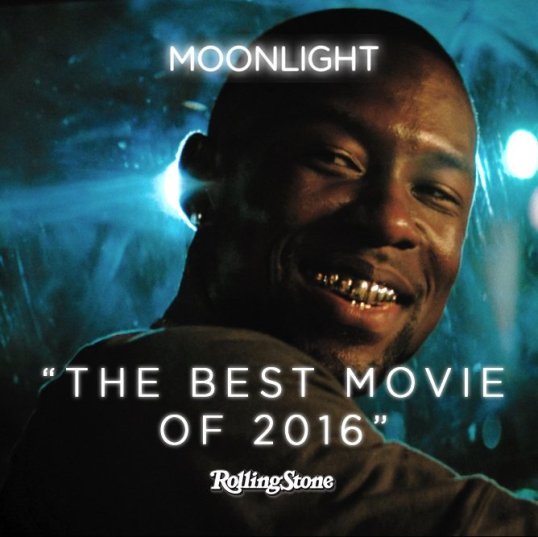
Here Are the 48th Annual NAACP Image Award Nominations!


moonlight

You can see the film nomination below.  For a full list of all the Image nominations, including the television nominees, click here.

Outstanding Motion Picture
•    “Fences” (Paramount Pictures)
•    “Hidden Figures” (20th Century Fox)
•    “Loving” (Focus Features/Big Beach)
•    “Moonlight” (A24)
•    “The Birth of a Nation” (Fox Searchlight Pictures)

Outstanding Directing in a Motion Picture – (Film)
•    Anthony Russo, Joe Russo – “Captain America: Civil War” (Marvel Studios)
•    Barry Jenkins – “Moonlight” (A24)
•    Garth Davis – “Lion” (See-Saw Films)
•    Mira Nair – “Queen of Katwe” (Walt Disney Studios)
•    Nate Parker – “The Birth of a Nation” (Fox Searchlight Pictures)

Outstanding Writing in a Motion Picture (Film)
•    Adam Mansbach “Barry” (Black Bear Pictures and Cinetic Media)
•    Barry Jenkins “Moonlight” (A24)
•    Jeff Nichols “Loving” (Focus Features/Big Beach)
•    Nate Parker “The Birth of a Nation” (Fox Searchlight Pictures)
•    Richard Tanne “Southside With You” (Roadside Attractions)

Outstanding Actor in a Motion Picture
•    Denzel Washington – “Fences” (Paramount Pictures)
•    Don Cheadle – “Miles Ahead” (Sony Pictures Classics)
•    Nate Parker – “The Birth of a Nation” (Fox Searchlight Pictures)
•    Stephan James – “Race” (Focus Features/The Luminary Group A Solofilms/Trinidad/Trinity/Trinity Race Production)
•    Will Smith – “Collateral Beauty” (Warner Bros. Pictures/New Line Cinema)

Outstanding Actress in a Motion Picture
•    Angela Bassett – “London Has Fallen” (Focus Features/Millennium Films/G-Base Production)
•    Madina Nalwanga – “Queen of Katwe” (Walt Disney Studios)
•    Ruth Negga – “Loving” (Focus Features/Big Beach)
•    Taraji P. Henson – “Hidden Figures” (20th Century Fox)
•    Tika Sumpter – “Southside With You” (Roadside Attractions)

Outstanding Supporting Actor in a Motion Picture
•    Alano Miller – “Loving” (Focus Features/Big Beach)
•    Chadwick Boseman – “Captain America: Civil War” (Marvel Studios)
•    David Oyelowo – “Queen of Katwe” (Walt Disney Studios)
•    Mahershala Ali – “Moonlight” (A24)
•    Trevante Rhodes – “Moonlight” (A24)

Outstanding Supporting Actress in a Motion Picture
•    Aja Naomi King – “The Birth of a Nation” (Fox Searchlight Pictures)
•    Lupita Nyong’o – “Queen of Katwe” (Walt Disney Studios)
•    Mo’ Nique – “Almost Christmas” (Universal Pictures)
•    Octavia Spencer – “Hidden Figures” (20th Century Fox)
•    Viola Davis – “Fences” (Paramount Pictures)

Outstanding Independent Motion Picture
•    “Lion” (See-Saw Films)
•    “Loving” (Focus Features/Big Beach)
•    “Miles Ahead” (Sony Pictures Classics)
•    “Moonlight” (A24)
•    “The Birth of a Nation” (Fox Searchlight Pictures)

Outstanding Documentary – (Film)
•    “13th” (Netflix)
•    “I Am Not Your Negro” (Velvet Film)
•    “Maya Angelou: And Still I Rise” (The People’s Poet LLC)
•    “Miss Sharon Jones!” (Cabin Creek Films)
•    “Olympic Pride, American Prejudice” (Coffee Bluff Pictures)

Lisa Marie’s Thoughts On Captain America: Civil War


captain-america-civil-war-181827

It was freaking awesome!

That, in a nutshell, is my main thought when it comes to Captain America: Civil War.  It’s a movie that we spent a year anticipating.  It’s a movie that we were continually assured would be great.  And it’s a movie that, unlike Batman v Superman, actually lived up to all the hype.  It’s also a movie that has already been reviewed here on the Shattered Lens.  Check out Arleigh’s review by clicking here and be sure to check out Gary’s review as well.

So, what’s really left for me to say about Captain America: Civil War?  Beyond, of course, that it was freaking awesome.

Of course, it’s hard to talk about Captain America: Civil War without also talking about Batman v Superman.  Both films start with the same basic idea: the heroic activities of super heroes has led to cities being destroyed and innocent people dying.  In Batman v. Superman, Batman takes it open himself to avenge the destruction of Metropolis and expose Superman as being the biggest false God since Baal.  In Civil War, the United Nations announces that, from now on, all super hero activity has to be cleared with them.  In Batman v. Superman, Batman and Superman are manipulated into fighting each other.  In Captain America: Civil War, Captain America and Iron Man are manipulated into fighting each other.  In Batman v Superman, Jesse Eisenberg plays a neurotic villain.  In Captain America: Civil War, Daniel Bruhl plays a neurotic villain.  Batman v Superman features more heroes than just Batman and Superman.  Civil War features more heroes than just Captain America and Iron Man.  Batman v Superman ends with a promise of more films to come.  So does Civil War.  Both films are huge and expensive star-filled spectacles and both of them are a part of a larger cinematic mythology.  They both even have roughly the same running time.  Of course, Batman v Superman seems even longer while Civil War is over far too quickly.

Ca

And yet, Civil War is a thousand times better than Batman v Superman.  For all of its sound and fury, Batman v Superman is ultimately an empty shell.  I left the film feeling not at all emotionally moved but definitely deafened by all the explosions and the yelling and the ranting and the pounding score.  As I left the theater, the world sounded like it was underwater.  Batman v Superman opens with the world exploding and the explosion continues for another two and a half hours.  Civil War, on the other hand, takes its time.  After the initial battle scene (which features a nice cameo from the great Frank Grillo), Civil War slows down.  It explores its characters and their relationships and their motivations.  The first hour of Civil War may be dominated by people debating but its compelling to watch because, after 8 years, the MCU and the characters within feel as alive as the world outside the theater.

In Batman v Superman, Henry Cavill and Ben Affleck appeared to be acting in separate films.  That’s not a problem in Civil War.  When you watch Chris Evans and Robert Downey, Jr., you believe that they are friends and, when they fight, you don’t just thrill at the action.  You mourn the end of a friendship.  If Batman v Superman‘s battle ultimately felt hollow, the final battle in Civil War leaves you wincing in pain.

capitan-america-3-civil-war-steve-y-bucky

Which is not to say that Civil War is not a fun movie.  It’s the most genuinely fun film that I’ve seen so far this year.  There’s a joy to the best films of the MCU, a joy that — with the exception of Gal Gadot’s cameo — was totally lacking from the somber and self-important mess that Batman v Superman.  I have never heard an audience applaud more than they did while watching Civil War.  The film may have been dominated by Evans and Downey but every citi of thzene MCU got a chance to shine.  Scarlett Johansson, Paul Rudd, Sebastian Stan, Anthony Mackie, Don Cheadle, Jeremy Renner, Chadwick Boseman, Paul Bettany, and Elizabeth Olsen all proved their worth to this new cinematic mythology.  After years of using Halloween to pay homage to Scarlett Johansson, I may have to go as Wanda Maximoff this year.  After seeing Hollywood waste her off-center and damaged talent in films like Godzilla, it was good to see Elizabeth Olsen playing Wanda as if she could have been a cousin to her character from Martha Marcy Mae Marlene.

Scarlet-Witch-Elizabeth-Olsen

The audience saved their loudest and most enthusiastic cheers for Tom Holland, who claimed the role of Spiderman as his own and thankfully freed Andrew Garfield to go back to being the intriguing actor that we all remember from The Social Network and Never Let Me Go.  Holland doesn’t have a large role in Civil War but he’s still well-served by the film and the script makes great use of the character and Holland’s energetic performance.  As opposed to the super hero cameos in Batman v Superman, Spiderman’s appearance didn’t just feel like merely a teaser for a future film.  He belonged in the story.

gTP42

Of course, Civil War is dominated by the battle between Iron Man and Captain America and it says something about how successful the MCU has been that the battle feels less like a marketing gimmick and more like the natural result of what happens when two differing worldviews come into conflict.  When Tony Stark sides with the UN, it makes sense.  Ever since the very first Iron Man, Tony has been motivated by both guilt over making weapons and a fear that he doesn’t deserve his success.  Of course Tony would side with the UN.  Doing so not only allows him to alleviate his guilt but it also frees him of responsibility for any future actions that the Avengers may take.  It makes just as much sense that Captain America would feel the exact opposite.  His name is Captain America, not Captain United Nations.  When the UN was founded, he was still frozen in a block of ice.

ice

(Also interesting to note: Civil War was the first MCU film that I could follow without once having to ask my boyfriend for any background info on who all the characters were.  The MCU has become such a part of our culture that we all know the characters, regardless of whether we have ever read a Marvel comic or not.)

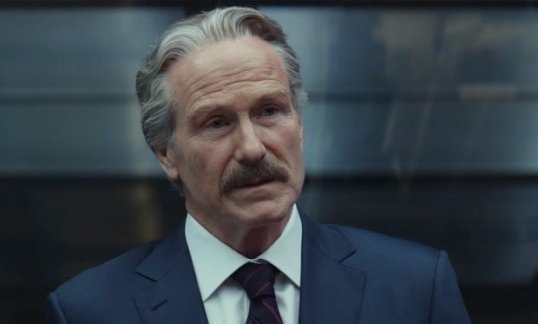
There is a nominal villain.  Daniel Bruhl plays Zemo and his role is actually pretty small.  That said, Zemo is definitely more interesting than the typical MCU villain (he’s certainly more memorable than Corey Stoll was in Ant-Man) and Bruhl does a good job playing him.  (Watching Civil War, it was hard not to think about how much better SPECTRE would have been if Bruhl, as opposed to Christoph Waltz, had played Blofeld.)  But, for me, the real villain of the film was the U.S. Secretary of State (played by William Hurt).  The character represented everything that all good people hate about the power structure.  William Hurt turned him into the epitome of unthinking and unreasonable authority.

William-Hurt-Captain-America-620x374

After Civil War was released, Salon’s Amanda Marcotte (who, let’s just be honest, ceased to be interesting the minute that she sold out and briefly worked for John Edwards in 2007) complained that Captain America had become “a douchey Libertarian.”  I would argue that 1) Captain America is definitely not douchey and 2) it’s his “libertarian” stance that makes him a hero.  Captain America does not represent any institution or ideology and he doesn’t take orders from faceless bureaucrats.  Captain America doesn’t need permission to do the right thing.  As played by Chris Evans, there’s something undeniably poignant about Captain America attempting to cling onto his idealism and his belief in personal freedom in an increasingly complicated and totalitarian world.  When told that he has a duty to become an anonymous, order-taking drone, Captain America says, “NO!”

(As a sidenote: If you want to see what the world expects Captain America to become, check out William Klein‘s Mr. Freedom.)

I know that some are claiming that Civil War is the best MCU film so far.  I wouldn’t quite go that far.  The film never quite reaches the lunatic heights of Guardians of the Galaxy nor does it match the subversive glee of Winter Soldier revealing that smug old Robert Redford is an agent of HYDRA.  But, no matter!  Captain America: Civil War is pretty freaking great!

ca2

Here are the other MCU reviews that have appeared here on the Shattered Lens:

  1. Arleigh on Iron Man 2
  2. Arleigh on Thor
  3. Arleigh on Captain America: The First Avenger
  4. Leonard on The Avengers
  5. Viktor Von Glum on The Avengers
  6. Ryan on The Avengers
  7. Arleigh on Iron Man 3
  8. Leonard on Iron Man 3
  9. Ryan on Iron Man 3
  10. Ryan on Thor: The Dark World
  11. Ryan on Captain America: The Winter Soldier
  12. Lisa on Captain America: The Winter Soldier
  13. Ryan on Guardians of the Galaxy
  14. Lisa on Guardians of the Galaxy
  15. Lisa on Avengers: The Age of Ultron
  16. Leonard on Ant-Man
  17. Ryan on Ant-Man
  18. Lisa on Ant-Man
  19. Arleigh on Captain America: Civil War
  20. Gary Loggins on Captain America: Civil War


Captain America Civil War

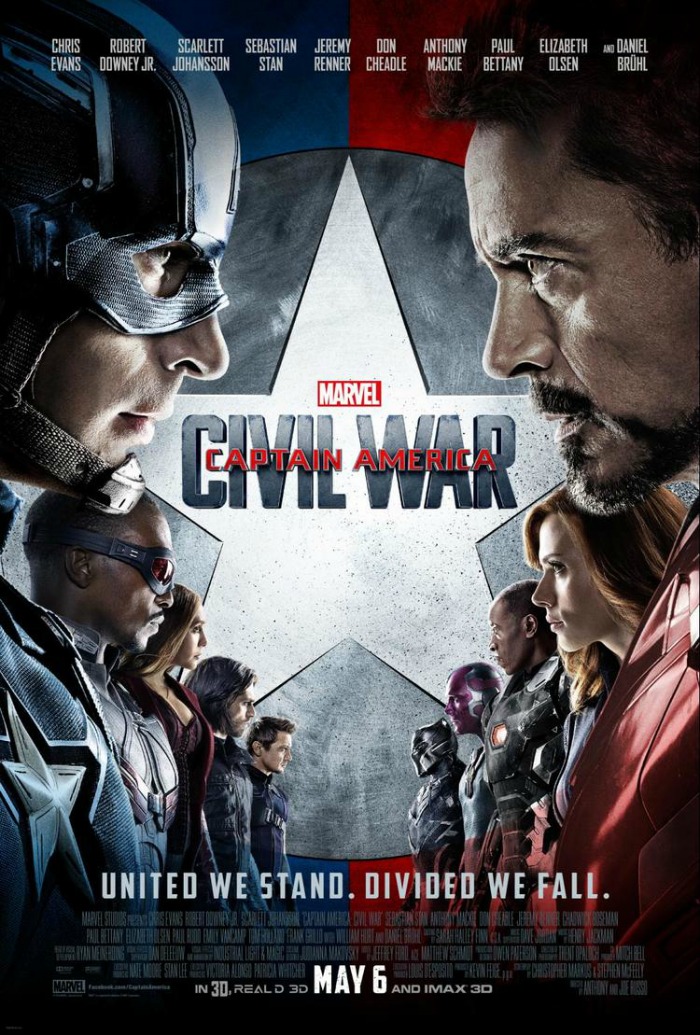
Review: Captain America: Civil War (dir. by Anthony & Joe Russo)


Captain America Civil War

Captain America: The Winter Soldier wasn’t just a surprise hit for Marvel Studios and parent company Disney in 2014, it also showed the general public that there was more to Captain America than just a flag-waving symbol of America’s past glory. Captain America was a character that wasn’t the hip, wisecracking Tony Stark. He wasn’t the tortured soul in a monster’s body like Bruce Banner as the Hulk. He didn’t have the Shakespearean gravitas that was always lurking behind Thor and his complicated Asgardian family. No, Captain America was considered too straight-laced, blonde and blue-eyed goody two-shoes.

Captain America: The First Avenger focused on those very qualities. Steve Rogers was just a skinny, asthmatic young man from Brooklyn who wanted to do his part during World War II. It would be thanks to an experimental super-soldier serum that Steve Rogers’ body finally matched the inherent goodness and will to defend the little guy. For some, this initial introduction to Captain America was too hokey, but was entertaining enough. His next appearance in 2012’s game-changing superhero team-up The Avengers saw him be part tactician for a burgeoning superhero team and part comedy relief.

It would be with The Winter Soldier that the rest of the general public finally got to what comic book fans have known for years. This is a badass man, out of his time but always fighting the good fight and staying true to his convictions and principles. What was seen as hokey idealism became something of a beacon of selflessness and the moral center in a modern world that was steeped in shades of grey. It helped that writing team of Stephen McFeely and Christopher Markus (who wrote The First Avenger) finally found a pair of directors in the Russo Brothers (Anthony and Joe) who understood just what made Captain America relevant in this day and age of cynical anti-heroes.

It’s no surprise that the Russo Brothers were tasked with continuing the work they began in the Winter Soldier with McFeely and Markus with the film that would complete the Captain America trilogy in the Marvel Cinematic Universe. It would be quite a task in getting Captain America: Civil War off the ground and moving forward under all the weight of nearly every MCU superhero (minus Thor, Hulk and Nick Fury) in attendance and the introduction of two new ones to the universe.

Did the Anthony and Joe Russo pull off this massive undertaking? Or did they stumble to not just the huge cast and many storyline threads the way Joss Whedon did with the ambitious, but flawed The Avengers: Age of Ultron?

I’m happy to say that the Russo Brothers did better than succeed but may have just made the best film in the Marvel Cinematic Universe and proved that Marvel Studios head honcho Kevin Feige was correct in placing the brothers as the new captain of the massive thing called the Marvel Cinematic Universe as it enters Phase 3.

Captain America: Civil War is set just a year after the events of Age of Ultron where the Avengers barely defeated Tony Stark’s mad A.I. Ultron and it’s decision to wipe humanity from the planet. While the team did save the world from global extinction they also didn’t save everyone. there were still hundreds, if not, thousands of Sokovians who died during the battle. The same could be said for all the battles since the alien invasion over New York. The Avengers, led by Captain America, have saved the world from invading aliens, world-dominating terrorist group and killer A.I robots. Yet, the collateral damage caused by these battles have begun to weigh not just on some of the Avengers, but has made the governments of the world see the team as a sort of super-powered private military group who don’t obey international laws and borders. Yes, they’ve saved humanity many times from destruction, but at what cost.

It’s during a battle early in the film as Captain America and his team stop the theft of a biological weapon in the city of Lagos, Nigeria that collateral damage and deaths rear it’s head once more as Wanda Maximoff (aka the Scarlet Witch) accidentally allows a suicide bomb vest explode too close to a nearby high-rise causing the deaths of several aide workers from Wakanda.

It’s from this event that the world finally have reached a tipping point and want to put the team under U.N. control with Tony Stark agreeing to the plan to help assuage his guilt over the deaths caused by him creating Ultron. Some of the team understands that government oversight that the Sokovian Accords puts on the team is the right thing to do. While others, especially Captain America, think it’s best to leave the team to continue to be their own masters instead of beholden to a bureaucracy whose agenda may not be conducive to saving lives.

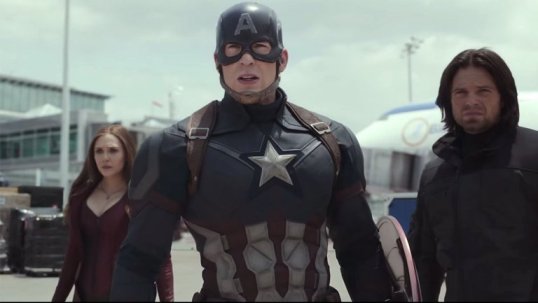
It’s a subject matter that was explored in some fashion in an earlier superhero mash-up but one that failed to stick the landing. Yet, even this battle of differing ideologies between Captain America and Iron Man only becomes part of the foundation to the true narrative for Civil War. It’s the friendship between Captain America and Bucky aka the Winter Soldier and how the former must try to prove the latter innocent of another terrorist attack the world thinks he’s responsible for. Those Avengers who signed the Accords must now bring in Bucky dead or alive while Captain America with the help of those who didn’t sign try to prove his innocence and find the true architect of the terrorist bombing.

Captain America: Civil War succeeds where the earlier superhero film failed because of the groundwork laid down by the 12 previous films released to make up the current Marvel Cinematic Universe. From Iron Man all the way up to Age of Ultron, these twelve films flesh out the backstory and characters that make up these heroes. We’ve gotten to know what motivates them to risk their lives for the greater good, but we also see glimpses of the inter-personal conflicts that looks to tear the team apart from within.

There’s not enough that could be said about the masterful work done by the Russo Brothers in juggling the personalities of twelve superheroes (two getting their initial introduction to the MCU) and giving them enough to do in the film to make them relevant to the proceedings instead of just becoming glorified cameos. The actors playing these characters have had many films to own the roles and each and everyone hits it out of the park. The stand out from the veterans in the ensemble cast still remains Chris Evans and Robert Downey, Jr as Captain America and Iron Man, respectively. Yet, it would be the arrival of the two new heroes into the mix with Chadwick Boseman as the newly-crowned king of the technologically-advanced nation of Wakanda, T’Challa and Tom Holland as the teenage chatterbox and dumpster diving tech genius Peter Parker aka Spider-Man.

Boseman as the Black Panther adds a certain level of gravitas and regal fury to the proceedings which balances the edge between serious to comedic. His Black Panther has his own agenda in getting involved in this intra-familial squabble. He has his own agenda and if it means siding with Iron Man against Captain and his team then he would do so if it succeeds in helping him finish his mission. It helps that he looks damn cool in what has to be the best superhero costume thought up by the designers in Marvel Studios.

It would be Tom Holland as the young Peter Parker and Spider-Man who steals the show whenever he’s on-screen. This is the Peter Parker and Spider-Man that comic book fans have been waiting for. While Tobey Maguire and Andrew Garfield succeeded in portraying some of the character’s personality, they could never fully capture what made Spider-Man such a favorite amongst comic book readers. This Spider-Man is geeky and not at all hip and cool, but with a sense of right and wrong that comes having great power means shouldering the responsibility to use it for good.

Captain America: Civil War, with its exploration of many profound ideas and themes, is still a superhero film and a tentpole blockbuster at that and audiences still want to see the action up on the big screen. Boy, does this film have action and enough of them to spare. The action scenes range from the grounded hand-to-hand fighting the Russo Brothers used to great effect in The Winter Soldier (this time around with the help from Chad Stahelski and David Leitch, directors of John Wick to provide 2nd Unit Directing help) up to the superhero battle that raises the bar on such things set at an evacuated airport in Leipzig, Germany.

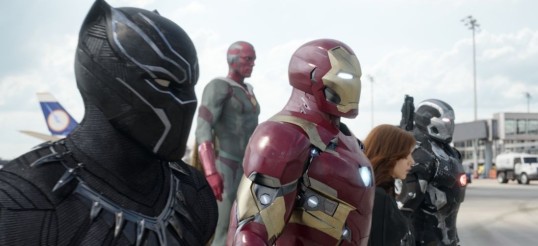
This 6-on-6 tête-à-tête between friends and colleagues takes the climactic battles in both Avengers films and does them better. With each hero using their abilities to great effect in conjunction with their allies and against those they are fighting. There was never a time during this near on 20-minute action scene did it ever get confusing. Many filmmakers doing superhero (or just plain old action films) could learn a thing or two from how the Russo Brothers and 2nd Unit directors Spiros Razatos, Stahelski and Leitch choreographed and filmed all the action sequences in Civil War. It was near-perfect with only wishful thinking that Gareth Evans from The Raid films could’ve been asked to help out to make things perfect.

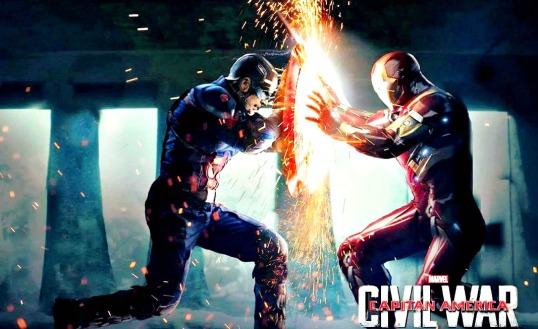
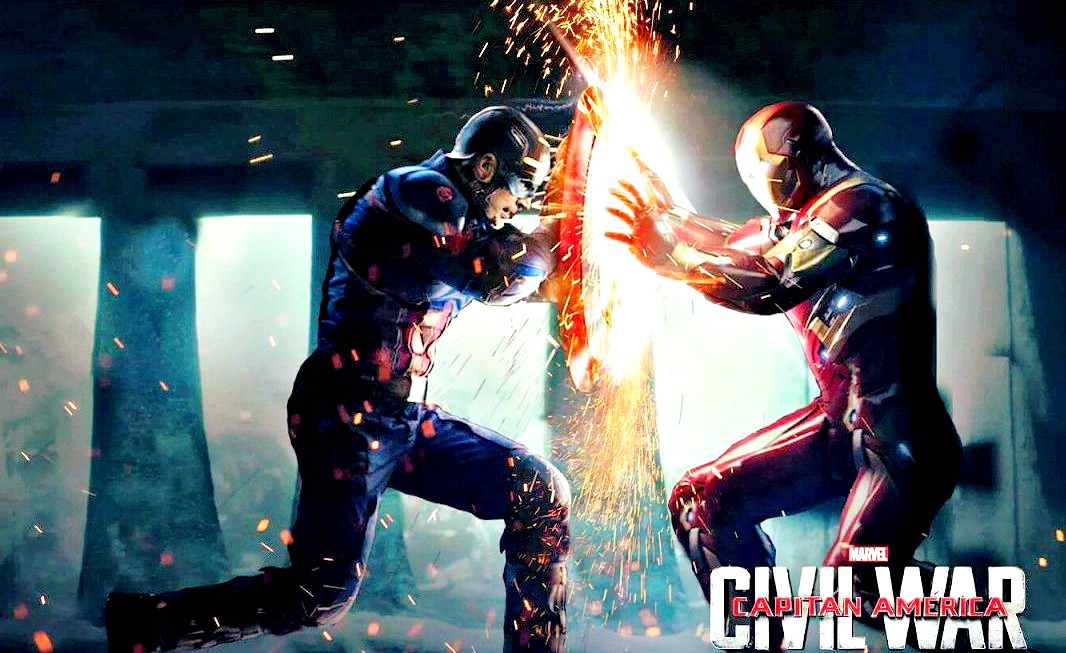
As huge and bombastic the film gets with this airport fight, it would be the final throw down between Captain America and Iron Man at the end of the film that we get the emotional heft the film needs to keep itself from becoming just another loud and explosive superhero film. This fight becomes personal and shows how fights between close friends become the most brutal and heartbreaking. Neither combatants are wrong about their stances in the fight, but they’re also wrong in not being able to think things through. These two alpha males who have a  friendship full of respect but also combativeness throughout the years of the MCU that finally explodes into all-out war when a tragic secret from both Tony Stark’s and Bucky’s past come to light.

It’s a fight that has no winners and for a superhero film that is a major change from the usual narrative (especially within the MCU storytelling playbook). The film ends with the very team created to save the world from all threats even more unsure of their place in the ever-changing and ever-judging world. It’s a bold move by Marvel Studios to start their Phase 3 that would culminate in the battle to end all battles with the two Avengers: Infinity War films (soon to be retitled) which happen to be under the master-class guiding hands of the Russo Brothers in the directors’ chair and the writing duo Stephen McFeely and Christopher Markus.

In the end, Captain America: Civil War manages to capture not just what made comic books and films adapted from them fun and exhilarating, but also able to tackle some serious ideas and themes both existential and personal. It just goes to show that one doesn’t need to sacrifice one to have the other. One can have serious and dark but also be fun. It’s a balance that’s difficult to do, but when the people involved in creating such a story stick the landing then we a classic in the making. It bodes well for the rest of the films in Phase 3 to have such a great beginning, but also raises the bar for the other filmmakers following in the wake of what Anthony and Joe Russo have concocted. Let’s  hope they are all up to the task.

The Final Captain America: Civil War Swings By


Captain America Civil War

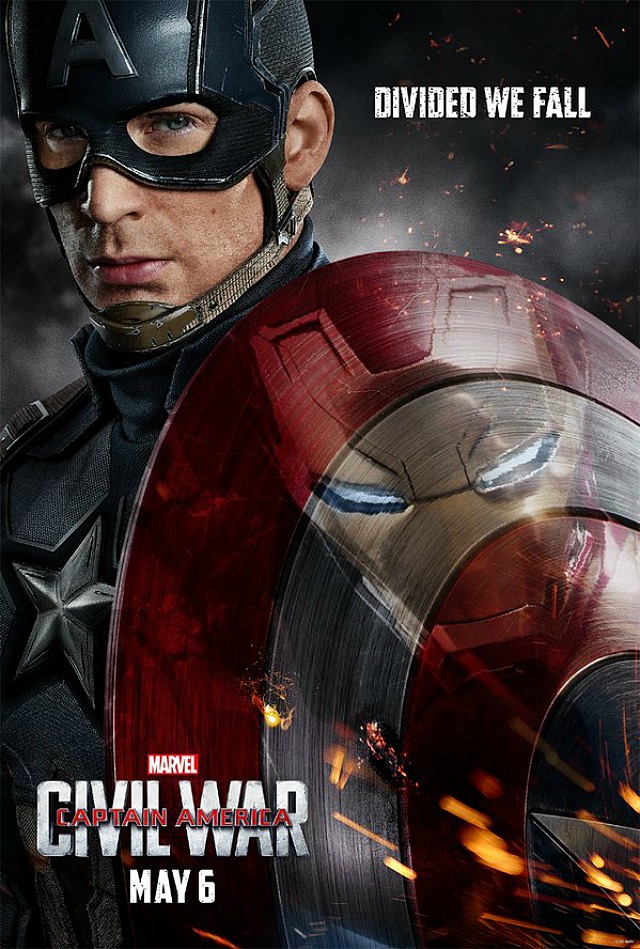
We are just two weeks away from the release of Batman v. Superman: Dawn of Justice and just a week from the premiere of Netflix’s Daredevil Season 2. What better way to remind people that there is another hero vs hero film coming out to start off the summer than with the final full trailer for Captain America: Civil War.

One things which distinguishes this latest and final trailer happens right at the very end. One could almost say that this was the trailer’s post-credit sequence.

Captain America: Civil War swings into action on May 6, 2016.

Captain America: Civil War Super Bowl TV Spot “Rivals”


Captain America - Civil War

It’s that time of the year when the country (to some extent the world) witness a sporting event that’s become almost ritualistic in how it gathers it’s audience. I’m talking about the yearly Super Bowl pitting the NFC champions against the AFC champs. Even if one wasn’t a huge fan of football, the Super Bowl has become such an event day not just for the game, but the half-time show. Then there are the commercials which has become just as anticipated as the game itself.

It’s this day that we get major studios plying their upcoming films for the summer blockbuster season and Disney is not a studio to let this day pass without showing something new regarding one of their biggest films this summer.

The first Captain America: Civil War trailer a couple months ago got everyone anticipating the film. Now we have the Super Bowl TV spot to fan the flame of hype for the film that dared to go up against Batman v. Superman: Dawn of Justice when they both had the same release date: May 6, 2016. The latter film blinked and opted to dominate the film landscape a couple months earlier.

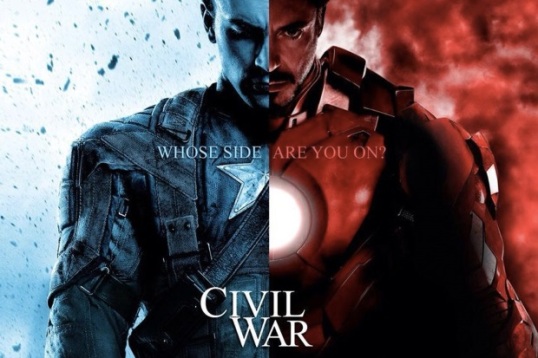
This tv spot emphasizes the fractured nature of Avengers that lends to the film’s title of civil war.

So, which team are you on? Are you on Team Captain America? Or are you more the Team Iron Man?

I guess, we’ll find out this May 6, 2016.

Captain America: Civil War Is Coming


Captain America - Civil War

“A Titan against a Titan!”

Captain America: Civil War is the opening shot of Marvel’s Phase 3 for their cinematic universe. The huge success of Captain America: The Winter Soldier, both in the box-office and among critics, even convinced Marvel Studios and Disney to pit this upcoming sequel against DC’s own Batman v. Superman: Dawn of Justice. One of the two had to blink and move their release date and it ended up being DC.

In what many have called Avengers 2.5 due to the amount of Marvel superheroes involved in the story, Captain America: Civil War will look to explore the consequences of the collateral damage incurred by Captain America and his teammates in the Avengers whenever they fight it out in public. The destruction of Midtown Manhattan during the Battle of New York was the start. The wreckage of three advanced SHIELD Helicarriers in the Potomac was another. Yet, it looks like the destruction of the capital city of Sokovia during the team’s fight against Ultron may have been the straw that broke the global governments’ back.

So, will Tony Stark and his team of Pro-Registration win out over the out-gunned Team Captain America who do not want to be beholden to the agendas of any world government?

We shall find out when Captain America: Civil War drops on everyone on May 6, 2016.

Arleigh’s Top 9 Films of 2014 (Front End)


We’re now past the halfway point for the film season of 2014. The year has seen it’s share of hits, bombs and surprises. Many look at the box-office numbers some that these films generate as a sign of their success. Others look at how the critics-at-large have graded these films as a way to determine whether they’ve been successful.

I know some people would list nothing but independent arthouse films as their best. They look at genre and big-budget films as not being worthy of being the best of the year, so far. It’s that sort of thinking that limits one’s appreciation of film, in general.

Does having a 150 million dollar budget mean that a film cannot be one of the best of the year. Past history will suggest that’s not the case. Yet, there are cinephiles out there who will dismiss such films because they consider it as being too Hollywood. The same goes for people who look down upon genre films like horror, scifi, westerns and many others that do not fit their slice-of-life drama study. They’re not existential enough for some.

I’ve come to look at all the films I’ve been fortunate enough to see through the first six months of 2014 and picked 9 of the best (I picked a random odd number since Lisa Marie already does the even numbers thing) no matter their genre, type of film and budget. I’ve picked a couple of scifi films, a documentary, an action-packed blockbuster sequel, a wonderfully made 3-D animated film (itself a sequel), a neo-noir Western, a brutal crime-thriller, an indie horror-thriller and one of the best comedies of the last couple years.

In no special order….

noah-banner222Noah (dir. by Darren Aronofsky)

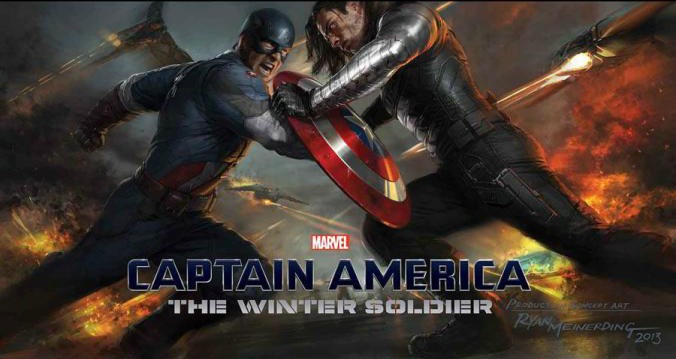
capawsmovarthc-cvr-a91f8Captain America: The Winter Soldier (dir. by Anthony and Joe Russo)

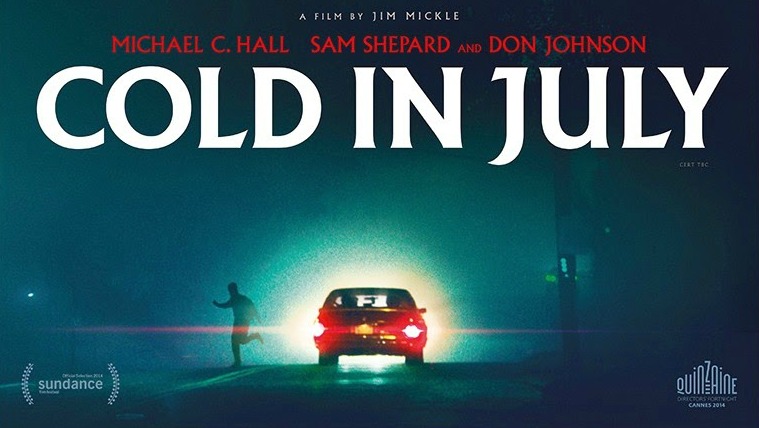
cold_in_july_ver2_xlgCold in July (dir. by Jim Mickle)

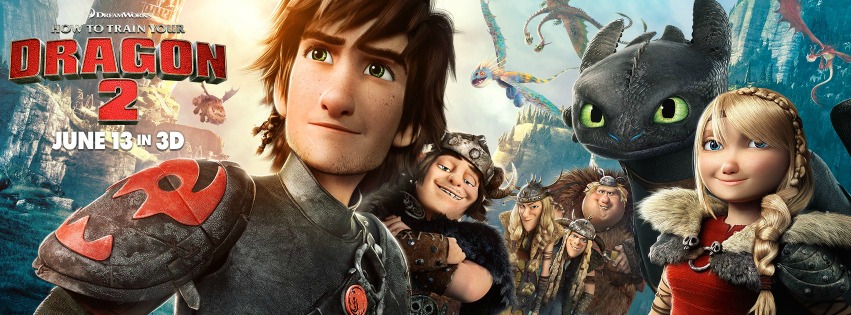
HTTYD2How To Train Your Dragon 2 (dir. by Dean DuBois)

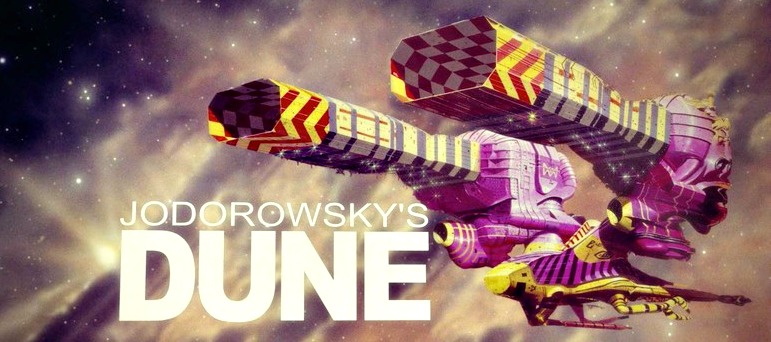
JodorowskysDuneJodorowsky’s Dune (dir. by Frank Pavich)

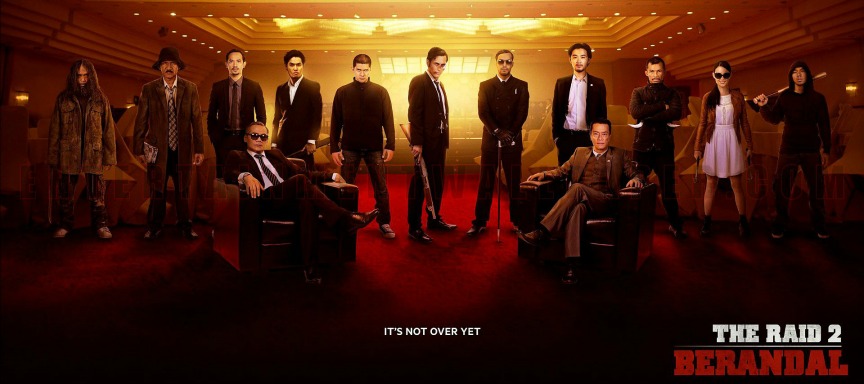
the-raid-2-berandal01The Raid 2: Berandal (dir. by Gareth Evans)

Snowpiercer (dir. by Bong Joon-ho)

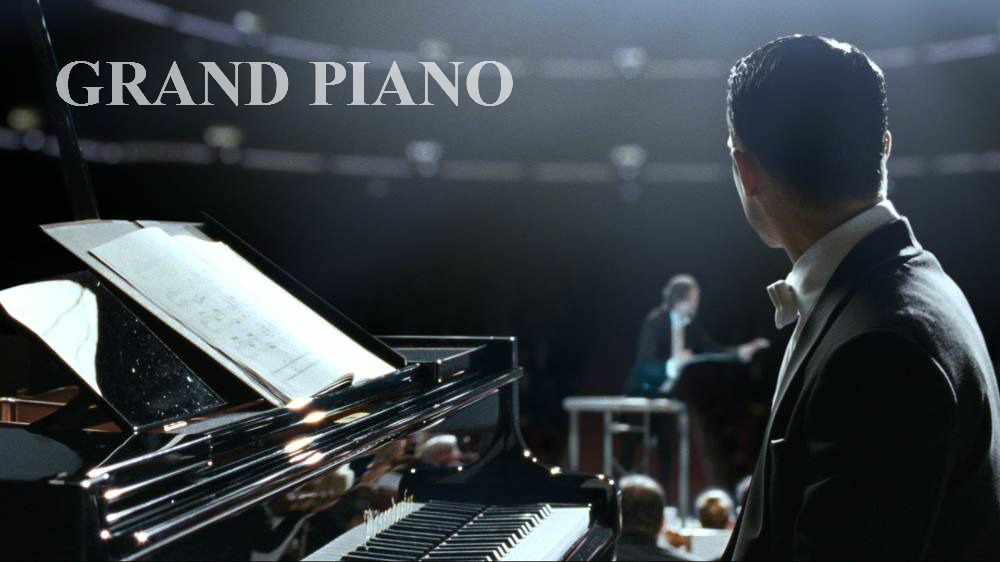
GrandPianoGrand Piano (dir. by Eugenio Mira)

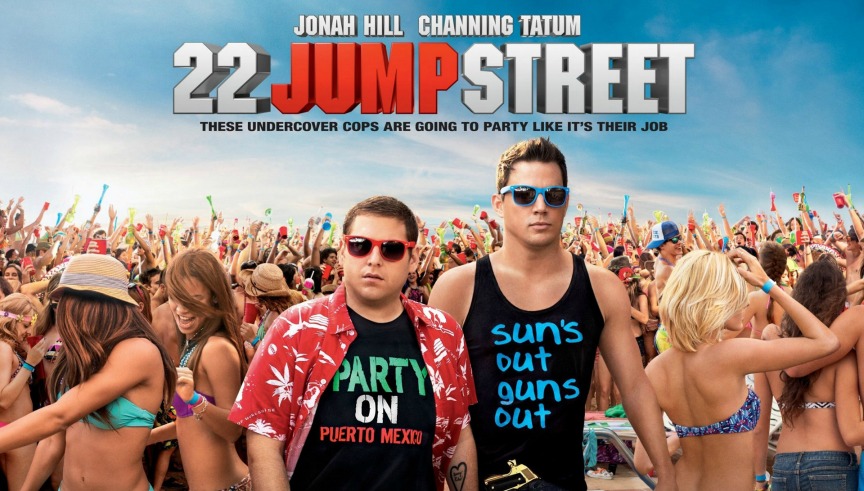
22JumpStreet22 Jump Street (dir. Phil Lord and Christopher Miller)

My honorable mentions: All Cheerleaders Die, X-Men: Days of Future Past, Joe, Edge of Tomorrow, Lego: The Movie, Blue Ruin, Locke, Under the Skin, Only Lovers Left Alive, The Sacrament