Horror Film Review: C.H.U.D. (dir by Douglas Cheek)


There’s something living under the streets of New York City.

That’s the basic idea behind 1984’s C.H.U.D., a film that opens with an upper class woman and her little dog being dragged into the sewers by a creature the reaches out of a manhole.  People are disappearing all over the city but the authorities obviously aren’t revealing everything that they know.  Even after the wife of NYPD Captain Bosch (Christopher Curry) disappears, the city government doesn’t seem to be too eager to dig into what exactly is happening.

Instead, it falls to two activists.  Photographer George Cooper (John Heard) specializes in taking picture of the homeless, especially the one who live underground in the New York subways.  He’s like a well-groomed version of Larry Clark, I guess.  Social activist A.J. “The Reverend” Shepherd (Daniel Stern) runs a homeless shelter and is convinced that something is preying on the most vulnerable citizens of New York.  When the police won’t do their job, George and the Reverend step up!

So, what’s living in the sewers?  Could it be that there actually are cannibalistic humanoid underground dwellers out there?  Everyone in New York City has heard the legends but, much like stories of the alligators in the Chicago sewers, most people chose not to believe them.  Or could the disappearance have something to do with the cannisters labeled Contamination Hazard Urban Disposal that are being left in the sewers by the Nuclear Regulatory Commission?  Wilson (George Martin) of the NRC says that they would never purposefully mutate the people living underground but Wilson works for the government so who in their right mind is going to trust him?

C.H.U.D. is a horror film with a social conscience.  It’s very much an 80s films because, while you have Shepherd running around and attacking everyone for not taking care of the most vulnerable members of society, the true villain is ultimately revealed to be the members of a regulatory agency.  Instead of finding a safe way to get rid of their nuclear waste, they just found a sneaky way to abandon it all in New York and obviously, they assumed no one would care because …. well, it’s New York.  Everyone in the country knows that New York City isn’t safe so who is going to notice a few underground monsters, right?

The idea behind C.H.U.D. has a lot of potential but the execution is a bit lackluster.  For every good C.H.U.D. kill, there’s long passages where the story drags.  Considering that Heard spent most of his career typecast as the type of authority figure who would dump nuclear waste under New York City, it’s actually kind of interesting to see him playing a sympathetic role here.  Daniel Stern, on the other hand, is miscast and rather hyperactive as Shepherd.  You really do want someone to tell him to calm down for a few minutes.  Watching C.H.U.D., one gets the feeling that it’s a film with an identity crisis.  Is it a horror film, an action flick, a work of social commentary, or a dark comedy?  There’s no reason why it can’t be all four but C.H.U.D. just never really comes together.  It ultimately feels more like a mix of several different films instead of being a film made with one clear and coherent vision.

In the end, Death Line remains the film to see about underground cannibals.
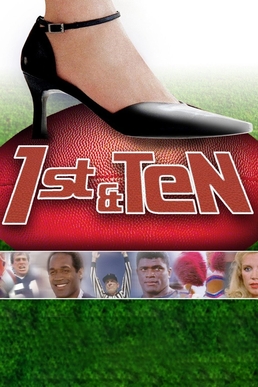
Late Night Retro Television Review: 1st & Ten 1.13 “Super Bull Sunday”


Welcome to Late Night Retro Television Reviews, a feature where we review some of our favorite and least favorite shows of the past! On Wednesdays, I will be reviewing 1st and Ten, which aired in syndication from 1984 to 1991. The entire series is streaming on Tubi.

This week, season one comes to an end with the Championship Game!

Episode 1.13 “Super Bull Sunday”

(Dir by Bruce Seth Green, originally aired on February 17th, 1985)

The Bulls make it to the Championship Game!

And lose!

In fact, they lose in spectacular fashion.  We don’t actually see much of the game but we do see the aftermath.  We learn that star running back Carl Witherspoon set a record for fumbles.  Star quarterback Bob Dorsey set a record for interceptions.  The offensive line set a record for letting their quarterback get sacked.  Coach Denardo blames himself but Diana announces to the press that the Bull will be back next year so …. “LOOK OUT!”

Admittedly, the big game only took up about 5 and a half minutes of screentime.  Most of this episode centered around a dumb plot to trick Diana into selling the Bulls to the Japanese so that her ex-husband (remember him?) could swoop in and buy back his team.  It was a pretty dumb plan that fell apart easily but, at the very least, it appears that it finally led to Diana firing her duplicitous general manager, Roger Barrow (Clayton Landey), something she should have done at the start of the season.

But let’s give the show some credit.  It would have been really easy to just have the Bulls pull off another last-minute victory.  Instead, season one ended with the agony of defeat and the actors actually did a really good job of playing up their depression.  It can’t be easy make it to the Championship Game and fail.

So, that’s it for season one.  It wasn’t really that good of a season but maybe I would feel differently if I was a football fan or if I was a dude.  This is very much a guy-centered show.  Next week, we’ll start season 2!

Late Night Retro Television Review: 1st & 10 1.8 “The Sins of the Quarterback”


Welcome to Late Night Retro Television Reviews, a feature where we review some of our favorite and least favorite shows of the past! On Wednesdays, I will be reviewing 1st and Ten, which aired in syndication from 1984 to 1991. The entire series is streaming on Tubi.

This week, Bryce Smith finally takes the field!

Episode 1.8 “The Sins of the Quarterback”

(Dir by Bruce Seth Green, originally aired on January 13th, 1985)

During a game against the — oh come on! — Atlanta Confederates, Bob Dorsey is sacked and knocked unconscious.  Ultra-religious backup quarterback Bryce Smith (Jeff East) is sent in to replace him.  Bryce throws an amazing pass across the entire field that is somewhat caught for a touchdown.  The Bulls win!

The defensive players celebrate by grabbing Bryce forcing liquor down his throat.  Bryce is a Mormon and a graduate of BYU.  Bryce gets drunk easily.  After the rest of the players leave the locker room, a barely coherent Bryce is  approached by cheerleader Tammy Baker (Pamela Jean Bryant) who says that she is God’s gift to him.  The scene ends rather abruptly, I assume because this episode was heavily edited for syndication.

A week later, an excited Tammy approaches Bryce at a roast honoring the team.  She tells him that she’s pregnant!  She’s super-excited!  Bryce, however, is shaken and — after a fantasy sequence set in the Garden of Eden — Bryce announces that he is retiring from football and going to Tibet to become a monk.  Why would a Mormon go to Tibet to become a monk?

Well, I guess the team is screwed!  Bob Dorsey still isn’t ready to come back and the third-string quarterback can barely throw the ball.  However, Bryce’s wife comes to the rescue.  She forgives Bryce for cheating and she also invites Tammy to come live with them.  Bryce can continue to play football!

Denardo, however, doubts that Bryce is the one who impregnated Tammy.  He demands that every other player who had sex with Tammy raise their hand.  Nearly every hand in the locker room goes up.  Bryce worries that everyone is going to have to move in with him and his wife….

Okay, then!  It’s hard to review this episode because, again, it’s obvious that the racy, original episode (the one that aired on HBO) was heavily edited for syndication.  The version that I saw featured a lot of abrupt jump cuts.  The story itself was fairly dumb but that’s kind of a given when it comes to this show.  I’ll give some credit to Jeff East.  He was far better than the material he had to work with.

Myself, I’m just amazed that this show featured a team called the Atlanta Confederates.  I’m going to assume that team eventually changed their name.

Late Night Retro Television Review: 1st & Ten 1.6 “You Are Who You Eat”


Welcome to Late Night Retro Television Reviews, a feature where we review some of our favorite and least favorite shows of the past! On Wednesdays, I will be reviewing 1st and Ten, which aired in syndication from 1984 to 1991. The entire series is streaming on Tubi.

This week, Diana makes history!

Episode 1.6 “You Are Who You Eat”

(Dir by Bruce Seth Green, originally aired on December 30th, 1984)

Coach Denardo has a heart attack and is laid up in the hospital.  It looks like Diane is going to have to coach the team!

Wait?  What?

Listen, I’ll be the first to admit that I don’t know a lot about football but I do know that there is such a thing as an assistant coach.  And there’s also coordinators.  There’s a lot of coordinators and a lot of assistants and I imagine that a part of their job entails coaching whenever the head coach is in the hospital.  So, I’m not really sure how this episode went from “Coach Denardo can’t coach this weekend” to “The owner is going to have to do it!”

Still, Diana ends up on the sidelines as the “first female head coach in history!”  I remember that a few Super Bowls ago, they made a big deal about one of the teams having a female assistant coach and I was like, “Well, they better win or they’re never going to hire another woman.”  I think the team lost.  I don’t really follow football.

Anyway, Coach Denardo is on the phone with Diana for most of the game but, towards the end of the game, the connection goes down.  Denardo runs out of his hospital in his hospital gown and takes a taxi to the stadium.  Luckily, even without his help, Diana knew exactly which play to call and the Bulls win another game.

Yay, I guess.  This episode was pretty dumb.  If I was coaching a football team, I would just be like, “Have that guy run to the touchdown area and then throw him the ball.”  I think we would win easily.

Late Night Retro Television Review: 1st & Ten 1.4 “The Slump”


Welcome to Late Night Retro Television Reviews, a feature where we review some of our favorite and least favorite shows of the past! On Wednesdays, I will be reviewing 1st and Ten, which aired in syndication from 1984 to 1991. The entire series is streaming on Tubi.

This week, cocaine comes to the locker room.  Actually, cocaine was probably already there.  Now, there’s more cocaine.  Football, right?

Anyway….

Episode 1.4 “The Slump”

(Dir by Bruce Seth Green, originally aired on December 16th, 1984)

This week’s episode starts off with some full front nudity as wide receiver Mace Petty (Marshall R. Teague) takes a shower with a blonde woman.  Suddenly, a bearded man steps into the shower, accuses Mace of seducing his wife, and points a gun at him.  OH MY GOD, IS MACE GOING TO DIE!?  (And who is Mace, anyway?)

Oh wait, it’s a prop gun.  Ha ha, it’s practical joke.  Those crazy Bulls.

With the required HBO nudity out of the way, the plot kicks off.  The Bulls are in a slump.  They’ve lost their past two games!  In order to turn things around, Diane makes a trade for a talented wide receiver.  (Ha!  TAKE THAT, MACE!)  Butch Cassidy (Michael Toland) may be a good athlete but guess who has a cocaine addiction!?  Butch is soon snorting in the men’s room.  When he has to take a drug test, he uses a groupie’s urine instead.  When the results come back, it’s announced that Butch is pregnant.  Butch is kicked off the team.  Maybe the Sundance Kid can take his place….

The good news is that The Bulls still win their next game, breaking the slump.  And Bob Dorsey earns Diana’s trust by telling her that Butch has a drug problem.  And the Arcola Brothers attempt to keep the Bulls from serving beer at the stadium is thwarted when Diana has a bunch of helicopter fly in the beer.  (That way, no one has to cross the picket line that the Arcolas have set up outside the stadium.)  Finally, Carl Witherspoon gets a new contract and the rest of the team gets jealous because Carl is now a “millionaire” but then Carl points out that he’s a terrible negotiator and he actually got screwed over on the contract.  He then agrees to take the team to Hawaii.  No wonder they won that game!

This episode was actually better than the previous three.  That doesn’t mean it was particularly good but still it wasn’t terrible.  (And that’s what we mean by “damning by faint praise.”)  If nothing else, Michael Toland gave a good performance as the cocky but self-destructive Butch Cassidy.  I also kind of like the chemistry between Geoffrey Scott and Delta Burke.  They’re good together.  As far as episodes of bad shows go, this was a good one.

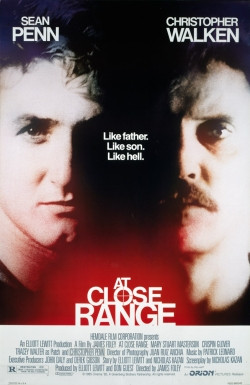
At Close Range (1986, directed by James Foley)


Brad Whitewood, Sr. (Christopher Walken) is known as Big Brad, a rural crime lord who rules the backwoods of Pennsylvania.  When his son, Little Brad (Sean Penn, trying too hard to be James Dean), comes to live with him, Big Brad goes out of his way to try to bring the teenager into his criminal lifestyle.  At first, Little Brad loves being a part of the family business but witnessing a murder and falling in love with Terry (Mary Stuart Masterson) caused Little Brad to start to move away from his father.  With the FBI closing in on the Whitewood family, Brad Sr. starts to eliminate everyone who he considers to be a threat, including the members of his own family.

Based on a true story, this neo-noir features a great cast, including Chris Penn, Millie Perkins, Kiefer Sutherland, Crispin Glover, David Strathairn, Tracey Walter, and Mary Stuart Masterson.  Unfortunately, the movie itself moves at a plodding pace.  There are some good and disturbing scenes, like the montage where Big Brad starts to eliminate the members of his gang.  The film does a good job of showing how seductive Big Brad’s criminal lifestyle can be to a bunch of kids who have basically been written-off by society.  But the story itself is so bleak that most people will end up tuning out long before Little Brad finally turns against his father.

Whatever other flaws it may have, At Close Range does feature one of Christopher Walken’s best performances.  Walken is chillingly evil as Big Brad.  He’s got enough charisma to be believable as someone who could bring a gang together but he’s also frightening as he starts killing anyone who he thinks might talk to the police or the FBI.  Big Brad is a remorseless killer and Walken plays him as being a classic sociopath, someone who cannot understand why the members of his gang and family would get upset when he starts killing some of them.  To Big Brad, that just goes with the territory.  It’s a part of doing business.  With his distinct way of speaking and his trademark tics, Walken is someone who has inspired many impersonators and it can be easy to forget that he’s also a damn good actor.  Films like At Close Range remind us of just how talented Walken actually is.

Guilty Pleasure No. 73: Days of Thunder (dir by Tony Scott)


In 1990’s Days of Thunder, Tom Cruise plays Cole Trickle, a talented but headstrong racecar driver who is recruited by businessman Tim Daland (Randy Quaid) to become a NASCAR champion and to also provide some publicity for Daland’s Chevrolet dealership.  Tim convinces Harry Hogge (Robert Duvall) to come out of retirement and serve as Cole’s crew chief.  Harry builds cars in his barn and then he talks to them, whispering sweet nothings into their side mirrors.  (This happens quite a bit.)  Both Cole and Harry have something to prove.  Cole has to prove that he’s the best.  Harry has to prove, to himself, that an accident that killed one of his driver was not his fault.  Harry also has to prove that he’s not insane.  That’s not an easy thing to do when you’re always in the barn, talking to a car.

At first, Cole’s rival is Rowdy Burns (Michael Rooker) but, after Rowdy is seriously injured in a crash and told that he will never race again, Rowdy becomes Cole’s closest friend and supporter.  With Rowdy off the circuit, Russ Wheeler (Cary Elwes) becomes Cole’s main rival.  We know that Russ is a bad guy because he never has a hair out of place and he’s played by Cary Elwes, who for some reason was always cast as the smug bad guy in films like this despite having a rather charming screen presence.

Cole’s love interest is Dr. Claire Lewicki (Nicole Kidman), who is there to help Cole deal with his anger issues and who is surprisingly forgiving of all the times that Cole acts like a complete and total jerk.  That happens quite a bit.  Cole is a bit of brat but eventually, with the help of everyone around him, he learns how to be a great driver.

The first time I ever saw Days of Thunder, I was pretty dismissive of it.  The film was producer and directed by the same people who were behind Top Gun and it pretty much tells the same story, except the jets are replaced with cars and the stakes are a bit less than saving democracy.  Like Top Gun, it was a film where Tom Cruise played a character who wants to be the best but who has to learn how to set aside his own ego and take control of his impulsive nature.  The first time I saw the film, I shrugged and said that, while Nicole Kidman and Tom Cruise had a lot more chemistry than Cruise and Kelly McGillis, it was still nothing that I hadn’t seen before.

But I have to admit that, since then, I’ve rewatched the film a few times.  It’s one of those movies that I never specifically seek out but if I see it playing somewhere on cable, I’ll usually watch a bit of it.  Some of it is because the race scenes actually are exciting, even if they do get a bit repetitive after a while.  Tony Scott was a director who knew how to film action.  The other major reason why I often find myself watching Days of Thunder is for the totally over-the-top performances of Robert Duvall and Randy Quaid.

“We looked like a monkey fucking a football out there!” Quaid exclaims, not once but twice.  It’s a phrase that doesn’t make the least bit of sense and it’s one of those lines of dialogue that reminds us that Days of Thunder went into production with a script that was being written and rewritten on a daily basis.  But Randy Quaid’s delivery is so emphatic that line works despite being totally stupid.

As for Robert Duvall, his performance here is a perfect example of how much fun it can be to watch a legitimately great actor overact.  There’s nothing subtle about his performance and I doubt Days of Thunder will ever be a film that shows up when people are talking about the highlights of his legendary career.  But when Duvall talks to his car, you believe every minute of it.  It’s such a silly scene but Duvall pulls it off like the pro that he is.

Finally, if you’re going to watch a movie about two cocky race car drivers who are constantly taunting each other, wouldn’t you want them to look like Tom Cruise and Cary Elwes?  Good lookin’ guys in fast cars, drivin’ around Southern racetracks, what’s not to love?

Previous Guilty Pleasures

  1. Half-Baked
  2. Save The Last Dance
  3. Every Rose Has Its Thorns
  4. The Jeremy Kyle Show
  5. Invasion USA
  6. The Golden Child
  7. Final Destination 2
  8. Paparazzi
  9. The Principal
  10. The Substitute
  11. Terror In The Family
  12. Pandorum
  13. Lambada
  14. Fear
  15. Cocktail
  16. Keep Off The Grass
  17. Girls, Girls, Girls
  18. Class
  19. Tart
  20. King Kong vs. Godzilla
  21. Hawk the Slayer
  22. Battle Beyond the Stars
  23. Meridian
  24. Walk of Shame
  25. From Justin To Kelly
  26. Project Greenlight
  27. Sex Decoy: Love Stings
  28. Swimfan
  29. On the Line
  30. Wolfen
  31. Hail Caesar!
  32. It’s So Cold In The D
  33. In the Mix
  34. Healed By Grace
  35. Valley of the Dolls
  36. The Legend of Billie Jean
  37. Death Wish
  38. Shipping Wars
  39. Ghost Whisperer
  40. Parking Wars
  41. The Dead Are After Me
  42. Harper’s Island
  43. The Resurrection of Gavin Stone
  44. Paranormal State
  45. Utopia
  46. Bar Rescue
  47. The Powers of Matthew Star
  48. Spiker
  49. Heavenly Bodies
  50. Maid in Manhattan
  51. Rage and Honor
  52. Saved By The Bell 3. 21 “No Hope With Dope”
  53. Happy Gilmore
  54. Solarbabies
  55. The Dawn of Correction
  56. Once You Understand
  57. The Voyeurs 
  58. Robot Jox
  59. Teen Wolf
  60. The Running Man
  61. Double Dragon
  62. Backtrack
  63. Julie and Jack
  64. Karate Warrior
  65. Invaders From Mars
  66. Cloverfield
  67. Aerobicide 
  68. Blood Harvest
  69. Shocking Dark
  70. Face The Truth
  71. Submerged
  72. The Canyons

Retro Television Review: Miami Vice 2.23 “Sons and Lovers”


Welcome to Retro Television Reviews, a feature where we review some of our favorite and least favorite shows of the past!  On Mondays, I will be reviewing Miami Vice, which ran on NBC from 1984 to 1989.  The entire show can be purchased on Prime!

This week, the second season comes to a close with …. TRAGEDY!

Episode 2.23 “Sons and Lovers”

(Dir by John Nicolella, originally aired on May 9th, 1986)

The final episode of the second season Miami Vice opens with Crockett and Tubbs getting their cover blown for what seems like the 100th time.  Seriously, has there every been an episode featuring these two going undercover in which their cover has not been blown?  This time, they’re nearly executed by the drug dealers they were trying to arrest but, at the last minute, a sniper with a laser-guided sight shoots one of the dealers.  In the confusion, Sonny and Tubbs are able to subdue most of the other dealers and disarm a booby trap that would have blown up Switek and Zito.

When Crockett mentions that they would have been dead if not for the sniper with the laser pointer, Switek says, “None of our guys have a laser.”

(Why not, Switek!?  Are you guys trying to win the War on Drugs or not!?)

It turns out that the sniper worked for Angelina Medera (Phanie Napoli), the daughter of Calderone, the Colombian drug lord whose murder of Tubb’s brother led to Tubbs coming to Miami in the first place.  Though she is still bitter over Crockett killing her father, Angelina has come to Miami to introduce Tubbs to his son, infant Ricardo, and to warn Tubbs that her half-brother, Orlando (John Leguizamo, in his first screen role), has put a contact out on his life.

Tubbs is a father!  Tubbs is in love!  Well, as Crockett could warn him, there’s nothing worse than being happy when you’re a member of the Vice Squad because it’s guaranteed that your happiness will be ripped away from you in the most violent way possible.  Orlando comes to Miami and kidnaps Angelina and little Ricardo.  With the help of a corrupt DEA agent named Harrison (J.C. Quinn), Orlando tries to set Tubbs up.  Drawing Tubbs out to a pier where Angelina is bound in a car, Orlando plans to blow up his rival.  Tubbs, being the star of the show, does manage to survive being near the car when it explodes.  Angelina is not so lucky.  Tragically, Tubbs believes that his son was in the car as well.  (Actually, Orlando set little Ricardo back to Colombia.)  At Angelina’s funeral, Tubbs receives a letter from Orlando.  “I’ll be back!” it reads.

And so, season 2 ends!

The finale was a bit of a let down, largely because a good deal of the running time was devoted to flashbacks to remind us just who the Calerdones were in the first place.  As well, John Leguizamo is not exactly the most intimidating of actors and his performance as Orlando was a bit stiff and awkward.  (It makes sense when you consider that he was only 19 years old and making his debut on a hit television show.  Anyone would be nervous.)  Much like the Frank Zappa episode, it’s obvious that this episode was meant to launch a storyline that would be revisited in the future.  While Leguizamo would return, it would appear that this episode is the only one to feature Tubbs’s son.  So, I guess Tubbs will have to live the rest of his life thinking his childhood was blown up by a Colombian drug lord.

That’s dark!

That’s Miami Vice dark!

Despite the weak finale, I thought the second season of Miami Vice was a good one.  There were a few weak episodes but, for the most part, it was a strong and stylish season and one that continued to explore just why exactly the War on Drugs proved to be unwinnable.  Episodes like Out Where The Buses Don’t Run, Bushido, One Way Ticket, Little Miss Dangerous, and Trust Fund Pirates were all examples of Miami Vice at its cynical and surreal best.

Next week, we begin season 3 with a guest appearance by Liam Neeson!

A Movie A Day #70: Wired (1989, directed by Larry Peerce)


Sometimes, you watch a movie and all you cay say, at the end, is “What the Hell were they thinking?”

Wired is one such movie.  Based on a widely discredited biography by Bob Woodward, Wired tells two stories.  In the first story, John Belushi (Michael Chiklis, making an unfortunate film debut) wakes up in a morgue and is told by his guardian angel that he has died of a drug overdose.  Did I mention that his guardian angel is Puerto Rican cabbie named Angel Vasquez (Ray Sharkey) and Angel drives Belushi through a series of flashbacks?  Belushi meets Dan Aykroyd (Gary Groomes, who looks nothing like Dan Aykroyd).  Belushi gets cast on Saturday Night Live.  Belushi marries Judy (Lucinda Jenney).  Belushi uses drugs, costars in The Blues Brothers, dies of a drug overdose in a sleazy motel, and plays a pinball game to determine whether he’ll go to Heaven or Hell.  While this is going on, Bob Woodward (J.T. Walsh) is interviewing everyone who knew Belushi while he was alive.

There are so many things wrong with Wired that it is hard to know where to even begin.  I haven’t even mentioned the scene where Bob Woodward travels back in time and has a conversation with Belushi while he’s dying on the motel room floor.  Wired tries to be a cautionary tale about getting seduced by fame and drugs but how seriously can anyone take the message of any movie that features Ray Sharkey as a guardian angel?  The scenes with Woodward are strange, mostly because the hero of Watergate is being played by an actor best known for playing sinister villains.  (Seven years after playing Bob Woodward, J.T. Walsh was actually cast as Watergate figure John Ehrlichman in Nixon.)  Considering that this was his first movie, Michael Chiklis is not bad when it comes to playing a drug addict named John but he’s never convincing as John Belushi.  He never captures the mix of charisma and danger that made John Belushi a superstar.  Wired wants to tell the story of Belushi’s downfall but never understands what made him special to begin with.

Wired tries to be edgy but it only succeeds for one split second.  During the filming of The Blues Brothers, a director who is clearly meant to be John Landis walks over to Belushi’s trailer.  Listen carefully, and a helicopter can be heard in the background.

As for the rest of Wired, what the Hell were they thinking?

Icarus File No. 2: Maximum Overdrive (dir by Steven King)


mo

There is exactly one effective sequence to be found in Maximum Overdrive, a horror film from 1986 that attempts to show us what would happen if all of Earth’s machines decided to destroy humanity.

It takes place at the end of a little league game.  The coach, happy that his team has won, declares soda for everyone!  He walks over to the soft drink machine and puts in his coins and…nothing happens.  The coach stares at the machine perplexed.  His team gathers around him.

Suddenly, a can flies out of the machine and hits the coach in the groin.  Coach falls to his knees, just to get another can driven straight into his skull, leaving him with a big bloody hole in his head.  As the coach twitches, his teams starts to run away.  Suddenly, the machine is shooting cans out at them.  Some of the kids escape but quite a few don’t.

Suddenly, as the kids flee, a driverless steamroller crashes through a fence and drives across the field, graphically flattening one of the players…

It’s over-the-top, it’s kind of scary, it’s fun in a naughty sort of way, and it’s exciting to watch.  It’s totally absurd and yet it’s effective at the same time.  It’s a really brilliant scene, one that hints at what Maximum Overdrive could have been.  It hints that Maximum Overdrive‘s first-time director did have some potential and watching it, one is tempted to feel a pang of regret over the fact that he never directed another film after this one.

However, then you watch the rest of Maximum Overdrive and you realize that one effective scene was a total fluke.  To your horror, you realize that this film’s director (and screenwriter) has decided to set nearly the entire film in the ugliest and most disgusting truck stop in the world.  You realize that the director has no idea how to maintain suspense and that his idea of horror appears to be having a lot of trucks constantly circling the truck stop.  And then, worst of all, you realize that the unlikable caricatures inside the truck stop are meant to be our heroes!

And you find yourself wondering if things could possibly get any worse.  Well, believe me — they can.

First off, a guy named Camp Loman (Christopher Murney) shows up and reveals himself to be a total lech and then starts trying to sell bibles and really, what do you expect from someone named Camp Loman?  And, what’s annoying, is that the film’s director seems to think that he’s blowing our mind by presenting us with an hypocritical bible salesman.  I mean, seriously — the amount of time devoted to Camp Loman will make you nostalgic for scenes of a steamroller crushing a child.

And then Emilio Estevez shows up as our hero but he scowls through the entire movie and delivers all of his lines through gritted teeth, as if he’s pissed off about appearing in Maximum Overdrive and really, who can blame him?  That said, it doesn’t really make for an enjoyable performance.

But hey — Emilio’s not the only person in the truck stop.  There’s also Pat Hingle, playing the owner of the truck stop.  He’s overweight, wears a tie, smokes a cigar, and speaks with a vaguely Southern accent.  Hmmmmm, do you think he’s going to be a bad guy?

Oh!  And let’s not forget the waitress played by Ellen McElduff.  “WE MADE YOU!” she shouts at the machines and then she shouts it again and again and again and again and it’s almost as if the film is being directed by a guy so in love with his own dialogue that he doesn’t realize how annoying the same line gets when it’s screeched over and over again.

And I haven’t even gotten to the helium-voiced newlyweds yet…

When I recently watched Maximum Overdrive on Encore, there were a lot of things that annoyed me, such as the bad pacing, the bad acting, the bad dialogue, the bad special effects, the bad cinematography, and the bad everything else.  But what really got to me was just how inconsistent this movie was.  Some machines turned into killers but oddly, others did not.  At one point, a machine gun starts shooting at the people in the truck stop but the weapons that Pat Hingle keeps in the truck stop never turn on their human masters.  Seriously, if you’re going to make a terrible movie, at least be consistent.

So, you may be asking, why is this an Icarus File?  Well, it was directed by Stephen King, the writer who is routinely called the “master of horror.”  King may be a great writer but, judging from this movie, he was a really crappy director.  I imagine, when the film was in pre-production, the logic was that if King could write a scary book then he could definitely direct a scary movie.

Nope.

It turns out that, just as Icarus should never have gotten so close to the sun, Stephen King should never have directed a movie.

Previous Icarus Files:

  1. Cloud Atlas