Playing Catch Up With The Films of 2016: Race (dir by Stephen Hopkins)


race

Do you remember Race?

It came out in February of this year and it was kind of a big deal for a week.  I think everyone was expecting it to be a big hit, just because there’s never much competition in February.  Race is a biopic of Jesse Owens, the African-American runner who sets world records and won gold medals at the 1936 Berlin Olympics, defeating a legion of Aryan athletes while Adolf Hitler watched from the stands.  Not only is that a compelling story but 2016 was also an Olympic year.  Eddie The Eagle had already been a success due to the Olympic connection.  Add to that, Focus Features promoted the Hell out of this film.  In they weeks leading up to its release, I saw commercials for it on a nearly hourly basis.  The reviews, when the came, were mixed but generally positive.

I’m not really sure how Race did at the box office.  According to Wikipedia, on its opening weekend, it was sixth at the box office.  Apparently, the film only had a budget of five million and ultimately made a profit of $20,000,0000.  I guess that would make it a success.  All I know is that it seems like, for all the hype, Race just kind of came and went.

In fact, I didn’t see Race until about two months ago.  It’s one of those films that’s not really great but it’s certainly not bad.  It’s pretty much the epitome of being adequate.  It was well-made and generally well-acted.  Director Stephen Hopkins occasionally struggled to maintain a consistent pace (Race is over 2 hours long and feels longer) but he still did a good job filming the scenes of Owens of running and competing.  In the role of Jesse Owens, Stephan James was well-cast.  You not only believed him in the dramatic scenes but he was also believable as a record-setting athlete.  He had some great scenes with Jason Sudekis, who was surprisingly believable in the role of Jesse’s coach.

With all that in mind, why didn’t Race make more of an impression?  I think that, too often, Hopkins allowed the film’s focus to wander away from Jesse and the inner conflict he felt as he won medals for a country where he was treated like a second-class citizen.  There were too many random scenes of Jeremy Irons and William Hurt, playing Olympic officials and debating whether or not to boycott Hitler’s Olympics.  During the second half of the film, Leni Riefenstahl (Carice van Houten) showed up and we got a few scenes of her trying to film Jesse’s triumph at the Olympics despite the interference of Nazi propaganda minister, Joseph Goebbles (Barnaby Metschurat).  All of these extra scenes are supposed to set Jesse’s struggle in a historic context but they’re unnecessary and distracting.  All the context that the film needs can be found in the fact that Jesse was a black man living in America in the 1930s.

For the most part, Race is uneven but occasionally the film delivers a powerful scene or two.  One of the most powerful parts of the film comes when Jesse, after setting world records and being proclaimed as a hero across the world, is informed that he still can’t enter a New York club through the front door.  As well, the scenes depicting Jesse’s friendship with German jump Luz Long (David Kross) are poignant.  In fact, they’re so poignant that I initially assumed that they were fictionalized for the film but actually, Jesse and Luz Long did become good friends during the 1936 Olympics.

Race is uneven but it’s not bad.  Stephan James gives a good performance as Jesse and, if nothing else, the film provides a worthy history lesson.

Playing Catch-Up With The Films of 2016: The 5th Wave (dir by J Blakeson)


The 5th Wave, which came out in January of this year (and that really should be all you need to hear), is the epitome of a “Who cares?” type of film.

It’s another YA adaptation, taking place in a dystopian future and featuring way too many characters for its own good.  Aliens have invaded the Earth and they’ve attacked in 4 waves.  There was the 1st wave, which destroyed all of the electricity.  There was the 2nd wave which involved a lot of earthquakes and natural disasters.  I imagine California fell off the mainland during the 2nd wave.  The 3rd wave involved bird flu.  The 3rd wave is important because it killed the mother of our protagonist, teenager Cassie Sullivan (Chloe Grace Moretz).  You can’t be a YA protagonist unless you have at least one dead parents.  That’s the rules of the genre.

The 5th Wave deals with the … well, the fifth wave.  As far as I can tell, the 5th Wave involves turning every human left into a stock character from a YA dystopian novel.  Basically, if you’ve sat through Divergent or The Maze Runner or The Giver or countless other YA adaptations, you already know who everyone is in The 5th Wave.  Cassie is our heroine, which means that she spends a lot of time wandering around in the forest, killing potential threats, and thinking about how different things were back in high school.

And that’s really all she does.

See, The 5th Wave last nearly two hours and not a damn thing happens in the entire film.  That’s because the 5th Wave is all about setting up a sequel.  We meet a lot of characters.  We get a lot of backstory.  Imagine if The Walking Dead did a half-season with 6 shows straight of people talking about doing things but never actually doing any of it. (Oh, wait, they did just do that…)  That’s pretty much what sitting through The 5th Wave was like.  We learn that there are aliens disguised as humans.  We learns that what’s left of the government cannot be trusted and I was totally happy with that plot development because seriously, the government sucks.  As we watch Moretz, Ron Livington, Liev Schriber, and Maria Bello struggle to make some of the most cliched dialogue ever sound compelling, we learn that being a talented actor doesn’t mean that you always get to appear in interesting films.

Things drag on and then they end.  Why do they end?  Because that’s the way YA adaptations works.  Nothing can be resolved in just one movie.  Instead, everything’s about setting things up for the next installment.  At the very least, all YA films have to be a part of a trilogy.  And the third part of the trilogy always requires at least two parts to tell the entire story.  That’s just the way things works.

And really, I thought that Divergent was the most soulless YA adaptation that I had ever seen.  But the 5th Wave makes a strong case that perhaps it deserves the title.

I guess we could wait to see what happens when part two comes out but seriously, who cares?

Here’s The Trailer For The Lost City of Z!


I’ve been so busy from the holidays that I forgot to share the trailer for next year’s The Lost City of Z.  Based on a historical novel, The Lost City of Z features Charlies Hunman as explorer Percy Fawcett and follows him as he and his son (Tom Holland) and an assistant (Robert Pattinson) obsessively search for a missing civilization.

The Lost City of Z was directed by James Gray, who is one of those directors who has always been more popular with critics than audiences.  It seems like every year we’re told that Gray’s latest film will be an Oscar contender.  Remember The Immigrant?  How about We Own The Night?   Both of these films were promoted as being surefire Oscar contenders, both of them flopped at the box office, and both of them are now kind of forgotten.  Will that happen with The Lost City of Z?

Well, The Lost City of Z is one of those things that sounds like it should be a surefire Oscar contender (and it got very positive reviews when it premiered at the New York Film Festival) but it’s being released in April.  Traditionally, it’s thought that films released that early in the year will be forgotten by Oscar time.  However, both The Grand Budapest Hotel and Mad Max: Fury Road were released early in the year and both managed to do quite well when the Oscar nominations were announced.

So, we’ll see what happens!

Check out the trailer below!

Playing Catch Up With The Films of 2016: Whiskey Tango Foxtrot (dir by Glenn Ficara and John Requa)


whiskey_tango_foxtrot_poster

Some day, someone will get around to making the ultimate Tina Fey movie, which will basically just be 4 and a half hours of people talking about how much they love Tina Fey while Tina makes silly faces in the background.  Until that day comes, viewers will just have to settle for Whiskey Tango Foxtrot.

In Whiskey Tango Foxtrot, Tina Fey plays Tina Fey playing real-life journalist, Kim Baker.  When the film starts, Kim accepts an assignment as a war correspondent in Afghanistan.  Though she starts out as neurotic and intimidated, Kim soon steps up and emerges as a passionate and committed journalist, one who is dedicated to revealing the truth — both good and bad — about what’s happening in Afghanistan.  Helping her along the way is a BBC reporter, Tanya Vanderpool (Margot Robbie) and a Scottish photographer named Iain (Martin Freeman).  Iain and Kim may be attracted to one another but Kim has a boyfriend (Josh Charles) back in New York.  How long do you think it takes for Kim to catch her boyfriend cheating via Skype?

Whiskey Tango Foxtrot is one of those movies that you just know was made to be an Oscar contender.  Not only does it deal with a big important subject but it stars a popular performer in a change-of-pace role.  Except, of course, it’s not really that much of a change-of-pace.  Tina Fey’s a good actress but you never forget that you’re watching Tina Fey.  You never think to yourself, “Kim is caught in the middle of a firefight” or “Kim is getting addicted to the rush of being a war zone.”  Instead, you think, “Any minute now, Tina Fey’s going to start shooting a gun and it’s going to be funny because she’s Tina Fey.”  Towards the end of the film, when a U.S. soldier who has lost his legs tells Kim to never stop trying to tell the people the truth about what’s happening in Afghanistan, you don’t think, “Don’t give up, Kim!”  Instead you think, “Wow — so that soldier lost his legs so that Tina Fey could have an Oscar moment.”

If I haven’t already made it clear, Whiskey Tango Foxtrot is an extremely uneven film, one that never seems to be sure if it wants to be a relationship comedy, a media satire, or a serious look at the realities of war.  The film works best when it concentrates on the friendship between Tanya and Kim and it’s nice to see a film about two women who are colleagues and friends.  When Tanya first showed up, I was worried that the film would devolve into one of those “Women can’t work together” diatribes or that Tanya would immediately be set up as some sort of mean girl rival for Iain.  Instead, the film explores how women support each other through even the most difficult of circumstances.  But then there’s other scenes that just don’t work as well, like the scenes with Alfred Molina as an Afghan politician who has a crush on Kim.

Whiskey Tango Foxtrot has its moment but ultimately its too uneven to be of much consequence.

4 Shots From 4 Holiday Films: A Very Harold & Kumar 3D Christmas, Black Nativity, Tangerine, Krampus


4 Shots From 4 Films is just what it says it is, 4 shots from 4 of our favorite films. As opposed to the reviews and recaps that we usually post, 4 Shots From 4 Films is all about letting the visuals do the talking.

4 Shots From 4 Holiday Films

A Very Harold & Kumar 3D Christmas (2011, dir by Todd Strauss-Schulson)

A Very Harold & Kumar 3D Christmas (2011, dir by Todd Strauss-Schulson)

Black Nativity (2013, dir by Kasi Lemmons)

Black Nativity (2013, dir by Kasi Lemmons)

Tangerine (2015, dir by Sean S. Baker)

Tangerine (2015, dir by Sean Baker)

Krampus (2015, dir by Michael Dougherty)

Krampus (2015, dir by Michael Dougherty)

Here’s The Lux Radio Theater Version of Miracle on 34th Street!


I’ve spent so much time talking about how much I love It’s A Wonderful Life that I’m running the risk of overlooking my second favorite Christmas film of all time, 1947’s Miracle on 34th Street!

So, now that you’ve had a chance to enjoy the radio version of It’s A Wonderful Life and the behind-the-scenes documentary about the making of that classic film, why not sit back and listen to Lux Radio Theater’s production of Miracle on 34th Street!?

This was originally broadcast on December 22nd, 1947 and it features the cast from the film — Natalie Wood, Edmund Gwenn, John Payne, and Maureen O’Hara!

And remember — Santa Claus is real!  The U.S. Post Office says so!


A Blast From The Past: The Making Of It’s A Wonderful Life (dir by Sandra Moiseeff)


Now that you’ve either seen the film or listened to the radio adaptation of It’s A Wonderful Life, how about a documentary about how this classic film came to be in the first place?

The Making Of It’s A Wonderful Life was apparently made for television and was broadcast in 1990.  Hosted by actor Tom Bosley, it’s a warm and appreciative look at a much beloved classic.

And here it is!


Did you miss It’s A Wonderful Life? Don’t worry, we got you covered!


Last night, NBC broadcast the classic 1946 film It’s A Wonderful Life and…

What?

You missed it?

Well, don’t worry — we’ve got you covered!

Presented for your listening enjoyment, here is the 1947 radio version of It’s A Wonderful Life!  This was an episode of the Lux Radio Theater and it featured Jimmy Stewart and Donna Reed recreating their film roles!

Have Yourself A Terrifying Little Christmas … With The Trailer for Alien: Covenant!


AGCK!

Ridley Scott returns to the Alien franchise and, if this trailer is any thing to judge by, it looks like 2017 is going to be a scary one indeed!

Alien Covenant will be in theaters on May 17th!

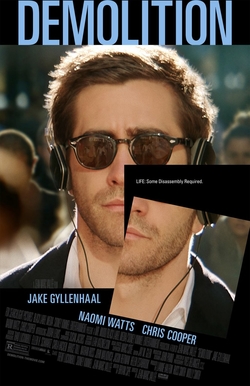
Playing Catch Up With The Films of 2016: Demolition (dir by Jean-Marc Vallee)


demolition_poster

Jake Gyllenhaal is owed an Oscar.  We all know that.  He should have been nominated for Nightcrawler and, even more importantly, he should have won.  However, for whatever reason, the Academy snubbed him.  Ever since then, we — and by “we,” I mean “me” but “we” sounds better — have been waiting for him to get another nomination.

Last year, for instance, we thought he would be nominated for Southpaw.  Then the movie came out and it turned out to be not that good.

This year, we thought it would be for Demolition.  Then Demolition came out and it turned out to be worse than Southpaw…

And really, it shouldn’t have been.  Demolition was directed by Jean-Marc Vallee, who was rightly acclaimed for his work on Wild and Dallas Buyers Club.  Not only did it star Jake Gyllenhaal but it also featured Naomi Watts and Chris Cooper!  I mean, how could you go wrong with all that talent?

But the thing is, Jean-Marc Vallee may have directed Wild and Dallas Buyers Club but also directed the wildly uneven The Young Victoria.  Naomi Watts is a great actress but it’s rare that she gets truly great parts.  Chris Cooper can be great but he’s usually at his least subtle whenever he’s playing a suit-wearing authority figure.  As far Jake Gyllenhaal, he is an actor who was born to play eccentric outsiders.  Whenever he has to play someone who is “conventional,” he can seem miscast.

Now admittedly, Davis Mitchell is only “normal” for a few minutes in Demolition but, for the film to work, you have to believe that he was once a successful investment banker who made a lot of money, lived in the suburbs, and never questioned anything.  Since you never believe that Jake Gyllenhaal could ever not be eccentric, it’s hard to be shocked when Davis starts destroying houses and dancing in public.  Everyone else in the movie is so shocked to discover that Davis had an eccentric side but we’re not because he’s played by Jake Gyllenhaal.

The reason why Davis is acting so strange is because his wife has just died in a horrific auto accident.  Now that she’s gone, Davis finds himself wondering if he ever loved her and questioning his entire life.  What little joy he gets comes from helping to tear down houses and corresponding with Karen (Naomi Watts).  Karen works for a vending machine company.  When the hospital vending machine didn’t give Davis the candy that he paid for, he wrote a long letter to the company and explained that his wife has just died and…

*sigh*

See, this is one of those films that is so relentlessly quirky and full of scenes that are supposed to be profound and thought-provoking that it’s kind of a drag to actually try to describe the film’s plot.  I mean, it actually kind of ticks me off to think about all of the contortions that Demolition goes through in its attempt to convince us that it actually has something important to say.  (I was shocked to discover that it wasn’t based on a Nicholas Sparks novel.)  It’s one of those films that obviously has the best of intentions but it’s so overwritten and overdirected and overly portentous that anyone who has ever had to deal with depression will get annoyed with the simplified and shallow way that Demolition deals with it.

Demolition was supposed to be an Oscar contender last year but it’s release date got moved back and I can understand why.  The movie’s a mess.

Here’s hoping that Jake Gyllenhaal gets a great role next year!