Horror On The Lens: House On Haunted Hill (dir by William Castle)


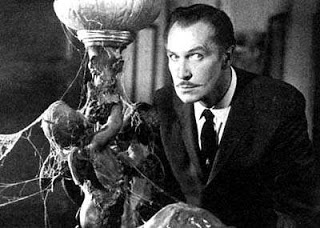
The original The House on Haunted Hill is a classic and one that we make it a point to share every Halloween.  And since October is nearly over, now seems like the perfect time to do so!

Be sure to check out Gary’s review by clicking here!

Enjoy Vincent Price at his best!

Guilty Pleasure No. 59: Teen Wolf (dir by Rod Daniel)


First released in 1985, Teen Wolf is a bit of an odd film.

Michael J. Fox is Scott Howard, a 17 year-old high student in Nebraska.  There’s nothing special about Scott.  He plays on the school’s lousy basketball team.  He has a crush on the most popular girl in school, even though she barely seems to know that he’s alive.  He’s completely oblivious to the fact that his lifelong best friend, Boof (Susan Ursitti), is totally crushing on him.  His parents are clueless to Scott’s angst.  Maybe the only thing that Scott has going for him is that he is friends with the coolest kid in school, Stiles (Jerry Levine).  How cool is Stiles?  He’s so cool that his name is Stiles!  Actually, to be hones, Stiles seems just as dorky as Scott but this is an 80s film so who am I to argue with the film’s argument that everyone wants to hang out with Stiles?

Then, one night, Scott discovers that he has inherited the family “curse.”  He’s a werewolf!  But, on the plus side, he’s a really popular werewolf.  Everyone at school loves the werewolf.  The popular girls want to date the werewolf.  Everyone loves seeing the werewolf van surfing.  And, even more importantly, the werewolf is really good at basketball!  It’s weird because the Werewolf is just as short as Scott was but apparently, being a wolf makes you good at basketball.  You have to wonder why the other teams wouldn’t protest having to play against a werewolf.  I would be worried that the werewolf would get mad if it missed a shot and kill everyone on the court.

Anyway, Scott is popular but he soon learns that popularity is empty, regardless of whether you’re a werewolf or not.  He also realizes the Boof is the girl that he should be going out with but Boof only wants to date Scott.  She doesn’t want to date the werewolf.  Will Scott find the courage to go to the school dance as himself?

This is a pretty stupid movie but Michael J. Fox brings a lot of heart to the role of Scott and his romance with Boof (who really needs a better nickname) is actually rather sweet.  The highlight of the film are Scott’s interaction with his supportive but nerdy father (played by James Hampton).  There are a lot jokes that fall flat and the plot never makes much sense but the film itself so amiably dumb that it’s hard not to kind of like it.  That said, don’t ever try to surf on top of the van.  Werewolf or not, that looks dangerous!

Previous Guilty Pleasures

  1. Half-Baked
  2. Save The Last Dance
  3. Every Rose Has Its Thorns
  4. The Jeremy Kyle Show
  5. Invasion USA
  6. The Golden Child
  7. Final Destination 2
  8. Paparazzi
  9. The Principal
  10. The Substitute
  11. Terror In The Family
  12. Pandorum
  13. Lambada
  14. Fear
  15. Cocktail
  16. Keep Off The Grass
  17. Girls, Girls, Girls
  18. Class
  19. Tart
  20. King Kong vs. Godzilla
  21. Hawk the Slayer
  22. Battle Beyond the Stars
  23. Meridian
  24. Walk of Shame
  25. From Justin To Kelly
  26. Project Greenlight
  27. Sex Decoy: Love Stings
  28. Swimfan
  29. On the Line
  30. Wolfen
  31. Hail Caesar!
  32. It’s So Cold In The D
  33. In the Mix
  34. Healed By Grace
  35. Valley of the Dolls
  36. The Legend of Billie Jean
  37. Death Wish
  38. Shipping Wars
  39. Ghost Whisperer
  40. Parking Wars
  41. The Dead Are After Me
  42. Harper’s Island
  43. The Resurrection of Gavin Stone
  44. Paranormal State
  45. Utopia
  46. Bar Rescue
  47. The Powers of Matthew Star
  48. Spiker
  49. Heavenly Bodies
  50. Maid in Manhattan
  51. Rage and Honor
  52. Saved By The Bell 3. 21 “No Hope With Dope”
  53. Happy Gilmore
  54. Solarbabies
  55. The Dawn of Correction
  56. Once You Understand
  57. The Voyeurs 
  58. Robot Jox

Blast From The Past: The Mermaid (dir by Georges Méliès)


For today’s blast from the past, we have another dream film from Georges Méliès.  In this film, a man (played by the director) appears to dream of a mermaid.  This film is from 1904 and, 118 years later, it’s still a charmingly surreal vignette.  Georges Méliès reveals himself to be not only a dreamer but a pioneer of the type of special effects that we today take for granted.

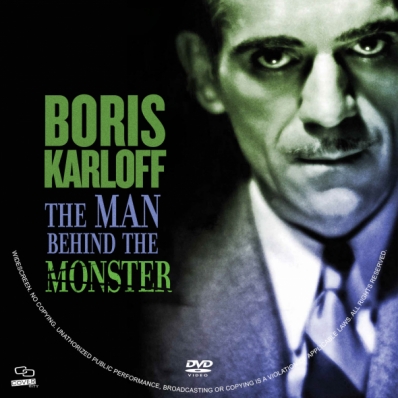
Insomnia File #57: Boris Karloff: The Man Behind The Monster (dir by Thomas Hamilton)


What’s an Insomnia File? You know how some times you just can’t get any sleep and, at about three in the morning, you’ll find yourself watching whatever you can find on cable or Netflix? This feature is all about those insomnia-inspired discoveries!

Ah, the mystery of Boris Karloff.

On screen, Karloff was a horror icon.  He brought Frankenstein’s Monster to life and influenced generations of actors and horror filmmakers.  He was also the Mummy and the first actor to play Sax Rohmer’s international criminal, Fu Manchu and, of course, he won over a whole new generation as narrator of How The Grinch Stole Christmas.  Over the course of his long career, Karloff appeared in movies both good and bad.  He worked for Mario Bava and Roger Corman and James Whale and Peter Bogdanovich.  He was also the host of Thriller, a much-beloved horror anthology series.  At the height of his fame, he was often credited by just his last name.  Everyone knew who Boris Karloff was.

Off screen, Boris Karloff was a quiet and rather dignified gentleman, one who was widely considered to be one of the kindest and most generous men in Hollywood.  Born William Henry Pratt, Karloff’s father was a diplomat and his family assumed that he would follow their career.  Instead, William Henry Pratt immigrated first to Canada and then to California and transformed himself into Boris Karloff.

Boris Karloff: The Man Behind The Monster is a documentary that both explores the mysteries of Karloff’s life and also pays tribute to him as an actor.  It attempts to answer the question of how such a kindly man could also be responsible for some of the greatest moments in horror.  Full of archival footage and interviews with those who worked with Karloff and also those who were influenced by his films (like Guillermo del Toro), the film presents a portrait of a talented actor who was as expressive onscreen as he was somewhat withdrawn in real life.  For Karloff, his roles became a way to escape from the troubles of the real world.  As the film makes clear, Karloff didn’t start his career planning to eventually become a horror actor and, occasionally, he did chafe a bit at being typecast.  However, regardless of what role he was playing, Karloff always gave it his best.  He may have appeared in some bad films but he never gave a bad performance.  The film not only includes clips from his films but also an examination of what made his performances so special.  The analysis of Frankenstein, The Mummy, The Terror, and Targets is especially interesting.

If you’re a fan of horror, this documentary is for you.  It’s currently available on Shudder.

Previous Insomnia Files:

  1. Story of Mankind
  2. Stag
  3. Love Is A Gun
  4. Nina Takes A Lover
  5. Black Ice
  6. Frogs For Snakes
  7. Fair Game
  8. From The Hip
  9. Born Killers
  10. Eye For An Eye
  11. Summer Catch
  12. Beyond the Law
  13. Spring Broke
  14. Promise
  15. George Wallace
  16. Kill The Messenger
  17. The Suburbans
  18. Only The Strong
  19. Great Expectations
  20. Casual Sex?
  21. Truth
  22. Insomina
  23. Death Do Us Part
  24. A Star is Born
  25. The Winning Season
  26. Rabbit Run
  27. Remember My Name
  28. The Arrangement
  29. Day of the Animals
  30. Still of The Night
  31. Arsenal
  32. Smooth Talk
  33. The Comedian
  34. The Minus Man
  35. Donnie Brasco
  36. Punchline
  37. Evita
  38. Six: The Mark Unleashed
  39. Disclosure
  40. The Spanish Prisoner
  41. Elektra
  42. Revenge
  43. Legend
  44. Cat Run
  45. The Pyramid
  46. Enter the Ninja
  47. Downhill
  48. Malice
  49. Mystery Date
  50. Zola
  51. Ira & Abby
  52. The Next Karate Kid
  53. A Nightmare on Drug Street
  54. Jud
  55. FTA
  56. Exterminators of the Year 3000

October Positivity: The Healing (dir by Russell S. Doughten, Jr.)


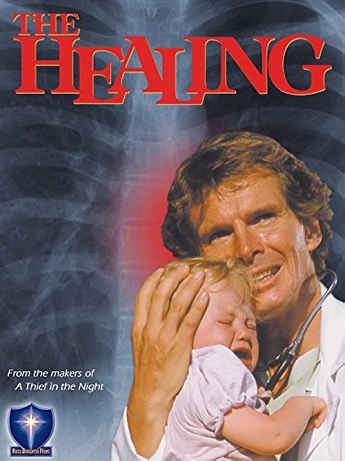
The 1983 film, The Healing, tells the story of Dr. John Lucas (played by Brian Jones).

Dr. Lucas has a bright future ahead of him.  He’s a successful and popular doctor in Des Moines.  He’s making a good deal of money.  He’s socially well-connected.  He enjoys playing golf every weekend.  Unfortunately, he also tends to neglect his wife and son.  His wife continually reminds Dr. Lucas that he was originally planning on becoming a doctor so that he could honor God.  But now Lucas has gotten materialistic and callous.  Lucas laughs off her concerns until, one day, Lucas is interrupted at the country club by a phone call informing him that his wife and son have both been killed in a car accident.

Sinking into despair, Dr. Lucas starts to drink.  Soon, he’s such an alcoholic that he has lost his job and his place in society.  With the exception of his fellow alcoholics, no one wants anything to do with Lucas.  Lucas is prepared to drink the rest of his life away but then, he sees an elderly homeless man having a medical emergency.  His natural instincts kick in and Dr. Lucas saves the man’s life and takes him down to the local shelter.  At the shelter, Lucas agrees to act as a doctor on the condition that no one push any religious stuff on him.  Following another tragedy, Lucas regains his faith.  However, his new-found idealism is put to the test when a junkie shows up at the clinic, carrying a switchblade and demanding a fix….

The Healing is another low-budget faith-based film from director Russell Doughten, Jr.  Doughten, who started out his film career working on 1958’s The Blob, directed several independent Christian films towards the end of his career.  This month, we’ve previously taken a look at Nite Song, Face in the Mirror, and Brother Enemy.  Like those films, The Healing was filmed on the streets of Des Moines, Iowa.  If nothing else, Doughten’s films served as a reminder that “urban” problems were not just limited to cities like New York, Los Angeles, and Chicago.  Instead, homelessness and crime were problems that afflicted every city, even the seemingly quite ones sitting in the middle of the country.  Unfortunately, The Healing often portrays the homeless as being plot devices as opposed to actual human beings.  In particular, one older gentleman’s only role in the film is to provide Lucas with some advice before promptly dying.

The Healing is achingly sincere in its desire to try to make the world a better, there’s no denying that.  Unfortunately, the film’s execution doesn’t always match its high ideals.  Brian Jones does a good of turning Dr. Lucas into a sympathetic character but the rest of the cast seems to the struggle with their underwritten characters.  The scenes featuring Dr. Lucas and the junkie also feel a bit rushed, as if the film itself was in a hurry to wrap things up.  As such, the conclusion of the junkie storyline never feels authentic and since the end of that storyline is also the end of the film, it casts a pall over the entire film.

Personally, as a history nerd, I’m glad that Doughten captured what Des Moines looked like in the early 80s.  If I ever find myself in Des Moines, I’ll compare the modern city to the 1983 version.  The film has its strengths but ultimately, it’s a bit too uneven to really work.

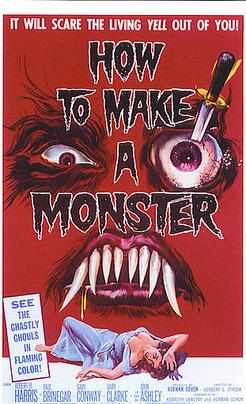
The TSL’s Horror Grindhouse: How To Make A Monster (dir by Herbert L. Strock)


How do you make a monster?

According to this 1958 film, the man to ask is Pete Dumond!

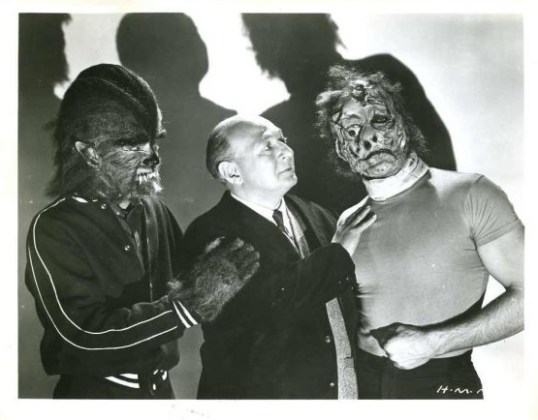
As played by Robert H. Harris, Pete Dumond is the chief make-up artist at American International Pictures.  He’s so good that he can easily transform handsome teen idols like Tony Mantell (Gary Conway) and Larry Drake (Gary Clarke) into convincing monsters.  Everyone loves Pete but there’s a problem.  As the new studio head explains it, horror just isn’t that popular anymore.  Teenagers are no longer interested in seeing movies about werewolves and Frankenstein’s Monster.  Instead, teens now only care about rock and roll.  Elvis has killed horror!

(Actually, the film argues that a recording artist named John Ashley killed horror.  At the time this movie was made, John Ashley was under contract to American International Pictures and the film even includes a dance number where Ashley performs his latest hit.  Ashley wasn’t a bad singer but it’s still hard to believe that he could have killed horror.  That said, the choreography is fun and every horror movie needs at least one random dance number.)

Sadly, Pete is about to be out of a job.  However, what the studio heads don’t realize is that Pete is more than just a makeup artist!  He’s also a master hypnotist!  Soon, Pete is using a special foundation cream to hypnotize Tony and Larry.  Once he has them under his control, he sends them, in full costume, on a mission to kill anyone who thinks that horror is dead!

There’s a lot of enjoyment to be found in How To Make A Monster.  The film not only takes place at American International Pictures but it was produced by AIP as well, so the entire movie is basically full of in-jokes that would only be appreciated by B-movie fans.  For instance, the makeup effects that Pete creates are the same ones that were used in I Was A Teenage Frankenstein and I Was A Teenage Werewolf.  (Gary Conway wore the Frankenstein makeup in both Teenage Frankenstein and this film.)  Towards the end of the film, when Larry and Tony confront Pete at his home, the walls are decorated with all of the monsters that Pete has created throughout the years and attentive viewers will recognize them as coming from such previous AIP films as The She-Creature, It Conquered The World, and Invasion of the Star Creatures.  (Seriously, I loved seeing the big crab monster from It Conquered The World hanging on Pete’s wall.  I’m sure horror and sci-fans in the 1950s felt the same way.)  While the majority of the film is in black-and-white, the scenes in Pete’s home are in full and vibrant color, as if AIP was announcing, “This is what makes the movies fun!”

Needless to say, How To Make A Monster is not a film that was ever meant to be taken seriously.  Instead, it’s a rather cheerful send-up of both the film business and AIP’s own status as a B-studio.  (At times, I felt like the film could just as easily have been called Sam Arkoff’s The Player.)  Watching the film, one gets the feeling that it was largely made as a lark, an inside joke amongst friends.  As such, it’s impossible to dislike this energetic little film.  Director Herbert L. Strock keep the action moving along and, in the lead role, Robert H. Harris gives exactly the type of over-the-top performance that this material needs.

If you’re a fan of 50s drive-in movies, How To Make A Monster is a film that you simply must see!

International Horror Review: Jack The Ripper (dir by Jess Franco)


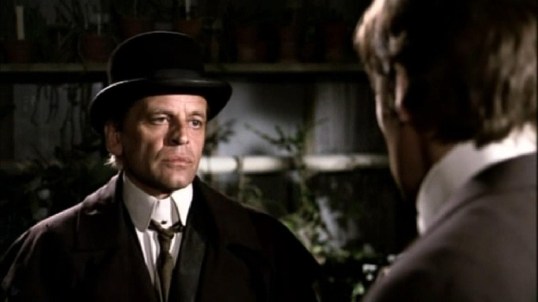
In this 1976 German film, Klaus Kinski plays Dr. Dennis Orlof.

He’s a doctor in what is supposed to be Victorian-era London.  (Some of the characters where Victorian-style clothes.  Some of them definitely do not.)  Dr. Orlof is known for being a kind and compassionate man.  He has dedicated his life to taking care of the poor and the sick.  He is one of the few doctors willing to take care of the men who fish on the Thames and the women who walk the foggy streets of Whitechapel.  Because his patients are not rich, Dr. Orlof makes very little money.  He is usually behind on paying the rent for his office but his lady doesn’t care.  Dr. Orlof is such a kind man.  Who could possibly even think of evicting a living saint?

Of course, what only he and his wife know is that Dr. Orlof is also a deviant who is haunted by hallucinations of a nearly naked woman taunting him and daring him to “come and get me.”  Dr. Orlof haunts the sleazy dance halls of London and he often offers to give the dancers a ride in his carriage.  Dr. Orlof is also the murderer who the press refers to as being Jack the Ripper.

Klaus Kinski as Jack the Ripper?  That sounds like perfect casting, right?  Actually, it’s too perfect.  Klaus Kinski is so obviously unhinged from the first minute that he appears onscreen that it’s impossible to believe that he wouldn’t automatically be everyone’s number one suspect.  Kinski plays Orlof as being someone who is in a permanently bad mood.  Even when Orlof is doing his “good deeds,” he comes across as being so annoyed with the world that the viewer is left to wonder how anyone could have fallen for his act.  Kinski himself seems a bit bored with the role.  When Kinski was invested in a character (as he often was when he appeared in the films of Werner Herzog), he was a dangerously charismatic force of nature.  When he was bored, though, Kinski made little effort to keep anyone else from noticing.  Kinski moves lethargically through Jack the Ripper.

Trying to solve the Ripper case is Inspector Selby (Andreas Mannkopf).  The film spends a lot of time on Selby’s investigation but it’s never as interesting as one might hope.  Selby spends a lot of time in his office, looking concerned.  When he actually talks to the witnesses to the Ripper’s murders, the scene seem to drag out forever.  In one unfortunate scene, he gathers all the witnesses in one room and asks each one to describe what the Ripper looked like so a sketch can be made of him.  Again, what should have been a minute or two-minute scene is dragged out to an unbearable seven minutes.  Seven minutes is a lot of time when you’re bored.

Jack the Ripper was directed by Jess Franco.  On this site, I’ve defended some of Franco’s other films.  Franco was an idiosyncratic filmmaker whose films often felt rushed but who was also capable of creating a dream-like atmosphere and occasionally coming up with an insanely bizarre plot twist.  Jack the Ripper, with its tormented title character and its dance hall scenes, in unmistakably a Jess Franco film.  Unfortunately, it’s also often excruciatingly dull.  Kinski was obviously a big name in Europe in the 70s but I kind of wish that Franco had cast his frequent star, Howard Vernon, as Jack the Ripper.  Not only was Vernon the start of the original Awful Dr. Orlof but Vernon also specialized in playing self-loathing aristocrats.  If nothing else, Vernon would have been a bit less oblivious in his madness than Kinski.

Jack the Ripper is definitely a lesser Franco film.  It’s also a lesser Kinski film and a lesser Jack the Ripper film.  There is one good sequence in which Orlof and a victim ride through the London fog in a carriage.  Otherwise, this is a Franco film that you can get away with skipping.

4 Shots From 4 Horror Films: 2017


4 Or More Shots From 4 Or More Films is just what it says it is, 4 shots from 4 of our favorite films. As opposed to the reviews and recaps that we usually post, 4 Shots From 4 Films lets the visuals do the talking!

This October, I’m going to be doing something a little bit different with my contribution to 4 (or more) Shots From 4 (or more) Films.  I’m going to be taking a little chronological tour of the history of horror cinema, moving from decade to decade.

Today, we take a look at 2017!

4 Shots From 4 Horror Films: 2017

Get Out (2017, dir by Jordan Peele, DP: Toby Oliver)

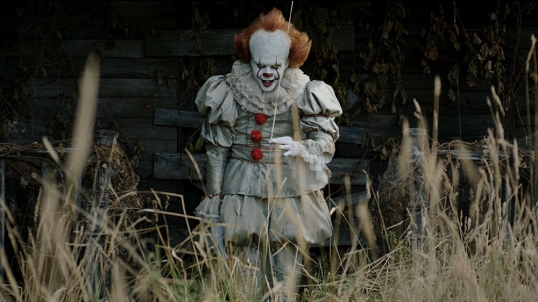
It (2017, dir by Andy Muschietti, DP: Chung-hoon Chung)

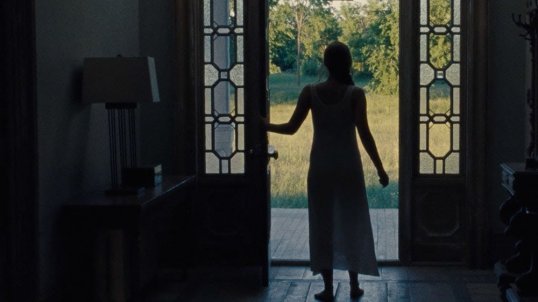
mother! (2017, dir by Darren Aronofsky, DP: Matthew Libatique)

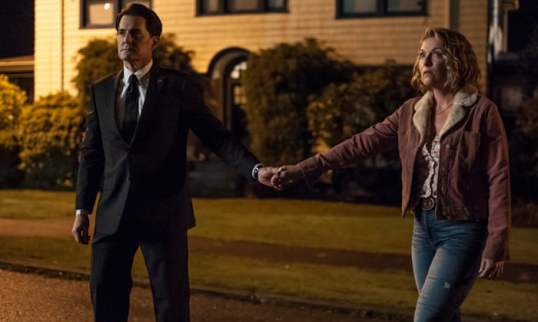
Twin Peaks: The Return Part 18 (2017, dir by David Lynch, DP: Peter Deming)

Horror Film Review: Night of Dark Shadows (dir by Dan Curtis)


Since I just reviewed House of Dark Shadows, it only makes sense to now take a look at 1971’s Night of Dark Shadows today!

While Night of Dark Shadows is not a direct sequel to the first film, it is still definitely a part of the same cinematic universe.  There may not be any vampires in this film but it does take place in the same house and it features two members of the family that was decimated over the course of the previous film.  At one point, it’s mentioned that Joan Bennett’s character from House of Dark Shadows died after the first film but no one goes into any details.  I guess a vampire in the family is something that’s simply not discussed amongst polite company.

Night of Dark Shadows deals with Quentin (David Selby) and Tracy Collins (Kate Jackson).  Quentin is an artist who confesses that he wasn’t particularly nice before he married Tracy.  When they move into the Collins mansion, they bring two friends with them, Alex (John Karlen) and Claire (Nancy Barrett.)  Interestingly enough, Karlen and Barrett both played different characters in House of Dark Shadows.  Grayson Hall, who played Dr. Hoffman in House of Dark Shadows, also returns for Night of Dark Shadows.  This time Hall is playing Carlotta Drake, the creepy housekeeper.  (Needless to say, all mansions comes with a creepy housekeeper.)

Soon after everyone moves in, Quentin starts acting strangely.  He becomes obsessed with the painting of a beautiful woman who was named Angelique (Lara Parker) and with the story that Angelique was hanged when it was discovered that she was having an affair with Quentin’s ancestor, Charles.  (For his part, Charles was apparently walled up in the mansion.  That sounds a bit extreme to me but I guess that’s the way they did things in the 19th century.)  Quentin starts to have visions and nightmares involving his ancestor who, it turns out, looked exactly like him!  Meanwhile, Carlotta and the groundskeeper, Gerard (Jim Storm), seem to be determined to make sure that Tracy doesn’t feel welcome in her new home.  It’s almost as if they’re trying to drive everyone but Quentin away from the house.

Night of Dark Shadows is a much more polished film than House of Dark Shadows but it also unfolds at a far more leisurely pace.  It lacks the relentless energy that distinguished House of Dark Shadows.  This wouldn’t be as much of a problem if the plot itself wasn’t so totally predictable.  From the minute that Quentin first sees that portrait of Angelique, you know that he’s going to get possessed and start acting strangely.  There are a few atmospheric scenes but, for the most part, the film just doesn’t grab the viewer’s attention the way that House of Dark Shadows did.

On the plus side, David Selby is properly intense and brooding in the dual roles of Quentin and Charles Collins while Lara Parker does an equally good job as the wonderfully evil Angelique.  Grayson Hall, who tended to go overboard in House of Dark Shadows, gives a much better and far more menacing performance here.  Night of Dark Shadows isn’t a bad film.  It’s just not a particularly memorable one.

Horror Film Review: House of Dark Shadows (dir by Dan Curtis)


There’s a lot that you can say about this vampire film from 1970 but I think it can all be summed up with one word: relentless.

A lot of this is because House of Dark Shadows is a film adaptation of a daytime drama.  Over the course of six sesons, Dark Shadows ran for a total of 1,220 episodes.  That’s a lot of story to cram into a 97-minute film but director Dan Curtis does just that.  The end result is an incredibly busy film and I mean that in the best way possible.

Seriously, there are so many twists and turns in this film’s plot that it’s difficult to even know where to begin.  This is one of the most incident-filled horror films that I’ve ever seen.  No sooner does one plotline resolve itself than another begins.  Meanwhile, a surprisingly large cast wanders through the shadows and tries not to get transformed into a vampire.  Most of them do not succeed.

See if you can keep all of this straight:

In Maine, a lowlife handyman named Willie (John Karlen, giving the film’s best performance) breaks into a mausoleum and approaches a coffin that’s covered with chains.  Willie thinks that there’s a treasure hidden in the coffin but, after he removes the chains, he instead discovers that he’s stumbled across the home of a vampire!  Barnabas Collin (Jonathan Frid, who perfectly combines old world manners with thinly veiled menace) has spent 175 years trapped in that coffin and now that he’s been released, he’s not in a very good mood.

Soon, Barnabas has introduced himself to his descendants (including Joan Bennett, as Elizabeth, the family matriarch) as a cousin from England.  Everyone is impressed with Barnabas’s charm and courtly style.  Of course, some people are a little bit skeptical.  Prof. Stokes (Thayer David) notices that Barnabas doesn’t seem to know much about London while Dr. Hoffman (Grayson Hall) flat out accuses Barnabas of being a vampire.  Barnabas admits that this is true but fear not!  Dr. Hoffman’s fallen in love with him and wants to help cure him.

Meanwhile, everyone in town is growing concerned about all of the bloodless bodies that are showing up.  They especially get worried after Elizabeth’s daughter, Carolyn (Nancy Barrett), dies and then promptly comes back to life, complete with her own set of fangs….

While the town concerns itself with what to do about Carolyn, Barnabas has fallen in love with a nanny named Maggie (Kathryn Leigh Scott), who he thinks is the reincarnation of his former lover.  Unfortunately, Maggie already has a boyfriend named Jeff (Roger Davis) but when has the ever been a problem for a vampire?  Far more of a problem than Jeff is the fact that Willie is also in love with Maggie and Dr. Hoffman is so jealous of Barnabas’s love for Maggie that she’s willing to inject him with a formula that causes him to transform into an elderly man….

And all that’s just in the first hour!

Needless to say, it all leads to one final, gore-filled confrontation.  When I say that this film is gory, I mean just that.  Blood isn’t just spilled in House of Dark Shadows.  Instead, it flows like water busting out of a cracked dam.  When Barnabas bites a victim, he doesn’t just leave two neat little puncture marks.  Instead, he literally rips their neck to shreds.  Just how savage Barnabas and Carolyn get in this film is one of the things that sets House of Dark Shadows apart from other vampire films.  As opposed to the type of tragic figure who shows up in so many vampire films, Barnabas is ruthless, cruel, and unforgiving.  He’s a genuinely frightening creation.

House of Dark Shadows is a chaotic movie but it’s also a lot of fun.  This is one of those films that you watch in amazement as it just keeps going and going, piling on one incident after another.  Does the film always make sense?  No, but it doesn’t have to.  Quickly paced and featuring nonstop gore and fog, the film has a dream-like feel to it.  Curtis and the cast attack the material with such unbridled enthusiasm that it doesn’t matter if the plot occasionally doesn’t always add up or if the dialogue is occasionally a bit clumsy.  It’s impossible not to get swept along with the film’s insanity.

Probably because of its television roots, House of Dark Shadows is often dismissed by critics.  (I’ve never seen any old episodes of the show so I can’t say how the movie compares to it.)  Well, those dismissive critics are wrong.  House of Dark Shadows is one of my favorite vampire films and it’s definitely one that deserves to be rediscovered.

(And yes, it’s a helluva lot better than that movie that Tim Burton made with Johnny Depp….)