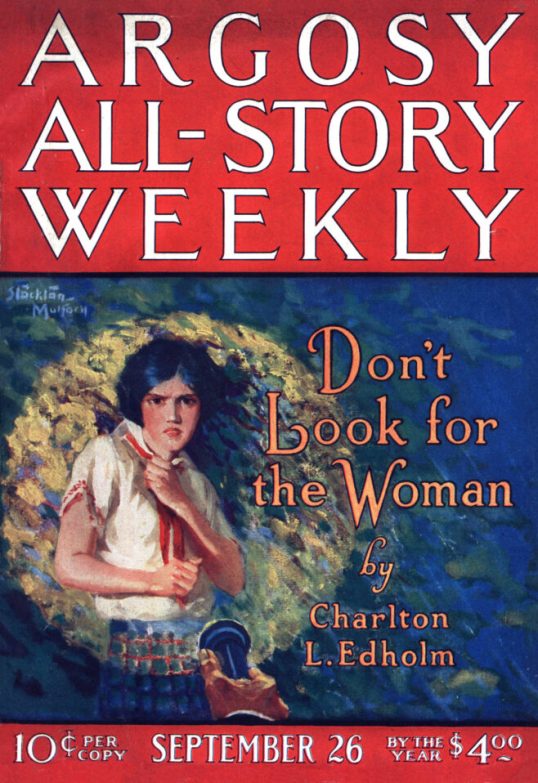
by Stockton Mulford
This cover is from 1925.
by Stockton Mulford
This cover is from 1925.
In 1988, evangelical preacher-turned-comedian Sam Kinison had a hit with his cover of Wild Thing. For the music video, he not only recruited a host of 80s rockers, he also cast Jessica Hahn, who was at the center of the scandal that took down two other evangelical preachers, Jim and Tammy Faye Bakker.
For completists, here is who can be seen in this video, backing up Sam and Jessica: Joe Perry and Steven Tyler (Aerosmith), Steve Adler and Slah (Guns ‘n Roses), Sebastian Bach (Skid Row), Jon Bon Jovi, Alec John Such, and Richie Sambora (Bon Jovi), Jonathan Cain and Deen Castronovo (Journey), Robbin Crossby and Warren DeMartini (Ratt), C.C. Deville (Poison), Tommy Lee (Motley Crue), Rudy Sarzo (Quiet Riot), Billy Idol, and Dweezil Zappa.
Enjoy!
Welcome to Late Night Retro Television Reviews, a feature where we review some of our favorite and least favorite shows of the past! On Sunday, I will be reviewing the Canadian series, Degrassi: The Next Generation, which aired from 2001 to 2015! The series can be streamed on YouTube and Tubi.
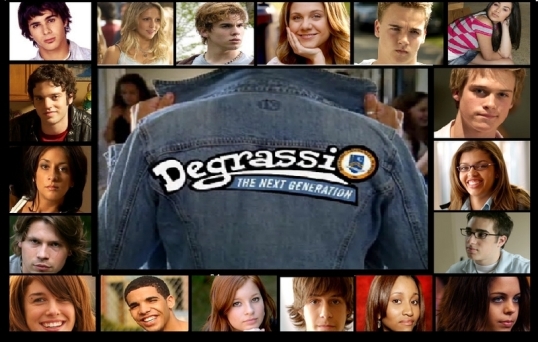
This week, Terri has a boyfriend!
Episode 3.10 “Never Gonna Give You Up”
(Dir by John Bell, originally aired on November 19th, 2003)
Hey, it’s Rick Murray!
When last we saw Rick (played by Ephraim Ellis), he was the shy, nerdy-but-cute guy leaving flowers at Terri’s locker. When this episode starts, Terri and Rick have been dating for a while. From the outside, Rick seems sweet, romantic, and utterly devoted to Terri. Jimmy and Spinner both think he’s a little weird, but Hazel and Paige insist he’s perfect for her.
The truth is that Rick is controlling, arrogant, and easily offended. In private, he loses his temper fast. In Ms. Kwan’s scene-study class, he’s in a group with Jimmy, Hazel, and Terri, assigned to bring to life a one-act written by budding playwright and actor Marco. Rick wants to direct. When Jimmy takes that job, Rick agrees to be stage manager. That’s right, folks! Rick is one of those people who likes to work crew. Anyone who ever did theater in high school knows how annoying those people were. (Seriously, you’d come offstage glowing because you’d just given the best performance of your life and some lighting-crew dork would go, “You nearly missed your mark.” Like, seriously, just shut up and stay out of my way, you weirdo.)
Marco takes the lead male role. Jimmy gives the nurse to Hazel and then announces that Terri will be the female lead. Terri is stunned and excited. Rick is immediately defensive, telling her it’s obvious Jimmy “has a thing for you. Why else would he give you the female lead?” (I think it may have had something to do with Terri being the last person left.)
This episode follows a pattern that will be painfully familiar to anyone who has ever been in an abusive relationship. Rick gives Terri a pile of overly technical acting notes that make her look stupid onstage. When she gets upset, he grabs her wrist and leaves a bruise. Then he buys her flowers and apologizes. When Terri says she’s having a girls’ night with Paige and Hazel and Rick can’t come because “it’s just for girls,” he backhands her and leaves her with a swollen lip. (Hazel sees the lip and immediately knows Terri is lying about a cold sore.) When Terri says she needs time to herself and that Rick is suffocating her, he shoves her against a wall. Terri announces that she’s done with him.
Unfortunately, every Degrassi watcher knows that isn’t true. This episode may end with Terri throwing away the flower Rick left at her locker, but we know he’ll be back in a few episodes. We also know Season 4 is basically the season of Rick Murray’s revenge.
It’s an episode with a commendable message and a good performance from Ephraim Ellis. That said, as I rewatched it, I found myself obsessing over just how bad Marco’s little scene was. Marco played Ray, a dying man, and spoke in an exaggerated Italian accent. Hazel was the nurse who told Terri (playing Ray’s mother) that Ray was not going to live. In the episode, Terri takes the blame for everyone laughing at the play’s big dramatic beat, but I think the real culprit was Marco’s writing. “We do not always get what we want .… or want what we get.” I’ve always assumed the play was meant as a parody of bad teenage dramatics. At least, I hope it was.
The B-plot is an amusing little prank war between Spinner and J.T. Spinner is sick of J.T. hanging around Paige, so among other things he plasters the inside of J.T.’s locker with glamour photos of Mr. Raditch and slips a romantic poem under Raditch’s office door. J.T. responds by showing up at The Dot and being such an obnoxious customer that Spinner, waiting tables, loses his temper. Spinner gets in trouble with his boss and is demoted to — get this– “dish pig.” Is that an actual job? I mean, I guess he’s washing dishes, but “dish pig” is a really vivid way to put it. It’s certainly better than anything Marco ever wrote. J.T. and Spinner call a truce, but not before Ms. Kwan gets a love poem from “Spinner.”
This week’s episode was classic Degrassi. I liked that the ultra-dark Rick Murray storyline was balanced with JT and Spinner acting like idiots. That’s high school for you.
Next week, it’s Christmas in Canada!

I was sick and congested for most of this week but I still managed to get a little Horrorthon work done. Fortunately, as I type this, I’m feeling a lot better. We’ve two and a half more weeks to go until October, the greatest time of the year!
Here’s what I watched this week:
Films I Watched:
Live Tweets:
4 Shots From 4 Films:
Scenes That We Love:
Songs Of The Day:
Artworks of the Day:
Music Video of the Day:
Erin’s Labor Day Fun:
Links From Last Week:
News From Last Week:
Links From the Site:
Click here to see what I watched last week!
Welcome to Retro Television Reviews, a feature where we review some of our favorite and least favorite shows of the past! On Sundays, I will be reviewing Homicide: Life On The Street, which aired from 1993 to 1999, on NBC! It can be viewed on Peacock.
This week, the Wilson case is finally resolved.
Episode 6.3 “Blood Ties, Part 3”
(Dir by Mark Pellington, originally aired on October 31st, 1997)
“Yo, Frank!” Detective Ballard yells at Pembleton at the start of this episode and I have to admit that I immediately cringed at the sound of it. The man’s name is “Detective Pembleton.” Ballard has done nothing so far to give her the right to address Homicide’s best character as “Yo, Frank!”
Of course, the main theme of this episode seemed to be all the detective who have been with the show since the beginning suck and that the new arrivals can do no wrong.
Take Falsone, for instance! After a drug dealer is murdered, Falsone proves himself to be the only one who can talk to the dealer’s traumatized child. Lewis is a buffoon in this episode, gloating over the dead dealer and traumatizing the kid while trying to lead him through the police station. But Falsone? He knows exactly what to say and, with his gentle prodding, the kid identifies the murderer of his parent as being a narcotics detective who is on the Mahoney payroll. When Lewis asks Falsone why he’s so awesome, Falsone explains that he’s divorced and he misses his own kids….
OH MY GOD! He’s a young detective who gets results and he’s divorced! For a show that previously avoided stereotypes, Homicide is going out of his way to promote a big one in the form of Detective Falsone.
Meanwhile, the Wilson case is resolved. It turns out that Ballard was totally correct and Pembleton was totally wrong. Melia was killed by a member of the Wilson family and, to the surprise of absolutely no, the murderer turns out to be Hal Wilson (Jeffrey Wright, giving perhaps the worst performance of his distinguished career), the twitchy son of Felix. Hal was obsessed with Melia and flew into a rage when he found out she was sleeping with his father. Pembleton even gets Hal to admit it but –– Law & Order plot twist time! — Felix and Hal were only willing to talk to Pembleton on the condition that they weren’t Mirandized so the confession is inadmissible. (That doesn’t seem like something that the normally meticulous Pembleton would agree to but whatever.) Felix, Hal, and the entire family leave Baltimore for San Diego.
Afterwards, Ballard track Pembleton down and tells him that she’s going to be a Baltimore homicide detective whether he likes it or not. Pembleton admits that he was wrong. Watching the scene, one gets the feeling that the show is telling us, “Who needs Pembleton and Bayliss and all those boring cops when we’ve got new cop who are young and sexy and infallible?”
And here’s the thing. There’s nothing wrong with bringing in new characters. There’s nothing wrong casting attractive actors in those roles. There is something wrong with pushing the characters to whom we’ve grown attached aside and insisting that we instead embrace new characters that we barely know.
This was a disappointing ending for the first three-parter of the series. The season has just started and I’m already sick of Falsone trying to prove that the Luther Mahoney shooting wasn’t justified. I’m sick of everyone talking about George Rae Mahoney as if she’s some total badass as opposed to a plot device. And I’m tired of my favorites being pushed to the side.
We are not off to a good start.
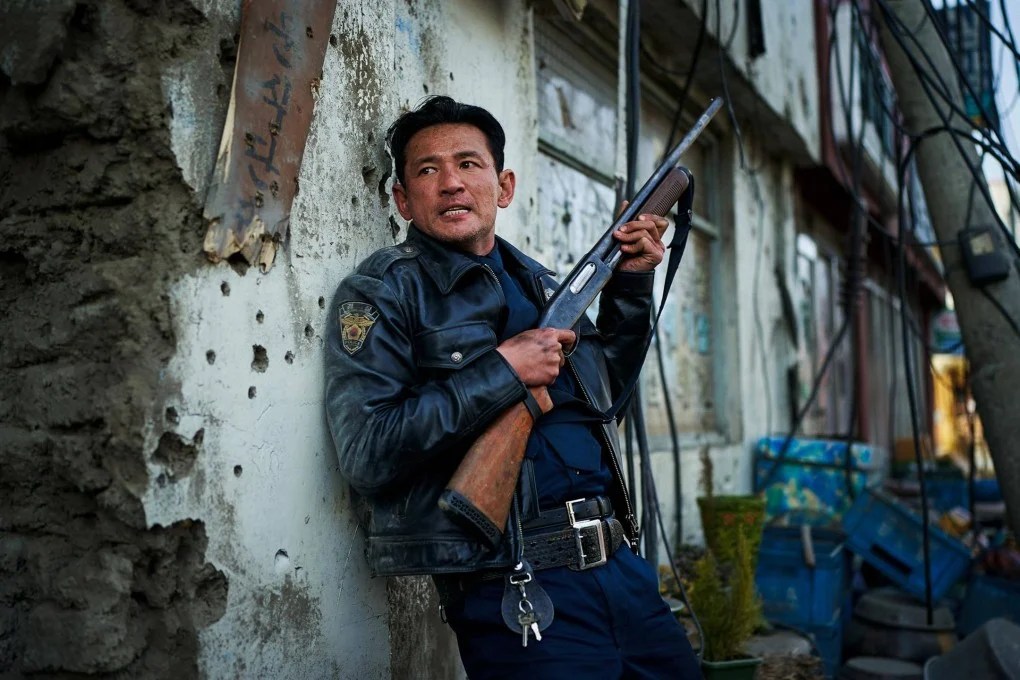
I’ve been seeing trailers for the South Korean action film HOPE (2026). Being a fan of the country’s cinema, it definitely piqued my interest. As I investigated a little further, I saw that it was written and directed by Na Hong-Jin who did the same for the unsettling THE WAILING back in 2016. Digging even deeper, I recognized actor Hwang Jung-Min as the lead of the film. He’s been great for a long time, starring in South Korean classics like A BITTERSWEET LIFE (2005), NEW WORLD (2013), VETERAN (2015), and the director’s THE WAILING. This being my birthday week, I decided I’d start it off with a bang by heading to the movie theater to see what this intriguing film has up its sleeves!
The movie gets right into the action as we meet small town Police Chief Beom Seok (Hwang Jung-Min) in the middle of his investigation of the vicious death of a cow. The incident was reported by a group of hunters who think the wounds look out of the ordinary. Wondering if a bear or a tiger might be on prowl as he’s driving back, he arrives in town where all hell has broken loose. It seems there’s something causing death and destruction, but it’s way too powerful to be a bear or a tiger. I won’t say anymore because the fun of the first half of the film is discovering just what the hell is bringing such chaos to this normally sleepy harbor town.
HOPE has a lot of good stuff going for it. The performances from the leads are at the very top of my list, beginning with Hwang Jung-min as the police chief. He has this ability to project goofy exasperation better than anyone else I know. A lesser actor might take this too far, but not Hwang. He is able to balance the film’s absurd humor while also being tough and fearless when he needs to be. He’s great here. Next up is Hoyeon (SQUID GAME), who plays police officer Sung Ae. I won’t say too much, but her character’s introduction into the film is incredibly fun and badass. I loved it, and you can’t help but love her as the film progresses. Finally, I really enjoyed actor Zo In-sung’s performance as one of the hunters who reports the suspicious cow death at the beginning of the film. At first he seems like a guy being set up as a victim, but he turns out to be much more than that by the end. I’ll have to give writer Na Hong-jin credit for creating such fun characters. I’ll mention here that Michael Fassbender and Alicia Vikander are also in the cast, but I won’t say anything more about their characters.
After actually watching the film, I can say that writer-director Na Hong-jin really did come up with a very interesting premise for HOPE. The first half of the film is so fun as our characters fight for their lives and simultaneously try to figure out what the hell they’re dealing with. I would say this is the best section of the film. When we finally see what our ragtag group is up against, we get an exciting, non-stop action sequence that ends with a bit of luck and relief for our heroes. Up to this point, the movie has been a violent, funny, action-packed ride!
The second half of the film, while still enjoyable, isn’t quite as successful as the first. The primary issue is the extreme length of the film. HOPE clocks in at over two and a half hours. While it continues on as a non-stop action ride, I think this movie would be just as good at only two hours long by cutting some repetitive action sequences. The last part of the film introduces a whole new storyline solely to set up future sequels. HOPE had the biggest box office opening weekend in South Korea thus far in 2026, so the sequels will definitely be coming. I’m certainly looking forward to them, but if you’re looking for closure for any of these characters, you won’t get it here. There is an almost unbelievable mid-credits sequence that’s truly absurd, but it’s also not out of line with the craziness of the film we just watched. Don’t miss that part!
For me, watching HOPE at the theater was 100% worth my time and an awesome start to my birthday week. It’s not a perfect film, but I truly enjoyed it, and I’ll be on the lookout for the sequels!
Today’s scene that I love is one of the greatest television moments of the past ten years. It’s one that I still think about on a nearly daily basis.
Oddly, ever since it went off the air, there’s been an attempt on the part of the media to pretend that Selina Meyer was meant to be some sort of inspiring figure. This scenes reminds us that she wasn’t even supposed to be likable.
(I groaned when the cast of Veep reunited to support Kamala Harris in 2024 because Veep was literally the last show that Harris should have been trying to remind people of.)
4 Shots From 4 Films is just what it says it is, 4 shots from 4 of our favorite films. As opposed to the reviews and recaps that we usually post, 4 Shots From 4 Films is all about letting the visuals do the talking.
4 Scenes From 4 Films
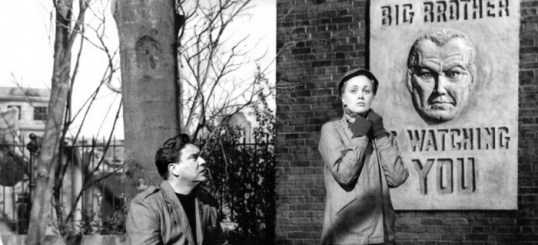
1984 (1956, directed by Michael Anderson)
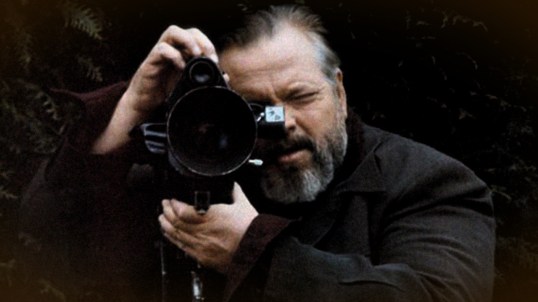
F For Fake (1974, directed by Orson Welles)
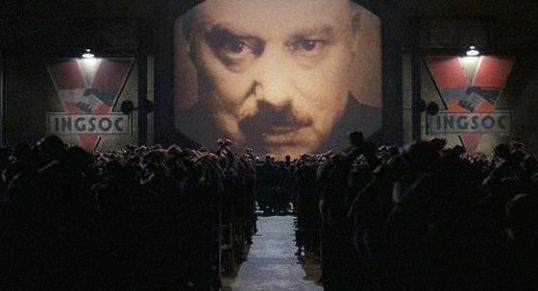
Nineteen Eighty-Four (1984, directed by Michael Radford)
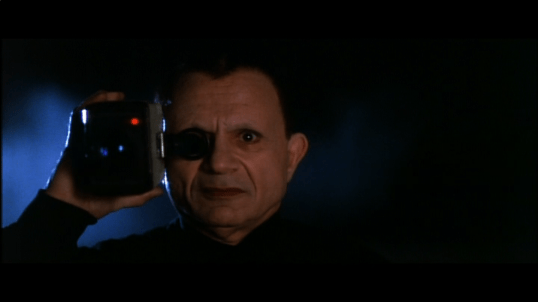
Lost Highway (1997, directed by David Lynch)

Unknown Artist
This cover is from 1960.

