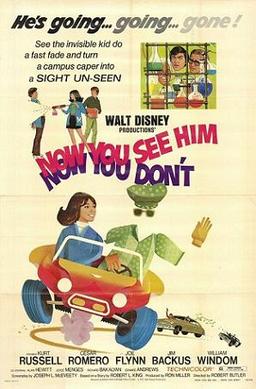
I Watched Now You See Him, Now You Don’t (1972, Dir. by Robert Butler)


Dexter Riley (Kurt Russell) is back and just in time because Medfield College is on the verge of getting closed down again.

In The Computer Wore Tennis Shoes, buying a computer was supposed to be the solution to all of Medfield’s financial problems.  I guess it didn’t work because Medfield is broke again and corrupt businessman A.J. Arnoe (Cesar Romero) is planning on canceling the school’s mortgage so that he can turn it into a casino.

There is some hope.  Dexter has accidentally created an invisibility spray.  Not only does it tun anything that it touches invisible but it also washes away with water so there’s no risk of disappearing forever.  Dexter and his friend Schuyler (Michael McGreevey) know that they can win the science fair with their invention but the science fair doesn’t want to allow small schools like Medfield to compete unless they really have something big to offer.  Dexter tells the Dean (Joe Flynn) that he has a sure winner but Dexter also refuses to reveal what it is because he doesn’t want word to leak before for the science fair.  The Dean decides to raise the money to pay off the mortgage by becoming a golfer, as one does.  Schulyer works as the Dean’s caddy while Dexter uses the invisibility spray to help the Dean cheat.  That’s a good message for a young audience, Disney!  But when Arno finds out about the spray, he wants to steal it so he can rob a bank.

This was even dumber than The Computer Wore Tennis Shoes but it was also hard to dislike it.  The comedy was too gentle, Kurt Russell and the rest of the cast were too likable, and the special effects were too amusingly cheap in that retro Disney way for it to matter that the movie didn’t make any sense.  When a bunch of college kids learn the secret of invisibility and use it to cheat at golf, you know you’re watching a Disney film.

Music Video of the Day: Leave by Jessica Simpson (2025, dir by ????)


Today’s music video of the day is the latest from Jessica Simpson.  Jessica Simpson actually went to my high school, though she was a student long before I got there.  She was often held up as an example of what we, as students, could achieve even though she dropped out without graduating.

In other words, don’t worry too much about that diploma.

Enjoy!

4 Shots From 4 Films: Special Alan Parker Edition


4 (or more) Shots From 4 (or more) Films is just what it says it is, 4 (or more) shots from 4 (or more) of our favorite films. As opposed to the reviews and recaps that we usually post, 4 (or more) Shots From 4 (or more) Films lets the visuals do the talking.

81 years ago, on this date, the late director Alan Parker was born in London.  One of the many British directors, like the Scott brothers and Adrian Lyne, who began by directing advertisements, Parker went on to become a director known for both his intense visual style and his revolutionary use of music as a storytelling device.  It’s time for….

4 Shots From 4 Alan Parker Films

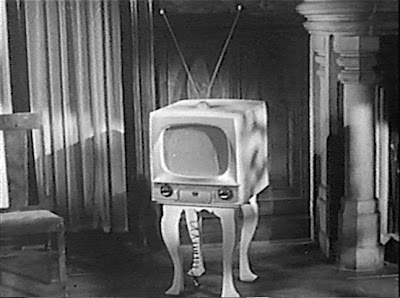
Midnight Express (1978, dir by Alan Parker, DP: Michael Seresin)

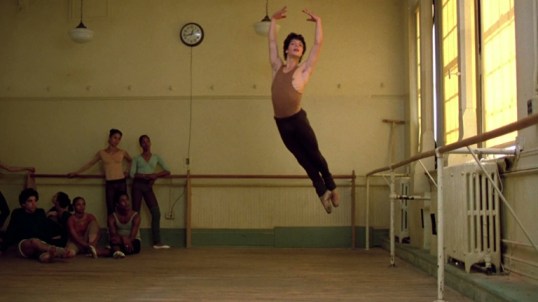
Fame (1980, dir by Alan Parker, DP: Michael Seresin)

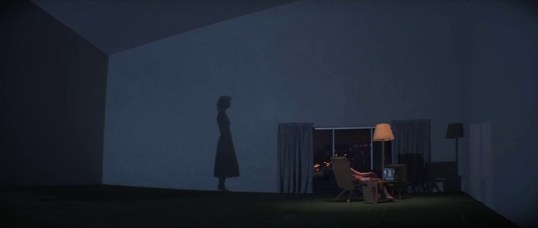
Pink Floyd — The Wall (1982, dir by Alan Parker, DP: Peter Bizou)

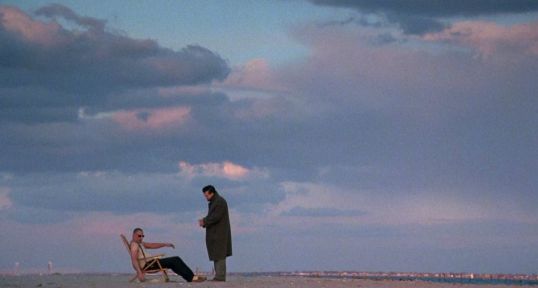
Angel Heart (1987, dir by Alan Parker, DP: Michael Seresin)


Retro Television Reviews Will Return On Monday


Hi, everyone!  Due to it being the big Superbowl weekend and also TSL’s tradition of posting all of the movie-related trailers that are released leading up to and during the big game, Retro Television Reviews will be taking a break this weekend but will start back up on Monday with Miami Vice and CHiPs.  Our regular reviews of Welcome Back Kotter, Check It Out, Homicide and Degrassi High will resume next weekend!

Behind the Camera: The Unauthorized Story of ‘Diff’rent Strokes’ (2006, dir by Robert Iscove)


Norman Lear has television superstar Conrad Bain under contract and Fred Silverman wants to build a show around Bain and a talented black child actor named Gary Coleman.  Entitled Diff’rent Strokes and featuring Todd Bridges and Dana Plato as Coleman’s brother and stepsister, the show is a hit.  The three young actors briefly become superstars, much like the amazing Conrad Bain.  And then, when the show is finally canceled after ten years, it all goes downhill as Todd Bridges and Dana Plato run into trouble with drugs and the law and Gary Coleman, once one of the highest paid stars on television, discovers that he’s now flat broke.  All three of them learn how quickly the world can turn on you when you’re no longer considered to be a success.

Behind the Camera: The Unauthorized Story of ‘Diff’rent Strokes’ was another one NBC’s cheap movies about the behind-the-scenes drama of a popular sitcom.  (They also did Three’s Company and Mork & Mindy).  Like all of NBC’s Behind the Camera movies, it makes the mistake of thinking that everyone is as interested in the habits of network executives as the people who work for them are.  (This time, it’s Saul Rubinek who gets to play Fred Silverman.)  The actors who plays Bridges, Coleman, and Plato are convincing enough but the storytelling is shallow, featuring the same information that you would expect to find in an episode of the E! True Hollywood Story.  I was disappointed that we didn’t get any scenes of Alan Thicke recording the theme song.

Todd Bridges and the late Gary Coleman both appear as themselves, talking about their experiences with the show and the difficulties of navigating life after Diff’rent Strokes was canceled.  Bridges is down-to-Earth while Coleman rambles like someone who was still trying to figure out how his life had led up to this moment.  The ending, in which Bridges and Coleman stand at Dana Plato’s grave and Coleman delivers a nearly incoherent monologue, is the one time that the film really captures any feeling of emotional honesty.  It is obvious that both Bridges and Coleman are still haunted by what happened to Plato after the show ended.  Knowing that Coleman himself would die just four years after the airing of this movie makes the scene more poignant when viewed today.


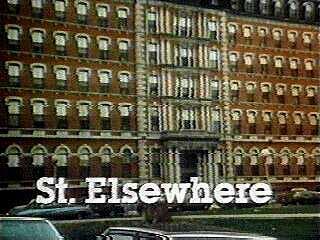
Retro Television Review: St. Elsewhere 1.11 “Graveyard”


Welcome to Retro Television Reviews, a feature where we review some of our favorite and least favorite shows of the past! On Fridays, I will be reviewing St. Elsewhere, a medical show which ran on NBC from 1982 to 1988.  The show can be found on Hulu and, for purchase, on Prime!

This week, a handful of doctors save two patients and lose one.

Episode 1.11 “Graveyard”

(Dir by Victor Lobl, originally aired on January 18th, 1983)

It’s the graveyard shift at St. Eligius.  The halls and the cafeteria are dark.  The ER is oddly calm.  There are only a few patients to be looked after and most of the doctors are playing poker and talking about the rather boring subject of Dr. Samuels’s love life.

Only a handful of the series regulars make an appearance in this episode but that’s fine.  This episode actually provides a nice break from having to keep track of where everyone is.  Unfortunately, as I already said, a lot of this episode is centered around the character of Dr. Samuels.  Nothing against the late David Birney, who did a perfectly acceptable job in the role, but Dr. Ben Samuels is just not that interesting of a character.  He’s a dedicated surgeon who feels too much, drinks too much, and wants to sleep with his colleagues.  That’s fine but I grew up watching General Hospital.  I’ve seen a hundred doctors just like Samuels on television.

To me, the far more interesting characters are the people like David Morse’s Jack Morrison or Ed Begley, Jr’s Victor Ehrlich or even Terence Knox’s Peter White.  They’re doctors who screw up and aren’t always brilliant and sometimes say the wrong things.  They feel like real people whereas Dr. Samuels just feels like a cliche, a holdover from some other medical show.  Samuels is not a particularly compelling character and, when I did some research, I was not surprised to discover that David Birney only appeared on one season of the show.

G.W. Bailey’s Hugh Beale also only appeared in the first season and that’s a shame because Bailey’s performance as Beale has been one of the first season’s real pleasures.  Bailey plays Beale as a compassionate man who often pretends to be more naive than he is.  As a Southerner, he’s an outsider on this Boston-set show and, being an outsider, he can often relate to the patients in the psych ward.  Of course, that still doesn’t stop Dr. Beale’s main patient, Ralph the Birdman, from throwing himself off the roof of the hospital in this episode.  To be honest, I already suspected things weren’t going to go well for Ralph on this show but his suicidal jump still upset me.  As annoying as the character was, he was also finally making some progress.  He finally admitted he wasn’t a bird.  And then he proved it by showing that he couldn’t fly.

While Ralph plunged to his death, Dr. Samuels saved a gunshot victim (played by Tom Hulce).  And Jack allowed the father (James Hong) of one of his comatose patients to perform a Chinese ritual that led to the patient waking up and eventually walking into the cafeteria, where the doctors were playing poker.  “Who ordered the Chinese?” Fiscus asked and …. ugh.  Not cool, Fiscus.

It was a night of triumph and tragedy.  Ralph died but Dr. Samuels and Dr. Paxton agreed to give their relationship another try which …. eh.  I don’t care about Samuels and Paxton.  For the most part, though, I liked this episode.  The smaller cast made it easier to keep track of things and the poker game banter reminded me that the doctors are all people too.  Still, I have to feel bad for Ralph.  All he wanted to do was fly.