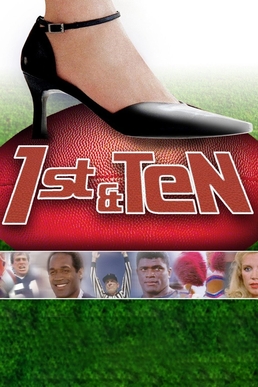
Late Night Retro Television Review: 1st & Ten 2.8 “Easy Come Easy Go”


Welcome to Late Night Retro Television Reviews, a feature where we review some of our favorite and least favorite shows of the past! On Wednesdays, I will be reviewing 1st and Ten, which aired in syndication from 1984 to 1991. The entire series is streaming on Tubi.

Time to get back to 1st & Ten.  To be honest, with all the excitement of the holiday season, I totally forgot that I was reviewing this show.

Episode 2.8 “Easy Come, Easy Go”

(Dir by Burt Brinckerhoff, originally aired on January 6th, 1987)

This is yet another episode of 1st & Ten that felt as if it was put together almost at random.

Mad Dog (Tony Longo) has a one night stand with a lawyer named Molly (June Chadwick) and he ends up becoming obsessed with her.  He shows up at a fancy cocktail party being hosted by Molly’s law firm.  “This man is stalking me!” Molly yells.  All of the men at the party are like, “Mad Dog!  You’re my favorite player!”  Now, I will say that this is a realistic portrayal of how most men act whenever they see a professional athlete but it still felt a bit icky to watch.

Jethro takes a blood test and discovers that little Tommy is not his son.  But he still wants to be a part of the kid’s life.

Yinessa sees a tabloid newspaper headline about his “nude pictures” and starts yelling at a supermarket manager for selling the paper.

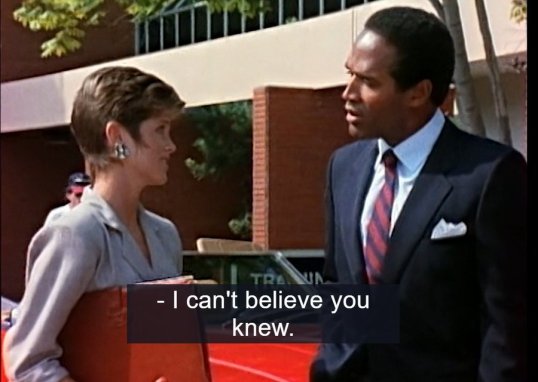
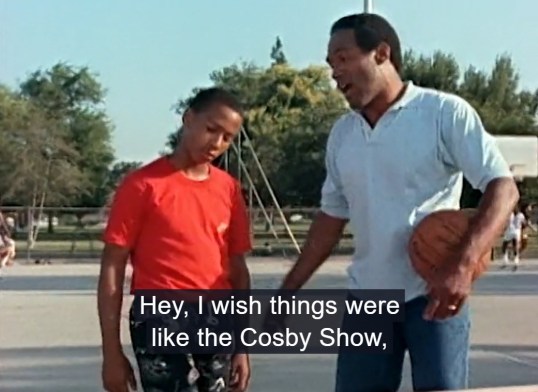
Waldren is in financial trouble because he’s been tossing money around.  A group of gamblers approach him and offer to pay to shave points.  OJ Simpson (in the role of offensive coordinator T.D. Parker) tells Waldren, “I’m keeping my eye on you.”  Oh no!  LOOK OUT, WALDREN!

However, Waldren does not shave points.  Instead, he catches the ball that seals the Bulls victory in their first playoff game.  Woo hoo!  Go, Waldren!

A lot happened but, in typical 1st & Ten fashion, none of it added up to much.  It could be because the streaming episodes were edited for syndication but this is just a weird show.  Every episode feels as if their huge chunks of plot missing.

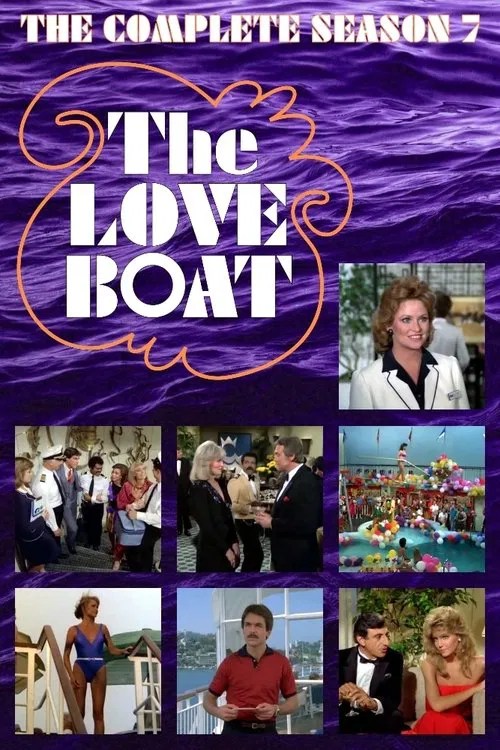
Retro Television Review: The Love Boat 7.1 “China Cruise: The Pledge/East Meets West/Dear Roberta/My Two Dumplings”


Welcome to Retro Television Reviews, a feature where we review some of our favorite and least favorite shows of the past!  On Wednesdays, I will be reviewing the original Love Boat, which aired on ABC from 1977 to 1986!  The series can be streamed on Paramount Plus!

This week, we begin season 7!

Episode 7.1 “China Cruise: The Pledge/East Meets West/Dear Roberta/My Two Dumplings”

(Dir by Robert Scheerer, originally aired on October 1st, 1983)

It’s time for season seven of The Love Boat!

Gopher has been promoted to head purser.  For six seasons, he was assistant purser and I always wondered who the head purser was.  Apparently, there wasn’t one because Stubing promoted him without firing anyone.  It’s possible that I just don’t know how cruise ships work.

The Love Boat crew starts off the season with a cruise around China!  I guess the old saying is true — only Stubing could go to China.  I kept waiting for Stubing to announce that he recognized Taiwan as an independent nation but he didn’t.  I was a little bit disappointed by that.  Instead, Stubing and the crew saw the sights.  There’s a panda bear!  There’s the Great Wall of China!  There’s a bunch of young people all singing, almost as the future of their loved ones depended on doing a good job!  In fact, this premiere episode is really more about seeing the sights of China than it is about any of the drama playing out on the boat.  I guess that makes since.  This episode aired in the pre-Internet age of 1983, so for the audience, this really was a chance to see a world that they probably couldn’t otherwise experience.  It’s not like they could go on YouTube and do a search for China or something like that.  It was up to The Love Boat to open up the world!

That said, Chinese medicine came in for a bit of criticism.  Susan Anton played a woman who didn’t trust doctors and who thought buying a Chinese symbol for good luck would keep her safe.  However, when she suddenly had intense stomach pain, it was up to Doc to save her life.  Where’s your good luck charm now!?

Linda Evans played a woman who fell in love with Lee Majors, little suspecting that Majors was the author of the “Dear Roberta” advice column.  Some of “Roberta’s” advice led to Evans divorcing her previous husband.

Lee Horsley played a man with two girlfriends (Erin Moran and Pat Klous).  Uh-oh!  They all ended up on the boat at the same time!

Finally, Ursula Andress played a dying woman who fell for a mysterious but charming passenger (John Forsythe).  Unfortunately, Forsythe had a warrant out for his arrest and Detective Michael Constantine was determined to take him into custody.  This story was unique in that it had an unhappy ending!  While the crew had a few unhappy endings (Remember when Julie was left at the altar?), this was the first time that things didn’t work out for a passenger.

Was this a good episode?  It was, strictly from the point of view that I like The Love Boat crew and I enjoy spending time with them.  This episode was occasionally a bit too much of a travelogue but the Andress/Forsythe story carried some weight.  All in all, it was a decent start for season 7.

Review: Fallout (Season 2, Episode 4 “The Demon in the Snow”)


“If doing the right thing makes me a traitor, then maybe I’m not the one who’s broken.” — Maximus

Episode 4 of Fallout Season 2, “The Demon in the Snow,” feels like the moment the season properly hits its stride: nasty, funny, and chaotic, but with just enough focus that it never collapses into pure noise. The hour leans into monster-movie horror and drug-fueled mayhem while still pushing the major storylines forward in ways that feel purposeful rather than like random side quests. It is very much a mid-season “everything is escalating at once” chapter, and for the most part, that energy works in its favor.

The episode is built around escalation on multiple fronts. On the surface level, that means finally unleashing a full-on deathclaw, escalating Brotherhood tension into outright war, and sending Lucy stumbling into New Vegas with a chemically assisted death wish. Underneath the spectacle, though, the script keeps circling one idea: the ways addiction, ideology, and systems twist people into thinking their worst decisions are actually noble. That combination of pulpy set pieces wrapped around a fairly sharp thematic throughline is where the episode finds its groove, even if not every beat lands cleanly.

The Cooper flashbacks give the title “The Demon in the Snow” its most literal read. He’s stuck in a remote war zone long before the bombs fall, only to come face to face with a deathclaw framed as this almost mythic horror cutting through soldiers like they barely exist. The sequence works both as a tense creature-feature moment and as a reminder that the apocalypse wasn’t born just from nukes; it was also born from the weapons and bioweapons people created and then failed to control. There’s something quietly grim in the way Cooper realizes that whatever “victory” his side claims out here has less to do with human heroism and more to do with the nightmare they’ve unleashed.

That past horror reverberates nicely against Lucy’s present-day story. She wakes up in an NCR camp wired to Buffout after being dosed for days, which means she’s basically sidelined into instant addiction. The show has a dark sense of humor about it: Lucy’s twitchy, hyper-focused, and suddenly way too ready to bulldoze through anything that isn’t directly tied to rescuing her father. She frames staying on the drug as a moral choice—if it helps her get to Hank faster, then it must be “right”—and that rationalization is exactly the sort of self-delusion the episode keeps poking at. The Ghoul plays the exasperated straight man here, watching her slide further into this chemically boosted version of herself that’s both capable and deeply compromised.

Their approach to New Vegas walks a satisfying line between fresh ground and game nostalgia. The city’s automated defenses are already wrecked by the time they roll up, which kills any chance of a slow-burn infiltration and immediately tells you something very bad has been here recently. The reimagined Kings—now a feral ghoul faction that riffs on the Elvis-obsessed gang from Fallout: New Vegas—become cannon fodder once Lucy lets the Buffout and her revenge drive take the wheel. The fight that follows is gory, brisk, and noticeably sharper in choreography than some of the earlier action this season. At the same time, the show never totally lets the audience forget how disturbing Lucy’s enthusiasm for the violence actually is; even The Ghoul looks a bit rattled by just how far she’s willing to go now.

The Vegas section eventually funnels into the Lucky 38, where the horror angle fully takes over. The once-bustling casino sits eerily vacant, patrolled only by the corpses of destroyed securitrons and an ominous egg that Lucy discovers a little too late. When the deathclaw finally emerges, it’s staged as a true “oh, we’re in over our heads” moment rather than just a giant CGI flex. The earlier wartime flashback helps here; by the time the creature steps into the light in the present, it already has weight in the story as something more than just a boss fight. Pairing Lucy’s adrenaline and bravado with a threat that genuinely terrifies her is a smart way to cap the episode’s Vegas thread.

Over with the Brotherhood, the show continues leaning into its mix of satire and tragedy. Maximus, scrambling to cover up the fact that he killed his superior, shoves Thaddeus into the dead man’s armor, which leads to some very deliberate physical comedy as Thaddeus fumbles around in a suit he barely understands. Around that goofiness, though, the tension over the cold fusion relic boils over. Leadership squabbles turn ugly, and different Brotherhood factions reveal how thin the veneer of honor and order really is once power is on the line. Dane quietly emerges as one of the more competent and grounded figures, slipping recruits out of harm’s way and securing the relic while the so-called authorities are busy imploding.

The strongest Brotherhood moment belongs to Max’s confrontation with High Cleric Quintus. Max comes clean about killing the Paladin and gets a surprisingly measured response—until he explains that he did it to protect ghouls. The conversation flips on a dime into pure zealotry, with Quintus dropping any pretense of nuance and revealing just how deep the organization’s dehumanizing worldview runs. It’s a blunt scene, but it makes the point: the Brotherhood can talk about discipline and order all it wants, yet underneath that rhetoric sits a fanatical hatred that ultimately guides its choices. When the ships start falling and the Brotherhood’s fortress turns into a battlefield, the chaos feels like the natural endpoint of that ideology colliding with reality.

While all of this plays out topside, the Vault storyline quietly remains the show’s creepiest thread. Vault 33 is dealing with a growing water crisis, yet somehow there are still little pockets of privilege and favoritism intact, which underlines how these supposedly “ordered” societies still manage to ration compassion as much as supplies. Overseer Betty’s attempt to negotiate for help with Vault 32 turns anything resembling cooperation into a transaction; every promise of aid seems to come with a hidden clause involving Hank or Vault 31. At the same time, the group from Vault 31 stumbling into the outside world and discovering things like old food trucks brings a streak of bleak comedy. They’re technically in charge, but their naïveté makes them feel just as fragile as anyone else.

Hints of a looming “phase two” for the Vault experiments keep that story humming in the background, suggesting that the worst outcomes for Vault 32 and 33 haven’t even surfaced yet. The vault sections may be quieter compared to the deathclaw and Brotherhood fireworks, but they deepen the sense that the real villain of the series is still the architecture of Vault-Tec’s grand experiment, not just any one person caught inside it.

If there’s a major knock against the episode, it’s that it occasionally feels like it’s doing too much at once. Between Cooper’s war memories, Lucy’s spiral in Vegas, Brotherhood infighting, and the various vault machinations, the hour sometimes jumps away from a scene right as it’s hitting an emotional high point. Lucy’s addiction arc, in particular, moves so quickly that it risks feeling like a setup beat rather than something fully explored in the moment. On the other hand, that density also gives the world a lived-in, interconnected feel—plotlines bump into each other, collide, and ricochet, instead of sitting on separate tracks waiting for their turn.

Taken as a whole, “The Demon in the Snow” stands out as one of the more compelling entries in Season 2 so far. It delivers on fan expectations with the live-action deathclaw and New Vegas callbacks, but it doesn’t stop at simple spectacle. Lucy’s compromised heroism, Max’s struggle to reconcile his conscience with his faction, Cooper’s haunted past, and the vault dwellers’ slow realization that their home is a gilded cage all circle the same idea: people will justify almost anything—violence, bigotry, self-destruction—if it feels like it serves a higher cause or keeps them from admitting they’re afraid. The episode is rough-edged and occasionally overloaded, but that messiness fits the world it’s dealing with, and it sets the board for the back half of the season in a way that feels genuinely promising.

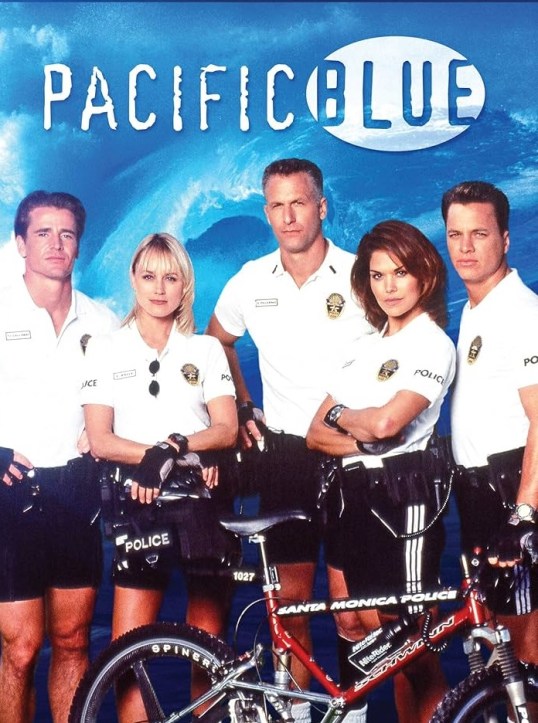
Late Night Retro Television Review: Pacific Blue 3.9 “Cop In A Box”


Welcome to Late Night Retro Television Reviews, a feature where we review some of our favorite and least favorite shows of the past! On Tuesdays, I will be reviewing Pacific Blue, a cop show that aired from 1996 to 2000 on the USA Network!  It’s currently streaming everywhere, though I’m watching it on Tubi.

Okay, we’re doing this again.

Episode 3.9 “Cop In A Box”

(Dir by Scott Lautanen, originally aired on November 2nd, 1997)

Oh, Pacific Blue.  How I have not missed you.

This episode features TC getting abducted by Harland Groves (Jeremy Roberts), a criminal who TC previously busted.  Harland traps TC in an underground beach bunker.  How Harland got his hands on an underground beach bunker is never explained.  Harland demands that TC’s rich family pay him 4 million dollars.  At the same time, he plans to use a chlorine gas bomb to kill TC.  Why he didn’t kill TC to begin with and then demand the money is never really explained.  It’s almost as if Harland secretly wanted his plan to fail.

I really didn’t have a problem with the idea of TC getting killed off.  Pacific Blue is one of the more boring of the shows that I review and killing TC would have livened things up.  At the very least, without TC around, I would no longer be forced to try to keep straight which member of Pacific Blue was TC and which member was Victor.  Unfortunately, TC manages to disarm the chlorine bomb.  When Harland attacks him in the bunker, it leads to a bunch of sand pouring in.  Harland is suffocated while TC escapes.

Oh well.

The cool thing about this episode is that Andy Buckley — who later played David Wallace on The Office — returned as TC’s brother.  The funny thing about this episode was the sight of grim-faced Palermo barking out orders while wearing his stupid bicycle shorts.  And the unfortunate thing is that TC survived so Pacific Blue will not be changing any time soon.

Retro Television Review: Fantasy Island 7.21 “Bojangles and the Dancer/Deuces Wild”


Welcome to Retro Television Reviews, a feature where we review some of our favorite and least favorite shows of the past!  On Tuesdays, I will be reviewing the original Fantasy Island, which ran on ABC from 1977 to 1984.  The show is once again on Tubi!

It’s time for our second-to-last trip to the Island.

Episode 7.21 “Bojangles And The Dancer/Deuces Wild”

(Dir by Bob Sweeney, originally aired on May 12th, 1984)

Sisters Audrey and Judy Jennings (played, of course, by Audrey and Judy Landers) come to the Island because they’re sick of men only appreciating their bodies as opposed to their other talents.  They end up meeting a hotelier named Rex Reinhardt (Stuart Whitman) who, after some poorly-defined drama involving his duplicitous chief of security (John Ericson), ends up opening a resort with the two of them.  Fans of the James Bond franchise will be happy to see Walter Gotell, who played the head of the KGB opposite Roger Moore in several films, cast as a writer who romances one of the sisters.

It’s kind of a sad fantasy when you consider that this is the second-to-last episode of the original Fantasy Island and the best they could do for this story were the Landers sisters and Stuart Whitman.  Not only were the guest stars not particularly inspiring but the fantasy itself didn’t really make much sense.

As for the other fantasy, it does feature a big-name guest star.  Sammy Davis, Jr. plays the legendary dancer, Bojangles!  Now, admittedly, Sammy doesn’t look particularly healthy in this particular episode.  Reportedly, by the time the 80s rolled around, all of the smoking, drinking, and drug-taking had finally started to catch up with him.  But, even while obviously ill, Sammy Davis Jr. still had the undeniable charisma of a natural-born star.  The fantasy is nothing special.  Joe Wilson (Glynn Turman) goes into the past so that he can dance with Bojangles.  However, Sammy Davis Jr. lights up the story.  He shares a wonderfully-acted scene with Ricardo Montalban, two old showbiz pros sharing what may have been a final moment together.

So, this trip to the Island was a mixed bag. Neither fantasy was particularly compelling and Tattoo’s absence was very much felt.  (Lawrence, I’ve noticed, tends to be rather judgmental of the guests which is something Tattoo never was.)  But at least Sammy Davis Jr. was there to add some life to the proceedings.

Only one more episode to go.

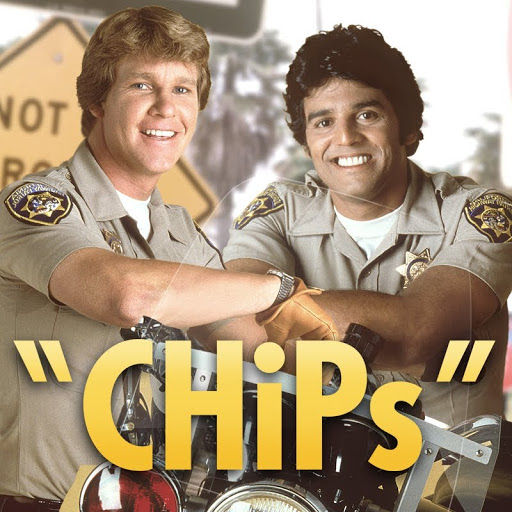
Late Night Retro Television Review: CHiPs 5.3 “Moonlight”


Welcome to Late Night Retro Television Reviews, a feature where we review some of our favorite and least favorite shows of the past!  On Mondays, I will be reviewing CHiPs, which ran on NBC from 1977 to 1983.  The entire show is currently streaming on Prime!

This week, it’s Ponch and Jon’s anniverary!

Episode 5.3 “Moonlight”

(Dir by Earl Bellamy, originally aired on October 18th, 1981)

A highway accident leads to a bunch of cars flying through the air in slow motion!

Ponch works off-duty as a security guard for an action film.  Ponch being Ponch, he ends up flirting with the two female stars.  He also ends up accidentally flirting with their stunt doubles, both of whom turn out to be men wearing blonde wigs.  Oh, Ponch!

Someone is dumping toxic waste and ruining the beautiful California country side.  Ponch and Jon turn to their old friend, trucker Robbie Davis (Katherine Cannon), for help.  However, it turns out that the waste is being transported and dumped by someone close to Robbie!

There’s a lot going on in this episode but the majority of the screentime is taken up with Getraer, Grossman, Baricza, Turner, and Bonnie thinking about how to celebrate Ponch and Jon’s 4th anniversary as partners.  At one point, Getraer does point out that it’s unusual for an entire department to celebrate the anniversary of a partnership.  I’m glad that someone said that because, seriously, don’t these people have a job to do?  I mean, aren’t they supposed to be out there, issuing tickets and preventing crashes like the one that opened this episode?  You’re not getting paid to be party planners, people!

Knowing just how much Larry Wilcox and Erik Estrada disliked each other when the cameras weren’t rolling, it’s hard not to feel as if there’s a bit of wish-fulfillment going on with the anniversary storyline.  Watching everyone talk about how Jon and Ponch are the perfect team, one gets the feeling that the show itself is telling its stars, “Can you two just get along?  Everyone loves you two together!”

Reportedly, by the time the fifth season rolled around, Wilcox was frustrated with always having to play second fiddle to Estrada.  Having binged the show, I can understand the source of his frustration.  During the first two seasons, Wilcox and Estrada were given roughly the same amount of screen time in each episode.  In fact, Estrada often provided the comic relief while Wilcox did the serious police work.  But, as the series progressed, the balance changed and it soon became The Ponch Show.  If there was a beautiful guest star, her character would fall for Ponch.  If there was a rescue to be conducted, Ponch would be the one who pulled it off.  When it came time to do something exciting to show off the California lifestyle, one can b sure that Ponch would be the one who got to do it.  Baker got pushed to the side.  This episode, however, allows Baker to rescue someone while Ponch watches from the background.  “See, Larry?” the show seems to be saying, “We let you do things!”

As for the episode itself, it’s okay.  There’s enough stunts and car accidents to keep the viewers happy.  That said, the toxic dump storyline plays out way too slowly.  At one point, Baricza finds a bunch of barrels off the side of the road and he looks like he’s about to start crying.  It’s an odd moment.

The episode ends with Baker and Ponch happy.  It wouldn’t last.  This would be Larry Wilcox’s final season as a member of the Highway Patrol.

Retro Television Review: Miami Vice 5.9 “Fruit of the Poisoned Tree”


Welcome to Retro Television Reviews, a feature where we review some of our favorite and least favorite shows of the past!  On Mondays, I will be reviewing Miami Vice, which ran on NBC from 1984 to 1989.  The entire show can be purchased on Prime!

Retro television reviews returns with Miami Vice!

Episode 5.9 “Fruit of the Poisoned Tree”

(Dir by Michelle Manning, originally aired on February 3rd, 1989)

Crockett and Tubbs are trying to take down a drug dealer named Enriquez (Jeffrey Meek) but every time that they think they’ve got the guy, his shady lawyer, Sam Boyle (Stephen McHattie), is able to use a technicality to get the case tossed.  Even sending Gina in undercover backfires as Gina’s cover gets blown and a bomb meant for her kills an innocent 13 year-old instead.

Crockett thinks that Sam and his associate, Lisa Madsen (Amanda Plummer), have evidence that could put Enriquez away.  Crockett puts pressure on Lisa to become a confidential informant but Lisa is devoted to Sam.  Lisa’s father was a crusading anti-drug prosecutor who was stabbed to death and Sam has promised that he will do everything within his power to prove that her father was actually assassinated by a drug cartel.

Of course, there’s some things that Lisa doesn’t know.  Sam is heavily involved in the drug trade himself and he’s currently in debt to gangster Frank Romano (Tony Sirico, bringing some nicely realistic menace to his role).  Sam plots to double cross Enriquez to get the drugs necessary to pay off Frank.  Plus, it also turns out that Sam is the one who had Lisa’s father killed.

When Lisa (and hey, that’s my name!) finds out the truth, she uses her legal training to seek her own revenge.  Enriquez has been arrested due to evidence that Lisa gave Crockett.  But when Lisa reveals herself to have been Crockett’s informant, the case is tossed because Lisa violated attorney/client privilege.  This frees up Enriquez to kill Sam right before Sam gets onto a private plane that would have taken him to freedom.  The episode ends with Enriquez getting arrested yet again and Lisa staring down at Sam’s dead body.

This was a pretty good episode, especially considering that it aired during the final season.  It feels like a throwback to the first two seasons, where the morality was always ambiguous and pretty much no one got a happy ending.  Lisa may have gotten revenge for the killing of her father but she did it by arranging the murder of  a man who she had spent years worshipping.  The Vice Squad takes down a drug dealer but not before an innocent boy is murdered.  The only reason that they’re going to a conviction this time is because they actually witnesses Enriquez killing Sam Boyle.  Otherwise, the case probably would have gotten thrown out again.

Miami Vice was always at its strongest when it examined futility of the war on drugs.  There’s a lot of money to found in the drug trade and there’s always someone willing to step up and replace anyone who the Vice Squad actually manages to take down.  This episode may end with Enriquez defeated but there’s no doubt that someone else will step into his shoes.

Lisa Marie’s Week In Television: 12/28/25 — 1/3/26


Bar Rescue (Fave TV, weeknights and weekends)

I watched two episodes on Friday night.  One took place at a champagne bar in Philadelphia.  The other was at a Detroit jazz club.  I’m never surprised to learn that most of these places ended up closing, even after Jon Taffer’s makeover.  Would you want to eat or drink at a place that was featured as being incredibly dirty and vermin-infested on television?

On Saturday, I watched an episode in which Jon Taffer helped out a surly sports bar owner.  Why are the owners of sports bars always so surly?  I then watched another episode featuring a bar that was home to a wild racoon.  After that episode, I then discovered that Fave TV was doing a Bar Rescue marathon and I ended up watching several episodes that followed.  As I watched, I was reminded that I would be both a terrible bartender and a terrible waitress.  It’s a good thing that I decided to spend my life watching movies instead.

Dallas Cowboy Cheerleaders: Making The Team (Fave TV, weeknights)

After Erin and I finished watching one of the Perry Mason movies on Friday, we watched an episode of this reality show on Fave TV.  Everyone was very smiley.  I was just happy because it was filmed in Dallas so I could spend the whole show going, “Hey, I was right outside that building earlier today!”

The Danny Thomas Show (MeTV+, Weekend Afternoons)

I watched an episode of this show on Saturday, largely because I was trying out the new remote control for the TV in my home office.  Danny Thomas was about to go on tour in Europe so comedian Jack Carter agreed to cover Danny’s nightclub show in the states.  Danny got jealous when he saw how much the audience loved Jack.  It made me laugh.

Dirty Pair Flash (Night Flight Plus)

On Friday night, I watched an episode of this often baffling anime.  The episode was about the pair playing beach volleyball.  I’m not sure why.  There was a lot of yelling involved.

Murder, She Wrote (Start TV, Weekend Mornings)

I woke up on Saturday and watched two episodes of this old show.  The first episode featured Elliott Gould arresting the wrong person and Angela Lansbury setting him straight.  The second episode featured Angela Lansbury speaking straight to the camera and telling us about some other detective, who was played by Ken Howard and who solved a murder involving a former football player.

New Year’s Eve Celebrations (Everywhere, Wednesday Night)

At my BFF Evelyn’s New Year’s Eve party, we flipped through and past many different televised celebrations.  We stopped to watch Andy Cohen and Anderson Cooper get drunk on CNN.  For the most part, though, we didn’t stick with anything for very long.  We had celebrating of our own to do!

Rose Bowl Parade (NBC, Thursday Morning)

I watched a bit of the Rose Bowl parade.  Watching a parade on television is never as much fun as watching it in person.

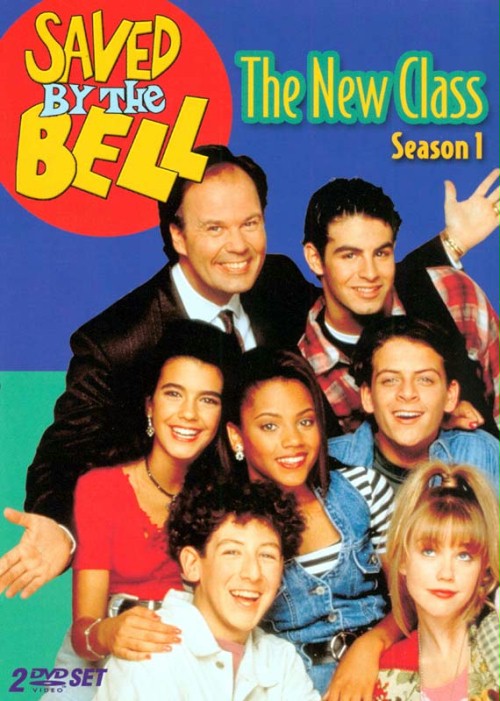
Saved By The Bell: The New Class (Prime)

Seriously, this show is perfect for my insomnia.  It lulls me to sleep.

Miss You After Goodbye, ReelShort Film, Dir. Ruixi Royce Gao


Happy New Year! I am always on the cutting edge of everything that is both terrible or great. Over Horrorthon, I reviewed A LOT of AI generated short films. I believe that we not far out to seeing a total change in how films are made. We are also seeing a change in how films are consumed- especially terrible ones. Reel Shortz and Dramabox (Dramabox might be a pirate outfit) is part of that transition. Reel Shortz is a Chinese company where they make TERRIBLE movies and break them up into bits and charge tokens that you buy with real money to keep watching the story. How you watch the film is just as different as how you pay for it: it’s designed to be watched on your phone- no letterbox. It sounds stupid, but stupid can make money- Just look at Francis Beto.

Does this sound like Temu Warner Bros.? Yes it does and YES IT IS! Also, if the title “Miss You After Goodbye” sounds like google translate- it is! The movie is terrible from the p@rn quality acting to the clunky/stupid dialogue, but they generated 700 Million in 2025; so, we will see A LOT more of this! I’m not saying whether I watched this film by buying their tokens or saw it on dailymotion, but I did watch it and howled with laughter at the unintentional comedy while I was on the elliptical!
With this lead up, you’re wondering how bad was this film? Oh, this film made Birdemic look like a masterpiece.

The plot is that Neil Wade an astrophysicist/astronaut marries his mentor’s daughter, Keira Thorne for five years, in exchange for his college tuition. His mentor believed that Keira needed a husband because her boyfriend broke up with her and she was sad. Keira does not know this transaction took place and marries Neil and treats him like garbage from day one. For some reason, he wears this outfit from 18th Century Cobblers Weekly – Ed Gein collection.

Neil falls for Keira, but she is so awful that he leaves her and accepts a mission to mars with NASX. Yes, NASX!

The main villain of the story is Simon who is Keira’s first love. Simon looks like what China believes our villains look like.

Keira does not believe that Neil has left her for real. She does not understand that Neil is not some boring house husband! No, Neil’s a ROCKETMAN!!!

Yes, Neil is the next Neil Armstrong! The first man to set foot on Mars, but no one knows what he looks like, which is both normal and possible. Keira keeps looking for Neil on Earth, but he’s gone Far…. Far… Away… Chirpy Chirpy Cheap Cheap…..

When Neil returns, Keira goes insane, Simon tries to kill Neil, there is no security at NASX, and Neil marries Elon Musk’s daughter. Yes, that all takes place in the last 4 minutes of the film.

The future is not always bright, but this shows that there is a market for serialized feature length storytelling; so, a mediocre script would be like Apocalypse Now by comparison to what is being churned out! How people make and consume films is changing and the days of the movie theater are OVER! Hollywood is likely over. One positive for Reel Shortz is this: the film used living actors and not AI generated ones.

Review: Fallout (Season 2, Episode 3 “The Profligate”)


“If you think everyone else is the bad guy, chances are, you’re the bad guy.” — Lucy McLean

Episode 3 of Fallout season 2 takes a deliberate breath after the season’s earlier frenzy, shifting focus to simmering tensions and the cracks forming within key factions. It trades some high-octane action for deeper dives into moral gray areas and character dilemmas, while sprinkling in plenty of nods to the game’s lore that will thrill longtime fans. The result is an episode that feels more introspective than explosive, building quiet dread that hints at bigger fractures ahead without fully detonating them just yet.

The spotlight falls heavily on Caesar’s Legion this time around, turning their rigid hierarchy into a pressure cooker of internal strife. Lucy finds herself right in the thick of it, her wide-eyed vault dweller optimism clashing hard against a group that views compromise as heresy. Hanging in the balance between rival power plays, she becomes a symbol of the wasteland’s brutal tug-of-war, where diplomacy often looks more like desperation. It’s a tough spot for her character, one that tests her limits and forces some uncomfortable reflections, though the episode spends more time on the surrounding politics than her personal evolution at first.

The Ghoul shines in his signature blend of cynicism and cunning, navigating a high-stakes deal that underscores his “ends justify the means” survival code. His interactions with NCR remnants carry that dry, world-weary edge, laced with flashbacks that keep peeling back layers of his pre-war life under influences like Vault-Tec and figures from New Vegas lore. These moments aren’t just backstory—they tie directly into his current ruthlessness, showing how old betrayals and power games echo into the irradiated present. It’s the kind of character work that makes his choices feel earned and uneasy, never fully heroic or villainous.​

Meanwhile, Maximus’s path with a Brotherhood superior veers into unexpectedly dark territory, blending camaraderie with the order’s uglier underbelly. What starts as armored antics at a familiar Nuka-Cola site uncovers dilemmas about who gets to claim “civilization,” hinting at rifts that could shake the Brotherhood to its core. His arc builds to a tense crossroads, mirroring the Legion’s own divisions and raising questions about loyalty in a world where ideals curdle fast. It’s a smart parallel that keeps the episode’s themes cohesive without feeling forced.

Guest spots add some unexpected flair, like Macaulay Culkin’s turn as a Legion figure whose quirky menace fits the faction’s cultish vibe perfectly. He brings a bureaucratic fervor to the role, emphasizing how the Legion ritualizes its brutality right down to succession squabbles over key artifacts. These cameos feel organic, enhancing the world rather than stealing focus, and they nod to the games’ eccentric cast without overwhelming the main threads.

Pacing-wise, this hour simmers more than it boils, which might test viewers craving constant momentum. Lucy’s predicament holds steady for a stretch, the Ghoul operates in the shadows, and Maximus’s detour unfolds gradually before tensions spike. That restraint pays off by letting atmosphere build—the Legion camp’s stark crosses and sun-scorched decay capture the series’ horror-Western mashup beautifully. Locations like Camp Golf and NCR outposts evoke New Vegas nostalgia, but twisted into symbols of faded glory, reinforcing the show’s point that no empire endures unscathed.

For game fans, the episode is a treasure trove of subtle references, from Legion dynamics to Securitron teases, woven in ways that serve the plot rather than just fan service. Newcomers won’t feel lost, as the context emerges naturally through dialogue and fallout from prior episodes. Visually, it’s peak Fallout: practical effects make the wasteland feel lived-in and lethal, with practical power armor clanks and irradiated horrors that pop off the screen.​​

By the later beats, the episode starts hinting at shifts in the power balance, leaving characters at pivotal junctures without spelling everything out. Lucy grapples with harsh realities that could harden her edge, the Ghoul’s gambit ripples outward in unpredictable ways, and Maximus faces choices that test his place in the Brotherhood. These teases set up a powder keg for the back half, where alliances fray and the wasteland’s chaos might force some reluctant team-ups or betrayals.​​

All told, episode 3 delivers a balanced mix of lore love, character depth, and atmospheric tension, even if its slower gear occasionally mutes the thrill. Strengths like the Ghoul’s layered flashbacks and faction parallels outweigh any mid-episode lulls, making it a solid bridge that primes the pump for escalation. In a season already nailing the games’ spirit, this one reminds us why Fallout endures: beneath the satire and shootouts lies a grim meditation on humanity’s stubborn flaws.